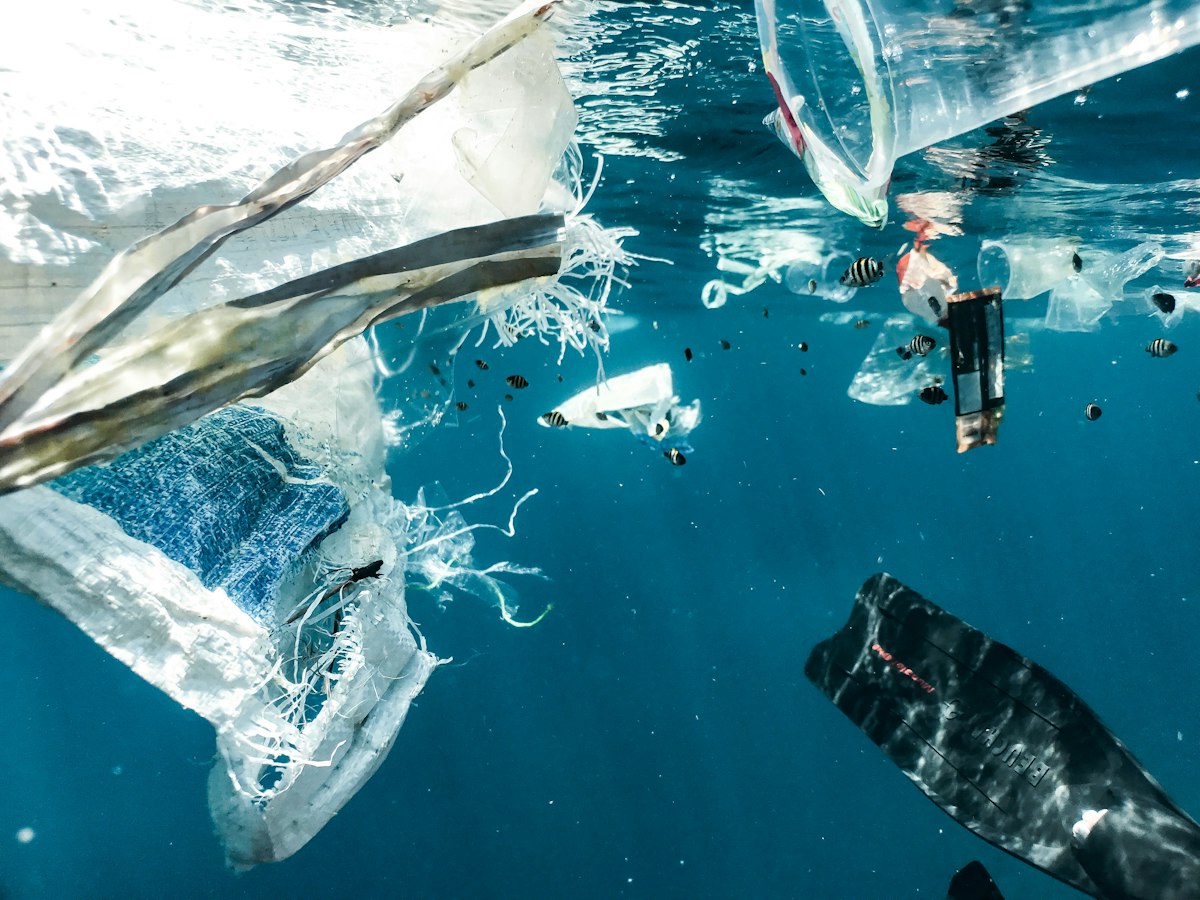
Boyan Slat was eighteen years old and on a diving holiday in Greece when he noticed that there were more plastic bags drifting around him than fish. That was 2012. Thirteen years later, the organisation he founded has pulled fifty million kilograms of trash out of rivers and ocean, deployed solar-powered barriers in some of the most polluted waterways on the planet, and put a single passive boom the length of a small island into the middle of the North Pacific Gyre. As of January 2026, The Ocean Cleanup is the largest plastic removal operation in the world.
The most important thing Slat figured out was not how to build a floating barrier. It was where the plastic is. Most ocean plastic does not live in the open ocean. It lives in rivers, and specifically in a small number of them, carrying things like the sachets sold to people with no waste system to put them in. Around a thousand rivers, roughly one percent of the world’s rivers by count, carry an estimated eighty percent of the plastic that flows from land into the sea. That single finding changed the shape of the problem. You do not need to clean the entire ocean. You need to stop the plastic before it gets there.
The Strategy: Stop It at the Source
The Ocean Cleanup operates on a logic that is almost surgical in its specificity. Intercept plastic at the points where it enters the ocean system, before it disperses into the water column and the currents pull it apart into something almost impossible to retrieve. This is a fundamentally different posture to beach cleanups or surface skimming. It is upstream work.
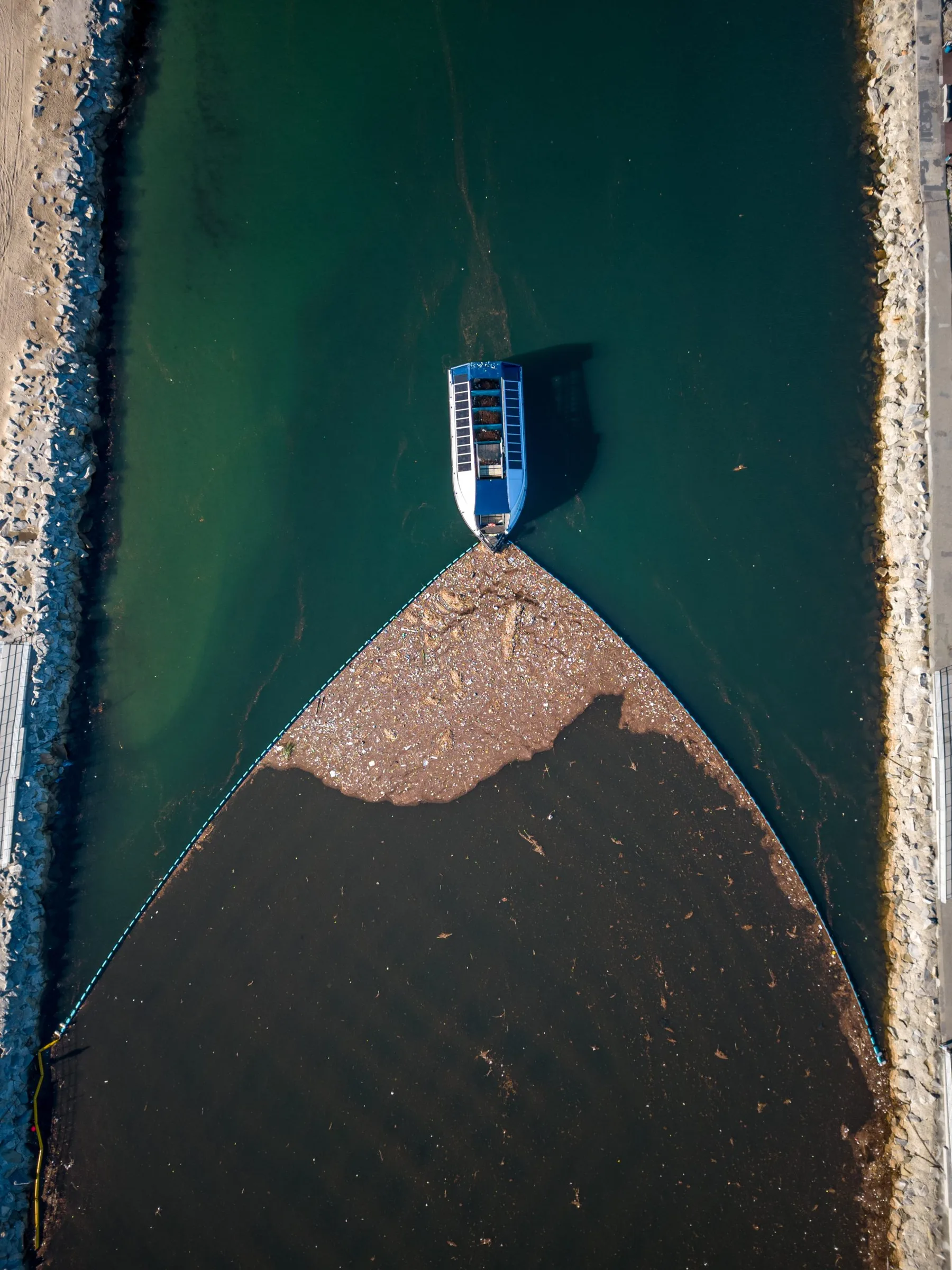
Their tool is the Interceptor: a solar-powered floating barrier that catches plastic debris in rivers before it reaches the sea, which is where most ocean plastic comes from. The system uses the river’s own current to direct floating waste into a collection zone, then onto an automated conveyor that loads it into dumpsters on board. The collected plastic is transported to local sorting and recycling facilities. The vessels themselves are silent, autonomous and powered entirely by the sun.
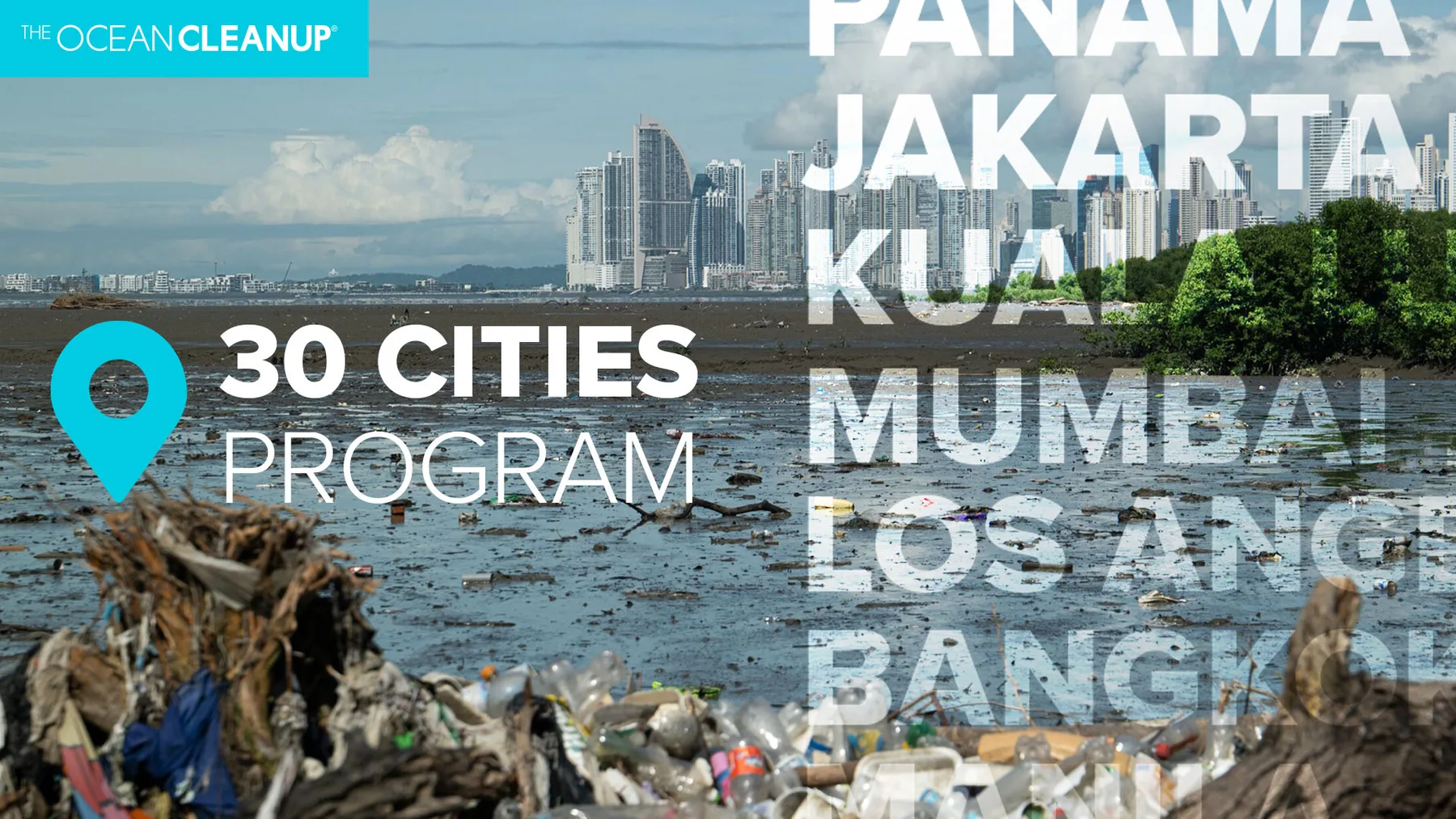
As of January 2026, this approach has prevented twenty-nine million kilograms of trash from reaching the ocean. The expansion plan is the 30 Cities Programme, announced in June 2025, which targets thirty strategically chosen coastal cities for citywide river deployment. The stated aim is to reduce plastic pollution flowing from those rivers by up to a third by 2030.
Local Employment and Community Impact
What separates The Ocean Cleanup from purely technological solutions is the operating model. Each Interceptor deployment is paired with local partnerships. The plastic collected is processed through local facilities where possible, creating jobs and economic pathways for communities that have been disproportionately affected by waste mismanagement.
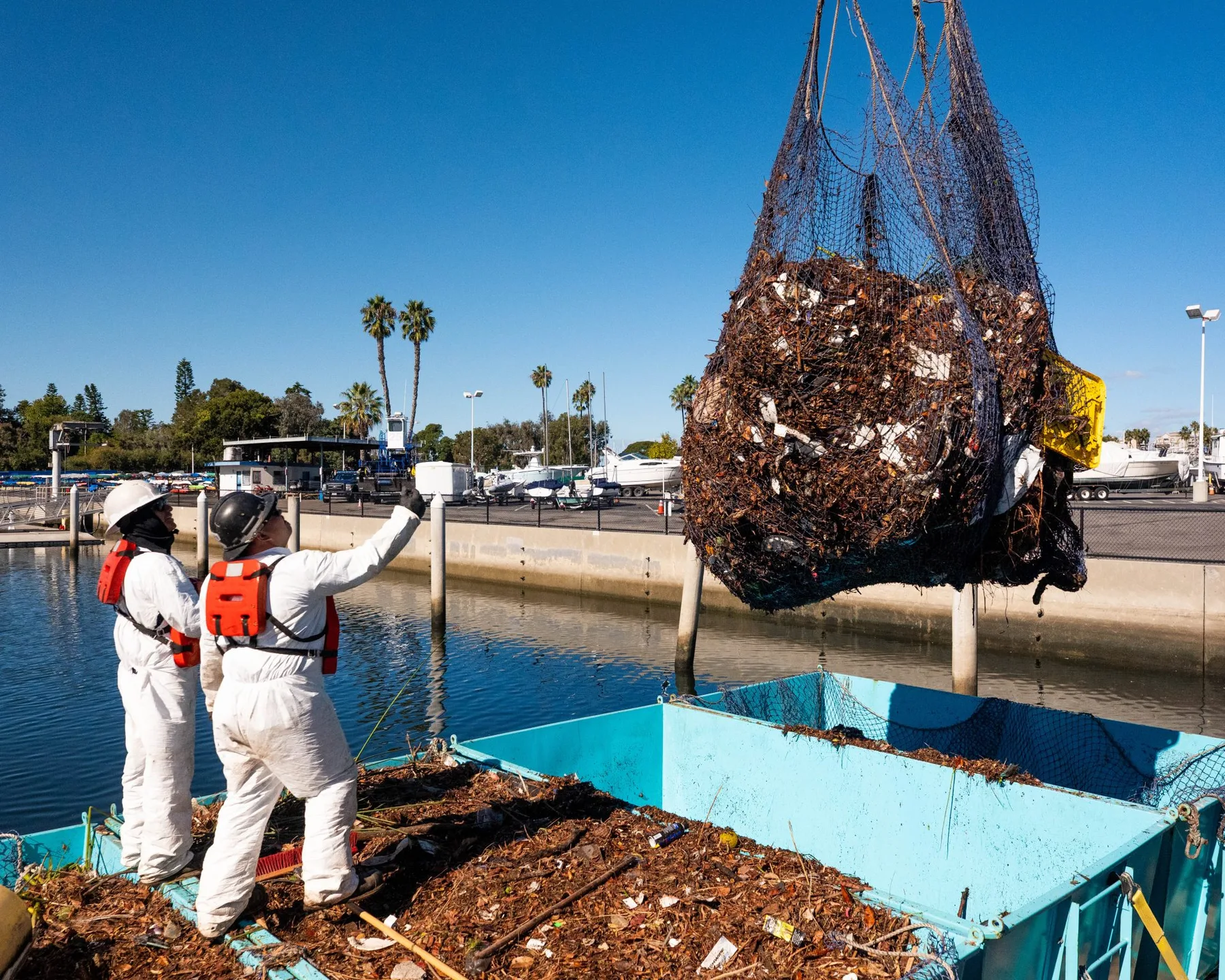
The strategy recognises something the policy debate often misses. Ocean plastic pollution is not just an environmental problem in the places it accumulates. It is an economic one. The rivers carrying most of the plastic are concentrated in regions where waste management infrastructure has been historically underfunded, where fishing livelihoods have already been damaged by the same pollution, and where communities have few practical alternatives. A cleanup operation that brings infrastructure, employment and a recycling supply chain into those communities is not charity in the old sense. It is structural.
The Great Pacific Garbage Patch
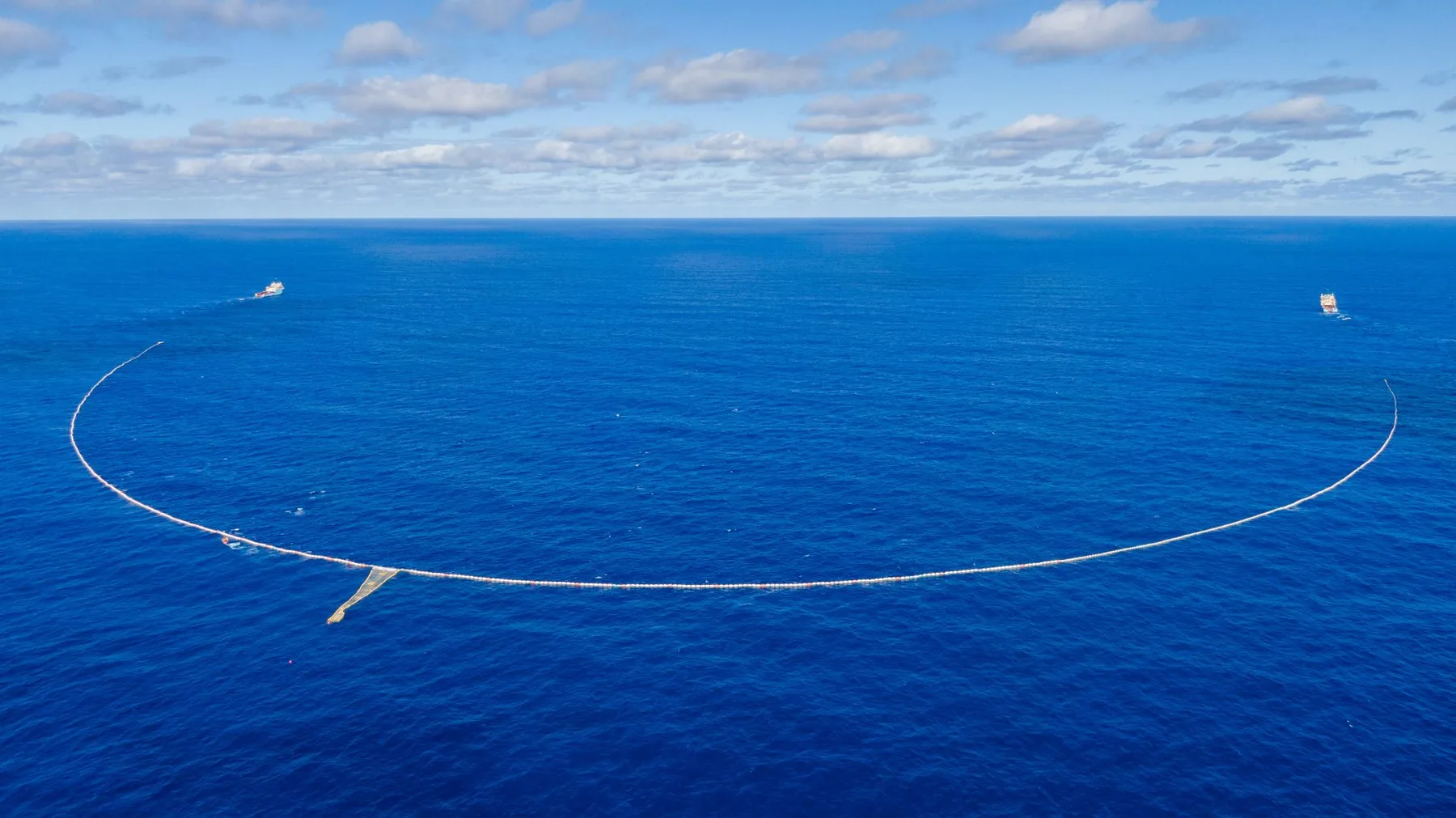
In parallel with the river work, The Ocean Cleanup tackles the legacy plastic already in the ocean. Since 2019 they have been removing plastic from the Great Pacific Garbage Patch, and in August 2023 System 03 was fully deployed there. It remains the only operation of its kind at this scale.
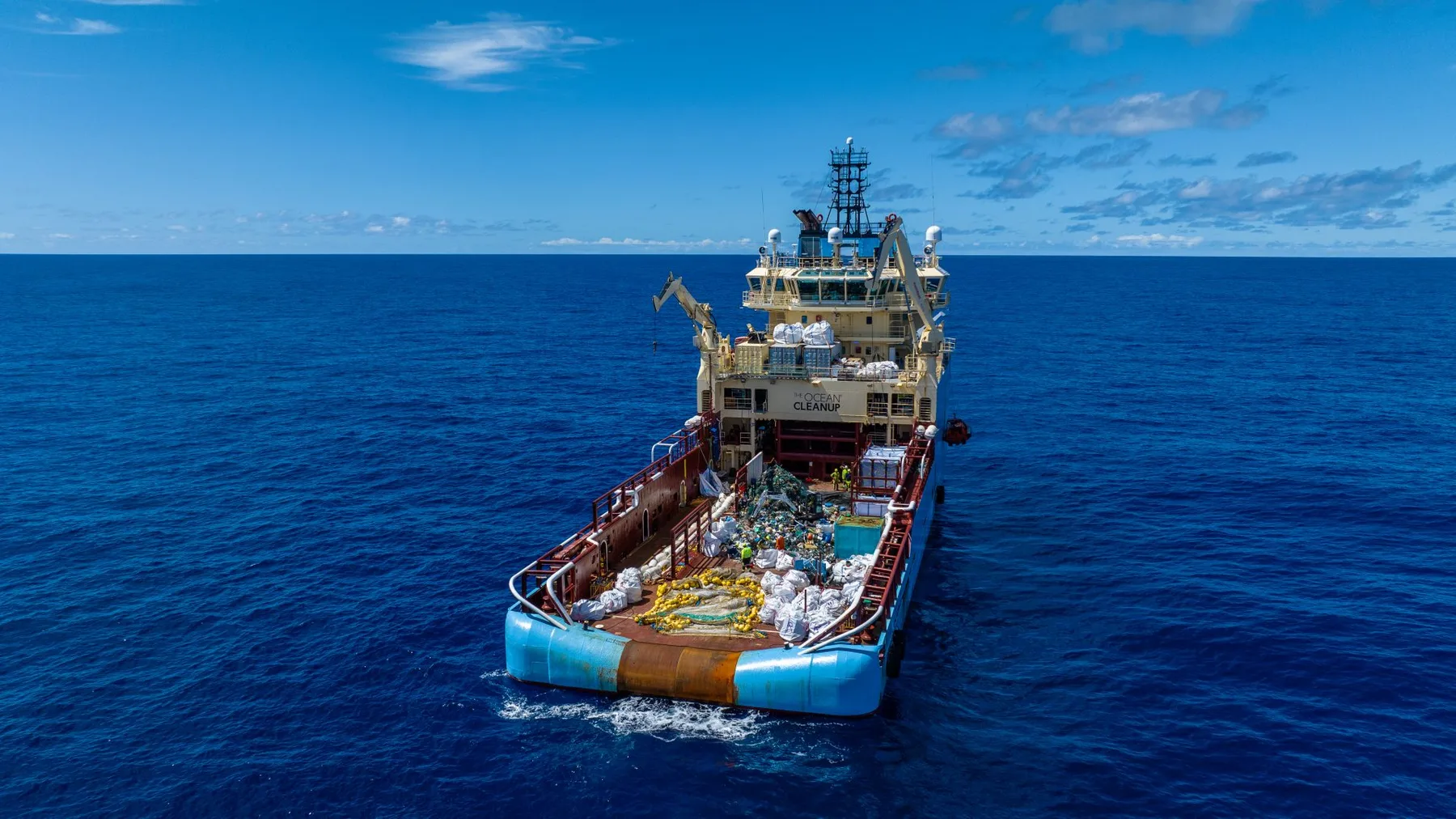
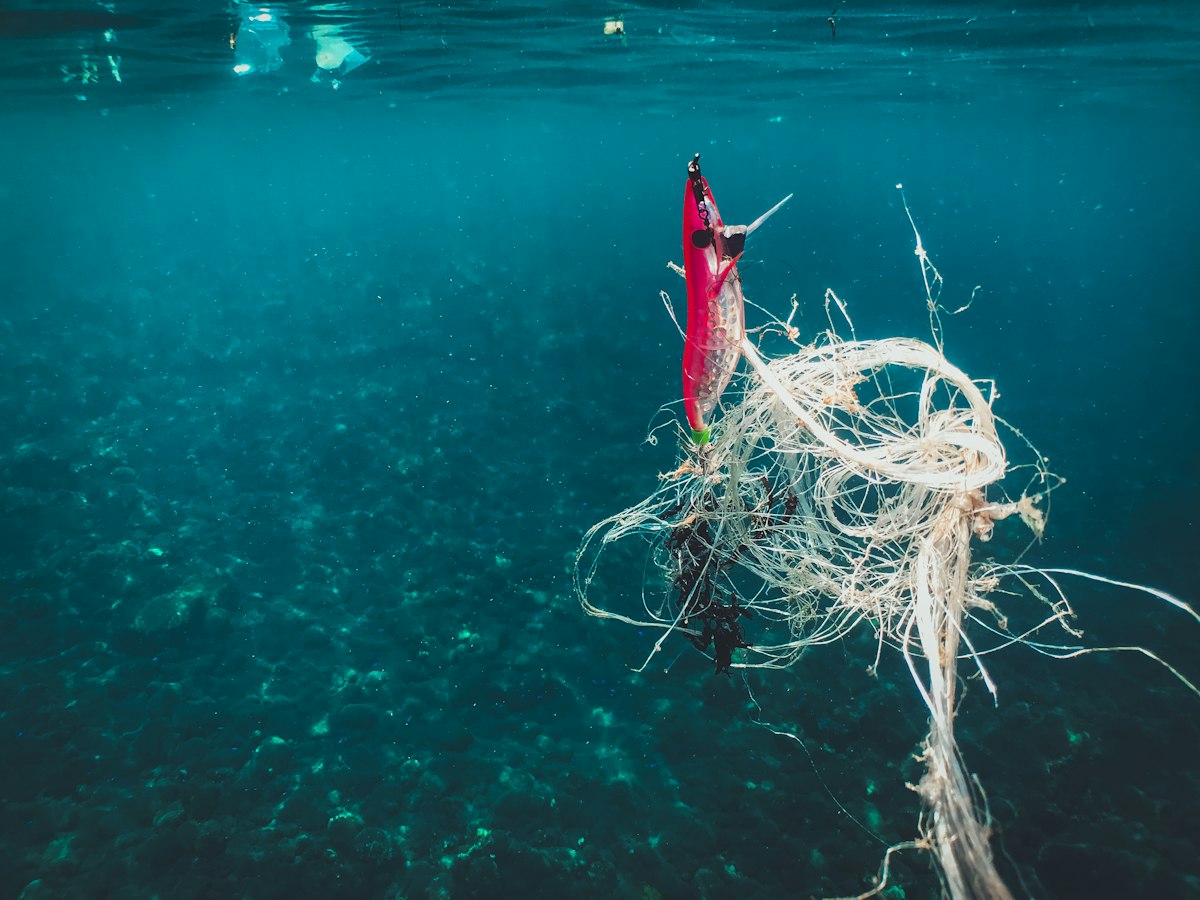
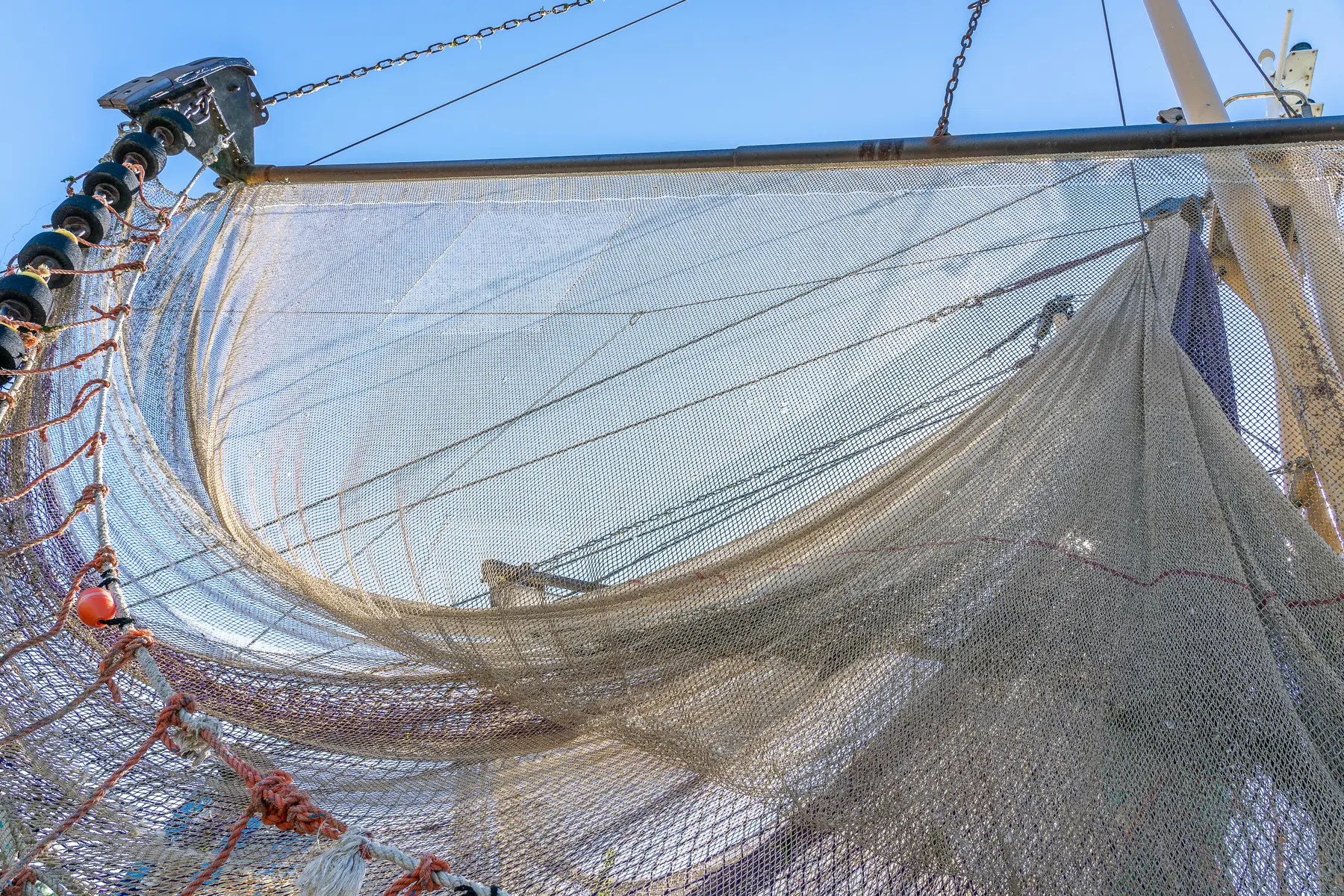
System 03 is a roughly two-and-a-half-kilometre passive floating barrier, towed slowly through high-density plastic zones by two vessels at the wings. It does not need a power source. It uses the relative motion of the boats and the water to concentrate plastic into a retention zone at the apex, which is emptied approximately every few days. The system is designed to capture everything from microplastics in the centimetre range up to ghost fishing gear, which by mass makes up around three quarters of the floating debris in the Great Pacific Garbage Patch.
Before scaling System 03, The Ocean Cleanup published a Net Environmental Benefit Assessment that asked the inconvenient question. Does removing the plastic do more good than the operation’s own emissions and ecological disruption do harm? The assessment concluded that the benefits of cleaning the Great Pacific Garbage Patch outweighed the costs. That kind of scientific honesty is rare in environmental NGOs at this scale, and it matters.
The Funding Model
In April 2025, The Ocean Cleanup received one of the largest single grants in its history: 121 million US dollars from the Audacious Project donor pool, announced at TED2025. The grant is not marketing money. It translates directly into Interceptor units, vessel deployments and recycling supply chains in the named target cities.
Their partnership approach is sophisticated. Coldplay has sponsored Interceptors in Malaysia and Indonesia and collaborated on a limited-edition LP made from recycled river plastic. Kia produced the first car accessory made from plastic extracted from the Great Pacific Garbage Patch. Each partnership serves two purposes at once. It funds operations, and it raises awareness that ocean plastic, once recovered, has measurable value in a circular materials supply chain.
Transparency as Foundation
One of The Ocean Cleanup’s quieter strengths is its commitment to publishing the science. The Mega Expedition, conducted in 2015, collected more data on the composition of the Great Pacific Garbage Patch in a single survey than the previous forty years of research combined. Aerial surveys, drift modelling and real-time deployment data feed into peer-reviewed papers and into the organisation’s own open reporting.
Every Interceptor logs what it captures. Every System 03 extraction is documented. The organisation publishes findings that sometimes complicate its own assumptions. Microplastic capture rates have been openly debated. So has the carbon footprint of the open-ocean operations. This is not a marketing operation hiding behind hero footage. It is a nonprofit that treats data as accountability, and that posture is what gives the rest of the work credibility.
The Vision: 90% by 2040
The Ocean Cleanup’s stated goal is the removal of 90% of floating ocean plastic by 2040. This is not a vague aspiration. It is backed by a specific roadmap: Interceptor deployment across the highest-impact rivers, optimisation of System 03 in the North Pacific Gyre and advocacy for stronger international regulation on plastic production at source.
Whether they hit ninety percent by 2040 is unknown. What is certain is that they are the only organisation with both the technology and the scaling strategy to attempt it at planetary level, and they are openly transparent about which parts of the work are on track and which parts are not.
Why This Matters
Anyone who has dived in the last decade has seen plastic where it should not be. A grocery bag drifting past a manta. A flip-flop on a sand patch. A water bottle stuck inside a sea fan. The cumulative effect of those small images is what makes ocean plastic feel intractable, because the problem looks evenly distributed across an ocean that is too big to clean.
The most important thing The Ocean Cleanup has done, technologically and strategically, is to reframe the geography of the problem. The plastic is not evenly distributed across the ocean. It is concentrated in rivers, in gyres and in coastal feeder systems, and those are clean-able. Most marine conservation NGOs work on the demand side: stop the plastic at production, change consumer behaviour, lobby for treaty. That work is essential. But the legacy plastic already in motion is its own crisis, and it needs a separate operational answer. The Ocean Cleanup is that answer. Imperfect, transparent about its limitations, and, as of 2026, the only thing operating at the scale the problem requires.
The global ocean plastic crisis is not solved. It will not be solved this decade. But for the first time, there is a credible operational path between where we are and the version of the ocean where the next generation of divers do not have to swim through more plastic than fish.