The first time I saw a coral nursery, I almost missed it. A grid of PVC pipes suspended mid-water, each hung with small fragments of staghorn coral on monofilament line, it looked, at a glance, like someone had dropped a piece of scaffolding off a boat. Then I looked closer. Every fragment was alive and growing. The tips were bright white. New growth.
That nursery, off the coast of Bonaire, was part of a network that now spans dozens of countries. Coral gardening, the practice of collecting coral fragments, growing them in underwater nurseries, then transplanting the juveniles onto damaged reefs, has gone from a niche research method to one of the most promising tools in marine conservation.
Why Reefs Are Collapsing
The numbers are stark. Since the 1950s, the world has lost more than half of its coral cover. The Great Barrier Reef has experienced four mass bleaching events since 2016. In the Florida Keys, coral cover has declined from roughly 25% in the 1970s to under 2% today. The causes are interconnected: rising sea temperatures cause bleaching, ocean acidification weakens coral skeletons, runoff from coastal development smothers polyps, and overfishing destabilises the entire reef ecosystem.
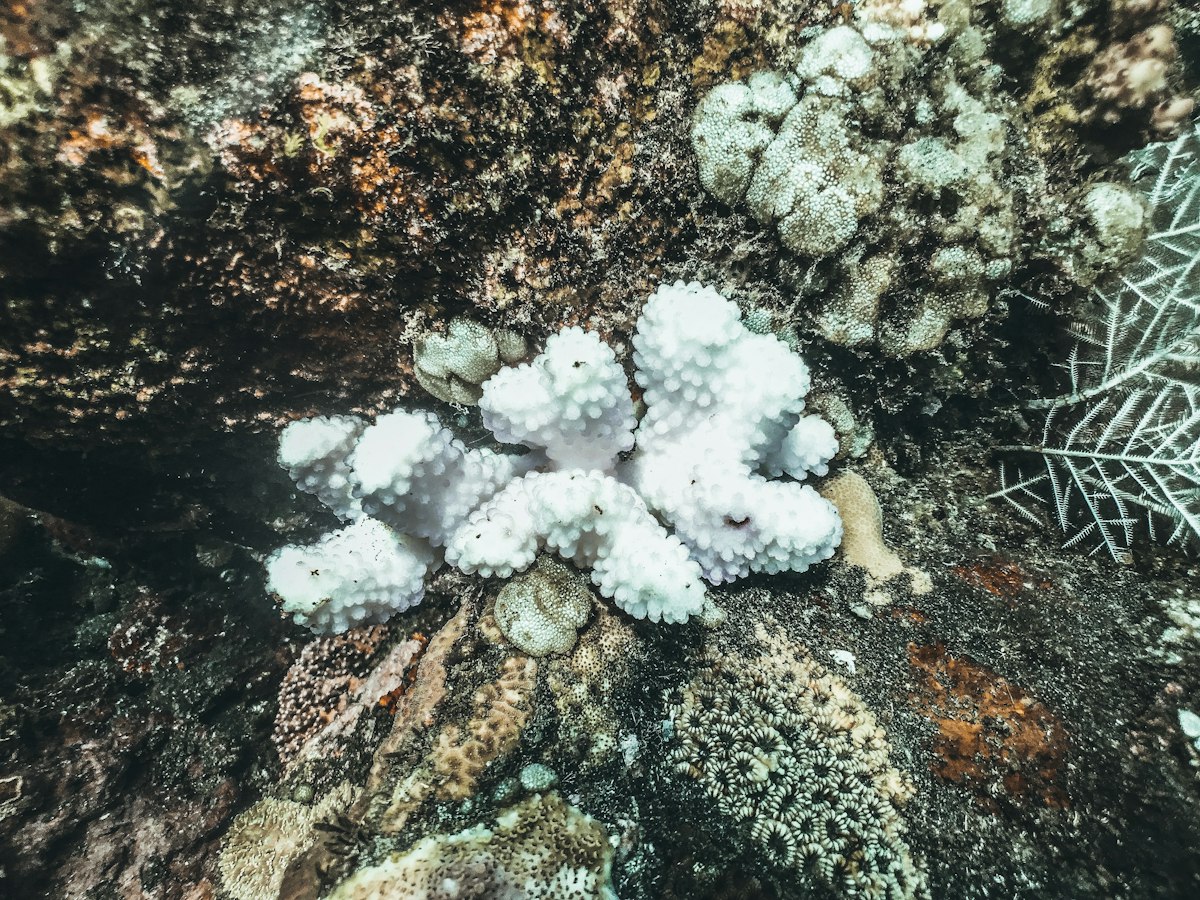
Bleaching happens when water gets too warm. Coral polyps expel the symbiotic algae, zooxanthellae, that live in their tissues and provide up to 90% of their energy through photosynthesis. Without zooxanthellae, the coral turns white. If temperatures drop quickly, coral can recover. If they stay elevated, the coral starves and dies.
At 1.5°C of global warming above pre-industrial levels, the target written into the Paris Agreement, scientists estimate 70 to 90% of coral reefs will be severely damaged. At 2°C, over 99% will be functionally gone.
What Coral Gardening Actually Looks Like
The technique was pioneered by marine biologist Dr. Ken Nedimyer in the Florida Keys in the early 2000s, when he noticed that small coral fragments were growing naturally on discarded lobster trap wire near his home. He began deliberately cultivating fragments and founded the Coral Restoration Foundation, now the largest coral restoration programme in the world outside of government.
The process begins with fragment collection. Divers take small cuttings, typically 5 to 10 centimetres, from healthy donor colonies. These fragments are attached to underwater nursery trees: PVC or metal frames suspended in open water where light and flow are good. Over six to twelve months, the fragments grow into juveniles large enough to transplant.
Outplanting, attaching juveniles to the reef using marine epoxy or nails, is the most labour-intensive part. Each coral must be secured individually, in a site chosen for suitable substrate, depth, and light. One outplanted coral does not save a reef. A thousand, sustained over years, begins to.
The Coral Restoration Foundation has now outplanted over 150,000 corals across the Florida reef tract. The Coral Triangle Initiative, covering Indonesia, Malaysia, Papua New Guinea, the Philippines, Solomon Islands, and Timor-Leste, has established nurseries across the world’s most biodiverse coral ecosystem. In the Maldives, the Reefscapers programme has deployed over 1,000 artificial reef frames seeded with coral fragments.
The Science Getting More Sophisticated
Early coral gardening focused on fast-growing branching species, staghorn and elkhorn coral, because they are easy to fragment and grow quickly. The field is now moving toward greater genetic diversity and heat-tolerant strains.
Researchers at the Australian Institute of Marine Science and SECORE International are working on selective breeding: identifying coral colonies that survived bleaching events and using their offspring to produce heat-resistant juveniles. The logic is the same as agricultural plant breeding, applied to a marine ecosystem under existential pressure.
There is also work on assisted gene flow, moving heat-tolerant coral genotypes from warmer waters into cooler reefs before temperatures rise, and on coral probiotics: introducing specific bacteria that reduce bleaching susceptibility. None of these are silver bullets. They are buying time. But buying time, right now, is everything.
What Divers Can Do
Restoration diving is real. Organisations including the Reef Check Foundation, the Coral Restoration Foundation, and local programmes across Southeast Asia and the Caribbean run volunteer programmes where recreational divers can train in nursery maintenance and outplanting. It requires open-water certification at minimum, and the work is meticulous, you are handling living animals in currents, at depth, with gloves off to feel what you are doing.
Beyond active restoration, the basics matter more than people realise. Proper buoyancy control is not just about air consumption. A single fin kick that knocks a coral fragment off a nursery tree sets that colony back months. Touching coral, even briefly, transfers oils and disturbs polyps. Anchoring on reef, still common in many places, can destroy in seconds what took decades to grow.
The reef I dive most often in the Philippines has been degraded for as long as I have been diving it. But two years ago, a local dive operation started a small nursery near the main dive site. Last month, I watched three outplanted staghorn fragments they had grown from scratch spawning in the current.
Small. Specific. Alive. Restoration is only possible on reefs that still have something to restore. Marine protected areas are what buys the time.