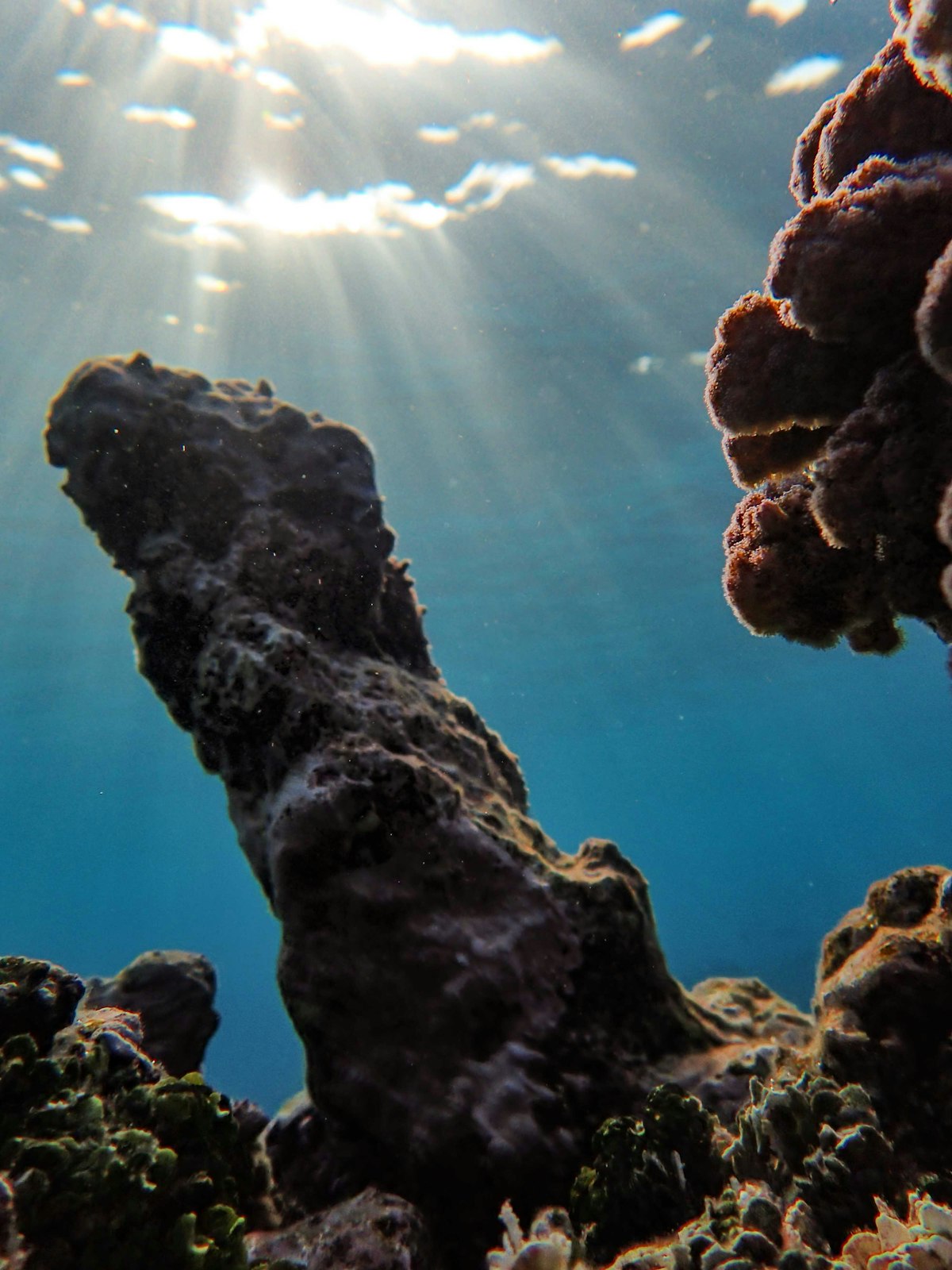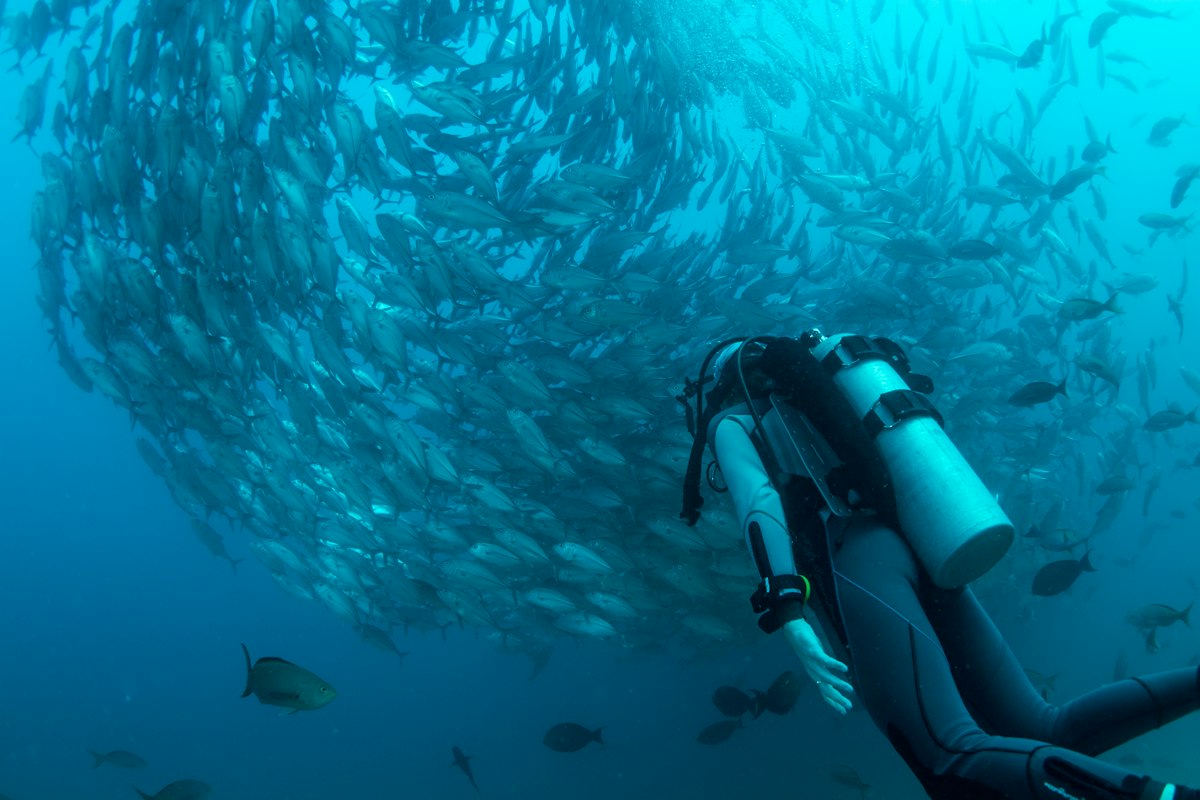
The fourth global coral bleaching event was declared in April 2024 and is, as of early 2026, still ongoing. By the time it is formally closed, whenever that turns out to be, it will be the longest, the most geographically extensive, and almost certainly the most severe bleaching event in the recorded history of coral monitoring.
The numbers are difficult to absorb. More than 84% of the world’s coral reefs have experienced bleaching-level heat stress during the current event. Every major reef province on the planet has been affected. The Caribbean, the Indo-Pacific, the Coral Triangle, the Red Sea, the Persian Gulf. Sites that historically served as thermal refuges, where corals were thought to be relatively protected from heat stress, have bleached too. The category five tier of NOAA’s Coral Reef Watch heat stress alert system was added in 2023 because the existing scale was no longer sufficient to describe what was happening.
I have watched it happen. Not the satellite numbers, the reef itself. Santa Marta on Colombia’s Caribbean coast, Cozumel on the Mexican side, Koh Tao in the Gulf of Thailand to a degree. All three in the last three years. All three carrying the white patches and the thinning fish counts that go with bleaching. Layered on top of it, in the Mexican Caribbean, the sargassum blooms now smothering shallow reefs from Cancún down through the Riviera Maya, choking light and oxygen exactly where the corals are already trying to recover. The category five alert tier did not exist when I started diving. It exists now because of what is happening on reefs I have actually been on.
What Bleaching Actually Is
A coral is a symbiosis between an animal, the polyp, and a single-celled algae called zooxanthellae that lives inside the polyp’s tissue. The algae photosynthesises, providing the coral with the bulk of its energy. In return, the algae has shelter and access to the polyp’s metabolic byproducts. The colour of a healthy coral comes mostly from the algae.
Under heat stress, the relationship breaks down. The algae produces toxic compounds, the polyp expels it, and the coral turns white. This is bleaching. A bleached coral is not dead. If the heat stress passes within a few weeks, the coral can re-acquire algae from the surrounding water and recover. If the stress is prolonged, the coral starves. Mortality typically follows within months.
The thresholds are tighter than most people assume. Bleaching can begin at temperatures only one degree Celsius above the long-term summer maximum. Severe and widespread mortality occurs at two degrees above. Many tropical oceans have spent extended periods of the last two years at three or four degrees above their historical norms. The system is being asked to tolerate conditions for which it has no evolutionary preparation.
What the Current Event Looks Like
The current event began in the Northern Hemisphere summer of 2023 and intensified through 2024 and 2025. Affected reef systems include:
The Great Barrier Reef has experienced its fifth mass bleaching since 2016, with the 2024 event particularly severe in the southern reefs that had previously been less affected. Aerial surveys documented bleaching on more than three quarters of surveyed reefs.
The Caribbean has seen heat stress that exceeds anything in the modern record. Florida’s reef tract experienced sustained bleaching throughout the summer of 2023, with coral mortality estimated at over 50% in some monitored sites. Emergency interventions, including the relocation of coral nursery stock to land-based holding facilities, were carried out at scale.
The Coral Triangle, which contains the highest coral biodiversity on the planet, recorded widespread bleaching across the Philippines, Indonesia, and Papua New Guinea through 2024. The region had been identified previously as the most likely climate refuge for corals globally. The current event has called that designation into question.
The Egyptian Red Sea, also frequently cited as a thermal refuge because its corals evolved in unusually warm water, has shown signs of stress for the first time in monitored history. The Indian Ocean’s western and central reef systems have bleached. Western Australia, French Polynesia, the Maldives, and Mauritius are all affected.
What Happens to Reefs That Have Bleached This Many Times
A coral reef ecosystem can recover from one bleaching event. With sufficient time, it can recover from two. The question marine biology has been forced to ask is what happens to a reef that bleaches three, four, or five times in a decade.
The empirical answer is that recovery slows or stops. Coral cover declines progressively after each event. The species composition shifts toward more thermally tolerant but ecologically simpler corals, table corals and branching staghorns are typically lost first, replaced by massive boulder corals or, in the most degraded cases, by algae and rubble. Fish communities reorganise around the simplified habitat, with declines in the species that depend on structurally complex coral.
The reefs we have are not the reefs we will have. The reefs we will have are simpler, lower in biomass, and dominated by a smaller subset of resilient species. This trajectory is no longer hypothetical. It is documented in every long-term reef monitoring programme that has now been running for more than a decade.
What Is Being Done
The interventions available range from local to systemic. At the local end, marine managers are deploying shading systems over particularly valuable reef sites during heat events, accelerating coral nursery and outplanting work, and, in extreme cases, evacuating coral genetic stock to land-based facilities for storage and breeding.
At the regional end, marine protected area networks are being expanded under the assumption that healthier reef ecosystems are more resilient to heat stress, even if the heat stress itself cannot be controlled.
At the systemic end, the only intervention that addresses the root cause is the reduction of greenhouse gas emissions and the stabilisation of ocean temperatures. This is the work of the broader climate transition and is not within the control of marine biology. The reef science community has been increasingly explicit about saying so.
Why This Still Matters
There is a temptation, in conservation, to soften the bad news. The reef science community has, in the last several years, mostly stopped doing this. The current bleaching event is bad. The trajectory is bad. The interventions available, while valuable, are unlikely to be sufficient on their own.
What is also true is that not all reefs are equally vulnerable, and the variation between reefs gives the system more options than the headline numbers suggest. Some species and some sites are coping better than others. The ones that survive will be the seed stock for whatever reefs come next.
The work of the coming decade is to give those seed populations the best possible chance, through marine protection, through emissions reduction, and through the kind of careful local management that produces refuges large enough to matter. The fourth global bleaching event is a warning. It is not yet the last word. Local stressors that divers can control, including sunscreen chemicals that damage coral DNA at concentrations of parts per trillion, compound the heat stress and are worth addressing now.