The bottle in the dive shop says reef-safe. The boat captain reassures you that the sunscreen you brought is fine. And yet a single dive boat carrying twenty people into a tropical reef can deliver enough oxybenzone into the water to disrupt coral physiology several hundred metres from the entry site. The chemistry is unforgiving. The labelling is mostly unregulated.
Sunscreen on the reef is one of those quiet, slow-acting threats that sit somewhere below the more cinematic conservation issues. Compared to dynamite fishing or coral mining, the impact is gradual and diffuse. But the science on it has hardened in the last decade, and the conclusion is now uncomfortable: several of the most widely used UV-filtering chemicals damage coral at concentrations that the human eye cannot detect and the human nose cannot smell.
What the Chemistry Does
The two compounds that have attracted the most research are oxybenzone, chemically benzophenone-3, and octinoxate. Both are common ingredients in chemical sunscreens. Both have been shown, in laboratory and in situ studies, to do measurable damage to coral at very low concentrations.
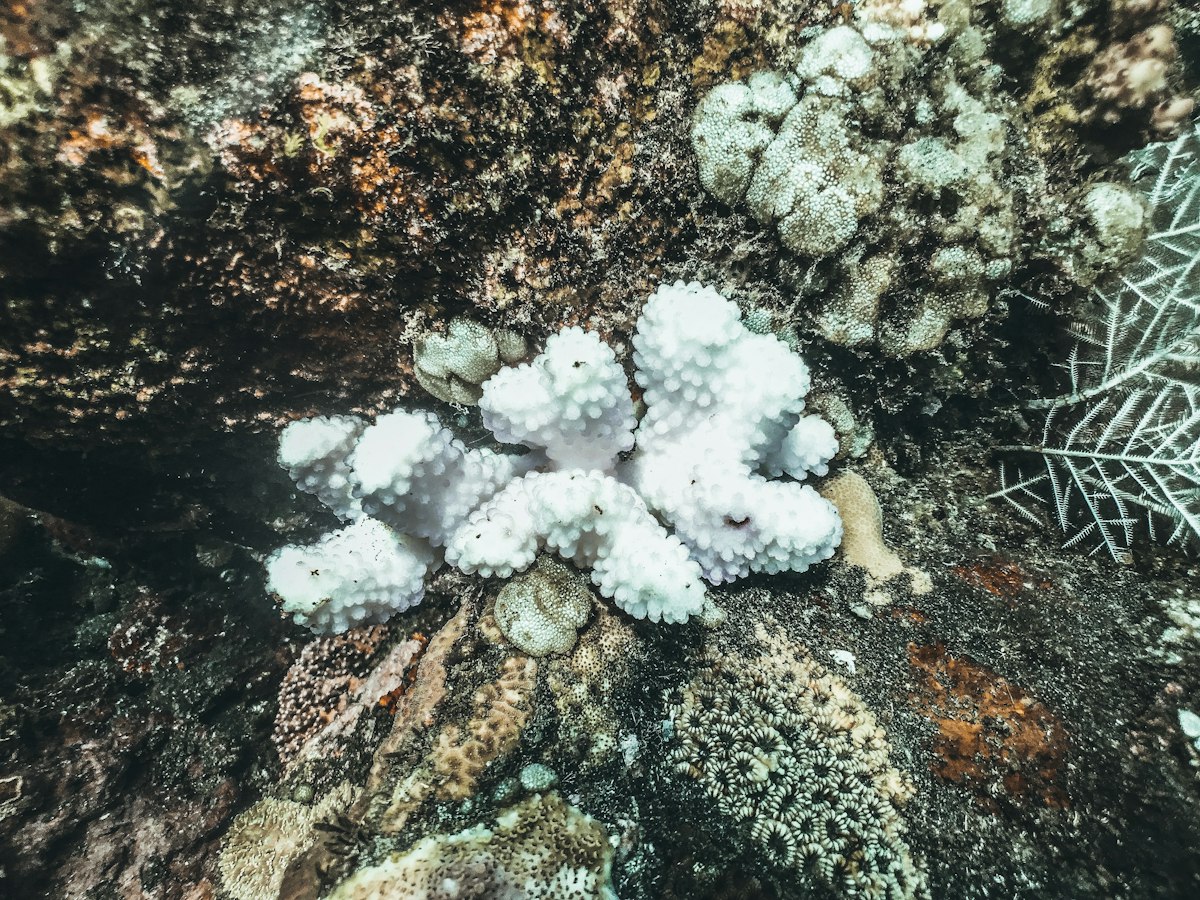
The damage takes several forms. Oxybenzone causes deformities in coral larvae, disrupting the formation of the calcified skeleton that the coral will need for the rest of its life. It is also an endocrine disruptor, interfering with hormonal signalling in ways that can affect reproduction and development. At higher concentrations, it accelerates bleaching by stressing the symbiotic relationship between the coral polyp and its zooxanthellae.
The concentrations at which these effects occur are extraordinarily low. Research published in the journal Archives of Environmental Contamination and Toxicology found that oxybenzone caused damage to coral DNA at concentrations of 62 parts per trillion. To put that in perspective, a swimming pool’s worth of water contaminated with a single drop of oxybenzone is enough to begin causing harm.
In high-traffic reef areas, Hanauma Bay in Hawaii, parts of the Mexican Riviera, and tourist hotspots in Thailand and the Philippines, measured oxybenzone concentrations have been recorded at levels several thousand times higher than the threshold for damage. Reefs in these areas were already under stress from heat, pollution, and overfishing. Sunscreen contamination has been compounding the stress.
What Counts as Reef-Safe
The term reef-safe is not legally regulated in most jurisdictions, including the United States, the European Union, and most of Southeast Asia. A manufacturer can place the words on a bottle without being required to substantiate them. This has produced a marketing landscape in which essentially every sunscreen brand claims some form of reef compatibility, and the actual ingredient lists vary widely.
The ingredients with the strongest evidence for harm to coral, in addition to oxybenzone and octinoxate, include octocrylene, homosalate, 4-methylbenzylidene camphor, and several preservatives commonly added to sunscreen formulations. The ingredients with the strongest evidence for relative safety, although safety is always relative in environmental chemistry, are non-nano zinc oxide and non-nano titanium dioxide, both of which are mineral rather than chemical UV filters.
The non-nano qualifier matters. Nanoparticle versions of zinc oxide and titanium dioxide can be ingested by marine organisms and have shown some toxic effects in laboratory studies. The non-nano formulations, with particle sizes above 100 nanometres, are too large to be absorbed by most coral cells and have a much better safety profile.
A genuinely reef-safer product, by current scientific consensus, is a mineral sunscreen using non-nano zinc oxide as the primary active ingredient, free from oxybenzone, octinoxate, and the other listed compounds.
Where the Bans Have Been
Regulatory action has been patchy but real. Hawaii became the first US state to ban the sale of sunscreens containing oxybenzone and octinoxate in 2021. Key West, Florida, has implemented a similar local ordinance. Bonaire, Aruba, Palau, the US Virgin Islands, and parts of Mexico have followed. The bans typically apply to sale rather than possession, on the assumption that visitors who already own non-compliant sunscreen will not be turned away from the country.
The European Union has not banned the chemicals but has placed concentration limits on oxybenzone in cosmetic products. Most other jurisdictions have done nothing legally binding.
The bans that exist work, partly. Studies in Hawaii after the 2021 implementation showed measurable reductions in oxybenzone concentrations at popular reef sites. The improvement was incremental rather than transformative. Visitors continued to use older stockpiles, online sales evaded the ban, and adjacent unregulated jurisdictions remained sources of contamination. But the direction was clearly correct.
What Divers Can Do
The most practical action a diver can take is to stop using chemical sunscreens on diving days. Mineral alternatives are widely available, increasingly comfortable, and significantly less harmful to coral. Read the active ingredients, not the front of the bottle.
A second option, particularly useful for divers in long dive days, is sun protection through clothing rather than chemistry. Long-sleeved rashguards, leggings under wetsuits, and wide-brimmed hats during surface intervals reduce the area of exposed skin requiring sunscreen and significantly reduce the chemical load entering the water. The dive industry’s gradual shift toward fuller coverage rashguards has been driven partly by sun protection and partly by reef safety, and the two motivations align well.
Boat operators can do more, and some are. A handful of dive operators globally have adopted policies of providing reef-safe sunscreen to guests, refusing to allow chemical sunscreens on board, or requiring that sunscreen be applied at least 30 minutes before water entry to allow it to bind to skin rather than wash off. These policies are still rare. They will become less rare as the science continues to harden and as more reef sites implement local regulations.
The Honest Caveat
Sunscreen is not the largest threat facing coral reefs. Climate change, ocean acidification, overfishing, and coastal development all dwarf it in scale. Eliminating sunscreen from every reef on the planet would not, by itself, save the world’s reef systems.
What sunscreen contamination is, however, is one of the few reef-scale threats over which an individual diver has direct, immediate, and complete control. You cannot personally fix the climate. You can change which bottle you put in your dive bag.
In a conservation landscape where most of the meaningful interventions require collective action across years or decades, a problem that can be addressed by reading an ingredient list is, by the standards of the field, refreshingly tractable. For the larger work of reef recovery, read about coral restoration programmes rebuilding what warming has damaged.