Eight million tonnes. That is how much plastic enters the ocean every year, according to the most widely cited estimate from a 2015 Science paper. To give that number texture: it is the equivalent of dumping a rubbish truck’s load of plastic into the sea every minute. It has been happening, at that rate or higher, since the 1980s.
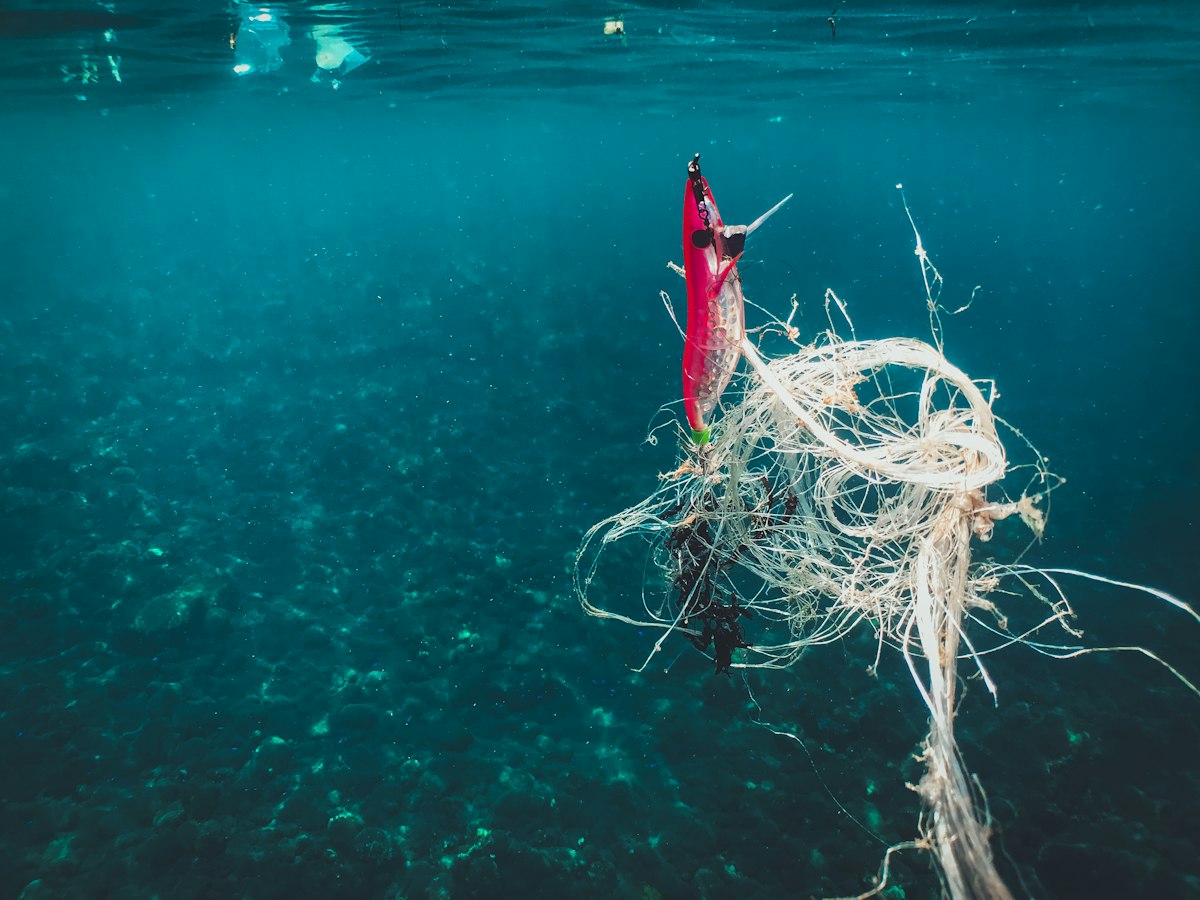
I have dived in some of the most remote waters on earth, sites that take hours of travel by banca boat to reach, with no visible human settlement anywhere, and found plastic on the reef. A shampoo bottle wedged under a table coral. A tangle of monofilament fishing line wound around a sea fan. A single-use fork, half-buried in sand, with a small goby using it as a shelter.
The ocean is not failing to hide this. It is failing to escape it.
Where It Comes From
The distribution of ocean plastic is counterintuitive. A 2017 study in Nature Communications found that just ten rivers, eight in Asia and two in Africa, carry between 88 and 95% of global riverine plastic to the sea. The Yangtze alone contributes an estimated 1.5 million tonnes per year. The Ganges, the Xi, the Brantas, the Ciliwung: rivers running through densely populated, rapidly industrialising countries where waste management infrastructure has not kept pace with plastic production.
This matters for how we think about solutions. Beach clean-ups in wealthy countries, while genuinely valuable for local ecosystems and community awareness, do not address the source. The plastic accumulating on a beach in Cornwall or California mostly arrived from elsewhere. Intercepting it at the rivers where it enters the system, before it reaches the ocean, is a fundamentally different kind of problem, and a much more tractable one.
The Great Pacific Garbage Patch
The Great Pacific Garbage Patch is the largest of five ocean garbage zones, located between Hawaii and California in the North Pacific subtropical gyre. Gyres are rotating ocean current systems that concentrate floating debris at their centres. The GPGP covers an estimated 1.6 million square kilometres, three times the area of France, and contains an estimated 80,000 tonnes of plastic.
The Ocean Cleanup, a Dutch non-profit founded by Boyan Slat in 2013, has been working on systems to extract this material. Their System 002, a U-shaped barrier towed by two vessels, successfully collected plastic during trials in 2021 and 2022. Their revised System 03, launched in 2023, is approximately three times larger and is now operating in the GPGP.
The organisation estimates that, to clean 50% of the GPGP in five years, they need to deploy around ten such systems. The plastic they collect is being processed into products, sunglasses, watch straps, phone cases, under their brand, which funds further operations.
Critics have raised legitimate questions: the energy cost of ocean clean-up versus river interception, bycatch risk from the barrier systems, and whether removing existing plastic addresses the flow of new plastic entering the system. The Ocean Cleanup has updated their systems in response to ecological concerns and frames their ocean work as complementary to, not instead of, river interception.
Intercepting at the River
Their river-focused system, the Interceptor, is a solar-powered barrier that catches floating plastic before it reaches the sea. It uses the river’s own current to direct plastic into collection barges, which are emptied regularly. Interceptors are now operating in Malaysia, Indonesia, Vietnam, the Dominican Republic, and Jamaica, with more in deployment.
Other organisations are working on similar approaches. Plastic Fischer uses floating trash booms in Indian rivers. The Ikea Foundation funded a barrier system in the Ciliwung River in Jakarta. Trash Free Seas, run by the Ocean Conservancy, focuses on policy change in high-leakage countries.
The Circular Economy argument, reducing plastic production and improving waste management upstream, so less reaches rivers in the first place, is compelling and supported by most environmental economists. But it operates on decade-long timescales. The plastic already in the system is there for centuries.
What the Science Says Helps
A 2021 analysis in Science of the Total Environment modelled different intervention strategies and found that the highest-impact approaches are, in order: reducing plastic production, improving waste management in high-leakage countries, and river interception. Beach and ocean clean-up come lower on the list but provide secondary benefits: ecosystem health, community engagement, data collection.
For individual divers, citizen science programmes like Dive Against Debris, run by PADI, provide a structured way to collect data on underwater debris. For the specific problem of abandoned fishing gear, which is both ocean plastic and an active trap for marine life, read the guide to ghost gear. Divers record the type, quantity, and location of plastic found during normal dives. This data is submitted to a global database that informs policy. It is not glamorous work. It is sorting through a bag of rubbish on a boat. But the dataset it is building is real.
The most useful thing a diver can do is combine clean-up with documentation: photograph unusual findings before removing them, log location data, and submit it. A single plastic bag found on a reef tells you less than a pattern of plastic bags found across multiple sites over multiple years.
The Honest Picture
Ocean plastic is not a problem being solved. It is a problem being managed, partially and at great effort, while the source continues to flow. Global plastic production hit 460 million tonnes in 2019 and is projected to triple by 2060 if current trends continue.
The projects working on this, The Ocean Cleanup, Plastic Fischer, the Interceptor network, dozens of smaller regional initiatives, are doing genuinely important work. They are also, in the bluntest assessment, bailing a boat that still has a hole in it.
The hole is plastic production. The bail is everything else. Both matter. Neither is sufficient without the other. The reefs that plastic reaches are simultaneously facing coral bleaching and the removal of the marine protected areas that give them any chance of recovery.