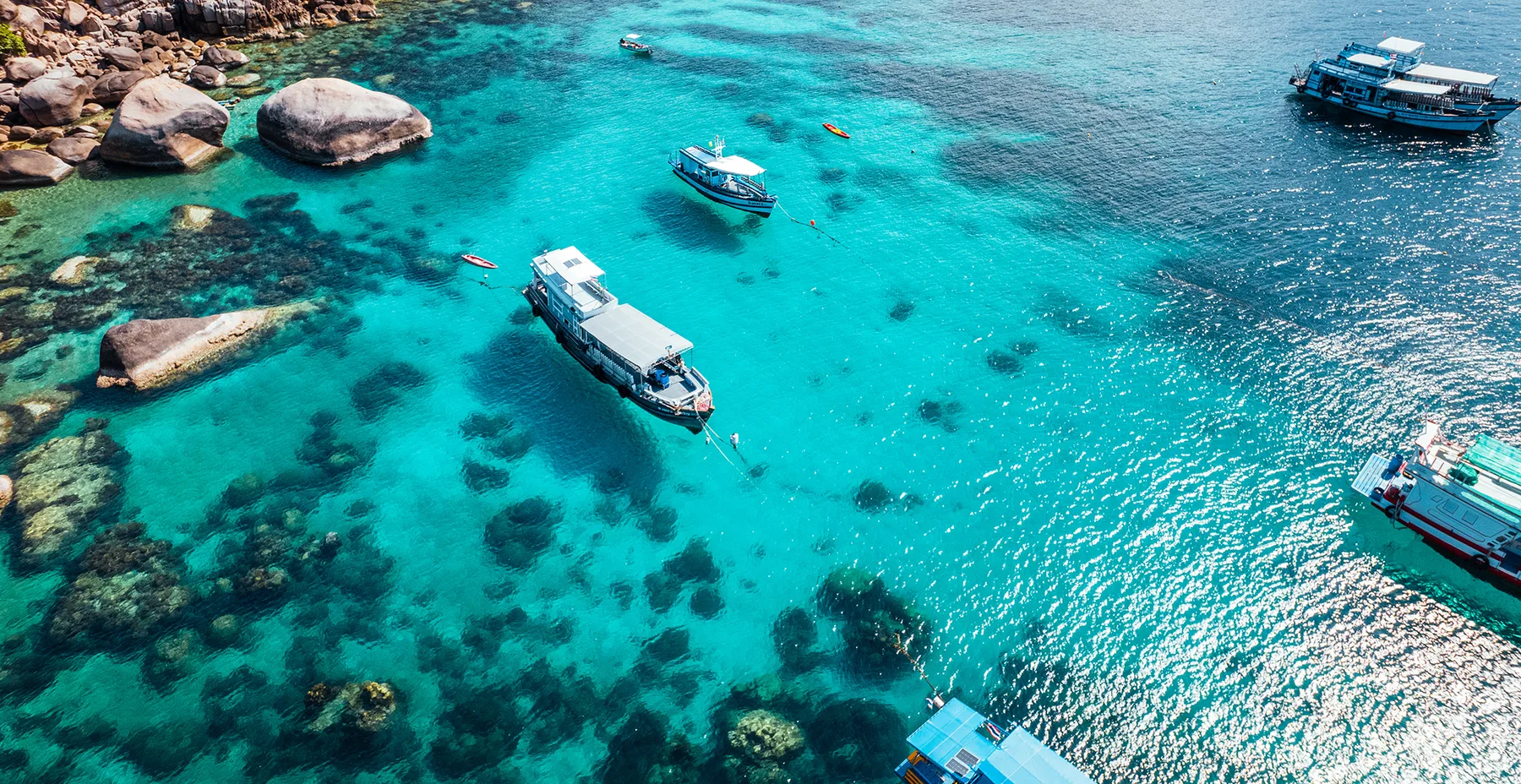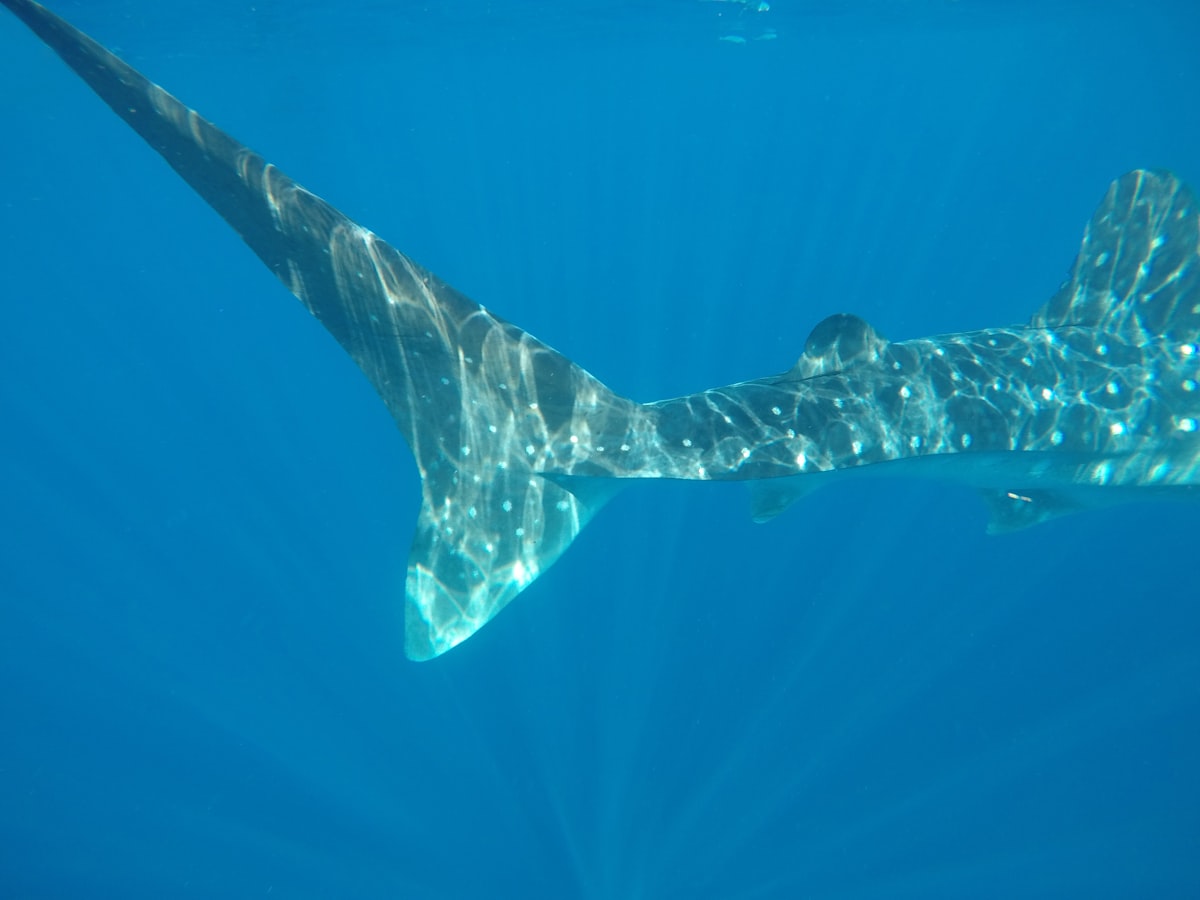
The single most-photographed beach in Asia closed itself for four years, and one of the things that came back is sharks. On 3 July 2025, marine scientists from the Marine National Park Research Centre Region 3 in Thailand used drone surveys and Baited Remote Underwater Video cameras to count blacktip reef sharks in Maya Bay, on the island of Phi Phi Leh. They counted 158 in a single observation. It is the highest figure on record for the site. The Department of National Parks has now formally classified the bay as a blacktip reef shark nursery ground.
If you have dived Thailand in the last decade you will already understand why this matters. The adult blacktip reef sharks that used to patrol the country’s reef tops in working numbers are mostly gone from the islands that get the most tourist traffic. At Ao Leuk and the southern bays of Koh Tao, the juveniles still come up into shallow water that is calm enough to snorkel through, but the adults that used to grow out of those nurseries have, for years now, largely failed to appear. The diving community has noticed. The data has been catching up. Maya Bay is the first big test case in Thai waters where the trend has been measurably reversed, and the conditions for that reversal are not mysterious. They are operational.
The Closure
Before 2018, Maya Bay was receiving an estimated 5,000 to 6,000 people per day at peak season. Boats moored in the bay itself. Snorkellers stood on the coral. Speedboats turned hard against the beach. Hard coral cover dropped to around 8%. There were almost no sharks left. The bay was on track for the kind of ecological flatline that closes the door on recovery even after the tourists leave.
In June 2018, the Thai Department of National Parks, Wildlife and Plant Conservation closed Maya Bay to all visitors. The closure was originally announced as a short measure. It was extended to four years once the restoration team understood how much of the bay had to be put back by hand.
The Restoration
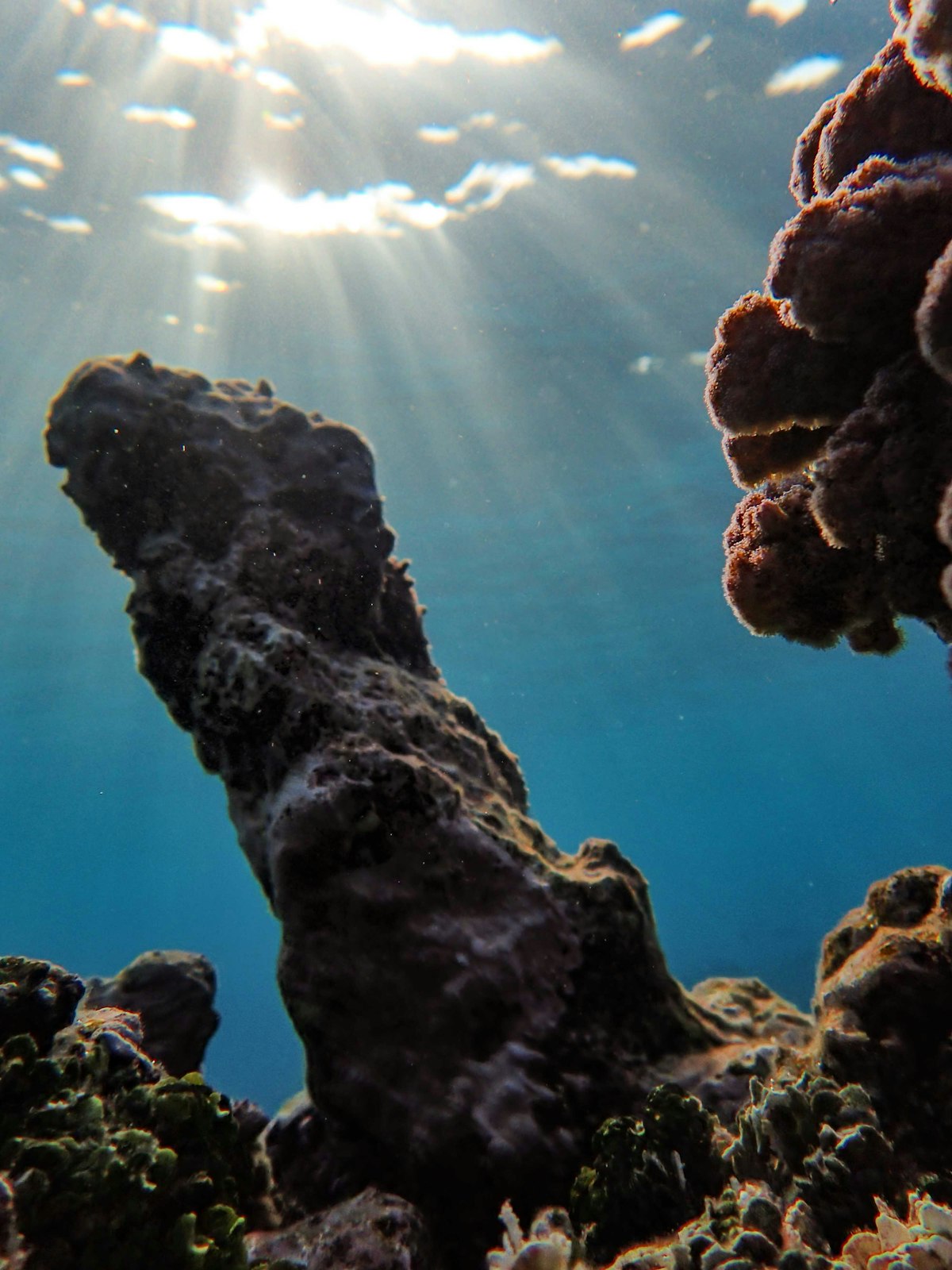
A team led by marine scientist Thon Thamrongnawasawat, in partnership with the Phuket Marine Biological Centre and the Department of National Parks, set up a coral nursery off the nearby island of Koh Yung and cultivated more than 30,000 hard coral fragments. They transplanted them into the bay over four years of closure. Roughly half of the transplants survived, and the surviving fragments have since spread on their own. Hard coral cover went from the 8% pre-closure baseline to between 20% and 30% by 2023. By the standards of degraded tropical reef recovery this is a remarkable rate.
The shark component of the recovery was run in parallel. The Save Our Sharks programme, in partnership with the Phuket Marine Biological Centre, raised juvenile blacktip reef sharks ex-situ, nurtured 29 shark egg cases through to hatching, and released 30 individuals into the bay’s protected shallows. The hope was that the bay’s restored cover, combined with the absence of human pressure, would convince the species to use the area as a nursery again. The 158-shark July 2025 count is the most explicit evidence that hope has been answered.
The Boring Architecture That Made It Work
The story of Maya Bay’s biological recovery is also the story of the institutional restrictions that have been kept in place since the bay reopened in January 2022. The Department of National Parks caps daily visitors at approximately 4,125 people. Swimming inside the bay is no longer permitted. Boats do not anchor in the bay itself. Access runs through fixed walkways and viewing zones. These are not glamorous restrictions. They will not appear on the Instagram tags that made Maya Bay famous. But they are the load-bearing structure underneath every coral fragment that has survived since the bay reopened, and underneath every shark that has chosen to stay.
The political cost of these rules is real. Maya Bay is one of the highest-revenue tourism sites in Thailand. The decision to cap it permanently rather than reopen at scale was the single largest test of whether the Thai parks system would hold the line on its own biggest brand. The line has held. So far.
The Pattern, Again
The recovery list is starting to repeat. Cabo Pulmo on Mexico’s Gulf of California climbed 463% in fish biomass over a decade after the local community closed it to fishing. Scotland’s South Arran Marine Protected Area, which I wrote about earlier this month, has just produced a peer-reviewed study showing triple the seabed life inside the boundary ten years after a bottom trawling ban. Western Manus in the Bismarck Sea was declared by Papua New Guinea as a 214,000 square kilometre no-take reserve. Maya Bay is the small, glittering, headline-grabbing example of the same principle at island-bay scale in the tropics. Each of these is a different ocean, a different cultural setting, a different headline species. The recovery pattern is the same. Where pressure is removed for long enough, life comes back.
What changes between them is the architecture of the protection. Community-led in Cabo Pulmo. Court-ordered in the Dutch Dogger Bank case. National decree at Western Manus. Tourism cap and full closure in Maya Bay. Whatever institution can hold the line locally is the institution that does the work.
What It Means for Koh Tao and the Andaman
The implication for the rest of the Thai coast, and for any heavily-dived Indo-Pacific destination operating under a similar tourism load, is the bit of this story that should not be lost in the headlines. The absence of adult blacktip reef sharks from working numbers in the bays around Koh Tao, around northern Phuket, and in the bays of the lower Andaman is not a permanent ecological loss. It is a management failure of a specific kind, applied for long enough that the population structure has shifted. The Maya Bay data is the first time anyone in Thailand has been able to put a concrete number on what reversal looks like, and how fast it can happen. Less than four years of full closure. Less than four years of capped reopening. 158 sharks counted in a single survey.
The choice for the operators, the destinations and the national park system is not between protecting the reefs and running a tourism economy. The choice is between paper protection and the kind of restrictions that boats and snorkellers feel. Maya Bay made the harder choice. The sharks came back.