I have a clear memory of the first time I understood, viscerally, what a marine protected area feels like from underwater.
Some of the worst dives of my life were in Bau Bau, Indonesia. The reefs there are still bombed for fish on a regular basis, and the current those days would carry more garbage than anything alive: bags, bottles, wrappers, drifting past in place of fish. What coral remained was rubble, shattered grey fragments from blast after blast, and the handful of fish still holding on were too small and too scattered to make it feel like a reef at all. I have been diving for years, and I have never felt as hopeless underwater as I did there.
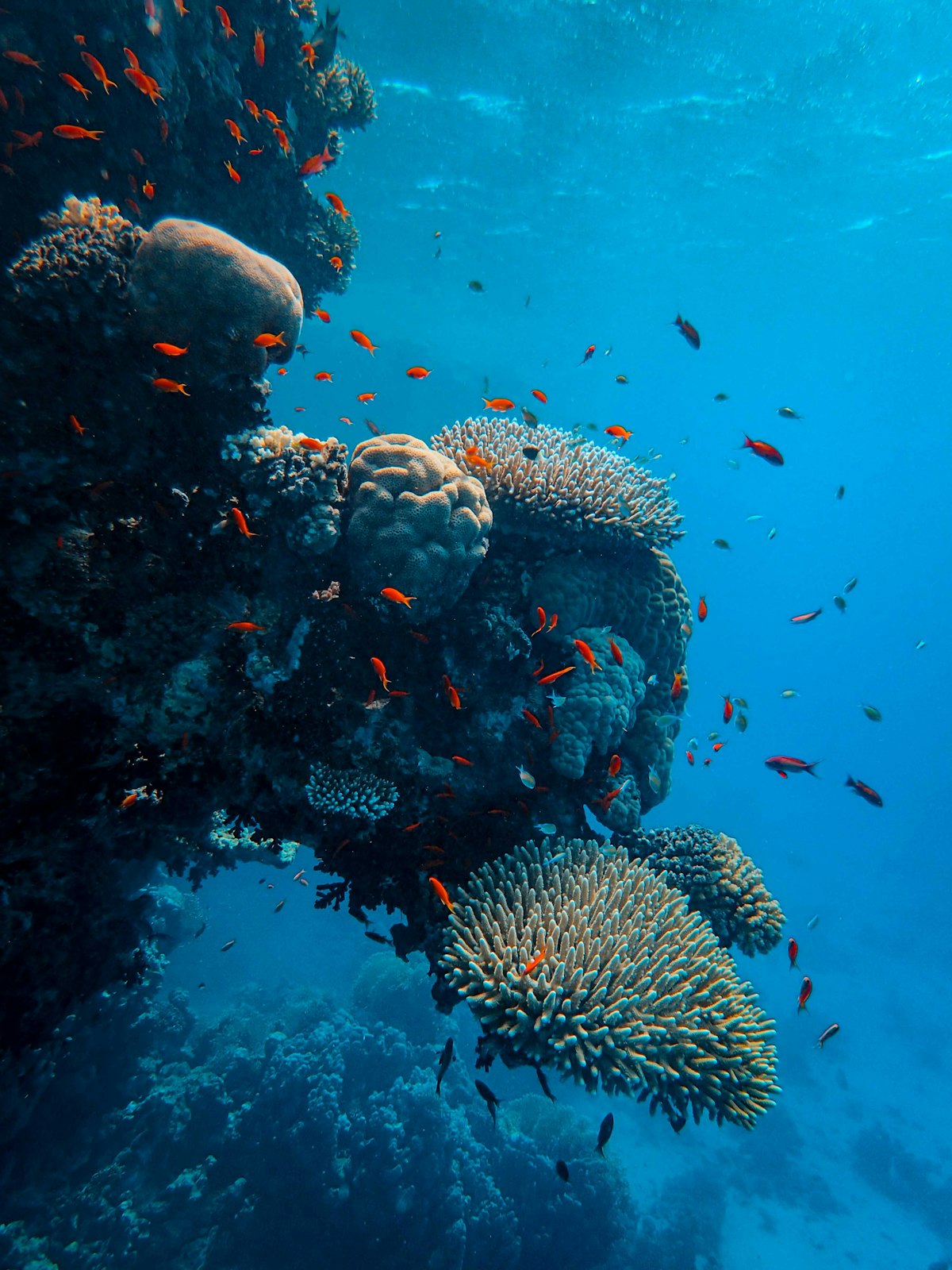
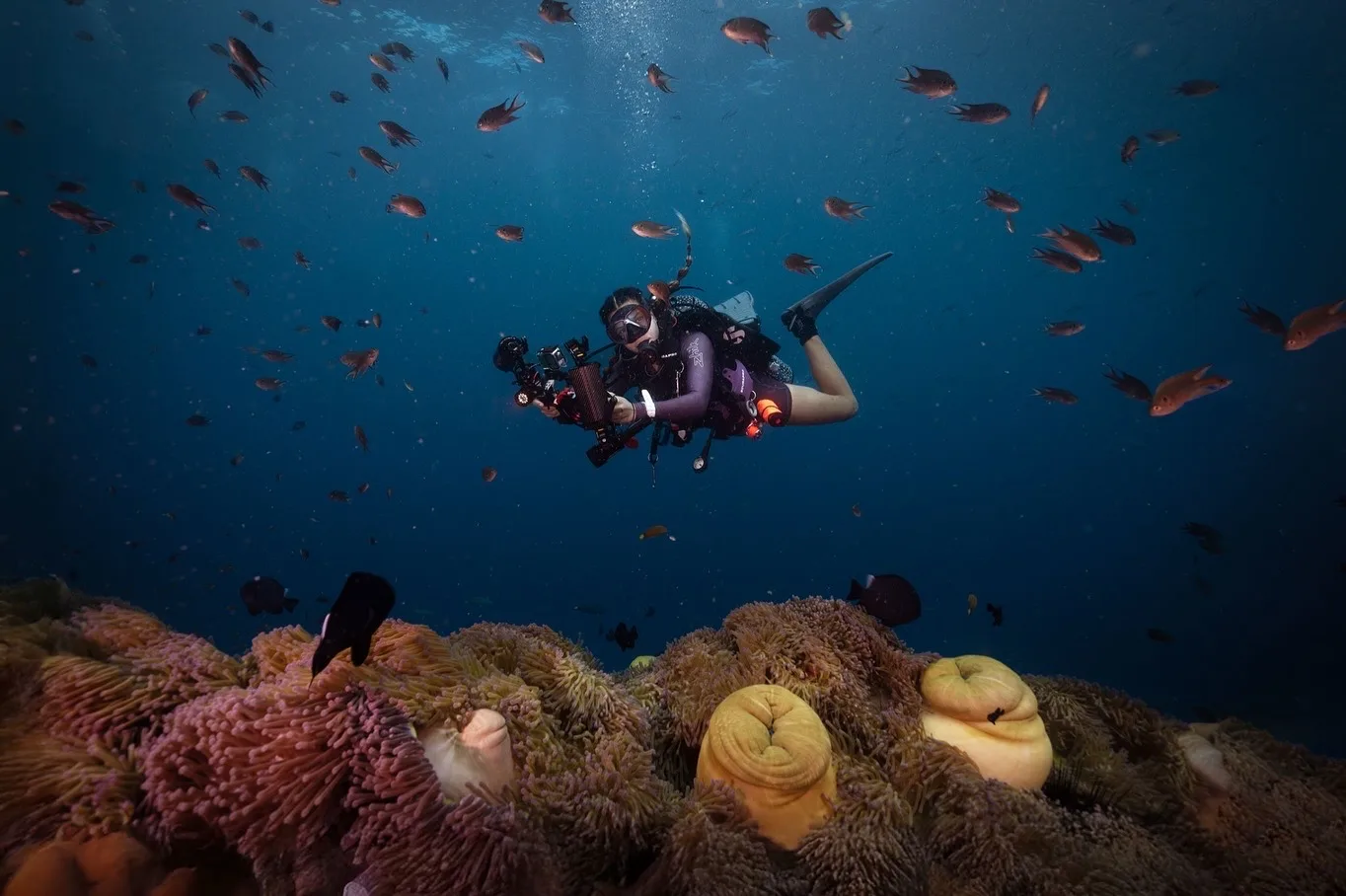
Puerto Galera, on the northern tip of Mindoro in the Philippines, is the opposite of that memory, honestly the healthiest reef system I have ever seen anywhere. It sits inside the Verde Island Passage, and it shows: walls covered edge to edge in hard coral, macro life packed into every crevice, big animals passing through on the current-swept sites further out. Nothing about it feels managed for show. It feels like a reef that has simply been left alone long enough to do what reefs do when nobody is bombing or stripping it.
Same tropical latitude, similar coral reef fish families, the same stretch of the Coral Triangle. A world apart in what happens when a reef is protected, and what happens when it is not.
What the Evidence Shows
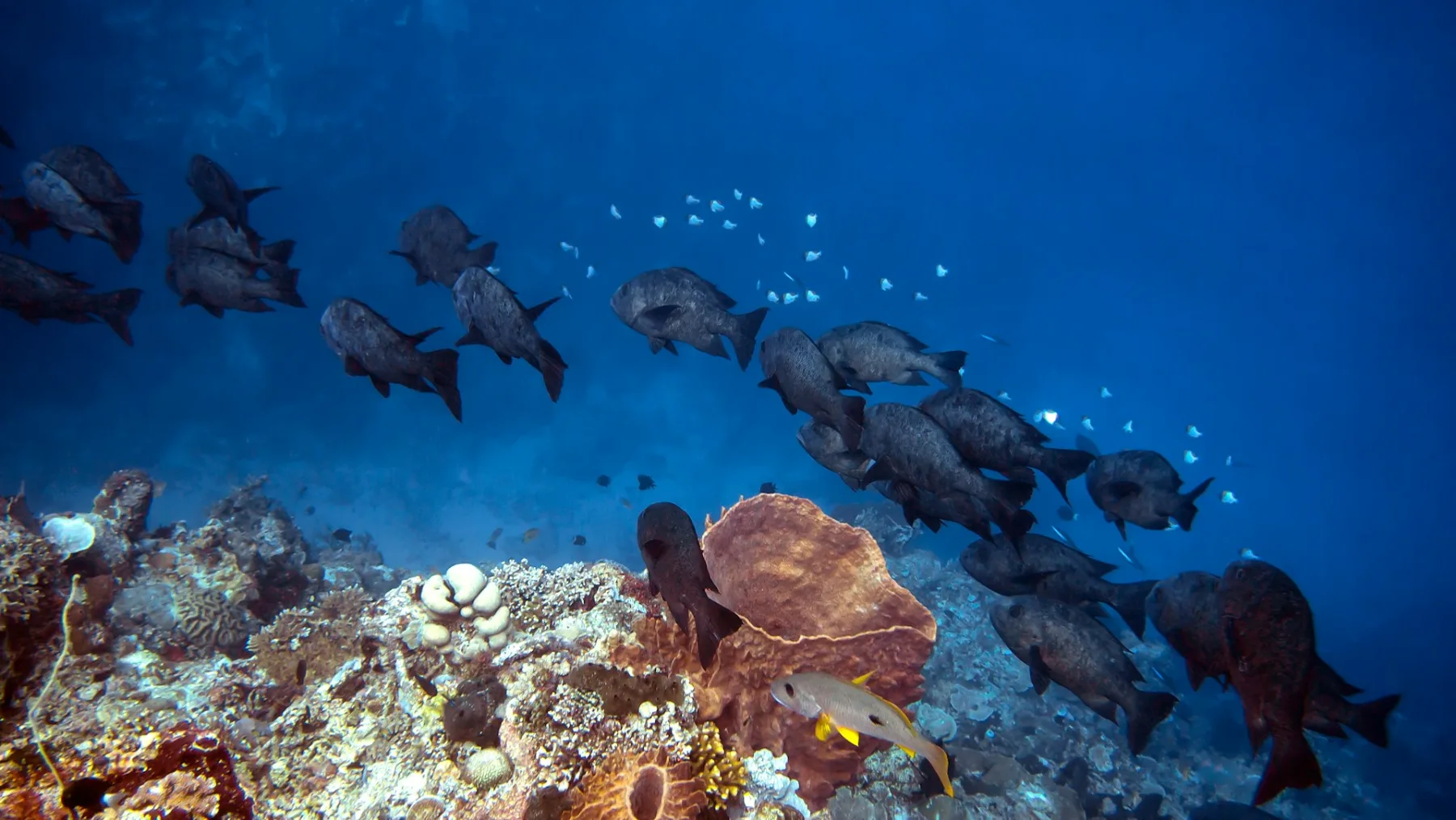
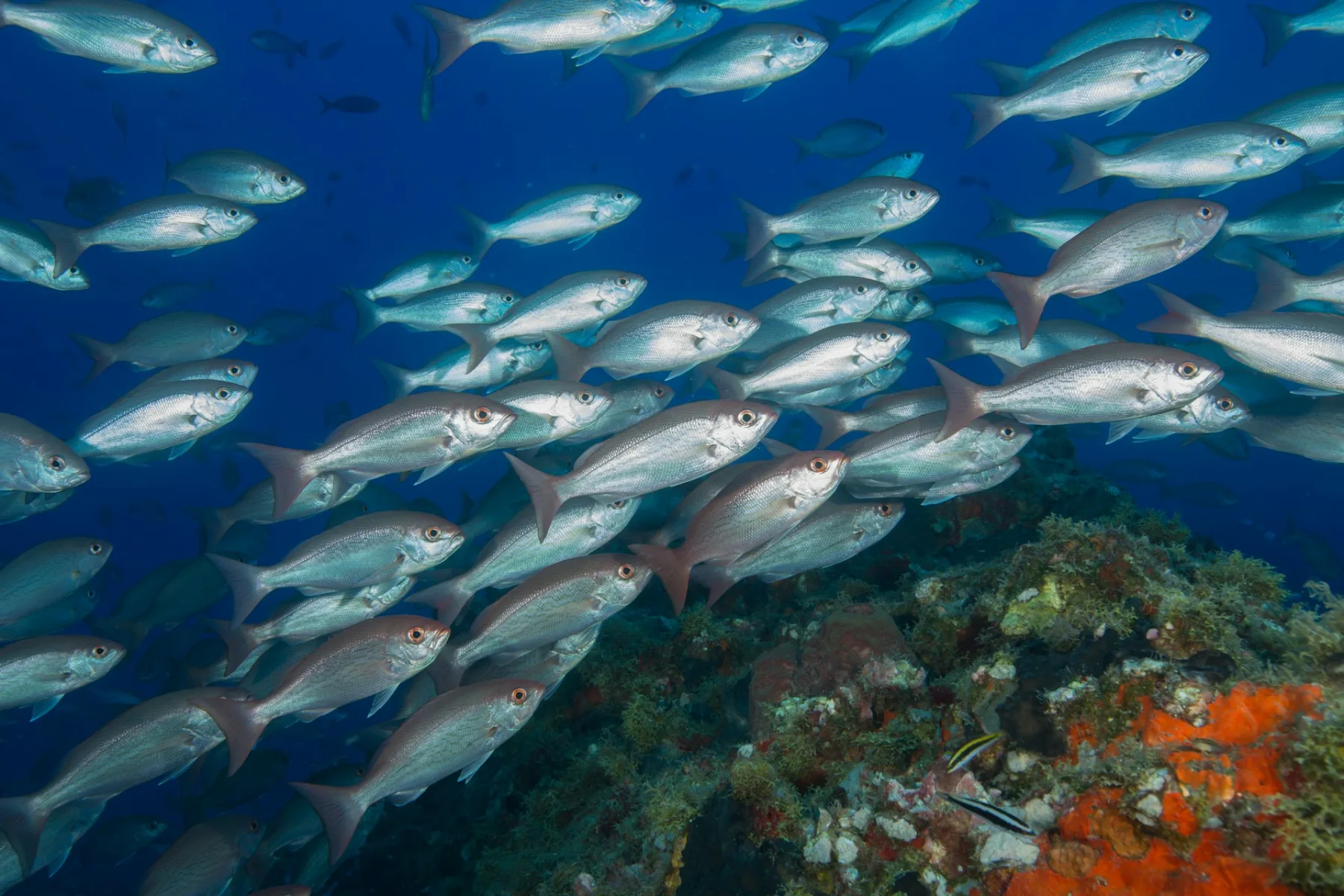
The science on marine protected areas is now extensive and largely consistent. A 2021 meta-analysis, drawing on data from more than 1,800 MPAs worldwide, found that fully protected areas contain, on average, 600% more biomass than unprotected areas nearby. Fish are larger, more numerous, and represent a more complete range of species, including apex predators, which are the first to disappear when fishing pressure increases.
Spillover is real. Fish and invertebrates move across MPA boundaries into adjacent fishing grounds, improving catches for fishers who operate near well-managed reserves. A study of community-managed MPAs in the Philippines found that fishers within 500 metres of a protected area caught significantly more per trip than those fishing further away. The MPA, far from taking something away, was subsidising the fishery around it.
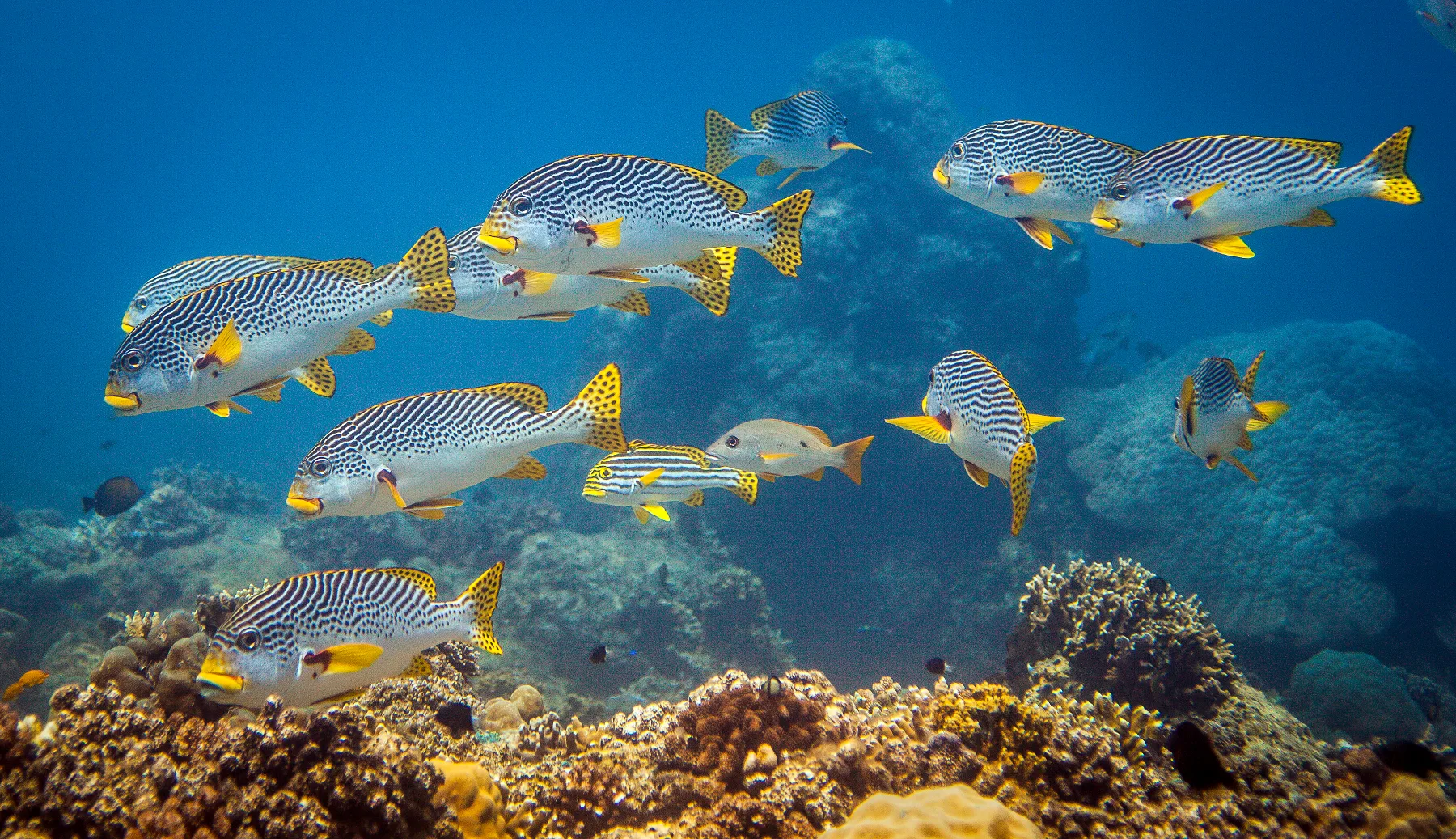
Beyond fisheries, fully protected areas show higher coral cover, greater structural complexity, and more resilience to bleaching events. Herbivorous fish, parrotfish, surgeonfish, graze algae from coral, preventing the algal overgrowth that follows bleaching. When these fish are abundant, reefs recover faster. When they are absent, algae win.
The Gap Between Paper Parks and Real Protection
The global target set at COP15 in Montreal in 2022 is to protect 30% of the world’s oceans by 2030. This is sometimes called 30x30. As of 2024, approximately 8% of the ocean has some form of protected status. Of that, less than 3% is highly or fully protected.
The distinction matters enormously. A marine protected area that allows fishing, anchoring, and industrial development is what conservationists call a paper park: it exists on a map and in a legal instrument but provides little biological benefit. The MPA designation can even be harmful if it creates a false impression of protection, redirecting conservation attention while damage continues.
Effective MPAs share a small number of characteristics, identified repeatedly in the literature: they are no-take for fishing; they are old enough to have accumulated biomass (at least a decade of protection); they are well-enforced; they are isolated enough that fishing pressure on their borders does not undermine the interior; and they have community buy-in, particularly from fishers who understand and accept the boundaries.
That last point is not rhetorical. The most effective MPAs in the world are not necessarily government-run. Many of the best-performing reserves in the Philippines, Indonesia, and Fiji are managed by local fishing communities with a direct economic stake in the reef’s health. When the fishers are the wardens, enforcement is consistent and local violations are rare.
Shark Sanctuaries
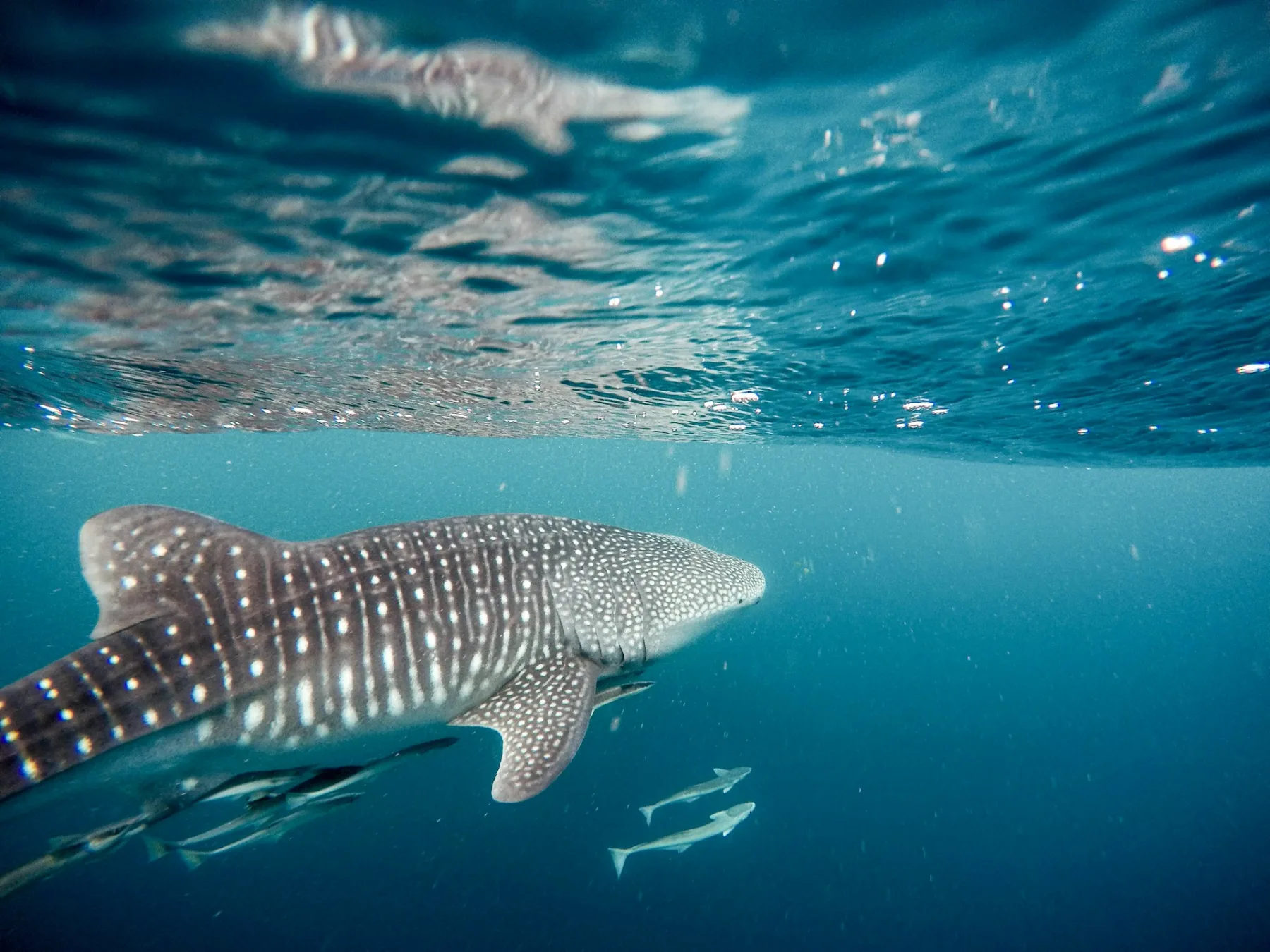
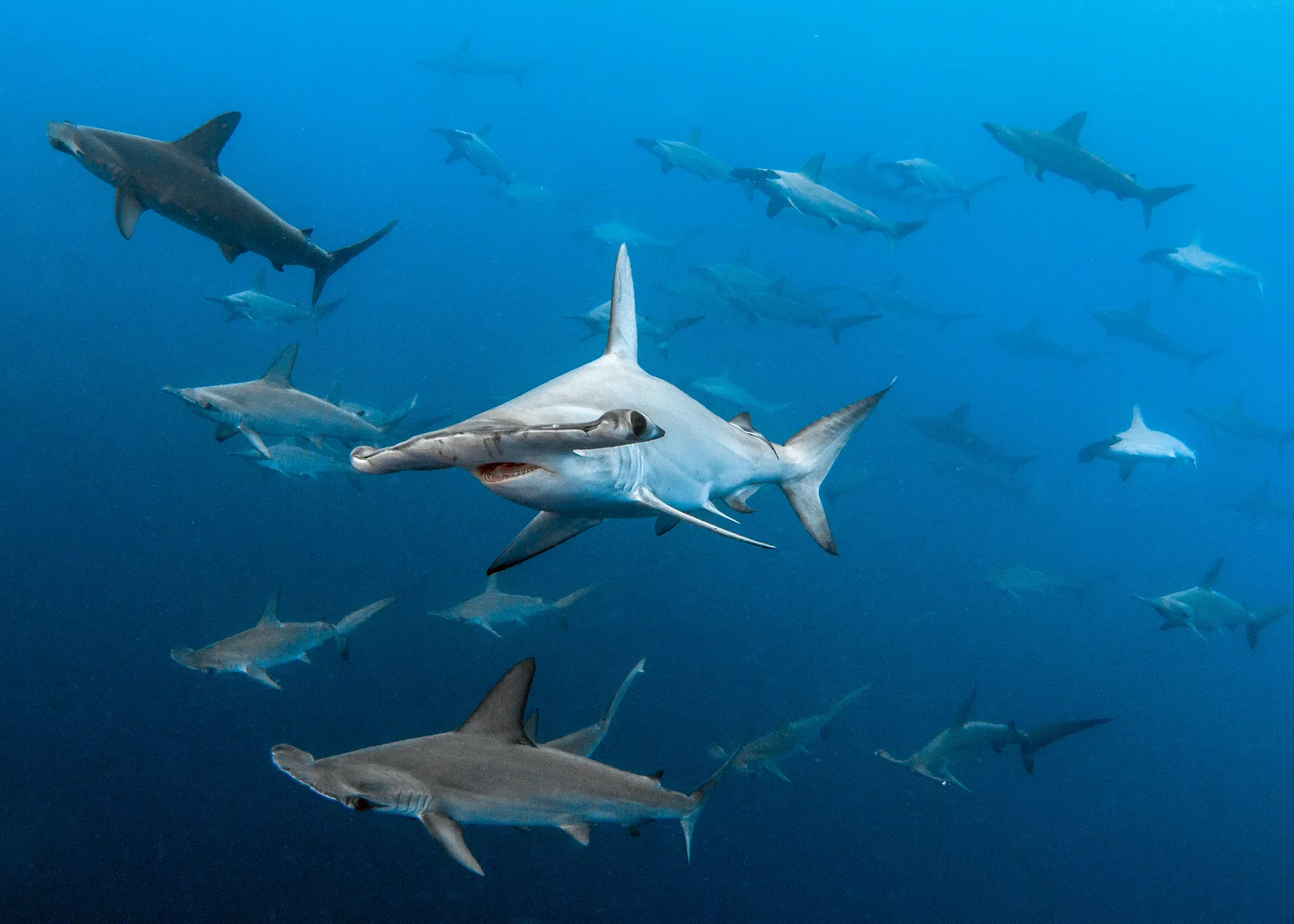
Sharks are among the most valuable indicator species in a marine ecosystem and among the most threatened. An estimated 100 million sharks are killed by fishing each year, for fins, for meat, as bycatch. Oceanic shark and ray populations globally have declined by over 70% since 1970, with some species down by 90% or more.
Shark sanctuaries, national waters where shark fishing is prohibited, now cover roughly 13 million square kilometres across 17 countries, including the Maldives, Palau, the Bahamas, and the Marshall Islands. Within these areas, and within fully protected MPAs more broadly, shark populations show clear signs of recovery.
Diving in a shark sanctuary feels different. Not just because there are sharks, though there are, but because of what their presence signals. Sharks structure the ecosystem beneath them. When they hunt, they concentrate prey species in ways that create feeding opportunities for other predators. Their absence creates a cascade of effects down the food web, most of which are bad for the reef and bad for fisheries.
Palau is often cited as the clearest example. Its no-take marine reserve, established in 2015, covers 80% of its Exclusive Economic Zone, about 500,000 square kilometres. Early monitoring showed rapid recovery of shark populations and improved catch rates in the remaining fishing zones. The economic case was also straightforward: a single reef shark, alive in the water, generates an estimated $1.9 million in tourism revenue over its lifetime. Dead, it is worth around $108 for its fins. For a closer look at what reef recovery actually looks like elsewhere, Cabo Pulmo’s 463% biomass recovery remains the strongest documented case for no-take reserves anywhere in the world.
But declaring a sanctuary and enforcing one are two different things, and Malpelo shows what it actually costs to keep the second promise. Roughly 500 kilometres off Colombia’s Pacific coast, Malpelo is one of the largest no-take marine reserves in the Americas, 857,000 hectares of Pacific where all commercial fishing is banned outright. On paper, that should be more than enough. In practice, industrial longline and gillnet vessels cross into the sanctuary regularly, chasing the same tuna and hammerhead sharks that make Malpelo one of the most shark-dense dive sites on Earth. Hammerheads are among the most targeted species in the global fin trade, and the same remoteness that keeps Malpelo pristine is exactly what makes it hard to police. The sanctuary avoids becoming a paper park only because a small crew lives permanently on a boat anchored off the island year round, watching for vessels that should not be there. Read about the people who guard Malpelo year round, because without them, the boundary on the map would mean nothing.
The 30x30 Question
Reaching 30x30 with real, enforced protection will take political will and money that do not currently exist, not at anything close to the necessary scale. Most MPAs are underfunded. The technology to enforce them already exists: satellite monitoring, drone patrol, automatic vessel identification. It works. It is also expensive, and in the countries where protection is needed most, the budget for marine enforcement is often close to zero. Some of that gap is starting to close through debt-for-nature swaps, deals where a country’s sovereign debt is refinanced on the condition that the savings fund conservation. Ecuador’s 2023 swap alone freed up $450 million for Galápagos marine protection over 18 years, and Belize, Gabon, and the Bahamas have since done versions of the same deal. It is not a full fix, but it is real money moving into places that had almost none. Ghana declared its first MPA in 2026, built from day one around 21 coastal fishing communities rather than added on afterward. That is what a serious first attempt looks like, and it is what it takes to have any real chance of working.
The High Seas Treaty, adopted by the United Nations in 2023 after twenty years of negotiation, entered into force in January 2026, making it possible to create MPAs in international waters for the first time. That matters enormously: roughly 64% of the ocean lies beyond any nation’s jurisdiction, and until now it has been almost entirely ungoverned. The first Conference of the Parties under the treaty could take place as soon as late 2026, which is where the first international-waters MPA proposals will actually get considered.
That window is not opening quietly. At the same time the treaty is coming into force, the fight over deep-sea mining is accelerating in exactly the same waters. The International Seabed Authority failed to agree on a Mining Code at its March 2026 session, and more than 40 countries are now calling for a moratorium until the environmental risks are properly understood. Meanwhile the United States, which is not an ISA member, has started issuing its own deep-sea mining licenses through NOAA, with a commercial recovery application already underway in the Clarion-Clipperton Zone. The same stretch of ocean the High Seas Treaty was just built to protect is also the stretch every mining company wants first. Which of those two processes moves faster will decide what much of the deep Pacific looks like a decade from now.
The ocean’s capacity for recovery, given space and time, is not in question. The question is whether we will provide the space and the time. Every MPA established, funded, and enforced is a direct answer. It does not solve climate change. It does not stop plastic. But it keeps the ecosystem intact long enough for those other battles to be won or lost.
That is worth something. In some parts of the ocean, right now, it is worth everything.
For the consolidated picture of which MPAs are working in 2026, Cabo Pulmo, the Egyptian Red Sea, Western Manus, and the Verde Island Passage, all in one place, see the 2026 World Reef Day piece.
What You Can Actually Do
🌊 Dive with operators who fund local enforcement. Entrance fees, ranger salaries, and patrol boats are usually paid for by tourism revenue, not government budgets, so where you book matters.
🌊 Support a debt-for-nature or blue bond initiative directly, several, including Ecuador’s Galápagos Life Fund, accept public donations on top of the sovereign financing.
🌊 Choose seafood from fisheries near well-enforced MPAs. Spillover fisheries are some of the best-managed in the world, and buying from them rewards the model.
🌊 Pay attention to the ISA’s Mining Code sessions. Public comment periods and country positions are tracked publicly, and this is a live, undecided fight over roughly two-thirds of the ocean.
🌊 Tell people what a healthy reef actually looks like. Most people have never seen one. That absence of reference point is part of why paper parks get away with looking sufficient.