This week, the Papua New Guinea government walked into the inaugural Melanesian Ocean Summit in Port Moresby and announced one of the largest single acts of ocean protection in the country’s history. The Western Manus Marine Protected Area, when formally designated, will cover approximately 214,000 square kilometres of the Bismarck Sea. That is roughly the size of the United Kingdom, and roughly 9 percent of PNG’s entire exclusive economic zone. It will be the largest no-take marine protected area Melanesia has ever had.
The announcement is bigger than the number. It is also the largest single piece of a wider regional initiative, the Melanesian Ocean Corridor of Reserves, that ties Papua New Guinea, Fiji and Vanuatu into a coordinated network of protected waters. For a part of the Pacific that has long lived under the threat of distant-water fishing fleets, foreign extractive interests and the steady drift of fisheries collapse elsewhere, this is a real change in trajectory.
Why the Western Manus Area Matters
The seabed north of Manus Island is not flat ocean. It is a sequence of underwater mountains, ridges and canyons that channel currents and pull deep water up to the surface. That topography creates the conditions for an unusual concentration of life: nutrient upwellings feed plankton, plankton feeds schooling fish, schooling fish feed sharks and cetaceans, and the bathymetry itself works as a migration corridor that links the shallow reefs of the coast to the deep open ocean.
Conservation scientists have started calling it a marine highway, and the language is accurate. Sharks, dolphins, whales and rays move along the structure on predictable seasonal patterns. Take the structure out of the ecological equation, or let it be fished out, and a corridor that connects half of Melanesia’s pelagic life disappears.
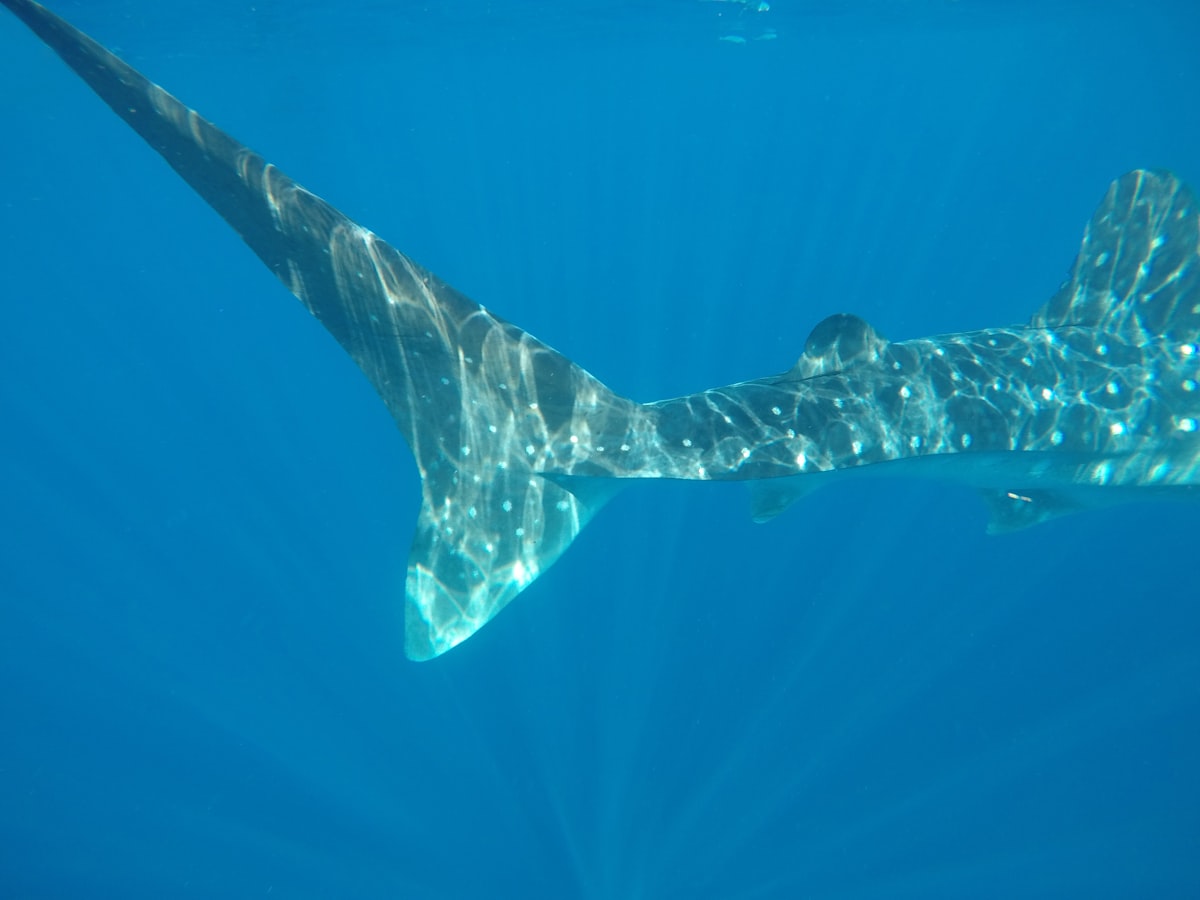
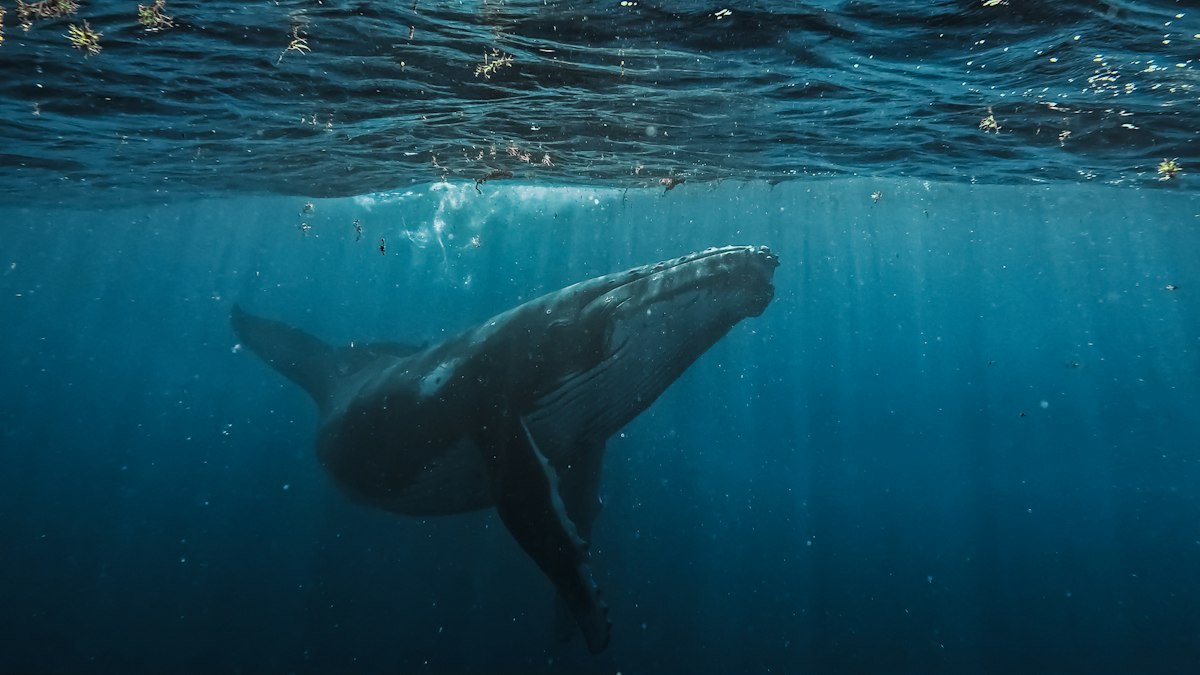
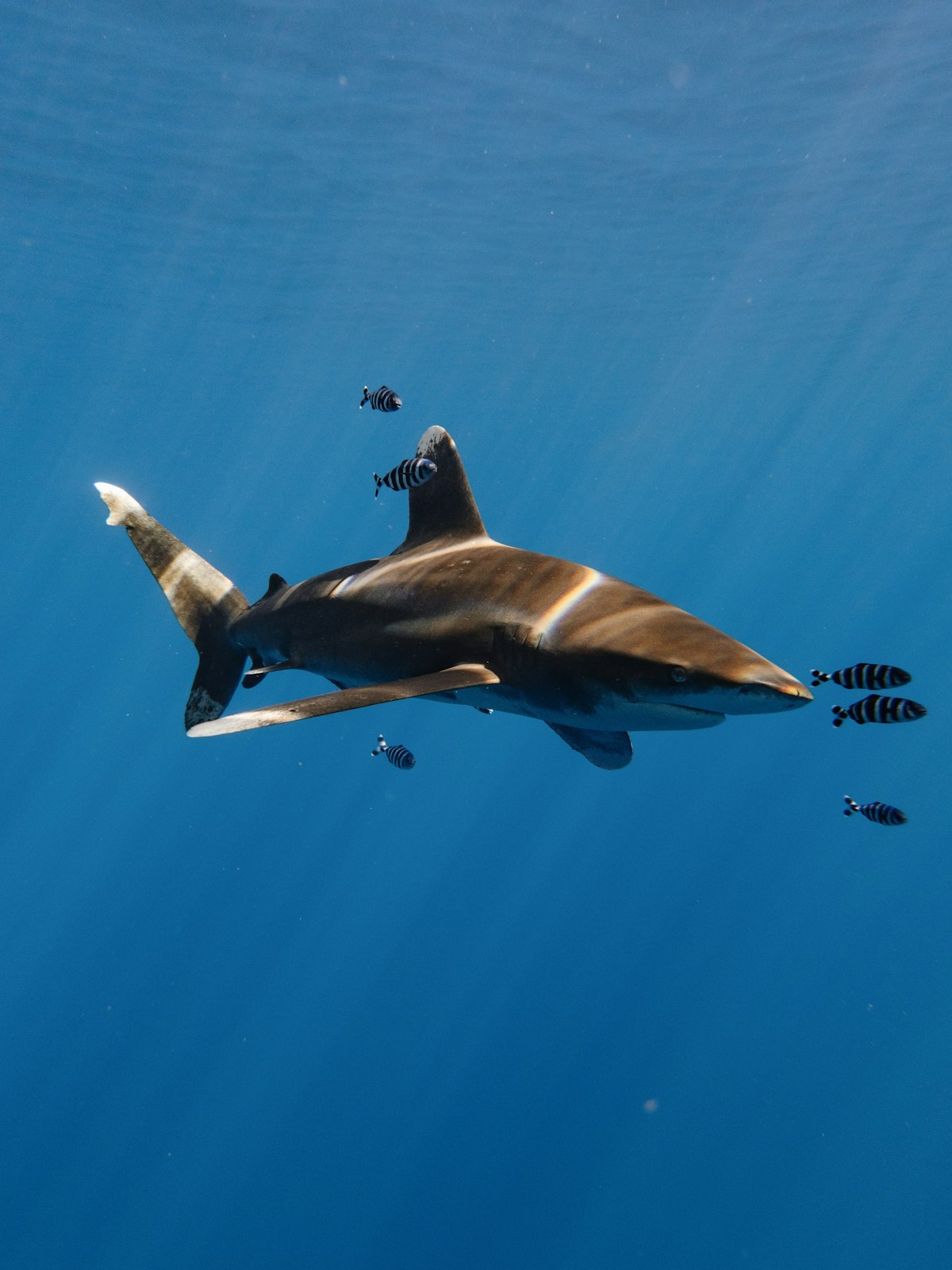
The species list reads like a global pelagic top tier. Scalloped hammerheads, grey reef sharks, silky sharks and blacktip reef sharks. Spinner dolphins, bottlenose dolphins, short-finned pilot whales. Cuvier’s beaked whales, the deepest-diving cetaceans known to science. Orcas that return on a seasonal cycle. Manta and devil rays at the reef edges. Seabird colonies at the surface: black noddies, white terns, red-footed boobies, plus migrating shorebirds. And below the recreational diving limit, in waters most people never see, the hairy nautilus, gulper sharks, and the colossal yokozuna slickhead, a deep-sea fish that was only described to science in recent years.
The Strongest Form of Protection
The Western Manus MPA is being designated as no-take. That distinction matters. A no-take protected area bans all extraction within its boundaries: commercial fishing, longlining, purse seining, recreational angling, the lot. Peer-reviewed marine ecology research over the last two decades has consistently shown that no-take is the form of marine protection that produces results. Fish biomass climbs. Predator populations recover. Reef structure rebuilds. Partial protection, where some fishing is still permitted, performs significantly worse on every measurable indicator.
In a part of the Pacific where industrial purse-seine fishing for tuna has reshaped surface ecosystems, drawing a hard 214,000 square kilometre boundary and saying nothing extractive crosses it is the most consequential conservation tool available.
The Melanesian Ocean Corridor of Reserves
The Western Manus MPA does not stand alone. It is the headline component of the Melanesian Ocean Corridor of Reserves, or MOCOR, announced at the same summit. The corridor links protected waters across Papua New Guinea, Fiji and Vanuatu into a continuous regional system. The point is to match conservation jurisdiction to actual animal movement: a hammerhead does not respect national boundaries, and a fragmented patchwork of single-country reserves loses the species the moment it migrates into unprotected open sea.
MOCOR is an attempt at a different model. By coordinating national protection across three jurisdictions, the Melanesian governments have built something closer to the scale of the actual ecosystem. It is the same logic that drove the High Seas Treaty negotiations at the UN level. The difference is that MOCOR is regional, specific, and led by the countries whose waters are involved.
What This Tells Us About Pacific Conservation in 2026
Papua New Guinea is part of the Coral Triangle, the most marine-biodiverse region on the planet. It is also, like most of the Pacific, under sustained pressure from foreign distant-water fishing fleets, climate-driven coral bleaching, deep-sea mining proposals and the slow accumulation of plastic and chemical pollution that affects every ocean basin. The country’s existing marine protections were, until this announcement, relatively modest. With Western Manus and the parallel new protections announced at the summit, PNG has tripled its protected ocean area in a single declaration.
What is also notable is how the announcement was made. The Melanesian Ocean Summit was not a UN side event or a multinational treaty negotiation. It was Pacific Island leaders, in a Pacific Island country, choosing the terms of their own ocean future. Prime Minister James Marape welcomed the delegations on day one. Minister for Environment, Conservation and Climate Change John Kilepa laid out the expansion plan in the days that followed. The Wildlife Conservation Society and other technical partners provided the science. The decision was domestic and regional, not external.
What Comes Next
The May 2026 announcement is a declaration of intent. The Western Manus MPA now moves through PNG’s national legislative and management processes, coordinated with Manus provincial authorities and supported by the Wildlife Conservation Society. Formal designation, management planning and enforcement infrastructure (patrols, monitoring vessels, satellite tracking of vessel transponders) will come online progressively. Implementation timelines for marine protected areas of this scale typically run several years from announcement to fully operational enforcement.
The risks are real and worth naming. Distant-water fishing fleets do not respect lines on a map without enforcement. Surveillance across 214,000 square kilometres of open ocean is expensive and technically demanding. Some of the surveillance work will likely depend on partnerships with regional and global organisations and on satellite-based monitoring systems such as Global Fishing Watch. None of that is guaranteed.
But the act of declaring the boundary is the necessary precondition for everything that follows. Without the boundary, there is no enforceable target. With it, the work of building the protection becomes possible.
A Closing Thought
In a year when international conservation news has been dominated by setbacks (Iceland and the Faroes restarting commercial whaling, fossil fuel infrastructure pushing into marine biodiversity hotspots, the slow erosion of distant-water fishing controls), Papua New Guinea has just announced the single largest piece of new ocean protection in the Pacific in years. It is the kind of decision that does not get made if Pacific Island countries are passive in their own waters. They are not. The Western Manus MPA is the evidence.
The marine highway through the Bismarck Sea, with everything that moves along it, has just been given a chance.