I lived in Playa del Carmen for two years. Long enough to watch the same pattern repeat itself every season: divers arrive, hear that Cozumel is a forty-five-minute ferry ride away, and skip straight there. Which is fair. Cozumel is the better reef diving by most measurable standards: healthier coral, stronger pelagic life, the kind of drift dives that built its reputation. But here is what those divers kept missing.
The reefs around Playa are still very good dives. Good in the way that rewards you if you show up with the right operator and the right timing, not in the way that sells itself from a brochure. And the cenotes, the underground rivers carved through the limestone beneath the jungle floor, are why serious divers come here in the first place. Add the bull sharks in winter, and you have a destination that delivers three completely different underwater experiences without moving more than an hour from town.
Most dive destinations do one thing well. Playa del Carmen does three.
The Reefs
I want to be honest about this, because the Caribbean reefs have taken a long beating from warming water, coastal development and tourism pressure, and pretending otherwise does no one any good.
The house reef in front of the main resorts is the dive you do on your first day to calibrate to the water. Fifteen to twenty metres, a reasonable mix of hard and soft corals, parrotfish and groupers and the occasional barracuda. It serves that purpose well and not much beyond it.
The better reefs sit further offshore. Coral formations running parallel to the coast between five and twenty-five metres, with more density and better fish life. Brain coral, staghorn, elkhorn, patches of soft coral forest if you know which sites to target. The sites that hold up best are the ones furthest from the coast and the ones that local operators have been actively protecting for years.
Current is the variable. Sometimes it is manageable. Sometimes it is a train that decides the dive before you have hit the bottom. The operators who have been working these sites for a decade know the difference. The ones with a new website and a shiny fleet do not. Go with experience.
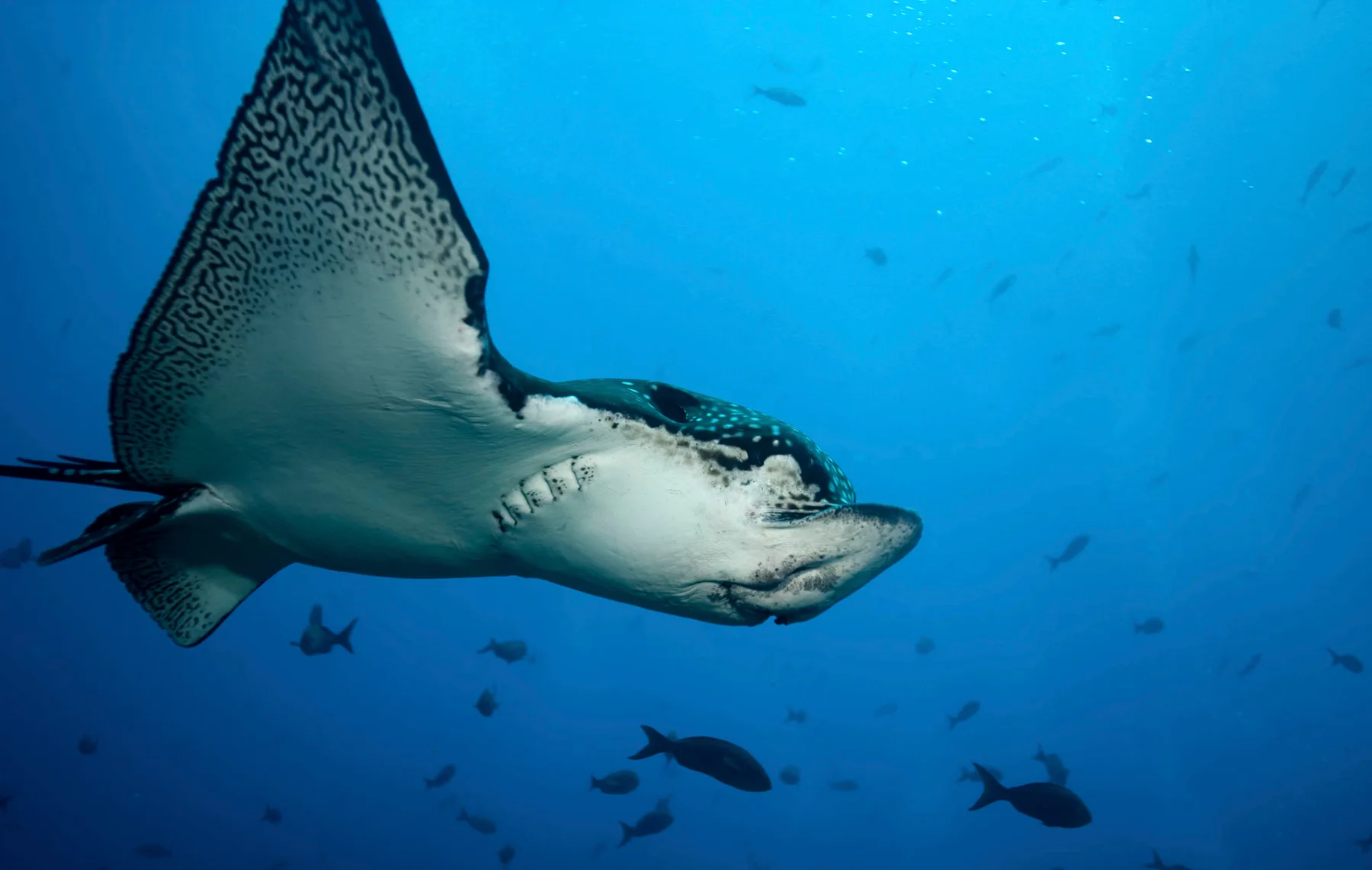
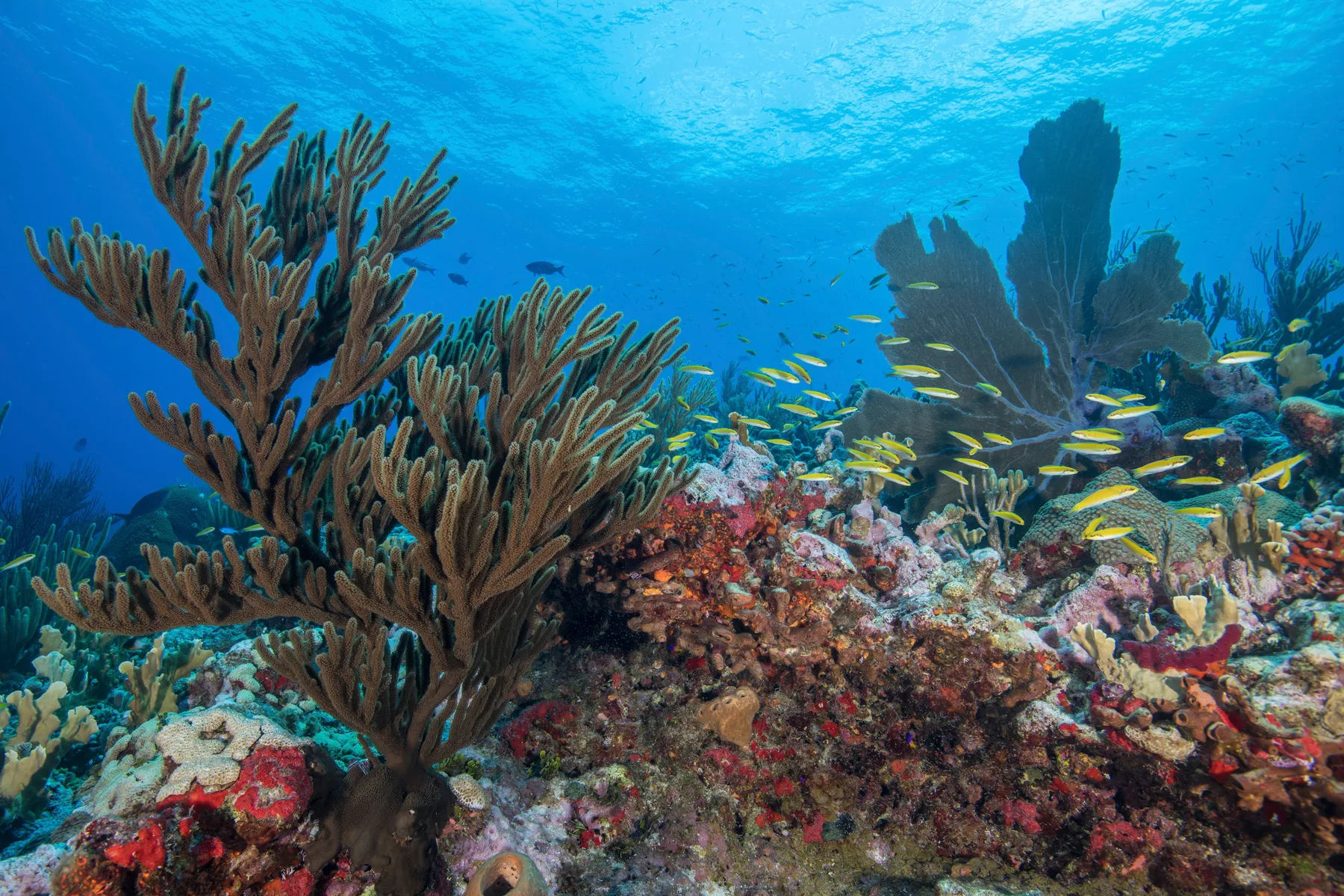
The fish assemblage is the real draw. Snappers in schools dense enough to block the light. Jacks, permit, groupers in crevices, sting rays on the sand. Turtles on most dives. Eagle rays on the good days. A full Caribbean reef system in the recreational depth band, compressed and still functioning despite everything it has been through. If you want a sense of how this same barrier system reads further south, the Caribbean coast of Colombia carries a similar story of reefs holding on under pressure.
Water temperature runs 24 to 28 degrees Celsius across most of the year. A 3mm full suit handles the majority of conditions. December through February can drop to 23 degrees, where a 5mm earns its weight. June through August pushes close to 29 degrees and a shorty or 1mm skin is enough.
Visibility is the gamble. The coast gets surge and freshwater runoff, especially during hurricane season from June through November. November through May is the more reliable window, though good diving happens year-round if you stay flexible and accept that some days the sea simply says no.
Cenote Diving
This is why Playa del Carmen exists as a dive destination for anyone who knows.
A cenote is a sinkhole formed when the limestone ceiling of an underground river or freshwater aquifer collapses. The Yucatan Peninsula sits over a massive subterranean water table, and the landscape is riddled with thousands of these formations. Some are barely visible surface pools. Some are vast underwater cave systems descending hundreds of metres into total darkness. The water is fresh. The visibility, in the right cenote, is infinite in every direction. The geology will change how you think about what diving is.
The first time I descended into The Pit (Cenote Azul) and reached the halocline at twelve metres, I stopped. The boundary between the freshwater above and the saltwater below created a visible shimmer, a distorted mirror suspended in the middle of the water column, with darkness below it and perfect clarity above. It looked like something someone had rendered incorrectly. Nothing underwater looks like that. And then you swim through it and feel your buoyancy shift underneath you, and you understand why people come back to these places for years.
The shallows on the way back up are their own thing. The surface of a cenote, seen from underneath, is usually carpeted in lily pads and the leaves of whatever forest is growing around the entrance. Sunlight punches through in slow shafts. The water is cold and clean and almost completely still. You hang at three metres on the safety stop and look up at a green ceiling that does not belong underwater.
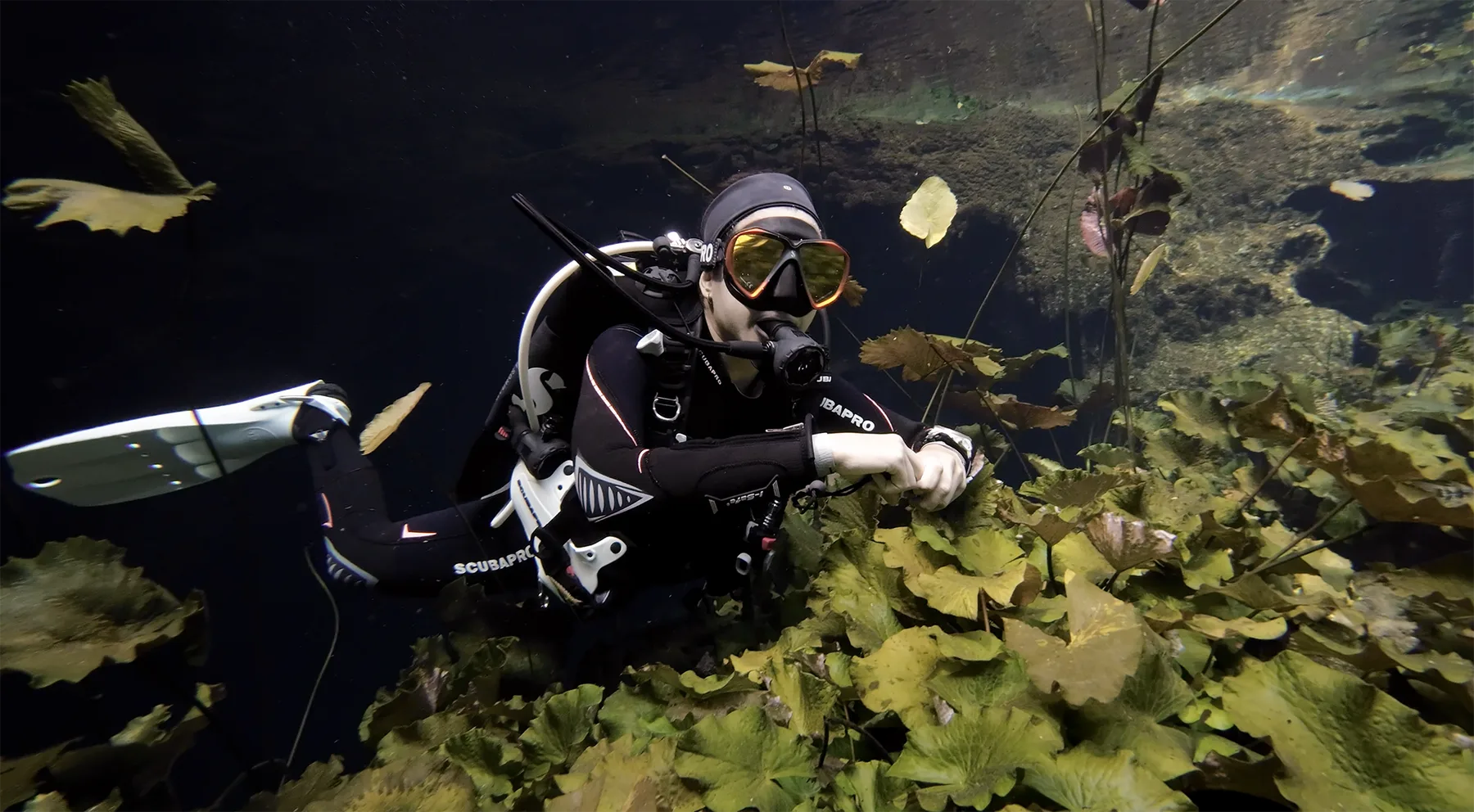
The Pit is open-water accessible. A massive sinkhole, thirty metres across, the halocline at twelve metres creating that mirror effect. You do not need cave training. The depth goes well beyond recreational limits but the shallow sections deliver enough on their own. Taj Mahal is another open-water accessible site, with flooded cave chambers, the same halocline and striking formations. Angelita goes deeper, with a hydrogen sulphide layer creating a dark river suspended in the water column. Diving above it feels like flying over clouds.
The full cave cenote systems require Cave Diver certification, and I want to be clear about this: they are not for recreational divers. The passages are narrow, navigation is technical and the consequences of a mistake are not abstract. But for those who are trained, they are some of the best dives anywhere on earth. Underground lakes. Cathedral-sized chambers. Stalactite formations. Archaeological sites where the Maya left offerings a thousand years ago.
Most operators in Playa run both open-water cenote dives for tourists and full cave dives for certified technical divers. The quality varies dramatically. Choose someone with a long and verifiable history in cenote guiding, transparent safety practices, and a clear distinction between what is appropriate for your certification level and what is not.
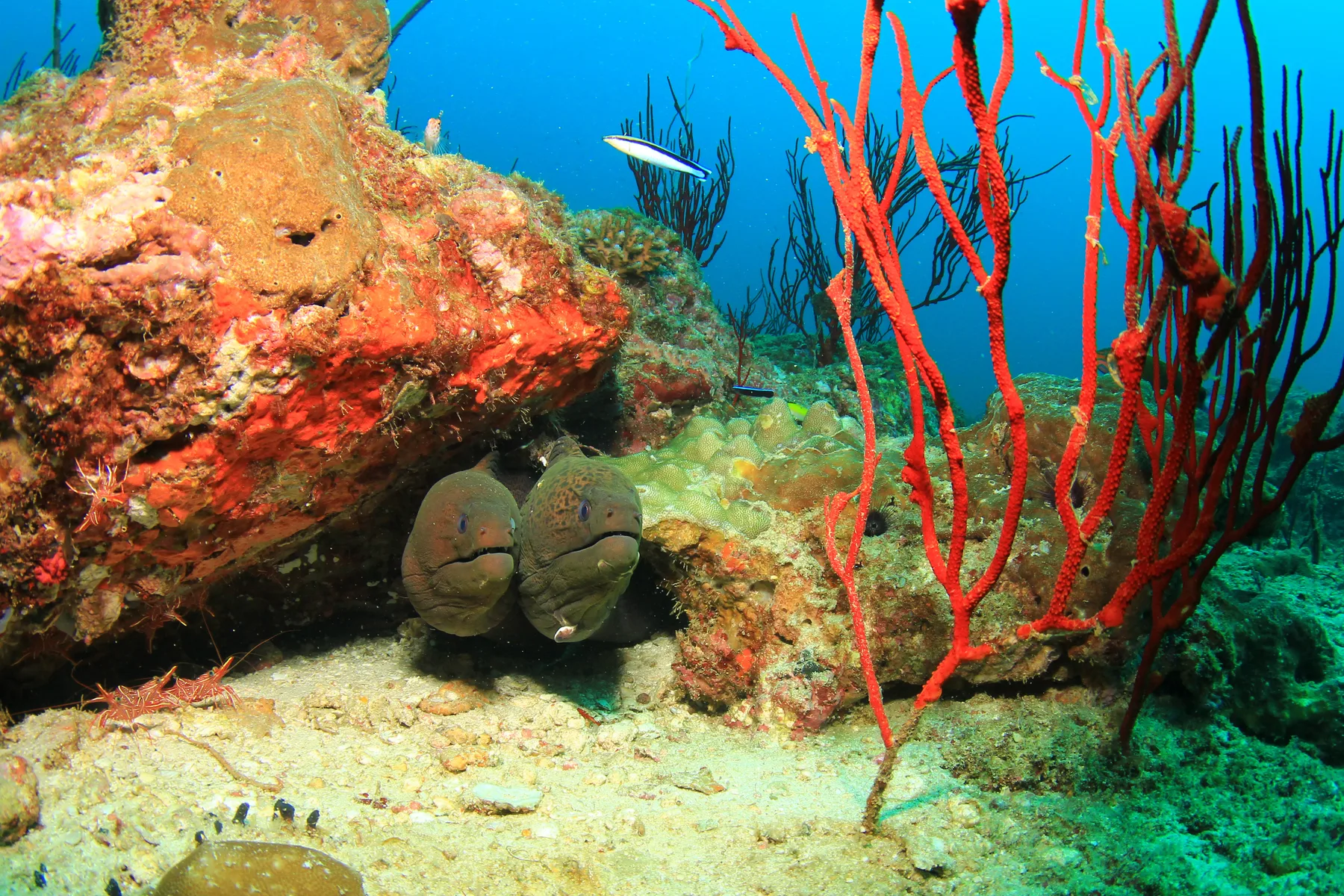
Cenotes are not lifeless. The deeper systems can be sterile, but the surface pools and shallow chambers host small freshwater fish, the occasional turtle, and a slow-motion ecology that most divers do not expect. Movement is slower in here. You travel in single file, your light is on but pointed away from other divers’ faces, and you fin softly enough to leave no trace on the carpet of decaying leaves on the floor.
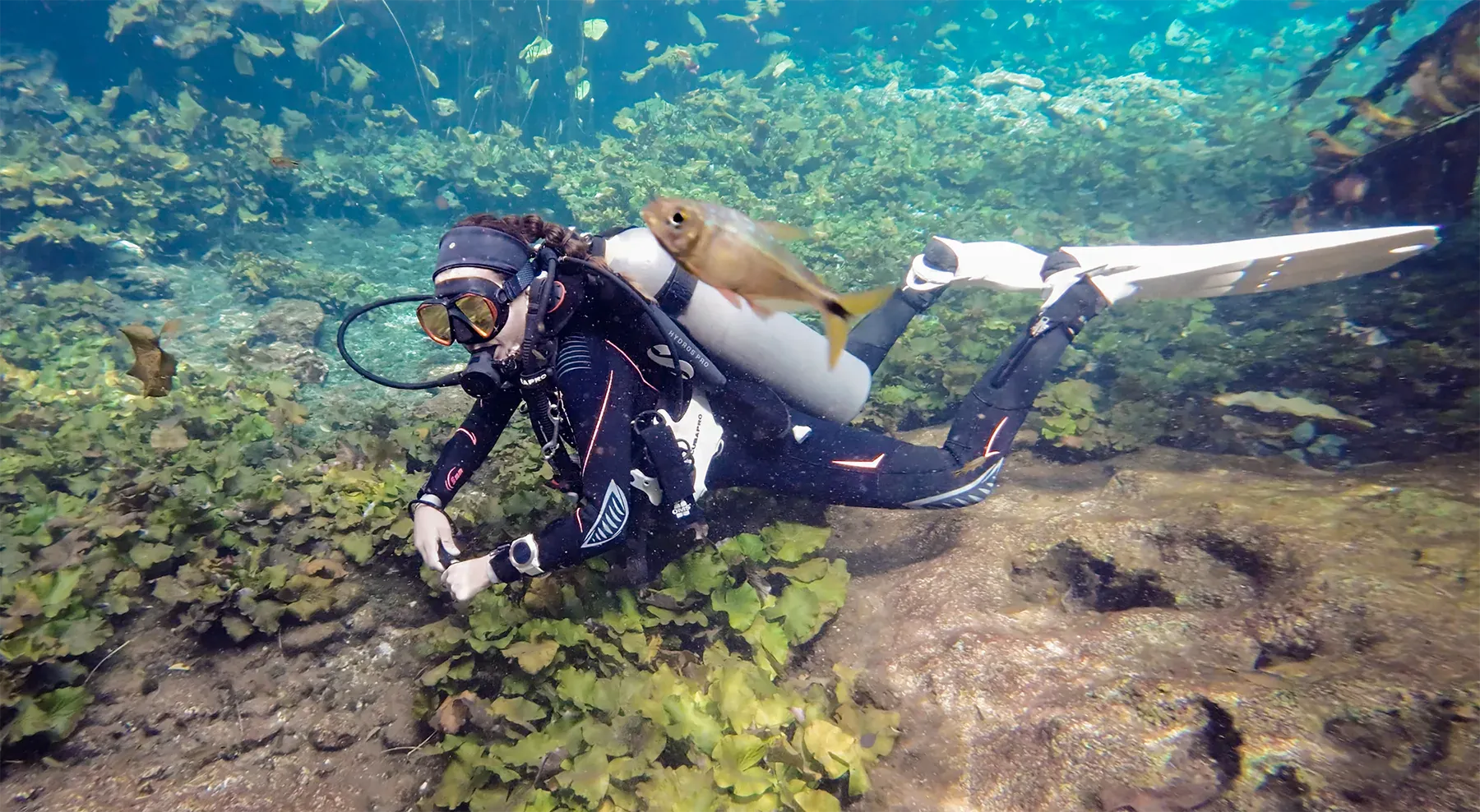
One practical note: cenote water is fresh. You will use less weight than you expect. Buoyancy control matters more here than it does in salt water, because the margin for silting up the bottom and destroying visibility for every diver behind you is much smaller. Rent locally. Use local operators. Respect the fact that these systems took millions of years to form and cannot be restored.
Bull Sharks
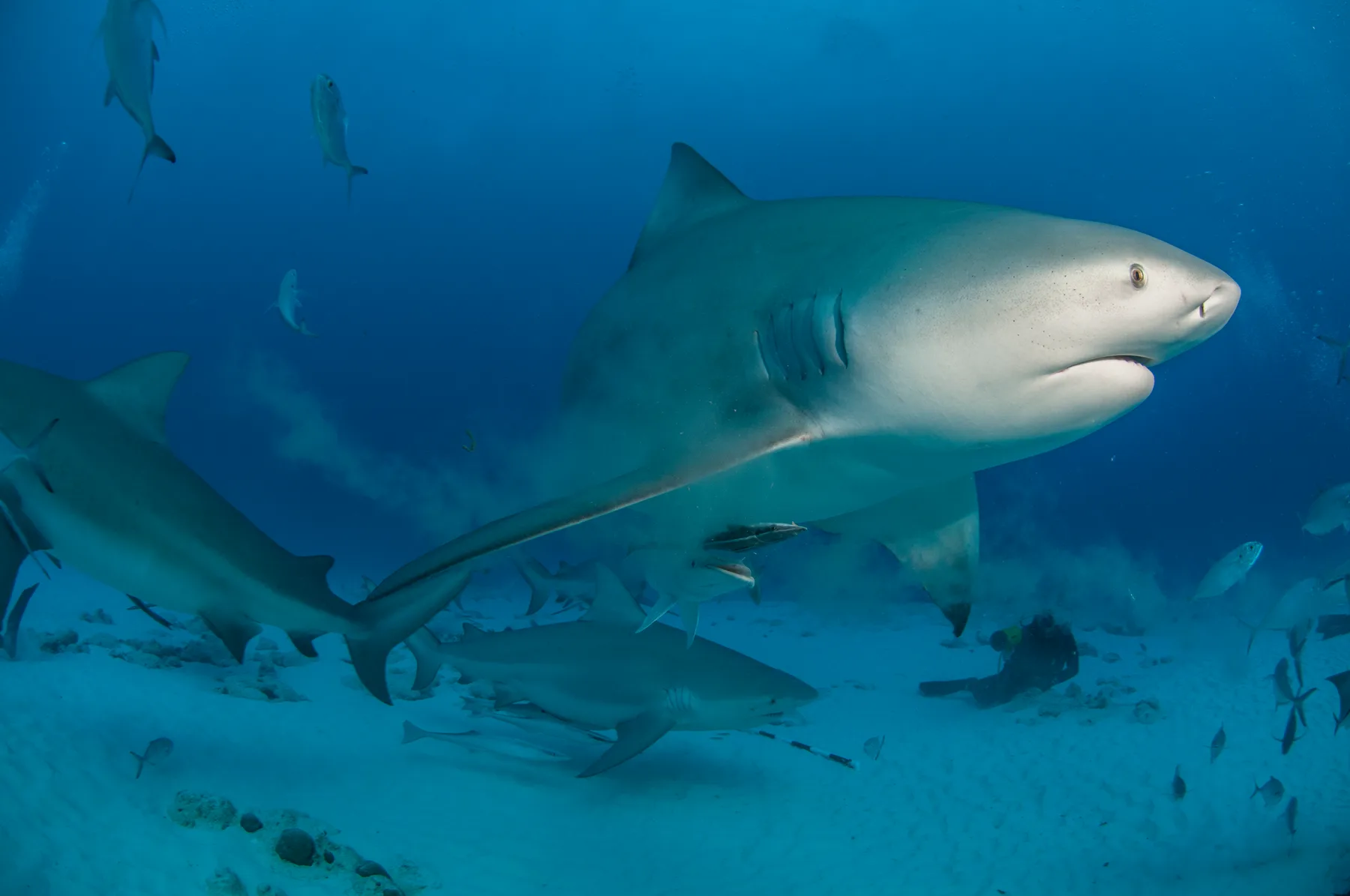
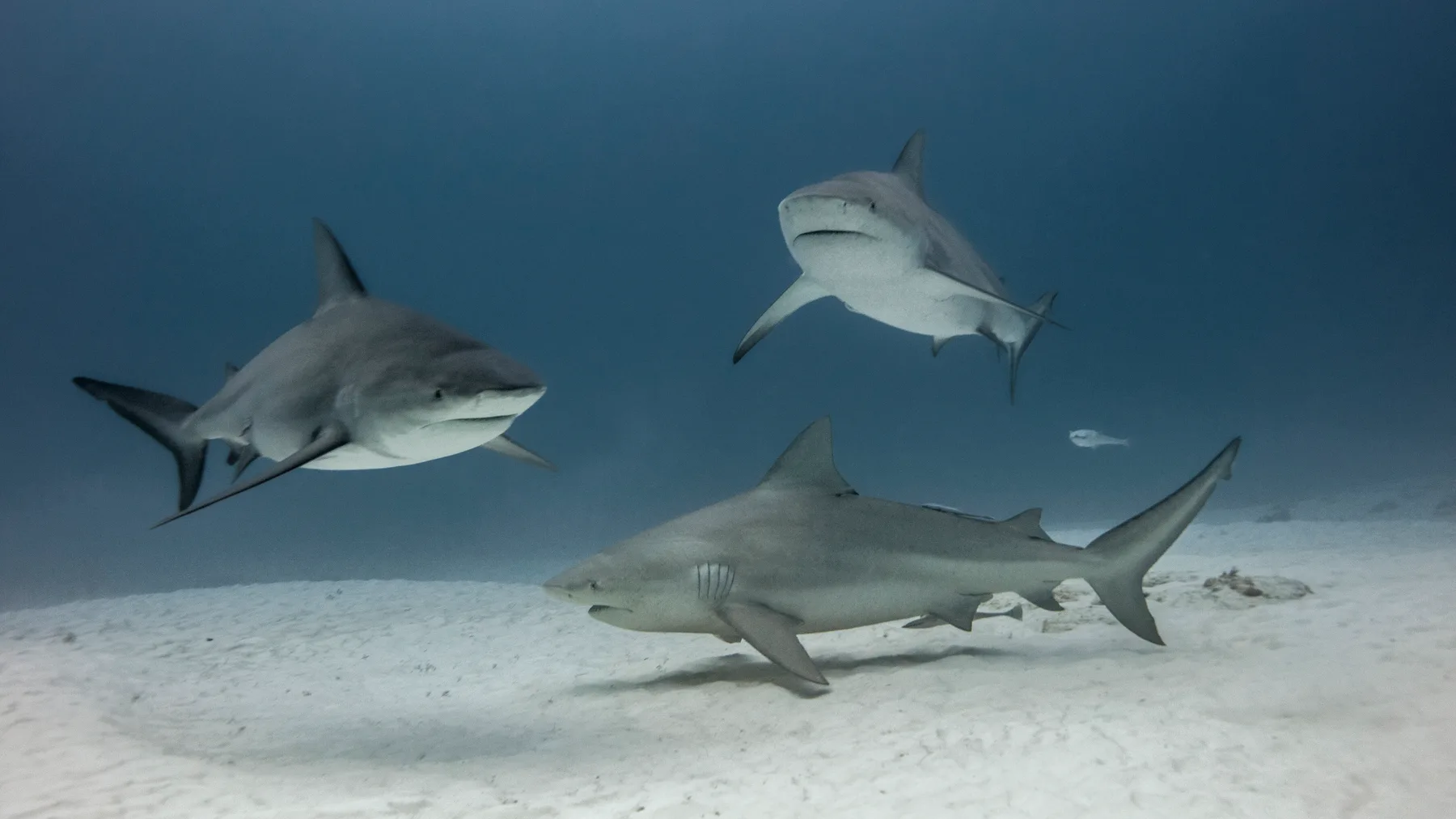
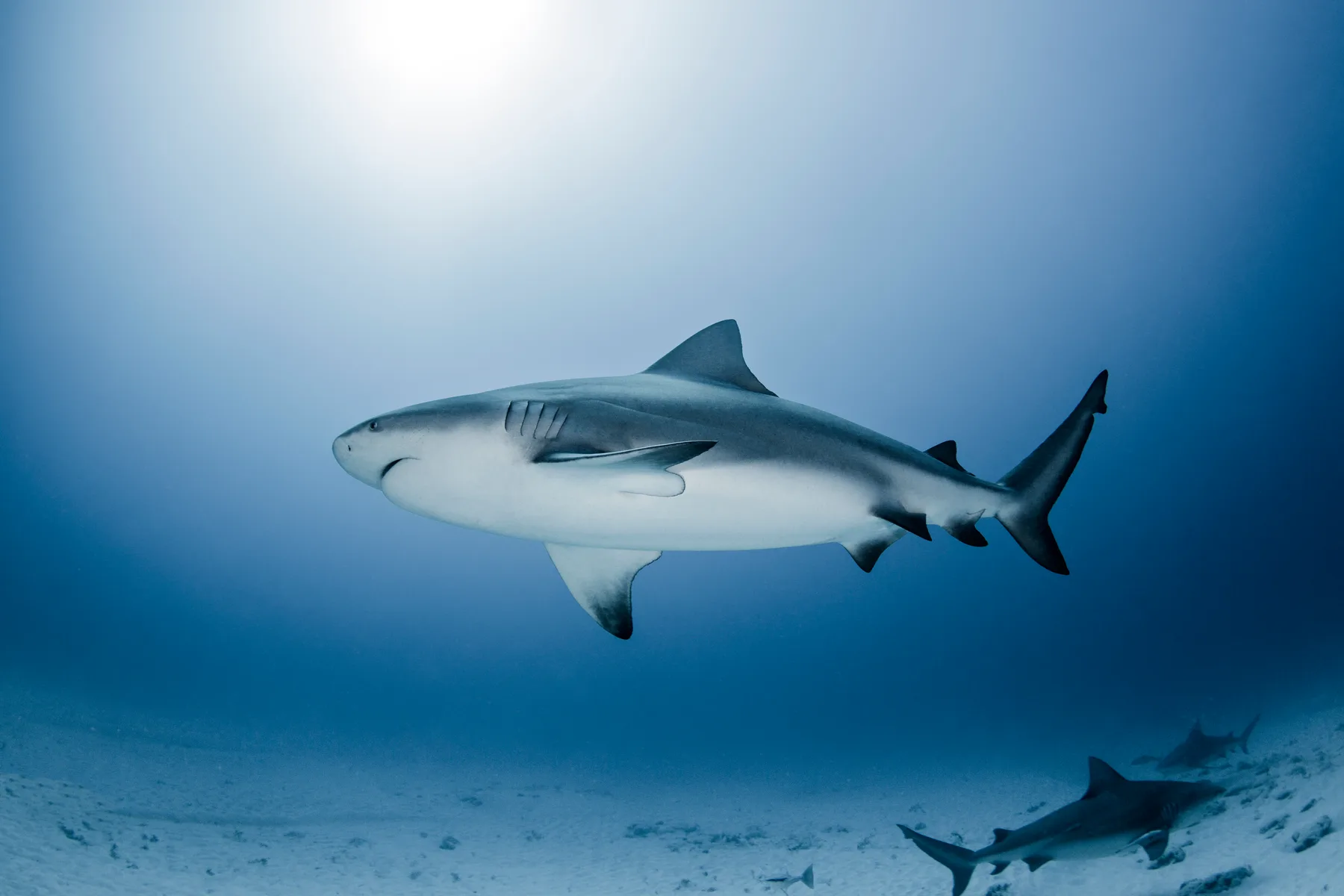
Each winter, bull sharks gather in the warm shallows off Playa del Carmen, and diving with them becomes possible in a way that is rare anywhere else in the world.
The window runs November through March. Conditions have to align: the right water temperature, the right time of day, enough animals in the area. The encounter is never guaranteed. But when it works, it is the most honest animal encounter diving offers. You are at twelve to sixteen metres with sharks that are powerful, curious and fundamentally unafraid of you. Not performing. Not contained. Just present, on their terms.
I have written a dedicated guide to diving with bull sharks in Playa del Carmen covering what the experience actually delivers, how to prepare and why the season timing matters. Read that for the full picture. The short version: it is not for everyone, and that is part of the point.
Nearby Dive Sites
Puerto Morelos, 30 minutes north
Puerto Morelos is a working fishing town with a protected reef directly in front of it, and it is healthier than the Playa del Carmen offshore reefs for exactly the reason you would expect: less tourist pressure, more local protection, fewer tour boats.
The sites run ten to twenty-five metres, with seagrass beds and patch reef in the shallow sections and more structured coral formations deeper. Elkhorn and staghorn at scale. Frequent sea turtles. Calm water and no crowds. If the Playa reefs disappoint, Puerto Morelos is the correction.
Certification: Open Water, all levels · Boat time: 20 min
Cozumel, 45 minutes by boat east, across the channel
Cozumel is the heavyweight, and yes, most divers skip Playa and go straight there. For good reason. The channel that runs past Cozumel brings nutrient-rich water that feeds stronger coral growth, larger schools of pelagic fish and the kind of current drift diving that has built the island’s reputation over decades.
From Playa, you have two options. Many dive centres run their own speedboats directly to the nearest Cozumel reefs in thirty to forty-five minutes, no ferry, solid access to good sites. The other option is the public ferry to Cozumel town and booking locally, which takes longer but gives you access to the deep wall dives and the famous drift sites that made Cozumel what it is. Both are valid. The ferry route is the one worth doing if you have a full day to commit.
Certification: Recreational to Advanced (current dives require experience) · Boat time: 30 to 45 min direct
Akumal, 30 minutes south
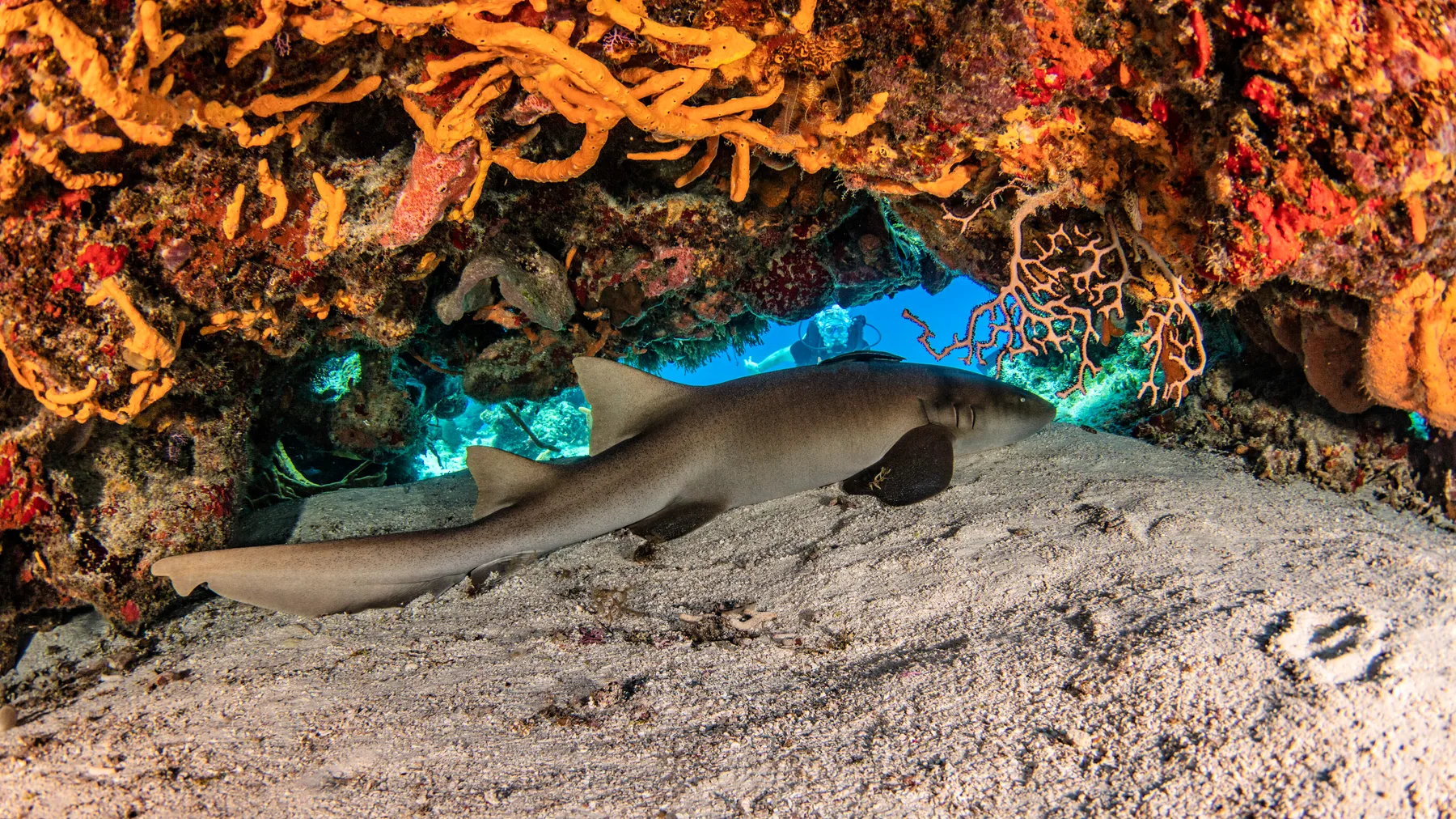
Akumal is the turtle bay. The shallow reefs inside the protected bay are nursery grounds for juvenile sea turtles, and encounters are not rare. They are almost routine. Green turtles and hawksbills, usually resting or feeding, largely indifferent to divers.
The reef inside the bay shows pressure from heavy snorkelling traffic. The outer reef, in deeper water, is better preserved and worth the extra time. Several cenotes are within reach. Gran Cenote and Car Wash cenote are both close and accessible for open-water divers.
Certification: Open Water, beginner-friendly · Distance: 30 min by car
Tulum, 1 hour south
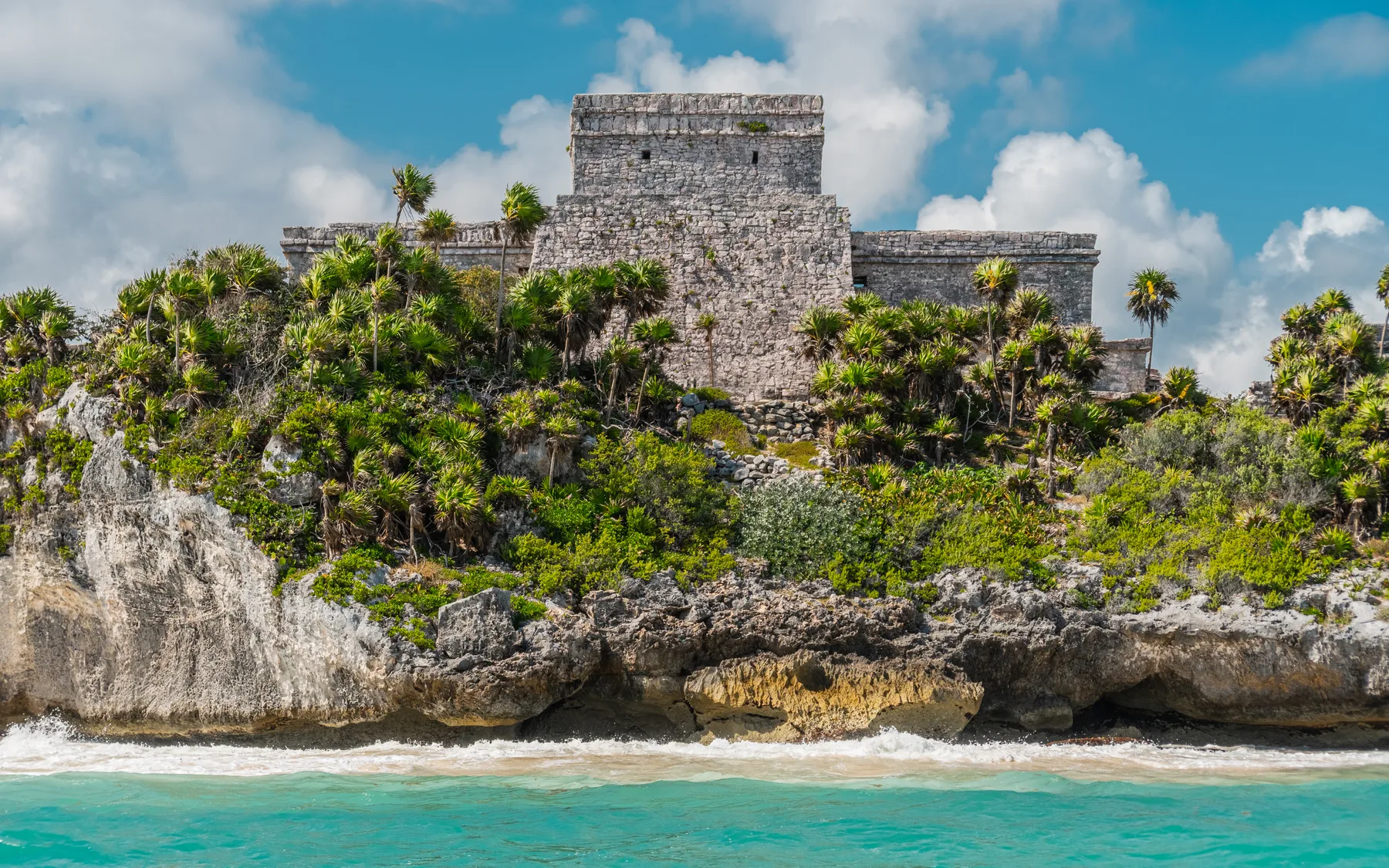
Tulum combines two things you would not normally find in the same dive: the Maya ruins visible from the beach above, and a coral reef running close to shore with beach entry. The ruins are not underwater. But the context of diving directly in front of one of the most intact pre-Columbian sites on the Caribbean coast does something to the dive.
The reef shows pressure from the volume of visitors that move through Tulum, but it holds its own. Warm shallow water, good for photography, dramatic coastline. The cenotes around Tulum are some of the most accessible and best-documented in the region.
Certification: Open Water, all levels · Distance: 1 hour by car
Xel-Há, 45 minutes south
Xel-Há is a cenote that opens directly to the ocean, creating a hybrid freshwater-saltwater lagoon that supports both ecosystems simultaneously. It is a designated marine park, strictly regulated, and the preservation is excellent.
Freshwater species and saltwater species coexist in the same water column. The coral formations are unusual, adapted to the brackish conditions in a way that makes them look different from anything on the open reef. The park infrastructure is well run, entry leads into cenote caverns, and the whole site is in significantly better condition than most comparable tourist attractions in the region.
Certification: Open Water, all levels · Distance: 45 min by car
Cancún, 1 hour north
Cancún has a diving reputation that its beach resort image does not suggest, and the best reason to go is MUSA, the Museo Subacuático de Arte, an underwater sculpture park with over five hundred pieces installed at various depths across multiple sites.
The sculptures were designed by Jason deCaires Taylor and other artists to function as artificial reef structure. Two decades in, they have become genuine habitat: colonised by coral, inhabited by fish and entirely photogenic in a way that nothing else in the region matches. The surrounding natural reefs complement them. It is the destination if you are bringing an underwater camera and want something that does not look like anywhere else.
Certification: Open Water, all levels · Distance: 1 hour by car, then boat
Isla Mujeres, 1.5 hours north
Isla Mujeres sits north of Cancún and offers deeper dives, stronger currents and healthier coral than most mainland sites. The island benefits from less coastal runoff and more stable oceanic conditions, and it shows on the reef.
The headline encounter is the whale sharks. From June through August, the aggregation that forms north of the island is one of the most reliable whale shark experiences on earth. Not a dive, strictly speaking, as the encounters are done by snorkel, but worth building a trip around. The wall dives and current dives on the deeper reef structures are available year-round and deliver on their own.
Certification: Recreational to Advanced · Distance: 1 hour by car, then ferry from Puerto Juárez
Practical Notes
Getting there: Fly into Cancún International Airport, forty-five minutes north of Playa del Carmen. Ground transfer by taxi, shuttle or rental car. Most dive operators will arrange hotel pickup.
Certification: Open Water covers the reef diving and open-water cenote sites. Advanced helps for deeper reef sections and stronger current dives. Cavern certification, an introductory cave course done in a single day, opens up more cenote sites while staying within natural light. Full Cave certification requires three to four days of serious technical training. Do not take it lightly, and do not take it with an operator who treats it lightly.
Operators: The town has dozens. Quality varies enormously. For cenotes, look for operators with a long history specifically in cenote guiding, not just dive shops that added cenotes to their menu. For reef diving, prioritise operators who have been working the same sites for years and know the current patterns. For cave diving, find someone who makes it abundantly clear that training is a serious undertaking, not an upsell. If you want a contrast in warm-water reef conditions and exposure planning before you book, the same logic I apply to diving Hurghada in the Red Sea holds here: pick operators by track record, not by fleet.
Water Temperature by Season
| Season | Temp | Recommended Exposure |
|---|---|---|
| January to March | 23 to 24°C | 5mm full suit |
| April to May | 25 to 26°C | 3mm full suit |
| June to September | 28 to 29°C | 1mm skin or shorty |
| October to December | 25 to 27°C | 3mm full suit |