I bought my first dive computer twice. The first one was an entry-level model someone recommended because it was “good enough to start.” Eighteen months later I sold it at a loss and bought the one I should have bought in the first place. That’s a story most divers can tell, with different gear in the starring role and the same dented wallet at the end.
This guide is the one I wish someone had handed me on the day I decided to stop renting. It’s built around a single idea: buy gear once, dive with it for a decade, and pack it all in carry-on.
Premium and travel-friendly aren’t opposites. They usually overlap. The lightest gear is often the best-engineered, because the people designing it know serious divers fly with their kit and curse at the check-in scale.
Here are the six pieces I’d buy, in no particular order, if I were starting over.
1. The Regulator
Most beginner guides tell you to wait on regulators. I disagree.
Rental regs are a lottery, and the prize is sometimes a regulator that breathes like a kazoo. Some shops service them religiously. Some don’t. You won’t know which kind of shop you’re at until something goes wrong at depth.
I’ve worked as a guide, and the issues I’ve seen up close are not pretty. Free-flows that empty a tank in minutes. Second stages that breathe wet from dive one. First stages weeping bubbles the moment they’re pressurised. Mouthpieces held on by a single zip tie and a prayer. Octopuses that won’t purge. None of this is rare. It’s the cost of relying on someone else’s maintenance schedule, which in some places is “when it stops working.”
A good personal reg, serviced once a year, will outlive your diving career. The first stage I bought as a new diver still breathes perfectly years later, and I know its history because I’ve owned every minute of it.
What to look for:
- A balanced diaphragm first stage, cold-water rated even if you only dive warm. Future you will thank present you.
- DIN with a yoke insert. DIN is more secure; yoke is what most rental tanks use globally. Owning both is the diving equivalent of carrying a universal travel adapter.
- A lightweight second stage, ideally under 200 grams.
- Environmentally sealed first stage if there’s any chance you’ll dive cold or silty water.
A travel-grade reg set weighs under a kilo and packs into the corner of a carry-on. You’ll never wonder about its service history again, because the answer will be “I did it in March.”
What I dive: Hollis 200LX second stage with matching octopus, DIN. Full breakdown in the regulator guide.
2. The BCD
If you’re moving from rental to your own kit, the BCD is one of the most transformative purchases you’ll make. Rental BCDs are the gear-room equivalent of a hotel pillow: adjusted for the last person, not for you, and slightly damp for reasons you’d rather not investigate.
The right BCD disappears on you. The wrong one rides up around your ears, pinches your hips, and reminds you of itself on every kick. That difference compounds across a week of diving.
The trap most new buyers fall into is grabbing the same jacket-style BCD they trained in. It’s familiar, but it’s rarely the best long-term choice. Hybrid and back-inflate designs offer better trim, better travel weight, and don’t squeeze you when fully inflated at the surface.
What to look for:
- Back inflate or hybrid, not pure jacket. Better trim, less squeeze, more streamlined.
- Travel weight under 3kg if you fly to dive.
- Fast-drying material. The boat ride home is wet enough.
- Integrated weight pockets that release cleanly. Test them in the shop.
- Modular construction so you can replace bladders or straps without binning the whole thing.
- A short backplate if you’re petite, or a women’s-specific cut for shoulder strap geometry.
The “buy it for life” version of this purchase isn’t necessarily the most expensive. It’s the one that fits your body and the kind of diving you actually do.
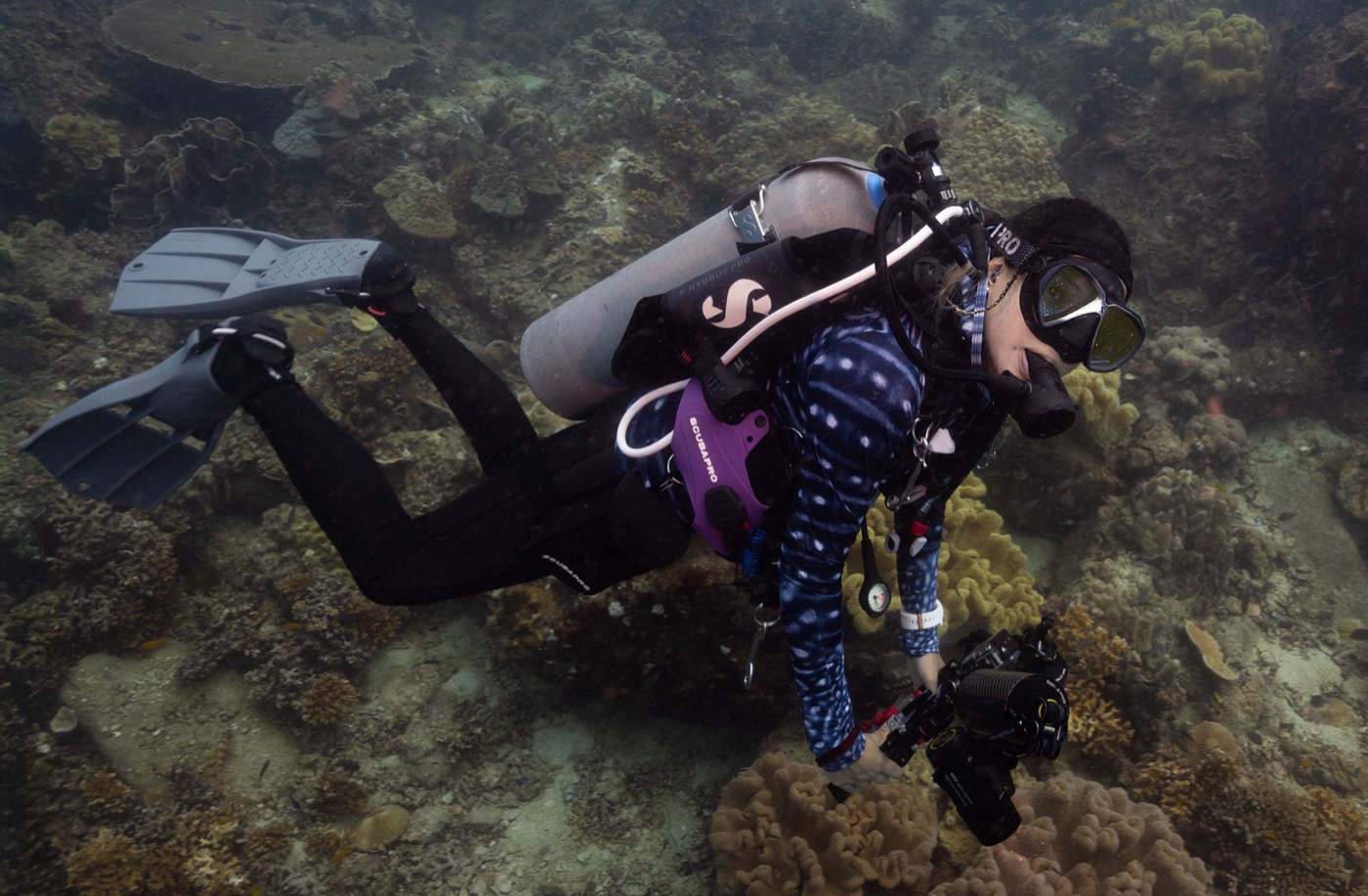
What I dive: Scubapro Hydros Pro Women’s. Hybrid design, monoprene material that dries on the boat, and the women’s cut sits properly on the shoulders. Worth the investment. More in the BCD guide.
3. The Dive Computer
Every diver needs their own. No exceptions, no sharing, no “we’ll just use yours and dive the same profile.” Two divers on the same dive can come up with very different decompression profiles, and a borrowed computer doesn’t know what your last dive looked like, or that you crushed three margaritas at the surface interval.
But buy past the entry-level. The cheap models do one thing, which is track depth and time, and you outgrow them around dive 50. That’s right when you start wanting more, and right after the warranty expires.
What to look for:
- A colour screen that’s readable in bright sunlight. Squinting at greyscale pixels through a flooded mask is a character-building experience you don’t need.
- Air integration capability, even if you don’t buy the transmitter yet.
- A conservative algorithm with adjustable settings.
- A rechargeable battery. Hunting for a CR2450 in a remote dive town will teach you this lesson the hard way, usually on a Sunday.
- Watch-sized so you can wear it on land. The computer that’s always on your wrist is the one that’s always with you, even when you forgot to pack the rest of your kit.
What I dive: Atmos Mission. Full notes in the dive computer guide.
4. Fins
Fins look like a commodity. They’re not. The right pair shapes your kicking technique for years. The wrong pair turns every dive into a leg workout you didn’t sign up for.
Skip split fins and full-foot fins. Both feel easy at first. Both limit you later. What you want is an open-heel paddle or modified-paddle fin paired with 5mm hard-soled boots. That setup carries you from your first reef dive to your first wreck and asks no questions.
What to look for:
- Negatively buoyant or neutral. Floaty fins fight you on every kick, and you will lose.
- Stiff enough for frog kicking, flexible enough for flutter.
- Spring straps instead of rubber buckles. Faster on, faster off, won’t snap on the boat ladder while everyone watches.
- A size that actually fits your foot. Many premium fin manufacturers seem to believe nobody under a size 8 dives.
The boots matter too. 5mm hard-soled covers most conditions, protects your feet on shore entries, and lasts years, assuming you remember to rinse them, which you won’t, but that’s between you and the smell.
What I dive: Apeks RK3 fins, Waterproof B2 6.5mm semi-dry boots.
5. The Mask
The mask is the cheapest piece of forever gear on this list, and the easiest one to get right. The trick is ignoring everything that looks cool in the shop.
Skip frameless masks promising a wider field of view; the difference is marginal and they’re harder to defog. Skip anything with a built-in snorkel attachment. Just skip it.
What to look for:
- Low internal volume. Easier to equalize, easier to clear.
- Black silicone skirt if you ever plan to take photos. Clear if you don’t.
- Tempered glass. Never plastic. This is not negotiable.
- A spare mask strap thrown in your kit, because the original one will snap at the worst possible moment. They always do.
Try it on before you buy. A mask that fits one face perfectly will leak on the next, and faces are stubbornly unique.
What I dive: Scubapro Spectra.
6. The Save-a-Dive Kit
This is the piece nobody talks about, and it might matter more than any single item above.
A broken o-ring costs five dollars. A ruined dive trip costs thousands. A save-a-dive kit is the bridge between those two numbers, and the reason the most popular diver on any boat is the one who packed extras.
What goes in it:
- An o-ring assortment for yoke, DIN, and hoses.
- A spare mask strap and a spare fin strap.
- A spare mouthpiece and a handful of zip ties. Zip ties solve more dive problems than they have any right to.
- A multi-tool with hex keys that fit your reg.
- Defog, ear drops, and a small tube of silicone grease.
- A spare computer battery, or your charging cable.
- A Sharpie, electrical tape, and a couple of small carabiners.
The whole thing fits in a small dry bag, weighs under half a kilo, and pays for itself the first time something snaps. After that, it pays for itself in goodwill from the diver you just saved.
What Can Wait
A wetsuit. Bulky, heat-degrading, and rental quality is usually fine for occasional dives. Buy one when you dive somewhere often enough to justify it, or go custom when you know what conditions you dive most. Bonus: your own wetsuit means you only have to wonder about your own bodily fluids.
What I dive: Scubapro Definition Steamer 5mm. Full notes in the wetsuit guide.
A camera. Not for at least 50 dives. Carrying a camera before your buoyancy is dialled in means worse photos and worse diving, a remarkable two-for-one. When you’re ready, an underwater phone housing is the gentlest place to start. More in the underwater camera guide.
A tank or weights. Almost never worth owning unless you’re diving the same site every weekend, in which case, lucky you.
The Math
Done properly, the six-piece kit above runs roughly $3,000 to $5,000. That sounds like a lot until you spread it across ten years and a few hundred dives. The diver who buys a $400 starter kit at year one and replaces half of it by year three pays more in the end, and never has the gear they actually want. They do, however, get very familiar with their local dive shop’s return policy.
Buy once. Pack light. Dive everywhere.