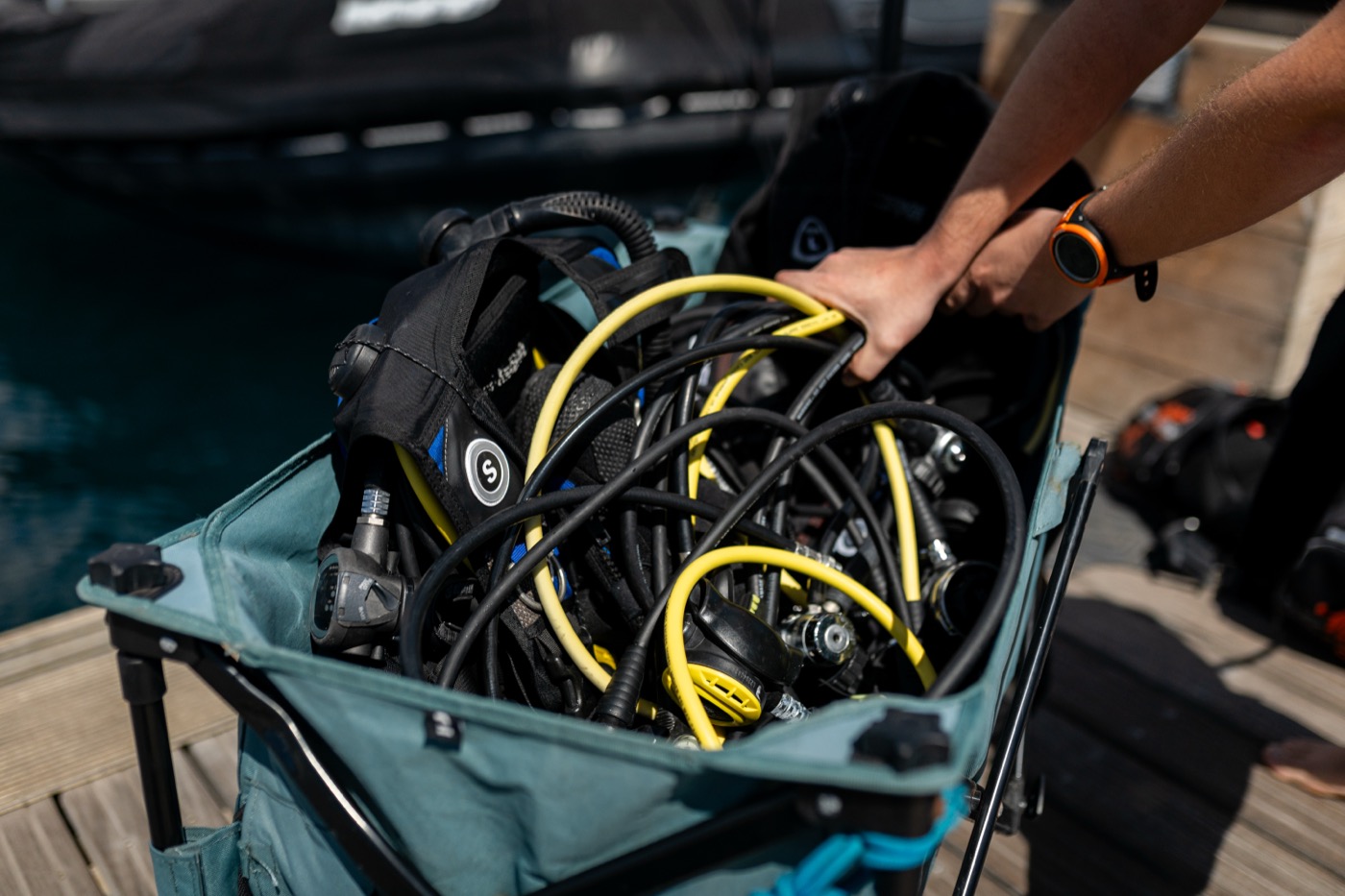
The first time someone handed me a regulator underwater, I did not think about it at all. I breathed. That was the point. It was only later, after a hundred dives and a handful of deep walls and low-visibility wreck penetrations, that I understood what a regulator actually is: a contract between you and the sea.
What a Regulator Does
A scuba regulator reduces tank pressure (typically 200 bar) down to ambient pressure, matching the water around you, so you can breathe effortlessly at any depth. It does this in two stages. The first stage attaches to your tank and drops pressure to an intermediate level. The second stage sits in your mouth and delivers air on demand as you inhale.
The engineering inside a good regulator is genuinely remarkable. The best ones are so finely balanced that breathing from them at 30 metres feels no different from breathing at the surface.
The Two Families
Diaphragm regulators use a flexible membrane to separate the internal mechanism from the surrounding water. They are more robust in cold, silty, or contaminated water, which is why they are standard for drysuit diving and technical work.
Piston regulators use a simpler mechanism that performs exceptionally in warm, clear water. They tend to breathe slightly more effortlessly at recreational depths and are easier to service.
For tropical reef diving, which is what this site is mostly about, a balanced piston regulator is usually the better choice. For anything cold or technical, go diaphragm.
What to Look For
Balanced vs. unbalanced. An unbalanced regulator delivers slightly less air as your tank empties. A balanced one delivers consistent airflow from full to near-empty. For your first regulator, spend the extra and get balanced.
DIN vs. A-clamp fitting. DIN screws into the tank valve and is more secure; A-clamp (yoke) sits over it. Most rental tanks globally accept A-clamp. If you are buying for travel, A-clamp or a convertible fitting gives you the most flexibility.
Octopus configuration. Your second stage will come with a primary mouthpiece and an alternate air source (octopus) for sharing air in emergencies. Some regulators include an integrated inflator hose for a BCD, worth considering for a cleaner hose setup.
Brands Worth Knowing
Scubapro, Apeks, Aqualung, and Mares all make excellent regulators across a range of price points. At the entry level, the Scubapro MK11/C370 and the Apeks XL4 are workhorses trusted by dive professionals worldwide. At the top end, the Scubapro MK25 EVO and the Apeks MTX-R are regulators you will never need to replace.
On Servicing
A regulator is a life-support device. It needs to be serviced annually or every 100 dives, whichever comes first. Factor this into your budget. A cheap regulator with poor service support will cost you more over time than a quality regulator serviced properly from the start.
Buy well. Breathe well. The rest takes care of itself. Once you have your regulator sorted, the BCD is the next decision that will define every dive. If you want to see how the regulator fits into a full travel-ready kit, read the forever kit guide.