The first time I pointed a camera at a nudibranch, I got a blurry blue rectangle. The nudibranch was somewhere in there, probably. What I got was not a photograph. It was evidence that I had been near one.
Macro underwater photography does not start with the camera. It starts with learning to slow down enough to see what is actually in front of you, and then building the technical foundation to capture it deliberately rather than by luck.
Why the TG-6 (and Why the TG-7 Is Not a Reason to Upgrade)
The Olympus TG-6 is not an entry-level camera that happens to work underwater. It is a purpose-built imaging tool that excels at one specific thing: getting extremely close to small subjects and producing sharp, well-exposed images of them.
The TG-7 exists. I have not upgraded. The colour processing is marginally improved and the processor is slightly faster, but in the water, doing macro, the two cameras are functionally the same. If you already have a TG-6 and are wondering whether the TG-7 justifies the cost, the honest answer is no. If you are buying new, the TG-7 is the current model and the one to buy. But do not let anyone make you feel underequipped with a TG-6. The limiting factor in your macro photography is not the sensor generation.
The reason the TG series works for macro is Microscope Mode. The camera can focus at 1 centimetre from the front of the lens, with a magnification ratio that no other point-and-shoot matches. In Microscope Mode, it stacks multiple focus passes to extend depth of field across a tiny subject. A nudibranch rhinophore, a shrimp antenna, a coral polyp at full extension: these are not things you can photograph properly with a wide-angle action camera. With a TG-6 in Microscope Mode, they fill the frame.
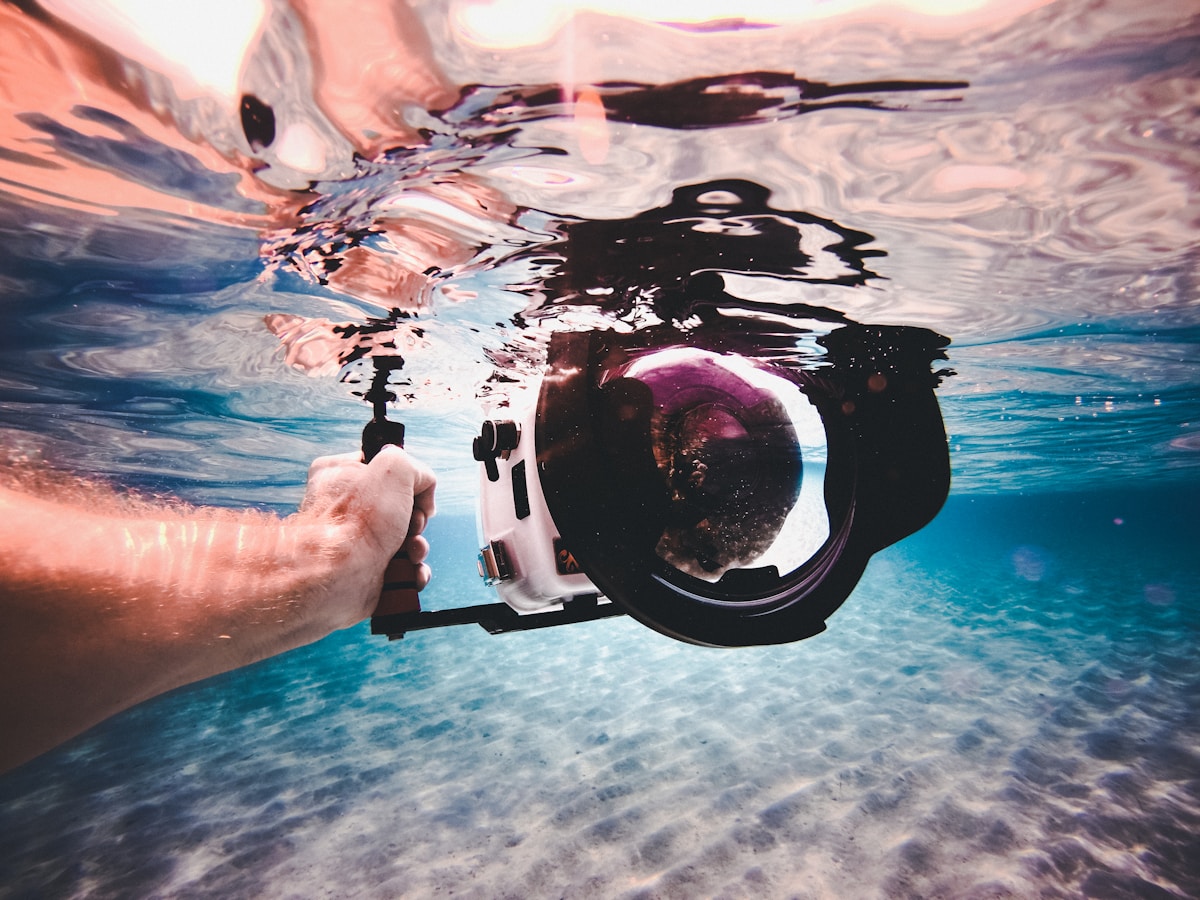
Both cameras fit into the OM System housing designed specifically for the lens geometry. That housing is the right choice over third-party options.
The Lighting Problem
Water absorbs colour with depth. By 10 metres, most of the red spectrum is gone. By 15, images are blue-green and flat regardless of camera quality.
Macro subjects live in places with structurally limited light even in shallow water: under ledges, inside sponges, tucked into crevices, on the shaded underside of coral heads. Macro photography without a dedicated light source produces images that are dim, colour-stripped, and flat. A light positioned correctly restores full-spectrum colour and reveals the texture and detail that ambient light strips away. This is not optional for serious macro work. It is the difference between a record shot and a photograph.
Two Backscatter Macro Wide 4300s
I dive with two Backscatter Macro Wide 4300 video lights. The 4300 is a continuous light, which means you see the effect of the lighting in real time before you shoot. For macro, this matters more than it does for wide angle. When you are 1 centimetre from a subject that may move at any moment, you do not have time to adjust and reshoot. You need to see the light falling correctly before you commit.
Two lights give you control over shadows. A single light from one side creates dimension but produces a hard shadow on the other. Two lights, positioned asymmetrically, give you the ability to fill that shadow or deepen it depending on what the image needs. With a pair of 4300s you can light a nudibranch the size of a thumbnail from two angles simultaneously, or swing both lights to one side for dramatic side-lighting that makes texture visible in creatures most people have never looked at closely.
The colour rendering at full power is accurate enough that images need minimal white balance correction in post. That matters when you are shooting hundreds of frames across a week of diving.
The Mini Flash Option
The Backscatter Mini Flash is the other light worth knowing. Where the 4300 is a continuous video light, the Mini Flash is a strobe. It fires a burst on every shot rather than staying on. The tradeoff is real: you lose the live preview of where the light is falling, which matters a lot when you are 1 centimetre from a subject that may move. What you gain is a harder, more defined light with a sharper falloff. That quality suits highly textured subjects (the cerata of a nudibranch, the armour of a mantis shrimp, the skin of a rhinopias) and produces deep, clean separation from dark backgrounds that video lights can struggle to match.
I use video lights because the real-time feedback fits the way I dive. But the Mini Flash is a legitimate choice for macro, and for photographers who are already used to strobe timing, the results can be exceptional. It is also small enough that it does not change the packability of the setup at all.
The Handheld Technique
I often dive without a tray. On many dive sites a tray is impractical: the penetration is too tight, the subject is under a ledge that requires a specific approach angle, or the reef demands a flexibility that a rigged setup cannot provide.
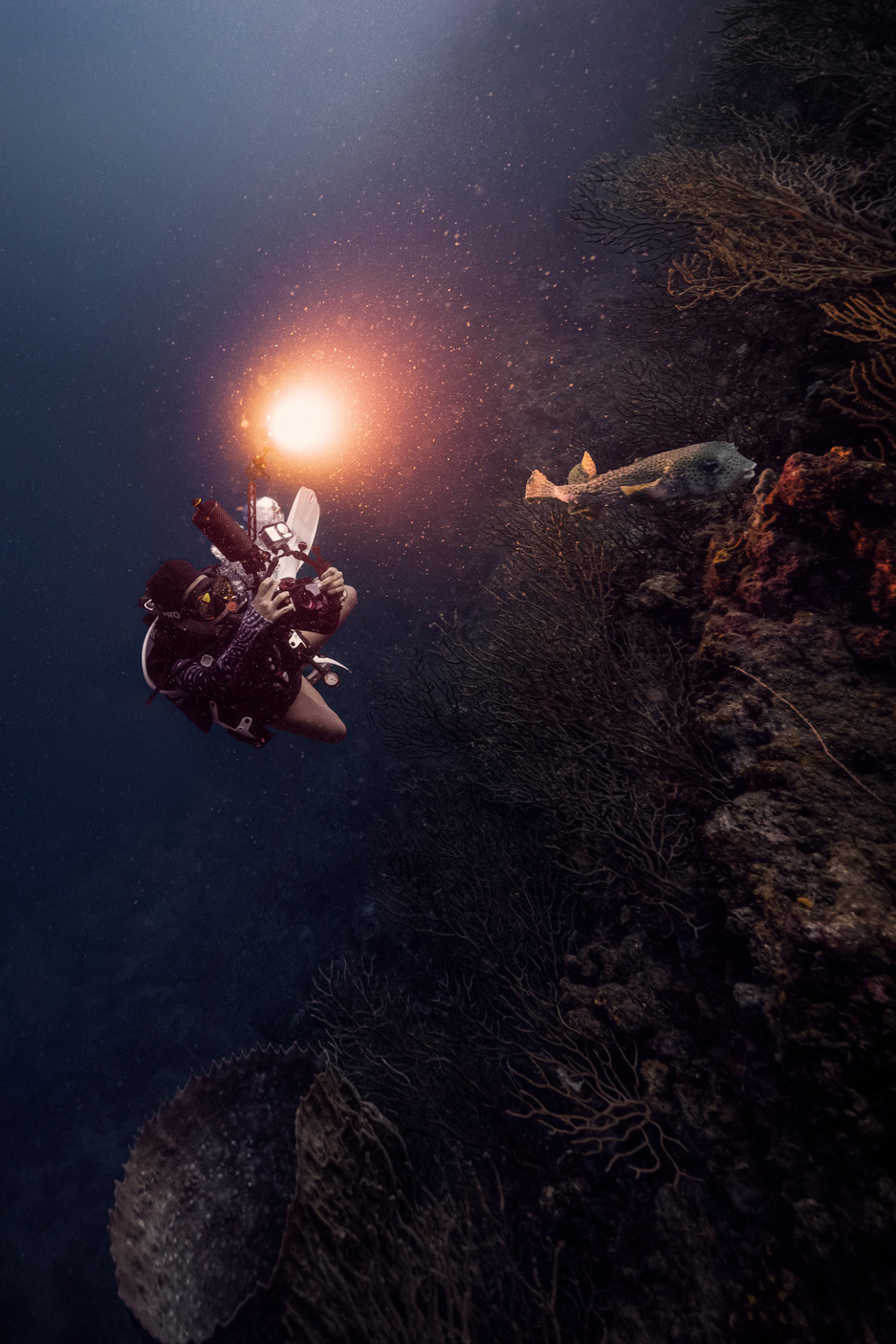
Handheld lighting is a skill. It takes time to develop the muscle memory for positioning a light at exactly the right angle while simultaneously framing a subject 1 centimetre from the lens and controlling your position in the water. It is also, once mastered, faster and more responsive than any rigged setup. You can change the lighting angle between shots in a fraction of a second. You can follow a moving subject across a rock face and adjust the light in the same motion without fighting a tray against the current.
The technique is to treat the light hand and the camera hand as independent instruments working together. The camera hand frames. The light hand sculpts. Neither is subordinate to the other.
Stop Hoping. Start Creating.
The biggest shift in macro photography is moving from reactive to intentional shooting.
Most macro photographers swim until they find something, point the camera at it, and hope. The results are inconsistent because the process is inconsistent.
Intentional shooting means understanding before you press the shutter what you want the image to look like. Where is the light coming from. What is the background doing. Is the subject isolated against something that draws the eye toward it, or competing with it. A black background created by positioning the lights correctly. A soft bokeh separating a tiny shrimp from a cluttered reef wall. A single angle of light catching the texture of a nudibranch cerata. These are choices, not accidents. The camera records them. You make them.
Fewer shots, slower. Adjust the light before shooting, not after. Find the background that serves the image before framing the subject.
Buoyancy Is the Whole Game
At 1 centimetre focus distance, depth of field is measured in millimetres. Any movement, a breath held wrong, a slight current, a fin kick that was not quite controlled, and the shot is gone. The subject did not move. You did.
This is why buoyancy is not a prerequisite for macro photography. It is the skill macro photography is built on. The photographers who consistently produce sharp, composed, well-lit macro images are not the ones with the best cameras or the most powerful lights. They are the ones who can hover motionless at any depth, in any current, for as long as the subject requires.
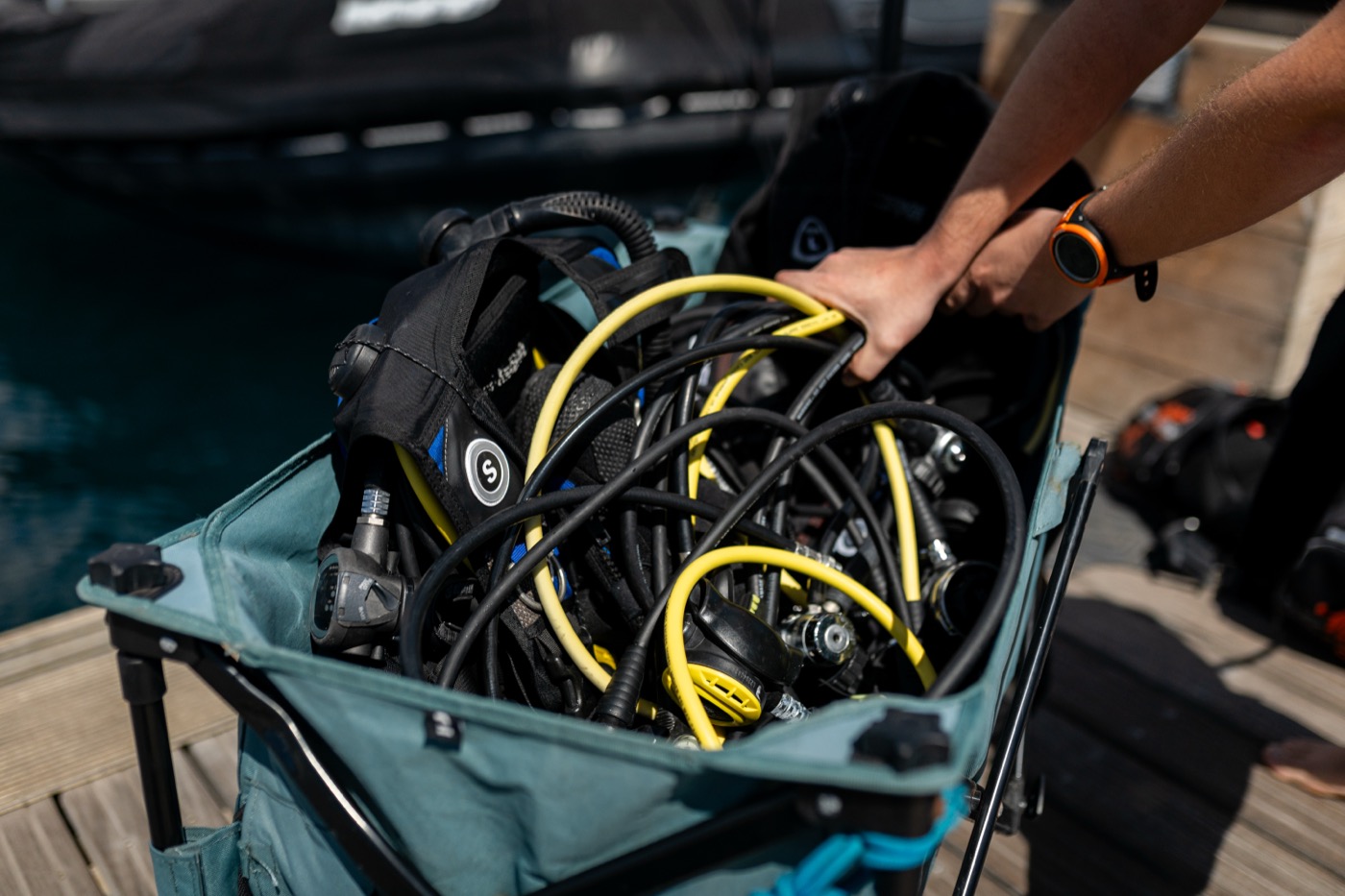
It also means you do not disturb the reef. A diver with poor buoyancy does damage: to the coral, to the animals, and to the shot. A diver with real control moves through the water without leaving a trace. The macro subjects that most divers never see are visible to the divers who are calm enough and still enough to earn them. A well-fitted BCD is part of that foundation. The stability you need for macro depends directly on having the right buoyancy equipment.
Where to Find Macro Subjects
The reef you think you know is hiding things. Nudibranchs live under ledges and on the undersides of coral heads. Pygmy seahorses live on specific species of fan coral. Frogfish sit motionless on sponges that match their colour exactly. Hairy frogfish look like algae. Rhinopias look like nothing at all until they move.
The rule for macro is: look down and slow. Check the undersides of things. Look at what is attached to what. Night dives expand this considerably. Animals that hide during the day come out after dark, and the reef becomes something else entirely. A good dive torch is essential for low-light macro work, both for illuminating subjects in crevices and for the sheer number of animals that only emerge after sunset.
For how the TG-6 fits into a broader underwater camera setup, and when to consider stepping up to a compact with a housing and strobes, see the underwater camera guide.