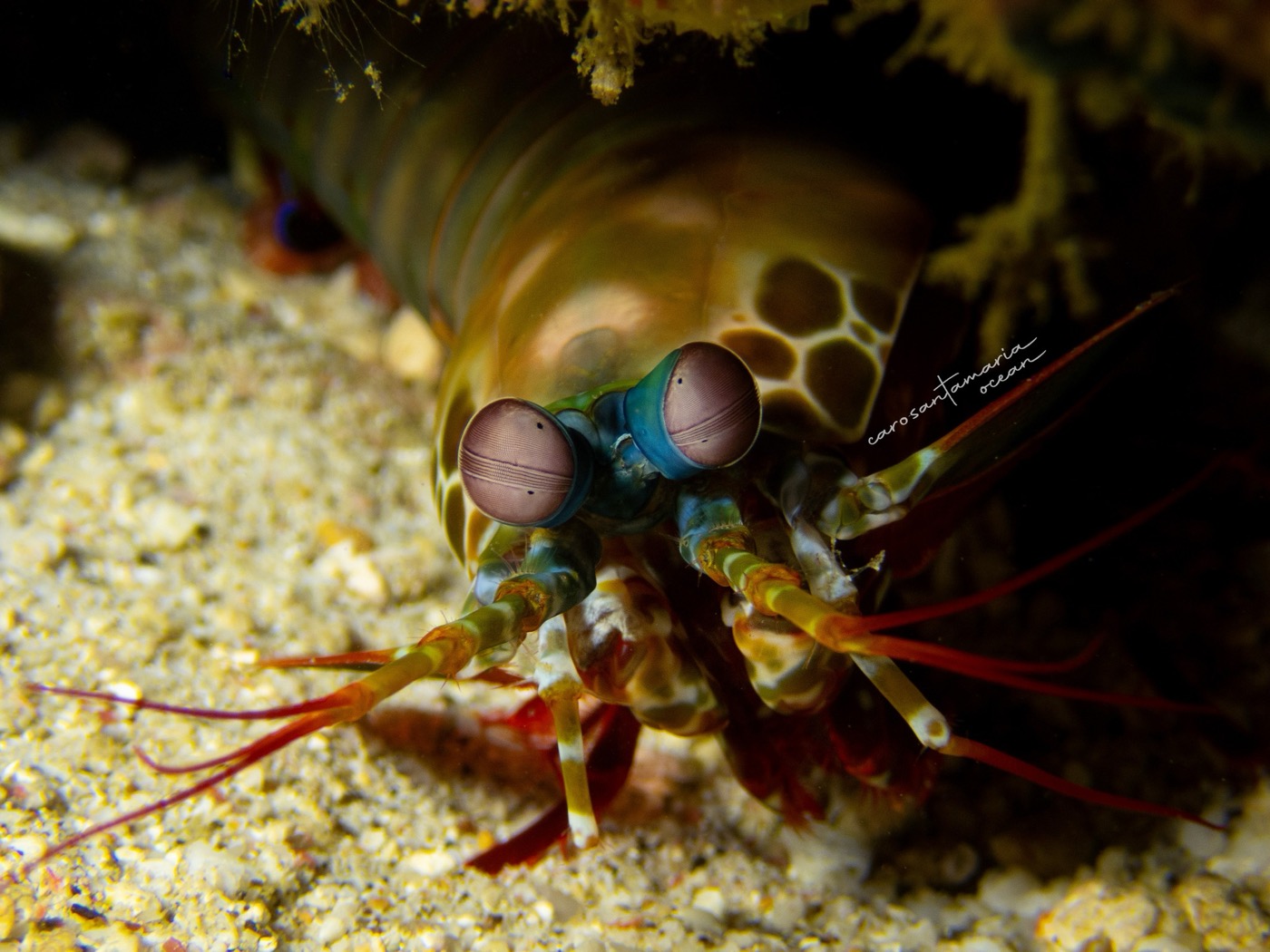
The first time you take a proper dive torch into a swim-through, or under an overhanging reef ledge, or into the eye sockets of a wreck, you understand something the dive briefing did not tell you: you have been seeing an inadequate version of every dive you have ever done. Colour returns. Detail emerges. Eyes look back at you from cracks you never knew were occupied. The reef you thought you were diving turns out to have been three quarters of the reef.
This is the case for buying a proper dive torch. It is also the gear divers most consistently put off buying, on the assumption that they will only use it on night dives, of which they plan to do approximately none. Both halves of that assumption are usually wrong.
What a Dive Torch Is For
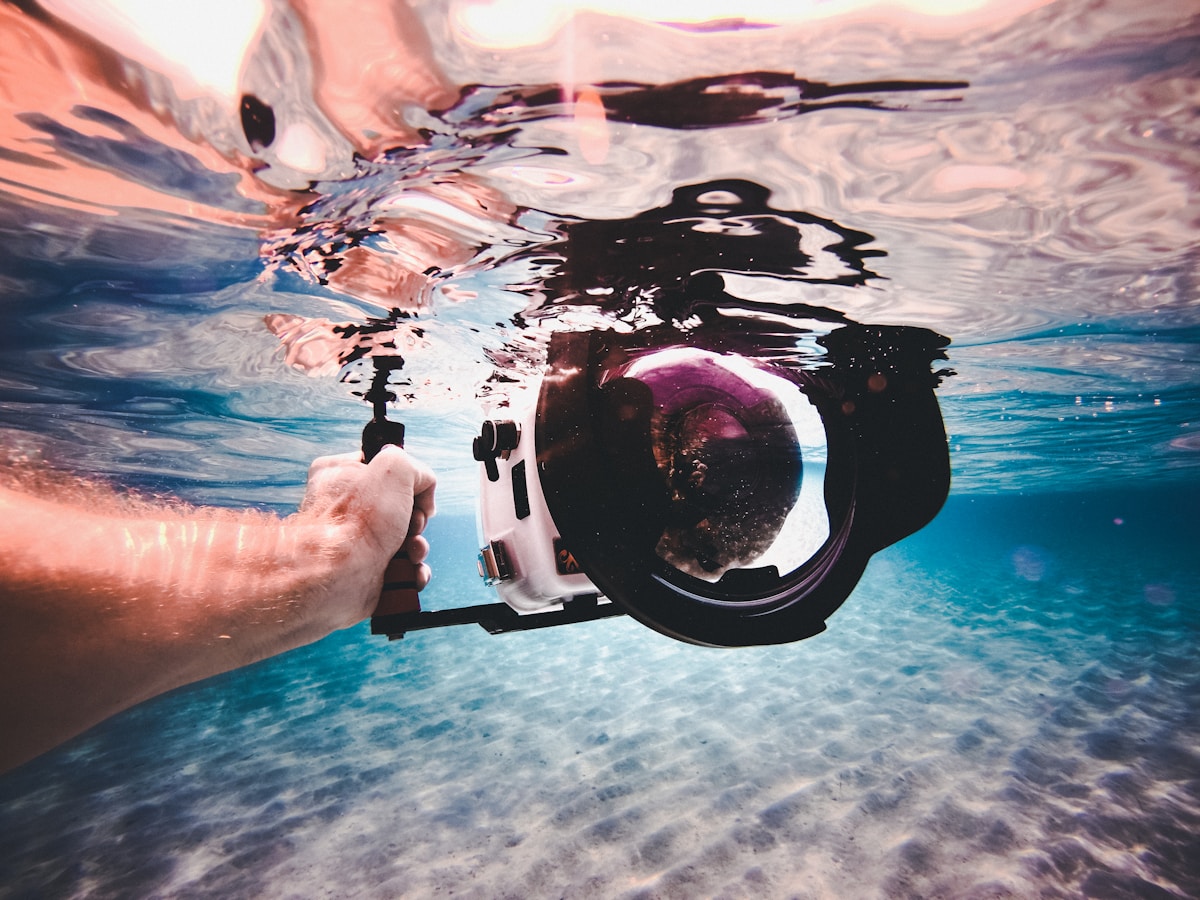
The obvious use is night diving. Less obvious, and more frequent, is daytime diving in any environment with overhangs, swim-throughs, caves, wrecks, deep walls, or anywhere the light is structurally limited. A torch is also useful for inspecting reef cracks and crevices for hidden marine life, octopuses, eels, frogfish, lobster, juvenile fish, that hide from sunlight by definition. Macro photography lighting is a third common use. A video light positioned correctly at close focus distance is often the difference between a flat record shot and a properly lit image. See the TG-6 macro photography guide for how video lights work at 1 centimetre focus distance, and the underwater camera guide for the broader strobe and housing picture. Signalling between buddies, particularly in low-visibility water or low-light conditions, is a fourth.
For technical divers, a torch is also a primary navigation and communication tool, used to mark gas switches, to signal position, and to identify line markers in caves. The requirements for technical diving are higher than for recreational use, and the equipment is correspondingly more specialised.
For most divers, the use case is the first three: structural light, marine life spotting, and night diving. A torch chosen for those uses is a different specification than one chosen for technical diving.
Lumens, Beam Angle, and What Actually Matters
The headline specification on most dive torches is lumen output, and the headline number is mostly misleading. A torch advertised at 5000 lumens is often a wide-flood torch designed for video work, where the high lumen rating is achieved by spreading the light across a 100-degree beam angle. The actual brightness in any given direction is far lower than a 1500-lumen torch with a 10-degree spotlight beam.
The two specifications that matter together are lumen output and beam angle. A narrow beam (8 to 12 degrees) concentrates the light into a tight spot that punches through water effectively, useful for spotting marine life and signalling. A wide beam (60 to 100 degrees) spreads the light over a broader field, useful for video lighting and general illumination but less effective at distance. Many recreational torches now offer adjustable beam angles, sometimes called zoom or focus, which is convenient.
For a first torch used primarily for daytime supplementary lighting and the occasional night dive, a 1000 to 1500 lumen torch with a narrow or adjustable beam is more than sufficient. Anything substantially more powerful is overkill for the use case.
The exception is video lighting, where you genuinely need 3000+ lumens at a wide beam angle to get usable footage. If video is part of your diving, you need a torch built for it; trying to use a spotlight as a video light produces unwatchable hot-spotted footage.
Burn Time
Burn time is the duration the torch will run at full power on a charged battery. The published numbers are usually optimistic, particularly in cold water, which reduces battery efficiency.
For recreational diving, you want burn time long enough to cover at least two full dives at full power without recharging. This typically means 90 minutes to two hours of rated burn time. Less than this and you will find yourself rationing torch use or carrying a backup, which defeats the purpose of having a torch in the first place.
Burn time is a function of battery capacity, lumen output, and the efficiency of the LED and electronics. Modern lithium-ion torches achieve significantly better burn times than older NiMH or alkaline-battery torches. Almost all serious dive torches now use rechargeable lithium-ion cells, usually 18650 or 21700 format.
Switches and Reliability
The single most common torch failure underwater is switch flooding. Magnetic and rotary switches are the two most reliable underwater switch types, both of which use a magnetic coupling or a sealed rotation rather than a button that breaks the o-ring seal. Push-button switches, common on cheaper torches, are more prone to flooding over time.
The second most common failure is o-ring failure at the battery cap. Rinsing the torch in fresh water after diving, lubricating o-rings with silicone grease before any battery change, and inspecting the o-ring for damage before reinstallation will dramatically extend torch life. Most torches that fail prematurely fail because of o-ring neglect, not manufacturing defects.
Brass and stainless steel construction are more durable than aluminum at the cost of weight. For a primary torch, this matters less than for backup torches. For tropical diving, aluminum is fine; for cold-water or technical diving, the additional weight of metal construction is offset by the durability benefit.
What to Buy
For a first torch covering recreational use:
Entry-level (50 to 100 USD): The Tovatec T1000, the OrcaTorch D530, or the Light & Motion Sola Dive 1200. Adequate output, decent build quality, and rechargeable lithium-ion batteries. These are the torches that will get you through most of your recreational diving without major regrets.
Mid-range (100 to 250 USD): The OrcaTorch D710, the Light & Motion Sola Dive 1200 SF, or the Big Blue AL1200P. Better switches, longer burn times, more robust construction. Worth the price difference if you dive frequently or expect to keep the torch for years.
Premium (250 USD and up): Halcyon, Hollis, Light Monkey, and similar brands. Built for technical and serious recreational use, with magnetic switches, brass or stainless construction, and runtimes measured in hours rather than minutes. These are the torches you buy once and use for a decade.
For a backup torch, and every diver should carry one once they start night diving or wreck diving regularly, a small, simple torch with a long burn time and an independent battery is more important than a powerful one. The OrcaTorch D560 and similar 30-USD torches do this job perfectly well.
What Else to Carry
If you are buying a torch, consider also: a wrist lanyard, so the torch does not vanish when you drop it; a torch holder on your BCD, so you have somewhere to put it when you need both hands; spare batteries and o-rings, particularly on dive trips; a backup torch on any night or wreck dive.
The torch is a piece of gear that pays back its cost on every dive once you start using it. Most divers, once they start carrying one, never dive without one again. For what it unlocks at night, read about the whitetip sharks at Malpelo or the Salem Express wreck, the two dives where I use a torch most. If you are building a full kit, see how the torch fits into the forever kit.