Choosing the right operator for Malpelo is not a small decision. The crossing is 36 hours each way. You will spend eight days on a single vessel with the same team, diving up to four times a day in some of the most demanding conditions in Colombian waters, and you will be doing it in a place where weather windows close fast and the difference between a great trip and a frustrating one is mostly down to how the team reads the day.
We went with DivingLife, on their Sea Wolf liveaboard, on what turned into one of the most extraordinary diving weeks of my life. We would not hesitate to go with them again, and I continue to recommend them to anyone diving the area.
This post is about why.
Who DivingLife Are
DivingLife is a Colombian marine tourism agency with offices in Colombia, operating liveaboard expeditions to Malpelo as well as trips to San Andrés, Providencia, and international destinations including the Maldives. They are a PADI-authorised dive school, registered with the Colombian Registro Nacional de Turismo (RNT #115032), and partnered with DAN (Divers Alert Network) and WWF.
They are not a generic booking platform. They are a team of Colombian divers who know the Pacific, know Malpelo, and have been running expeditions to the island long enough to have built a loyal repeat client base. Their stated mission, enamoramos a la gente del mar, we inspire people’s passion for the ocean, is not just marketing copy. It shows in how the trip is run, in the marine biology briefings, in the way the crew talks about the place.
The Sea Wolf
The Sea Wolf is the boat the trip lives on, and a Malpelo liveaboard is, before anything else, a story about its boat. So this section gets the detail.
She is a 34-metre yacht, originally built in 1979 and fully renovated in 2019, with a six-metre beam, 2.4-metre draft, and aluminium hull. Three diesel engines at 600 horsepower each push her at a comfortable twelve-knot cruise and a top speed of sixteen. That speed matters on the Buenaventura crossing, the faster you are through open Pacific water, the less time you spend on the swell.
She accommodates up to 21 divers across eight cabins on the upper and lower decks. The configurations are mixed: doubles, twins, triples, and quads, with both en-suite and shared bathroom layouts in the original spec, all reconfigured in the 2019 refit so that every cabin now has its own en-suite. The cabins are not large. No liveaboard cabin really is, and the Sea Wolf is at the more compact end of the range. They are clean, well-organised, and quiet. The lower-deck cabins are noticeably steadier than the upper deck on the crossing; if you are sensitive to motion, ask for a lower-deck booking.
The dive deck is generous for a vessel of this size. Tanks are racked along the rear, gear stays set up between dives, and the crew handles your kit in and out of the zodiacs without you having to lift it. There are warm-water showers right at the back of the dive deck for rinsing off after each dive. A separate camera-rinse tank is set up alongside.
There is a sun deck, a covered terrace lounge, and a jacuzzi on the upper deck, which is more useful than it sounds after a 17-degree dive at La Nevera. The dining room serves three meals a day plus snacks, with a Colombian-influenced menu that flexes for vegetarian, vegan, or pescatarian preferences if you flag them ahead of time. Coffee is constant. Drinks are included.
A note on gas: the Sea Wolf runs air only, not nitrox. For most divers and most of Malpelo’s recreational depths, air is fine. If you have built nitrox into your standard practice, factor that in.
The Zodiacs
Three rigid-bottom inflatable zodiacs sit on the dive deck. Five metres each, fibreglass-bottomed, with reliable outboards. These are the working tools of the trip and they shape how the diving feels.
Malpelo is not boat-tie-up diving. The Sea Wolf does not anchor on the dive sites. There is no anchorage, the water is too deep, and the sites themselves are exposed to current. Instead, the divemasters move divers in groups of four to six into the zodiacs, run them out to the site, brief them in the zodiac, and drop them. Twenty minutes per drop, two or three drops per day for each diver.
The standard entry is a negative entry. You sit on the tube of the zodiac in full kit, mask down, regulator in, BCD empty, fins back. On the divemaster’s call, you roll backwards. You do not surface. You descend straight down to the group depth, twenty or twenty-five metres typically, where the divemaster regroups everyone in the lee of the seamount. Then the dive begins.
This is non-negotiable on most Malpelo sites. The surface current is strong enough to sweep you off the seamount in seconds. If you stay on the surface for buddy checks, you will lose the dive site before you reach it. Buddy checks happen on the Sea Wolf before you board the zodiac, the negative entry is the actual descent.
DivingLife’s divemasters brief this thoroughly on day one and do not skip it on subsequent days, even with experienced divers. They take the system seriously, which is why it works.
The Expedition
DivingLife runs Malpelo as an eight-day liveaboard expedition departing from Buenaventura. The standard itinerary is roughly:
- Day 1. Boarding in the late afternoon. Welcome briefing at 7pm, dinner at 8, departure shortly after into the open Pacific. The crossing runs through the night and into the next day.
- Days 2 to 6. Diving at Malpelo. Three to four dives per day, typically two morning dives, lunch, an afternoon dive, and on some days a fourth before sunset. Night dives are not permitted at Malpelo, all operations are day dives only.
- Day 7. Final dives in the morning, then the return crossing in the afternoon and through the night.
- Day 8. Arrival back into Buenaventura in the early morning, breakfast on board, disembark.
The exact itinerary flexes with weather and conditions. Five full days at the island is the realistic target. The dive sites are chosen morning by morning by the divemasters and the captain, based on current, swell, visibility, and wind. You do not pre-book sites. You arrive, the crew reads the day, and the call is made.
Briefings happen before every dive, in detail, on the dive deck. The marine biologist on board adds context to the species you are likely to see at the site, which is part of why diving with DivingLife specifically is different from going with a generic operator. You are not just dropped on rocks and recovered an hour later. You leave the trip understanding the ecosystem you have been diving in.
The Trip We Did
The expedition we made with DivingLife in October 2024 will probably be the trip I tell people about for the rest of my life.
It happened between dives. We were on the deck of the Sea Wolf in the surface interval when the dorsal fins broke the surface less than a kilometre off the boat. Three orcas, cruising past Malpelo on the only day they have ever been recorded there. The next minutes were frantic and unplanned: gear pulled out fast, snorkels and fins, a zodiac launched, divers going over the side to try to get in the water with them before they moved on. They moved faster than we could close the distance. One small group out of our boat got a fleeting underwater encounter; the rest of us watched the surface from the zodiacs and the deck as the orcas cruised past the island and were gone. By that evening, the news had broken in Colombia. Within twenty-four hours, El Espectador, El Tiempo, and Caracol were all carrying it. Parques Nacionales Naturales de Colombia confirmed it formally that night: the first orca sighting ever recorded in the Malpelo Sanctuary.
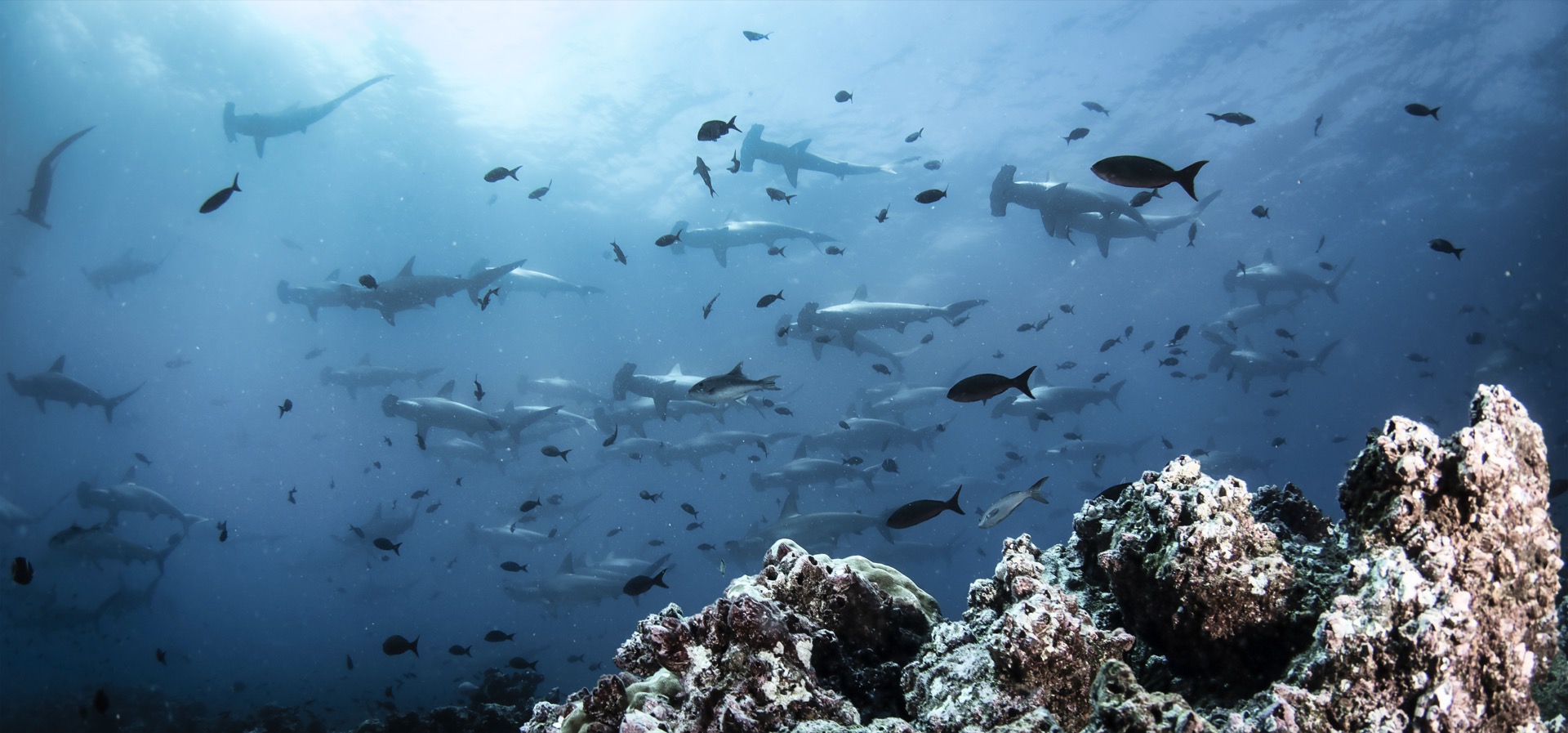
Across the same eight days we logged four tiger sharks at depth. Tiger sharks were historically rare at Malpelo, and four on a single trip is not the norm. The crew said it was the best week they could remember.
Both encounters happened on a DivingLife-run trip. Neither was on the briefing for the day. They happened because the boat was at Malpelo, the divemasters were paying attention to the conditions, and the radio chatter and dive scheduling let the divers be in the water at the right moments. That is what a good liveaboard operator buys you. Not guarantees, the ocean does not work that way, but the highest possible chance of being in the right place when something extraordinary happens.
What Sets DivingLife Apart
A few things stood out across the eight days.
They are Colombian. This sounds obvious but it matters. The team understands the Pacific in a way that operators flying in from elsewhere do not. Buenaventura is their home port. Malpelo is their dive site. They bring local knowledge that translates into better briefings, smarter site selection, and a confidence in the water that is hard to manufacture. The crew also speaks fluent English alongside Spanish, the trip is fully bilingual.
The conservation thread is genuine. DivingLife partners with WWF and incorporates marine biology expertise into every expedition. On our trip the marine biologist was on the dive deck for every briefing and at the table for every meal. That is the difference between a trip that shows you sharks and a trip that shows you why the sharks are there, why the protections matter, and what is at stake. That commitment connects directly to the wider work of keeping Malpelo protected from the illegal fishing fleets that push into the sanctuary.
The dive operations are tight. Eight days on a liveaboard is a long time to get the small things wrong. The food, the dive scheduling, the safety briefings, the equipment checks, the zodiac handling, the recoveries at the surface, the speed with which they pushed a zodiac and freediving kit out the moment the orca dorsals broke the surface, none of it felt improvised. DivingLife runs a serious operation.
They take certification minimums seriously. Advanced Open Water plus a minimum of 35 logged dives is the published floor, and they do not negotiate down from it. That sounds restrictive until you have watched what the current at Bajo del Monstruo actually does to a diver who is not ready for it. The minimums exist for a reason and DivingLife respects them, which is part of why the safety record on these expeditions is what it is.
The repeat client base. A meaningful proportion of the divers on our trip had been with DivingLife before. The Ocean Miles loyalty programme exists because the trips earn the repeat business. That is the cleanest signal you can get from any operator.
What to Pack
A few specifics that will save you a bad day:
- Exposure protection. A 5mm wetsuit was generally adequate for me on October dives, but you must dive with gloves at Malpelo and a hood is strongly recommended. For January-to-April trips, the cold-water season, divers move up to 7mm or drysuits as the upwellings push the water into the high teens at depth more often. La Nevera is consistently the coldest site on the island.
- Personal locator beacon. A Nautilus Lifeline GPS or equivalent is part of the mandatory dive kit at Malpelo, the requirement traces back to the 2016 Maria Patricia tragedy where five divers were swept off a site and two were lost. DivingLife provides one for every diver on the trip; wear it on every dive.
- Gloves are mandatory. No reef hooks at Malpelo. The system is gloves so you can grip the rock directly and hold position on the seamount as the current pushes through.
- Surface marker buoy and reel. The divemaster carries one, but a personal SMB is sensible at any current-exposed dive site, and Malpelo recoveries happen on the SMB.
- A torch or video lights. Useful at depth and inside the cave swim-throughs at La Catedral and La Gringa. A quality dive torch is worth the investment if you do not already shoot video, or Backscatter video lights if you do, which is what I run on every Malpelo dive. Note that Malpelo does not permit night dives, so the lighting is for daytime use only.
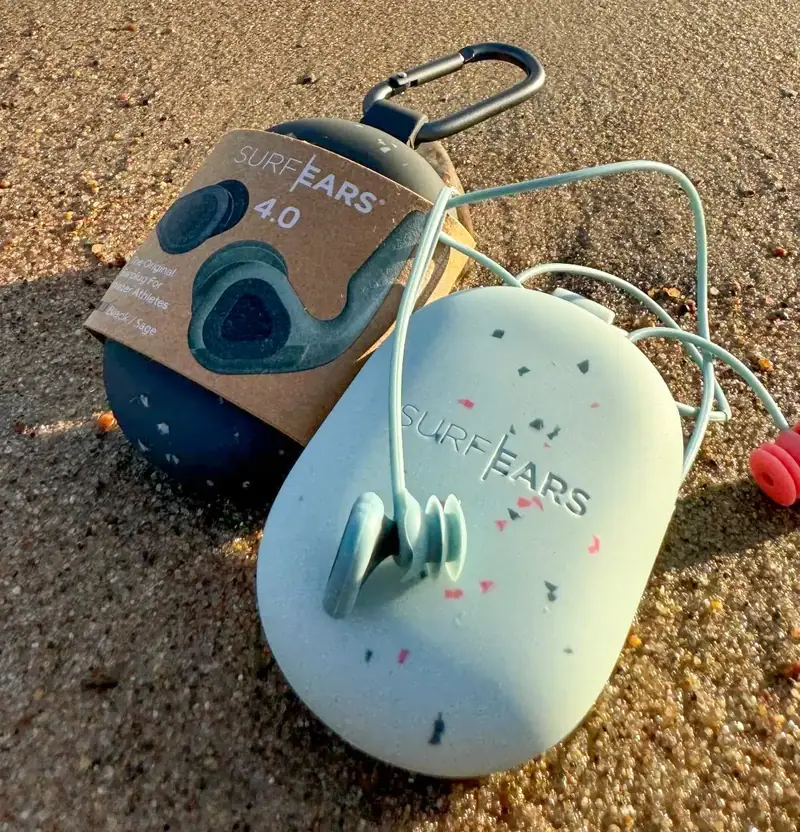
- Ear protection. Three to four dives a day for five days running is a lot of repetitions. After years of chronic ear infections, Surf Ears 4.0 are now permanent kit for me on any liveaboard.
- Seasickness medication. Take it before the swell starts. The crossing can be rough either way.
- Camera kit. A wide-lens setup, this is pelagic photography territory. Mid-range strobes are sufficient, ambient blue is the dominant aesthetic.
Practical Details
DivingLife runs an Ocean Miles loyalty programme, so if Malpelo becomes the first of several trips, repeat clients receive exclusive benefits. They are also a strong choice for trips beyond Malpelo, San Andrés, Providencia, the Maldives, if you build a relationship with the team.
To book or enquire:
- Website: divinglife.co
- Email: marketing@divinglife.co
- WhatsApp: +57 3234325818
For everything you need to know about what you will encounter in the water once you arrive, read the full Malpelo diving guide. For the broader story of how Malpelo’s protections were built and are defended, read the Malpelo conservation post.