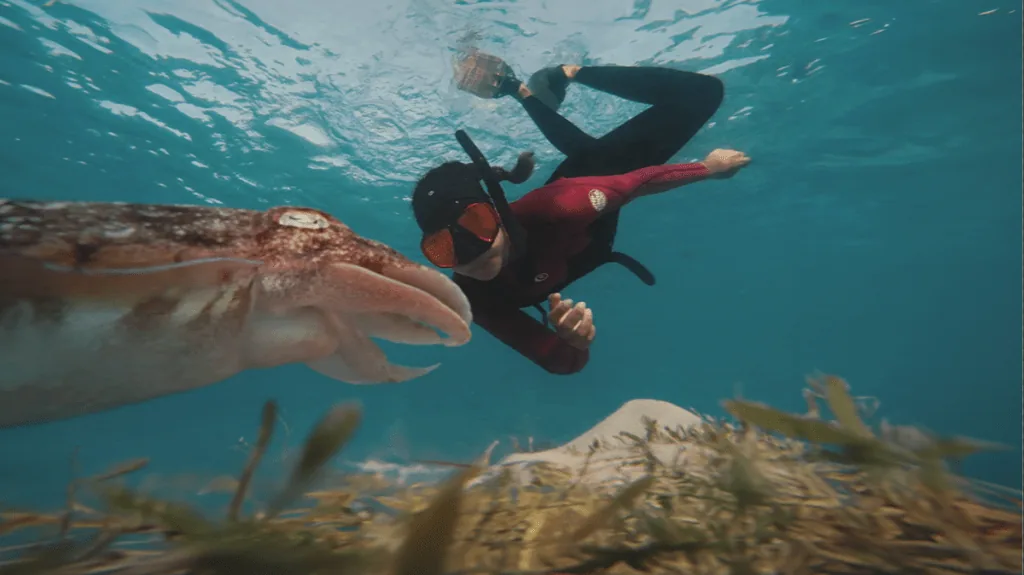
Freediving was something I was doing long before I knew it had a name. Long breathholds on snorkel, hovering at five metres over a coral head, stretching one breath as far as it would go just to stay in a particular moment a little longer. I didn’t call it freediving. I called it snorkelling.
I came to all of this late. I grew up landlocked in Medellín and did not learn to swim properly until my late twenties. The first time I held my breath under the surface for any meaningful length of time, I was already a fully grown adult who had not been a swimmer for most of her life. I say that because if you are reading this and quietly thinking you are not the right kind of person for freediving, I was probably less of a candidate than you are now, and the ocean did not seem to mind.
The day I took a proper course, I understood the difference. Freediving is snorkelling with intention, and the intention changes everything.
Where I Trained
I did my AIDA Level 2 with Pranamaya Mexico in Playa del Carmen. They run small, careful courses out of one of the best freediving classrooms in the world: warm Caribbean water, the cenotes a short drive inland for the depth sessions, and a teaching style that prioritises technique and breath over chasing numbers. I did not go to Pranamaya to set personal depth records. I went to learn the discipline, the breath protocols, the equalisation work, the safety drills, and to understand what was happening to me when I was under.
That distinction matters. AIDA Level 2 is not a depth-bragging course. It is the level where freediving stops being something you can self-teach and becomes a real practice with structure underneath it. By the end of the course I had a 2.5-minute dry static breathhold and was comfortable to 25 metres on a line. Both of those numbers, from where I had started a few years earlier as a non-swimmer, would have seemed impossible to me. The point of writing this is not the numbers. It is that the gap between the person who could not swim and the person doing 2.5 minutes on the breath is much smaller than it looks. The body learns. The breath learns faster.
What Freediving Actually Feels Like
This is the part most beginner guides skip and it is the part that decides whether you stay with it.
The first half of any breathhold dive is calm. You descend, you find your line, you settle. The second half is where the discipline begins. Your body starts to send signals. The diaphragm contracts, then contracts again, then begins to convulse in an involuntary rhythm that any trained freediver will recognise immediately. The contractions are not the end of the dive. They are the body asking, politely at first and then less politely, whether you are sure about this.
Past the contractions, if you stay relaxed and trust your training, there is a particular state on the line that is hard to describe to anyone who has not felt it. The body quiets. The mind quiets with it. The depth, the line, the surface, all of them stop being separate things and become one continuous moment. That is the euphoria freedivers talk about, and it is real. It is also why the discipline is mentally addictive in a way scuba is not.
Then you come up. You breathe. You sometimes laugh. Sometimes you cry. Either is normal.
I have an enormous amount of respect for anyone who chooses to push past where I push. The professional freedivers operating at 80, 100, 120 metres are not, in any sense I can understand, doing the same sport I am doing. The mental fight at those depths is on a scale recreational freedivers do not approach. Watch their interviews after deep attempts and what you see is people who have been somewhere genuinely far away inside their own bodies. I do not aspire to that. But I admire it from a distance.
What Is Freediving?
Freediving, also called apnea, is diving on a single breath without any breathing equipment. No tank, no regulator, no bubbles. Just you, the water, and however long your body and mind will let you stay under.
What makes it distinct from simply holding your breath is training. You learn to breathe correctly before a dive, to relax the muscles that consume oxygen, to read your body’s signals, and to move efficiently enough that the breath you take at the surface lasts far longer than you’d expect. The physical training matters. The mental training matters more.
Why People Fall In Love With It
Scuba diving is extraordinary. But bubbles are noise, they hiss, they distract, and most marine animals know exactly what they mean. A freediver enters the water in silence. The animals behave differently around someone who is simply holding their breath and moving slowly. Dolphins come close. Sea turtles don’t flee. A cuttlefish that would pivot away from a scuba diver will sometimes just watch you.
Beyond the wildlife encounters, freediving offers something harder to explain: the particular calm of being temporarily cut off from the surface. With no air supply, you are exactly as present as your breath allows. Anxiety about what’s above the water doesn’t survive the descent.
It also translates directly to scuba. Freedivers tend to have exceptional buoyancy, efficient fin kicks, and genuine comfort in open water. If you are considering both paths, read how to become a certified scuba diver alongside this guide.
What You Need Before You Start
- Swimming: Comfortable open-water swimming is a prerequisite. Not speed, ease. You need to be relaxed in open water before you can be relaxed under it.
- Physical condition: Cardiovascular fitness, flexibility, and breath capacity all help, but none of them need to be exceptional at the start. They improve fast with training.
- Mental readiness: Freediving requires a specific calm. If you experience strong anxiety in open water, it’s worth addressing that before enrolling. A conversation with your instructor beforehand is always the right starting point.
Getting Certified
Snorkelling experience is a natural foundation, but a formal course is not optional once you’re diving from boats or renting gear at dive centres. More importantly, the things a course teaches, proper breathe-up technique, equalisation, how to read your body’s signals, rescue protocols, are what keep freediving safe. Self-teaching through videos is dangerous here in a way most beginners do not recognise.
For landlocked students, certification trips are a common option and often organised through the agencies themselves.
Which agency? AIDA is the most globally recognised, the agency behind major international competitions, and the one I trained with. Molchanovs is the fastest growing alternative, built around a thoughtful training methodology developed by the Molchanov family and increasingly the choice of serious recreational and competitive freedivers. Either is a strong choice.
A beginner course typically covers breathing technique, stretching and relaxation, static apnea, depth training to around 20 metres, and rescue skills. Expect three to four days and 250 to 500 USD depending on location.
If you are anywhere near the Riviera Maya, Pranamaya Mexico is where I would send anyone starting out. The cenotes alone are worth the trip; the teaching is the reason you stay.
Recreational vs. Competitive
Most freedivers never compete and have no interest in doing so. Recreational freediving means moving through the water quietly, watching animals, meditating in blue, occasionally trying to go a little deeper. The discipline is internal rather than comparative.
Competitive freediving is a separate pursuit, structured training, progressive depth targets, safety protocols for deep dives, and events governed by AIDA and CMAS. It is beautiful to watch. It is intense to pursue. You do not need it to love the sport.
For me, the goal has never been depth. It has been the technique, the intention, and the breath. I have logged my 25-metre dives slowly, with care, and the meaning of those dives has nothing to do with the number on a line.
Gear
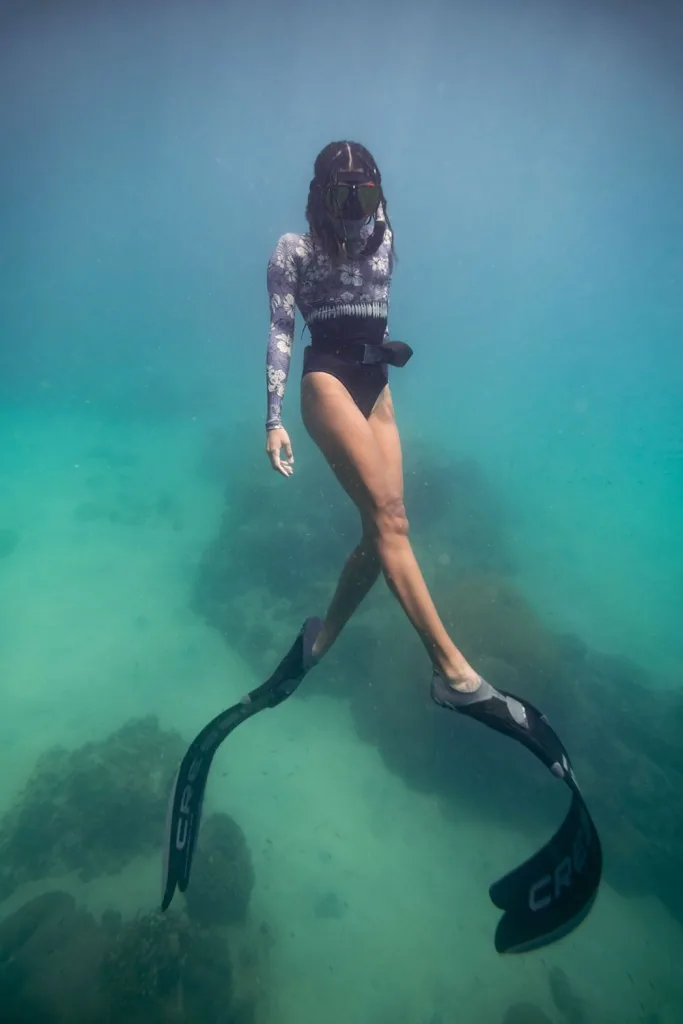
Freediving gear is minimal compared to scuba, which is part of the appeal.
- Mask: Low-volume freediving masks are designed specifically for easy equalisation at depth, standard scuba masks hold too much air in the lens space
- Snorkel: Simple, no purge valve. Purge valves add resistance you don’t want
- Fins: Long blade fins are the defining piece of equipment. The length converts minimal effort into significant glide, the whole point is efficiency. Beginners start with fibreglass or plastic blades; carbon fibre comes later
- Wetsuit: Thin and stretchy, 3mm or 5mm depending on water temperature. Freediving wetsuits use open-cell neoprene on the inside, which seals against the skin and provides more warmth per millimetre than a scuba suit
- Weight belt: A rubber belt sits at the hips rather than the waist and counteracts wetsuit buoyancy. The right weighting makes you neutrally buoyant at 10 to 15 metres, you stop having to kick down, and you stop having to kick up
- Dive computer: Not essential for casual shallow diving, but useful for tracking depth and surface intervals. Some freediving-specific computers add dedicated surface interval timers and dive logs
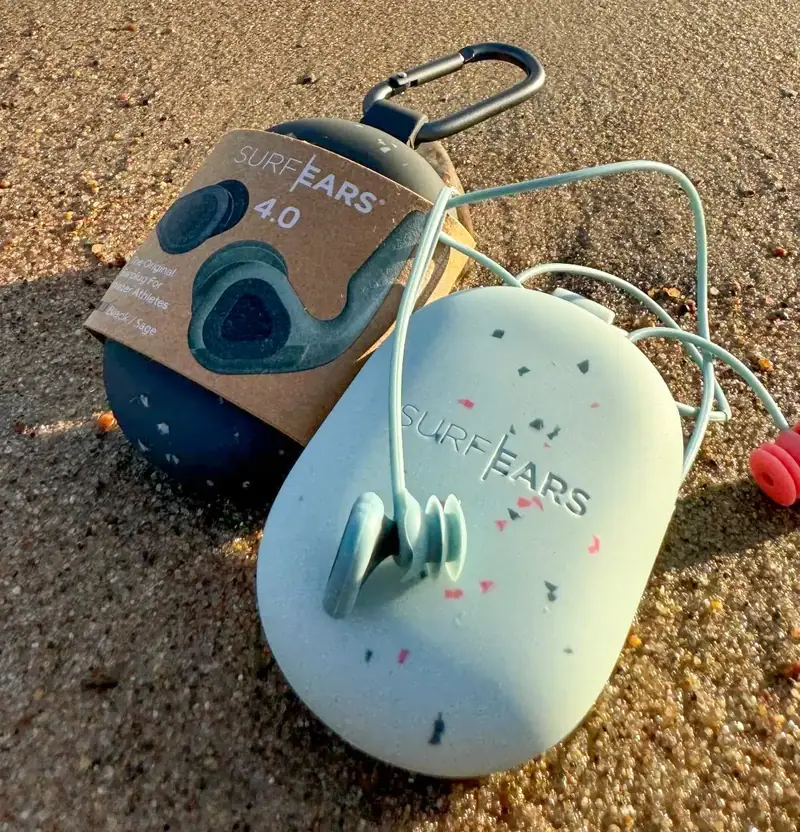
- Ear protection: Often overlooked. Freedivers do high repetitions in the water, and repeated exposure to cold or moving water is exactly what triggers chronic ear infections. Surf Ears are worth adding to the kit list early
The Learning Curve
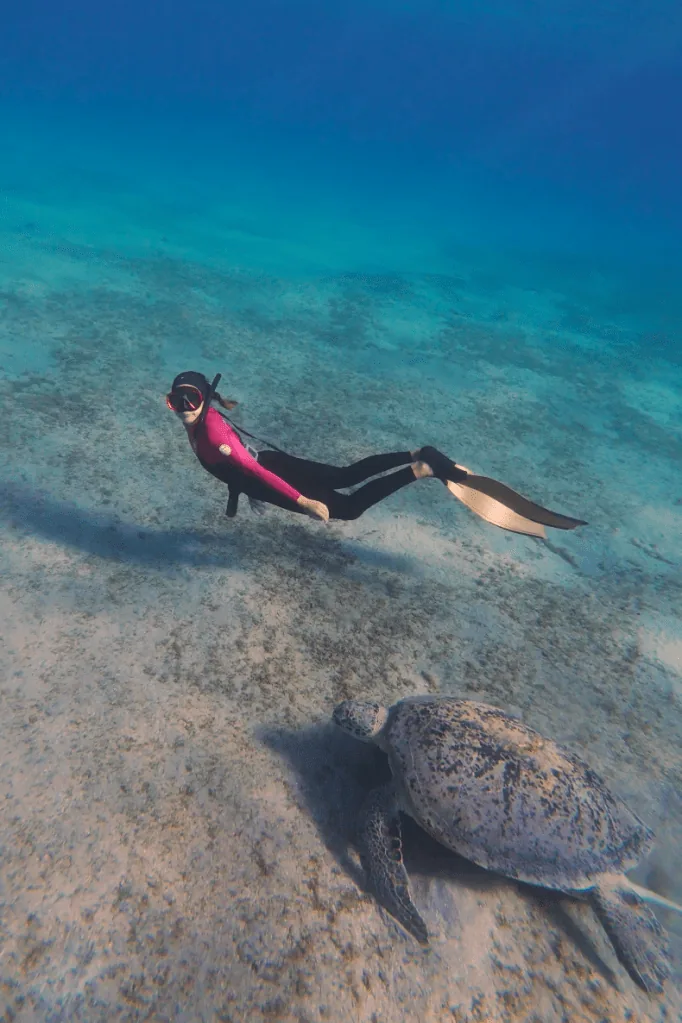
The first breathhold at the surface always feels short. By the end of a course, most students are surprised by how much longer the same breath lasts when the body is trained to relax rather than tense.
Freediving improves continuously with practice, not gruelling practice, but consistent time in the water. The body adapts. The mind adapts faster. The dives that felt long at 10 metres feel short at 20 metres, and what you find at 20 metres you never reached on the first day.
Go slowly. Breathe well. The depth takes care of itself.