If you wish to become a scuba diver or if the underwater world has simply sparked your curiosity, you’ve landed in the right place.
Before you fully immerse yourself, let’s start by dipping your toes into the basics. Scuba diving is more than a pastime, it’s a lifestyle and a commitment to exploring the grandiose underwater world.
A note before any of that. I came to all of this late. I grew up in Medellín, in a country I had never seen the ocean of, and I did not learn to swim until my late twenties. I started my scuba course as a non-swimmer with the basics barely under control. If reading the rest of this guide makes you wonder whether you are the right kind of person to be reading it, you almost certainly are. The water does not check your résumé.
Picture this. Turquoise waters, schools of colourful fish, the feeling of weightlessness as you float among the coral gardens and the most beautiful creatures you could ever encounter. Intrigued? Here’s how to do it.
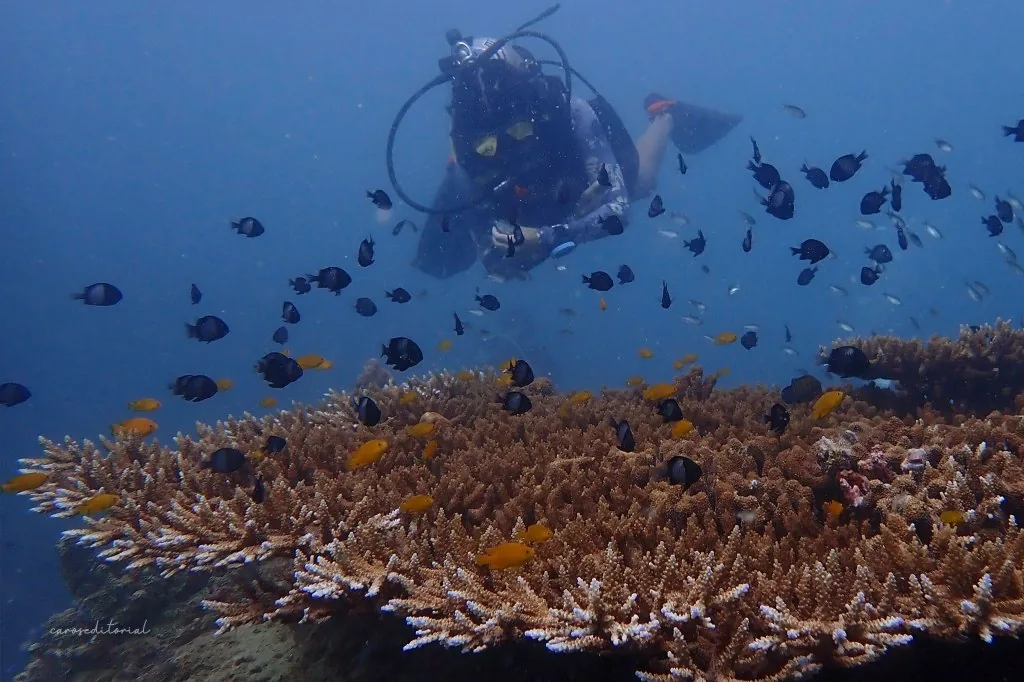
Step 1: Discover Scuba Dive
The first thing you’ll do is sign up for a Discover Scuba Diving experience (DSD). This introductory course (not a certification) is basically a trial. It gives you a taste of the underwater world under the guidance of experienced instructors.
You do this to decide if scuba diving is indeed something you enjoy or if it’s just a one-time thing you did on vacation. During this session, they’ll teach you the basics: how to use the equipment, breathe underwater, and perform very basic scuba skills. You usually start in a pool, and then they’ll take you to shallow open waters so you can dive for the very first time.
My first DSD experience was back in 2014, fascinating but overwhelming. I wasn’t comfortable in the water, and all the gear felt extremely heavy and constricting. It was only in 2023 that I finally gave scuba diving another try, got certified, became obsessed with it, and the rest is history.
As you can imagine, this first dive can make or break your future as a scuba diver. Find a reputable dive center, always check credentials and customer reviews, and make sure you have a positive experience.
Depending on the location, the cost of a Discover Scuba Diving experience ranges from $60 to $150 USD.
Before you sign up, know that you need to be physically fit. They will give you a medical questionnaire to fill out. Also, having a positive mindset is key, staying calm underwater is one of the most important elements in scuba diving.
Step 2: Open Water Certification
After deciding that scuba diving is for you, enroll in a scuba diving certification course. The most popular agencies worldwide are PADI and SSI. I personally chose PADI because you’ll find them everywhere.
The Open Water (OW) certification typically goes like this:
-
Study the theory: Either a self-guided online course or classroom instruction. This part is extensive, I recommend starting at least a week before your first physical session and breaking the content into manageable studying blocks.
-
Confined water skills: You need to demonstrate that you can swim proficiently for 200 metres without touching the pool bottom using any stroke you prefer, as well as tread water or float for 10 minutes. Then you’ll go through all the basic skills with your instructor.
-
4 Open Water dives: Now it’s time to practice everything you’ve learned. You’ll do 2 dives a day, up to 20 metres (the Open Water limit). Your instructor will test some skills, but then you can just enjoy the new world you’ve earned access to!
Depending on the location, the Open Water Diver course typically costs between $250 and $700 USD.
Step 3: Dive, Dive, Dive
The ocean is an immense playground, and each dive is a new adventure. Practice makes perfect, and the more you dive, the better you’ll get at executing all your skills and feeling more comfortable in the water.
Explore different dive sites, encounter marine life, master your buoyancy, and refine your skills with each descent. There’s no shortcut to this crucial step!
Step 4: Learn About the Ocean
The learning doesn’t stop once you get your certifications, it actually never stops! Become familiar with marine life, learn their behaviors, and understand how to act around them. Recognize environmental conditions and know what to do under different circumstances.
If breath-hold diving interests you alongside scuba, the freediving beginner’s guide is a natural next read. The two disciplines complement each other more than most people expect.
You can join diving communities online where you’re constantly learning from other divers. If you’re a woman, I recommend these Facebook groups:
- Girls That Scuba
- Scuba Women
Step 5: Level Up, Advanced Open Water Certification
After completing your OW certification, don’t rush the process. I did 25 fun dives in which I consistently practiced all my open water skills, and only once I felt ready did I sign up for my AOW certification.
The AOW course feels much easier since you’re more familiar with the scuba world. It consists of both theoretical knowledge development and five adventure dives:
- Mandatory: Deep Dive and Underwater Navigation Dive
- Elective (choose 3): Peak Performance Buoyancy, Wreck Diving, Night Diving, and others based on your interests and local conditions
Depending on the location, the Advanced Open Water Diver course typically costs between $250 and $700 USD.
Step 6: Gear Up Like a Pro
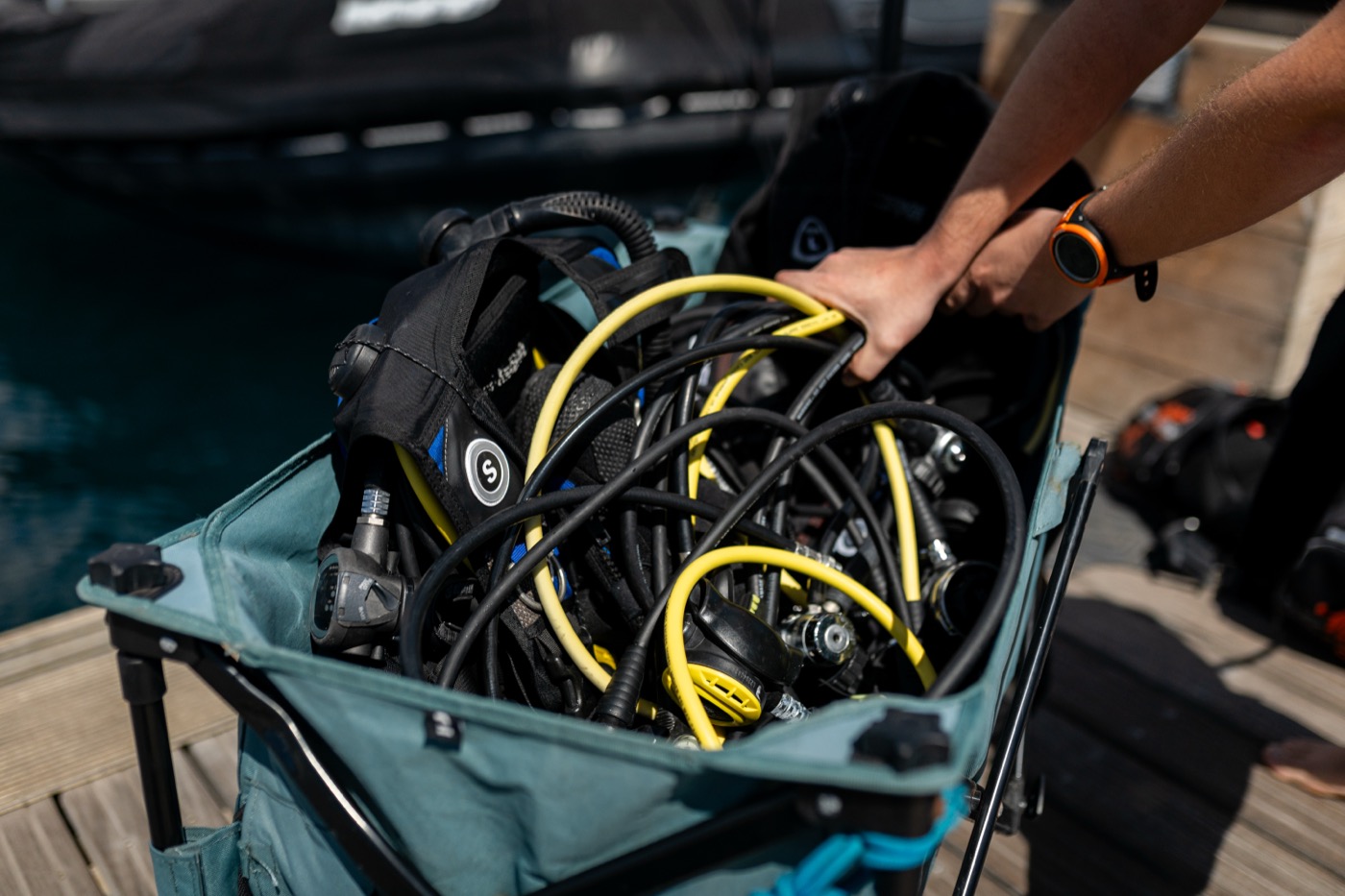
I did my first 100 dives with rental gear. Although BCDs and fins were fine, using communal regulators wasn’t ideal. Waiting to buy gear turned out to be great because I learned what I liked and didn’t like based on real experience.
When I finally invested in my own gear, the shopping process was more involved than expected. I’ve since written detailed guides to help you get it right: start with choosing the right regulator, the most critical piece of kit you’ll ever buy, then work through BCD selection, dive computer, and wetsuit thickness. If you want the full picture in one place, the forever kit guide covers all six pieces worth buying once and keeping for a decade.
Step 7: Challenge Yourself
At this point, you’re a confident diver with many dives under your belt. You could pursue additional certifications and see where your path leads: dive master, instructor, tech diving, cave diving, wreck diving, or even commercial diving. The possibilities are endless.
I personally make scuba diving a significant part of my life because it feels like entering a different dimension. The ocean is simply magnificent, a place where I go to connect with myself and the magical creatures I find along the way.
Whatever has motivated you to get into scuba diving, I hope this guide helps you start your own journey. Happy diving!