I avoided pools and the ocean for a big part of my life. As a kid, having even a little fun in the water would more often than not land me in the emergency room with a painful ear infection. That is one of the main reasons it took me so long to try scuba diving. I had accepted that I was simply prone to ear infections, and that the only way to prevent them was to stay out of the water, no matter how much fun I knew I was missing. Learning how to prevent ear infections while scuba diving turned out to be the thing that finally let me stay in.
Scuba diving kept enticing me, and when I finally tried it, I was hooked for life. Surprisingly, I did not even have the usual early struggles with equalisation during my Open Water dives, so it seemed like ear issues were a thing of my past. I was thrilled. Then, 237 dives in, an algae bloom hit the waters where I was diving three times a day for months, and it ended my clean record in the most agonising way. I was diagnosed with otitis externa, commonly known as “swimmer’s ear” or “diver’s ear”: an infection that occurs when water gets trapped in the ear canal, creating a warm, moist environment where bacteria or fungi thrive.
Ear infections while scuba diving
The early symptoms usually start subtly: itching in the ear canal, mild discomfort that worsens when you tug on the outer ear or press the small flap in front of the canal, redness inside the ear, a feeling of fullness or blockage, slight swelling of the canal, and sometimes clear, odourless drainage.
Left untreated, it progresses: pain intensifies and can become severe, hearing becomes muffled as swelling narrows the canal, discharge grows heavier (and may turn pus-like or foul-smelling), and swelling can spread to the lymph nodes around the ear or jaw. In more serious cases, fever sets in.
It is a deep, throbbing ache that starts behind the ear canal and radiates through your jaw, your teeth, the side of your face, the kind that wakes you at three in the morning (or, in my case, forces you to spend your birthday in a hospital 💀), and leaves you lying in the dark with your jaw clenched, already knowing you will have to text the dive centre and cancel tomorrow’s dives. It can last seven days, sometimes ten. For a recreational diver, that means precious time off, wasted. For a dive professional, it means time out of work, unable to do the one thing your whole livelihood is built around.
The usual treatment for an ear infection of this kind starts with something indisputable: keep the ears dry. Depending on the specific case, you might be prescribed special ear drops or a drying agent. If it is more severe, you will be given antibiotics.
The most effective way is to actually prevent the issue in the first place, which means keeping water from sitting in your ear canal. Dry your ears thoroughly after every dive, avoid inserting anything (like cotton swabs) that can push moisture or wax further in, and consider using drying drops (like a vinegar and alcohol mix) after diving. I also used to keep saline water in my dry bag to rinse my ears after every dive, as it helps remove salt and any other debris that could be sitting there.
What chronic ear infections actually cost
People who have not experienced chronic ear infections tend to think of them the way they think of a cold. Unpleasant, temporary, something you push through. They are not that. At their worst, they are debilitating. I have pulled out of guided dives last-minute with divers who had flown in for the trip, because I could not safely be in the water. That is the responsible thing to do, but I have also witnessed colleagues push their limits and say “it’ll be fine”, only to face the severe consequences diving with an ear infection can bring. To try and save one shift, they end up in a much worse situation, like bursting an eardrum, needing surgery and being told they cannot dive for a minimum of six months.
I have also known recreational divers who have had to sit out dive trips, including liveaboards, that they had been looking forward to for months or even years and spent a small fortune on.
The real cost was never just physical. When you are a dive professional, your income, your reputation, and your passion are all the same thing. Being in the water is not optional. A missed dive is a missed paycheck, a cancelled trip, a diver who waited months for the day you said you would guide them. It is the slow erosion of the work you spend years building. And it is missing the ocean, which for many is not a small thing.
Then there are the medical fees. This depends on your location, but you are most likely to pay for an ear infection in pain and in money. In Thailand, for example, working in diving barely covers your basic necessities. A visit to the hospital, as a minimum, will be the equivalent of $60, and that is just to get a diagnosis. Then you have to buy the medicine they prescribe, and you might need to go back for another check-up if the pain does not cease. All of this while being unable to work. It is a whole disaster, which is yet another reason to get a dive insurance policy that covers these kinds of events.
So when I had that original ear infection, I had ten dry days. I eventually felt my ears were “okay” and I went diving three times, before it was clear the infection had either come back or simply not really gone away. Then I was facing another two weeks out of the water. Then it was fine, and two months later, I fell victim to yet another ear infection. It was driving me insane. Was that my new reality? Had I become a person prone to these ear issues now? Had I had my run as a diver, for good?
There was someone at the dive centre I was working for, an instructor who had had surgery to fix a ruptured eardrum (she was one of those who had to be out of the water for six months). Because her ear was never going to be in as good a condition as it was before the incident, she was told to try scuba diving earplugs. She did, she liked them, and she recommended I try them.
Can you wear earplugs for scuba diving?
When you dive, the pressure around you increases as you descend. Your middle ear is an air-filled space connected to your throat by the Eustachian tube, and to equalise, you need to actively add air to that space to match the increasing pressure outside, usually by pinching your nose and gently blowing, or by swallowing. This is something every diver has to do constantly throughout a dive, especially during descent.
So no, you definitely should not use standard swimming earplugs. The silicone kind you would use to block out noise or keep water out while swimming seal the ear canal completely. That creates a sealed air pocket between the plug and your eardrum. As you descend and the pressure outside increases, that trapped air pocket cannot equalise on its own. The increasing pressure differential pushes against your eardrum from the outside while the trapped air pushes back from the inside. At best, this is uncomfortable. At worst, it can cause severe pain, eardrum damage, or barotrauma.
This is why standard earplugs are a hard no for diving. But you still want to keep as much bacteria as possible out of your ears. For this you need something that keeps water out without blocking the equalisation process, which is exactly the gap products like Surf Ears 4.0 are designed to fill, using a mesh that lets air and sound pass through while keeping water out. These earplugs keep water out without blocking sound.
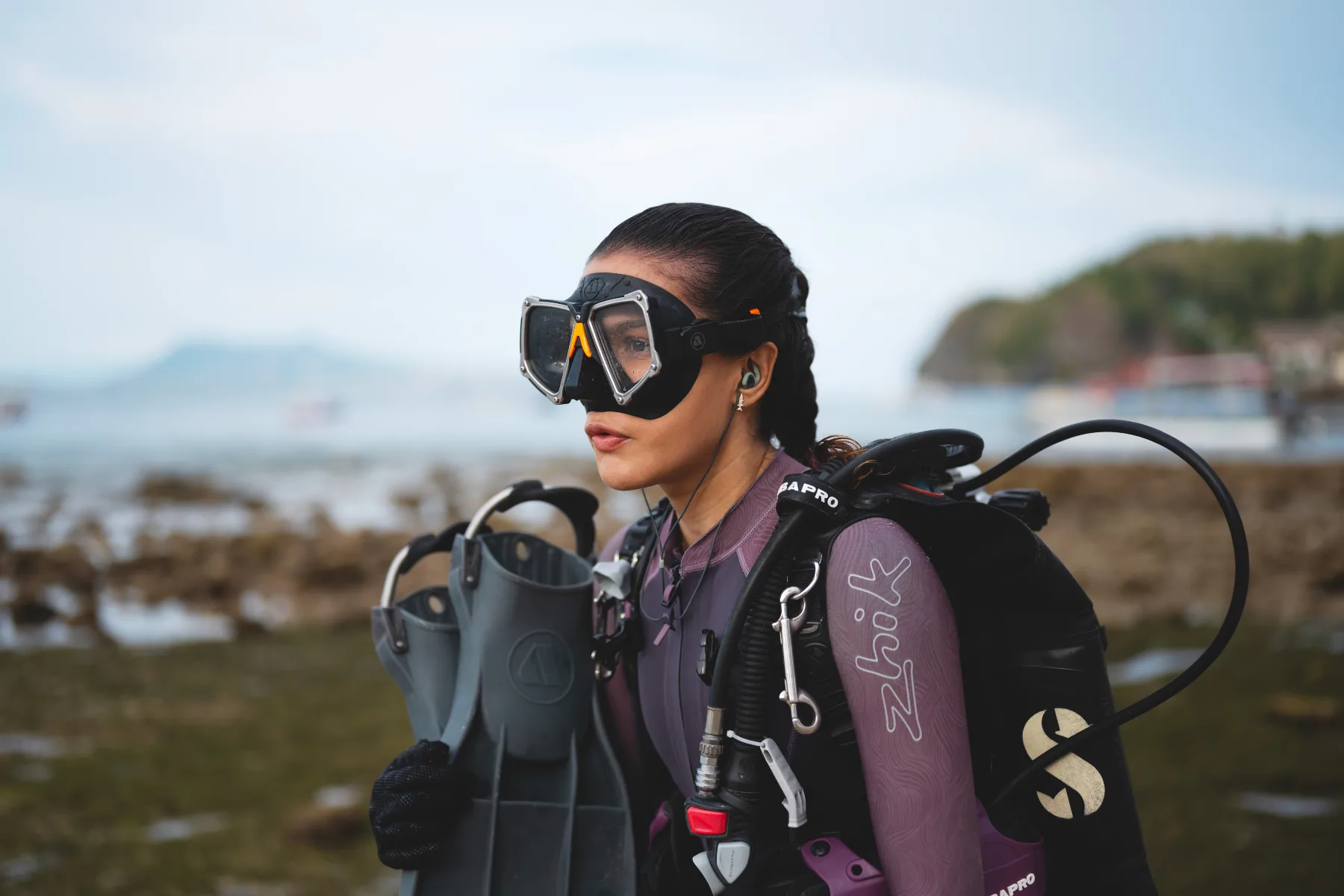
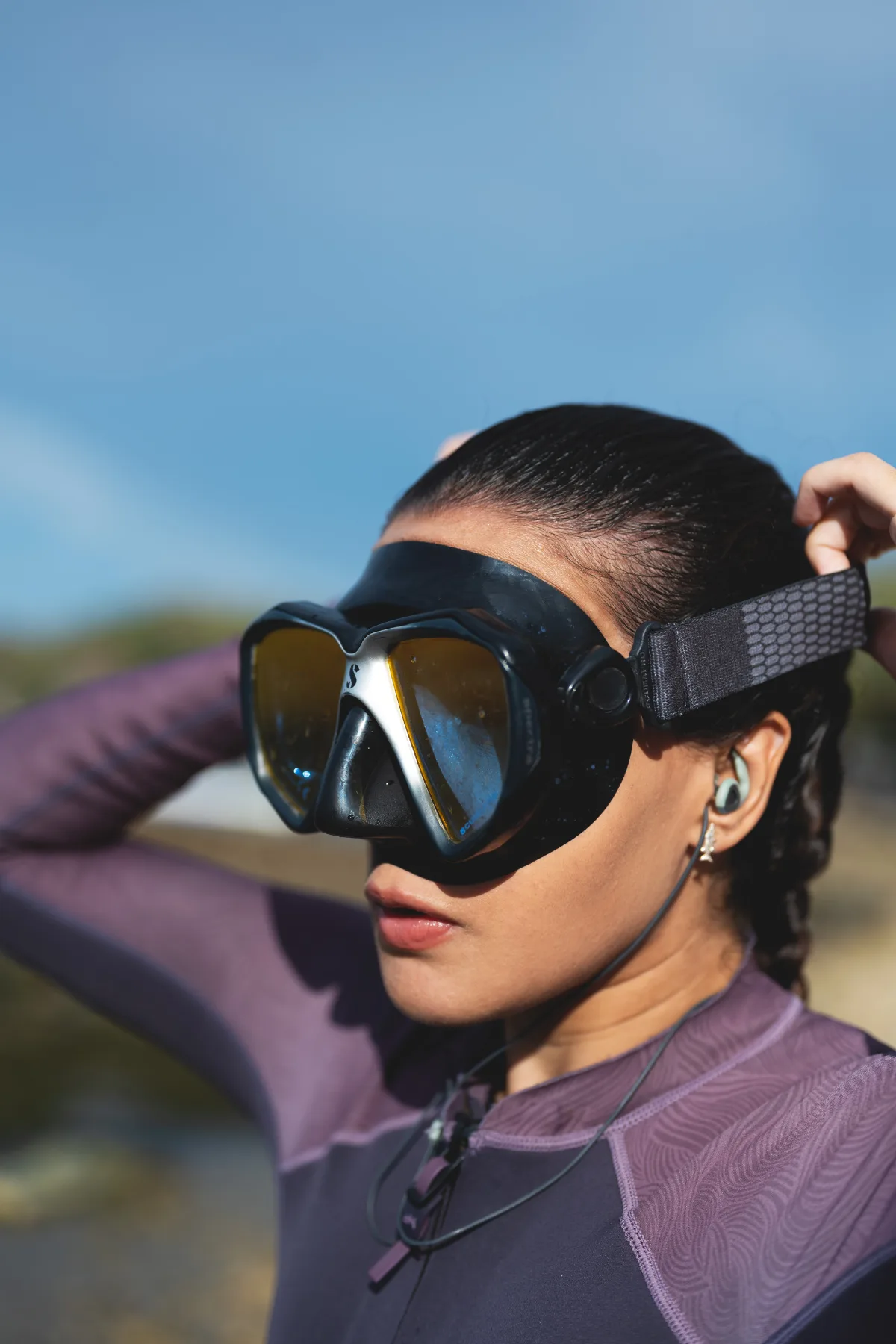
If I got a dollar for every time a curious diver asked me about the earplugs hanging on my neck, I could probably upgrade my underwater camera right this second. And this is a good time to clarify that this is NOT A SPONSORED POST, unfortunately! 🫢
How SurfEars 4.0 work to prevent ear infections while scuba diving
SurfEars started with earplugs designed for surfers (hence the name) but then developed a new product specifically for scuba diving and freediving.
The principle behind Surf Ears 4.0 is simple, and that simplicity is why it works. The plug sits in the outer ear canal and keeps water out, but it carries an acoustic mesh that lets sound pass straight through. Foam plugs block water and sound equally, which is useless for diving. You have to hear your guide, your buddy, the click of fish on the reef and the rasp of your own regulator. Surf Ears keeps the water (and the bacteria in it) out and lets the dive in.
Because the plugs sit in the outer canal and do not seal off your eardrum from pressure, you equalise completely normally. You pinch your nose and clear on descent exactly as you always have. Nothing about the plugs interferes with that.
I must say it took me two dives to get used to wearing them. I was simply aware that I had something in my ears, but it was not uncomfortable, just new. Now, when I am diving, I never think about them. They are just there, doing their job. As they are not airtight, a minimal amount of water might leak in, but they keep so much out. Have you been on a night dive surrounded by sea lice, or on a day dive where plankton is very visible? If so, I am sure you have thought about the possibility of those microscopic critters going inside your exposed ear holes. After having those thoughts, I personally could never dive without my SurfEars.
I have been wearing them now for a year and a half on an almost daily basis, and I have not had an ear infection since, so I will stand up right here and swear to you that yes, SurfEars earplugs do work.
I mentioned the algae bloom that triggered my first ear infection. You can bet I was not the only dive professional who suffered from it on the island. At least a dozen other divemasters and instructors fell victim to the same problem. We all got together and ordered a big shipment of SurfEars from Sweden.
What you get in the SurfEars 4.0
The 4.0 is the most refined version of a product that has been improved through multiple generations by a Swedish company that clearly cares about getting it right. It comes with interchangeable plugs in different configurations and sizes, both three-flange and two-flange options, so you can find the exact fit for your ear canal. They are connected by a soft cord (be gentle when pulling) so you cannot lose them in the water, which sounds like a small thing until you have spent any time gearing up on a rolling deck with cold hands. They are flat enough to sit comfortably under a wetsuit hood. They go in fast once you know your size, and they come in a small case that keeps both plugs together between dive days.
*I have used them without the cord attached, and after many dives like that, I did end up losing one during a rough dive.
Getting the fit right
The fit is everything, and it is the one thing you have to get right yourself. The first day I tried them, the medium three-flange did not seal properly and I felt water creeping in by the third dive. I switched to the larger two-flange, and that was the size. From that point on they have been silent and dry.
Spend the first day or two cycling through the plug options before you write anything off. A plug that lets water in is not a faulty product, it is the wrong size, and the kit gives you the range to fix that. Once you find your size, the routine is effortless. You stop thinking about them. They live in the same drawer as your mask defog and your dive computer.
Care is just as simple. Rinse them in fresh water after every dive day and let them air dry. The plugs detach from the cord so you can clean the acoustic mesh gently, and the case keeps you from losing one. Keep them out of a hot car and out of direct sun for long stretches and they will last.
View on Instagram
What changed
Now I can plan a week of diving without building in the mental contingency of when the next infection will arrive and how many days it will take from me. It means I can commit to a liveaboard without the quiet voice in the back of my head asking whether my ears will hold up to four dives a day. It means I have stopped dreading the water in the way I had, very quietly, started to, after years of associating diving with the pain that would always follow.
The first time I noticed it was halfway through a busy week of guiding at the start of a season. I realised I had been in the water every day for nine days running. Nine days. Pre-SurfEars, that would have meant pain by day three, antibiotics by day five, a week of recovery and a quiet apology to a group I had been meant to take out. Instead I was on day nine and my ears felt completely fine. I almost did not believe it. I kept waiting for the throb to start. It did not.
Surf Ears 4.0 did not improve my diving. They made it possible to be a dive professional without rationing my time in the water against the cost my body was paying to be there.

Who Surf Ears 4.0 is for
If you have chronic ear infections, if you have tried the drops, the prescription antibiotics, the home remedies, the drying agents, try Surf Ears before you try anything else. Not as a treatment, because they are not a treatment. As prevention. The whole problem with outer ear infections is water sitting in the ear canal long enough for bacteria to take hold. Surf Ears prevents that.
They make most sense for anyone who spends real time in the water rather than the occasional swimmer. Dive professionals doing three or four dives a day. Divers heading out on liveaboards where the daily count climbs fast. Anyone whose ears have a history. They have become as fixed a part of my forever dive kit as my mask, because three or four dives a day makes ear protection essential. I push them on every freediver I know. The repetition counts in freediving are even higher than in guided scuba, and the exposure risk is the same. If you are still learning to become a scuba diver, getting ahead of this early is worth it.
You can learn more about Surf Ears 4.0 at surfears.com.