Hurghada was the first place I dived for an extended stretch. Forty-five days of diving, every one of them from a boat. That was not really a choice. In Hurghada, the boat is essentially the only practical way to dive.
I want to write this honestly because a lot of the diving press around Hurghada papers over what is actually happening on the coast. The reefs offshore are spectacular. The reefs in front of the hotels are not what they were. And the strip of water in between has been progressively closed off to the public diver who is not staying inside one of the resort properties.
Why It Is All Boat Diving
In the 1980s, Hurghada was a fishing town of about 12,000 people. By 2014 it had over 250,000 residents and was on its way to receiving 9 million visitors a year. That growth was almost entirely tourism, and tourism arrived in the form of beachfront hotels along a coastline that was, until then, fringing reef.
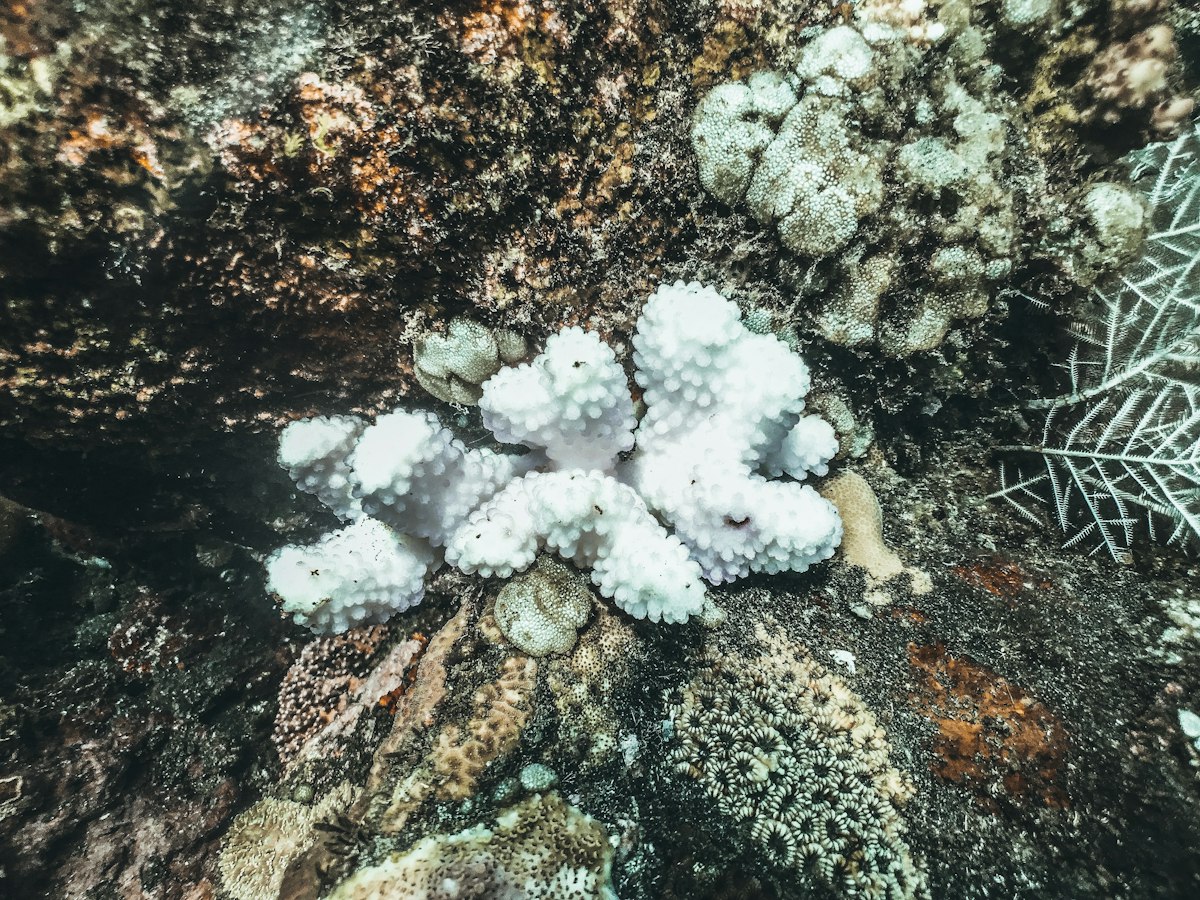
Without a strategic urban plan, hotel construction destroyed an estimated 3 million cubic metres of beach and coral reef. About 80% of live coral along that hotel coast is gone, lost to dredging, sediment plumes, and the simple reality of building on top of reef. The shorefront that survives is overwhelmingly held by individual hotel concessions: private beaches, gated walkways, and the remaining house reefs only accessible to paying guests of the hotels that hold the ground above them.
For divers who are not staying at one of the hotels with a house reef, this means there is essentially no shore diving worth doing. The boats are not a luxury. They are how you reach water that has not been built on.
A standard Hurghada dive day is a full day boat trip. Two or three dives, lunch on the boat, return at sunset. The sites are not far, often less than an hour out, but the operational model is full-day because shore-day-trip-and-back logistics do not work where shore access is locked up.
The Diving
Once the boats clear the coast, the diving is genuinely good. The sites my forty-five days covered:
Sha’ab El Erg, the Dolphin House. A horseshoe-shaped reef about 25 kilometres offshore, with a permanent population of around 60 spinner dolphins resting in the central lagoon. On a good day, you do the dive and the dolphins come past. I had several where they came within a few metres of the group, slow and curious, doing the kind of close passes you do not get from operators who push too hard.
El Fanadir. Closer in, a long fringing reef with sloping wall structure and a regular spinner dolphin presence. I had dolphin encounters on a high proportion of the dives I did here. More than at any other reef I have ever dived.
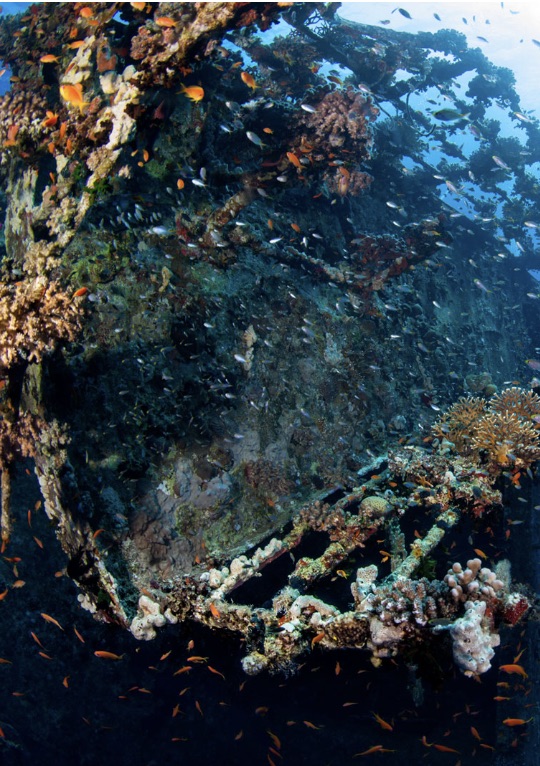
Abu Nuhas. A reef whose shallow plateau has accumulated four notable shipwrecks: the Carnatic, Giannis D, Chrisoula K, and the Kimon M. Advanced sites with multiple penetration points and prevailing currents that need to be respected. Extraordinary marine life accumulation, the kind you only get on long-settled wrecks.
Giftun Islands. The two-island system off Hurghada, with a network of dive sites including Banana Reef, Stone Beach, and Ben El Gibal. Reasonable for advanced beginners through to more experienced divers.
Visibility runs consistently between 15 and 25 metres. The water is comfortable, with summer surface temperatures in the high twenties and winter dipping to around 21 in the cooler months.
What Is Actually on the Reef
This is where the honest version of the diving has to sit somewhere different from the marketing.
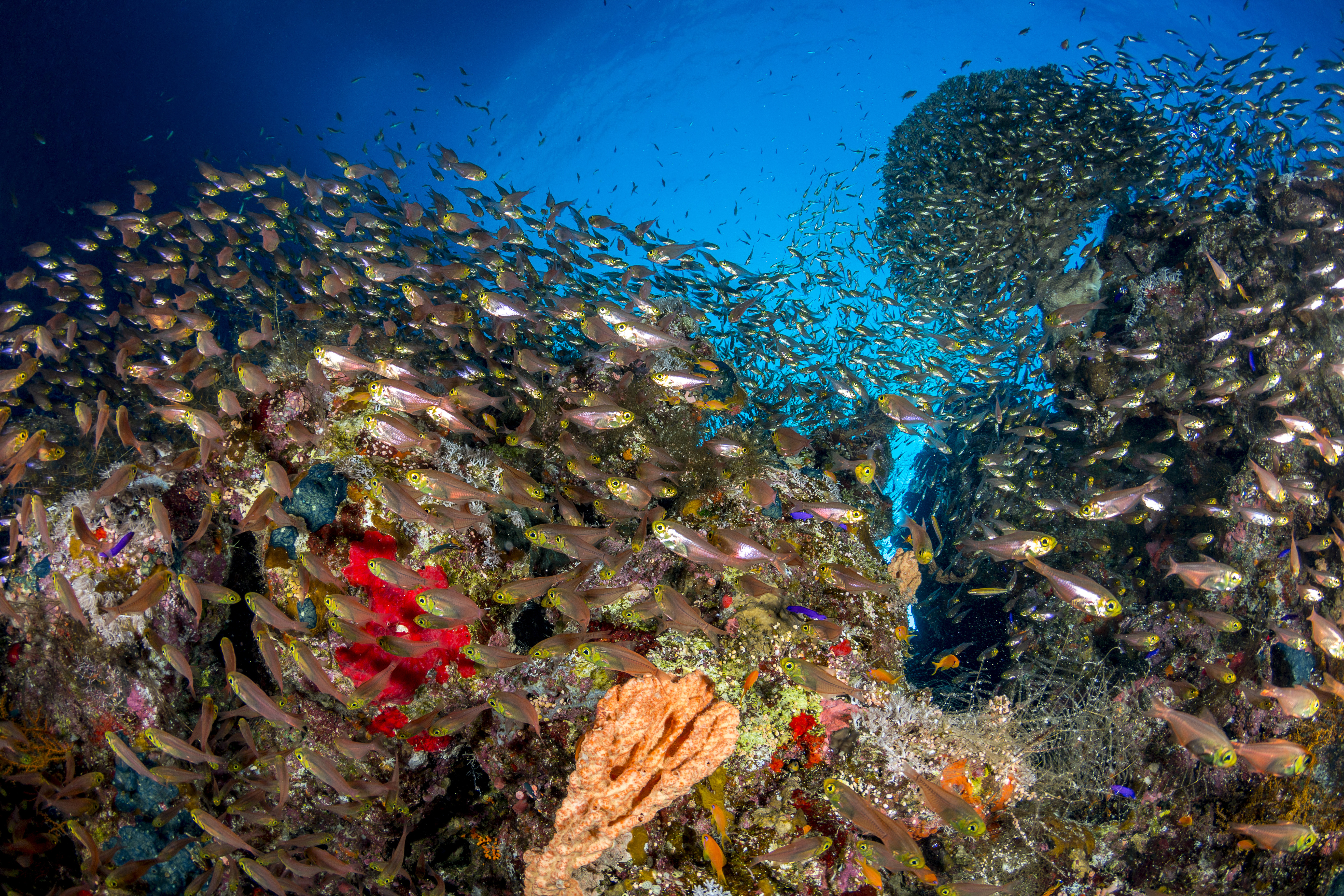
The coral architecture is beautiful. Hard coral structures, soft coral on the bommies and wall edges, and clouds of scalefin anthias, the small bright-orange fish the Red Sea is famous for, swarming the reef tops in numbers that genuinely register as thousands per dive. The colour is real.
What is missing is the rest of the food chain. In forty-five days of diving, with the dolphin encounters as the standout, I saw very few large fish. Almost no large pelagics. Few groupers worth noting. The big sharks the Red Sea was once known for are now sites you travel to specifically, not animals that turn up on a normal Hurghada day boat.
The reasons are documented. Post-COVID overfishing emptied out shark and large pelagic populations along the entire Egyptian coastline. The new Egyptian government decree protecting the Great Fringing Reef is, in part, an attempt to close that gap. Whether it will work depends on enforcement at sea, which is a different problem from the legal protection itself.
Who Hurghada Is For
Hurghada works best for divers who want a high-volume, easy-to-organise, predictable diving holiday. The infrastructure is mature. The operators are experienced. The day-boat schedule is dialled in. Open Water and Advanced Open Water divers are very well served. Photographers will find anthias clouds and reef structure in endless supply, plus the reliable dolphin encounters at El Fanadir and Sha’ab El Erg.
If what you want from a Red Sea trip is shark and pelagic encounters at scale, Hurghada is no longer the place to go. For shore diving and the less-developed offshore reefs further south, Marsa Alam is the better base.
When to Go
Diving is year-round. The best visibility falls in the cooler months from October through May. Summer is busy, hot, and warm-watered, with the highest surface conditions but slightly more crowded sites. Spring and autumn are the comfortable middle ground.