I have spent more time underwater on Koh Tao than anywhere else in the world. Extended periods on the island, over 400 dives logged here, dozens of whale shark encounters across the northern pinnacles. Most of the certifications I hold beyond Open Water came from this island.
So when I write about Koh Tao, I am writing from inside it.
That cuts both ways. The pinnacle sites in the north, on a good day, belong on any short list of the better tropical dive sites in Asia. Sail Rock alone holds schooling life that competes with anywhere in the Gulf, and Chumphon delivers some of the most consistent open-water encounters in Southeast Asia. And the island has, at the same time, become the highest-volume diver factory on the planet, with all the costs and trade-offs that follow.
Koh Tao on Its Own Terms
Koh Tao is small. Eighteen square kilometres of forested hills sitting in the Gulf of Thailand, with a coast made up of bays, fringing reef, and granite headlands. The water is warm year-round, between 27 and 30 degrees, and the visibility is decent if not extraordinary, typically 15 to 20 metres. None of that, by itself, would make it the world’s certification capital. What did was a combination of cheap living, a reliable cluster of training sites in a small geographic radius, and decades of dive industry compounding on itself.
Today, Koh Tao certifies more divers per year than almost any single location on earth. Walk Sairee Beach in high season and you can stand on the sand and count the dive flags lined up in the bay. The boats leave on rolling schedules. Some sites have a dozen operators arriving in a thirty-minute window.
The vibe is young and the vibe is busy. The island has, over the last fifteen years, drifted from a backpacker dive base into something closer to a party island that happens to have dive shops. That shift is real, and it is felt under the water as much as on land.
The Diving
I will start with the sites and what each one is actually for, because the marketing on Koh Tao tends to flatten everything into “amazing diving” and the truth is more textured than that.
Chumphon Pinnacle is everything. It is the site I would dive on my last day on the island. A granite seamount rising from around 36 metres to a top at 14 metres, sitting an hour boat ride north of Koh Tao in fully open water. The current can be strong. The marine life is what every other site on the island is graded against. Schooling chevron barracuda. Giant trevally hunting in packs. Big-eye trevally cycling through. Whale sharks turn up here as much as anywhere on the island, elusive on any given dive but real often enough over time.
Sail Rock sits between Koh Tao and Koh Phangan, about an hour south. A vertical column rising from 40 metres with a chimney swim-through running through the pinnacle from 5 to 18 metres. What sets Sail Rock apart from anywhere else in the Gulf is sheer volume. Schooling barracuda, fusiliers in walls, batfish in tight clouds, big groupers, and a real chance, never a promise, of a whale shark passing through in season. On a good day, the volume of fish life at Sail Rock is staggering.
Southwest Pinnacle is shallower than Chumphon, less exposed to current, and as strong a whale shark prospect as Koh Tao offers in season, though no site on this island gives guarantees. It also holds some of the largest schools on the island, fusiliers, snappers, and big-eye trevally moving in formation along the slopes. It is the site I would send a diver to if they wanted the schools and the openness without committing to Chumphon’s depth and current.
White Rock is the staple. Almost every shop runs it almost every day. A large reef site running between 5 and 20 metres, easy to navigate, suitable for almost any certification level, and reliable for triggerfish, blue-spotted rays, occasional turtles, and night dives that turn over a wholly different cast of nocturnal life.
Twins is the standard training site. Two granite outcrops in shallow water, a sandy bottom for skills, and enough fish life that the open water students leaving the site for the first time start to understand what they have just signed up for. Tens of thousands of divers have logged their qualifying dives on this site.
Red Rock is the swim-through site, a granite outcrop with cuts and channels through the boulders that you can move through with the right buoyancy. Less famous than the marquee sites, more memorable for divers who like architecture as much as wildlife.
Junkyard is the artificial reef. A purpose-built site of mooring blocks, scrap metal, and dropped dive school furniture seeded over years to give marine life new substrate. It is also home to Steve, a resident porcupinefish who has greeted Junkyard divers for so long that everyone on the island knows him by name.
When a Whale Shark Arrives
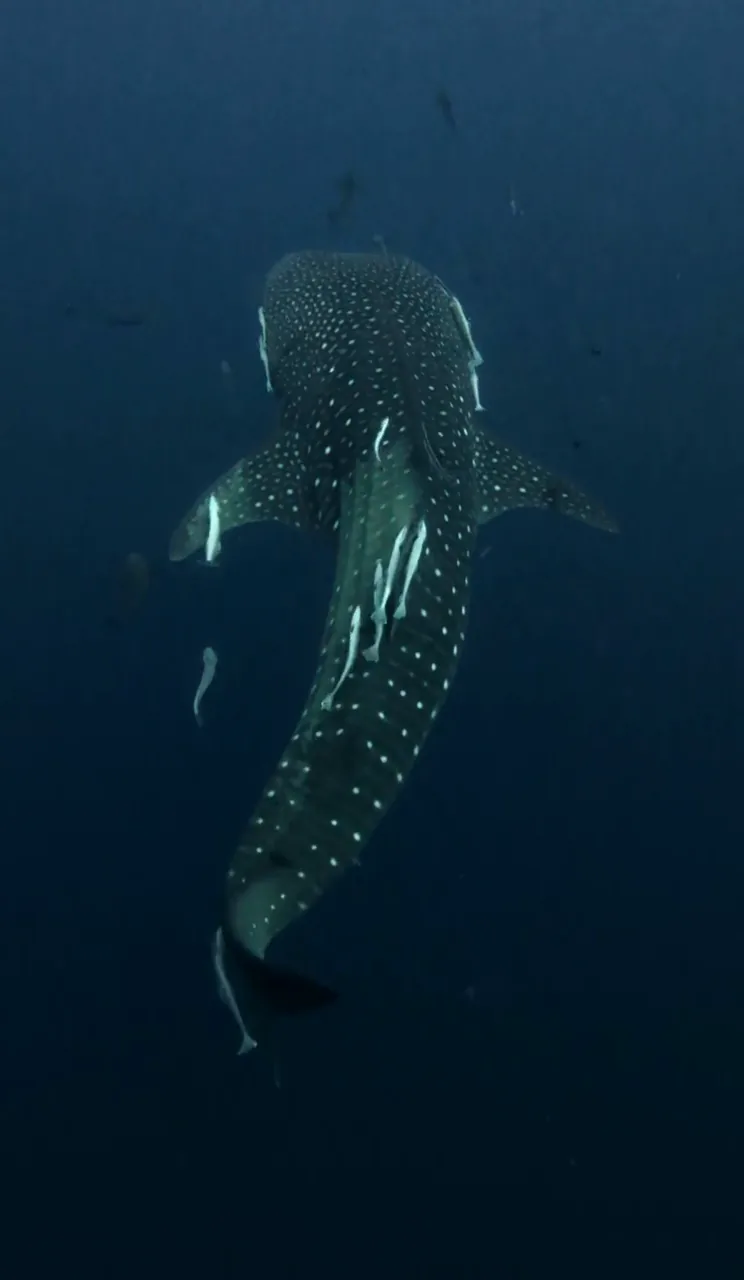
The whale sharks of Koh Tao are part of why I came back. Across the time I have spent on the island, dozens of encounters between Chumphon, Sail Rock, and Southwest combined. They are not guaranteed on any given dive. They are elusive in the way these animals always are. Stack enough days at the right pinnacles in the right windows and the dozens accumulate.
What you also need to know, and what almost no operator brochure will tell you, is what the water column looks like when one shows up.
The radio chatter on the boats means everyone hears within minutes. Boats reroute. Divers regroup at the nearest pinnacle. On a busy day in season, fifty or more divers can end up in the water around a single whale shark, GoPros first, fins kicking hard, the animal essentially being chased through the blue by a cloud of people trying to film it.
That is not what an encounter with a whale shark should look like, and the animal does not benefit from it. The protocol is unambiguous: do not touch, do not chase, do not position yourself above the animal, swim alongside if at all and let it set the pace. The Koh Tao whale sharks deserve better than they sometimes get from the water around them. The way to give them better is to be the diver who hangs back, who lets the animal come if it is going to, and who does not turn a wild encounter into a content opportunity. The longer-form on what those encounters are like when they work is in the Below the Surface piece on diving with whale sharks here.
The Factory Question
I will not paper over this part because it matters and Koh Tao’s reputation in the wider diving community depends on it.
Koh Tao runs more zero-to-hero certification pipelines than anywhere else on earth. Some operators, not all, will run a student from no diving experience through to Divemaster at around 60 logged dives and through to Instructor at around 100. That is not, by any reasonable measure, enough water time to be teaching new divers safely. The certification card is the same one issued anywhere in the world. The experience behind it is not.
This is the source of the international stigma against Koh Tao certs. Walk into a dive shop in the Red Sea or the Caribbean with 100 dives and an Instructor card from a Koh Tao zero-to-hero programme and you will, in many shops, be quietly vetted twice. Some shops will not hire you at all without further sign-off dives. The stigma is uneven and there are excellent instructors and divemasters who came up through Koh Tao and are world-class. There are also a lot who are not, and the industry knows it.
Plenty of the sharpest guides and instructors I have dived with anywhere came up through Koh Tao. The good operators here run their training programmes accordingly, with longer pathways, more mentoring, and divemasters with hundreds of dives before they are signed off. The challenge is that those operators are competing on price with operators that will not, and that race shapes the whole island. Choosing well is on the diver.
What the Reefs Look Like Now
The shallow sites are showing the strain.
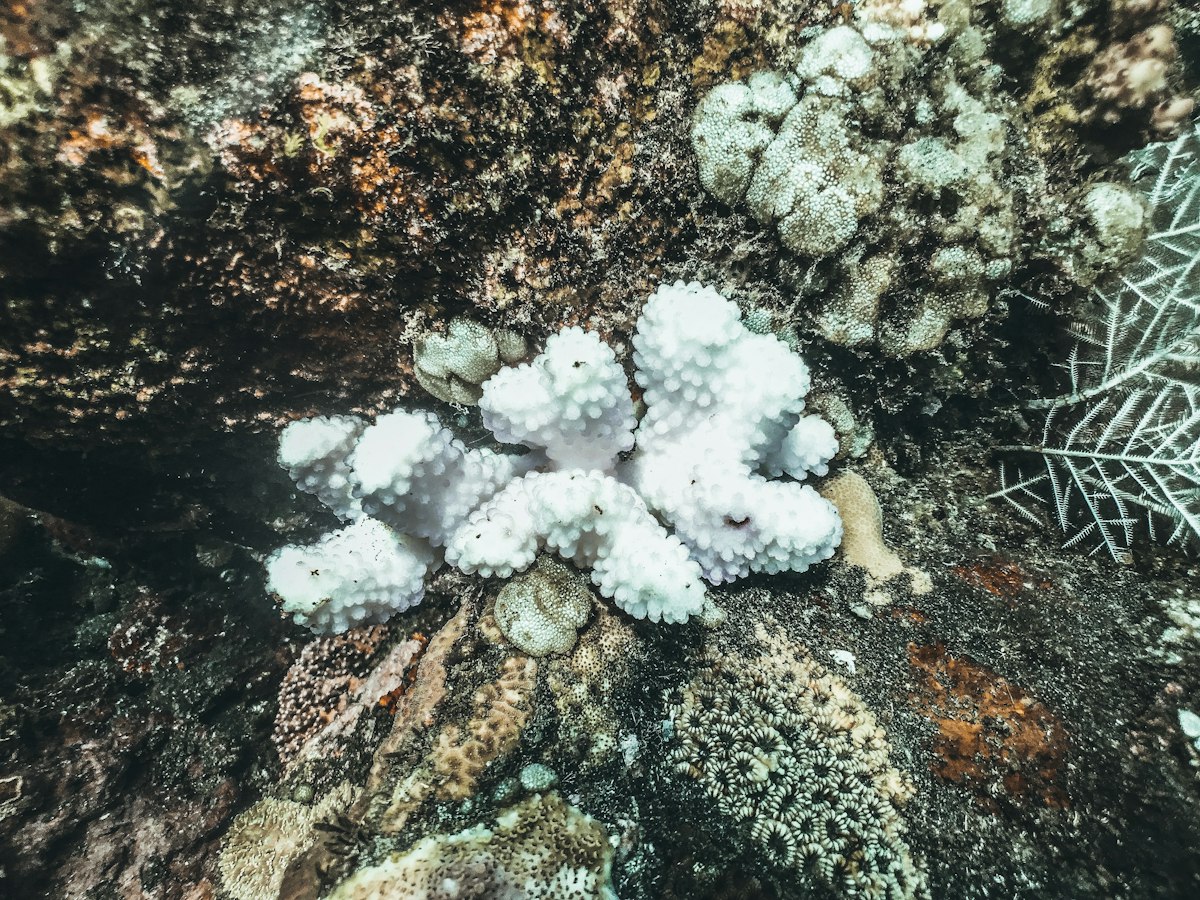
Bleaching is recurrent at the shallower fringing reefs around the island. Warm-water events that used to be exceptional are now near-annual on the inshore sites, and recovery between events is shorter than the events themselves. The Gulf of Thailand sits inside the geography of the fourth global coral bleaching event that has been running through 2024 and 2025.
The clearest single example is Shark Bay, on the southwest of the island, where the popular snorkel-with-resident-green-turtle excursions run throughout the day. Shark Bay was hit hard by the 1998 El Niño bleaching and never fully recovered. The centre of the bay is now substantially a carpet of broken coral. Hundreds of snorkellers a day, anchor contact, sunscreen runoff, and repeated thermal stress have compounded the problem rather than letting it heal. The turtles are still there. What surrounds them is degraded.
Ao Leuk on the southeast coast is full of juvenile blacktip reef sharks, easy snorkelling encounters with metre-long pups patrolling the rocks. What you do not see, anywhere on Koh Tao, are the adults. The adult blacktips have largely disappeared from the local reef in the years I have been diving here. Where they have gone, and why the population is reproducing into juveniles that never seem to grow on these reefs, is a question I cannot answer fully. Some of it is shore disturbance. Some of it is the broader pressure on Indo-Pacific shark populations, which still feeds the global shark fin trade at scale.
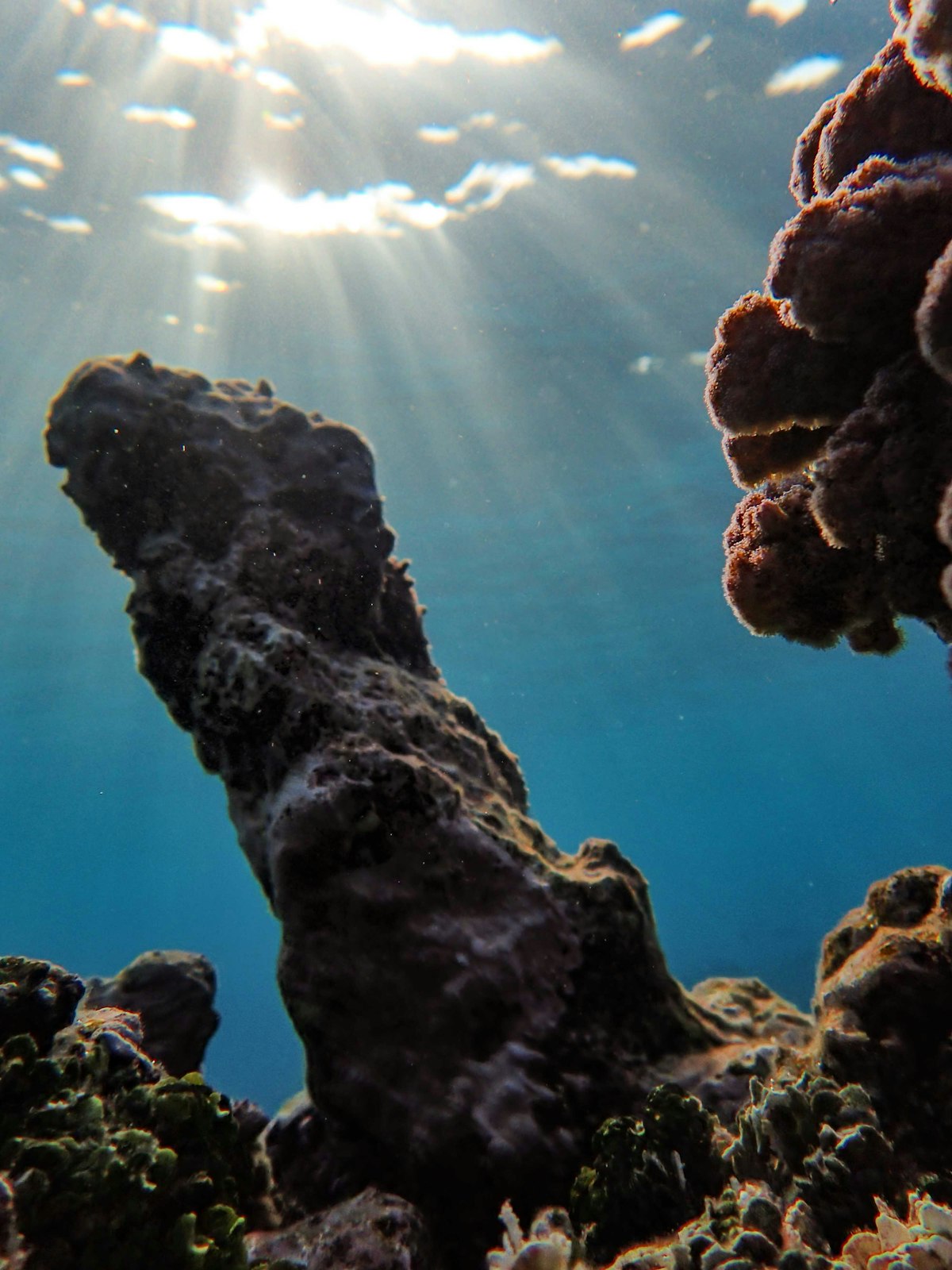
The pinnacle sites, the deep open-water sites I started this section with, are healthier. Distance from the coast, depth, and current all help. Chumphon and Sail Rock are still excellent diving. The contrast between those sites and the bays is the clearest single picture of what protection and exposure look like on the same small island.
The Restoration Work
Ban’s runs a long-running coral restoration programme: nurseries, transplants, mooring line installation to keep boat anchors off live coral, and ongoing reef monitoring. They are part of the broader Save Koh Tao network and a 100% Project AWARE facility.
I worked on the restoration project personally with the programme lead, on the operational side, not as part of a guest activity. That distinction matters. Coral restoration done well is technical work, not a half-day add-on. The shops that run their restoration programmes seriously are the ones doing meaningful reef rehabilitation on the island. Many do.
Restoration cannot solve the underlying problem, which is climate. It can, in the meantime, keep specific reefs alive long enough to give them a chance when the climate stabilises. It is also the most direct, accessible form of conservation diving available on the island, and worth seeking out, with an operator that runs it as a working programme rather than a marketing tagline. The wider context for that work is in the conservation piece on coral reef restoration.
Why I Keep Coming Back
For all of the above, the warm water, the morning boat rides out to Chumphon with the sun coming up, the camaraderie of a small island where everyone has organised their lives around the ocean, the muscle memory of knowing a site you have logged dozens of times, are all real. Koh Tao is where diving stopped being a holiday for me and became something I orient my life around. The reservations and the reef condition and the factory critique coexist with that, and a piece that left either side out would be dishonest. I came to the ocean late and never wanted to leave it. A lot of why is on this island.
Practical Notes
Diving is year-round. The dry northeast monsoon from November through April delivers the calmest seas and the best visibility on the east-side sites. The southwest monsoon from May to October can bring more wind and surface chop but tends to be quieter on the boats and is when the southwest sites come into their own. Whale shark sightings peak March to May and again October to December.
On paper, the depth and current at Chumphon and Sail Rock argue for Advanced Open Water as a minimum. In practice, Koh Tao operators routinely take Open Water divers to the pinnacles. The cert minimum that gets quoted and the cert minimum that gets enforced are not the same thing on this island, and that gap is part of the broader culture around training here. If you are an Open Water diver heading to Chumphon, take it seriously. The site does not.
Most operators rent full equipment in good condition. Nitrox is widely available and worth taking for multi-dive days at depth.
For divers picking an operator, the question is less about price and more about training pace. Ask how many dives a typical Divemaster trainee has by the end of the programme. The shops that answer with a number above a hundred are the ones taking it seriously.