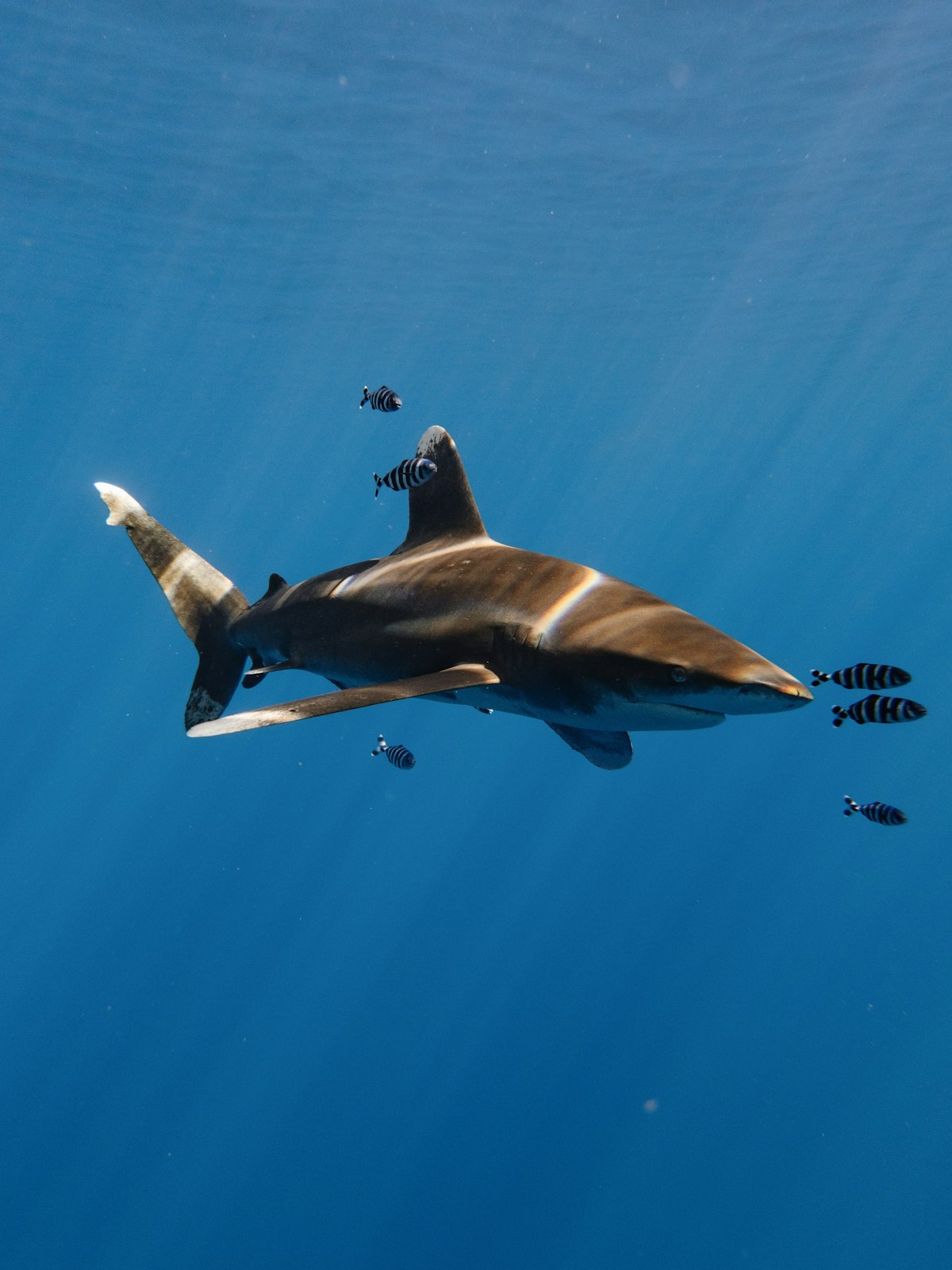
She came in from the blue without warning, a large female bull shark, perhaps two and a half metres long, moving with the unhurried directness that characterises her species. She passed at perhaps three metres, close enough to read every detail: the broad, blunt snout, the thick body, the small eyes. She paid no attention to the line of divers kneeling on the sand. She had been doing this every winter for years.
The bull shark dives off Playa del Carmen are one of diving’s more unlikely spectacles. You take a ten-minute boat ride from a beach resort town, drop to around 20 metres, kneel on the sandy bottom, and wait. And then the sharks arrive.
Why Bull Sharks Come to Playa del Carmen
The aggregation happens every year between November and March, when large pregnant female bull sharks gather in the warm, relatively shallow waters off the Riviera Maya. The exact reason remains a subject of ongoing research, the leading hypothesis is that the warm, nutrient-rich water provides an optimal environment for the final stage of pregnancy. Whatever the reason, the sharks return reliably every year, and they have been doing so for long enough that local dive operators have built entire businesses around them.
The site itself is called El Jardin (The Garden) or sometimes simply the Bull Shark Dive, and it sits in relatively shallow water between 15 and 25 metres, with a sandy bottom that makes for comfortable kneeling. Visibility is typically excellent, 20 to 30 metres, and the water temperature in winter hovers around 26 to 28 degrees.
The Dive
The protocol is specific and it matters. A divemaster leads the group down to the sand, and divers form a line along a fixed reference point. You kneel, you regulate your breathing, and you do not chase the sharks.
The sharks typically appear within the first few minutes. On an average day in peak season, six to twelve individuals may circle the site simultaneously; on exceptional days, twenty or more. The females are large, bull sharks are among the more powerfully built of the requiem sharks, and they move through the group of divers as though we are a mild inconvenience to be accommodated rather than a genuine concern.
The dives are managed by experienced divemasters who know individual sharks by sight, some have been returning for a decade or more and are recognised by body markings and behaviour patterns. This familiarity creates an unusual intimacy: you are not diving with generic wildlife, but with specific, known individuals on their annual return.
Some operators offer feeder dives, in which a divemaster feeds the sharks fish scraps to draw them closer. These are more dramatic and more controversial. Non-feeding observation dives remain the more responsible option and, frankly, the more sustainable one.
Beyond the Bull Sharks
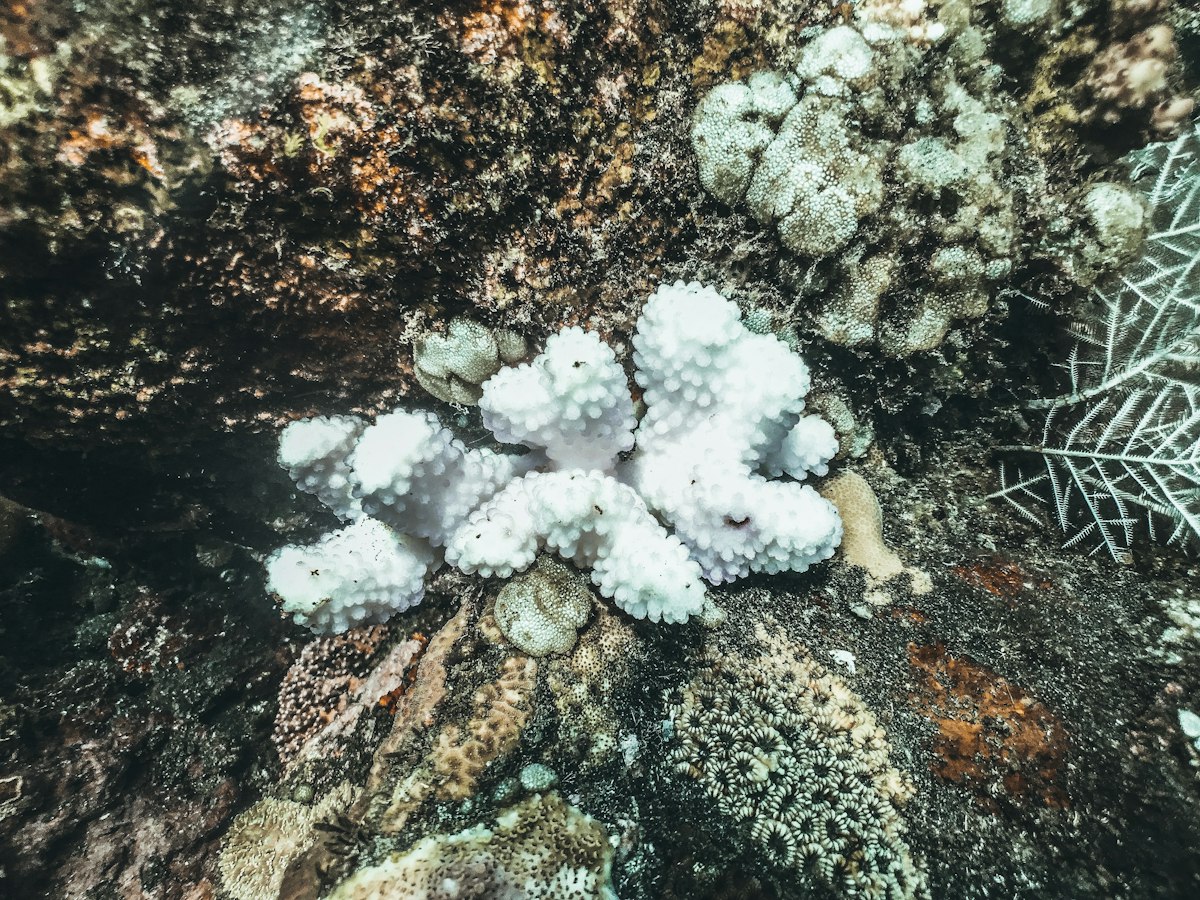
Playa del Carmen’s diving extends well beyond the bull shark season. The area sits at the northern end of the Mesoamerican Barrier Reef, the second-largest coral reef system in the world, and the diving along this reef is consistently excellent. The health of that reef depends on the same marine protections that allow the bull shark aggregation to persist.
Nurse sharks rest under ledges year-round. Turtles are a constant presence. The reef walls along the southern sites drop to considerable depths and support impressive coral architecture and schooling fish life.
The cenotes, the freshwater sinkholes that riddle the Yucatán Peninsula, offer an entirely different kind of diving: cold, crystal-clear water in cavern systems decorated with ancient stalactites and haloclines that bend the light into shapes you do not see anywhere else. A diving trip to Playa del Carmen that does not include at least one cenote dive is an incomplete one.
Practical Notes
Bull shark season runs from November through March, with December, January, and February generally considered peak months. All operators require Open Water certification as a minimum; Advanced Open Water is recommended given that the better sites sit between 18 and 25 metres.
Most operators run two-tank dives including the bull shark site combined with a reef or cenote dive in the afternoon. Equipment hire is widely available and of reasonable quality throughout the town.
The logistics are extremely easy. Playa del Carmen is a major tourist hub with direct international flights, abundant accommodation at every price point, and dive shops on every street. This is not a remote expedition dive. It is a remarkable wildlife encounter that is logistically simpler than most city breaks.
A Note on the Animals
Bull sharks have a reputation as one of the more dangerous shark species to humans, a reputation that has made them a target of the shark fin trade alongside species that are more obviously valuable, a reputation earned partly by their habit of entering brackish and freshwater river systems where encounters with people are more likely, and partly by genuine aggression when provoked or stressed. In the context of a managed dive in open water with an experienced guide, the risk profile is very different.
These animals are not tame. They are wild predators who have chosen, for reasons of their own, to spend their winters in the same stretch of ocean that humans find convenient to dive. The appropriate response is respect, stillness, and attention. The reward is an encounter with one of the ocean’s most formidable animals in conditions that would have seemed impossible even twenty years ago.