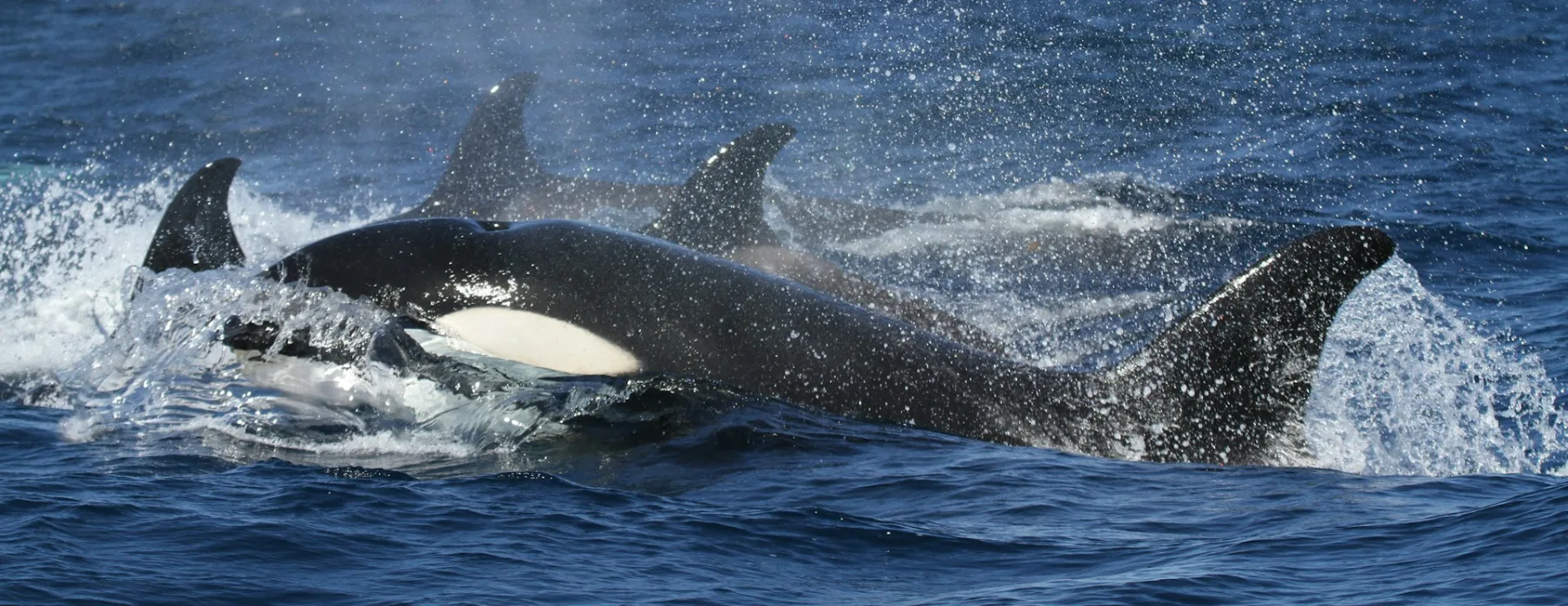
Every July 14th, orcas get a day of their own, and it belongs to all of them: the wild pods threading through cold open water, hunting by sound and teaching their calves dialects they’ll speak for the rest of their lives, and the ones still confined to concrete tanks, being exploited and forced to perform for crowds decades after the science made clear they should never have been there in the first place.
Orcas are the ocean’s most recognisable apex predator, which is exactly what makes their situation so easy to misread. Some wild populations are stable, others are collapsing so fast that a single birth or death reshapes the whole future of the group. The captive ones, meanwhile, are still waiting for the world to finish the fight to bring them home. World Orca Day is the day the calendar gives us to look at all of it honestly.
When Is World Orca Day?
World Orca Day is marked every year on 14 July. It celebrates orcas while pointing at the threats they face, from captivity to prey loss and pollution, which is what the rest of this piece is about.
Why We Celebrate World Orca Day
World Orca Day was born to celebrate orcas and, in the same breath, to confront what threatens them: captivity, pollution, prey loss, and the noise and traffic we pour into their water. It is a day built around a simple idea, that these animals belong in the wild and not in concrete tanks, and that the wild they belong to is under pressure from us.
What makes it worth marking is that orcas are not a single, interchangeable species doing equally well everywhere. They split into distinct populations with their own diets, their own dialects, their own hunting cultures and ranges. Some of those groups roam vast stretches of ocean; others are so localized and so few that a run of bad years could end them. The Southern Resident orcas of the Pacific Northwest are the clearest example, a population small enough that each individual has a name and a number, and each loss is felt across the whole community.
The day also refuses to let captivity fade into background noise. A lot of the world’s affection for orcas was manufactured inside marine parks, where an intelligent, wide-ranging, deeply social animal was reduced to a splash and a whistle. World Orca Day is part of the long, slow push to move that relationship back to where it belongs: wild animals in wild water, watched from a respectful distance and left alone to be what they are.
Why It Matters
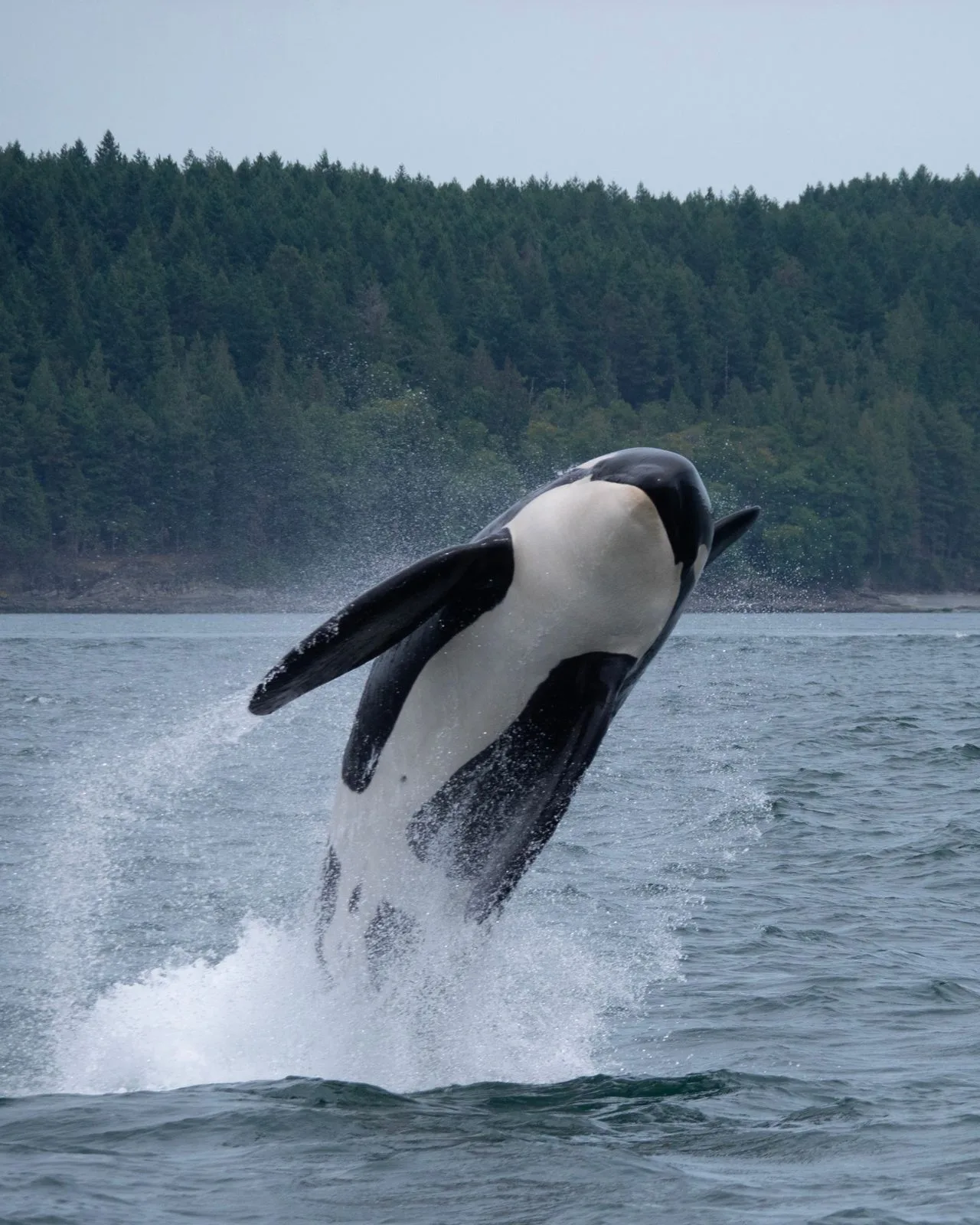
Orcas sit at the top of the food chain, which makes them a mirror for the health of everything below them. When their prey collapses, they feel it first and hardest. When the water fills with contaminants, those chemicals concentrate in their bodies because they are eating everything that ate everything else. When ocean noise rises, hunting by sound gets harder and quieter families go hungry. An orca population in decline is rarely just an orca problem. It is usually a signal that the system underneath is failing too.
That is the honest reason a day like this matters. Protecting orcas is not sentimental. It is a proxy for protecting the food webs, the water quality, and the quiet that the rest of the ocean needs to survive.
The Main Threats to Orcas
The pressures on orcas are not abstract, and they stack on top of each other. The big ones are worth naming plainly.
Prey collapse comes first. Populations that specialise on a single food source live or die by whether that source holds. When the salmon or the fish they depend on disappear, so does the orca. A predator this specialised cannot simply switch to something else.
Contaminants are next, and they are insidious. Persistent pollutants build up through the food chain, and because orcas eat animals that ate other animals, those chemicals concentrate in their bodies over a lifetime. Worse, mothers pass that chemical load to their calves through their milk, which means the youngest animals inherit a burden before they have had any chance to grow.
Then there is noise pollution*. Orcas hunt and communicate by sound, and shipping, sonar, and industrial activity fill the water with interference that drowns out the signals they rely on. A pod that can’t hear each other is a pod that can’t hunt, coordinate, or keep its calves close.
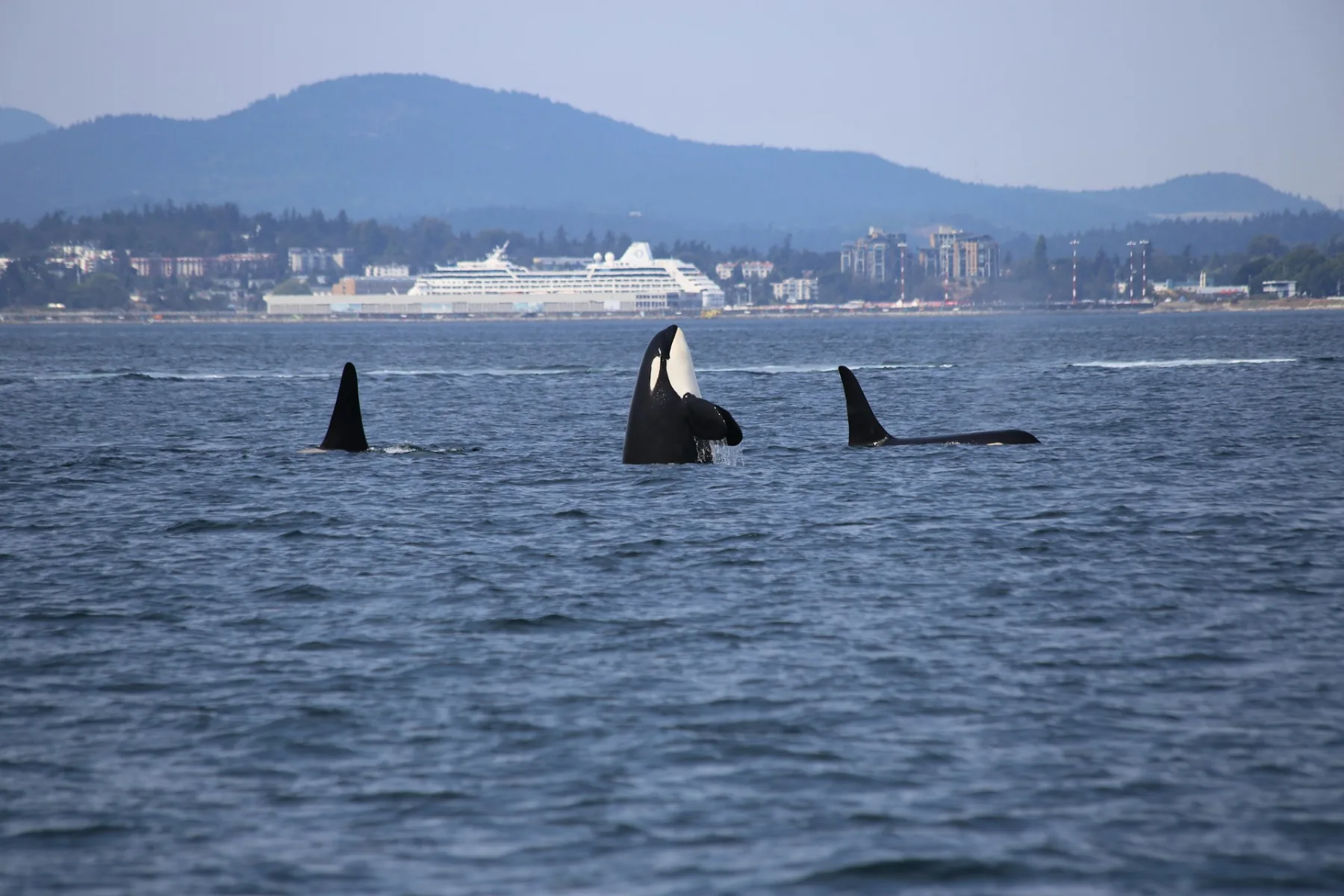
Cruise ships deserve their own line in this story. They are floating cities that run heavy engines straight through some of the most critical orca habitat on the planet, the Alaska Inside Passage, the Norwegian fjords, the coast of British Columbia, dumping treated sewage and grey water along the way and crowding pods at the surface for the sake of a guest photo op. The industry sells the encounter as a wildlife experience. What it actually delivers is a stress event dressed up in a buffet dinner.
And then there’s the capture itself. Every orca performing in a tank had to come from somewhere, and for decades that somewhere was a wild pod. Taiji, in Japan, still runs drive hunts where entire families are herded into a cove, the youngest and most attractive calves are selected and sold to marine parks and aquariums around the world, and the rest are slaughtered. Russia held wild orcas in floating “whale jails” for export to Chinese entertainment venues as recently as this decade. The industry likes to present captive orcas as ambassadors for their species, many using false “rescue stories” as cover up, but a huge share of them are survivors of the exact hunts that tore their families apart, and the ones born in captivity exist because those hunts happened in the first place. The tank and the capture boat are the same industry.
Add habitat loss, vessel strikes, and the ongoing reality of captivity, and you have a set of threats that no single day fixes, but that a well-aimed day can at least drag into the light.
Related conservation work
Orcas do not live in isolation, and neither do the threats they face. The bigger fight over who protects the water they hunt in is exactly what the High Seas Treaty is about, since so much orca range sits in open ocean that no single country governs. And the reef and coastal habitats I write about in my other conservation posts are part of the same connected system: healthy prey, clean water, and protected space are what let a top predator survive at all.
What You Can Do for Orcas
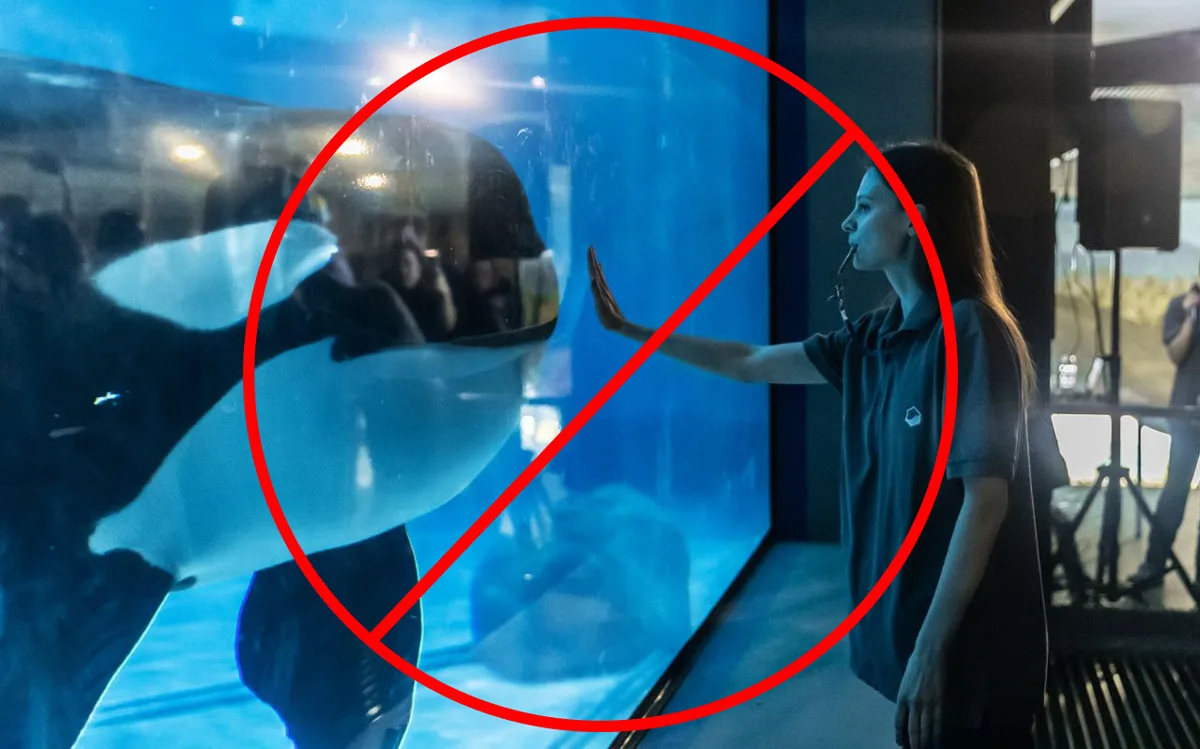
The single most important thing you can do is refuse to fund captivity. Don’t buy a ticket to a marine park like SeaWorld, and don’t treat an orca show as harmless family fun. Every ticket tells the industry that keeping these animals in tanks is worth it. Withhold the ticket and the calculation changes.
Then go further than your own choice. Talk to the people around you. The family members, the friends, the parents planning a weekend trip who genuinely think a marine park is a wholesome day out with the kids. Most of them have never been asked to think about where that spectacle actually comes from: calves violently torn from their mothers in the open ocean, whole families chased down by speedboats and helicopters, the young ones netted and hauled onto ships while the rest of the pod circles and screams for them. Some of the animals in those tanks today were taken that way. Others were born into captivity because the ones taken that way had nowhere else to go. A calm, honest conversation about any of that does more than any single boycott ever will. And don’t raise children to believe a wild animal in a concrete tank, performing tricks for applause, is anything close to normal. Raise thinking humans instead.
World Orca Day is a good excuse to start those conversations, and it gives you a date to hang them on.
Watch or Rewatch Blackfish
If you want a way to spread awareness that actually lands, today is a great day to watch, or rewatch, the documentary Blackfish. It changed how a lot of people see captive orcas, and it is one of the clearest ways to explain to someone why marine parks are a problem without lecturing them. Watch it with your family. Send it to a friend who is on the fence. A film does the persuading so you do not have to, and it turns a vague uneasiness into something people can name.
Available on Hulu and Amazon Prime
Responsible Wild Encounters
Wild encounters have become “bucket list” subjects more than ever due to the raise of social media, the same pressure that shapes how whale shark tourism is run. It seems like everybody just wants to proof with an image that they’ve done the “trendy thing”. But no matter how much you say you love a wild animal, in reality no human is entitled to their presence.
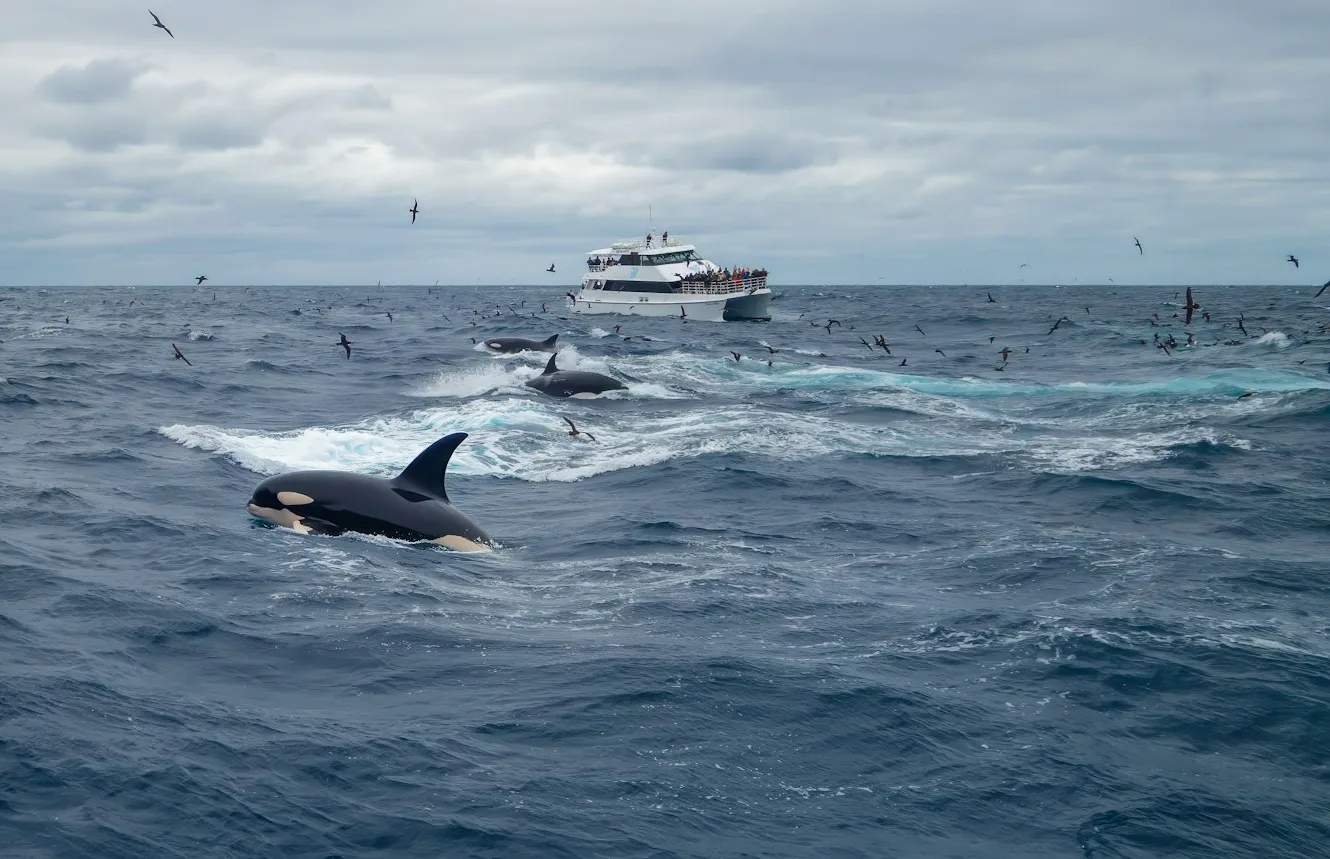
I’ve had the luck (yes, it was nothing but luck!) to encounter three orcas in the wild while diving in Malpelo, off the Colombian Pacific, and it is not something I will ever forget. But you do not need a personal encounter to care and advocate for the ocean’s top predator. That being said if like me, you do dream of seeing them, there are ethical ways in which you can make that dream come true. This type of adventure is the right way to go on about it:
The Better Alternative: Seeing Them Where They Actually Live
Wanting to see an orca isn’t the problem. Wild orcas are one of the most extraordinary animals a person can see in their lifetime, and there is nothing wrong with wanting that. The problem is thinking a stadium tank is the way to do it. Seeing them in the wild isn’t just the more ethical choice, it’s the better one. You get real animals doing real things: hunting, teaching, playing, calling across kilometres of open water to family they’ve known for decades. Not the same trick, on cue, for the fifth show of the day.
Because for the orca, that fifth show isn’t a job. It’s a life. Imagine spending yours in a bathtub, unable to swim in a straight line for more than a few seconds, cut off from your family, cut off from the sounds that made your world make sense. That’s the reality behind the splash. It’s why captive orcas develop stereotypies, self-harm, chew the concrete until their teeth break, and lash out at the trainers and each other. What the industry sells as entertainment is, for the animal on the other side of the glass, a slow psychological collapse. The other quiet upside is where your money goes. A ticket to SeaWorld funds captivity. A ticket to a responsible whale watching tour funds boat crews, marine biologists, coastal towns, and often the research and protection efforts that keep the pods safe in the first place. Same wallet, opposite outcome.
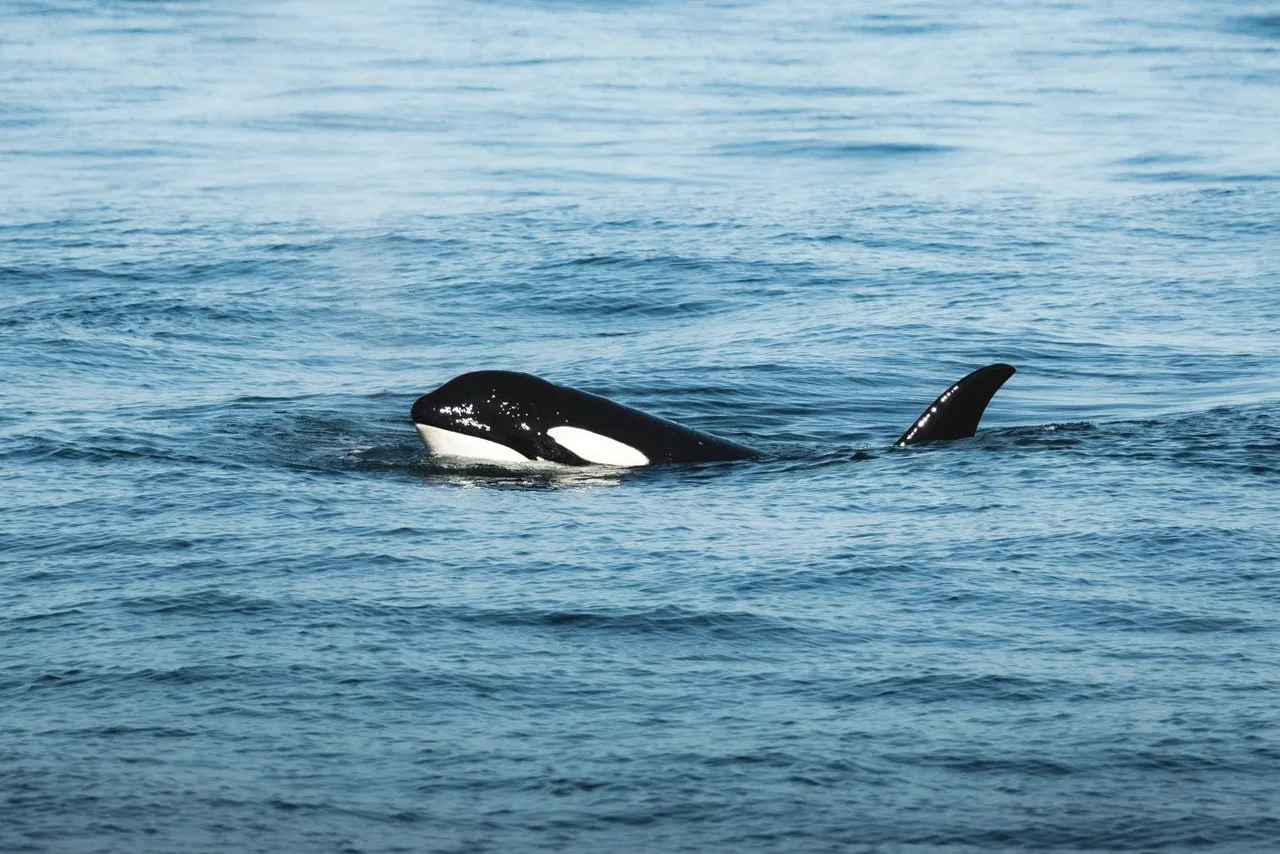
Where to See Orcas “Killer Whales” in the Wild
If you want to see wild orcas, these are the places to look:
San Juan Islands, Washington, USA: Some of the most respectful, well-regulated whale watching in the world. Operators follow the Be Whale Wise guidelines, and both Bigg’s (transient) orcas and the endangered Southern Resident pods pass through. Tours depart Friday Harbor and Anacortes. Best from April to October.
Vancouver Island, British Columbia, Canada: Home to both resident and transient orca populations. Small-boat and kayak operators around Telegraph Cove and northern Vancouver Island are among the most responsible you’ll find anywhere. Best from July to September.
Northern Norway (Tromsø and Andenes): Herring-hungry orcas gather in the fjords in winter. This is also one of the only places on Earth where you can legally snorkel with wild orcas, with strict, ethics-first operators. Best from October to January.
Bremer Bay, Western Australia: Now thought to hold the largest concentration of orcas in the Southern Hemisphere, drawn to the ocean canyon offshore. Tours depart from Bremer Bay Boat Harbour. Best from January to April.
Kaikōura and the Marlborough Sounds, New Zealand: About 200 orcas circle the coast, with a unique population that hunts stingrays. Best from September to February.
Península Valdés, Patagonia, Argentina: The famous “beaching” orcas that intentionally launch themselves onto the sand to grab sea lion pups. Mostly land-based viewing. Best from March to April.
Antarctic Peninsula: Roughly half the world’s orcas live in Antarctic waters. Expedition cruises out of Ushuaia offer some of the most dramatic sightings on Earth, including orcas washing seals off ice floes. Best from January to March.
San Diego, California, USA: Not primarily an orca destination (sightings are rare), but a strong year-round whale-watching hub with gray whales in winter, blues and humpbacks in summer, and the occasional orca. Genuinely useful as a reminder that a good whale-watching operator sitting a few miles from SeaWorld exists, and one of them deserves your money infinitely more than the other.
Wherever you go, pick your operator the same way you’d pick a shark tourism operator: look for the ones who follow a code of conduct, keep distance from the animals, don’t chase or crowd, and talk about the whales’ welfare rather than just the money shot you’ll get. Anyone guaranteeing a sighting is guaranteeing they’ll pressure a wild animal to give you one.
View on Instagram
Support Orca Conservation Organizations
If you have the means, put money behind the animals. A few organizations working on orcas and marine mammals are worth supporting: the Whale and Dolphin Conservation, the Orca Conservancy, the Center for Whale Research, the Dolphin Project, and Empty the Tanks. Even a small recurring donation helps fund the research, monitoring, and advocacy that decide whether the most fragile populations make it. Attention is free; the work is not.
View on Instagram
World Orca Day is worth marking because it points at something real: some of these populations are small enough that decisions made now decide whether they exist in a generation. The day itself changes nothing. What it can do is turn a moment of attention into the slower, less glamorous work of protecting prey, cutting contaminants, refusing captivity, and giving these animals quiet water to hunt in. That is the part that actually matters, long after the day is over.