Someone asks me what to watch to understand the ocean at least once a week. My answer changes depending on the person, whether they’ve never snorkelled or whether they already dive, but it always comes from the same short list. These are the films that don’t just show you the ocean. They make you feel what it means to love it, lose parts of it, and fight for what’s left.
All of these have been on Netflix. Availability shifts by region and by season, so check what’s live where you are, but they’ve all had substantial runs on the platform and most are still there.
Mission Blue
I want to start here because Sylvia Earle is, without question, one of the most important human beings alive. I don’t say that lightly. She has spent more than seventy years in the ocean. Over a hundred expeditions. More than 7,000 hours underwater. She was the first woman to serve as chief scientist of NOAA. She set a solo depth record walking untethered at 381 metres. National Geographic called her “Her Deepness.” She has been diving since before most of us were born, and she has watched the ocean change in ways that should keep all of us up at night.
What Mission Blue does, and what no other documentary quite manages, is put you inside that lifetime of witness. You watch a woman who gave everything to the sea describe, with controlled heartbreak, what she has seen disappear. Shark populations down more than 90 percent since she started diving. Coral systems she explored as a young scientist that no longer exist. Open-ocean silences where there used to be noise. She doesn’t perform grief. She carries it, and that is much harder to watch.
And then she does something remarkable: she refuses to give up. The whole second half of the film is about Mission Blue, the organisation she founded to designate and protect “hope spots”, critical areas of ocean that, if protected, could allow the sea to recover. Not as a gesture. As a strategy. She says, plainly, that we have the knowledge and the tools to turn this around if we choose to. The film is from 2014 and parts of the production show their age, but I have never found a better answer to the question of why any of this matters.
Watch it. Then follow Mission Blue. Then watch it again. The hope spots she founded are still being designated, including the Rapa Nui Hope Spot and those across southern Africa. Watch on Netflix.
My Octopus Teacher
If Mission Blue is the film that explains why, this is the film that explains how: how to actually be in the water, present and patient and changed by what you encounter there.
Craig Foster, a South African filmmaker and freediver, spent a year diving every single day in a cold kelp forest near Cape Town to build a relationship with one common octopus. What results is unlike anything I’ve seen in wildlife filmmaking. It is told from inside the relationship, not narrated from above it. Foster is not objective. He is completely, vulnerably in love with this animal and with the place, and by the end of the film you are too.
What moves me most is how accurately it captures the interior experience of freediving, that particular quality of attention that comes from being weightless and silent in the water, letting the world come to you. Foster shows what patience looks like when you commit to it over months rather than minutes. The octopus’s intelligence is documented in patient, unflinching detail: camouflage, tool use, problem-solving, genuine curiosity about a human being. But none of it feels like a nature lesson. It feels like falling in love with something you didn’t know you were capable of loving.
And then the film asks you to stay with grief. I won’t say more than that. Just stay with it.
It won the Academy Award for Best Documentary in 2021. More importantly, it permanently changed how a huge number of people think about cephalopods and about cold-water ecosystems. South Africa’s kelp forests are world-class and almost completely off the radar outside specialist circles. This film put them on the map and kept them there. Watch on Netflix.
Puff: Wonders of the Reef
This one surprises people who come to it expecting spectacle. The premise, follow a baby pufferfish on the Great Barrier Reef, sounds gentle, almost slight. In some ways it is. But what it does with scale and perspective is genuinely unlike anything else on this list, or anywhere.
The reef is shown from the point of view of a creature that is millimetres long at the start of the film. Things that look like flat ground become mountain ranges. A single coral head becomes an entire continent to navigate. A passing shadow becomes an existential threat. You stop seeing the reef as a backdrop and start seeing it as a world, layered, violent, absurdly beautiful, full of creatures going about urgent lives that we walk straight over when we snorkel.
For anyone who dives, it is a humbling reminder of what exists at scales you simply cannot perceive in the water. I find myself pausing it constantly, going back, watching again. For anyone who hasn’t dived, it is one of the most honest invitations I know into why this place matters and what is at risk if we lose it. The fact that it’s structured as an adventure story rather than a conservation lecture is exactly why it works. Watch on Netflix.
Chasing Coral
This one broke something in me the first time I watched it, and I mean that as a high compliment.
The team behind Chasing Coral set out to film coral bleaching events in real time, placing cameras on reefs, troubleshooting underwater for weeks, returning to find footage of something that was alive when they left it now dying on the other side of the lens. The logistics become the documentary. And then, gradually, the emotions of the people making it become the documentary too. You watch scientists and filmmakers process what they are seeing as they see it. One of them, underwater, starts to cry. He doesn’t stop the dive. He keeps filming.
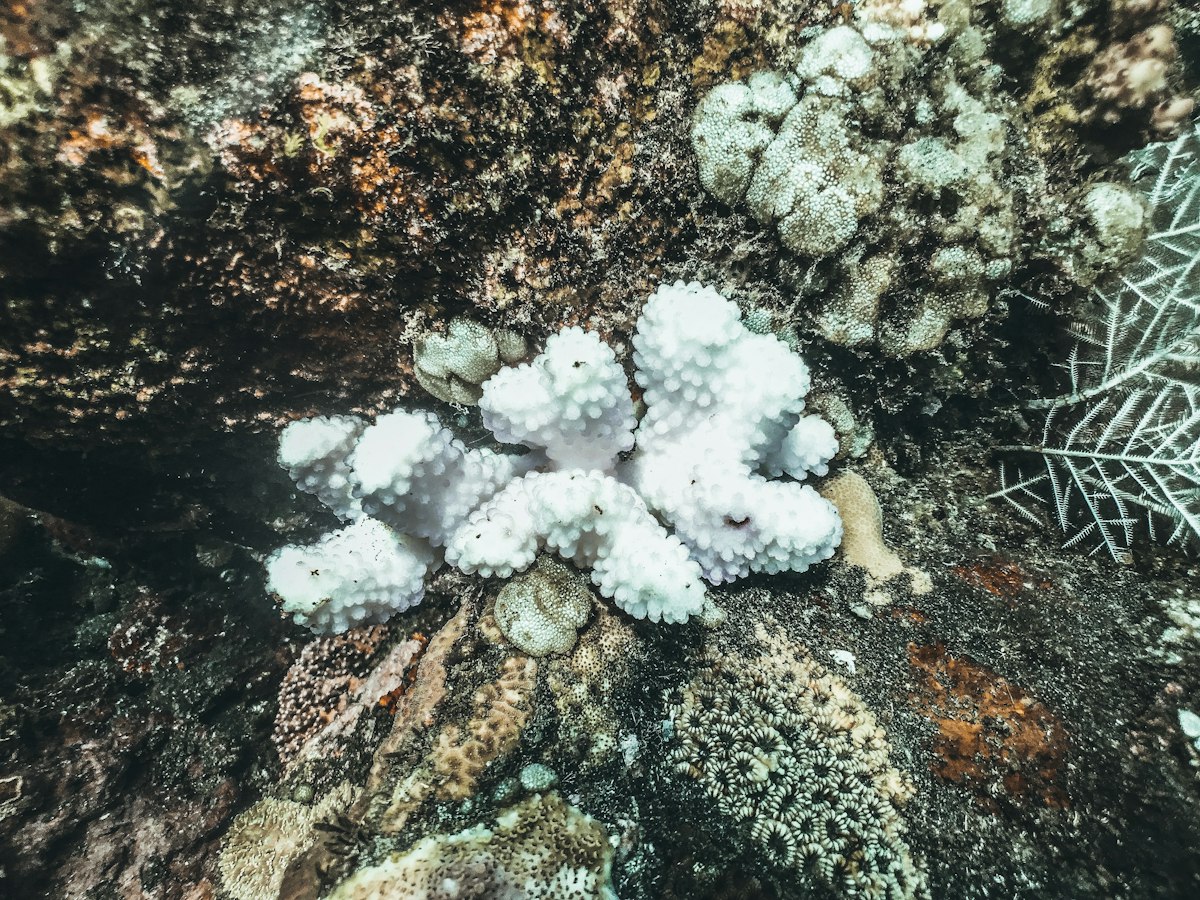
I saw my first severely bleached reef a few years ago and I wasn’t prepared. Nobody is. There is a particular kind of silence to a bleached reef that is nothing like the silence of a healthy one, no colour, no movement, no sound, just white. Chasing Coral finds a way to put that experience on screen for people who will never be there, and it does so without softening what it is. The time-lapse sequences of bleaching are the most effective visual documentation of reef loss I have seen anywhere.
Watch this and then look up what has happened to the Great Barrier Reef since the film was made, and read about the fourth global bleaching event that followed. Watch on Netflix.
Seaspiracy
This one is complicated, and I want to be straight about that rather than naming it without the caveats.
The central argument, that industrial fishing is among the largest drivers of ocean ecosystem collapse, and that many sustainability certifications are largely meaningless, is broadly supported by the evidence and important to engage with. The film also oversimplifies some of the science and misrepresents some of the researchers it interviews, which has been documented in detail by marine biologists since its release. It is a polemic, not a comprehensive study, and it should be watched as one.
I include it because the core questions it forces are worth sitting with regardless of where you land on the execution: what does sustainable seafood actually mean at industrial scale? Does it exist? The sections on bycatch and ghost gear are among the clearest explanations of those problems I’ve encountered on screen. Watch it, read the critiques alongside it, and form your own view. The anger it provokes, even imperfectly directed, seems to me more useful than not watching it at all. Watch on Netflix.
Our Planet
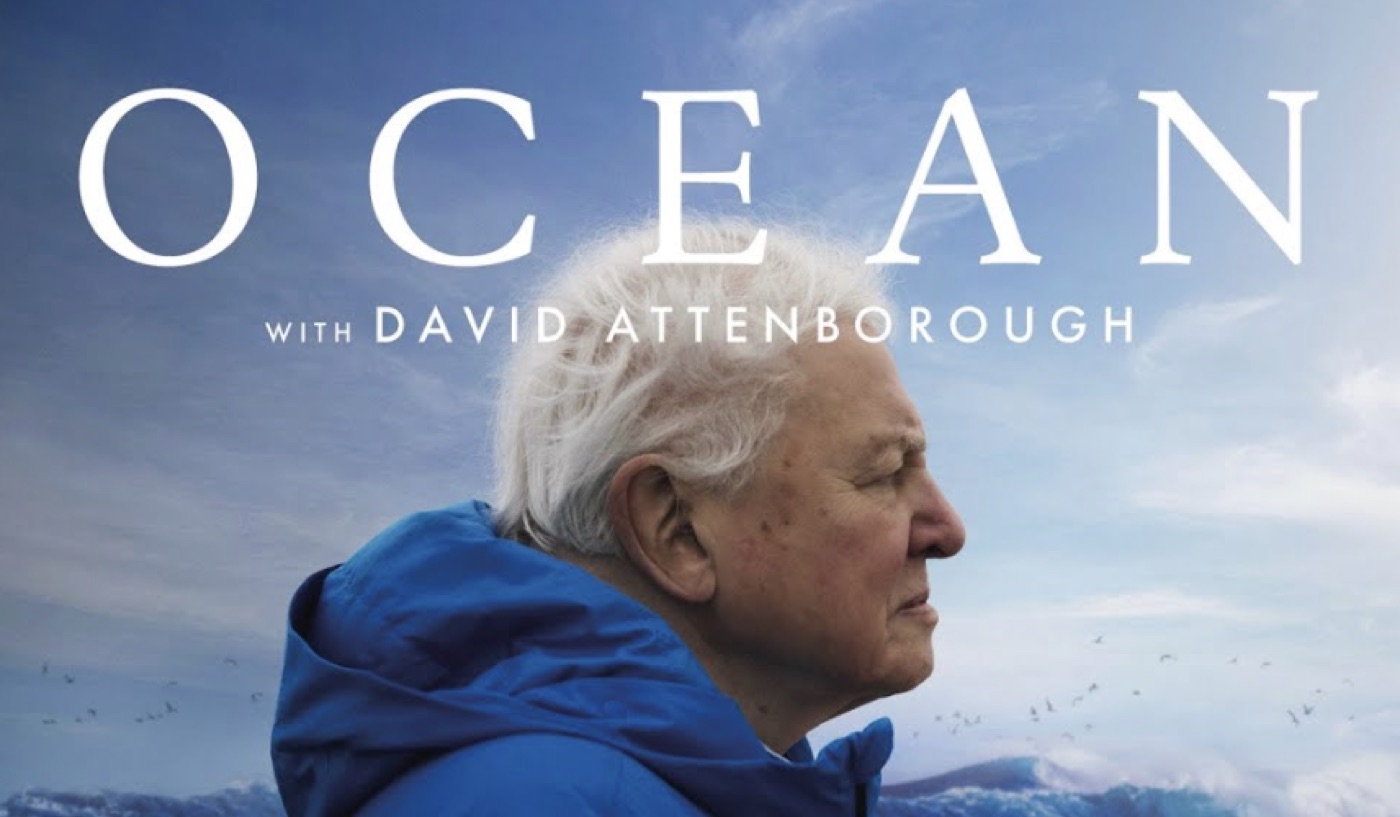
Attenborough’s Netflix series is the ocean at the largest scale any camera has ever attempted. The underwater sequences, particularly the deep ocean and coral reef episodes, are the most technically demanding nature filming ever made. Some of it doesn’t look real. It looks like something imagined.
But what stays with me is not the spectacle. It’s the footage of walrus falling from cliffs, hundreds of them, forced to haul out on sheer rock faces because the sea ice they depend on is gone. They climb. They fall. The camera doesn’t look away. It is one of the most devastating sequences I have seen in nature filmmaking, not because it is graphic but because it is so plainly the consequence of something we did.
Our Planet earns its wonder. The bioluminescence sequences are unlike anything I had seen before, and I have spent a lot of time in the water. But it earns its grief too, and it doesn’t let you separate one from the other. Watch the open ocean episode and the coral reef episode at minimum. Then, if you can, watch them again knowing what you now know. Watch on Netflix.