Coral Bleaching Awareness Month is in September now, and this is the first year it lands there. For three years it ran in November. The Coral Reef Alliance, which created the campaign, moved it because September is when the reef data actually arrives: the surveys from the northern summer, the monitoring updates, the field reports from people who have been in the water counting.
They were right about the timing. The biggest global reef assessment ever compiled was published on August 31, one day before this month began.
I want to write about it the way I would talk about it on a boat.
What Is Coral Bleaching Awareness Month?
Coral Bleaching Awareness Month is a global campaign run by the Coral Reef Alliance, built around one specific problem: bleaching is the loudest warning sign a reef can give, and almost nobody outside diving ever sees it.
It started in 2023 as a digital campaign with a bleaching guide aimed partly at dive shops and tour operators. Within a few years more than 200 organizations had joined, across the Coral Triangle, the Caribbean, East Africa, Australia and the Pacific Islands.
The move to September aligns it with on-the-ground reef monitoring, new field observations, and updated global bleaching outlooks. In other words, the month now sits where the evidence is, instead of three months behind it.
What Coral Bleaching Actually Looks Like Underwater
Bleaching does not look like death. That is the part nobody prepares you for.
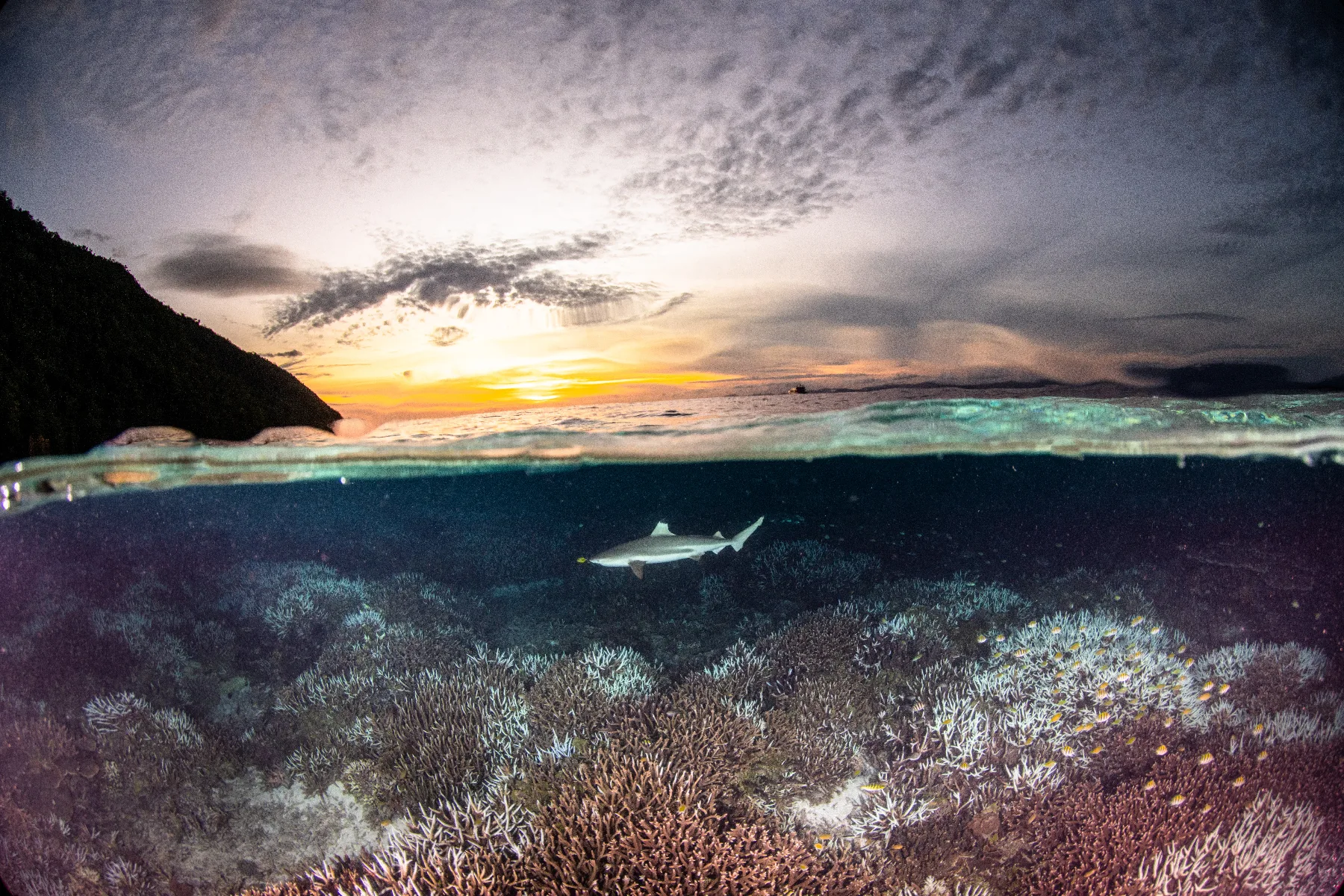
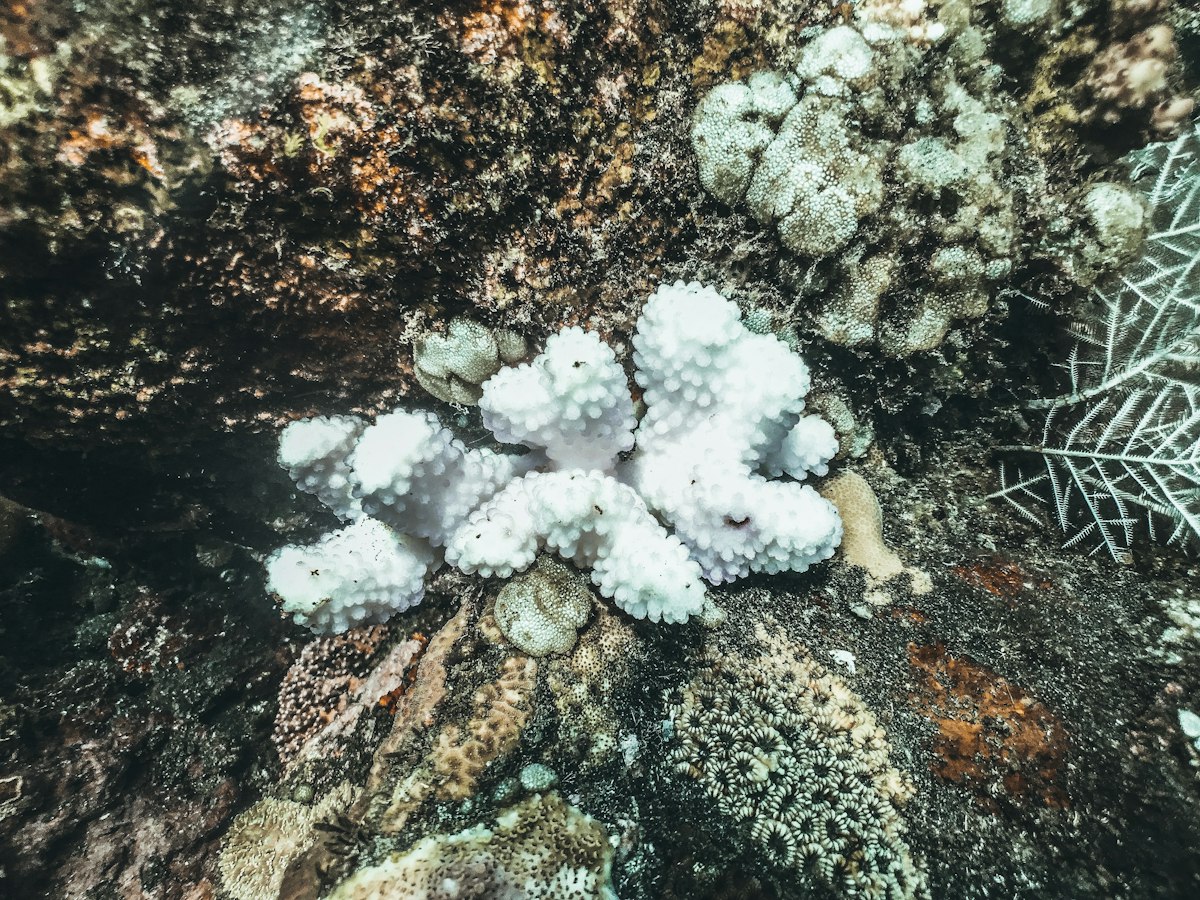
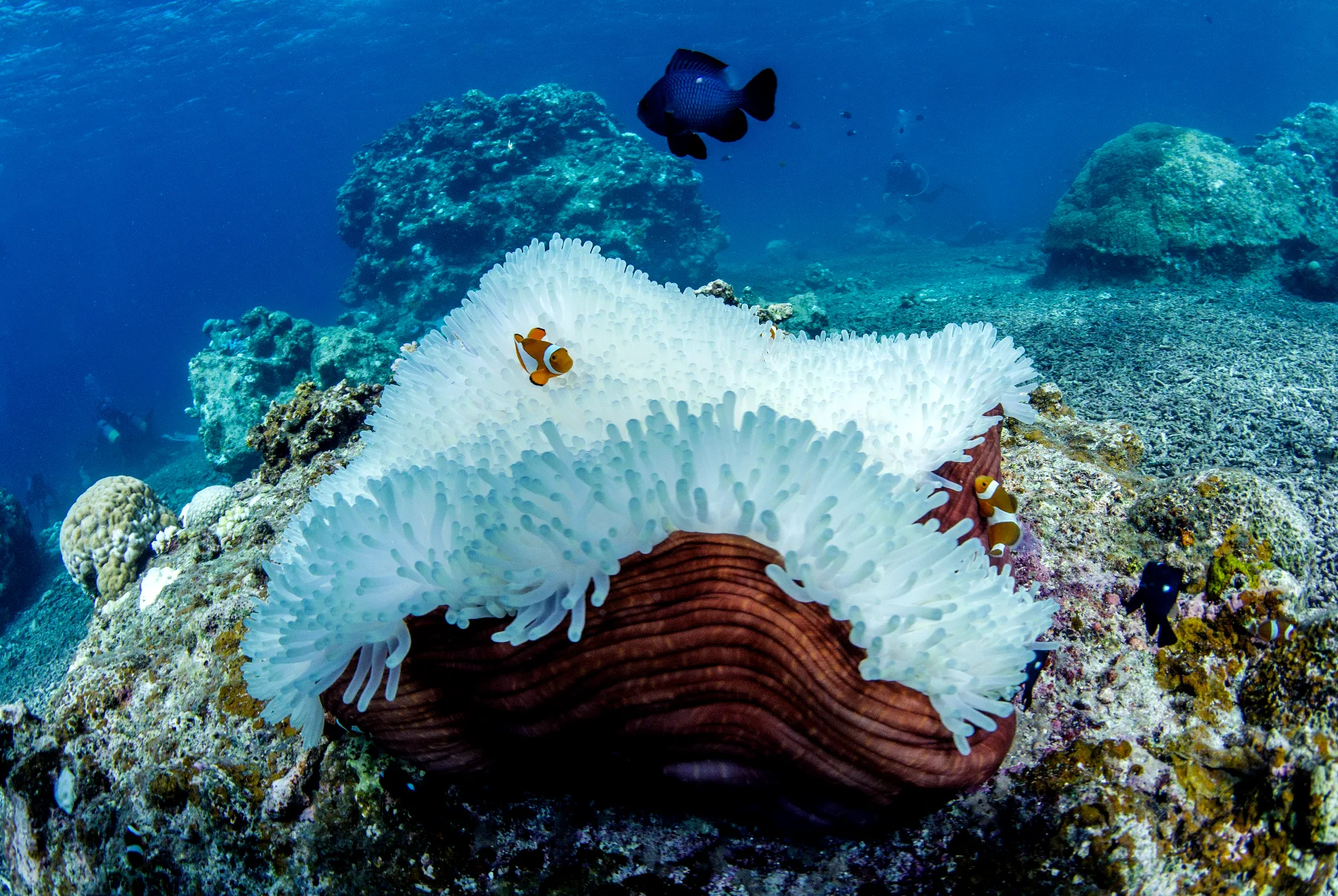
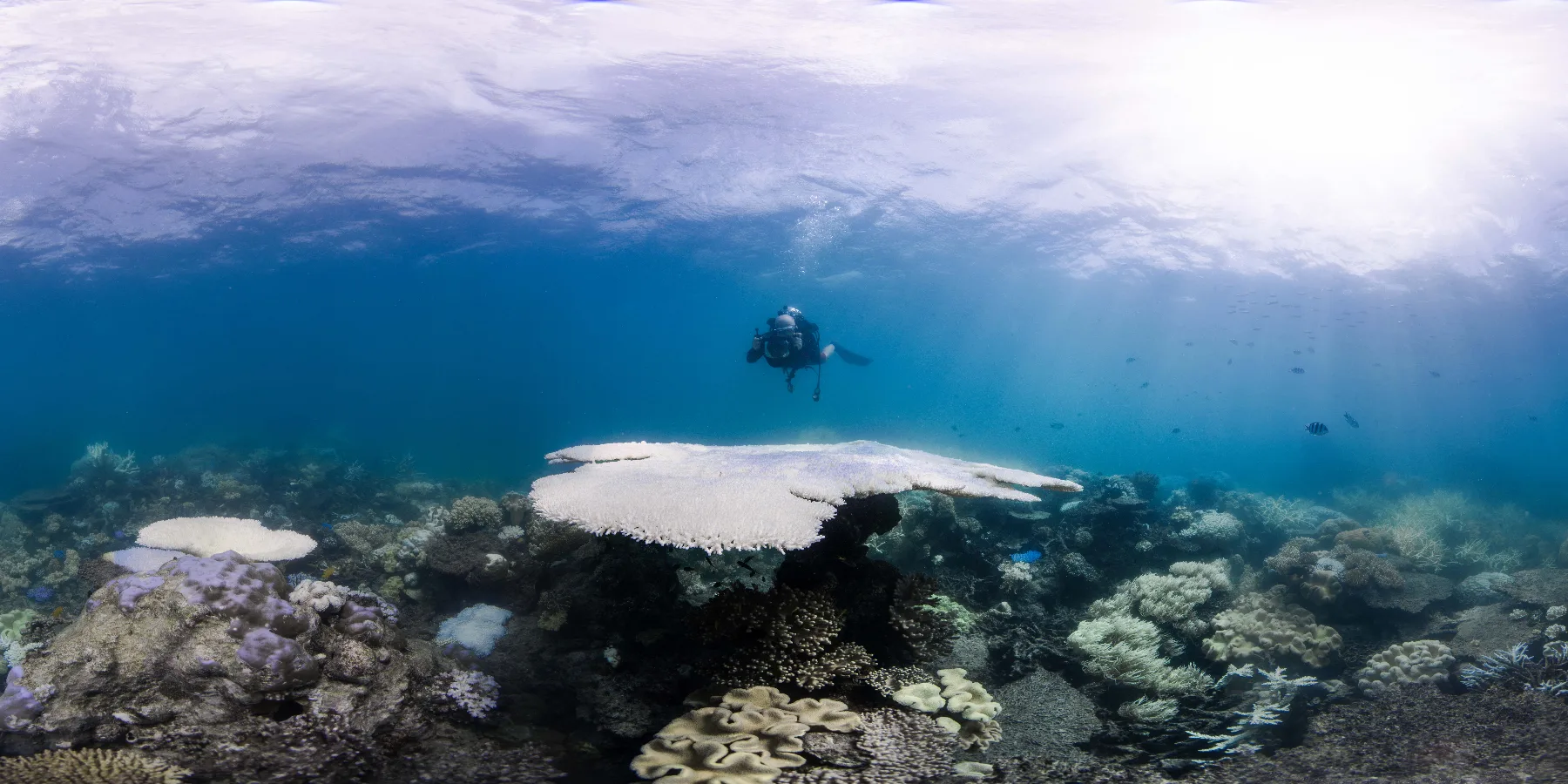
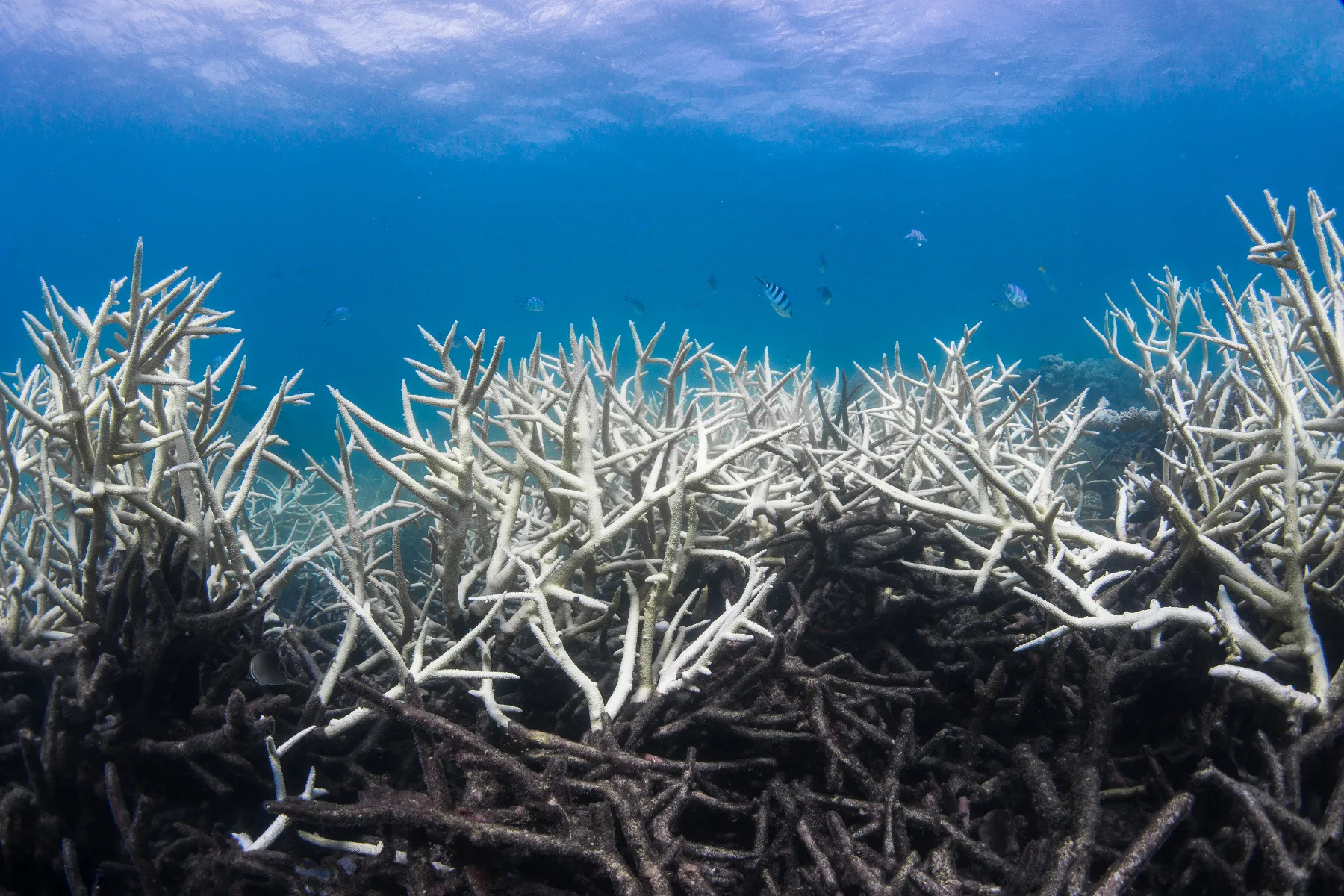
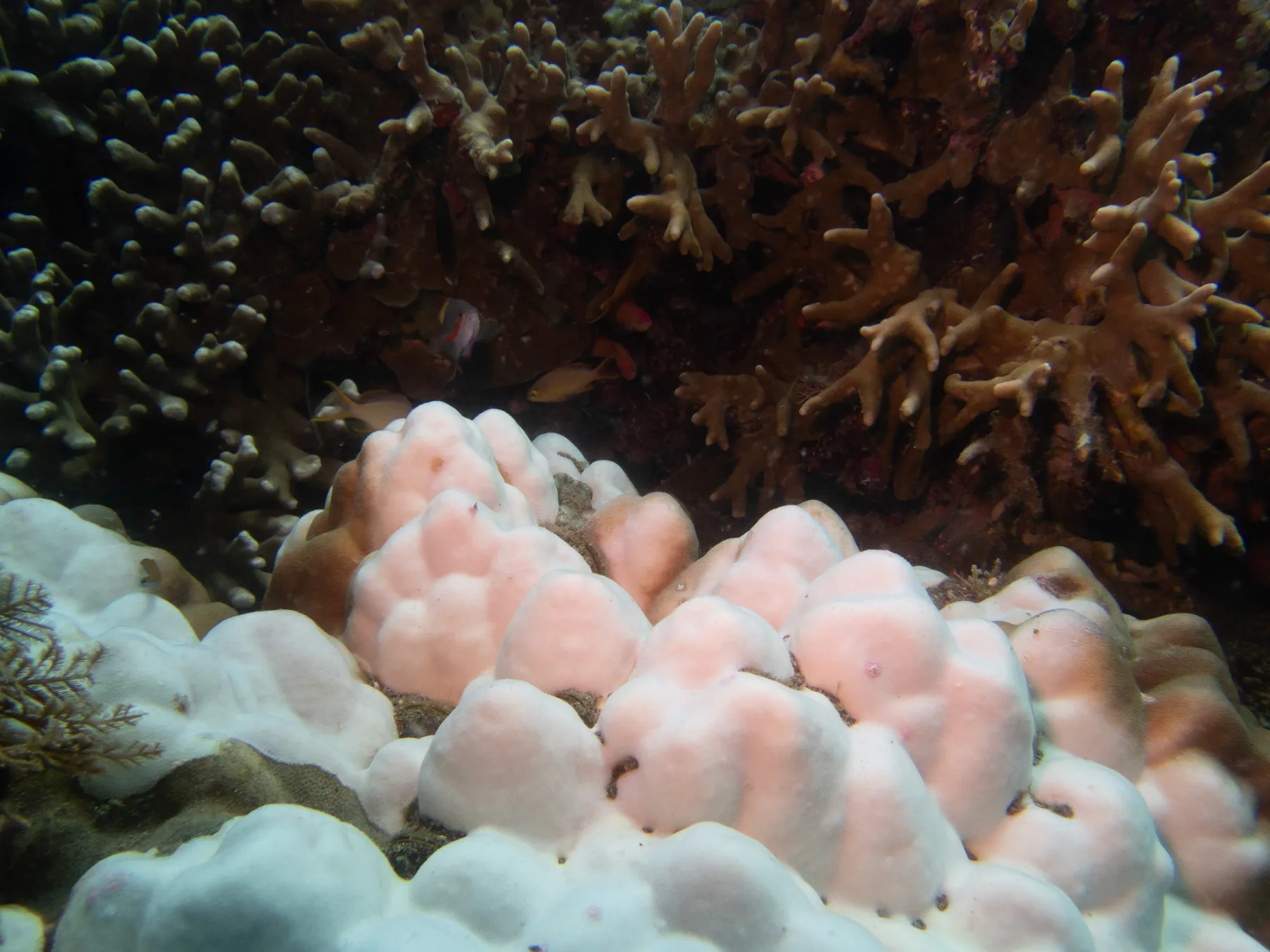
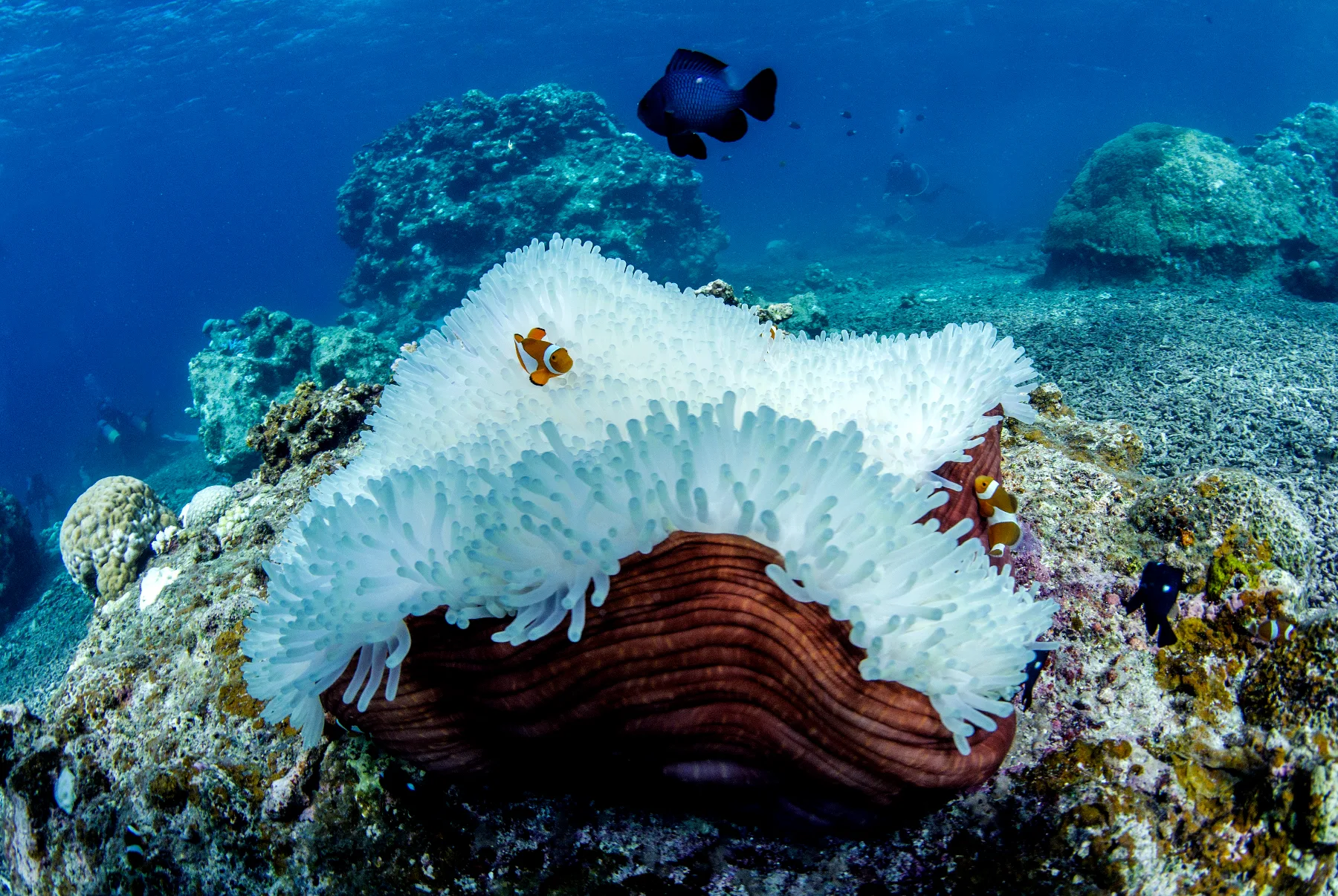
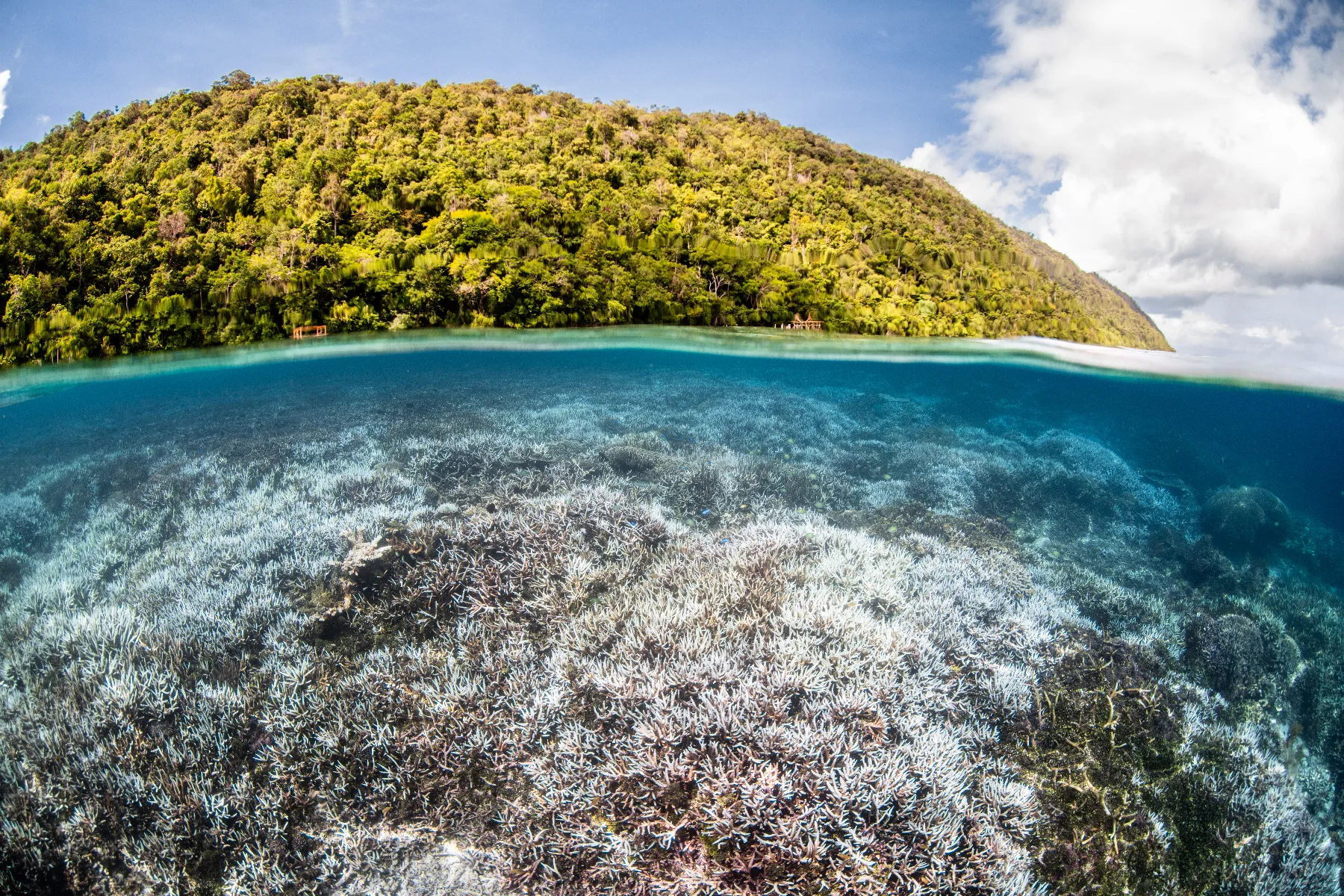
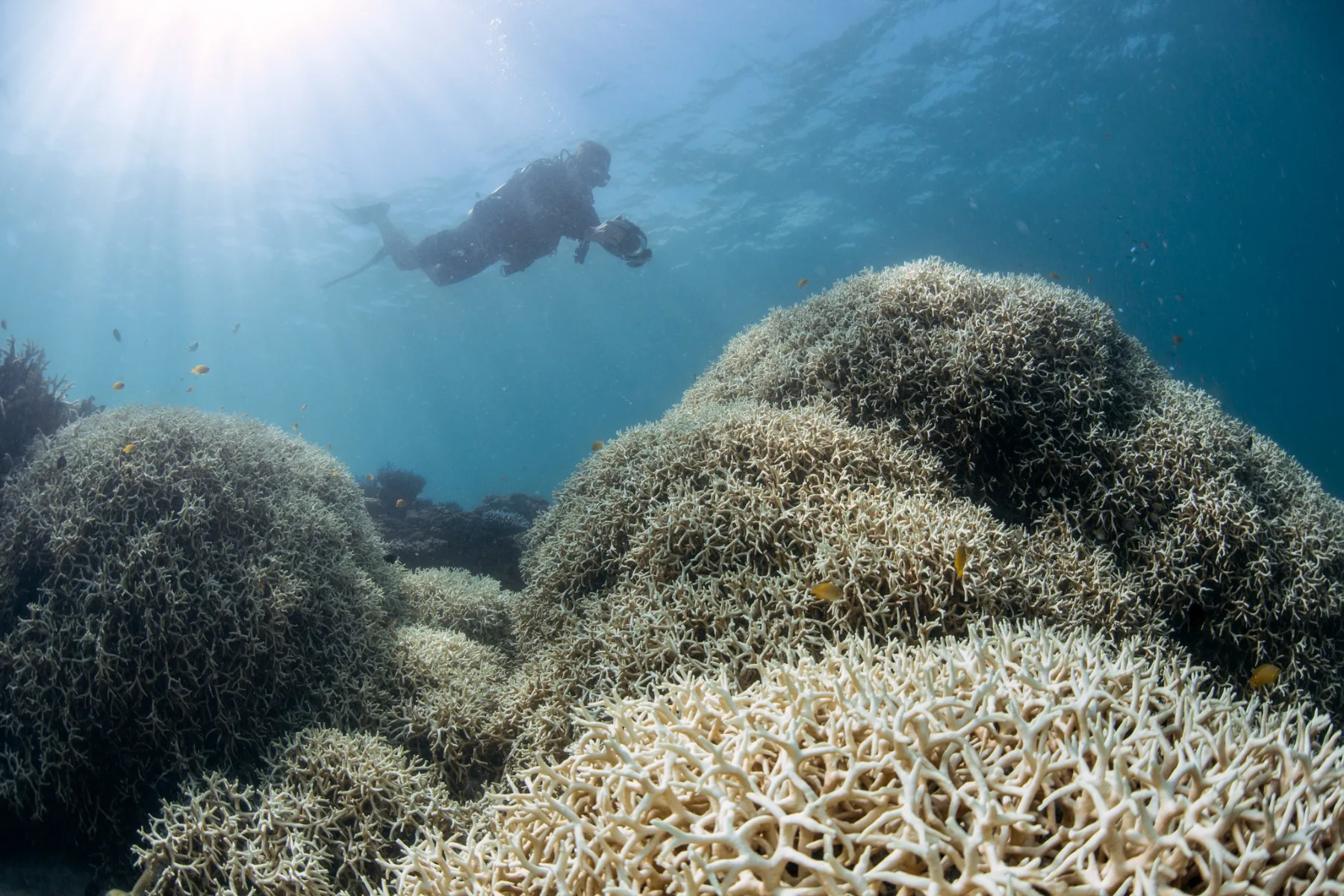
A bleached reef is bright. White, lilac, pale gold. If you have never seen a healthy reef, you might surface and call it beautiful. The coral is not dead when it bleaches. It has expelled the algae living in its tissue, the algae that give it both its color and most of its food. What you are looking at is a translucent animal over a white skeleton, starving in public.
If the water cools in time, some of it recovers. If it does not, the white turns furry and brown as algae colonize the skeleton, and the structure starts to crumble. That is the point where the fish leave.
The clearest tell is sound. Healthy reef is noisy, crackling, constant. Dead reef is silent. You can notice it on the descent before you can see anything at all.
The Report That Landed the Day Before This Month Started
The Global Coral Reef Monitoring Network published the seventh edition of Status of Coral Reefs of the World on August 31. It draws on 21.1 million observations from 87,299 surveys at 36,886 reef sites between 1980 and 2024. It is the most comprehensive assessment of coral reefs ever done.
The headline number: global hard coral cover has fallen by around 9.5% compared with the 1980 to 2009 reference period, with a stepwise drop since 2010.
The number that actually stopped me was the single-year one. Global hard coral cover fell 8.9% between 2023 and 2024. That is the largest single-year relative decline ever recorded.
Regionally it gets worse. Average hard coral cover in the Caribbean sat at 7.1% in 2024. In Belize, more than 90% of wild and restored acroporids died, and long-monitored sites collapsed to under 5% coral. In the Dominican Republic, around 70% of reefs were left with less than 5% cover. In the US Virgin Islands, coral cover dropped 47%.
Sea surface temperatures over the world’s reefs rose 0.81 °C between 1985 and 2025. That is the whole mechanism in one figure.
Why the Recovery Window Matters More Than Any Single Hot Summer
Here is the finding I would put on the wall of every dive center.
Before 2010, major disturbances hit a given reef roughly once a decade. Since 2010, in many regions, they arrive every four to six years.
More than a quarter of the world’s reef area experienced heat stress of at least 4 degree heating weeks on four or more separate occasions between 2019 and 2025. Near-annual bleaching stress is now normal across a large chunk of the planet’s reefs.
Reefs are not fragile in the way we tend to imagine. They are ancient and stubborn. What they are is slow. A reef can come back from almost anything if the gap between disasters is long enough.
Our entire problem is the length of the gap. Not any one hot summer. The shrinking space between them.
I wrote the fuller version of the science in the fourth global bleaching event if you want the mechanism rather than the summary.
Functional Extinction: What Florida Lost
If you want to know what the end of the process looks like, Florida published it.
A study in Science, led by Derek Manzello with 47 authors across 22 institutions, tracked the 2023 marine heat wave along the 560 kilometers of Florida’s Coral Reef. Sea surface temperatures sat at or above 31 °C for an average of 40.7 days.
In the Florida Keys and the Dry Tortugas, between 97.8% and 100% of elkhorn and staghorn colonies died. Wild ones and restored ones. Offshore southeast Florida, where the water stayed cooler, mortality was 37.9%.
The authors called it functional extinction. The species still exist in small numbers, but they no longer do the job they evolved to do, which is build the reef.
Elkhorn and staghorn were the backbone of Caribbean reef architecture. They were also the most restored corals in the world, the poster species of every nursery program. The heat took the wild colonies and the replanted ones in the same summer.
That is the part restoration people talk about quietly. You cannot outplant your way through a heat wave. Restoration works, and it matters, and I have written about how it functions in coral gardening and reef restoration, but it is a recovery tool, not a heat shield.
The Fourth Global Bleaching Event, and the El Niño Behind This One
NOAA and the International Coral Reef Initiative confirmed the fourth global bleaching event on April 15, 2024. It is thought to have ended in 2025.
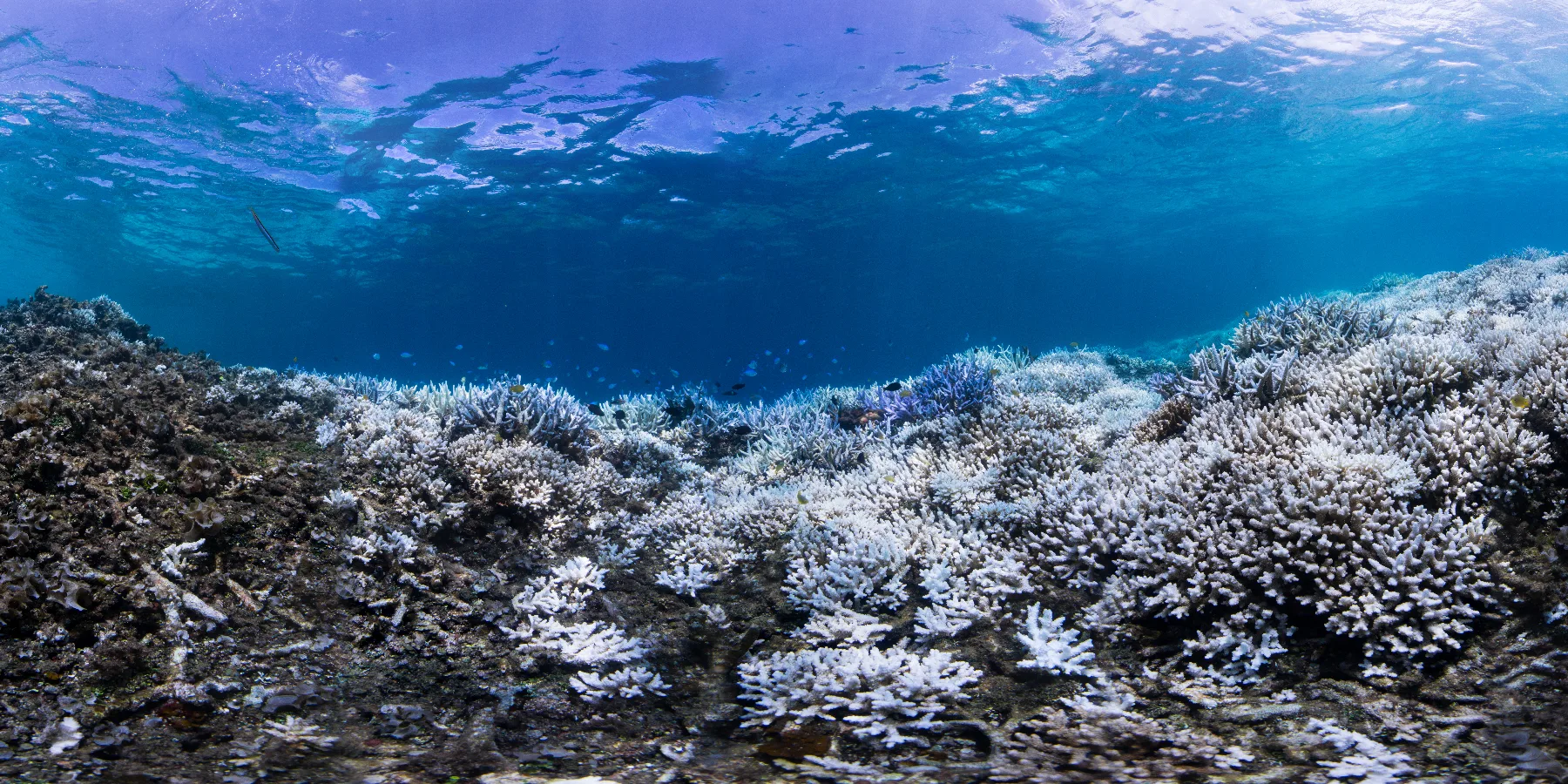
Between January 2023 and September 2025 it hit around 84.4% of the world’s coral reef area, with mass bleaching documented in at least 83 countries and territories. The previous record was 68.2%, during the third event from 2014 to 2017.
The monitoring itself had to change to keep up. NOAA’s bleaching alert scale used to stop at Level 2. In December 2023 it was extended to Level 5. A scale had to be rebuilt because reality overran it.
And now the next one is loading. NOAA’s Climate Prediction Center has an El Niño Advisory in effect, with a greater than 90% chance of a very strong event through the northern hemisphere fall and winter of 2026 to 2027. For October to December 2026, forecasters put a 69% chance on a historic event, one that would exceed every El Niño on record back to 1950.
Every global bleaching event since 1998 has coincided with a strong El Niño. Each has been more widespread than the last. This one is arriving on top of the warmest ocean baseline in the instrumental record, and on reefs that have had roughly one cool season to breathe.
If you are diving the Coral Triangle, the eastern Pacific, the Caribbean or the Great Barrier Reef between now and early 2027, there is a reasonable chance you will see bleaching in progress. I covered the forecast in more detail during Coral Reef Awareness Week.
What Divers Can Do During Coral Bleaching Awareness Month
🪸 Learn to recognize bleaching before you travel. Pale, fluorescent and stark white are different stages. Knowing what you are looking at turns a holiday dive into a data point.
🪸 Report what you see. NOAA Coral Reef Watch accepts bleaching observations, Reef Check trains recreational divers on real survey protocols, and most marine parks have a reporting channel. Photograph it with a date and a location. Divers noticing things in real time is part of how these events get mapped.
🪸 Fix your buoyancy before anything else. The single biggest thing most recreational divers do to a reef is touch it. A fin kick, a dangling gauge, a knee down for a photo. Do one dive this month where the only thing you work on is not making contact.
🪸 Change your sunscreen. Common UV filters damage coral DNA at concentrations measured in parts per trillion, and most places still have no rules about it. The full explanation is in what sunscreen does to coral, and it is the cheapest change on this list.
🪸 Choose the operator that says no. Small groups, proper briefings, sites cancelled when conditions would put divers on the coral. They cost more for a reason and the reason is the reef.
🪸 Give to something local and specific. A named nursery, a named ranger program, a named marine protected area. Small organizations working one reef convert money into outcomes at a rate the large ones cannot match.
The Part That Is Not Hopeless
Reefs are not uniformly dying, and I am not going to pretend otherwise.
The Florida study found something people skipped over in the headlines: mortality was 37.9% offshore southeast Florida instead of 100%, and the only difference was cooler water. Geography still decides. Some reefs have a margin and some do not.
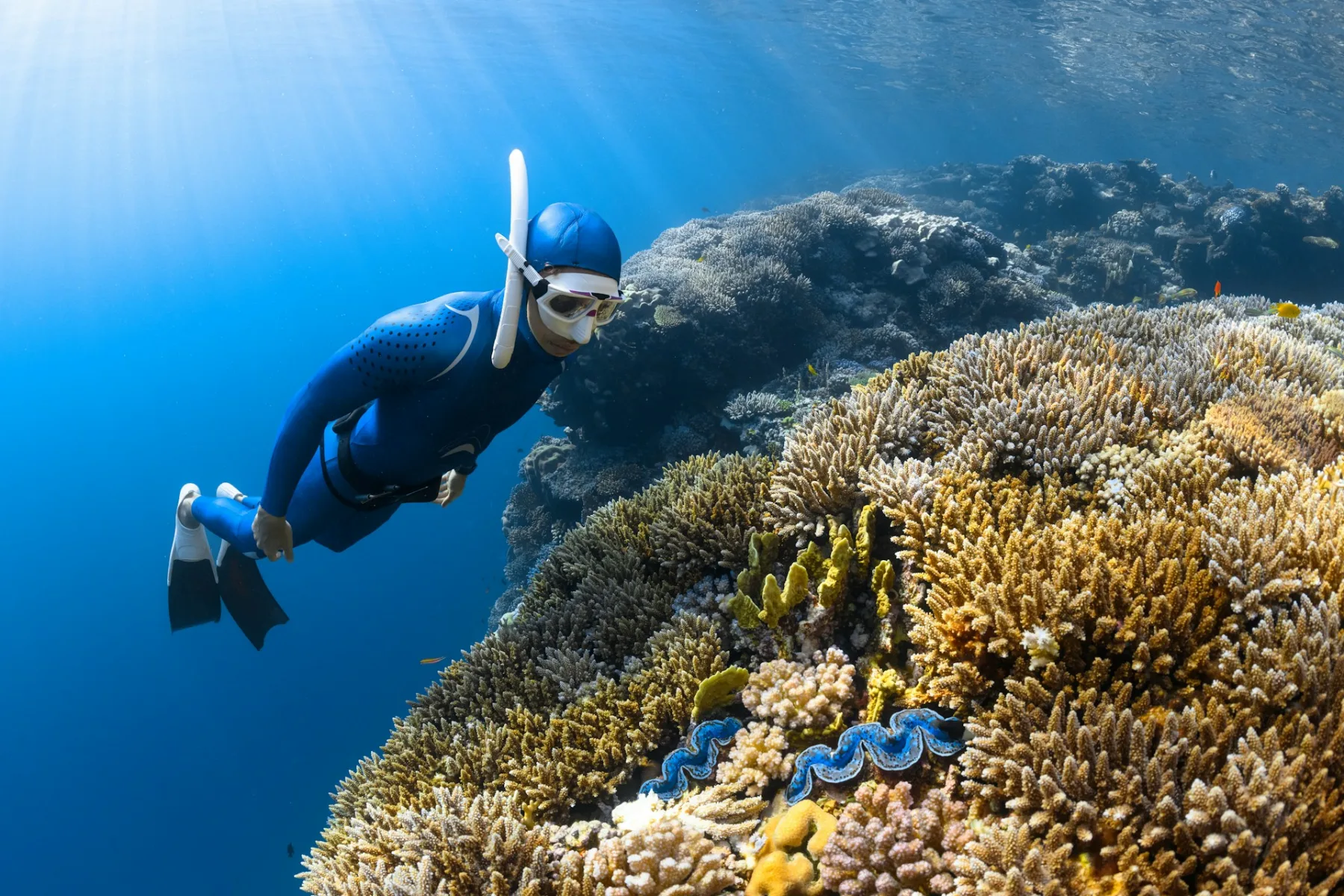
Reefs inside well-enforced no-take protection consistently outperform reefs outside it. Protection does not cool the water. What it does is remove everything else, so a reef that is not also being fished out, anchored on and silted has enough left in reserve to survive a bad summer. Water quality and fish biomass are the two levers that stay in local hands, and the GCRMN data keeps showing they matter.
I have dived reefs that still work, places where the coral is dense and the noise on the descent is constant, and the common factor is almost always people on shore who decided to protect them. Scuba diving Verde Island is one of those.
I have also dived the opposite. Reefs where most of the hard coral is rubble and the animals that remain are working around the wreckage, which is the honest picture in diving in Hurghada.
And protection on its own is not a guarantee. Diving in Santa Marta happens inside a park that has been protected since 1969, and the coral there is in poor condition. It gets called good by Caribbean standards, which tells you more about the Caribbean than it does about Santa Marta. When the regional average sits at 7.1% cover, that phrase stops meaning anything.
Colombia has the clearest version of this. The Seaflower Biosphere Reserve, around San Andrés, Providencia and Santa Catalina, is the largest marine protected area in the Caribbean. UNESCO designated it in 2000, and it holds close to 80% of Colombia’s coral reef area. On paper it is the best-case scenario in the region.
The reefs there have taken hurricanes Eta and Iota in 2020, stony coral tissue loss disease, and the 2023 mass bleaching, one after another. Long-term monitoring at a barrier reef off San Andrés has tracked elkhorn coral across three decades of surveys inside the protected area and documented steady decline throughout. Regionally, elkhorn has dropped more than 90% from white band disease, storms and repeated heat stress.
The protection did not stop any of that.
Protection buys a reef margin. It does not make it immune, and it cannot undo decades of runoff, sediment and warming water on its own. What it does is keep the fishing, the anchoring and the silt off a reef that is already fighting the heat, which is often the difference between a reef that comes back and one that does not.
The places that are still holding are not accidents. They are outcomes, and so are the ones that are not.
That is what this month is for, as far as I am concerned. Not mourning. Attention. Our ocean, our responsibility.
Get in the water. Don’t touch anything. Report what you saw.