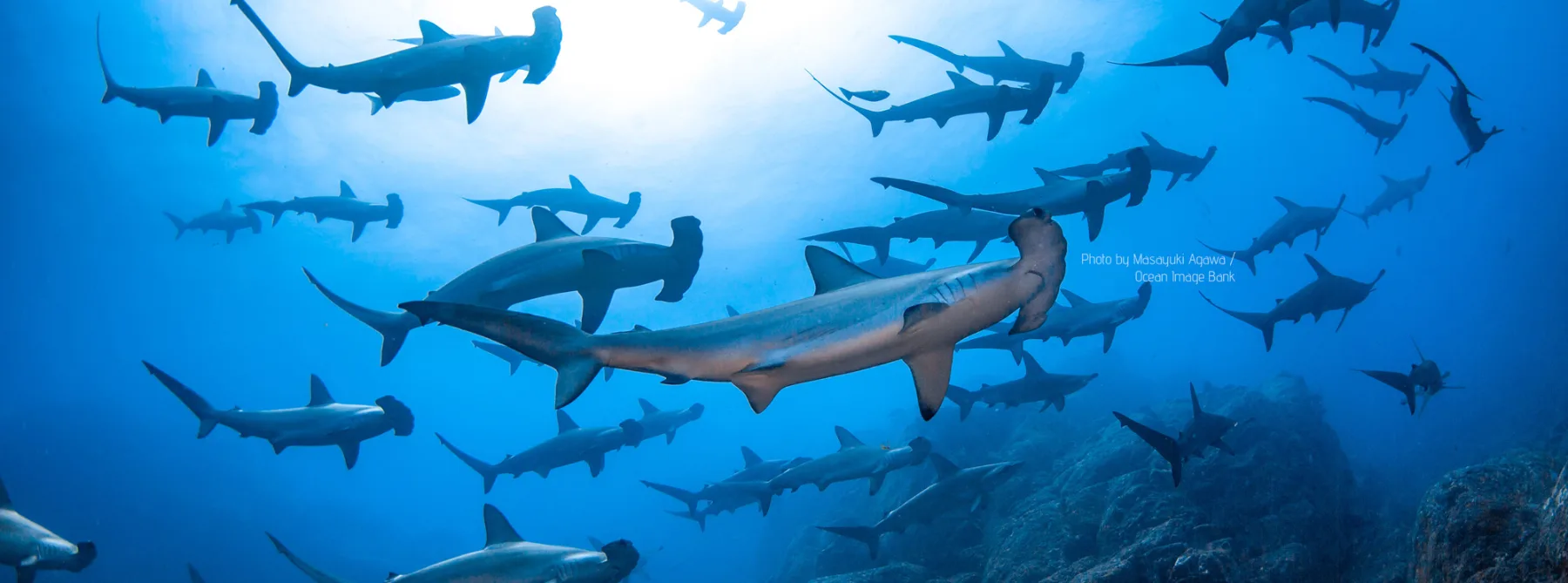
In March 2026, at the 15th Conference of the Parties of the UN Convention on Migratory Species in Campo Grande, Brazil, governments voted to place both the scalloped hammerhead and the great hammerhead on Appendix I. That is the highest level of protection this treaty offers. Signatory countries are now legally obliged to prohibit the catch of these species and to coordinate protection across their migratory range. It is one of the most significant international shark rulings in years, and the country that pushed it through was Ecuador.
What Actually Happened in Campo Grande
The Convention on Migratory Species, CMS for short, is the UN treaty specifically designed for animals whose entire life cycle crosses borders. Its two appendices work like a spectrum. Appendix II lists species that need international cooperation. Appendix I is reserved for animals threatened with extinction across all or a significant part of their range, and it comes with a hard legal obligation: parties must prohibit the taking of these species within their jurisdiction.
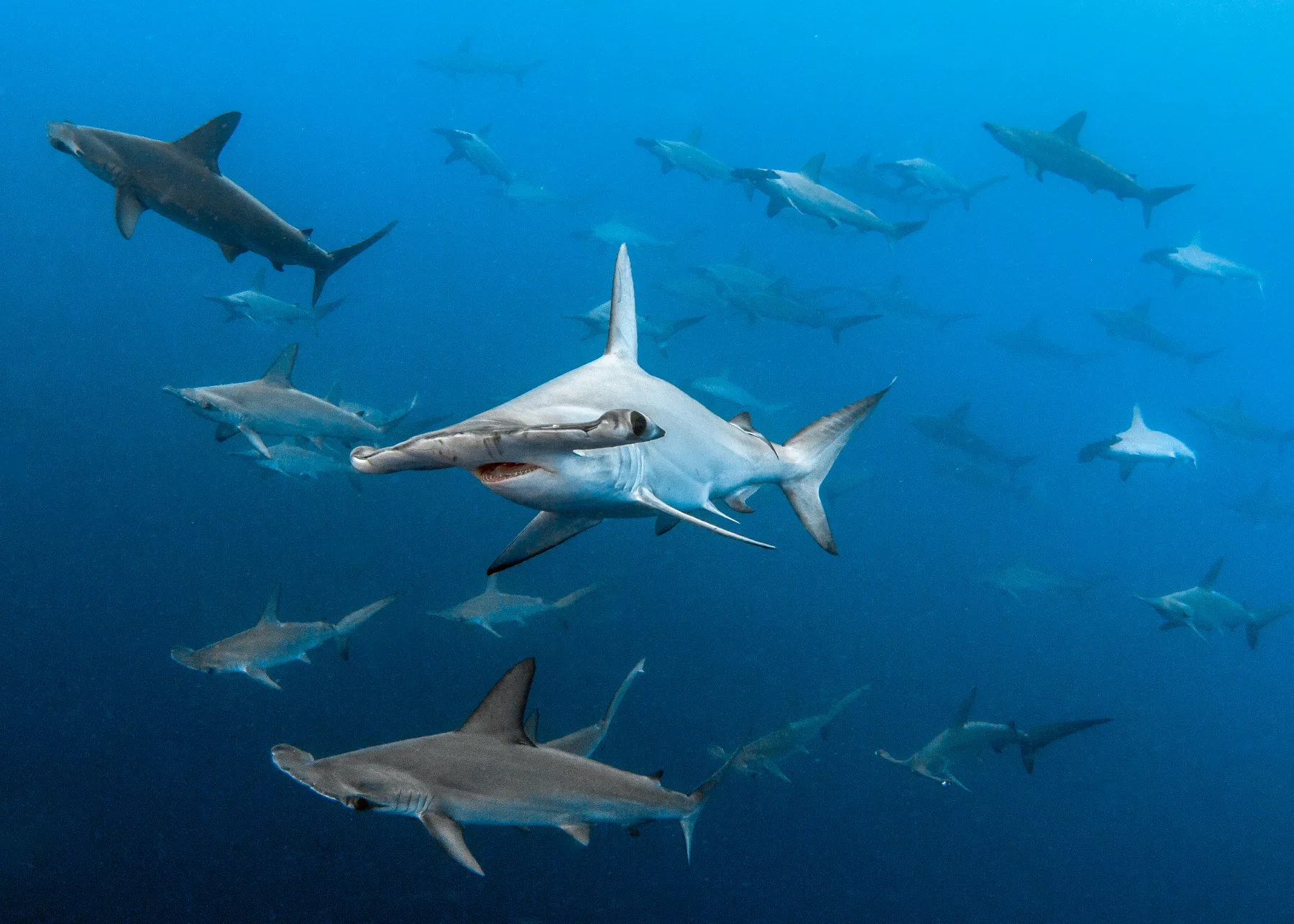
At CoP15, three of the world’s most endangered pelagic sharks moved onto that list. Ecuador proposed the scalloped hammerhead, and Ecuador proposed the great hammerhead. Panama proposed all three species of thresher shark. Every proposal passed. The Patagonian narrownose smoothhound, one of the most heavily landed shark species in the waters of Argentina and Uruguay, was added alongside them. Oceanic whitetip sharks, already listed on Appendix I, received additional measures to prevent their extinction.
The legal weight of an Appendix I listing sits in the language of the CMS itself. Signatory governments are obliged to prohibit the taking of listed species, to conserve and restore their habitat, to prevent obstacles to their migration, and to cooperate with the other countries these animals move through. That last obligation matters most, because it is exactly the gap that has always been exploited. A country can protect a shark inside its own waters and lose it the moment it swims into someone else’s, or into open ocean where no jurisdiction really applies. Appendix I is designed to close that door.
Why Latin America Led This
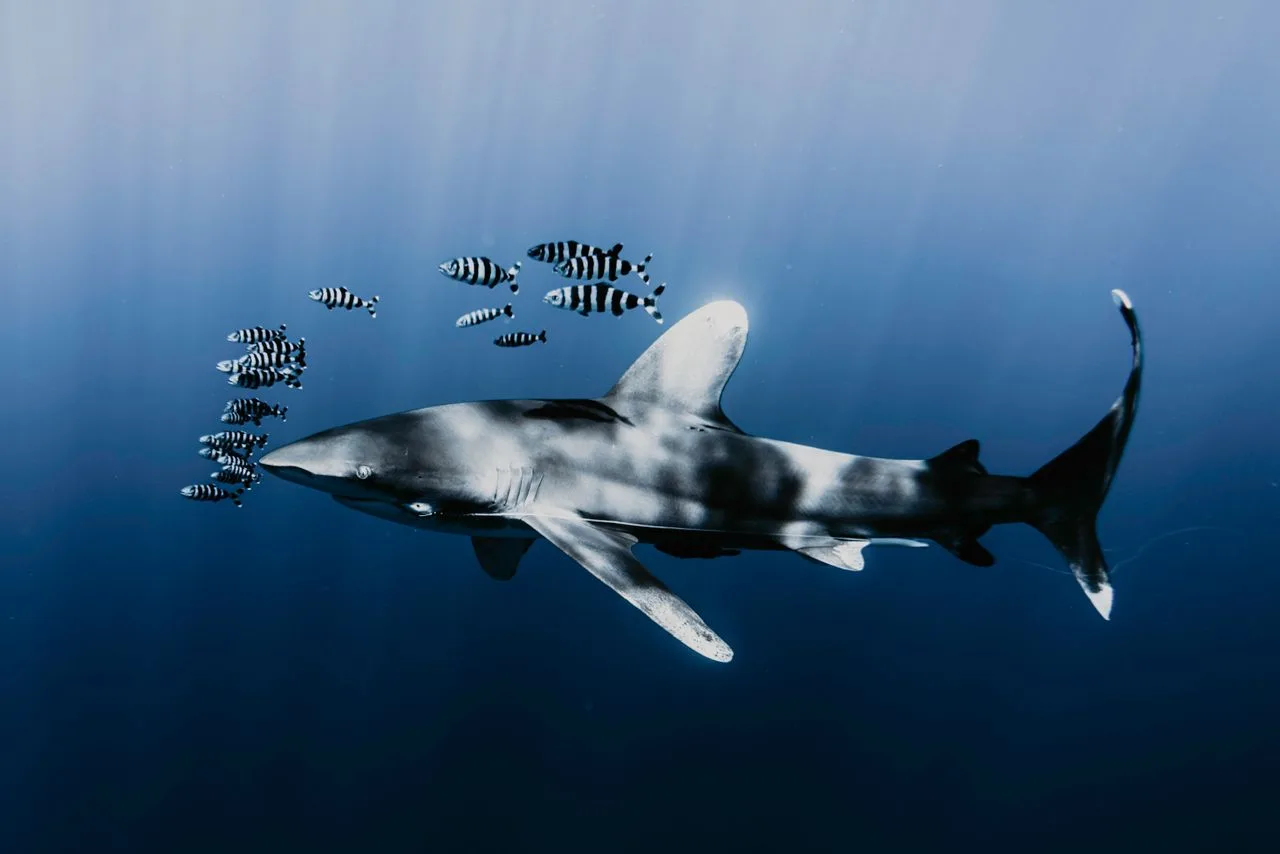
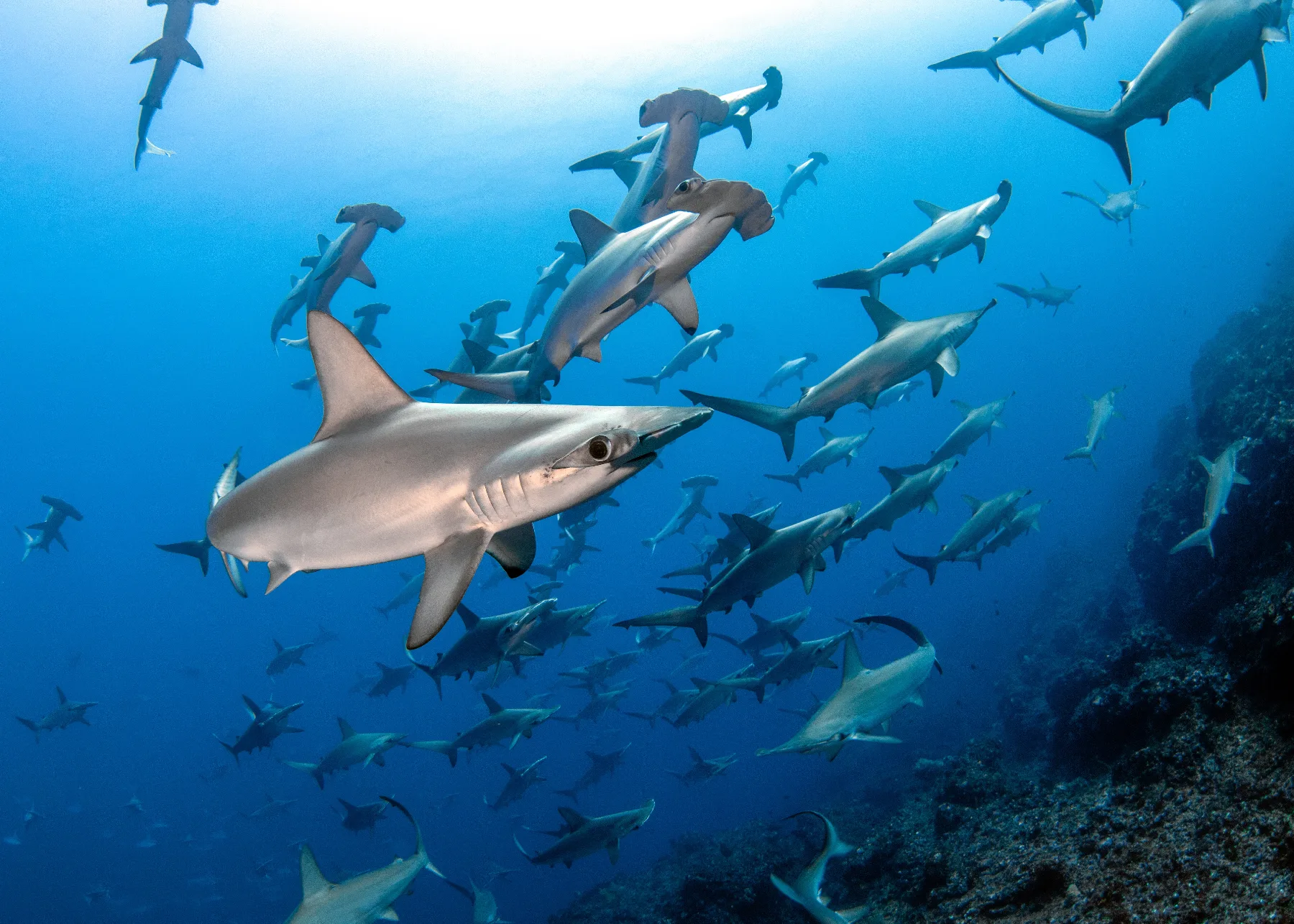
It is not a coincidence that Ecuador wrote both hammerhead proposals and Panama wrote the thresher one. These are countries sitting on the edge of the Eastern Tropical Pacific Marine Corridor, one of the only serious attempts anywhere on Earth to protect an entire migratory route rather than a single patch of ocean. The corridor links the Galápagos (Ecuador), Cocos Island (Costa Rica), and Malpelo (Colombia), and its waters are what divers call the shark superhighway: some of the most heavily trafficked hammerhead migration paths on the planet.
A tagging study published just before the CoP15 vote followed a pregnant scalloped hammerhead for 204 days from Darwin Island in the Galápagos to a birthing area off the Panamanian coast, then out to an offshore region more than 1,100 miles away. It was the first documented birthing migration for the species. Panama, Ecuador, and Colombia have been watching the same animals cross their borders for years.
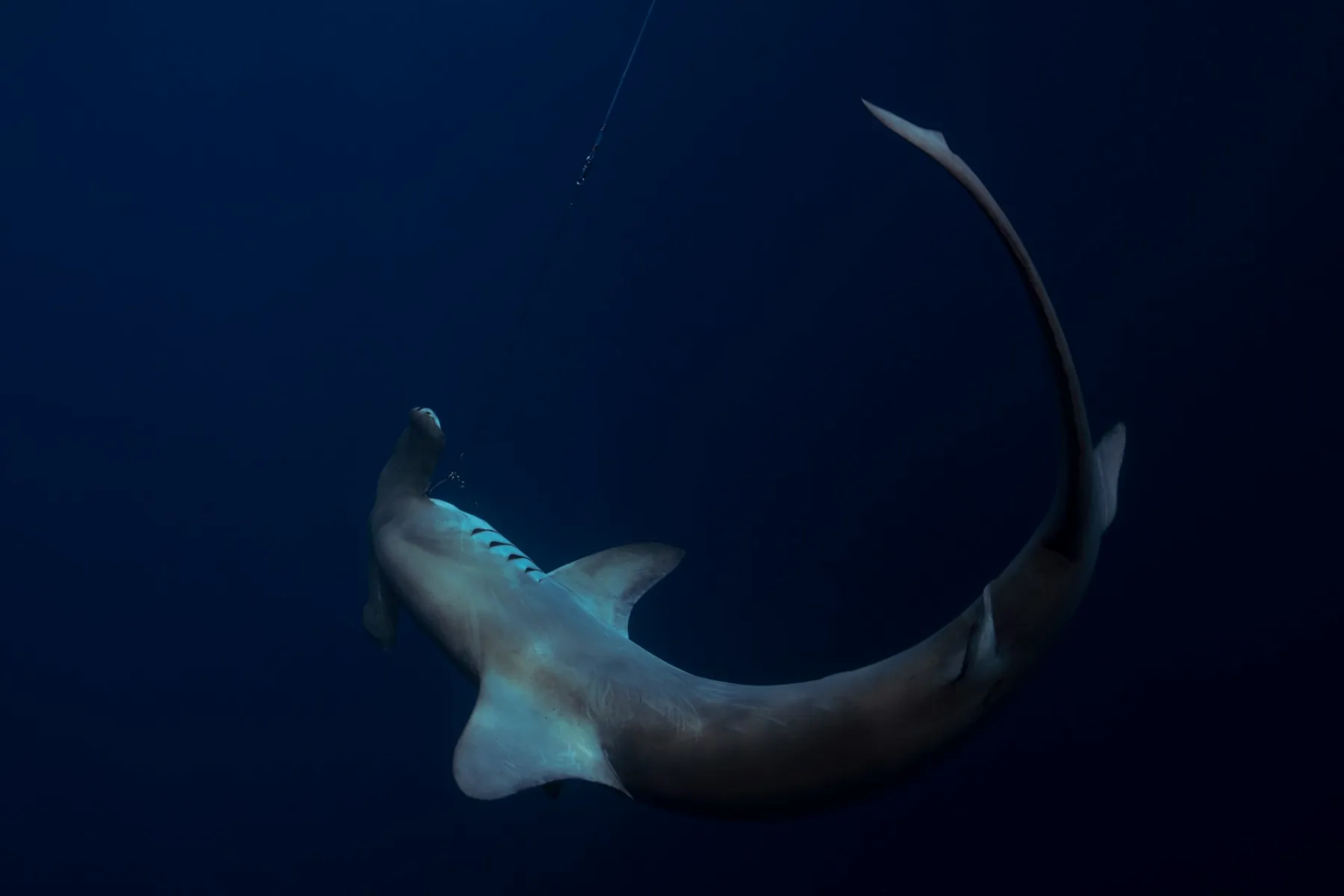
They also share the same problem: outside their protected zones, industrial longline fleets are waiting, and much of what those fleets pull up is illegal, unreported, or misreported. The people who guard Malpelo’s shark sanctuary year-round exist because no listing on paper is worth anything if nobody is enforcing it in the water.
The corridor countries have understood for years that they cannot protect these sharks alone. CoP15 is the moment the international community caught up.
What Appendix I Actually Requires
The legal weight of an Appendix I listing sits in the language of the CMS itself. Signatory governments are obliged to prohibit the taking of listed species, to conserve and restore their habitat, to prevent obstacles to their migration, and to cooperate with the other countries these animals move through. That last obligation matters most, because it is exactly the gap that has always been exploited. A country can protect a shark inside its own waters and lose it the moment it swims into someone else’s, or into open ocean where no jurisdiction really applies. Appendix I is designed to close that door.
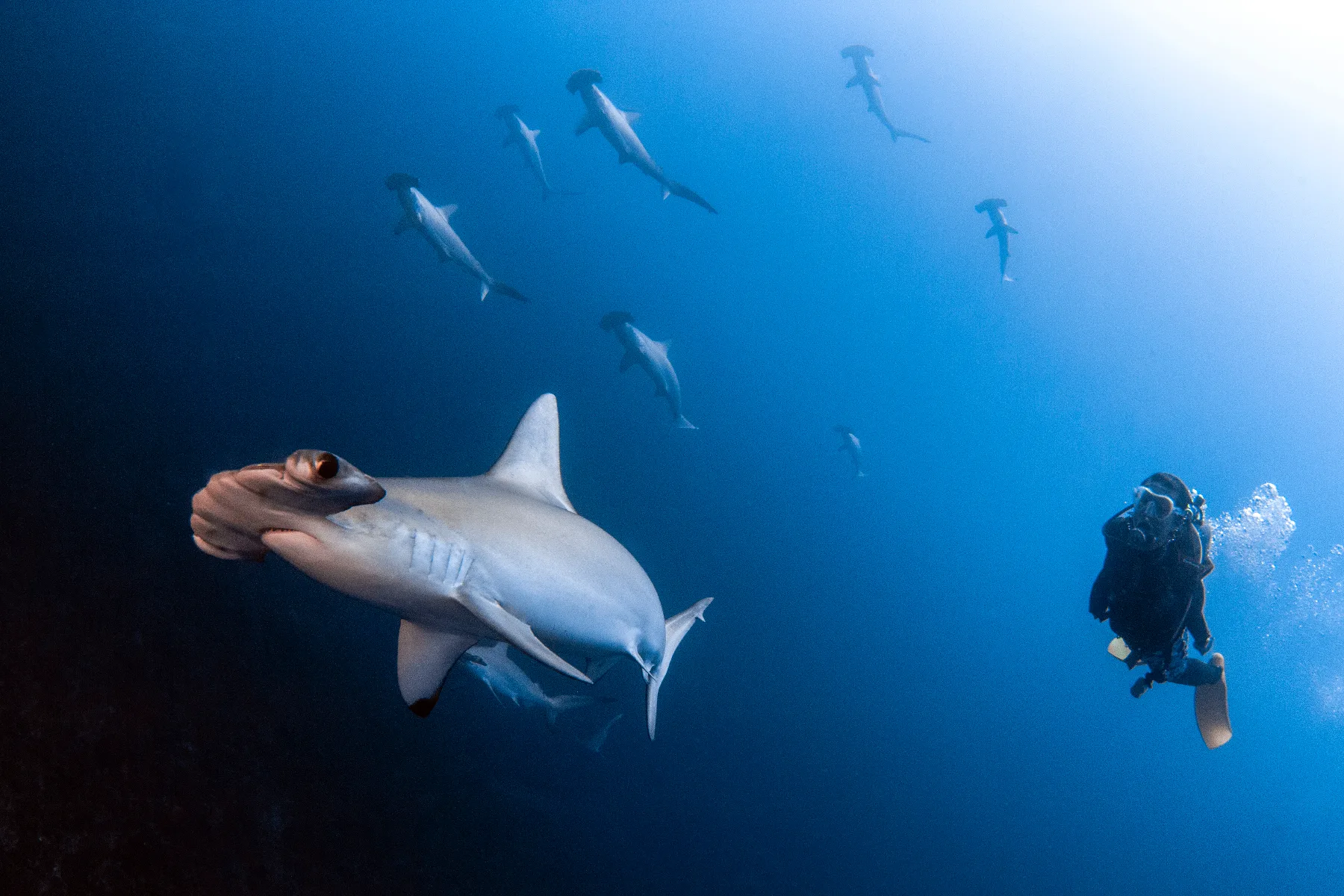
In practice, closing it takes time. As Pelayo Salinas of the Charles Darwin Foundation put it after the vote, an Appendix I listing is not a silver bullet. Countries have to translate the listing into their own domestic law, into enforcement budgets, and into the kind of patrol capacity that keeps illegal fleets out of the water. That is not automatic. The countries that pushed hardest for these listings, Ecuador, Panama, Colombia, are also the ones already carrying the highest enforcement burden, and they are the ones ranked most exposed on the global IUU Fishing Risk Index. The listing gives them stronger diplomatic and legal ground, but the boats, the fuel, the rangers, and the political will still have to be found locally.
That is why the CMS ruling matters most alongside what is already happening on the water. In May 2026, Panama signed a Memorandum of Understanding with the Charles Darwin Foundation to formalise cross-border research and management on hammerheads and rays across the Eastern Tropical Pacific Corridor. Cocos, Malpelo, and the Galápagos are already exchanging tagging data. The paper listing lets that coordination scale, but it does not replace it.
The Puerto Rico Problem
A separate piece of research published in July 2026 is worth reading alongside the CMS news, because it complicates the picture in exactly the way conservation always ends up complicating it.
Scientists working with local fishers in Puerto Rico analysed nearly 400 shark anal fins over 18 months, and the DNA came back with a surprise: the scalloped hammerheads landed in Puerto Rican waters are a genetically distinct population, separate not only from the Northwest Atlantic stock, but also from populations in Belize and Brazil. Puerto Rico may hold a previously undocumented component of scalloped hammerhead genetic diversity, which is exactly the sort of population that should be protected first, not last.
The problem is that these sharks are still being legally landed. Federal US law prohibits the catch of scalloped hammerheads. Puerto Rico’s territorial waters operate under a separate regulatory framework, and juvenile scalloped hammerheads continue to appear in the daily catch. The researchers are pushing for a formal Boca Vieja Scalloped Hammerhead Wildlife Refuge, and their approach is deliberately collaborative: they are working with the fishers, not against them, because a blanket ban that flattens local livelihoods and food security is not a solution any coastal community can actually live with. It is the same logic that has to sit underneath any CMS listing if it is going to hold, because the demand driving the boats does not disappear just because a species gets listed, as the global shark fin trade keeps proving.
Why This Is Worth Sitting With
International shark conservation has spent the last decade watching protection expand on paper while the actual killing continued in the water. CITES listings covering an entire family of requiem sharks. Finning bans across more than 40 countries. Shark sanctuaries covering more than six million square kilometres of ocean. All of that is real, all of that matters, and none of it has been enough on its own. The fin trade has not stopped, and the boats have adapted faster than the enforcement.
Appendix I under CMS is different from most of what has come before, because it names the specific mechanism that keeps failing: the migratory boundary. A shark that swims out of one country’s protection and into open water is a shark that becomes fair game. The Appendix I listing is an attempt to close that gap by treating the entire migration as the thing that needs protecting, not just a spot on a map. Whether that treatment works comes down to enforcement, which comes down to money, which comes down to the countries most exposed to illegal fishing carrying weight they cannot really afford. But the framework, finally, is right.
Great hammerheads have lost 95% of their global population. Scalloped hammerheads sit at the edge of the same drop. If a species that catastrophically damaged can still recover, it will only be because the paper listing and the patrol boat exist at the same time.
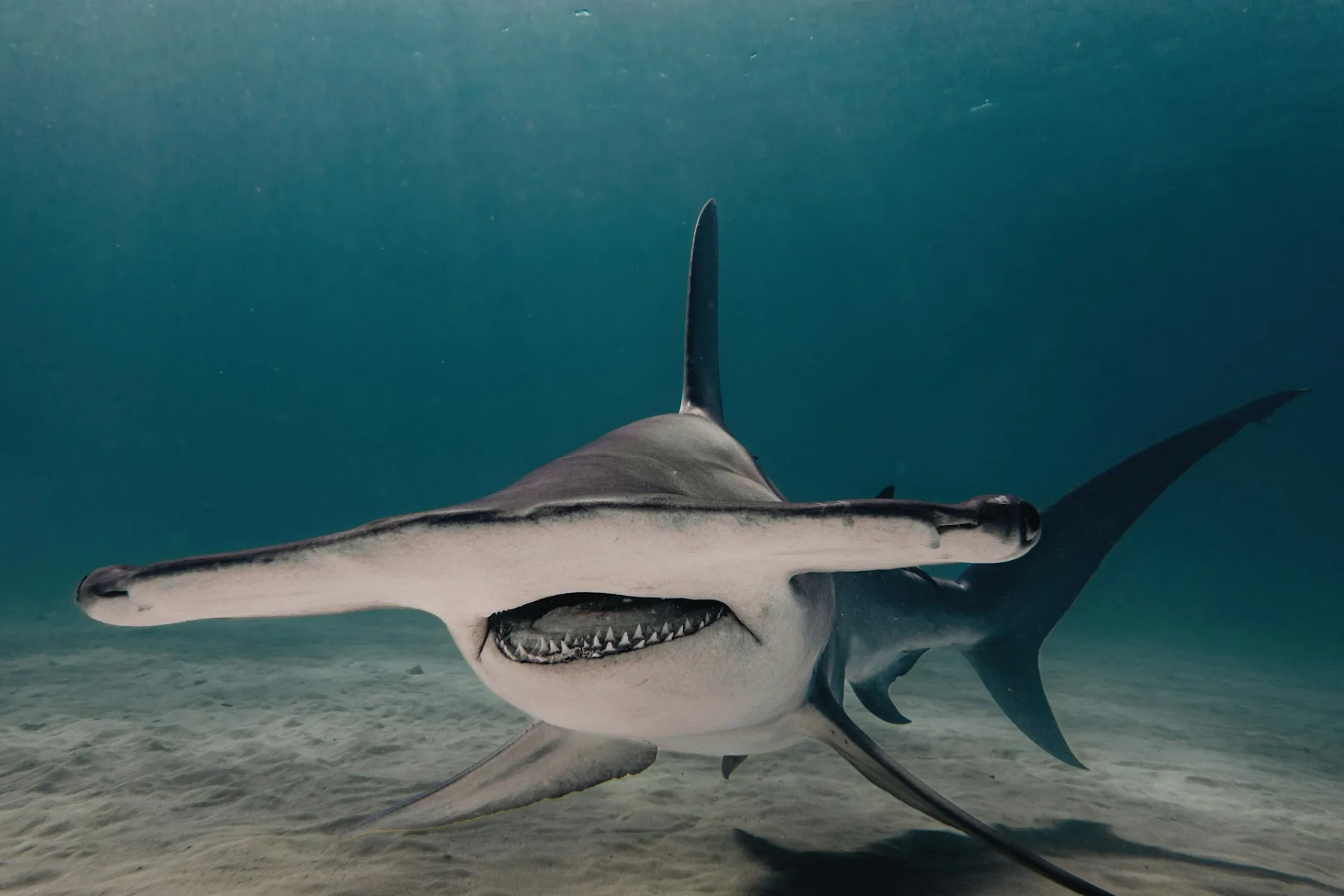
These news come out the same week as World Shark Day, which falls every year on 14 July. The day exists precisely for stories like this one: to put the maths of shark conservation in front of people who would otherwise never see it, and to close the gap between what protection looks like on paper and what it looks like in the water. March 2026 gave us the paper. The rest is what the next decade, and every 14 July inside it, is actually for 🦈