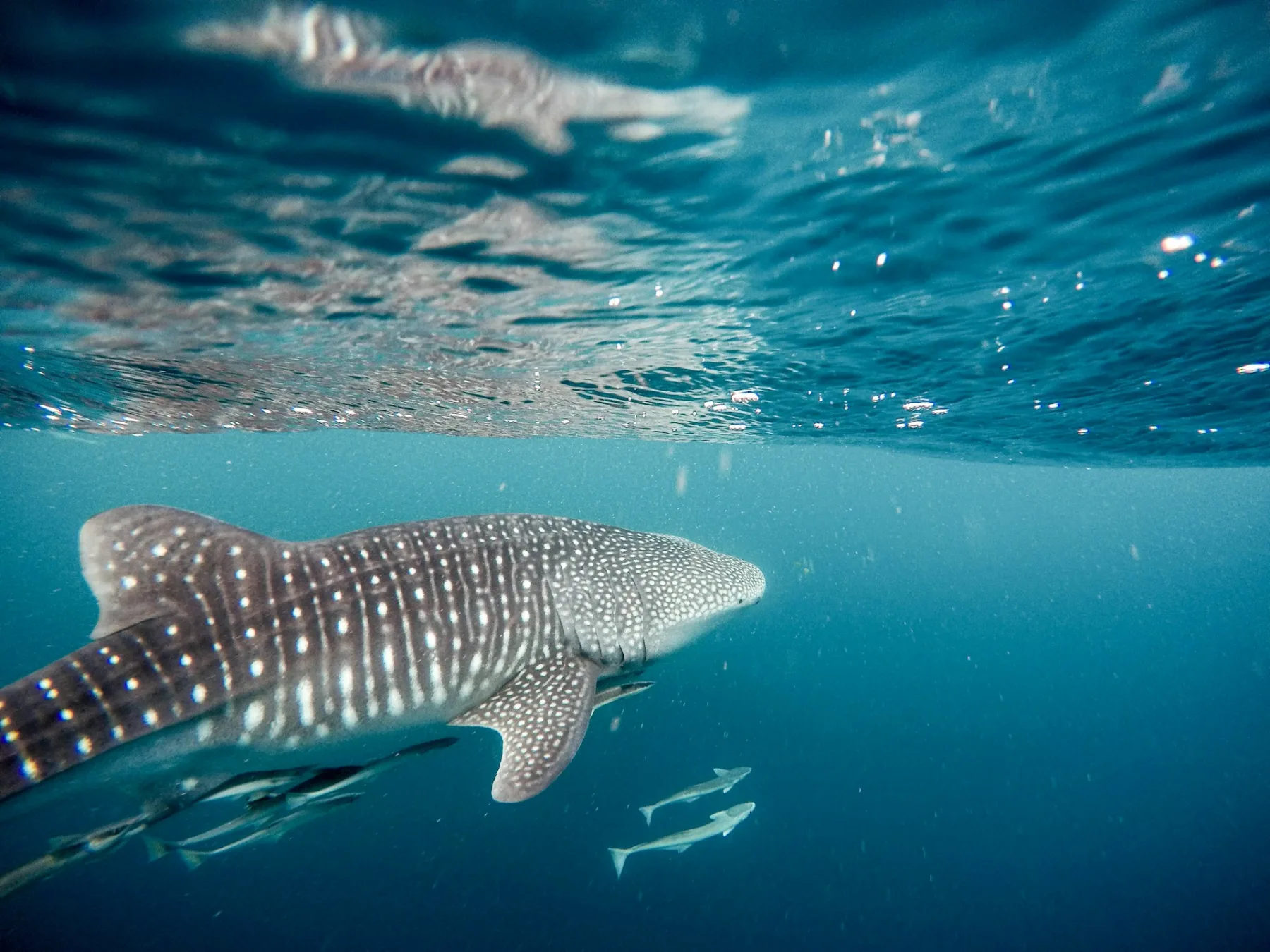
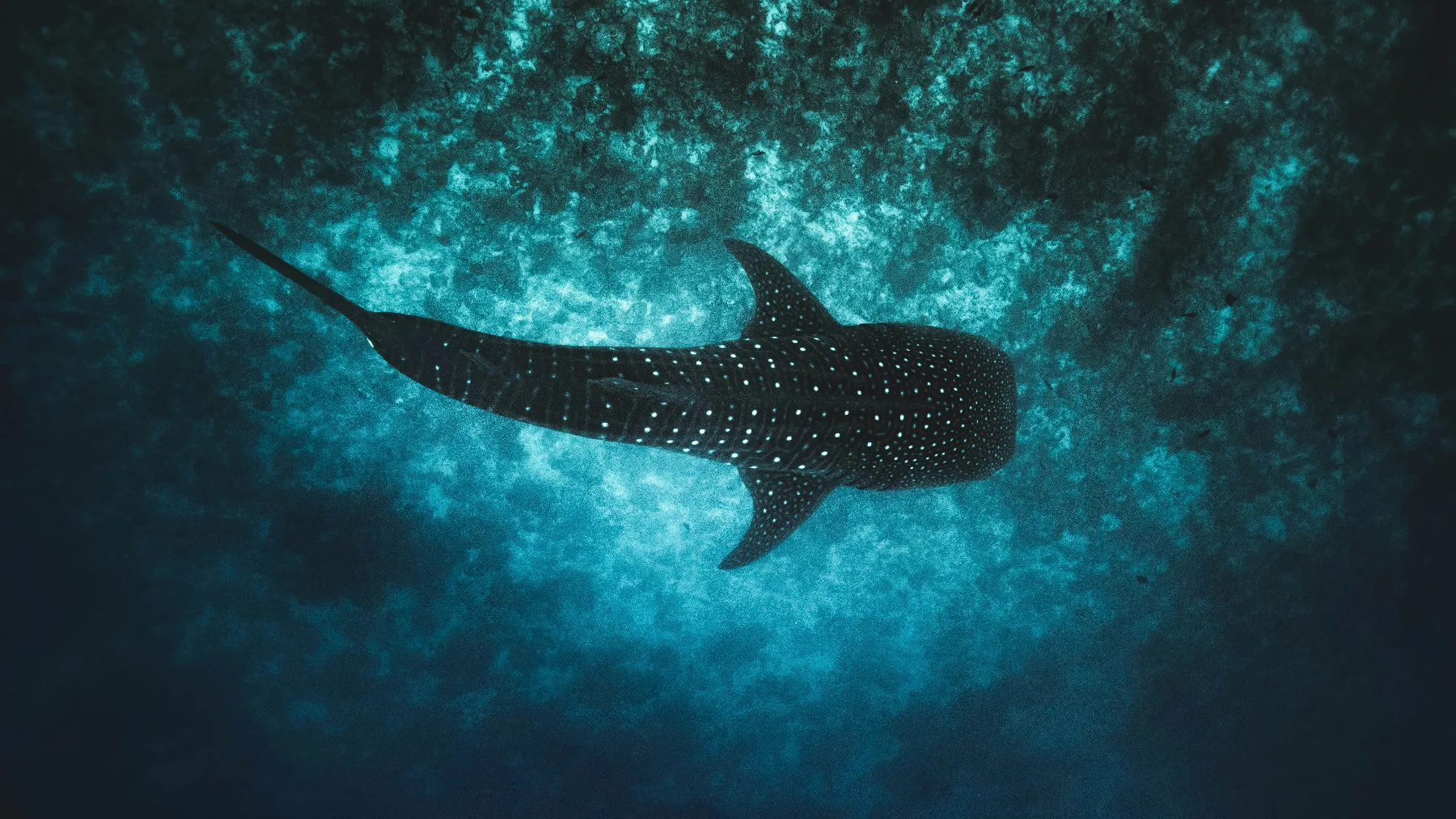
International Whale Shark Day falls on 30 August, and it belongs to an animal we have been looking at for two hundred years without really seeing.
Here is an interesting fact about whale sharks. In the entire history of marine science, researchers have examined exactly one pregnant female. She was caught off Taiwan in 1995, carrying around 300 embryos at different stages of development, the largest litter ever found in any shark. That is it. That is the sum of what we know about how the biggest fish on the planet has babies.
We do not know where they are born. We do not know where they mate. The largest fish in the ocean, and the nursery is still missing.
What Is International Whale Shark Day?
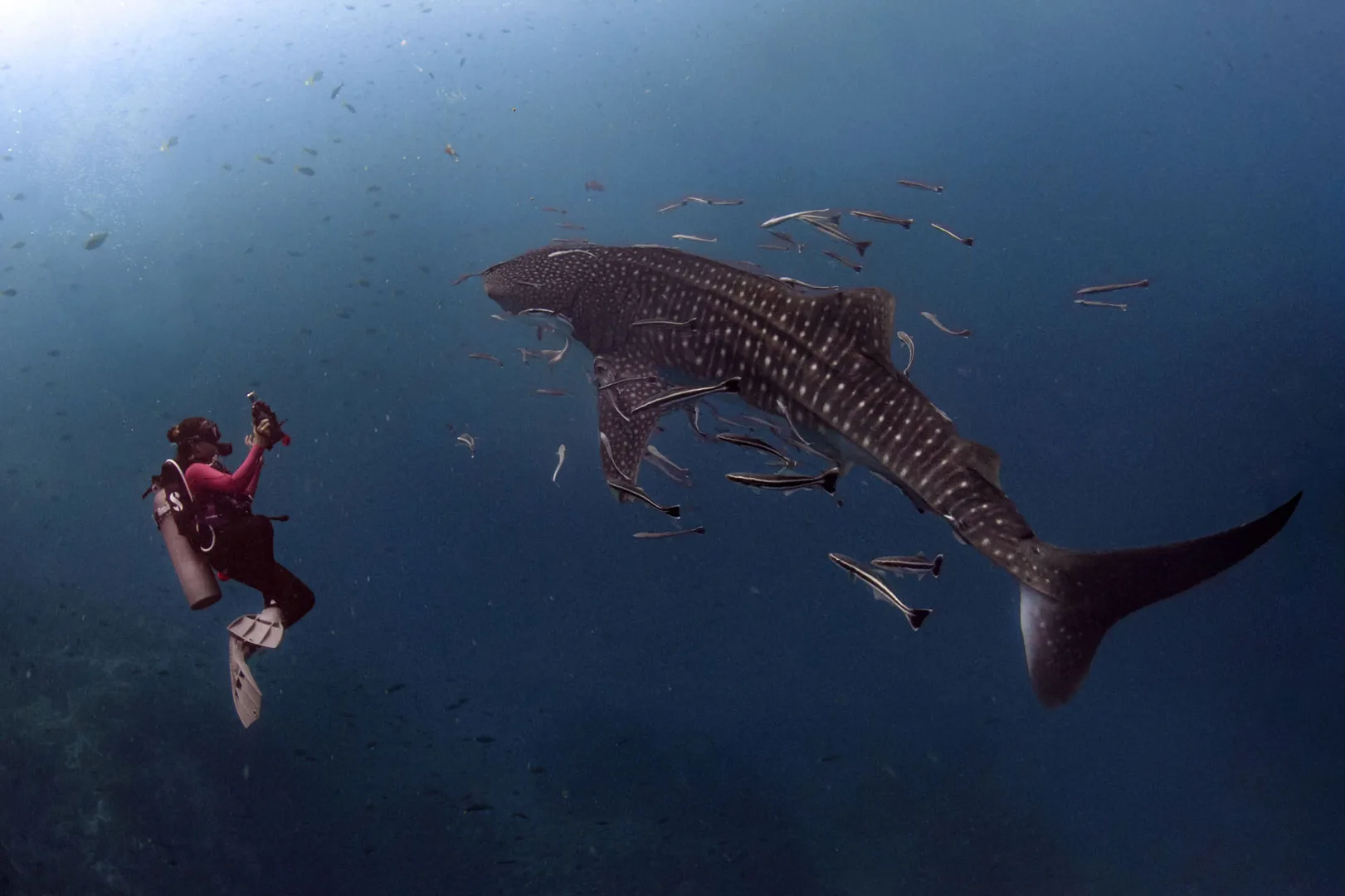
International Whale Shark Day is 30 August, every year. It started in 2008 at the second International Whale Shark Conference on Isla Holbox in Mexico, where around 40 scientists and conservationists decided the species needed a date on the calendar.
The reason is practical. Whale shark research is slow, expensive and spread across a dozen countries that do not share a coastline. A study can sit unread for a year. Give it a release date and it travels.
The day does not protect anything by itself. It decides when the rest of us are paying attention.
The Biggest Fish, and the Biggest Blank Space
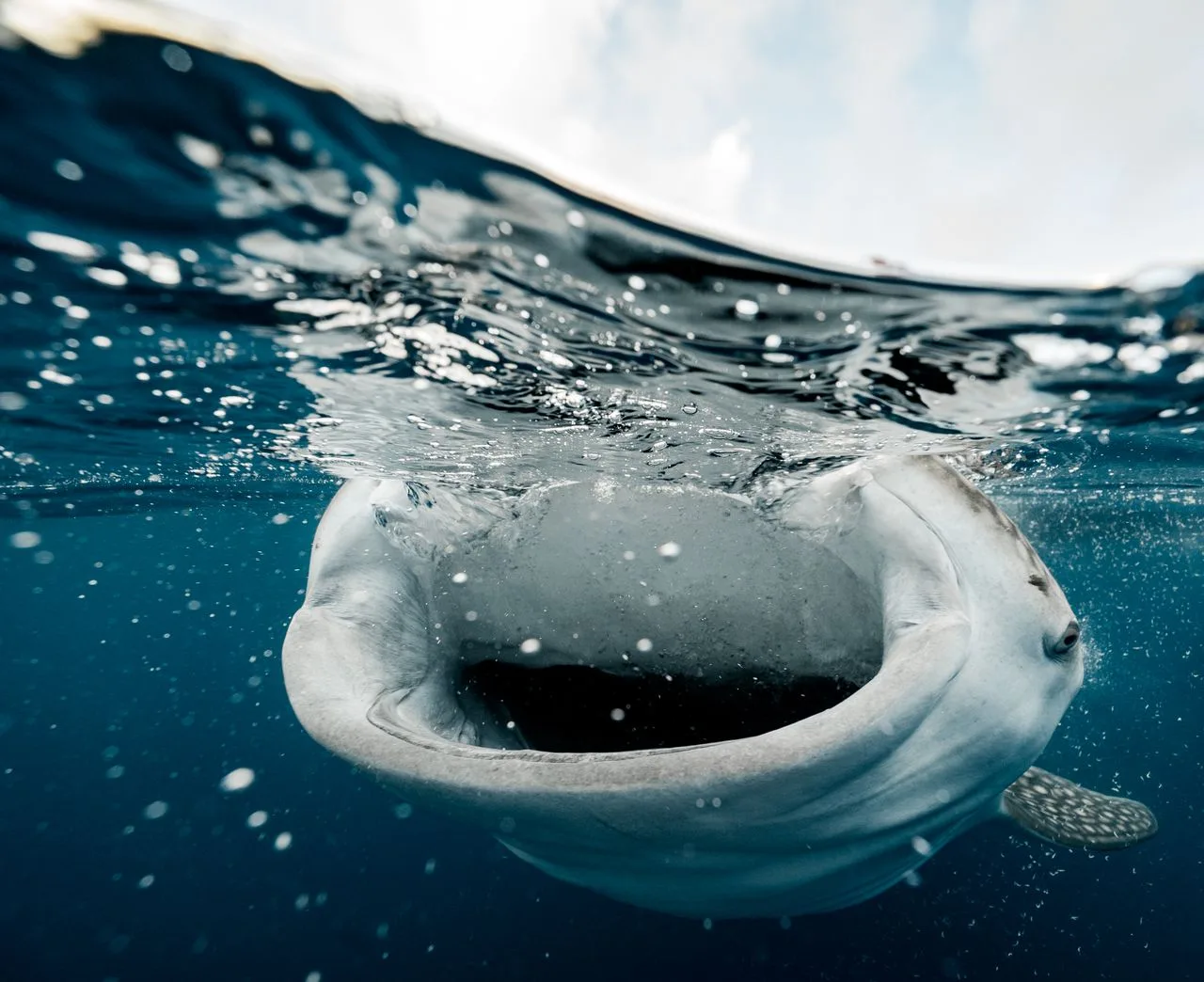
A whale shark can reach close to 19 meters. It eats plankton. It has around 3,000 tiny teeth it does not use for anything, and a mouth over a meter wide that it uses to filter water.
It also grows up slowly. A whale shark does not reach breeding age until somewhere around 25 to 30 years old, and may live to 70 or 100. That means an animal born the year Jaws came out is only now old enough to reproduce.
Slow biology worked fine for millions of years. It stops working the moment industrial fishing shows up, because a population that loses breeding adults does not refill in a decade. It refills in a century, if it refills at all.
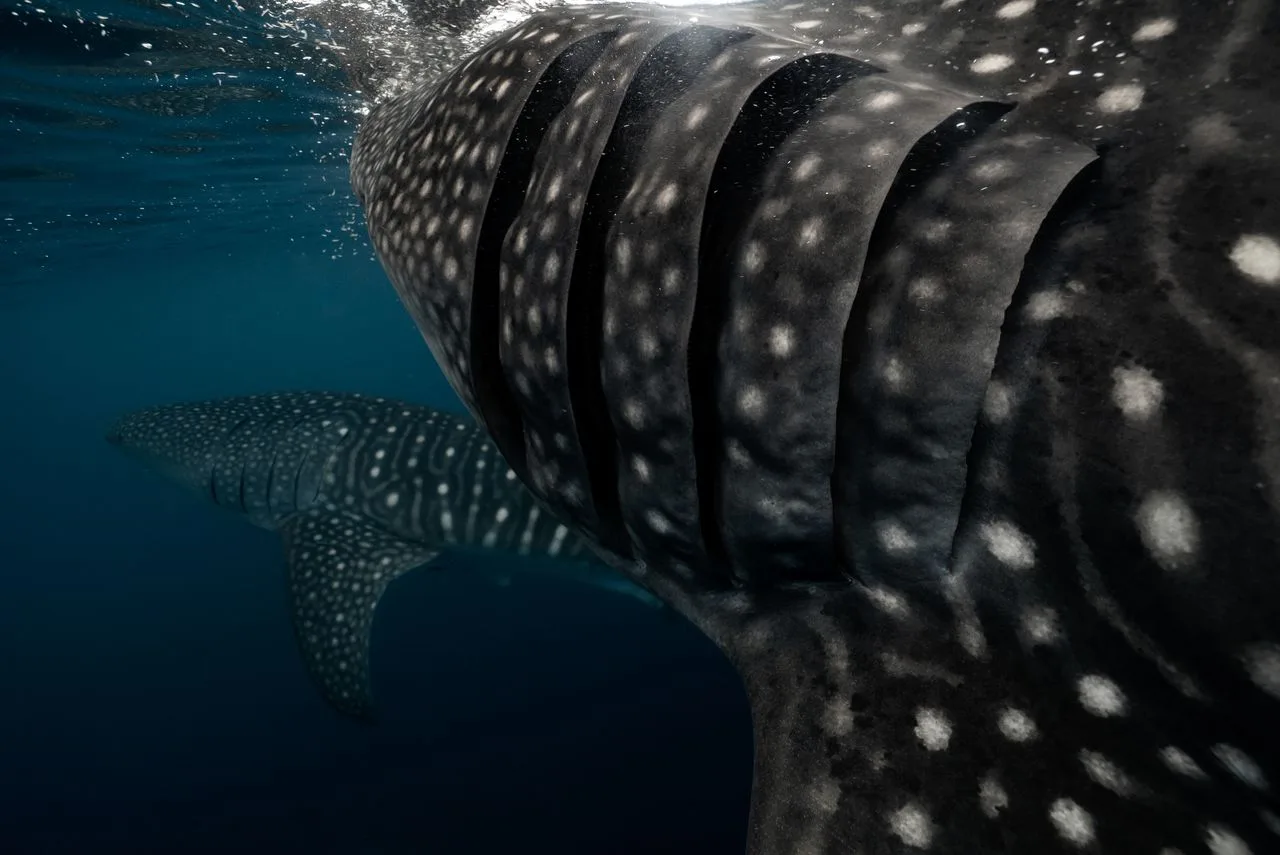
Why Are Whale Sharks Endangered?
The IUCN (International Union for Conservation of Nature) reassessed the whale shark in March 2025 and left it where it was: Endangered. In the Indo-Pacific, where roughly three quarters of all whale sharks live, the population is down more than 65 percent across three generations.
Fishing and bycatch did most of that. But the threat that has moved up the list is one nobody sees.
The first whale shark I ever saw had a massive scar across its head. A boat had hit it.
That is what I got. Not a clean first encounter with the biggest fish in the ocean, but a resilient animal already carrying the mark of the thing most likely to kill it. I did not understand at the time how ordinary that is.
View on Instagram
Whale sharks feed at the surface, and their range overlaps almost entirely with heavy shipping traffic. The animals you see with propeller scars are the ones that survived, which makes them the good news. They are also, in a grim way, the only evidence most of us will ever get.
Satellite tagging by the Global Shark Movement Project found tags going quiet in shipping lanes far more often than equipment failure could explain, and some of those tags recorded the animal sinking slowly to the seafloor afterward. Whale sharks are slightly negatively buoyant, so when one dies it goes down. No body, no photograph, no report.
Nobody counts the ones that do not come back up. We count scars on the survivors and call it data.
Whales got speed limits and rerouting schemes because enough people knew ships were killing them. For whale sharks there is still no international rule of any kind.
The other problem is where they spend their time. A decade-long tracking study published in 2026 followed 70 whale sharks across 13 countries and found that adult males spend more than 40 percent of their lives in the high seas, the part of the ocean no country governs. Protected on paper almost everywhere, and swimming half their adult life outside the paper.
That is precisely the gap the High Seas Treaty exists to close, and why marine protected areas alone were never going to be enough for an animal that treats borders as weather.
Swimming With a Whale Shark Is on Almost Everyone’s Bucket List
Understandably. Getting in the water with a creature that size rearranges your sense of proportion. I understand completely why people fly across the world for it.
Every whale shark I have seen has been luck. That is the part people booking a trip do not want to hear, and it is the whole truth of it. You cannot schedule a wild animal. Diving Koh Tao has given me more of them than I could have ever dreamed of, and not one was planned.
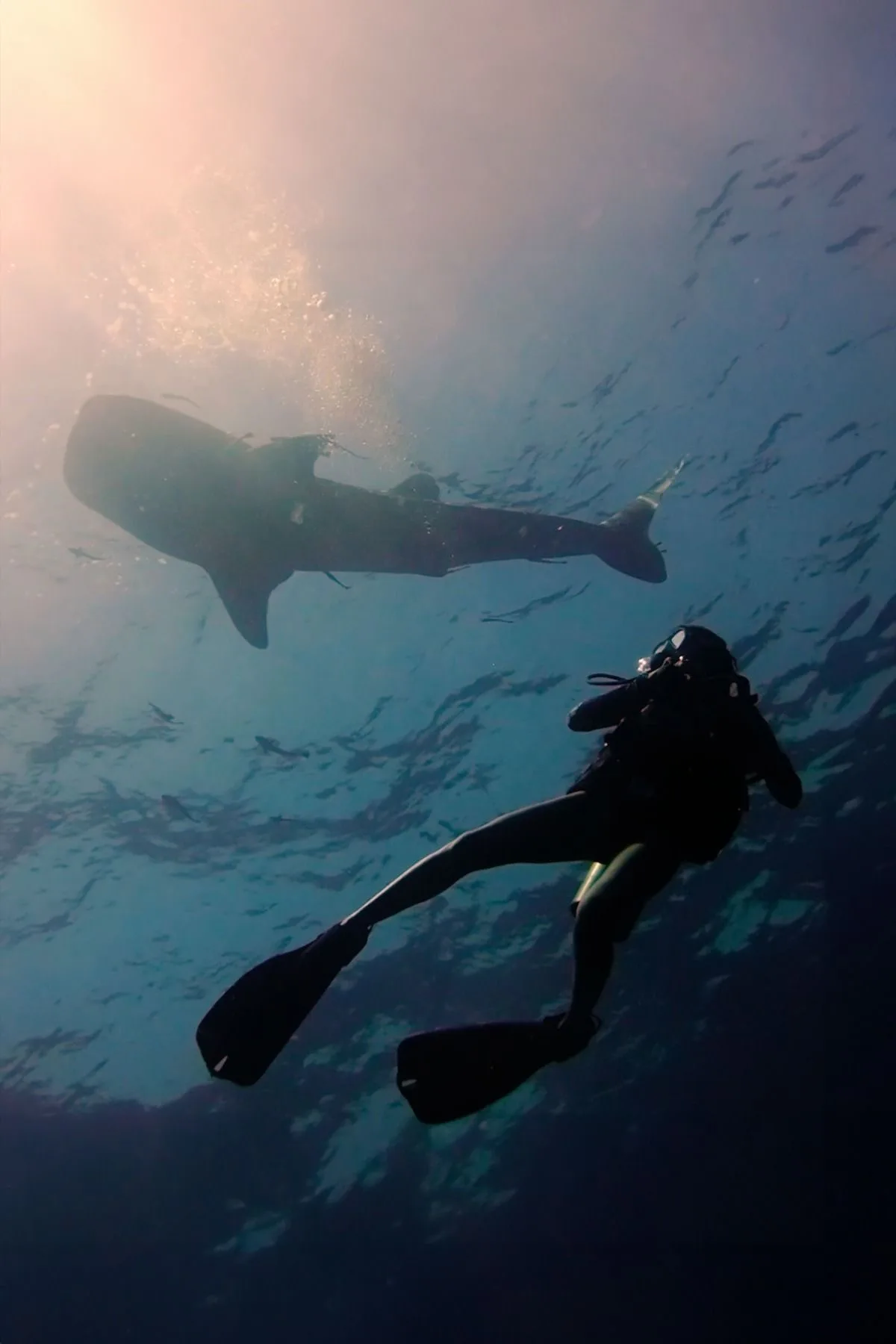
The best encounters were the quiet ones. Me and a couple of other divers, and a gentle giant deciding we were not worth changing course for. Nobody shouting. Nobody kicking. You get to just admire it.
I have had the other version too. Boats stacking up, too many divers in the water, and rules from the briefing evaporating the second someone spots the animal. Divers finning hard to keep up, cameras and annoying selfie sticks pushed in close, someone trying to reach. As a divemaster you are the one meant to hold the line on that, and believe me, I’ve had to intervene in several occasions. Unfortunately, not every dive professional does the same. The animal leaves, and it leaves because of those ignoring the rules and harassing the shark. Everybody loses.
Same species, same ocean. The difference wasn’t the shark.
This next clip, filmed in the Maldives, shows exactly the crowded scene I am describing.
View on Instagram
This viral video in the Maldives is hard to watch. For me, as an ocean advocate, that looks like a nightmare.
One animal. Hundreds of desperate people on top of it. No space, no exit, nowhere for it to go that is not somebody’s fins or somebody’s camera. If you love these animals, really love them, that footage does not read as a lucky day. It reads as an animal being harassed by a crowd.
And here is the part that gets me: most of them probably did not see anything wrong with it.
They are not agonizing over it. They are in the water, an animal is being surrounded on every side with nowhere left to go, and it does not land as a problem. It lands as their turn. They will post it on social media. They will caption it “bucket list.” Somewhere in that crowd is someone who kicked an endangered animal in the face and went to dinner without thinking about it once.
They were told the rules. The rules lost to wanting the photo/video.
That’s the experience you get when you book with a whale shark operator that only sees the animals as a money making machine and doesn’t care one little bit about their well-being.
What Feeding Whale Sharks Does
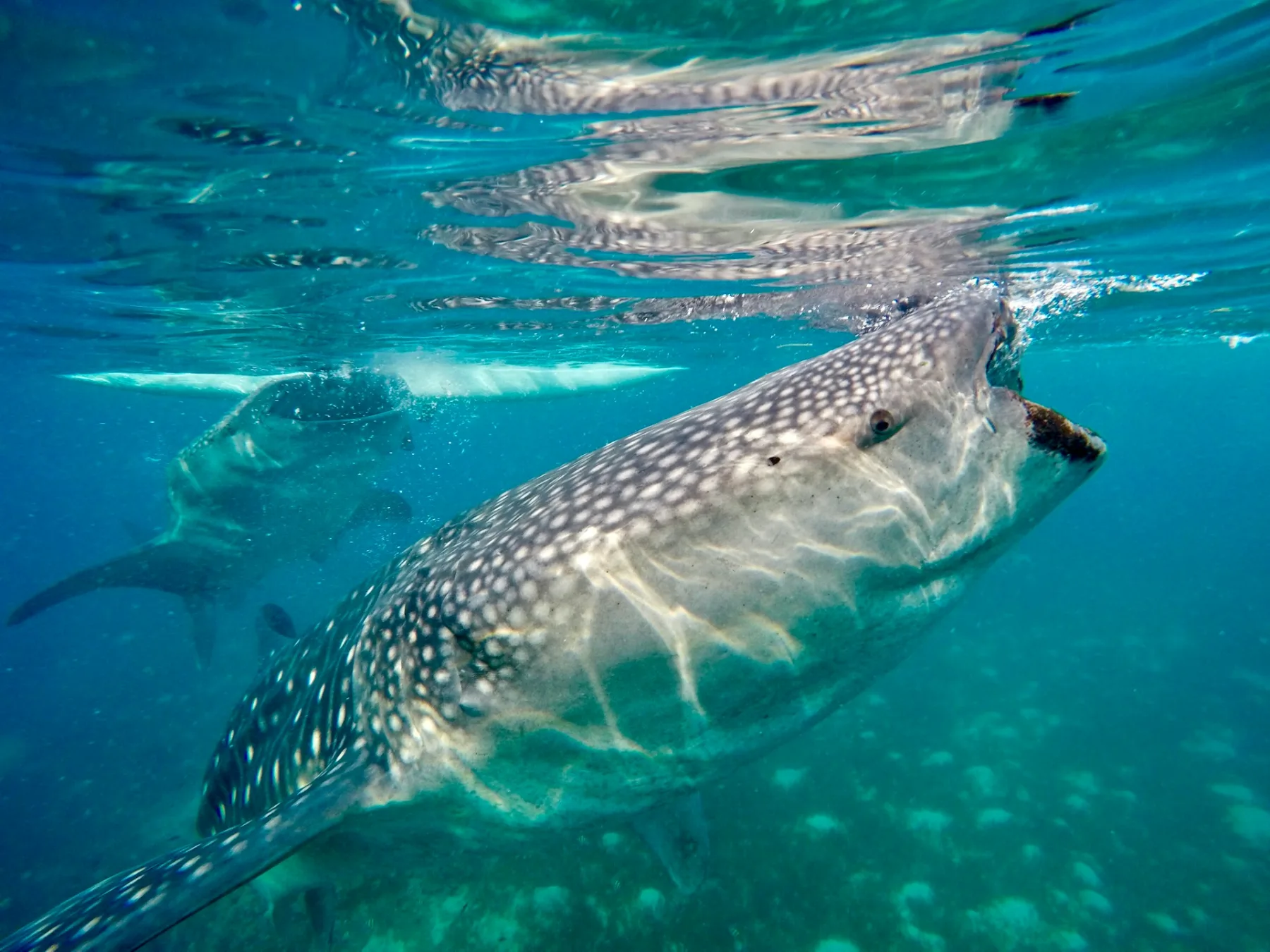
- The sharks feed vertically, nose up under the boats, instead of the horizontal filter feeding that is natural to them.
- They stop migrating. Animals that should be crossing oceans hang around a single bay.
- They learn that engine noise means food. Then they carry that lesson out past the edge of anywhere anyone can protect them.
- Crowding and contact are constant, and compliance with the distance rules has been poor for years.
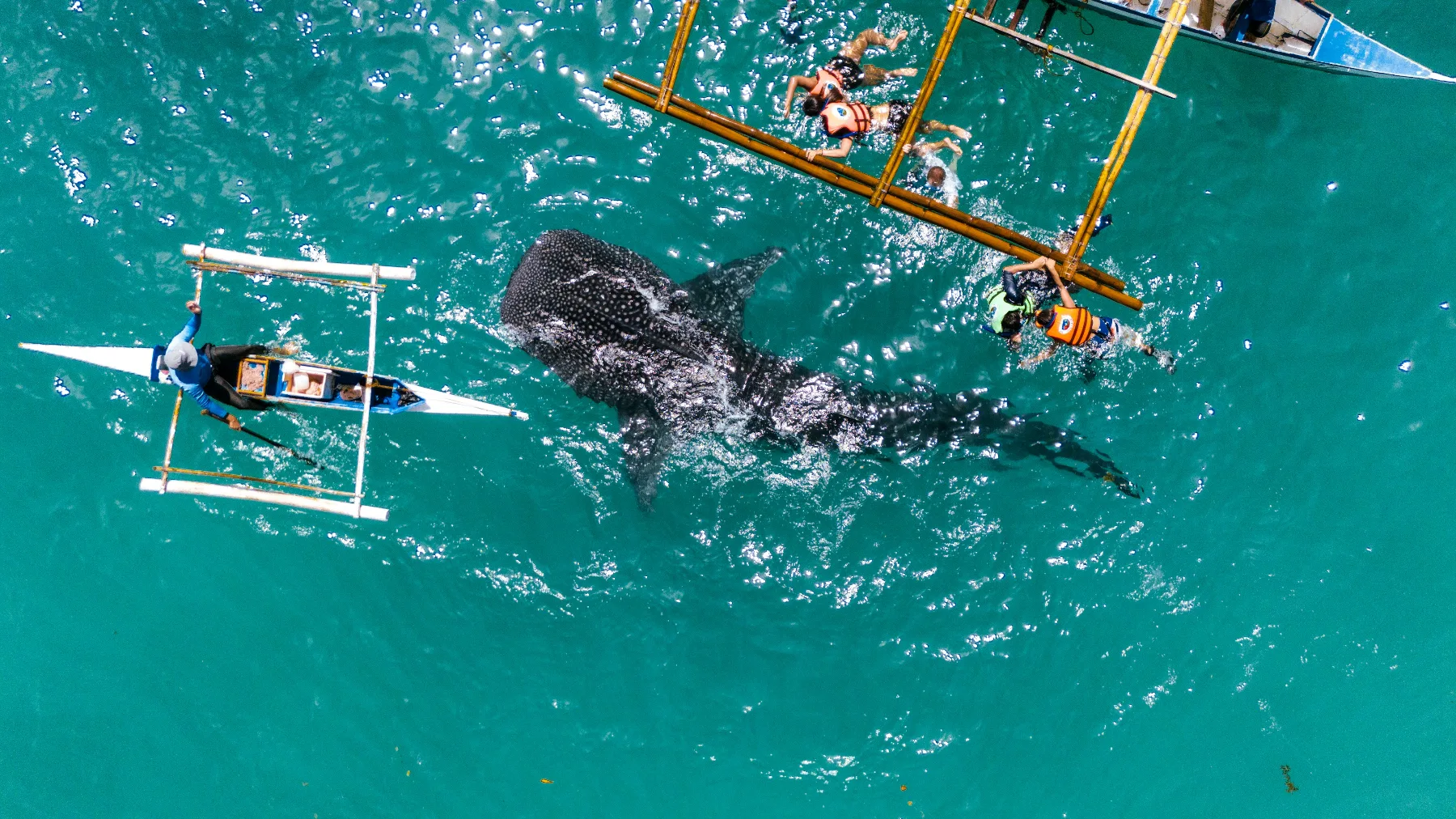
In late May 2026 the whale sharks did not show up in Oslob for four days and tourism operations stopped. Four days is nothing for a wild migratory animal. That it made the news tells you exactly what has been built there. The model has also been copied, most notably in Lila, Bohol.
There is a real argument on the other side, and it deserves saying: the money goes to fishing communities who once made a living from these animals in worse ways. But you can support those communities without training an endangered species to beg, and plenty of places prove it.
Go somewhere that lets the animals decide. Donsol in the Philippines runs seasonal trips with no feeding at all. Ningaloo Reef in Western Australia, South Ari Atoll in the Maldives, Isla Mujeres in Mexico, Mafia Island in Tanzania, Tofo in Mozambique and Djibouti all run on wild encounters. Some days you get nothing. That is the point.
How to Pick an Operator
- No guarantee. If a company promises whale sharks, ask what they are doing to keep that promise.
- No feeding, no baiting, no chasing. All three should be stated plainly, not buried.
- Capped numbers in the water. Ten people around one animal is not an encounter.
- A real briefing. Distances, no touching, what to do if it turns toward you. If the briefing is thirty seconds and a thumbs up, you know what kind of day it is going to be.
- They talk about the animal before they talk about your photo. This one tells you almost everything.
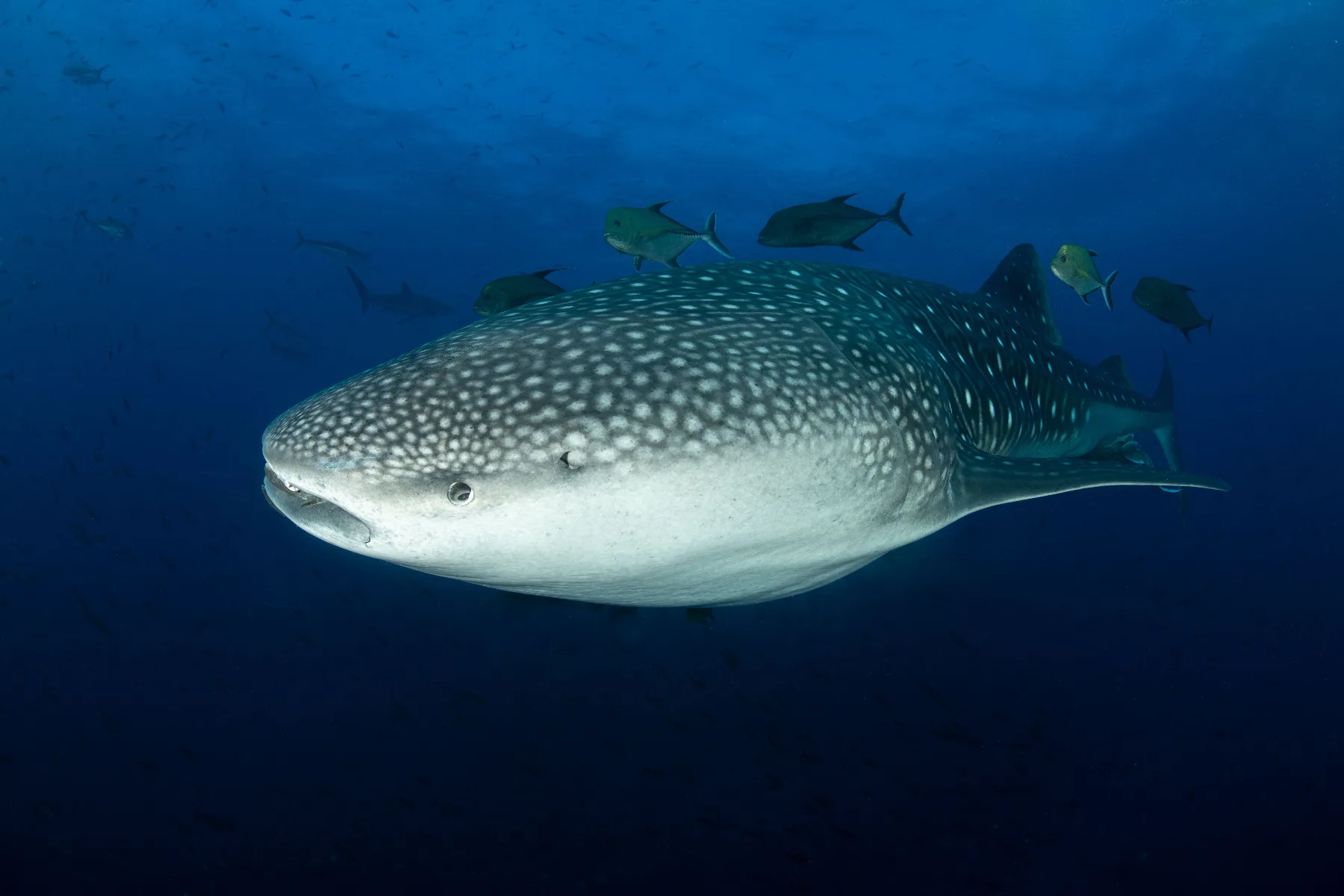
How to Behave in the Water With a Whale Shark
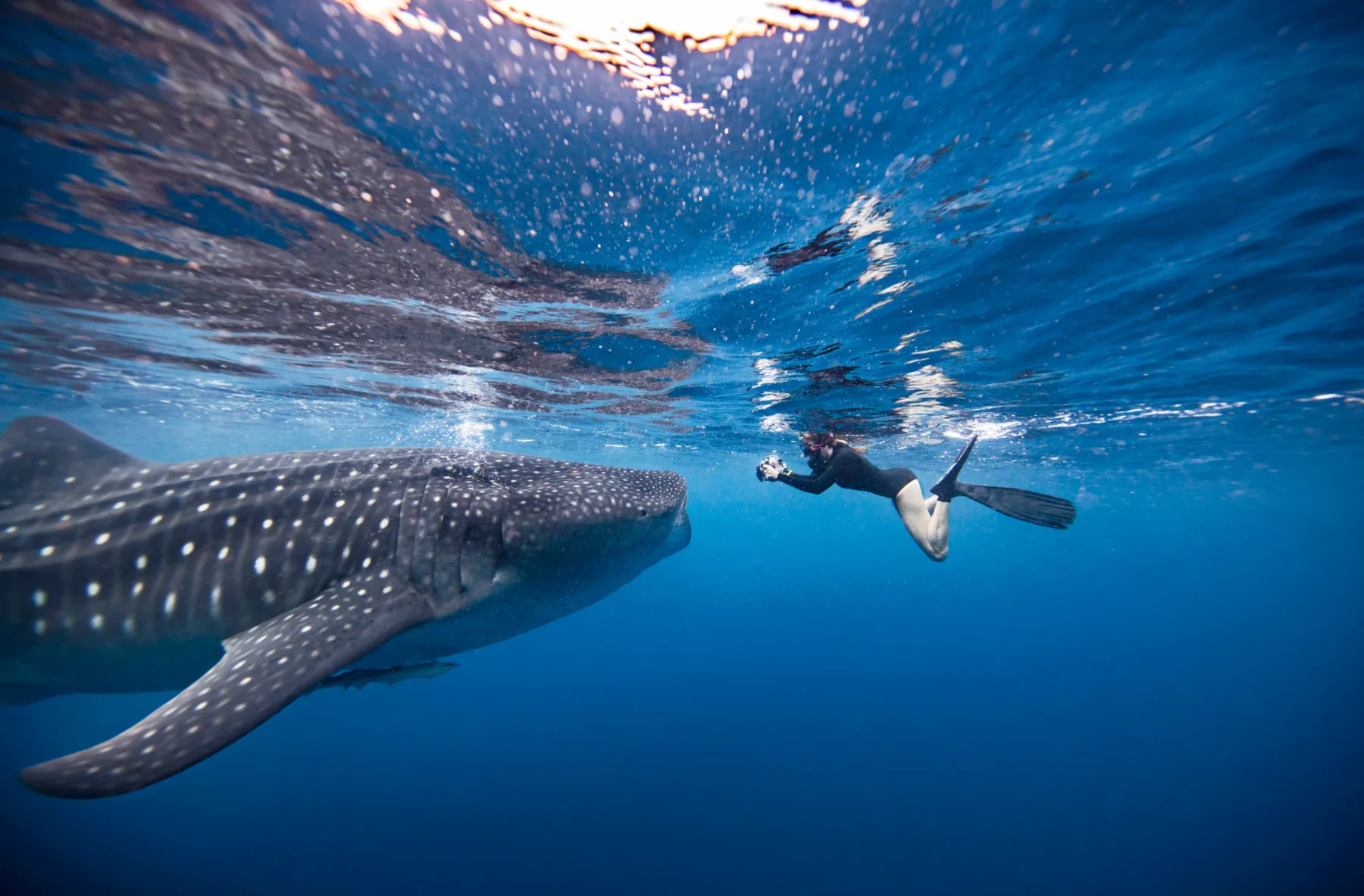
- Respectful distance Stay 3 to 4 meters off the body and 4 to 5 meters clear of the tail. That tail will break a rib without the animal noticing.
- Approach from the side Never head on, never from directly behind, never from the front blocking the path of travel. If it changes direction to get away from you, you are too close.
- Never EVER touch The mucus layer on a shark’s skin is its defense against infection, and you take some of it off every time. Touching is harassment. Yes, even if your favorite influencer has done it.
- No chasing If it leaves, it has left. Do not chase.
- Calm down Stillness buys you more time with a whale shark than frantic finning ever will. Freedivers, do not drop on top of one and do not follow it down.
- No harmful chemicals Mineral sunscreen or, better, a wetsuit or rashguard.
- Photos and videos When photographing whalesharks keep the respectful distance and don’t use flash. Do not shove selfie sticks at it.
- Be mindful Live the moment. If you’re lucky to encounter a whaleshark, be present. Record it in your memory. It’s a precious moment that stays with you for ever 🩵
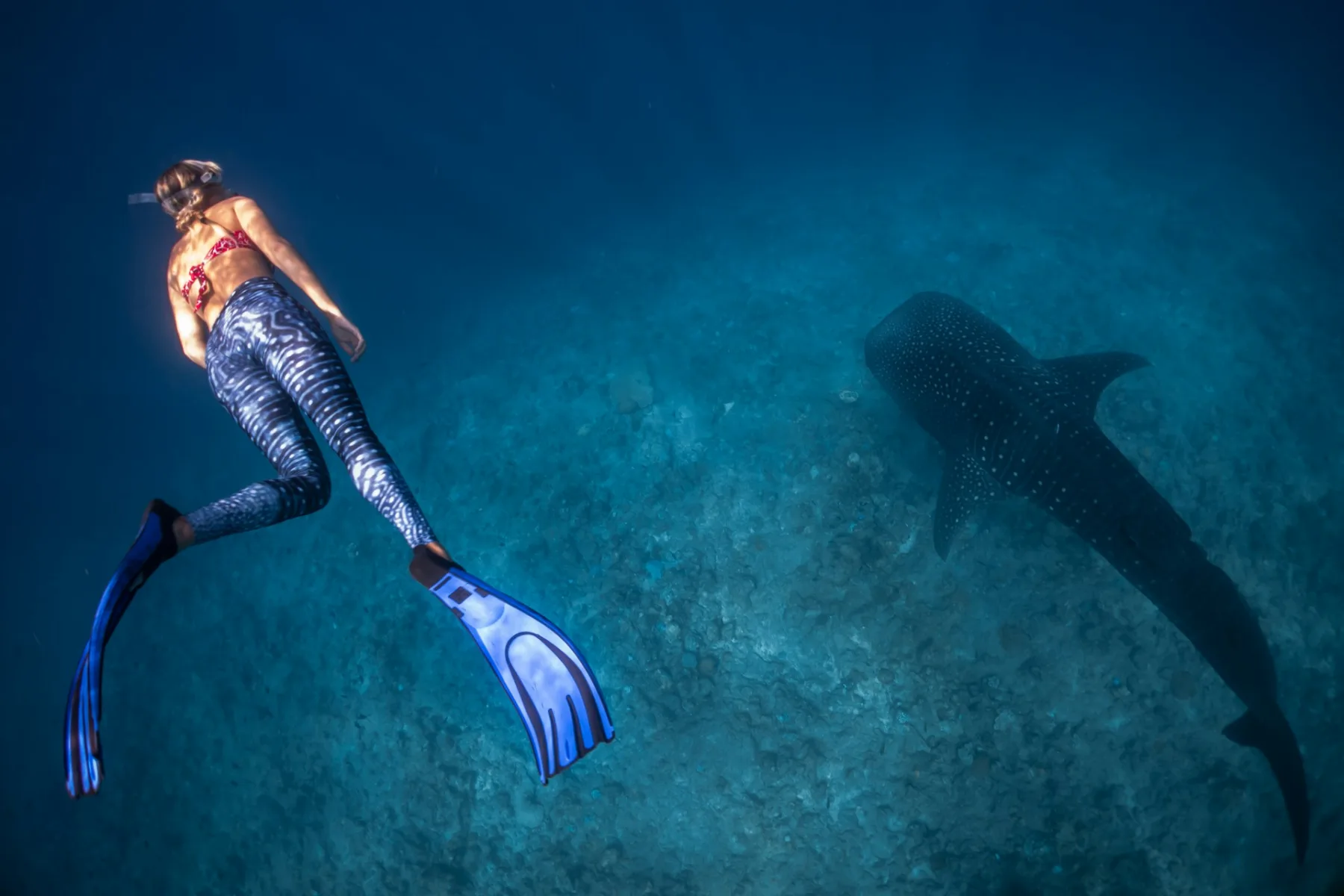
Your Whale Shark Photos Are Actually Data
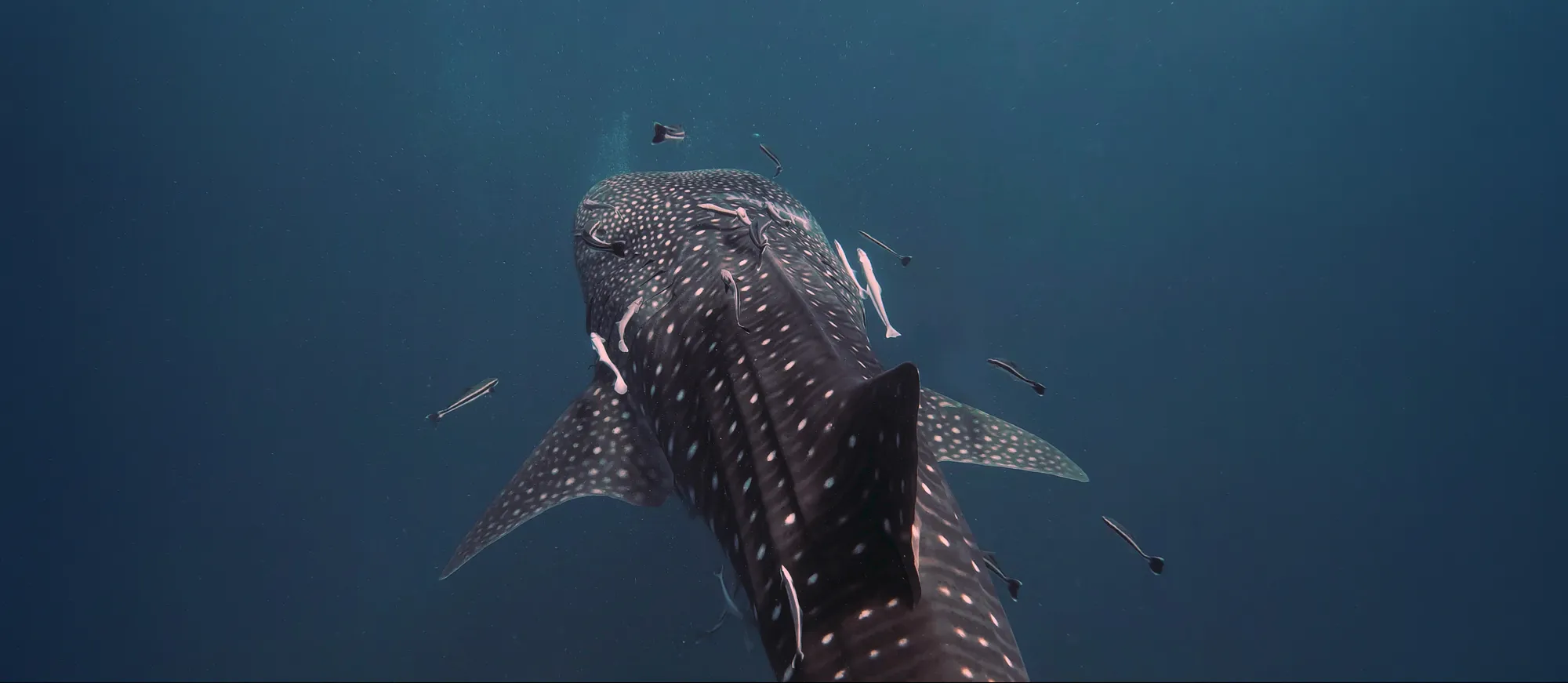
The spots behind a whale shark’s left gill slits are unique to the individual and stable for life, like a fingerprint.
In the early 2000s a programmer, a NASA astrophysicist and a marine biologist adapted an algorithm built in 1986 to map star fields for the Hubble Space Telescope, and pointed it at shark spots instead. Star patterns and whale shark patterns turn out to be the same math problem.
That became Sharkbook, which now holds close to 26,000 individually identified sharks and nearly 148,000 sightings, most of them submitted by ordinary people with waterproof cameras. The IUCN uses it in global population work.
So upload the shot. Left flank, behind the gills, with a date and a location. It either matches an animal already on file, and you have added a point to a migration track, or it does not, and you have just put a new whale shark into the global catalog.
Not many bucket list items hand you a way to be useful afterward.
What You Can Do on Whaleshark Day
🩵 Upload your photos to Sharkbook
🩵Book the operator who cannot promise you anything.
🩵Support the people doing the fieldwork: the Marine Megafauna Foundation, the Large Marine Vertebrates Research Institute Philippines, the Galapagos Whale Shark Project and Wild Me, which keeps Sharkbook running. That money buys boat fuel and satellite tags.
🩵Check what fish you eat. Whale sharks are rarely the target, but the nets do not care what the target was, and the shark fin trade runs on the same fleets.
🩵Spread the word! Tell someone that ships are killing the biggest fish in the ocean and no law anywhere stops them. Whales got protection because enough people knew. That is how it starts.
We have named this animal, filmed it, flown across oceans to swim beside it, and still cannot say where it is born. That gap is not a curiosity. It is the reason a species this old is this fragile, and the reason the small things we do on one day in August actually count.
Our ocean, our responsibility.