Discover Scuba Diving is how most people take their first breath underwater, and it is how I took mine, back in 2014. It is a half-day trial with an instructor beside you the whole time, and it asks for no experience and no certification. You can book it on the first morning of a beach holiday and be underwater by lunch.
My first one was fascinating and overwhelming at the same time. I was not comfortable in the water yet, and the gear felt heavy and constricting. It took me nine years to try again. In 2023 I signed up for my Open Water course, fell for diving completely, and I have built my life around the ocean since.
These days I see Discover Scuba from the other side. I have assisted on DSDs as a divemaster, and now I photograph people on their first dives, which means I spend a lot of time watching first descents through a viewfinder. The same things happen on almost every one of them, and most are easy to prepare for once you know they are coming.
What Is Discover Scuba Diving?
Discover Scuba Diving, usually shortened to DSD, is PADI’s introductory scuba experience for people who have never dived. You get a short briefing, a practice session in a pool or calm shallow water, and then, if you want it, a guided dive in the ocean. An instructor stays within arm’s reach of you from start to finish.
Other agencies run their own versions under different names. SSI splits the experience in two: Try Scuba is the pool session, and Basic Diver takes you into open water. Plenty of dive shops simply call it a try dive, an intro dive or a resort course. The format underneath is very similar everywhere, because most of these programs are built on the same international standard for introductory scuba, ISO 11121.
The limits are conservative on purpose. With PADI you need to be at least 10 years old, and you stay shallower than 12 meters (40 feet). You never dive without a professional, and you leave with a logbook entry or, with some agencies, a digital recognition card. Neither one qualifies you to dive on your own.
A DSD is designed to answer a single question, which is whether you like being underwater. You find out while a professional manages everything you do not know yet, from your air supply to your depth.
Can You Try Scuba Diving Without Experience or Certification?
You can, and trying scuba diving without certification is exactly what a Discover Scuba dive exists for. You do not need any diving experience before you arrive. You do need a clear medical form, to meet the minimum age, and a basic level of comfort in the water.
The medical form comes first. Every major agency uses the same Diver Medical Participant Questionnaire, a set of ten yes-or-no questions about your heart, lungs, ears, medication and recent surgery. If you answer no to all of them, you can dive that day. A yes to certain questions means you need a doctor’s sign-off before you get wet, and if you are pregnant, the form tells you not to dive at all.
Answer it truthfully, and ideally before you travel. The form is free to download, so read it at home, and if anything on it applies to you, see your own doctor before the trip. Finding out at the counter on the morning of your dive that you need a physician’s signature is a hard way to lose a day on a small island.
Most shops do not run a swim test for a Discover Scuba dive, but they do expect you to be at ease in water where you cannot stand. You wear a BCD that keeps you floating at the surface, and your instructor stays with you on the way down. The swim test comes later, in the Open Water course, where you swim 200 meters and float for 10 minutes.
I started my certification as a non-swimmer who had only just learned the basics, so I will never tell you that you need to be a strong swimmer. How you feel with your face in the water matters more. If putting your face under makes you panic, a few snorkeling sessions before your DSD will do more for your first dive than any briefing.
Age limits vary a little by agency. PADI’s DSD starts at 10 with no upper limit. SSI’s pool-only Try Scuba starts at 8, and its open water Basic Diver program starts at 10. Younger children can try PADI’s Bubblemaker, a pool session to 2 meters for ages 8 and up.
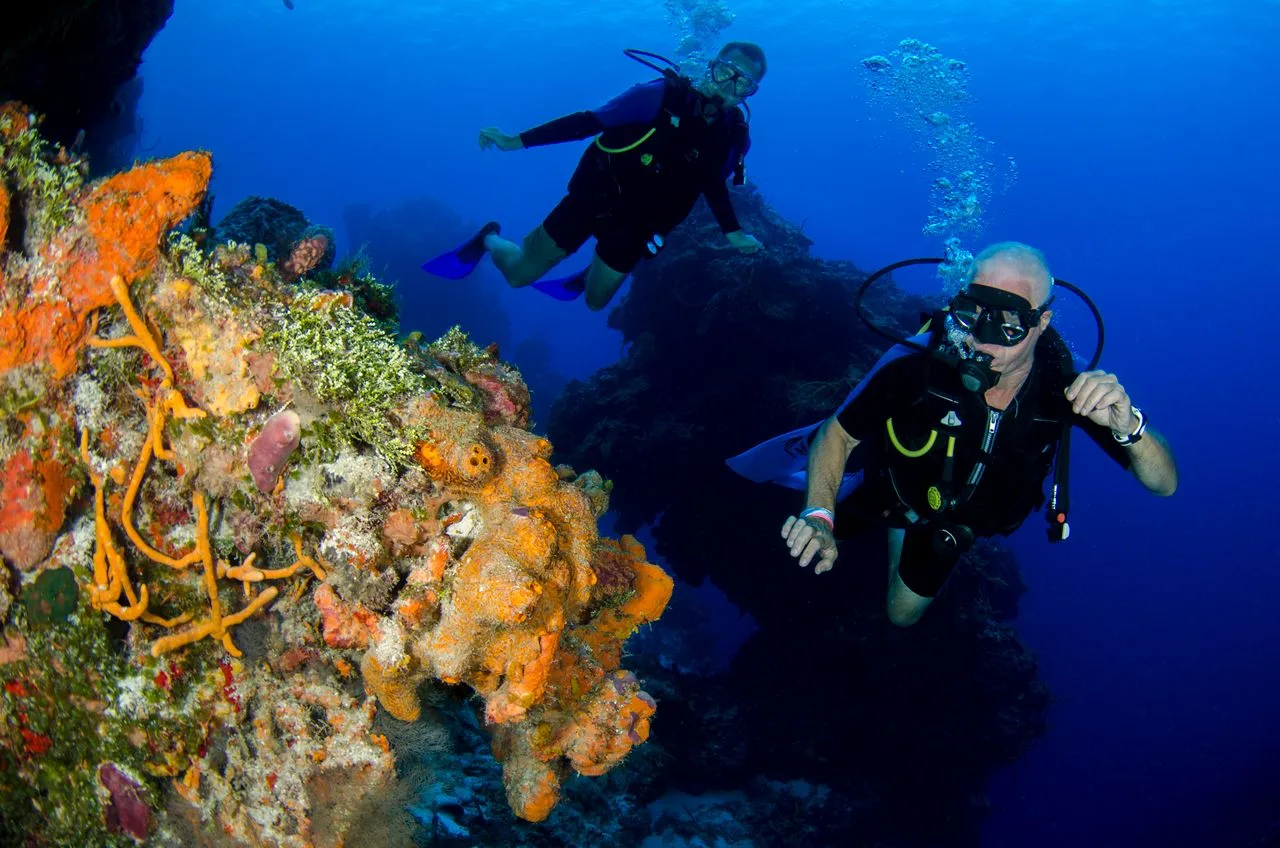
What Happens on a Discover Scuba Diving Day?
Most DSDs take half a day from arrival to rinsing your gear. The order of the day rarely changes from one dive center to the next.
The briefing. You sit down with your instructor to learn the basics: how the equipment works, how to equalize your ears, the hand signals you will use underwater, and the rule that matters above all others, which is to keep breathing and never hold your breath. Holding your breath while you ascend can injure your lungs, and you will hear that rule more than once before you get in.
Gearing up. You are fitted with a mask, fins, a wetsuit, a BCD and weights, and the tank and regulator come already assembled. On land the full kit can feel heavy and restrictive, which is exactly how it felt to me over a decade ago. Most of that weight disappears the moment you are in the water.
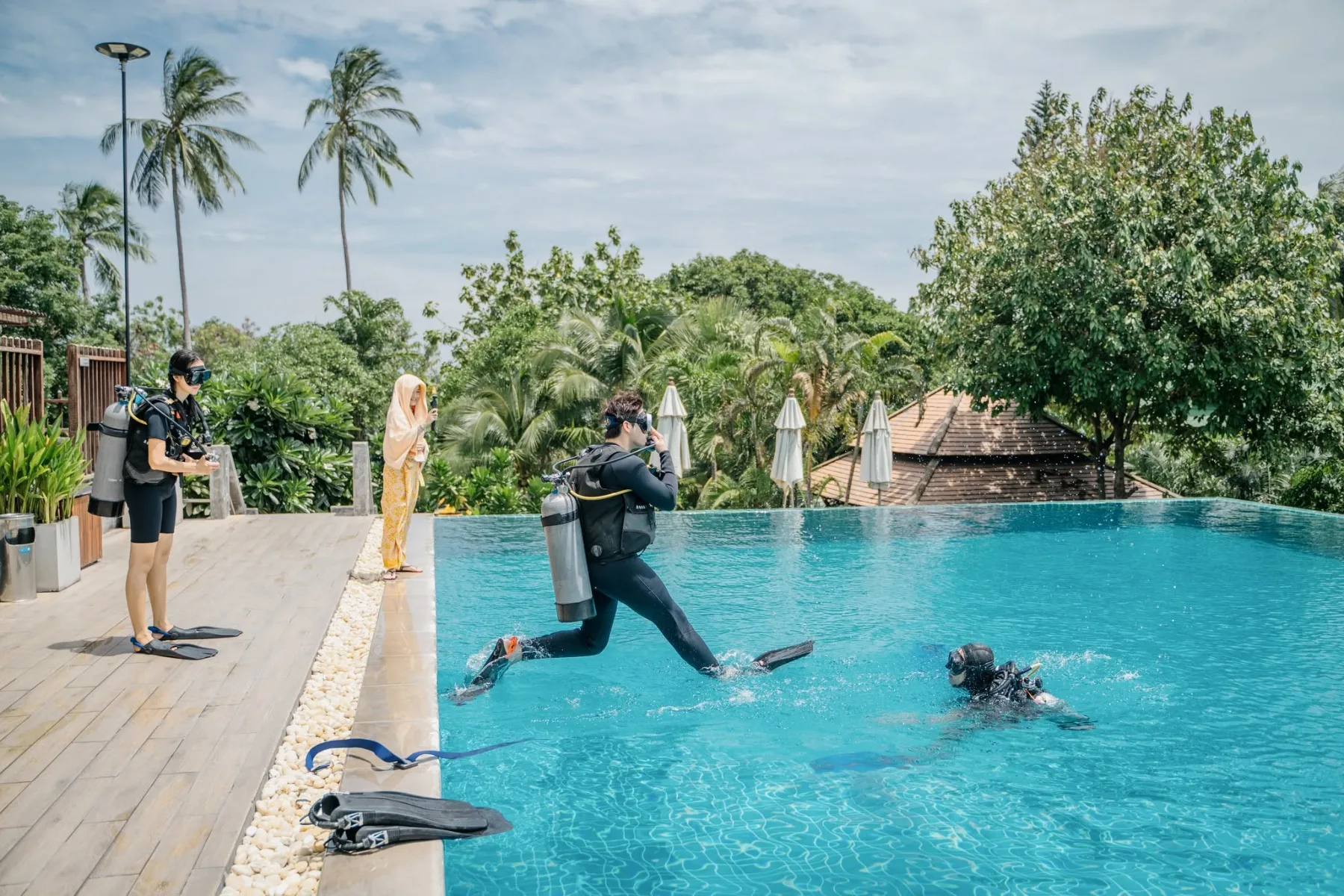
Confined water skills. In a pool or a calm, shallow patch of sea, you take your first breaths through the regulator with your head just below the surface. Then you practice a short list of skills: letting a little water into your mask and clearing it, taking the regulator out of your mouth and putting it back, and finding it again if it drifts behind you.
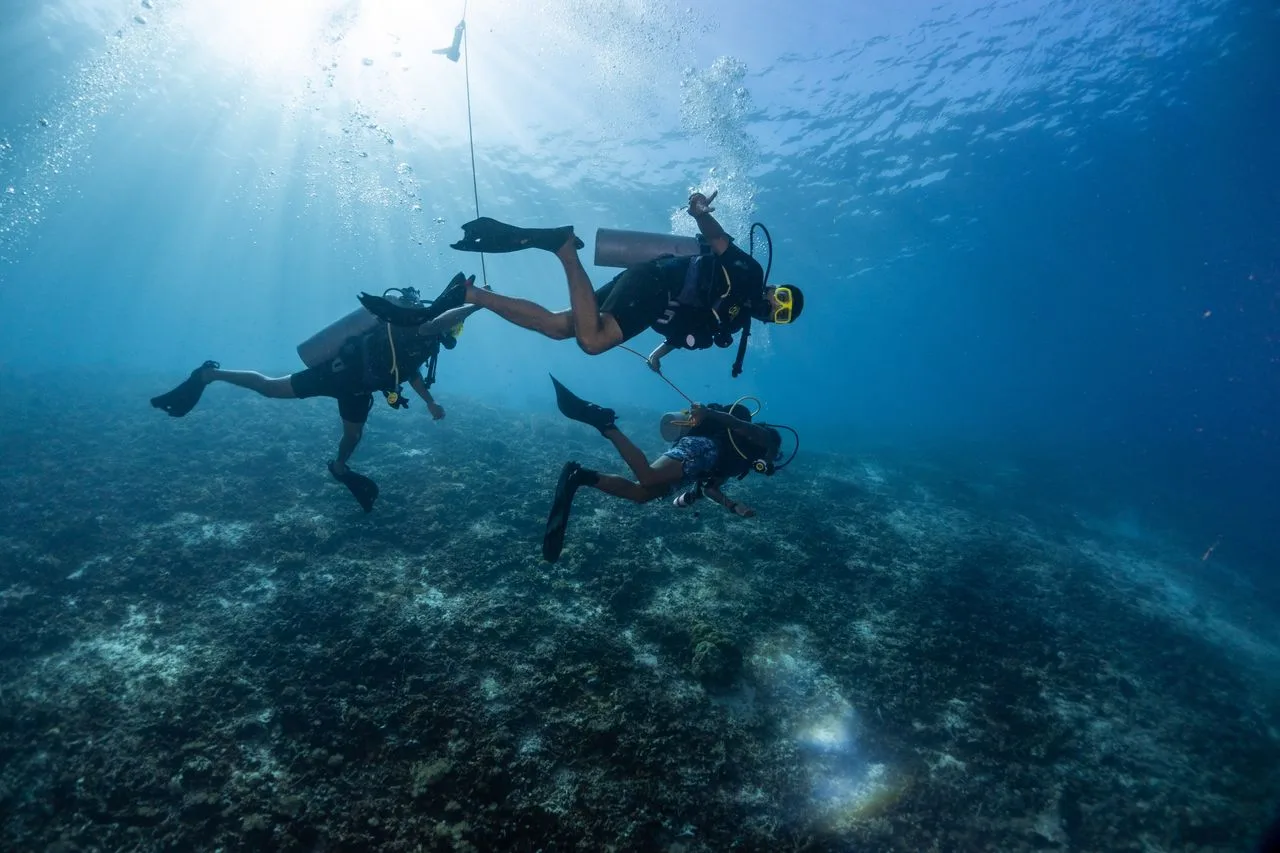
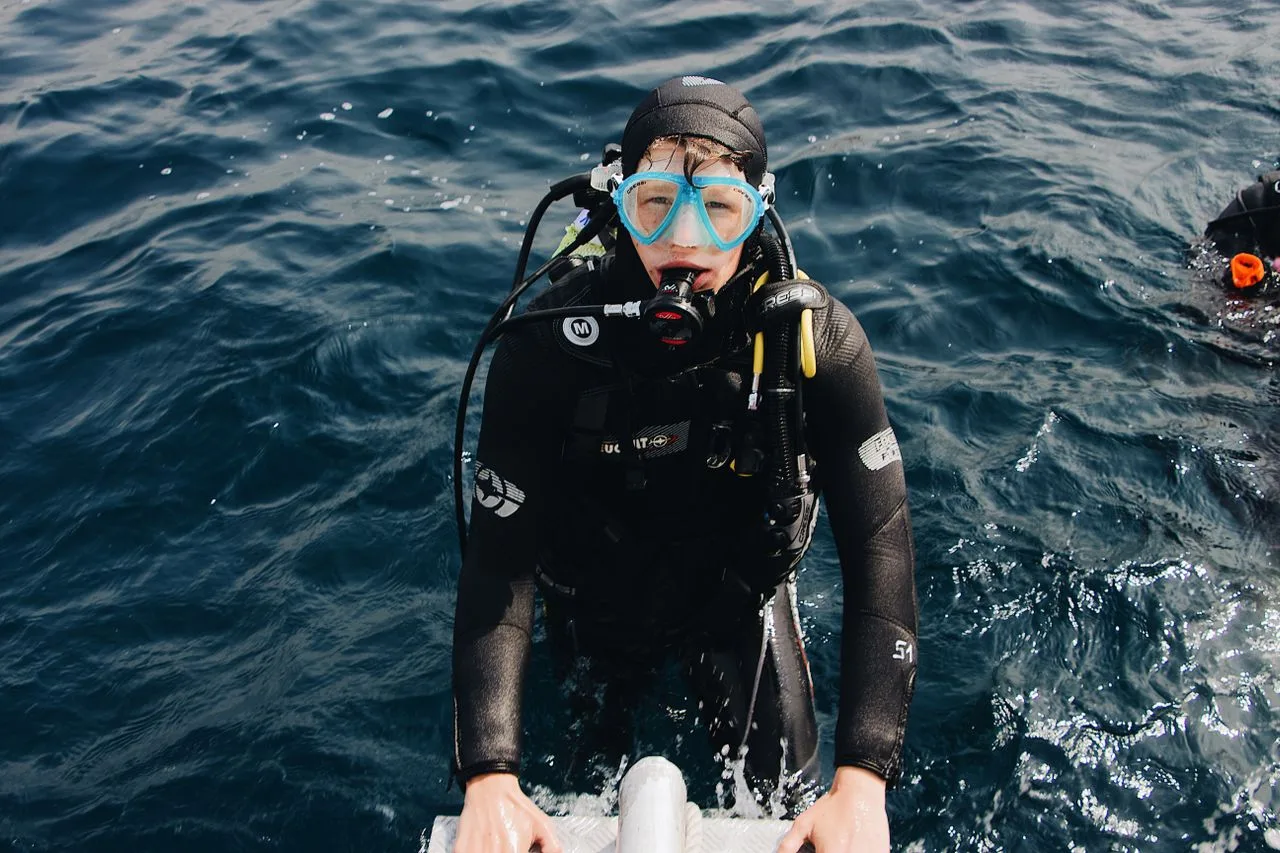
The open water dive. Once you are comfortable, you head out to the ocean, either from the beach or on a short boat ride. You descend slowly with your instructor holding your BCD or your hand, level off in the shallows, and spend somewhere between 30 and 50 minutes looking around. The instructor controls your buoyancy, watches your air and sets the pace. Your only job is to breathe slowly and enjoy the fish.
Some DSD packages include two ocean dives. PADI also allows more supervised dives after the first one, within the same 12 meter limit, which is useful if you are on holiday for a week and want to go again before you commit to a course.
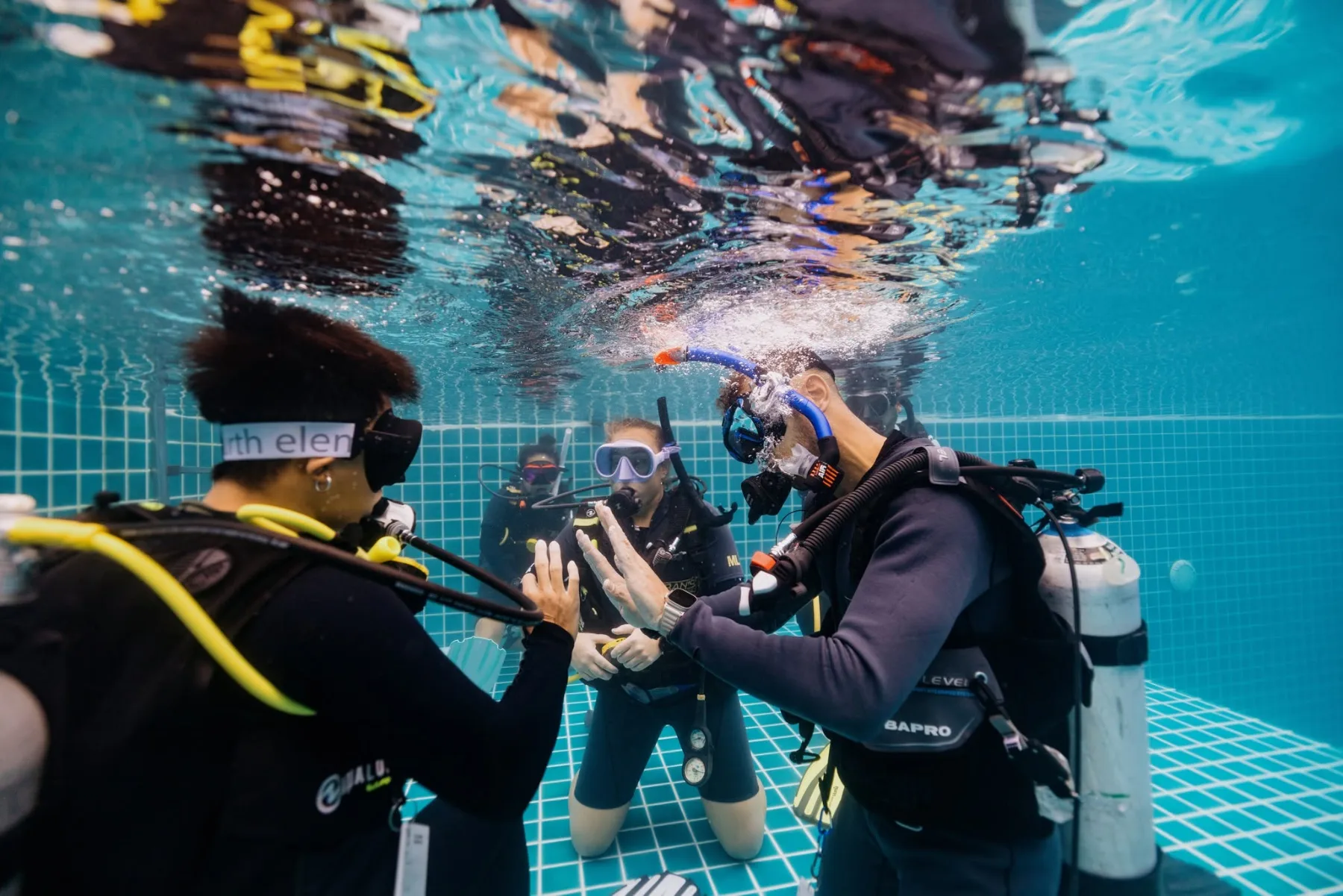
What Does Scuba Diving for the First Time Feel Like?
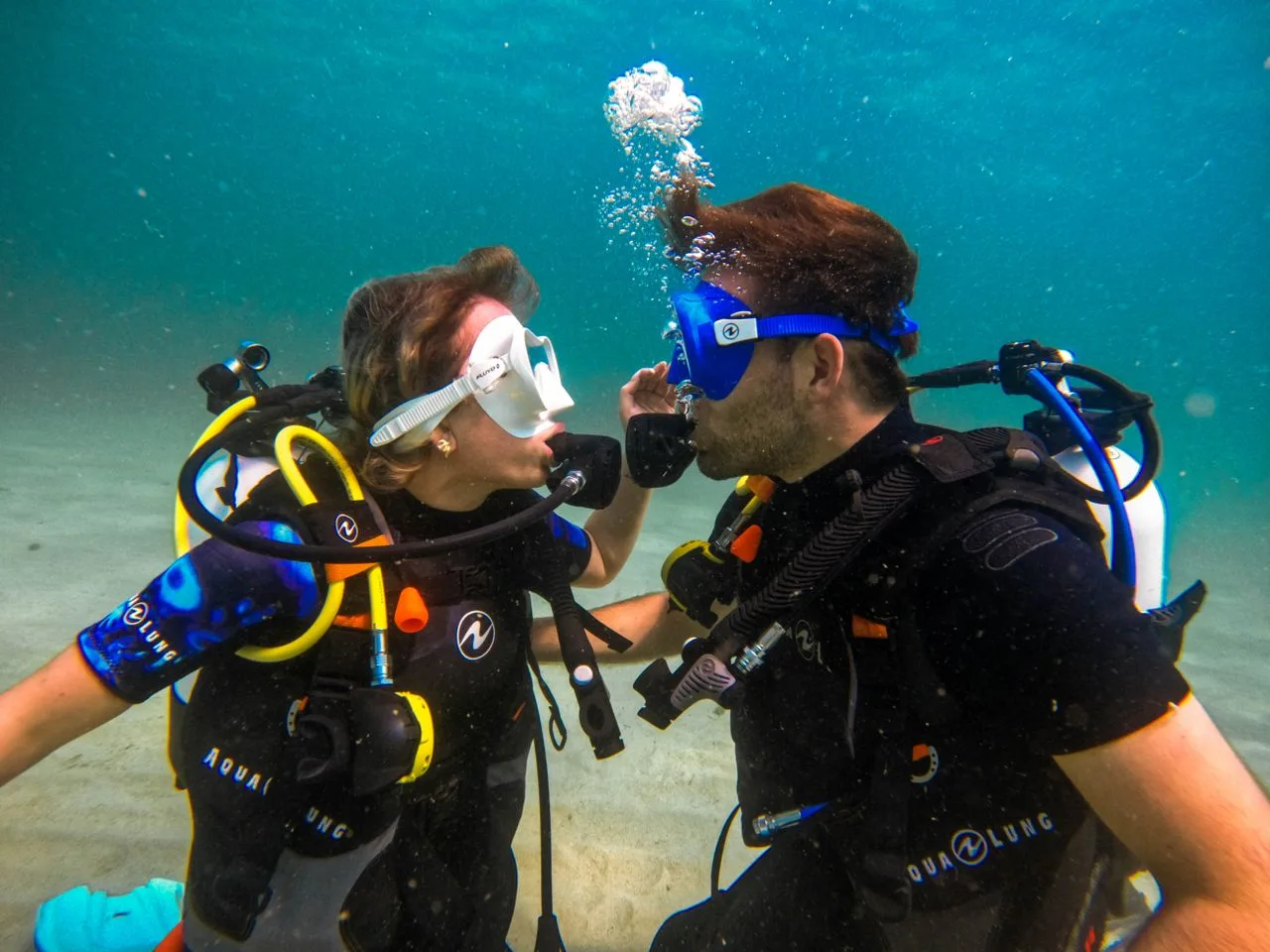
The first breath underwater feels strange for a second. Every instinct tells you that you should not be breathing with your face in the sea, and then the regulator gives you air anyway. Most people take that first breath too fast and too deep, and you can see it in the burst of bubbles.
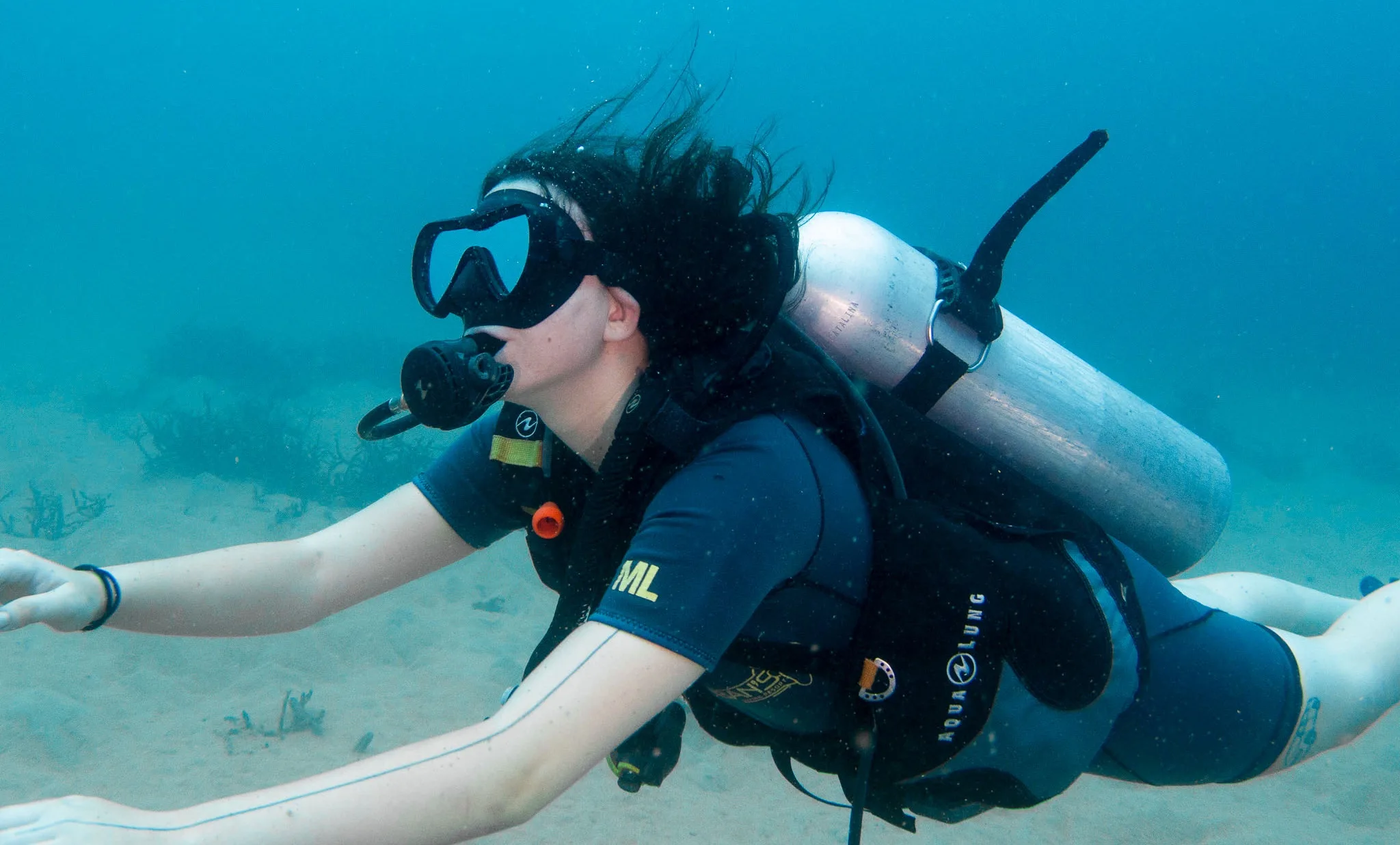
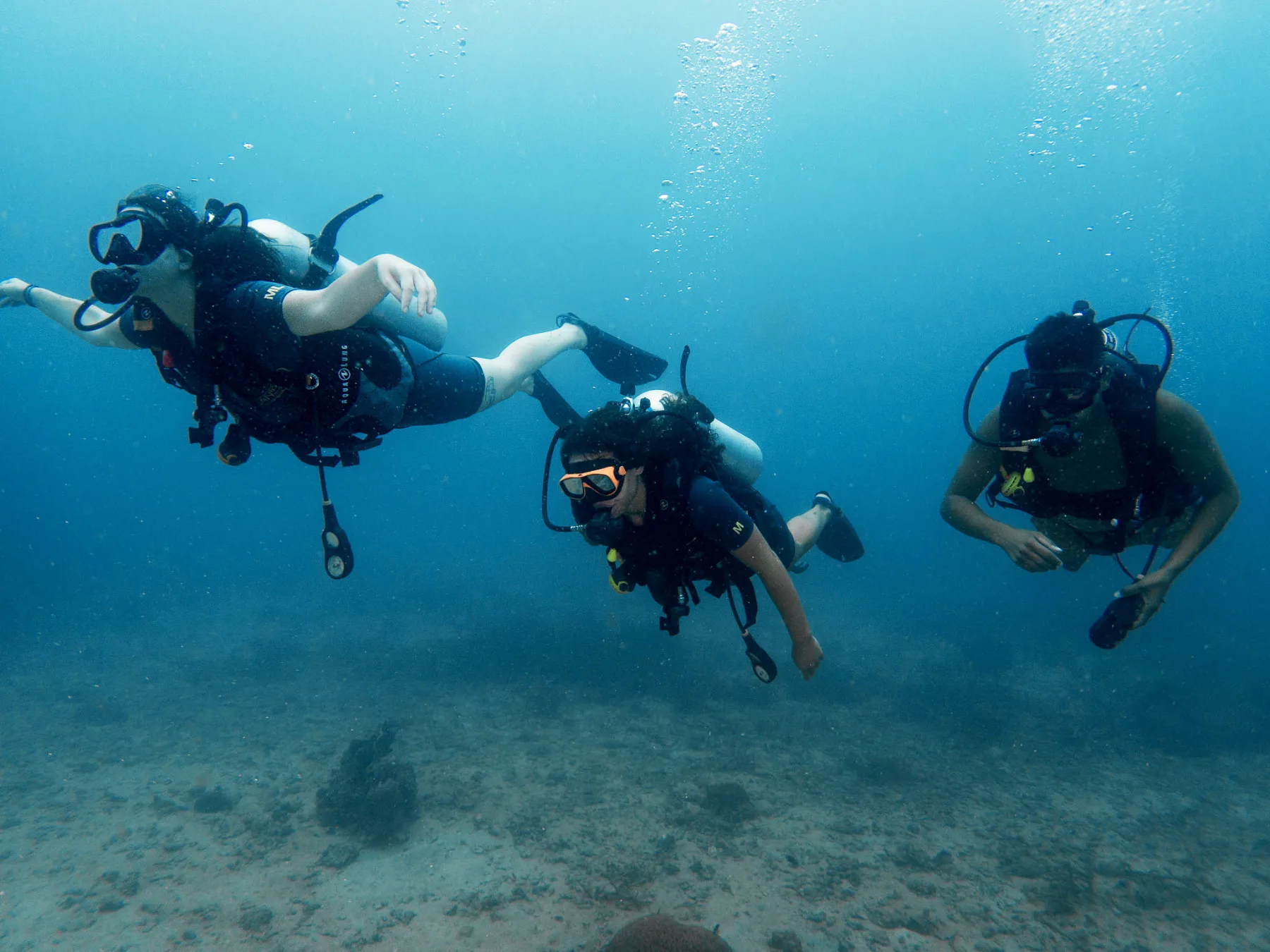
From behind the camera, the pattern on a first dive is remarkably consistent. People start out breathing quickly and heavily. They hold the instructor’s hand tightly, stare straight ahead or straight at the instructor, and forget there is a reef all around them. Their legs drop below them, as if they are looking for something to stand on.
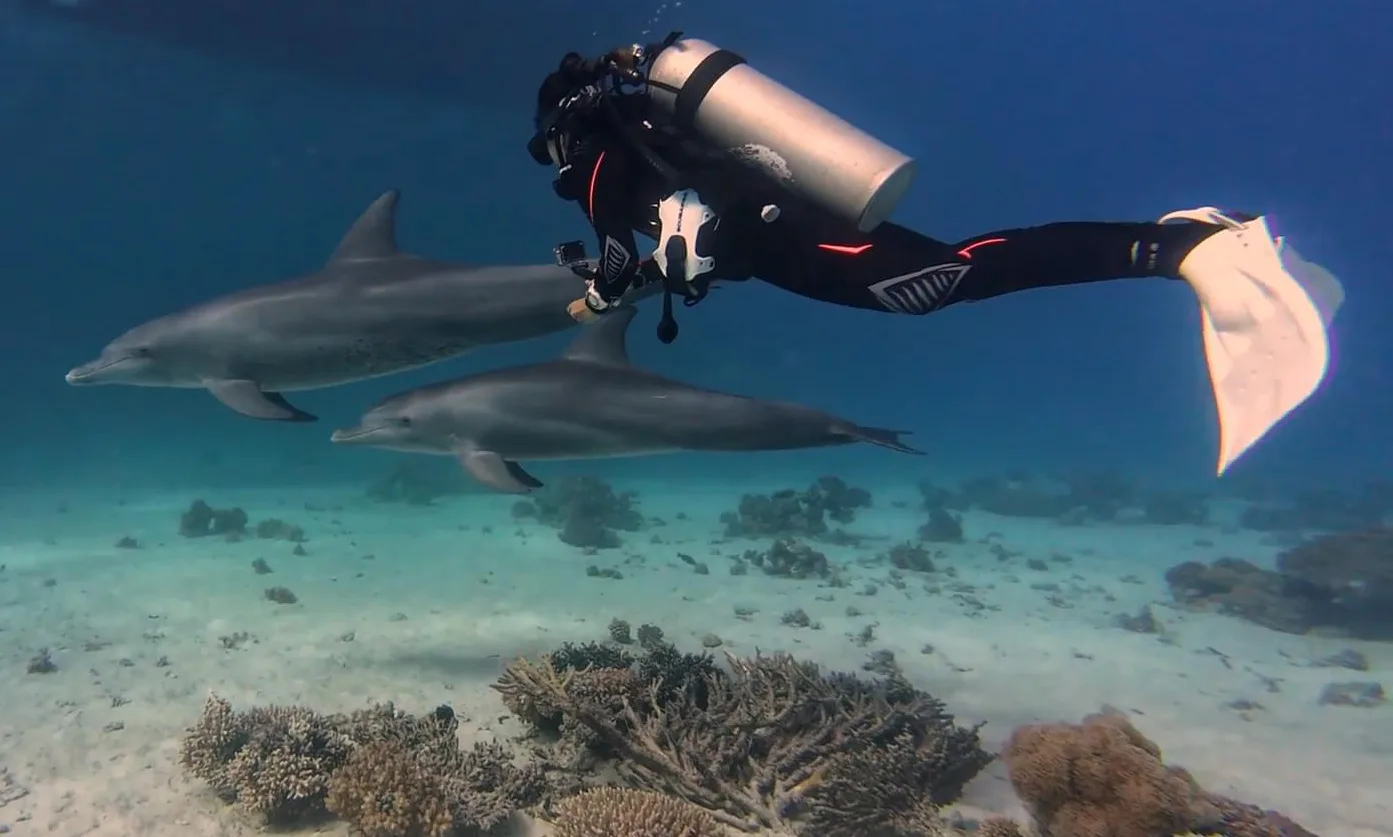
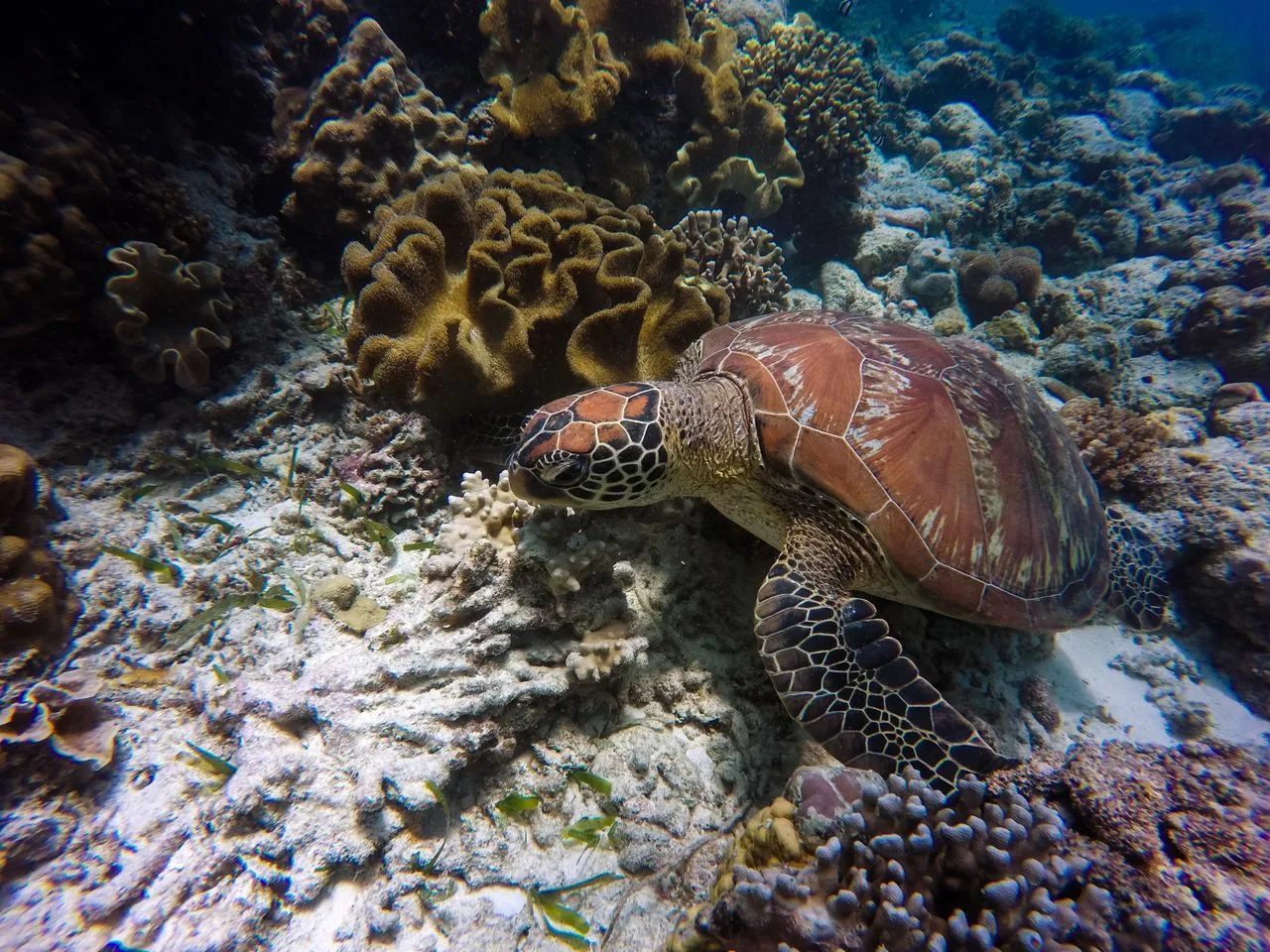
Then, somewhere in the first ten minutes, their shoulders relax. The breathing slows, the bubbles come out in a calmer rhythm, and they start pointing at parrotfish and clownfish. If a turtle swims past, they forget about their breathing altogether. That change is what I wait for with the camera, because you can see it in the eyes behind the mask.
A few other sensations catch people off guard. Pressure builds in your ears as you descend, which is why you equalize early and often. Sound travels differently underwater, so your own breathing and bubbles are the loudest things you hear. Colors fade as you go deeper, and red disappears first. Some people also feel cold after half an hour of floating still, even in tropical water.
My own first dive in 2014 was fascinating, but I spent most of it overwhelmed, and I was not comfortable enough in the water to settle into it. If your first dive feels the same way, give diving a second chance with a patient instructor before you decide it is not for you. It took me nine years to come back, and diving is now the center of my life.
How to Choose a Dive Center for Your First Dive
The dive center you choose will shape your first dive more than the dive site will. A calm instructor with time for you can make an average reef the best morning of your trip, and a rushed one can put you off diving for years.
A Discover Scuba dive costs roughly $60 to $150 USD depending on where you are. As with the full course, the cheapest option on the strip is rarely the best value. If you are already wondering about the next step, my breakdown of scuba diving certification cost shows what the Open Water course costs around the world and which fees the quotes leave out.
Before you book, ask a few questions:
- How many people go in the water with each instructor? Agency standards keep open water DSD groups small, usually around four participants per instructor. Fewer is better, and if you are nervous, ask whether a private session is possible.
- Is there a pool or confined water session first? A proper practice session in calm, shallow water makes a huge difference to how relaxed you feel once you are in the ocean.
- Who will be in the water with me? The open water dive should be led by an instructor, some times with a divemaster assisting as an extra set of eyes.
- Will this count toward a course? It can, but only if your instructor assesses your skills to Open Water standards and logs them, so tell them before the dive that you might continue. With PADI, a logged DSD can credit your first pool session and first ocean dive if you start the Open Water course within 12 months. With SSI, the pool-only Try Scuba does not count, while the Basic Diver program can be credited within 6 months.
- What do you tell first-timers about the reef? A good shop briefs every new diver on not touching anything, not standing on coral and keeping fins off the bottom.
Read recent reviews that mention the DSD specifically, and look at the equipment when you arrive. Masks, regulators and wetsuits that are rinsed, hung and in decent shape usually mean the rest of the operation gets the same care.
Where you try it matters less than who takes you, but some places make a first dive easier than others. Warm water, calm bays, good visibility and easy entries all help. Koh Tao in Thailand has dozens of dive schools and water that sits between 27 and 30 degrees, which is why so many people start there, and I cover the island in diving Koh Tao Thailand. In Bali, diving Amed, Bali Indonesia is mostly shore diving, so you walk in from a black sand beach without getting on a boat. In my own country, diving Santa Marta Colombia puts you on Caribbean reefs inside a national park.
First Time Scuba Diving Tips That Make the Difference
Most of what makes a first dive go well happens before you get in the water. These are the things I see make the biggest difference.
🌊 Sleep and eat properly. Arrive rested, hydrated and with a light breakfast in you. A late night of drinks before a morning dive makes everything harder, including staying warm and staying calm.
🌊 Only dive if you feel well. A cold or a blocked nose makes equalizing difficult and sometimes impossible. If you are congested, move your dive to another time, because forcing your ears against the pressure is how people end up with an ear injury on their first dive.
🌊 Equalize early and often. Start at the surface before you descend, then equalize gently every meter or so on the way down, before you feel any pressure. If your ears hurt, signal to your instructor, rise a little and try again. Never push through pain.
🌊 Breathe slowly and breathe all the way out. Long, slow breaths use less air, keep you calmer and make you more stable in the water. Most first-timers remember to breathe in deeply and forget to breathe out fully.
🌊 Know your BCD inflator. Understand how the inflator hose adds or dumps air from your BCD before you get in the water. It is what keeps you floating at the surface or lets you sink gently, and it is simple once your instructor has shown you on land.
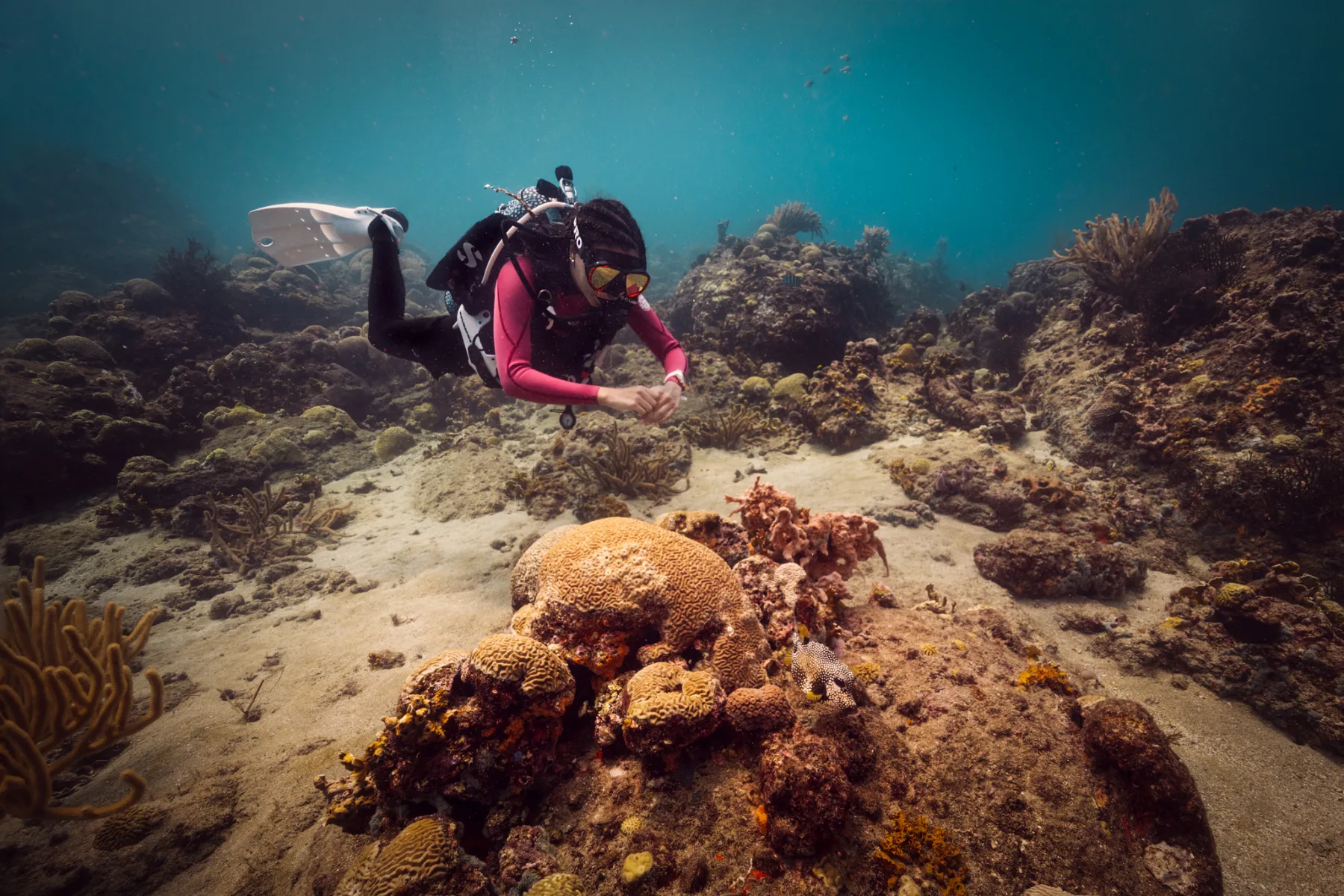
🌊 Keep your hands to yourself. You will not control your own buoyancy yet, so stay off the bottom, keep your fins away from the coral and let your instructor position you. Crossing your arms or clasping your hands together stops the instinct to reach out and grab things.
🌊 Make sure your mask fits. Rental masks are fine as long as they seal. Hold one against your face without the strap and breathe in gently through your nose, and if it stays in place, it fits. If you wear glasses, soft contact lenses work under a mask, and some shops rent prescription masks.
🌊 Leave the marine life alone. Do not feed, chase or touch anything, however tempting it is. Our ocean, our responsibility starts on the very first dive, and the habits you pick up on day one tend to stay with you. I have written more about this in how to be a good ocean tourist, and about the cream you put on before you get in the water in what sunscreen does to coral.
🌊 Do NOT bring a GoPro (or any camera) with you Holding a camera underwater is not the same as holding a camera on land. You are most definitely not ready to be taking pictures or videos the very first time you’re breathing underwater, an activity that is already asking you to multitask. Focus on the actual diving and the new world you’re experiencing. You can pay an underwater photographer to join your dive and document it if you want. That’s a service most dive centers offer and it will make a world’s difference on how much you enjoy your experience. Trust me.
🌊 Leave time before your flight. Divers Alert Network recommends waiting at least 12 hours before flying after a single dive and 18 hours after multiple dives. Book your DSD early in your trip, which also leaves you room to dive again or start a course if you love it.
What Comes After Your First Dive?
If you come up grinning and already asking about tomorrow, you have a few ways to keep going.
You can do more Discover Scuba dives. That makes sense if you only have a few days left, or if you want to be sure before you spend more money. Each one is supervised and limited to 12 meters, the same as your first.
You can sign up for the Open Water course, the certification that lets you dive with a buddy to 18 meters anywhere in the world, for life. It takes three to four days, and if your DSD was logged properly, your first pool session and first ocean dive may already count toward it. My guide on how to become a certified scuba diver walks through every stage, from the theory to your first fun dives.
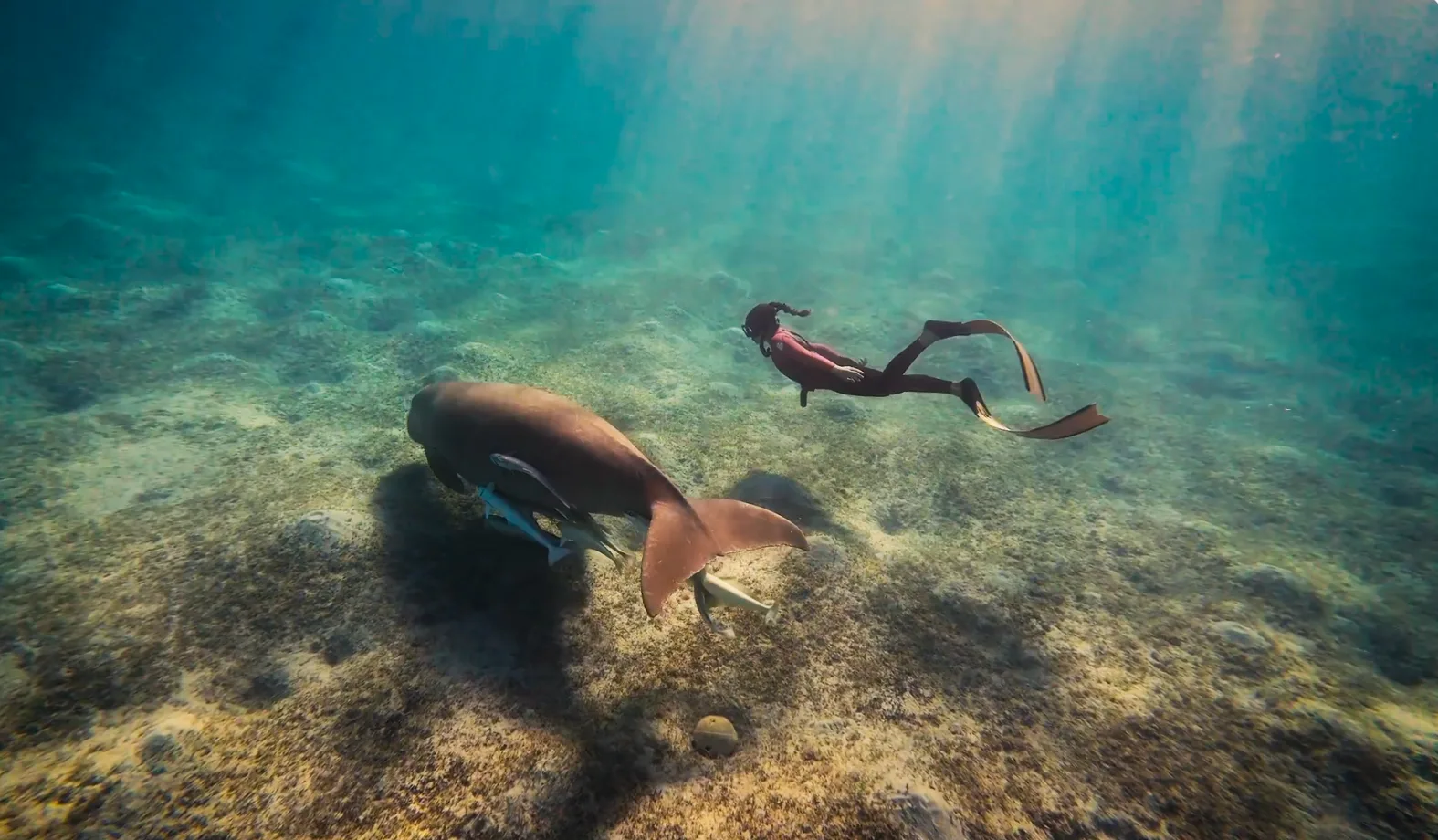
You can also take a step sideways. Some people realize underwater that what they love most is the quiet and the feeling of floating, more than the equipment. If that sounds like you, my freediving beginner’s guide is a good place to start.
And if you surface unsure, that is fine too. The ocean will still be there next year, or in nine years, as it was for me. All I would ask is that you give diving a second try with a patient instructor before you write it off.