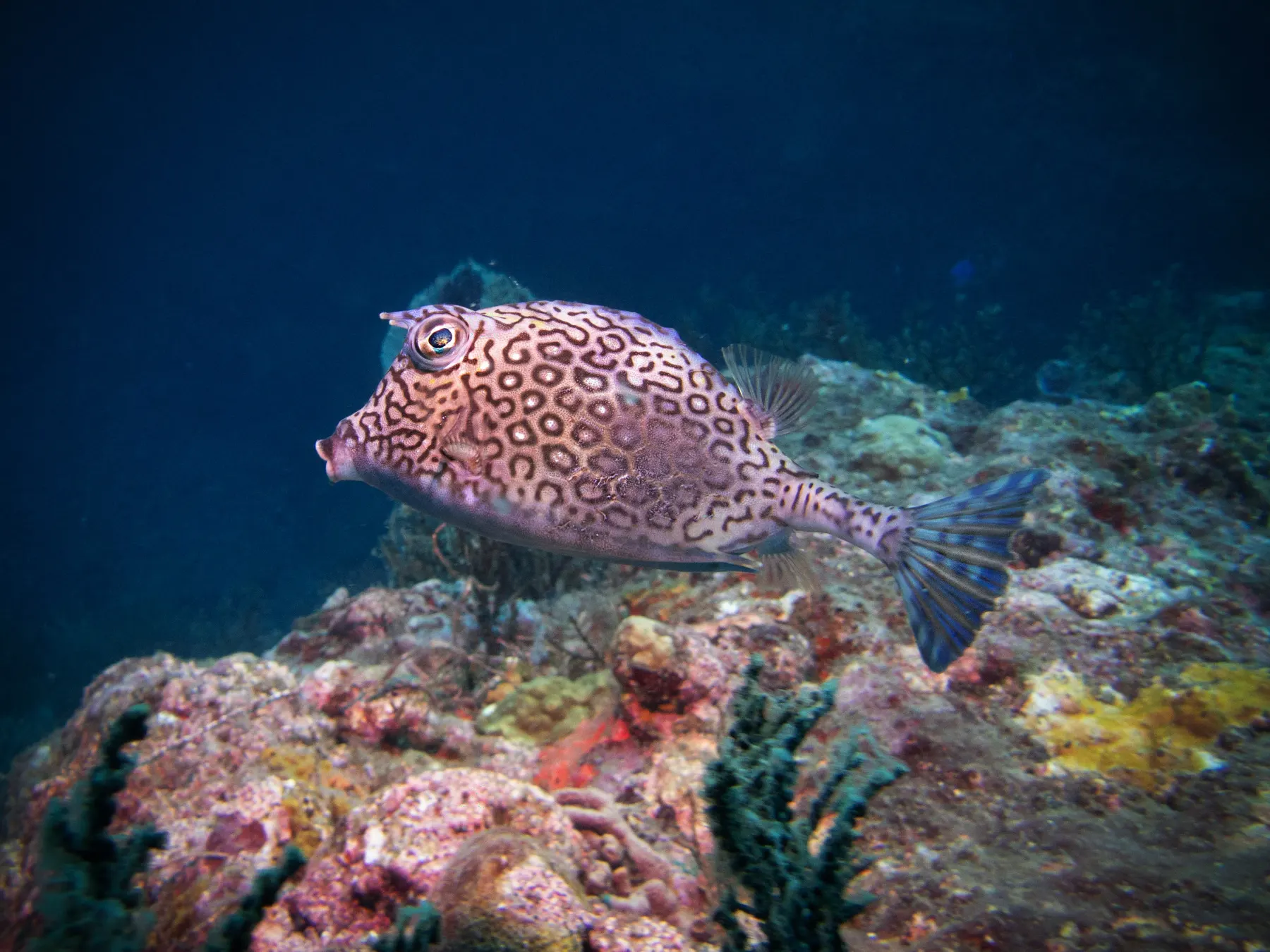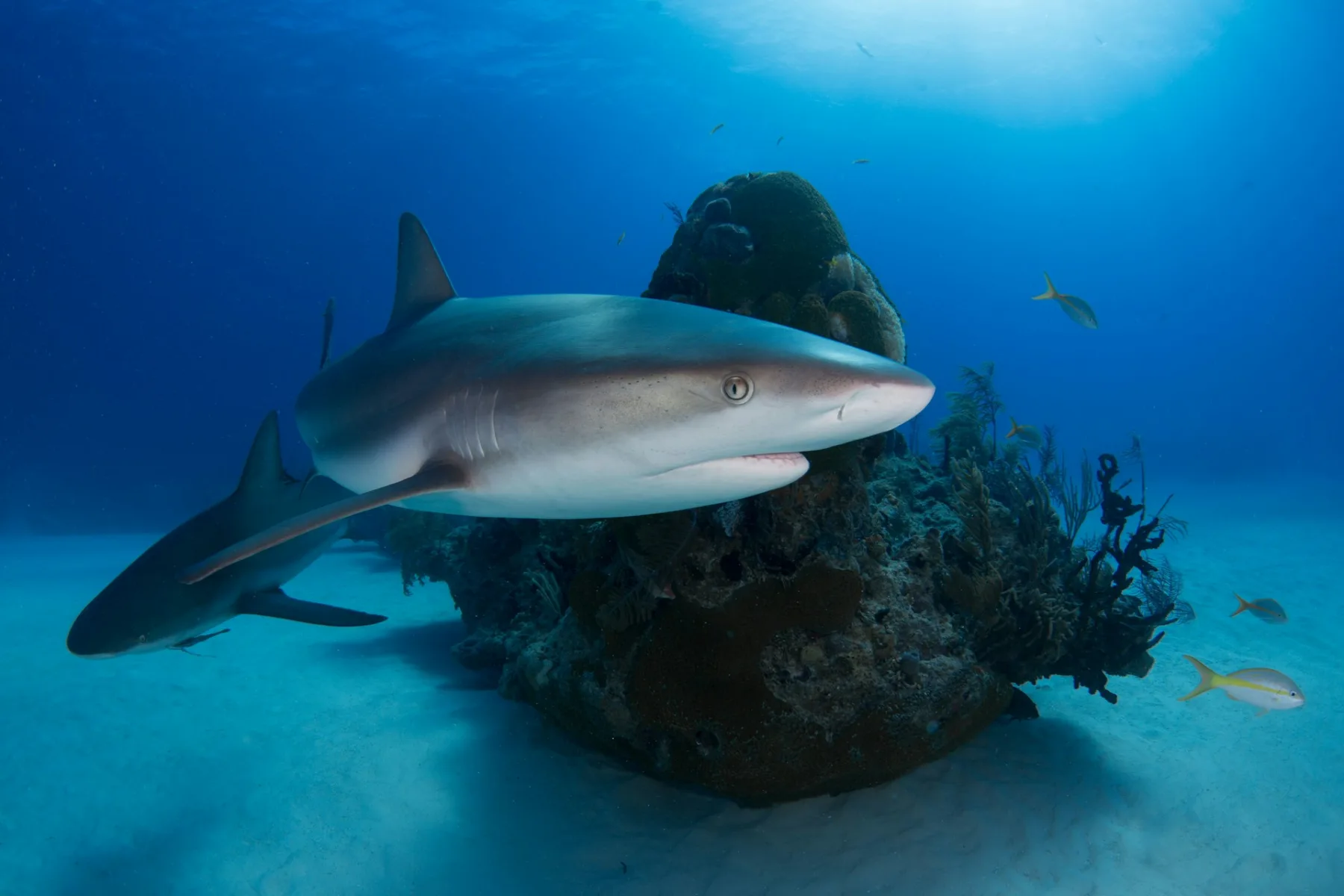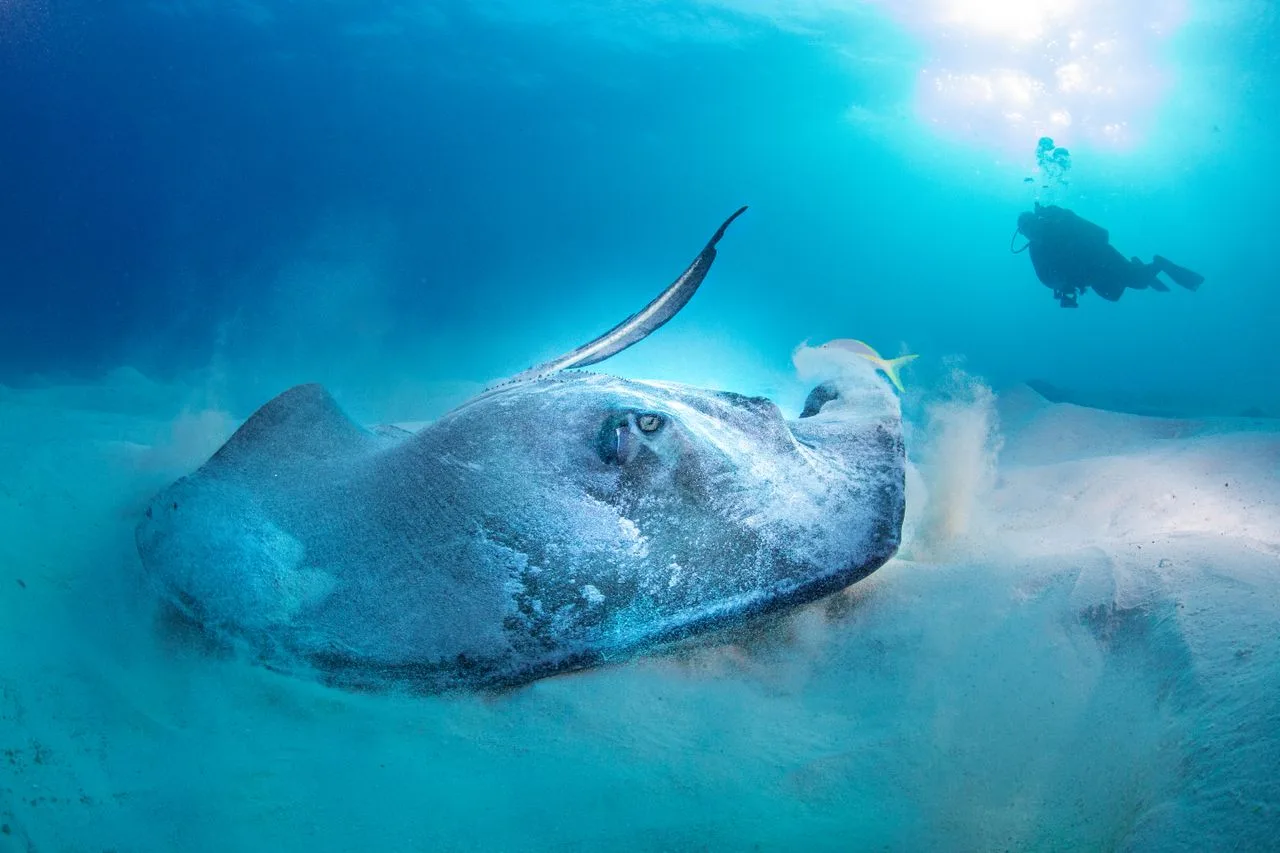
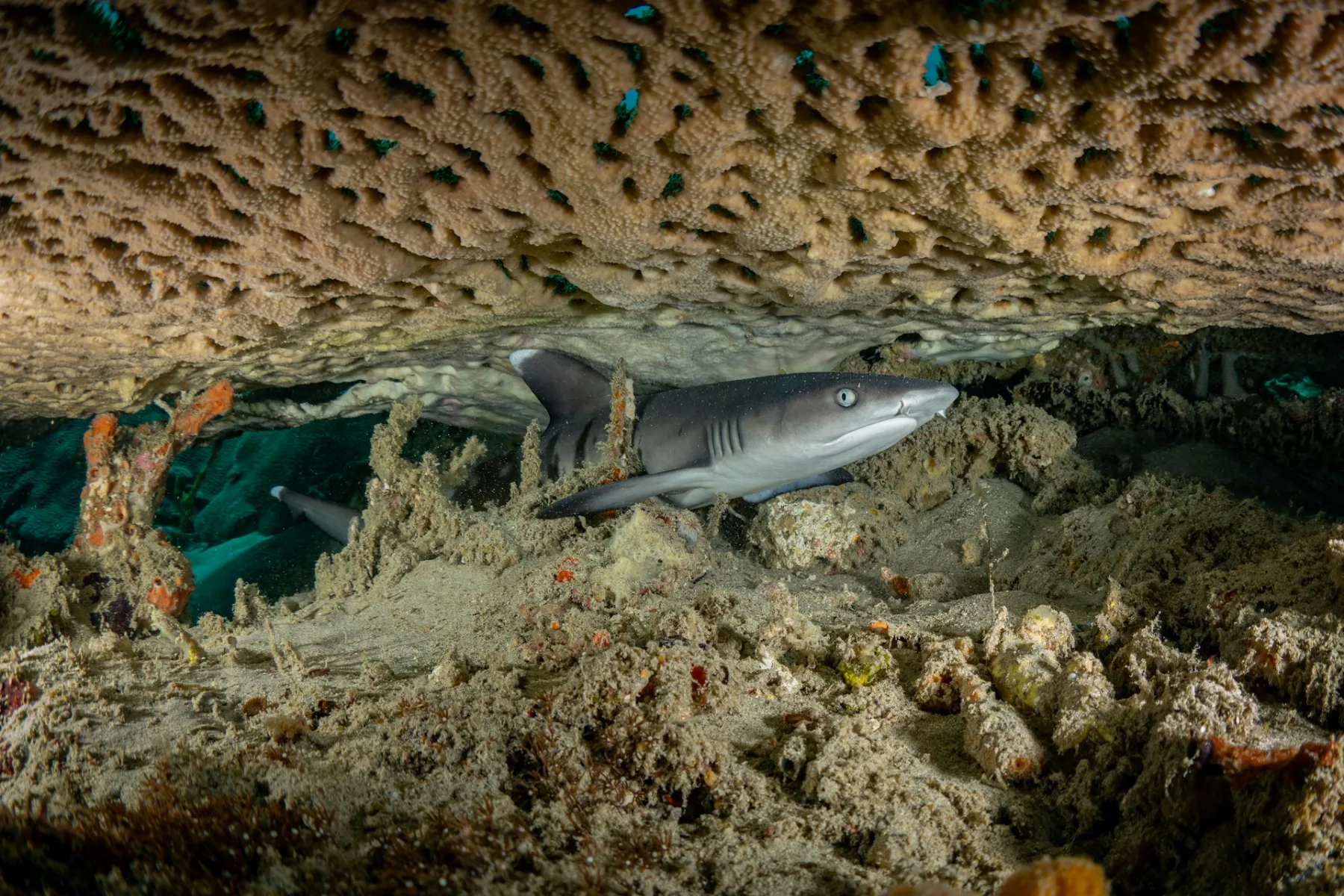
Diving in Amed is slow diving, and I mean that as the highest compliment I can pay a place.
I live on this coast. That matters for a guide like this, because I am not writing from one week of holiday dives with a checklist to tick. I dive the same sites over and over, in different light, in different seasons, with different tides. Repetition is where Amed gives up what it has.
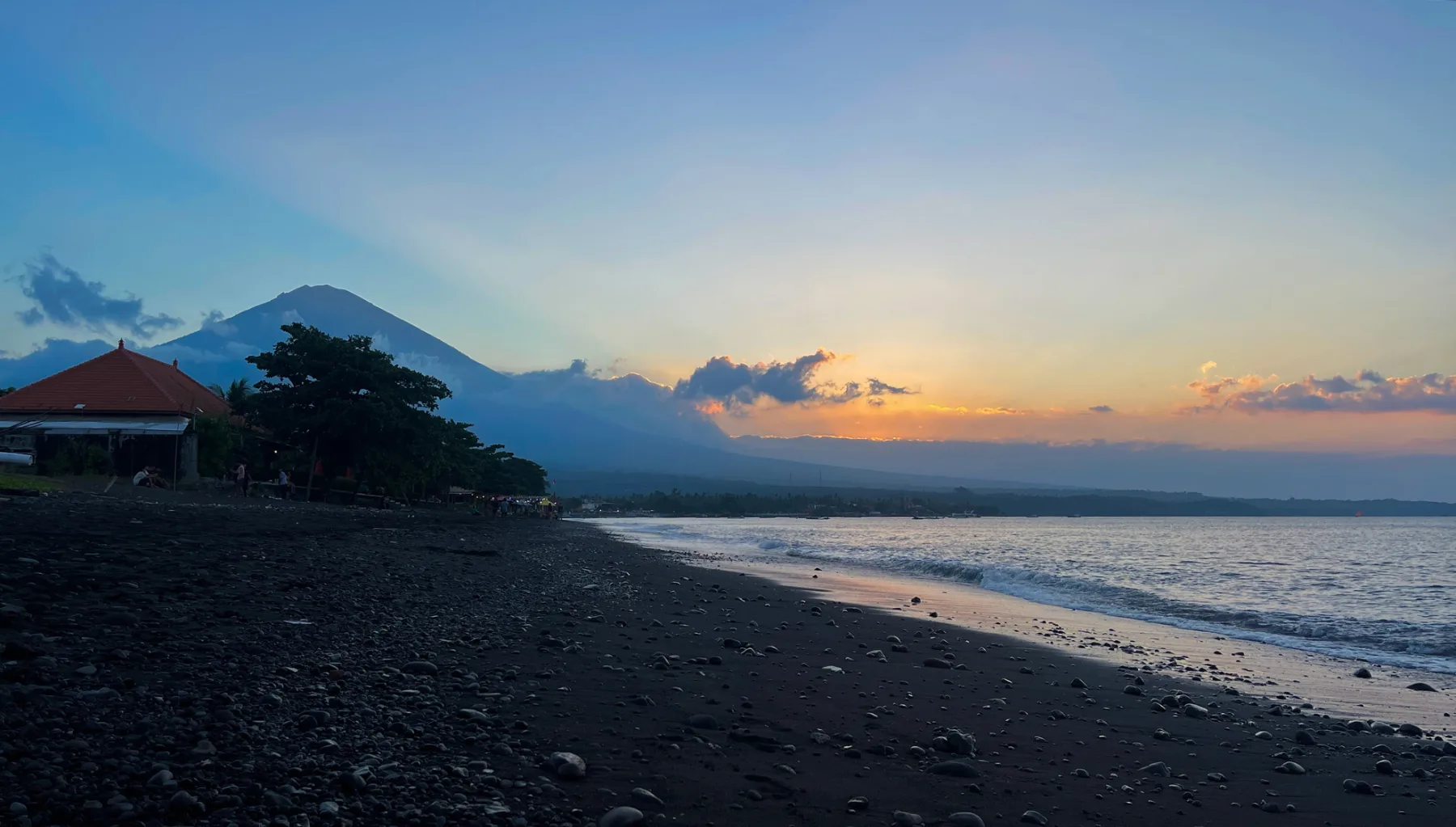
Most people arrive in Bali and go straight to the sites that get shouted about. Amed does not shout. It is a string of fishing villages on the northeast coast, black volcanic sand, water that stays flat long after the rest of the island is being pushed around by swell. You put your gear on at the back of a truck or on the beach, you walk in, and thirty seconds later you are either on a reef or at some brilliant muck spot.
Amed Is Seven Villages, Not One Beach
The first thing to understand about diving in Amed is that “Amed” is shorthand. Ask a local and Amed is one village. Ask a dive shop and Amed is roughly fourteen kilometers of coastline covering seven villages: Amed, Jemeluk, Bunutan, Lipah, Selang, Banyuning and Aas.
This matters because the diving changes as you move along that coast. Jemeluk is coral garden and wall. Bunutan is sand and current. Lipah has the wreck. Selang and the far eastern point are where the water starts moving properly. You can dive four sites in a day that feel like four different destinations, and never spend more than fifteen minutes in a car between them.
Amed sits inside the Coral Triangle, the most species-rich marine region on the planet. It also sits in the lee of the island, sheltered from the Indian Ocean swell that hammers the south and from the worst of the water ripping through the Lombok Strait. Biodiversity plus shelter is an unusual combination. It is the reason this coast punches above its reputation.
What Diving in Amed Is Actually Like
Shore diving is the default, not the fallback.
I want to be clear about this because a lot of divers hear “shore dive” and assume it is what you do when the boat is broken. In Amed it is the point. You are diving from a volcanic beach into a bay that drops away quickly, so the reef starts in three meters and keeps going. There is no forty minute crossing. There is no being trapped in a wetsuit on a boat for five hours because that is the schedule.
You dive, you come out, you sit down, you eat something, you go to another spot minutes away on the same strip.
The boats that do exist are jukung, the traditional Balinese outriggers, and they are used the way they should be: a ten or twenty minute hop to a site you cannot walk to. Two divers, a guide, a captain, no roll call.
The other thing to say is that most of Amed is calm. Not all of it. But at the sites where new divers spend their time, the current is mild or absent, the entries are easy but there can be a surge. That combination of easy access and easy conditions is why so many people learn to dive on this coast, and it is also why so many photographers stay.
The Best Dive Sites in Amed
Jemeluk Bay and the Amed Wall
The site most people do first, and the one I still do most. The shallow coral garden runs from about three to eight meters, dense enough that new divers spend the whole dive at ten meters and come up saying they saw everything.
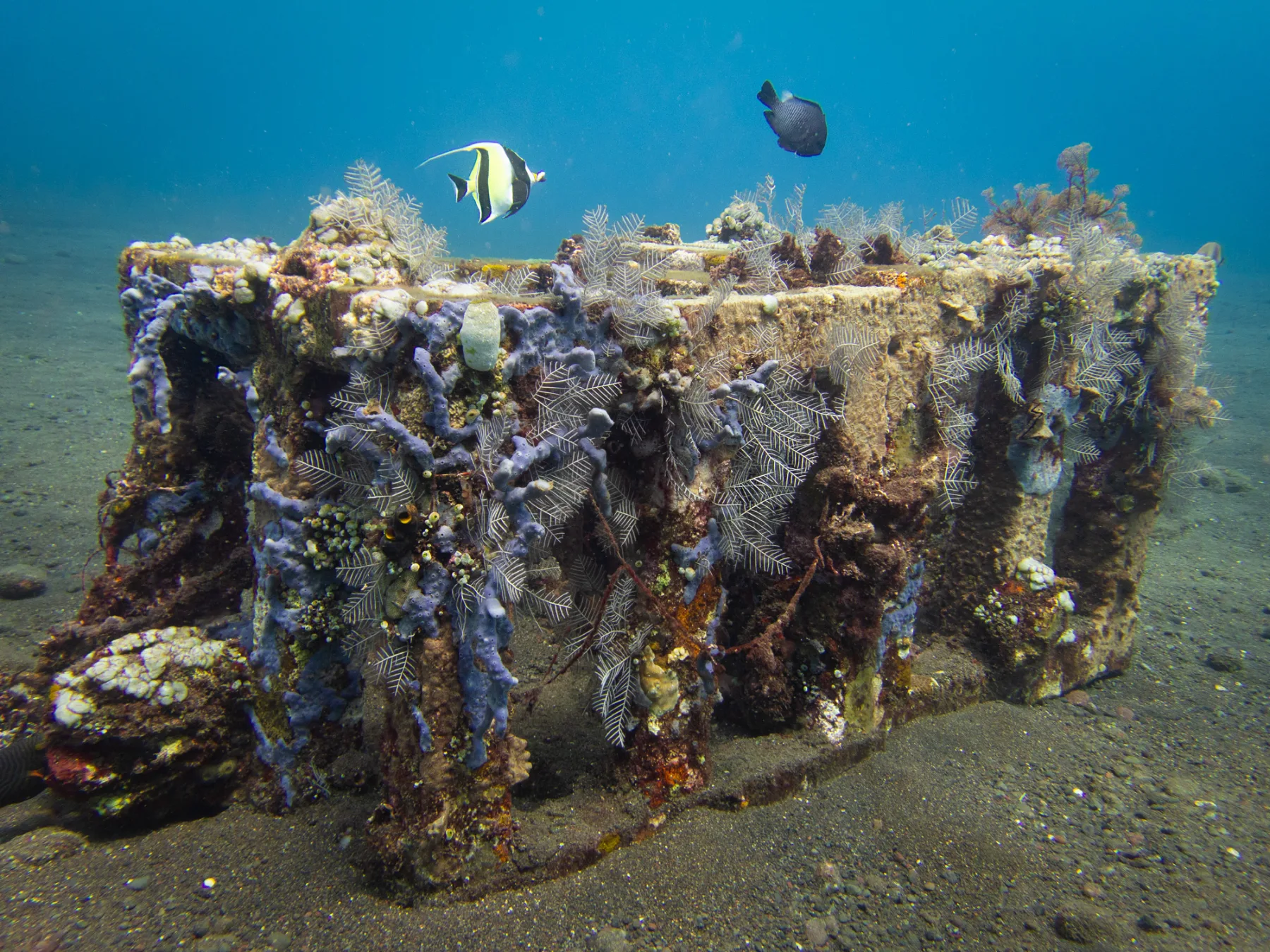
Follow the bay to the right and the reef turns into a wall and a slope that drops well past recreational depth. Around the headland you can pick up a gentle drift when the tide is doing the right thing. There are also concrete structures and sunken statues placed in the bay to give coral something to grow on, which have been colonized for years now and hold their own fish life.
The shallow section is the best night dive on this coast.
Amed Pyramids
Concrete pyramids sunk on a sand slope next to natural reef, sitting roughly between eight and twenty-five meters. Artificial structures like this get dismissed as gimmicks. They are not. Give a hollow structure fifteen years in warm water and it becomes a reef with its own residents.
Pyramids has a resident population of titan triggerfish, and during nesting season they will defend a territory that extends upward from the nest in a cone. Divers get bitten here every season. If one squares up to you, do not swim up, because up is deeper into its territory. Swim flat and horizontally away from the nest, and keep your fins between you and the fish. If you’re lucky you can encounter some reef sharks!
Amed Ghost Bay
The muck site, and the reason macro shooters end up staying longer than they planned. Black sand, low visibility on some days, very little that looks like scenery. What it has instead is density of strange things: frogfish, several kinds of ghost pipefish, mimic octopus, seahorses, stonefish, juvenile lionfish, razorfish, and crabs that most people swim over without noticing.
There has been an artificial reef growing in this bay since the early 2000s, which has given the critters structure to colonize.
Ghost Bay is not a pretty dive. It is a hunting dive. If unlike me, you do not enjoy hovering over a seemingly empty patch of sand for ten minutes because your guide spotted something tiny, this site will bore you. If you do, it is the best thing on the coast.
Seraya Secrets
Amed’s muck-diving corner, a dark sand slope that rewards patience over scenery. This is where you go looking for the small and strange: nudibranchs, frogfish, ghost pipefish, tiny shrimp and the kind of critters that make macro shooters lose track of time. It is the opposite of a big-vista dive, and that is exactly the point.
Melasti Amed
The other muck site, and the one with the shortest walk (there’s another Melasti in Tulamben). There is direct shore access, so you park, kit up and get in. No boat, no schedule, no waiting on anyone.
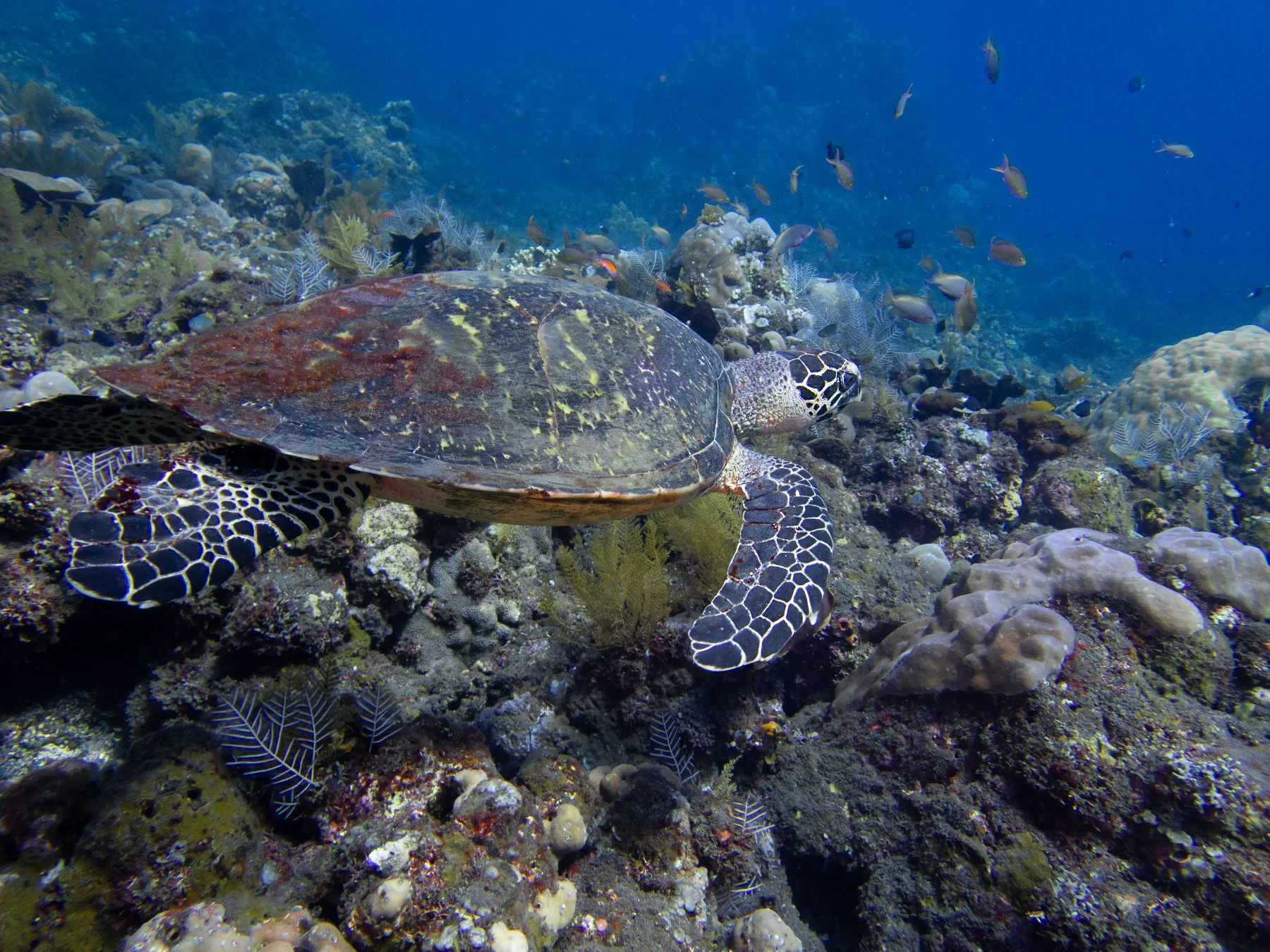
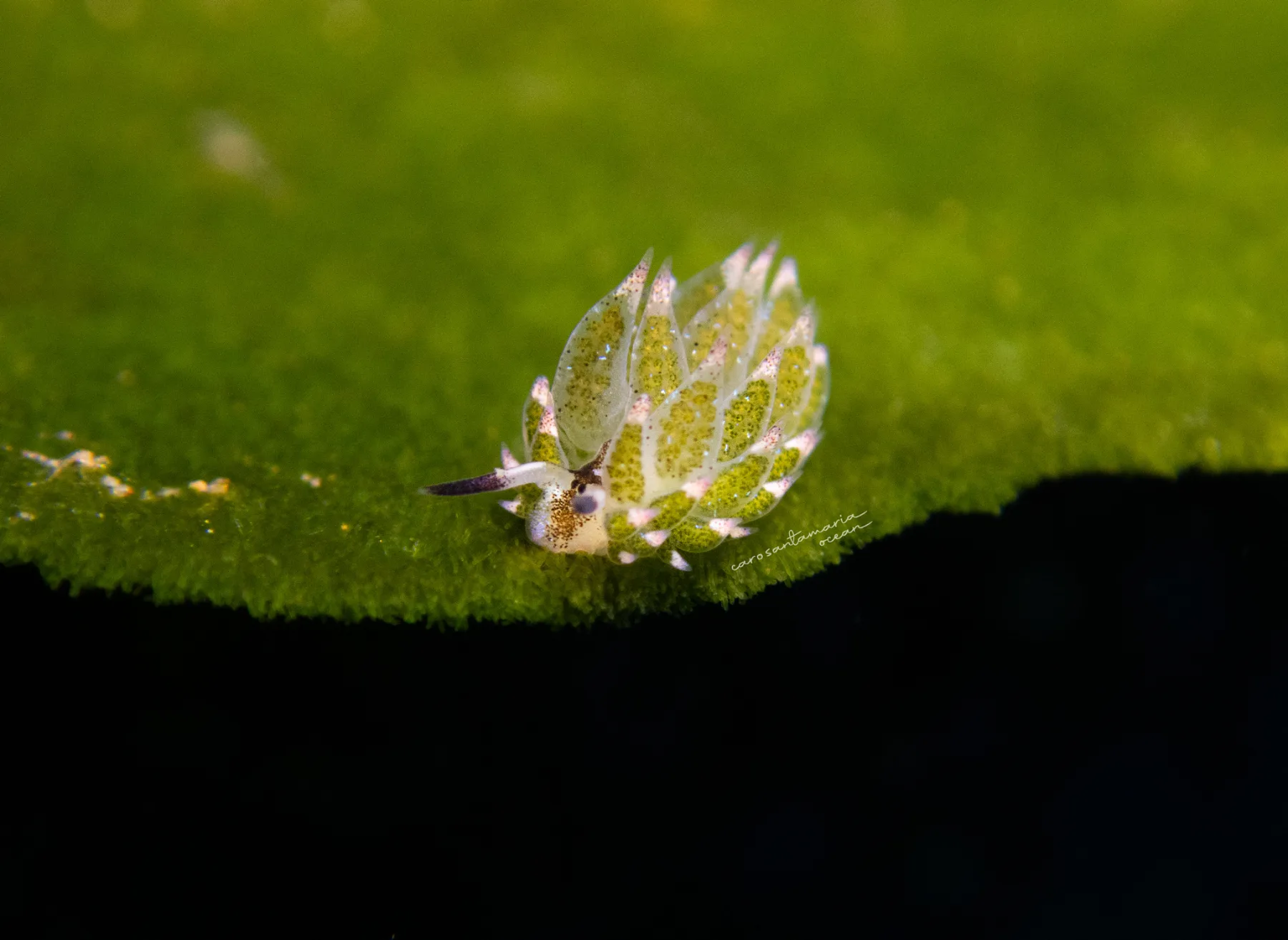
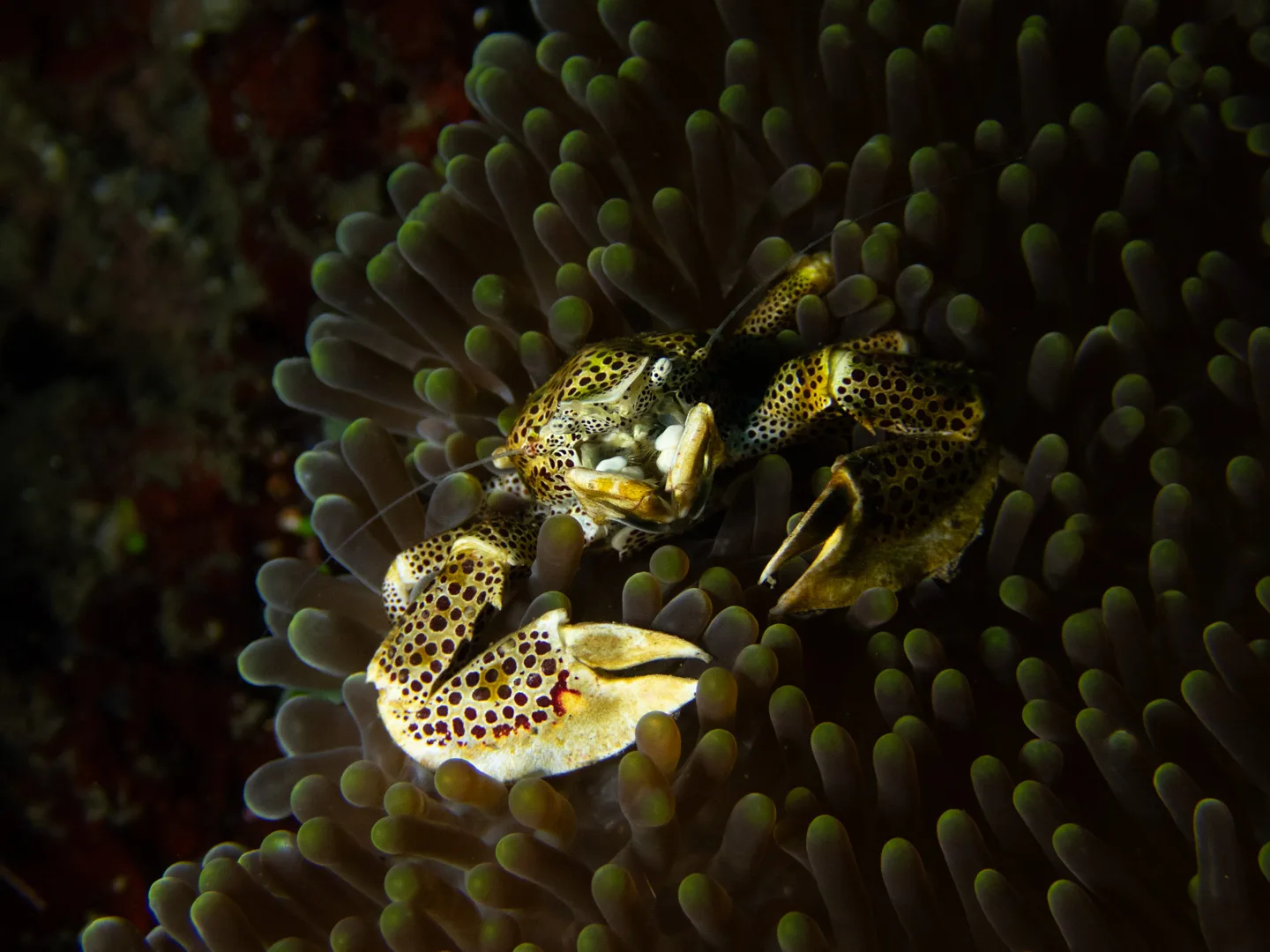
Like any muck site, what you find is a surprise every time, and that is the entire appeal. Turtles turn up here, which is not what most people expect from a black sand slope. The rest is the usual muck lottery of things that do not look like animals until they move. Insider tip: If you want to find sheep nudibranchs, Costasiella sp., this is the place.
Lipah Bay and the Japanese Wreck
A small wartime wreck lying broken in shallow water off Lipah, close enough to shore that snorkelers float over the top of it. Nothing about it is dramatic in the way a big steel hull is dramatic. What it has is coral. Decades in warm shallow water have covered it in gorgonians and soft coral, and the structure holds reef fish tightly.
It is an easy dive, it is a beautiful dive, and it is one of the most photogenic sites in Amed precisely because it is shallow. You get real light down there.
Lipah is also where some of the reef restoration work on this coast is happening, which I come back to below.
Bunutan and Garden Eel Point
Sand slope with a large colony of garden eels, which is one of those things that reads as boring on a site list and is fascinating in person. Hundreds of them standing out of the sand, retracting as you approach, coming back up behind you.
Bunutan gets more current than the inner bays depending on tide, and that current is what brings the schooling fish, the barracuda and the occasional bigger visitor from the blue.
Gili Selang
The far eastern point, and a different kind of diving entirely. This is where Bali runs out of land and the water from the Lombok Strait comes around the corner. Hard coral in very good condition, real fish life, and current that can turn on hard and unpredictably, including down current.
This is not a site for your fourth ever dive. Go with a guide who dives it regularly and who will call it off if the water is wrong. When it is right, it is the most alive water in the area.
Batu Niti
Deeper, boat access, hard coral and gorgonians on a slope that keeps going past technical depths. Turtles are common. Cold water occasionally pushes through, and with cold water there is always the outside chance of something drifting in that does not belong on a tropical reef. Treat that as a lottery ticket, not a reason to book.
Macro Diving in Amed: Why Photographers Stay
This is the real reason I would send a diver to Amed over most of Bali. Yes, Tulamben has gained world class popularity in the macro category, but Amed holds its own.
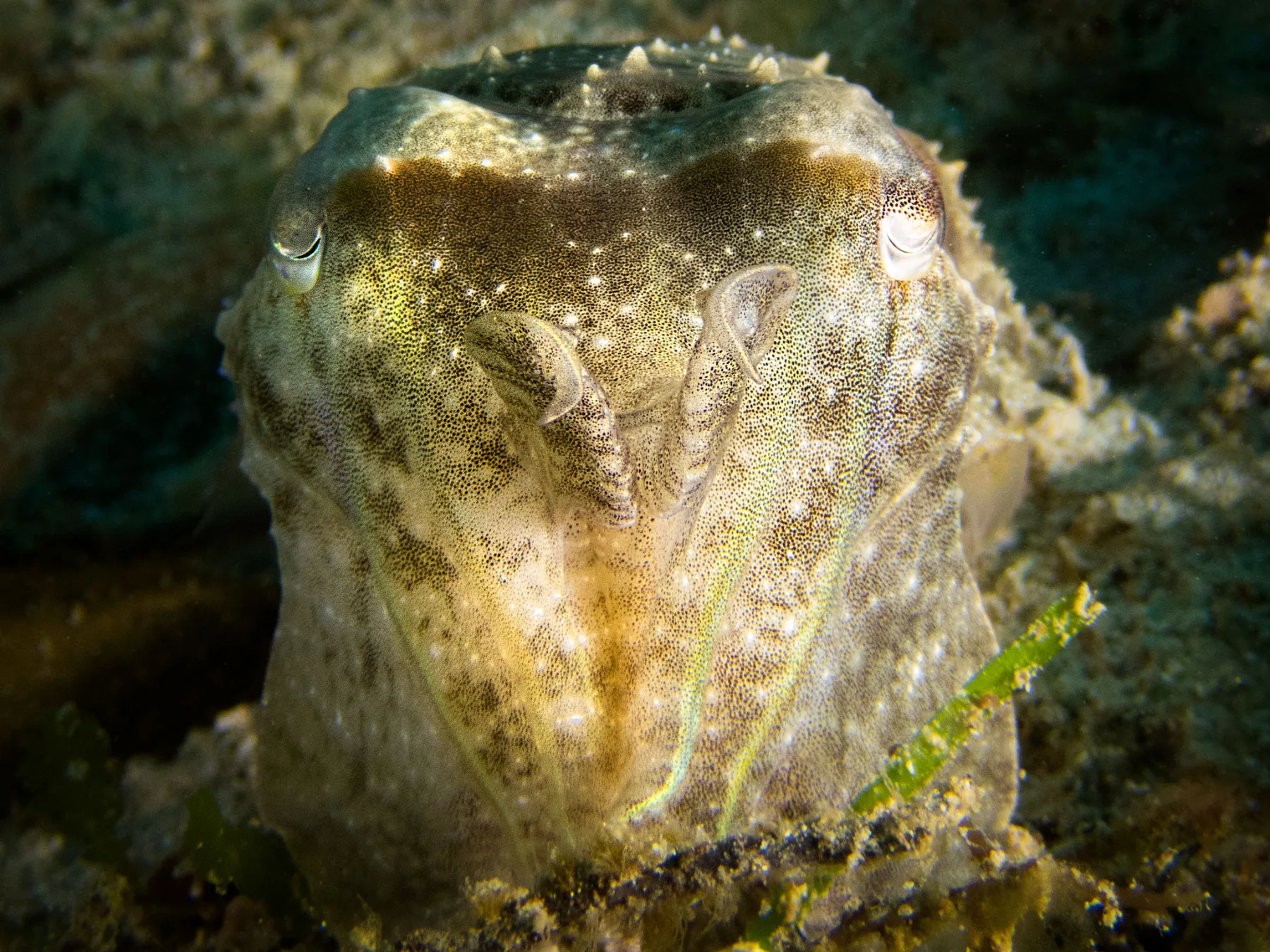
The black sand, the sheltered water and the sheer amount of hydroid and algae growth create ideal conditions for small life. There are nudibranchs on almost every dive if you know how to look, and the range is wide: Chromodoris, Hypselodoris, Phyllidia, Nembrotha, Costasiella… but there’s a lot of other macro critters that make every dive special.
If you have never trained your eyes for this, Amed is a forgiving place to learn. The guides on this coast are excellent spotters, and most of them are locals who have been diving the same fifty meters of sand for years. Learning how to find nudibranchs is mostly a matter of slowing down and knowing what substrate to search, and there is no better classroom than a calm shore dive you can repeat every day.
A macro rig earns its weight here. Underwater macro photography in Amed is not about fighting conditions, it is about buoyancy and patience. If you are still building your kit, work through your first underwater camera setup before you arrive rather than trying to solve it on site.
One thing I will say plainly, because it needs saying more in macro photography. Do not move animals for a shot. Do not manipulate and put a nudibranch on a nicer background. Do not poke an octopus to get a reaction. If the shot requires you to interfere with the animal, the shot is not worth taking, and the guides who let divers do it should be doing better.
Amed Diving Conditions, Season and Practical Notes
Water temperature. Broadly 26 to 29 degrees Celsius through the year. Thermoclines push colder water through at depth on some days, and at the deeper sites it can drop into the low twenties without warning. A 3mm full suit is the sensible default. Plenty of people dive in a shorty in the warm months and regret it on the third dive of the day. If you are working out what to bring, the thinking in how to choose a wetsuit for scuba diving applies directly.
Visibility. Typically 15 to 30 meters. It drops after heavy rain, and it drops at the muck sites by design, because that is what muck sites are. Mornings are usually clearer than afternoons.
Season. The dry season, roughly April through November, gives the calmest surface and the best visibility. The wet season is still very diveable on this coast because the coastline is sheltered, so if you can only come in January, come in January. You will get rain overnight and diveable water most days.
Current. Mild to none at the bay sites. Real and worth respecting at Bunutan on a moving tide, and serious at Gili Selang.
Surge. There are days when the surge here is significant. For the diving itself it is not a problem and it is not something to be nervous about. For anyone shooting it is a different story. Surge moves you and your subject at the same time and in different directions, which is the end of steady footage and sharp macro. If video is the priority, ask about the surge before you commit to a site, and favor the deeper sites over the shallow reef on a bad day. If you are stuck with it, get low, brace a finger on bare rock or sand and never on coral, and shoot in the pause between the push and the pull. Stills survive surge far better than video does.
Certification level. Open Water is enough for most of the coast. Advanced opens up the deeper walls and Batu Niti. If you are still deciding whether to start, how to become a scuba diver covers what the entry level course actually involves.
No certification at all. You can still get in. Almost every shop on this coast runs a Discover Scuba Diving day, the try dive that takes you down to twelve meters with an instructor without any prior training.
Night diving. Yes, and it is good. Jemeluk and the muck sites both come alive after dark. Bring a proper torch, not the pocket backup you use for looking into holes. How to choose a dive light is worth reading before you buy something underpowered.
What Shape Are Amed’s Coral Reefs In?
I am not going to sell you a pristine reef, because that is not what this is.
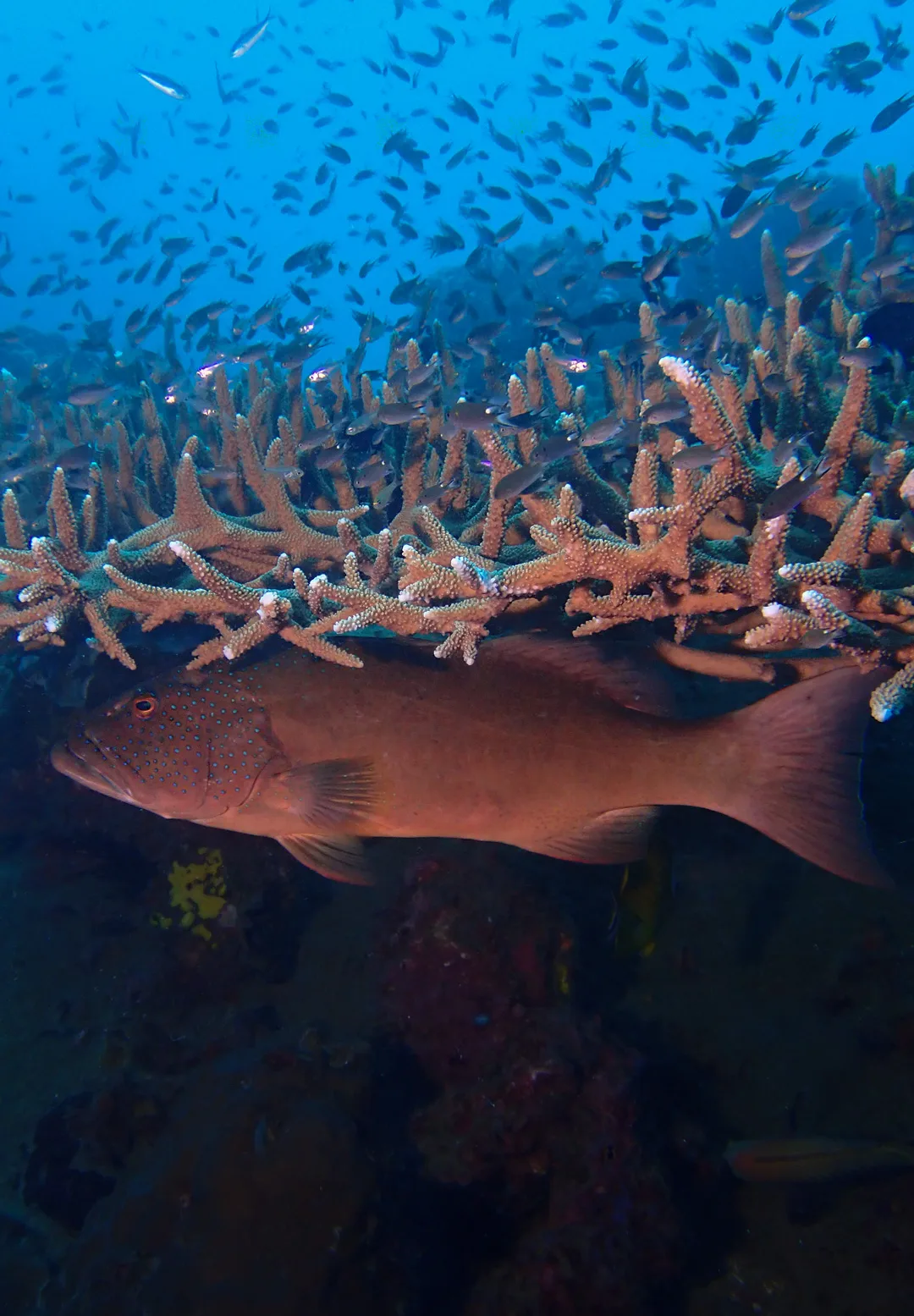
Parts of this coastline are rubble. Some of that is old damage from destructive fishing decades ago, some is crown of thorns, some is bleaching, and some is what happens when a lot of divers with poor buoyancy visit the same shallow coral garden for twenty years. Bali’s reefs have taken all of it. I have watched bleaching on reefs across four regions now, and nowhere gets a pass anymore.
What makes Amed interesting is what has been built on top of that damage, and these are the most thriving artificial reefs I have seen. The first time I saw them, I was surprised, and it filled me with hope.
Artificial reef structures have been going into these bays since the early 2000s. Since 2021, the local Balinese dive guides’ cooperative, Perkumpulan Pemandu Penyelam Amed, has been working with Coral Reef Care to deploy structures and transplant coral fragments onto the dead rubble fields at Jemeluk and Lipah, where algae had taken hold and natural recovery had stalled. Other operators in Lipah run their own nurseries and adoption programs. This is not decoration. It is the same coral reef restoration approach that is working elsewhere in the region, run by people who live on the beach it is happening on.
Bali as a whole holds a remarkable number of reef-building coral species, and the reefs at Jemeluk have been flagged in survey work as high conservation value, which is a polite scientific way of saying this coast is worth fighting for.
Our ocean, our responsibility. On a shore-diving coast, that responsibility is unusually concrete:
- Get your buoyancy right before you go near a coral garden in four meters of water. Most reef damage in Amed happens above ten meters, by accident, by people who did not mean it.
- Do not kneel on the sand at the muck sites. Something lives there.
- Clip your gauges and your octo. A dangling console in shallow coral does real damage.
- Do not touch, move, or reposition animals, and say something when you see a guide do it.
- Choose operators who are actively involved in restoration work. On this coast you can ask directly and get a straight answer.
Who Should Dive Amed
Amed suits divers who want to dive a lot rather than dive dramatically.
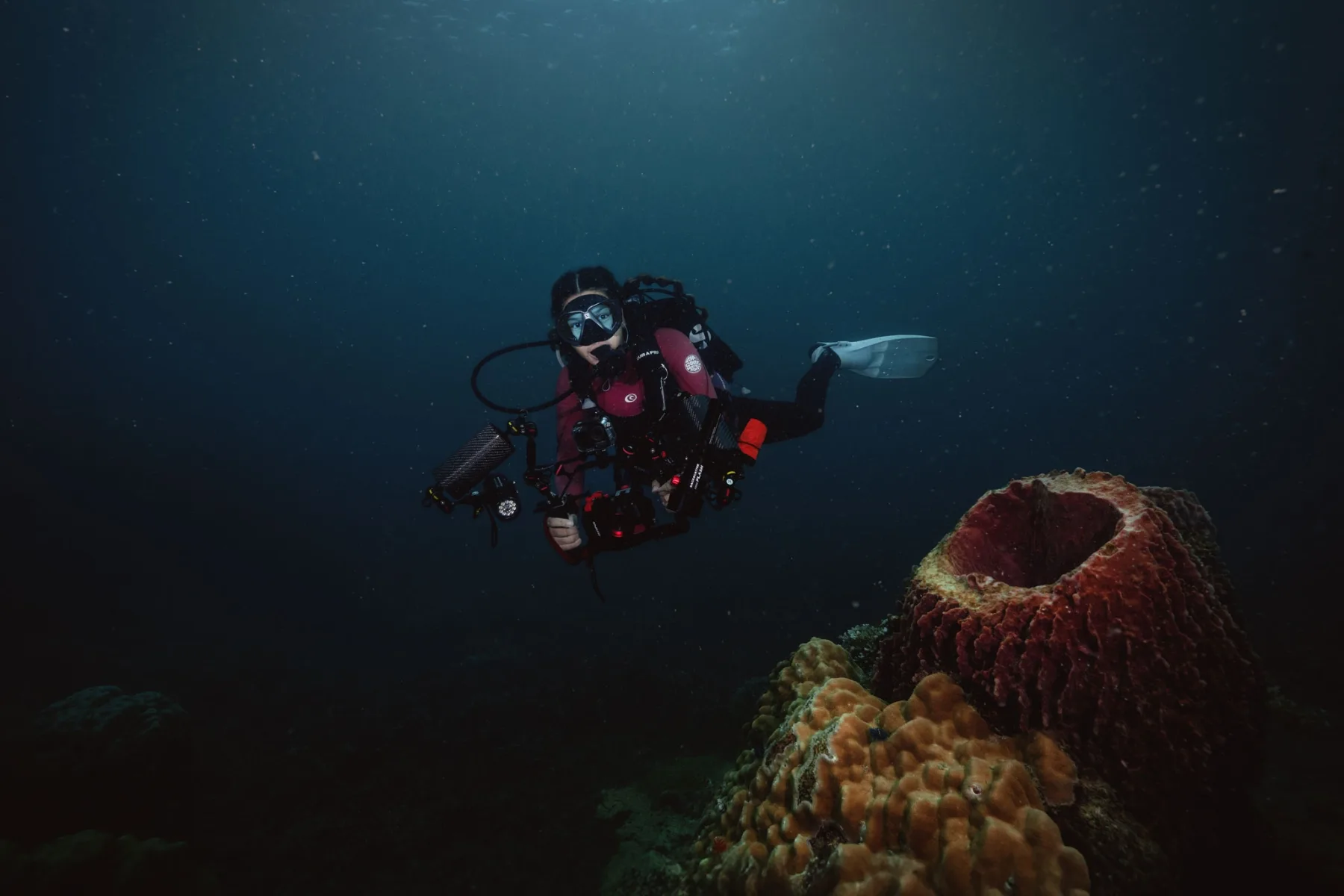
It is very good for new divers, because the entries are forgiving and the shallow reef is properly interesting rather than a consolation prize. It is excellent for photographers, especially macro shooters, because you can repeat the same site until you get the frame. It is good for anyone who wants to log four dives a day without spending twelve hours on a boat to do it.
It is not the place to come if you want big animals and adrenaline. There is no manta season, no reliable shark aggregation, no sweeping current dive down a wall of jacks. Compared with somewhere like Puerto Galera, where the reef density is on another level and the cephalopod encounters stack up dive after dive, Amed is quieter. That is a real trade and I would rather say it than pretend otherwise.
But quiet is a resource too. The thing this coast gives you is time. Time to get in the water before anyone else is awake, time to notice the same patch of sand behaving differently in different months, time to actually learn a reef rather than survey one.
I live here, and I am still finding things in three meters of water in front of the village. That is what Amed is.
Practical Notes
- Getting there: Amed is on Bali’s northeast coast, roughly a two-to-three hour drive from the airport and southern resort areas. It is a long transfer, which is part of why the coast stays quiet.
- Conditions: Generally calm, warm water with easy shore entries, which is the whole selling point. Conditions are usually gentle compared with Bali’s more current-driven sites.
- Skill level: Very friendly for beginners and newer divers thanks to the shallow, protected shore sites; still rewarding for macro-focused divers of any level.
- Pace: Plan for a relaxed trip. Shore diving means you set your own rhythm rather than chasing a boat schedule.