Diving in San Andres starts with the view from the plane. On the approach, the water around the island shifts from deep navy to cobalt to a turquoise so pale it looks lit from underneath, which is why islanders call it the Sea of Seven Colors. Most of that color comes from what sits below the surface: sand, seagrass and a fringing reef that wraps the whole island.
San Andres is the busiest island in Colombia’s Caribbean archipelago, and for a lot of Colombians it is the place they first breathed underwater. The water stays warm all year, the current on most sites is mild, the reef steps down in shallow ledges, and you can walk into several sites straight from the shore. Those are the conditions I look for when someone asks me where they should learn.
I’d like to set expectations before you book. San Andres is one of the friendliest places in the Caribbean to start diving, and it works well as a refresher stop if you have been out of the water for a while. If you already have a few hundred dives behind you, whether from diving in Cozumel, the Red Sea, or somewhere in the Coral Triangle, the reef will probably feel modest, and the 2023 bleaching event left a clear mark on the shallow coral. It is still a good week of diving, and it is the only way into Providencia Island, 90 kilometers north, where the reef sharks are. The two islands belong in the same trip.
Where Is San Andres, Colombia?
San Andres is a flat coral island of about 27 square kilometers in the western Caribbean. It sits more than 640 kilometers from the Colombian mainland and much closer to Nicaragua than to Cartagena. The island is built from limestone laid down by ancient reef, which sets it apart from Providencia and Santa Catalina, the volcanic islands to the north that complete the archipelago.
The island has its own culture and its own first language. The Raizal people, descended from African, British and other Caribbean settlers, speak an English-based Creole alongside Spanish, and their music, food and wooden houses painted in sea blues make San Andres feel unlike anywhere else in Colombia. It is also a duty-free port, and tourism drives almost the entire economy, so expect a developed island with resorts, busy beaches and traffic around North End, the main town.
All of the diving sits inside the Seaflower Biosphere Reserve, recognized by UNESCO in 2000, and the Seaflower Marine Protected Area, declared in 2005. The protected area covers about 65,000 square kilometers split into three sections, with San Andres in the southern one, and Coralina, the regional environmental authority, leads its management. It is one of the largest marine protected areas in the Caribbean.
The size is impressive, but most of the protection inside it is light. When the zoning was set, only about 3.4 percent of the area was designated no-take, while more than 93 percent sat under general use. That pattern is common around the world, and it is why I always look past the headline number on marine protected areas to see which zones actually keep the fishing out.
View on Instagram
Why Is San Andres So Good for Beginner Divers?
The reef around San Andres steps down like a staircase. There is a first ledge at around 5 meters, a second at around 9, and then a wall that starts at about 18 meters and drops into the blue. A new diver can spend a whole course on the upper steps with the sand close underneath, and only move down a level once their buoyancy is ready for it.
From a divemaster’s side, that layout is what you hope for when you are helping someone learn. Students can practice their skills hovering in neutral buoyancy over a clear, shallow sand patch, well away from the coral. A fish or a turtle on the ledge gives them something to focus on besides their gauges, and the deeper water is always right there for the day they are ready to look over the edge.
The conditions do the rest. The water sits in the high 20s Celsius all year, current on most sites is light, and the visibility is often even better than in Providencia because there is less particulate in the water. It feels like diving in an aquarium, and for someone on their third or fourth dive, that predictability matters more than anything else on the reef.
San Andres also has real shore diving. Sites like West View and the Blue Diamond wreck can be reached from land, so a refresher or a quick afternoon dive does not have to wait for a boat schedule, and short boat rides to everything else mean less time getting seasick before the first descent.
The dive industry here is mature and mostly Colombian. Some shops have been teaching on the island for more than 25 years, the boats run to more than 30 named sites, and most operators run Discover Scuba Diving sessions and Open Water courses every week. If you are working out how to become a certified scuba diver, San Andres is a sensible place to do it, and my breakdown of the cost to learn to scuba dive shows what a course price should include before you compare shops.
The Best Dive Sites in San Andres
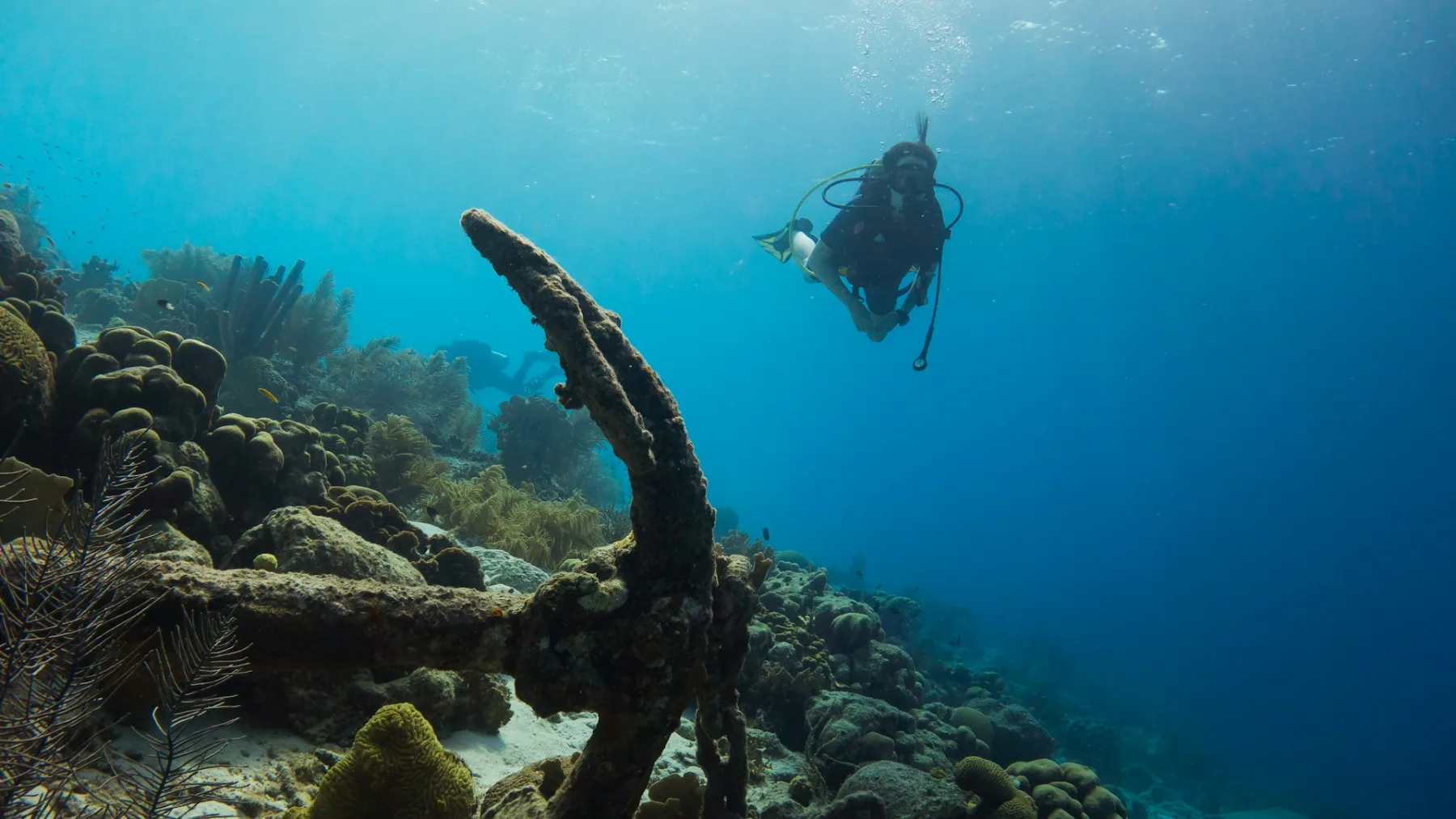
San Andres has between 30 and 40 named dive sites spread around the whole island. Boat trips usually run as two-tank mornings with a short surface interval, and the wind decides a lot. When the trade winds push swell onto the east side, the boats move to the sheltered west coast, so keep your list of must-do sites flexible.
Bajo Bonito. A long reef running parallel to the northwest coast between roughly 5 and 16 meters, and one of the most common first dives on the island. The coral heads are spread out with sand channels between them, which makes navigation easy, and nurse sharks sometimes rest along the edges. Next to it, Cantil Bajo Bonito drops as a wall toward 40 meters for divers with the certification to follow it.
Nirvana. A west-coast reef at around 14 meters and one of the best sites for divers who like to slow down. There is a coral nursery on the site, part of the restoration work on the island, and it’s ideal for shallow macro dives looking for seahorses, gobies and the iconic flying gurnard. If you shoot small subjects, underwater macro photography with the Olympus TG-6 is a good place to start with the setup.
La Pirámide. A very shallow site off the north end, bright with sunlight and easy for photographers. Anemones, French grunts and snappers are the regulars, and the shallow depth gives you long no-decompression limits to enjoy them.
El Faro (The Lighthouse). A reef with a picturesque swim-through. Nurse sharks, octopus, lobster, squid and moray eels all turn up, and the swim-through suits divers who already have steady buoyancy.
Blue Diamond. A wreck sunk as an artificial reef in about 12 meters on the southwest side of the island, reachable from shore. Sponges and corals have taken over the hull, and sergeant majors, damselfish and parrotfish now live on it. It makes a gentle first wreck for anyone who has never dived one.
Trampa Tortuga (Turtle Trap). An east-coast reef from around 14 meters, usually run as an intermediate dive. On calm days the visibility here can pass 30 meters, and it is the best site on the east side when the wind lets the boats around.
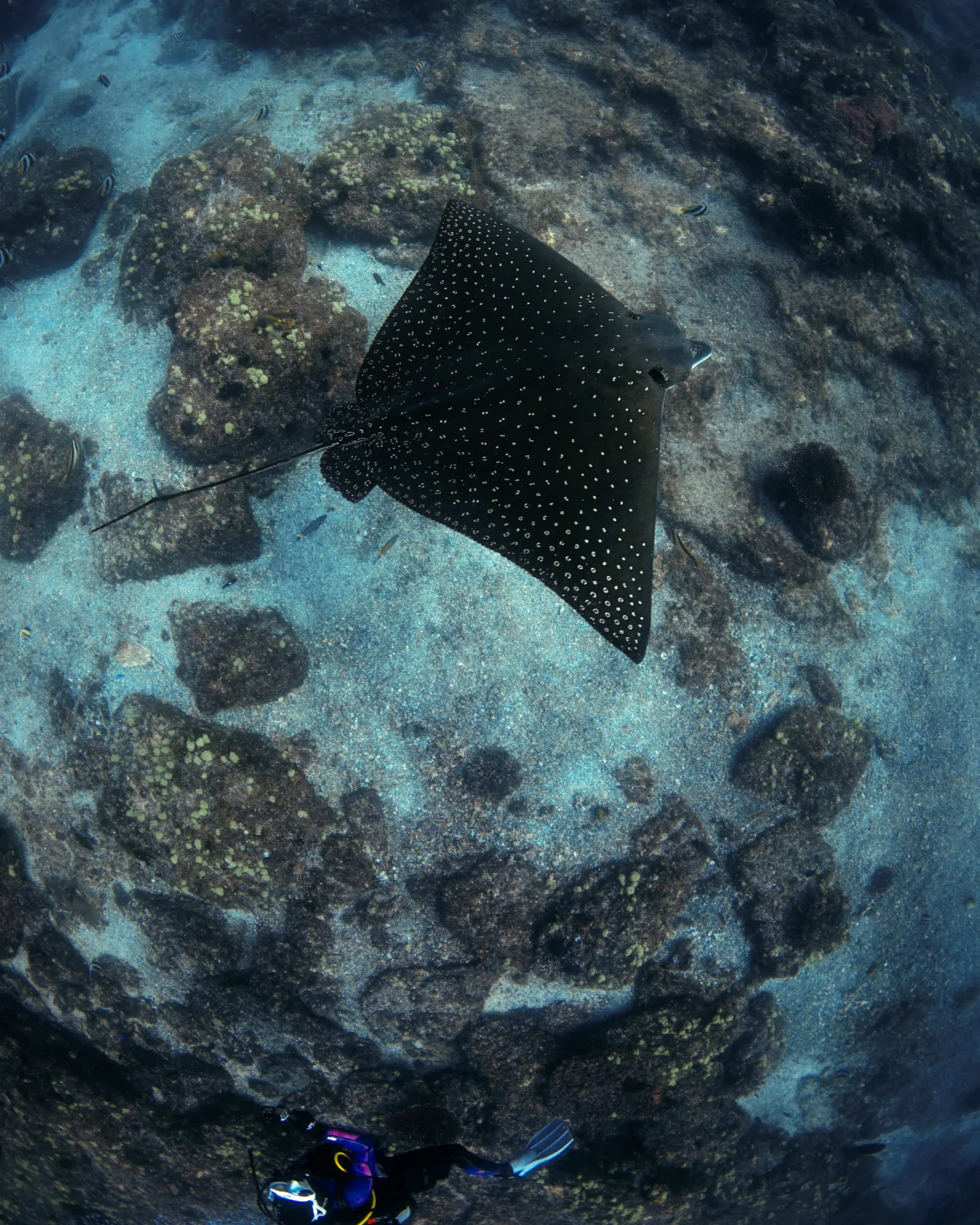
Blue Wall. The signature dive of San Andres and the one experienced divers ask for. It is an outer reef slope that starts at about 8 meters and falls well past 50, with a canyon cut through the coral in front of the wall. Most dives turn around near 40 meters, which makes it an Advanced Open Water site. This dive site stands out for its healthy coral, passing eagle rays, schooling jacks and the occasional reef shark.
West View. A shore-accessible site on the west coast beside La Piscinita, the natural pool popular with snorkelers. Shops mostly use it for check-outs and refreshers, and it is the easiest way to get your first dive of the trip done on arrival day.
What Marine Life Will You See Diving in San Andres?
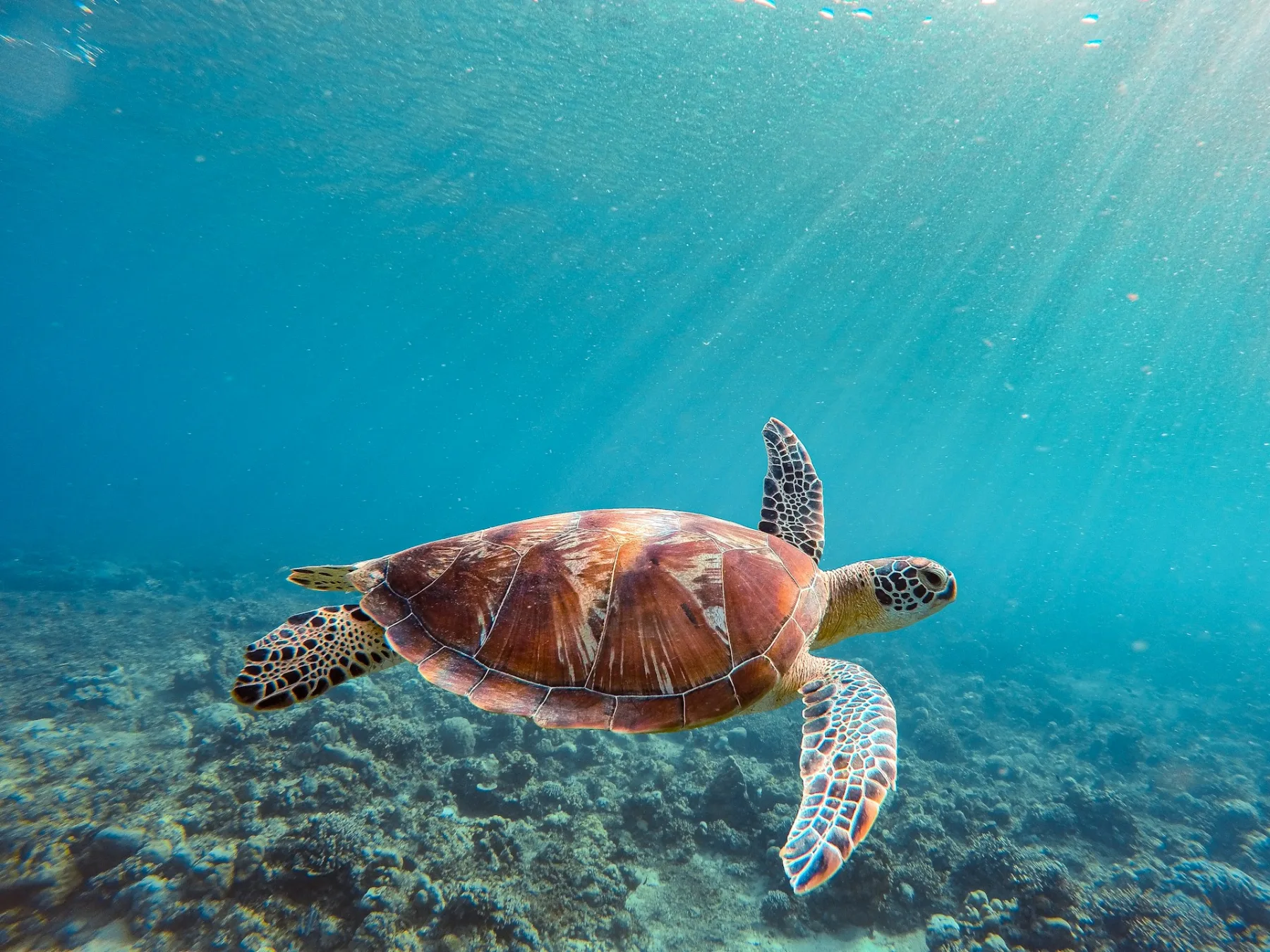
The fish life is classic Caribbean reef. Parrotfish, grunts, snappers, angelfish, trumpetfish and moray eels appear on almost every dive, and turtles show up often enough that one site is named after them. Lobsters and octopus hide in the ledges, especially on the swim-through sites and toward dusk.
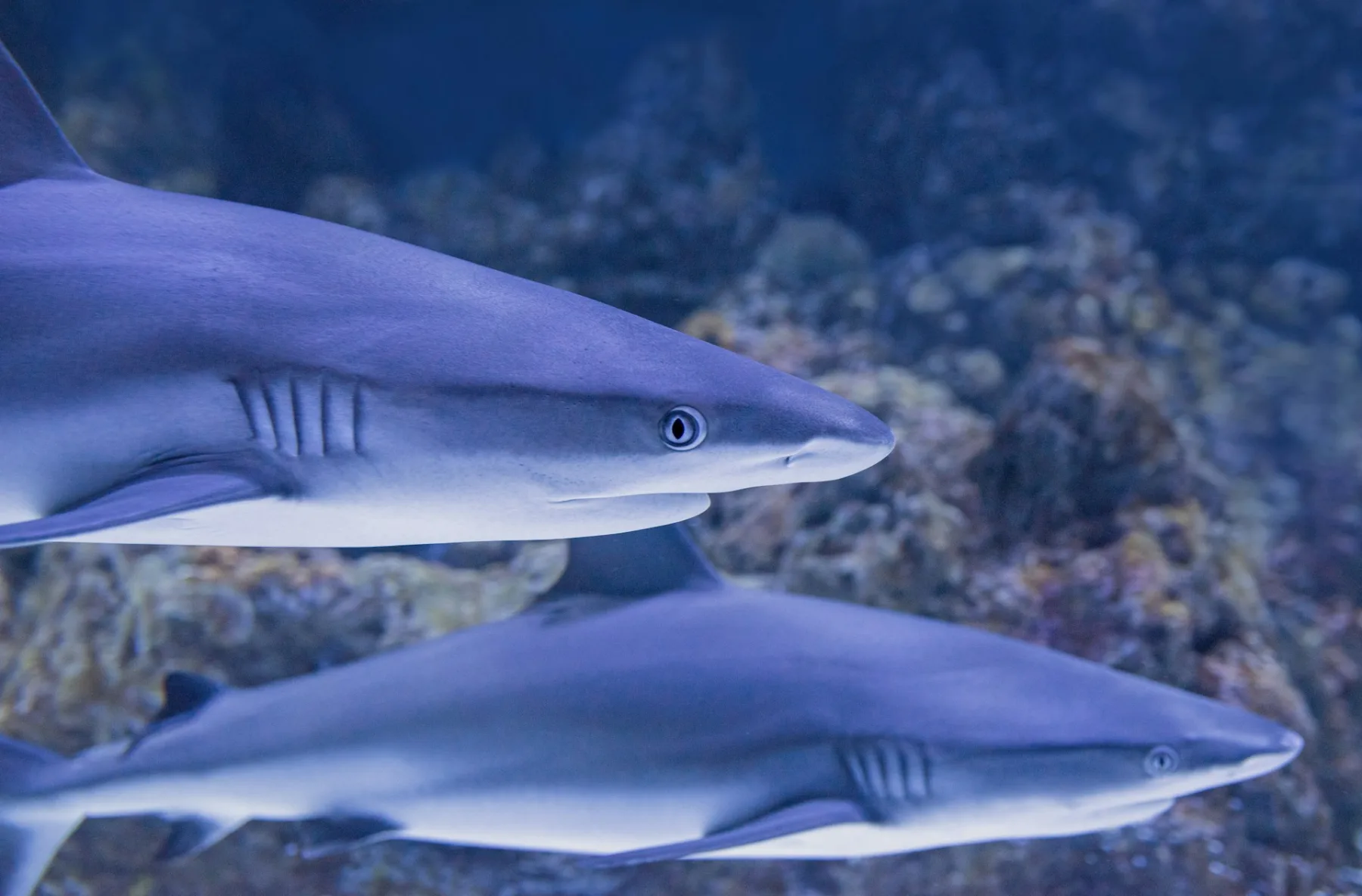
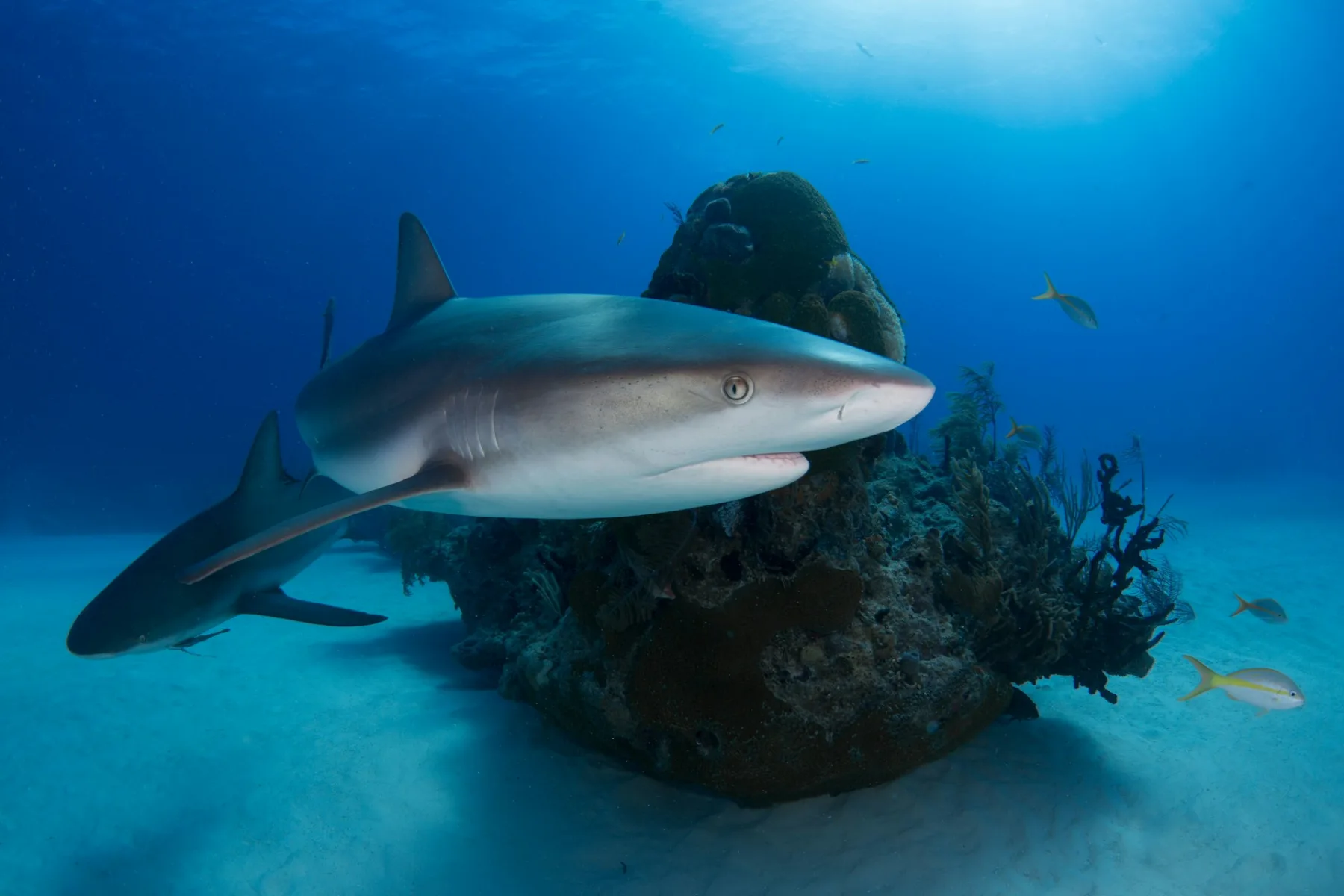
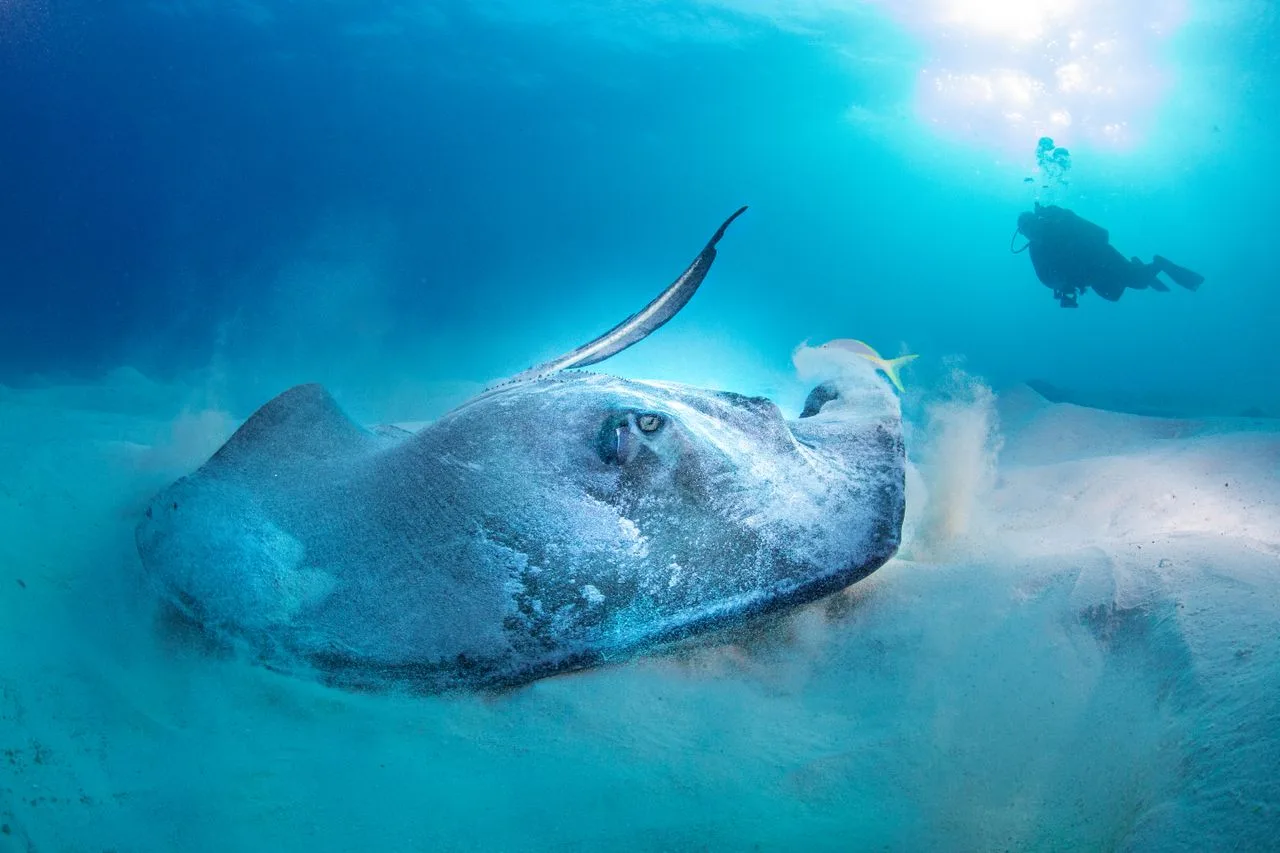
Nurse sharks are the shark you are most likely to meet, usually resting under a ledge on the shallower reefs. Other shark species have been sighted, but it is not common to meet them on a dive. They seem to avoid the area because of the constant human activity, with heavy fishing and busy tourist boats. You are more likely to come across eagle rays and the occasional Caribbean reef shark on Blue Wall. For regular, close encounters with reef sharks, Providencia is the island to plan around.
The small life rewards a slow diver. Seahorses, mantis shrimp, spinyhead blennies and bearded fireworms all live in the shallows, and a diver with a light and some patience will find far more than one who swims the whole reef.
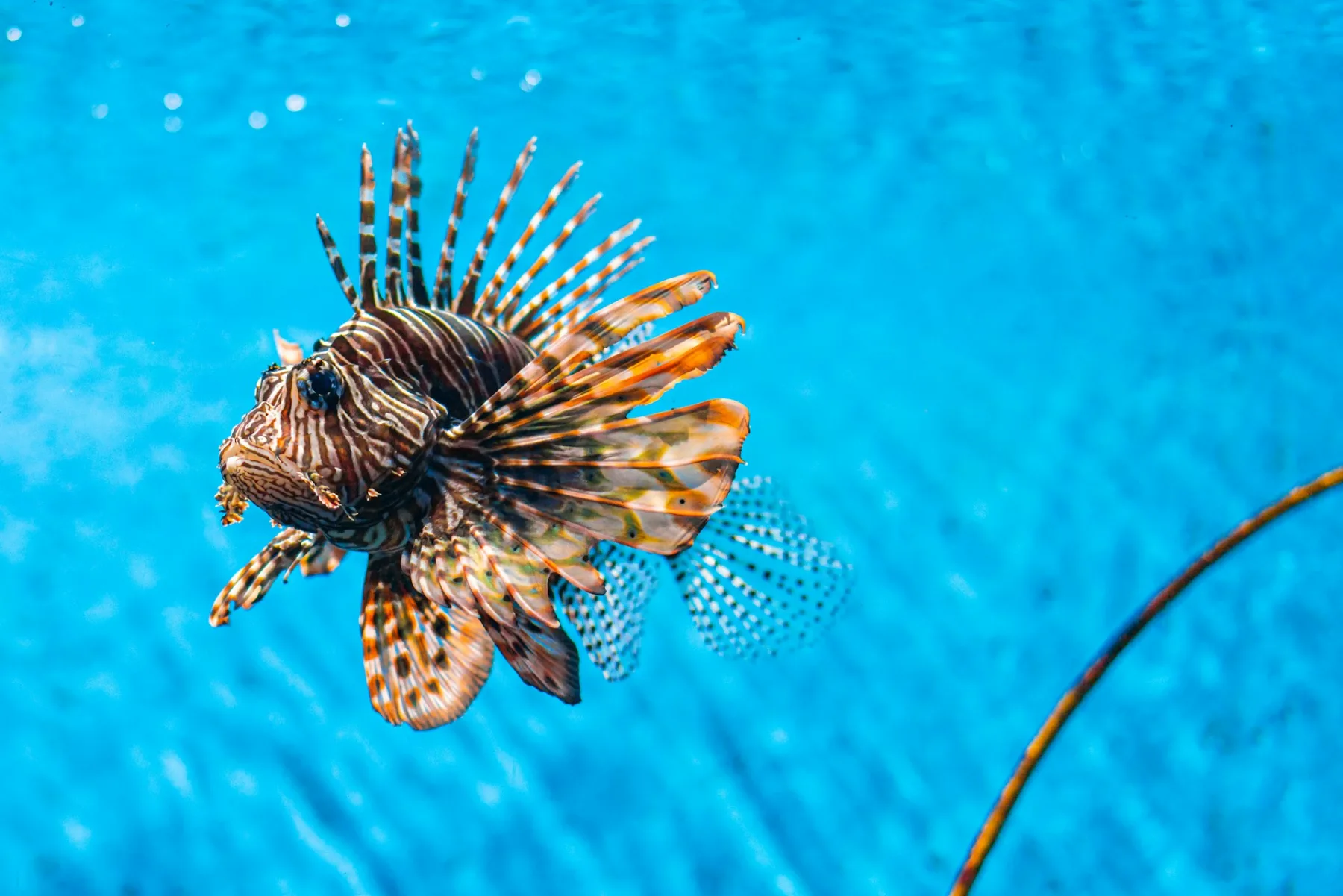
You will also see lionfish. They are invasive in the Caribbean, they eat juvenile reef fish and young lobster, and Coralina recorded the first one in the archipelago in December 2008. Local teams and the coast guard run regular culling expeditions, and the Lion Fish Expeditions foundation reports more than 4,500 caught across the archipelago. Their spines are venomous, so look and photograph, and leave the hunting to the people trained and authorized to do it.
What Is the Reef Like in San Andres Today?
If you are an experienced diver deciding whether San Andres deserves more than a stopover, the state of the coral is the thing to weigh. The 2023 to 2024 bleaching event was one of the two most severe Colombia has recorded, alongside 2005 to 2006, and the Ministry of Environment reports that up to 90% of corals were affected in some areas, with San Andres and Providencia among the places hit. Long-term monitoring shows what that means on a single reef. At Little Reef, a secondary barrier reef inside the Seaflower protected area, elkhorn coral dominated a reef with around 45% coral cover in 1995. By 2024 that cover was down to about 1%, and the researchers saw near-complete mortality after the 2023 bleaching with no visible recovery in their 2024 surveys.
That decline happened inside a marine protected area, which is the uncomfortable (and saddest) part. Protection controls fishing and anchoring, but it cannot cool the water. I have seen the same pattern on reefs in several countries: the structure stays, the fish keep using it, and the living coral on top thins out year after year.
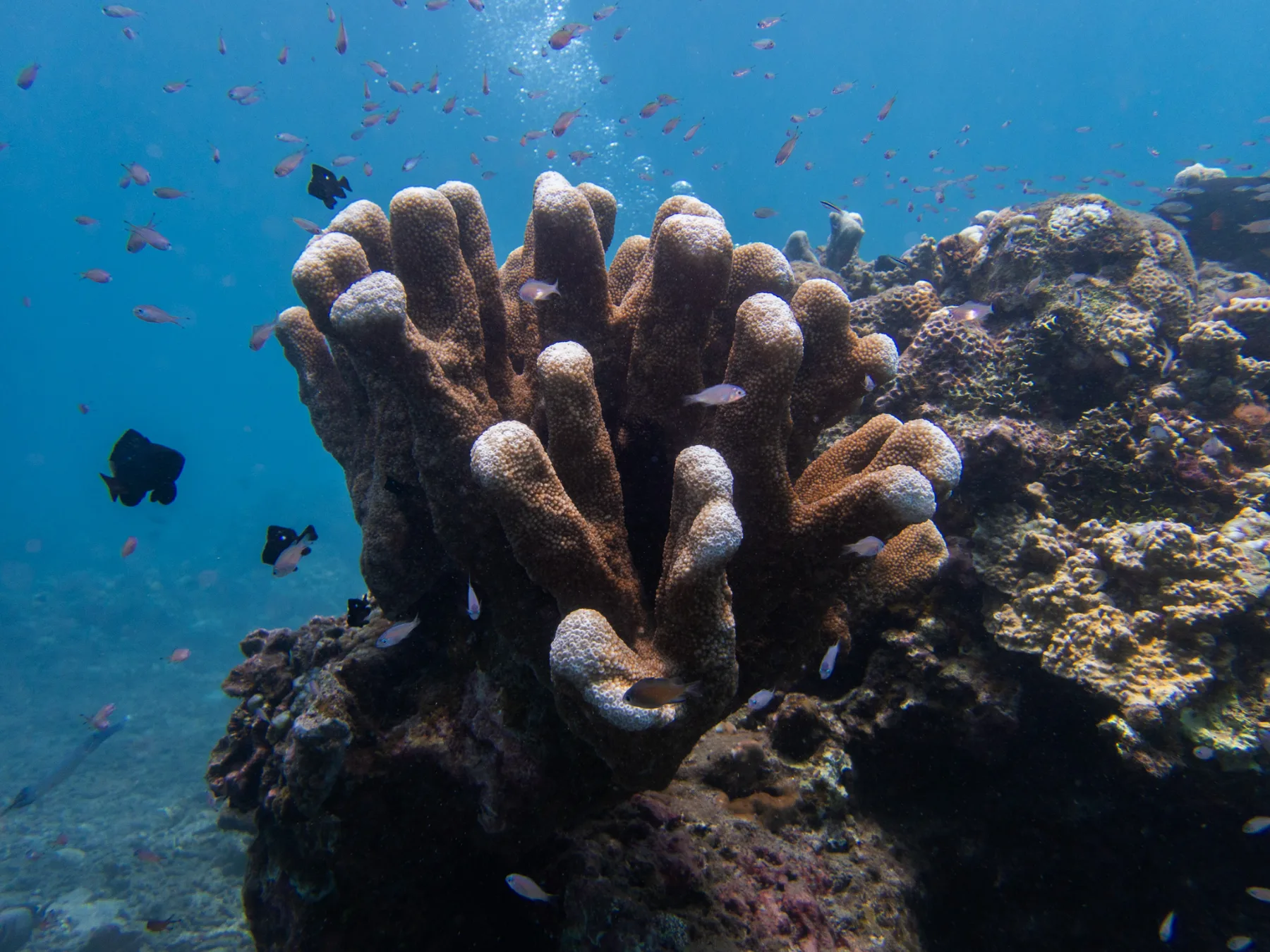
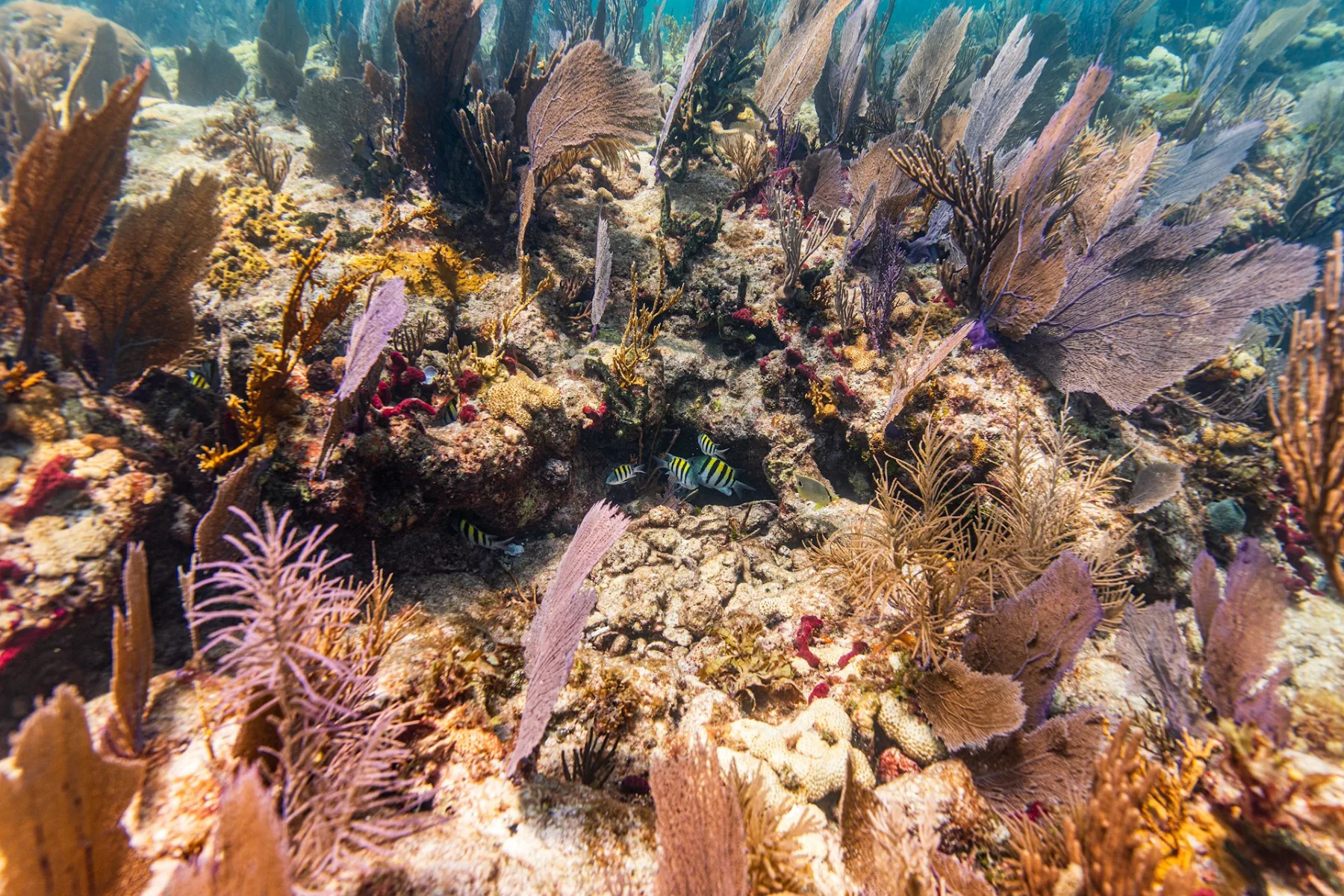
In practice, you will find healthy patches of sea fans, sponges and hard coral next to sections covered in algae and rubble, especially in the shallows. The fish are still there, and the deeper walls have held up better. If you arrive expecting a pristine reef you will be disappointed, and if you arrive to learn, practice and enjoy warm, clear water, you will have a good trip.
Restoration is part of island life now. Coral nurseries like the one at Nirvana grow fragments from surviving colonies and replant them. Some operators let visiting divers join cleanups or nursery dives, so ask when you book.
The rest depends on us as visitors. Good buoyancy, keeping your hands off the reef and wearing a mineral sunscreen all make a measurable difference on a reef under this much stress, and I explain the chemistry behind that last one in what sunscreen does to coral. It is our ocean and our responsibility, and on an island that sees this many tourists, every one of us adds up.
How Do You Get to San Andres, and When Should You Go?
Getting there
Direct flights connect San Andres with Bogotá, Medellín, Cali, Cartagena and Barranquilla, mainly on Avianca, LATAM and Wingo. For international travelers, Copa flies direct from Panama City, which is often the simplest connection from North America or Europe. Seat capacity dropped after two of Colombia’s low-cost airlines collapsed in 2023, so book early around Colombian holidays like Semana Santa, the mid-year school break and December.
The tourist card
Every non-resident visitor needs a tourist card to enter the archipelago, Colombians from the mainland included. For 2026 it costs COP 153,000, set by a decree from the island government in January 2026. You buy it before boarding, at the airport, at the airline counter, through authorized agencies or online, and you keep it with you because it is checked on arrival and again when you leave. The same card covers Providencia, and children under seven, people born on the island and registered residents are exempt.
Water, visibility and gear
Water temperature stays around 27 to 29°C all year. Visibility is often 20 to 30 meters and can go well beyond that on calm days, and current is light on most sites. A 3 mm wetsuit or a shorty is enough for most divers. Many are perfectly fine with just a swimsuit and a rash guard.
When to go
The drier months, roughly January to April, usually bring the calmest seas and the clearest water, although the trade winds can make the east side choppy early in the year. Hurricane season runs from June to November, and the archipelago sits in the path of storms that cross the southwestern Caribbean, as Hurricane Iota showed in 2020. Diving continues through those months, but build flexibility into your dates and take travel insurance that covers weather.
Dive operators
Some established dive shops in San Andres are Hans Dive Shop, Banda Dive, Blue Life Dive Center and San Andres Divers. Whichever you choose, ask how big the groups are, whether the guide briefs every dive, and whether the shop takes part in lionfish control or reef restoration. A shop that looks after the reef usually looks after its divers too. And of course, always check recent online reviews.
Why You Should Pair San Andres With Providencia
Every trip to Providencia passes through San Andres, so the real question is how many days to give each island. My suggestion is to use San Andres for the easy start, whether that is your course, your check-out dives or a refresher after a long break. Once you feel settled in the water, take the short hop north for the dives people travel this far for.
Satena flies the route several times a day in about 20 minutes, with fares from around COP 225,000 one way. The planes are small and the luggage limits are strict, which matters if you travel with your own BCD and regulator. There is also a sea crossing of around three hours, cheaper and much rougher, and its operators and schedules have changed several times in recent years, so confirm it before you plan around it.
Providencia is volcanic and quieter, it is still rebuilding after Hurricane Iota, and its Caribbean reef sharks turn up on dives almost as easy as the ones you will have just done around San Andres. I cover the sites, the sharks and how the reef came through the storm in diving in Providencia. For the bigger picture of my country, scuba diving in Colombia covers both coasts, and diving in Santa Marta is the mainland Caribbean option if you have extra days.