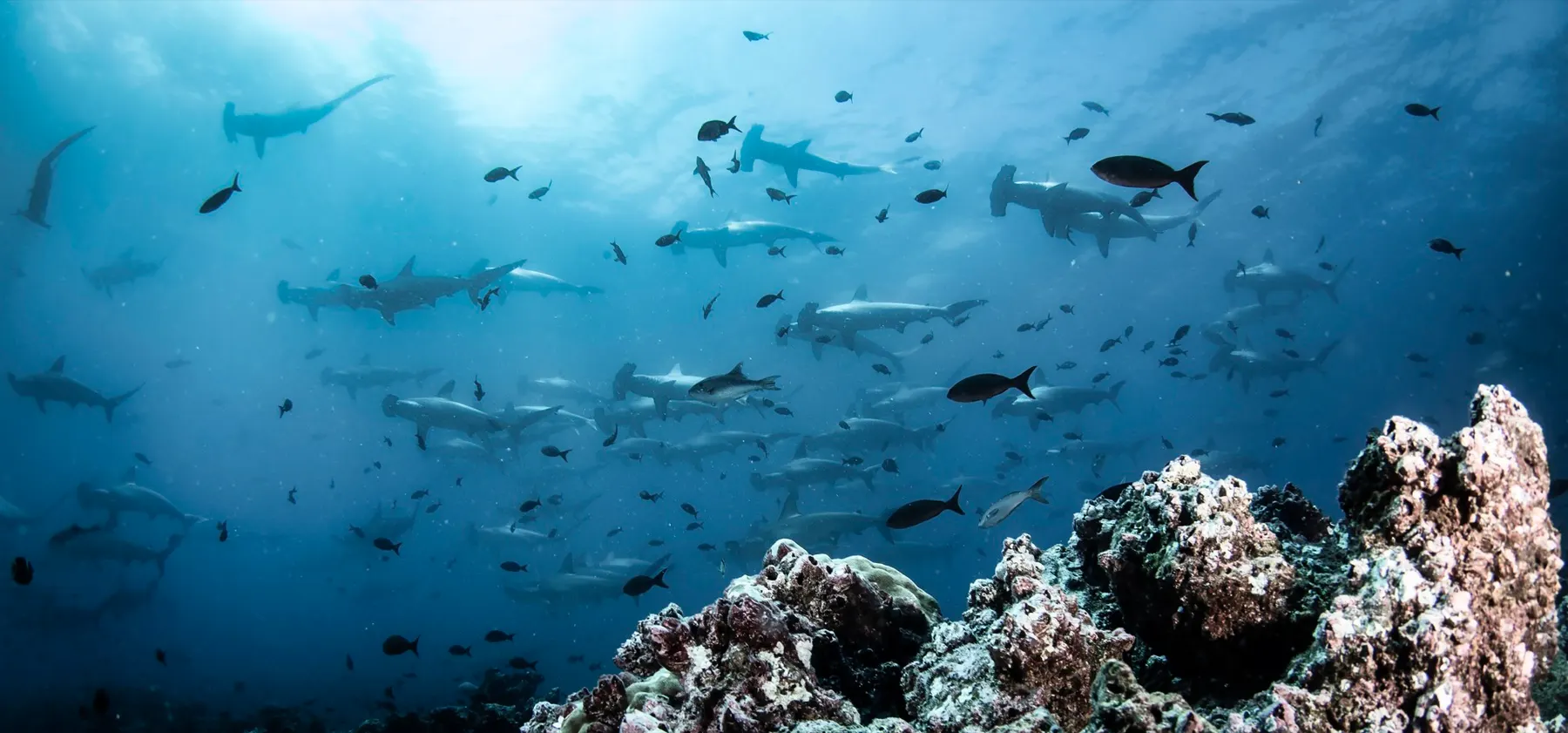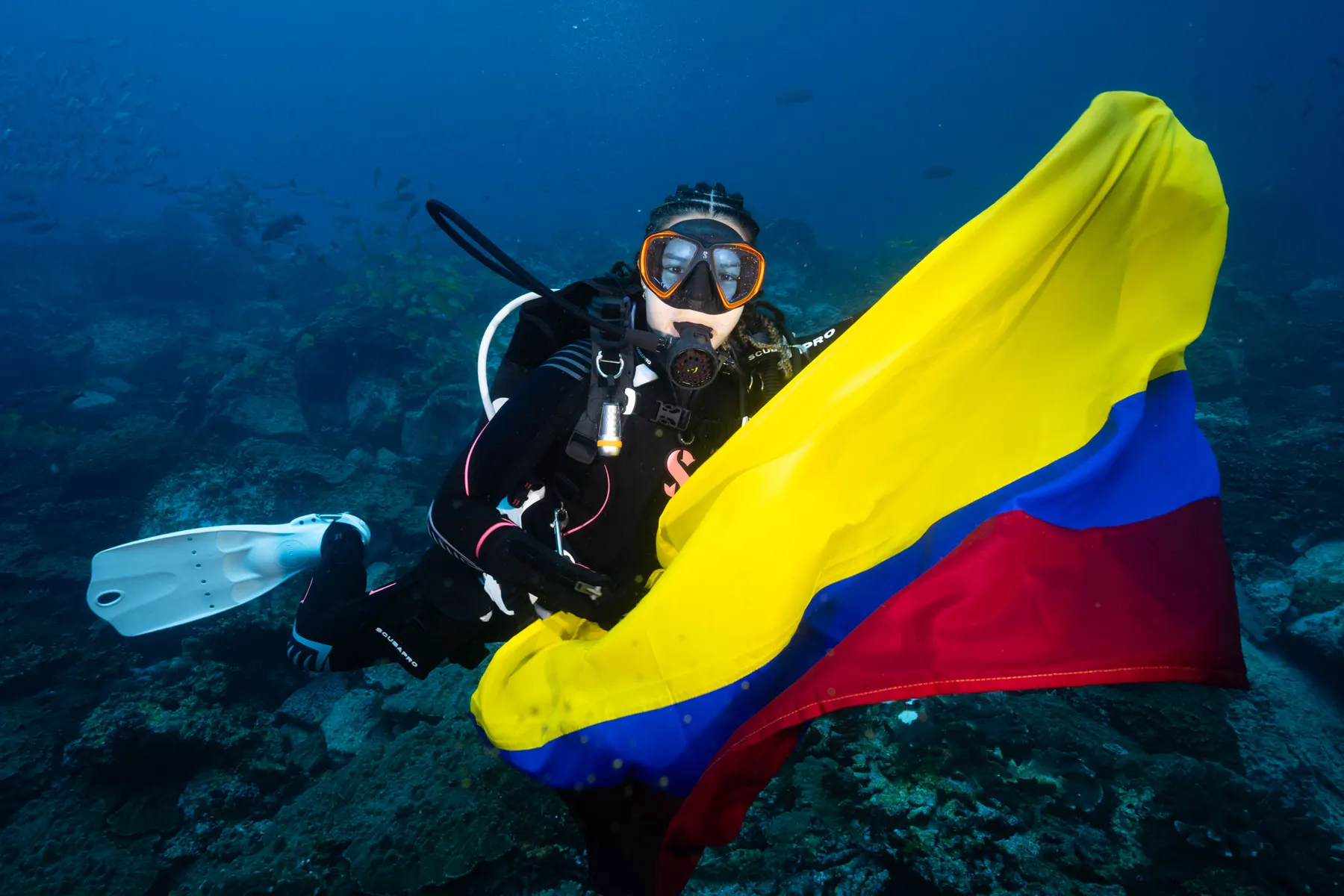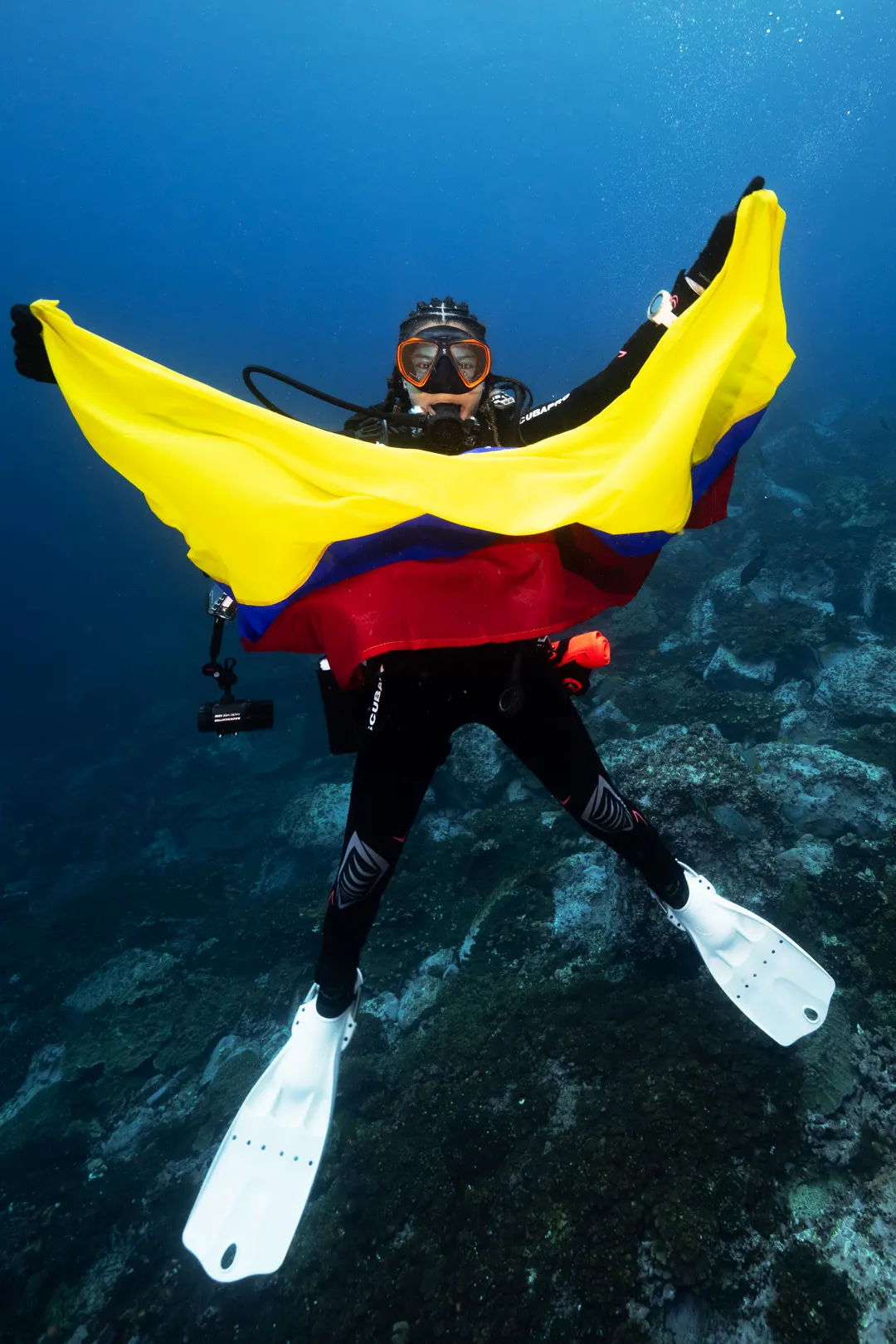
Diving in Providencia is the reason most divers take the extra flight north from San Andres, and the number of Caribbean reef sharks is the reason they keep talking about it afterwards. Reef sharks cruise over the sea fans on the deeper sites, nurse sharks rest under the ledges, and most of the dives that deliver them are short boat rides in warm, clear water that a newly certified diver can handle.
Six years ago, it was not clear when the island would welcome divers again. In the early hours of 16 November 2020, Hurricane Iota passed less than ten kilometers north of Providencia as a Category 4 storm, the last and strongest of a record Atlantic season. Communications went down, and for almost a day the rest of Colombia did not know whether the island had survived. When the reports came in, the government counted damage to 98 percent of the island’s infrastructure.
The question most divers ask now is whether the reef survived too. The reef came through far better than the land did, the island reopened to tourism in 2022, and the dive shops are running. The full picture is more complicated, with a reconstruction still being corrected in 2026 and a bleaching crisis that has nothing to do with the storm, and I cover both below alongside the sites, the sharks and the logistics.
Where Is Providencia, Colombia?
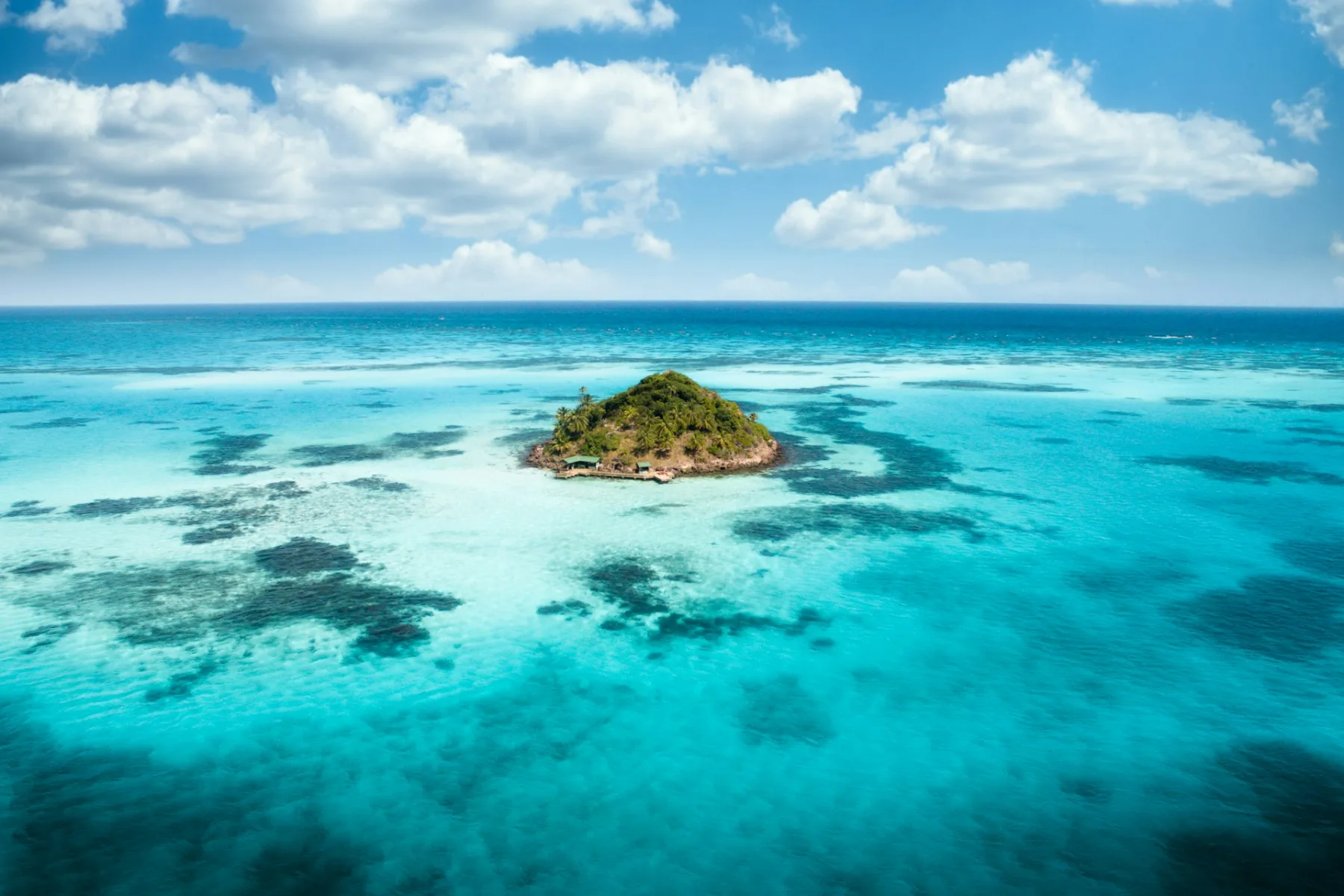
Providencia sits about 90 kilometers north of San Andres in the western Caribbean, closer to Nicaragua than to mainland Colombia. Unlike flat, coral-built San Andres, it is a volcanic island of about 17 square kilometers, with green hills that climb to The Peak at around 360 meters. Santa Catalina, a much smaller island, is joined to it by a wooden footbridge known as Lovers’ Bridge, and between 5,000 and 6,000 people live across the two, most of them Raizal, with English Creole as the everyday language.
Providencia has kept development small on purpose. Building has traditionally stayed at two stories and there are no big resort chains, so you stay in small hotels or in posadas nativas, guesthouses run by Raizal families. The trade-off is patchy phone signal, one ring road and a pace set by the weather and the boats, and that slower pace is part of why the reef has seen far less pressure than the one around San Andres.
The reef is the island’s great asset. The barrier reef off Providencia runs about 32 kilometers and covers some 255 square kilometers, and researchers describe it as the third-largest true barrier reef in the world, while Colombia’s national parks service calls it the second-largest in the Caribbean after Belize’s. Part of it is protected inside Old Providence McBean Lagoon National Natural Park, declared in 1995 on the island’s northeast coast, where most of its roughly 1,600 hectares are sea, including Crab Cay and the Three Brothers Cays.
All of this sits inside the Seaflower Biosphere Reserve, which UNESCO recognized in 2000 and which covers about 180,000 square kilometers of ocean around the archipelago. Providencia falls in the central section of the Seaflower Marine Protected Area, and the national park adds a stricter layer over part of the reef, the kind of stacked protection I explain in marine protected areas.
The island even has a fish named after it. The masked hamlet, Hypoplectrus providencianus, was described to science in 1994 from Providencia, and it is worth looking for on the shallow reefs and on the El Planchón wreck.
Diving With Caribbean Reef Sharks in Providencia
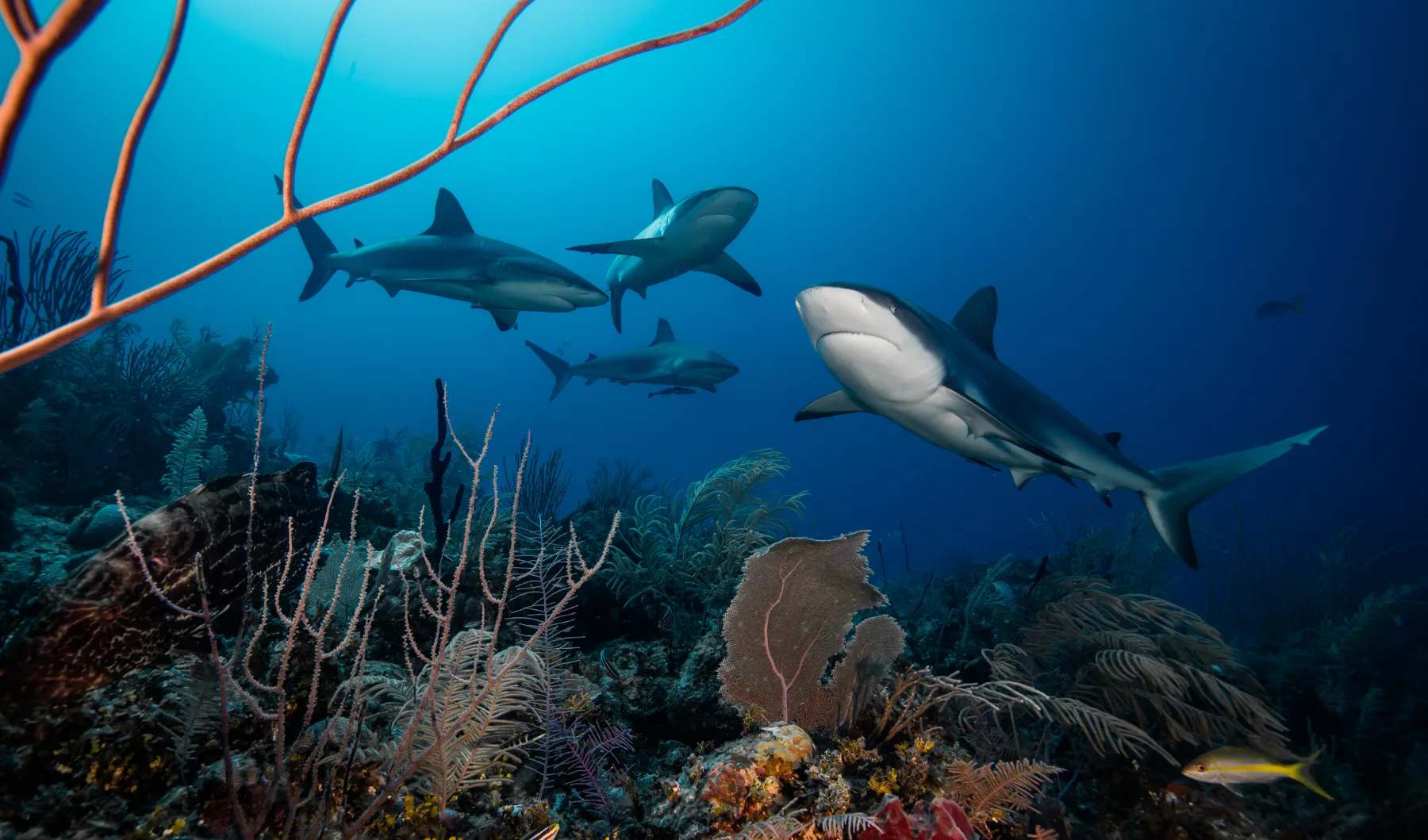
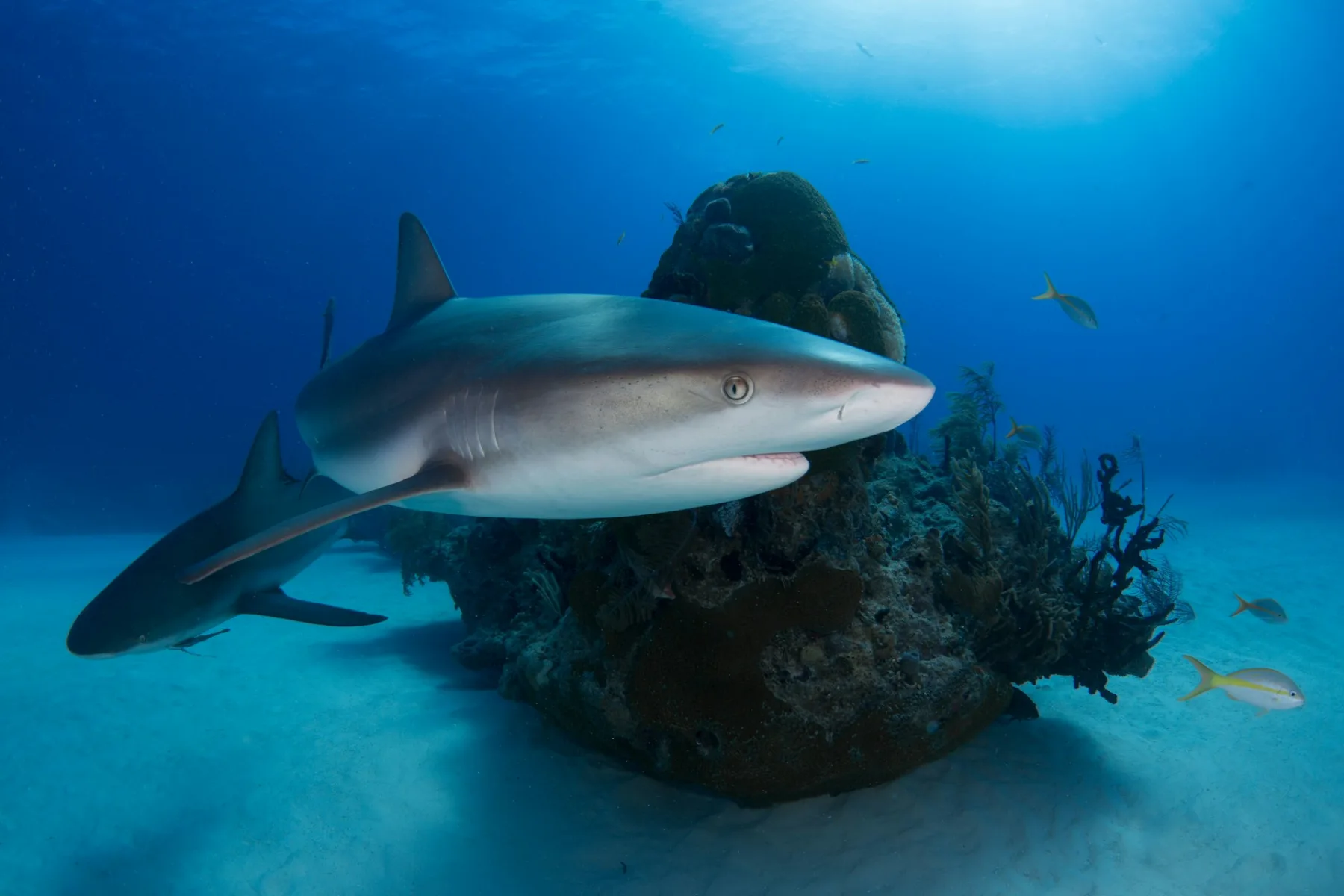
Caribbean reef sharks are the reason Providencia stands out in the Caribbean. They are seen regularly on the outer reef and the deeper slopes, often in small groups of three to ten, and the island has more of them than anywhere else in the archipelago. Chromis and the slope off Santa Catalina are where they turn up most, cruising over the sea fans or hanging in the blue just off the reef.
The species is listed as Endangered, and Providencia has been recognized as an Important Shark and Ray Area because of it. Very few places still let you see a threatened reef shark as part of a normal day of diving, and every diver who visits plays a part in keeping it that way.
The reasons they thrive are easy to see once you look at the island. The barrier reef is large and its structure is intact, there is plenty of prey, the population is small, part of the reef sits inside a national park, and far fewer divers come here than to the busier Caribbean islands. On reefs where sharks have been fished out, the whole system shifts, so a reef with sharks on it is usually a reef that is still working.
Most of the reefs I have dived around the world are missing their sharks. Three months in the Red Sea gave me two sightings. In Colombia, Providencia is one of three places, along with Gorgona and Malpelo, where sharks still show up the way they should on a healthy reef.
Caribbean reef sharks are calm around divers who stay calm. They usually keep a few meters away, circle once or twice and move on, and the best encounters come from staying low near the reef, breathing slowly and letting them come to you. Chasing a shark for a photo or video ends the encounter every time, and feeding them is something to avoid entirely.
What makes Providencia special for newer divers is the setting. At Malpelo, hammerheads hold off a seamount in open-ocean current, which is why diving in Malpelo asks for experience and a negative entry. In Providencia, reef sharks appear on easy reef dives in warm water with light current, so a diver with a few dozen dives can watch them without fighting the conditions at the same time.
Sharks are still among the most persecuted animals in the ocean, which I wrote about for World Shark Day, and the shark fin trade keeps pushing populations down across the Caribbean. A reef where sharks are a normal part of a beginner’s dive has become very rare, and it deserves to stay that way.
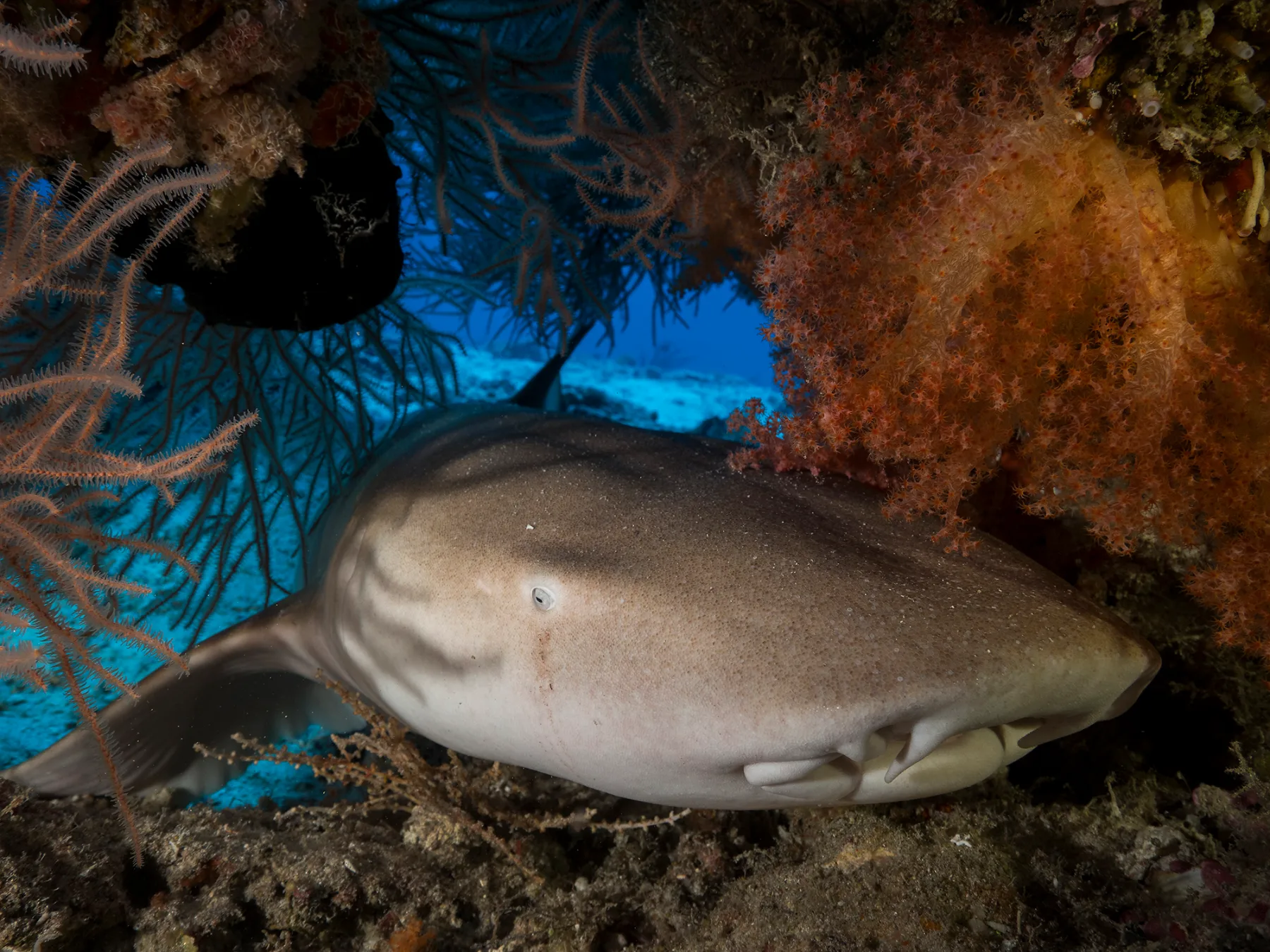
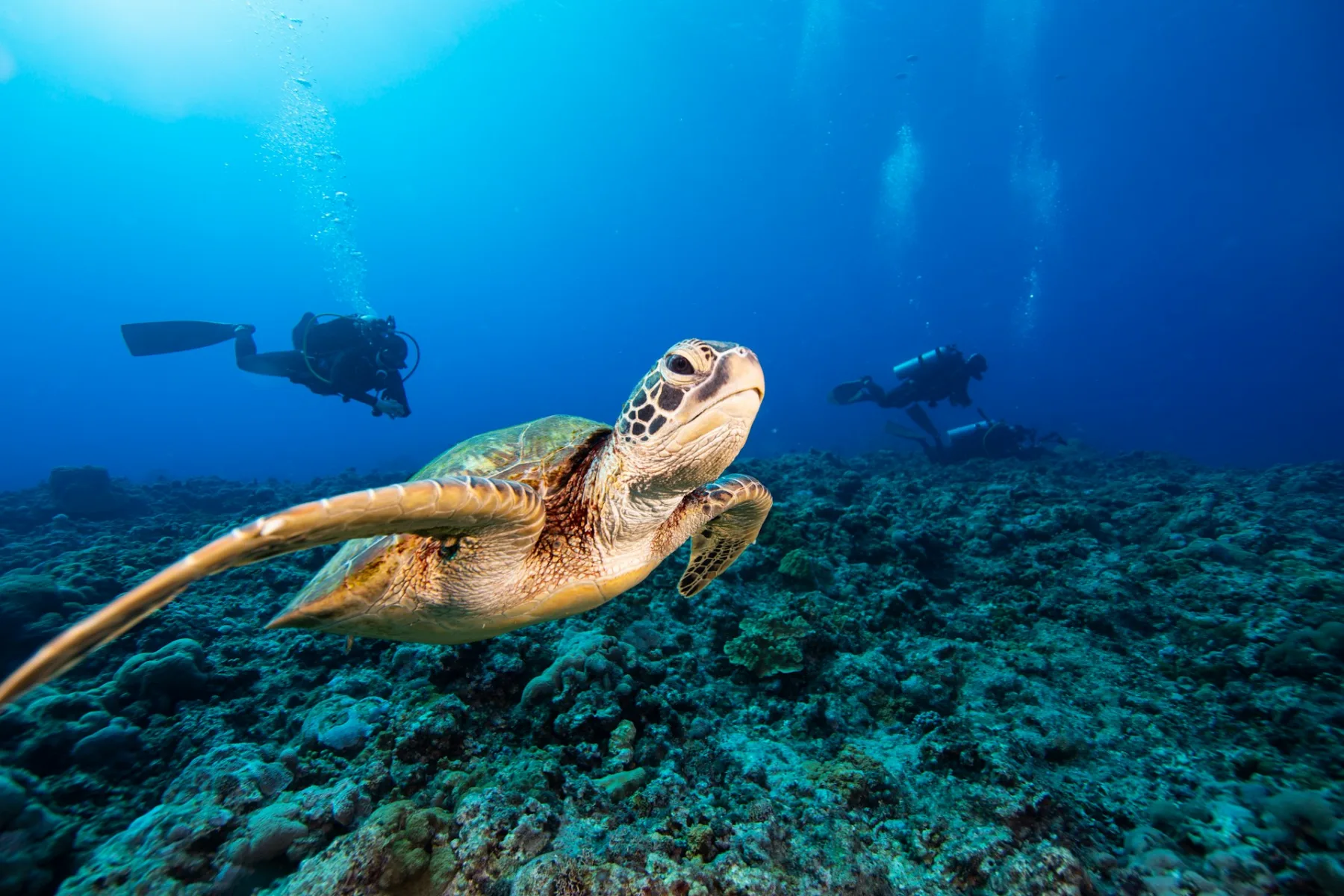
Nurse sharks are the other shark you will meet, usually resting under a ledge on the shallower sites, and they stay put if you keep your distance and your fins under control. Eagle rays, turtles, schools of white snapper and big black grouper on the deeper walls fill out the rest of the picture.
The Best Dive Sites in Providencia
Around ten dive sites sit within a 15-minute boat ride of shore, and most shops work from Freshwater Bay (Agua Dulce) and Southwest Bay on the west coast. Short rides mean you spend your time underwater instead of on the boat, and they make it easy to fit a night dive into the week.
Tete’s Place. If you only dive one site in Providencia, make it this one. It is a shallow reef that local guides have long called the fishiest site on the island, with castle after castle of pillar coral, a species considered functionally extinct in Florida. Between the pillars live Caesar grunts, peacock flounder, yellow-spotted stingrays, spotted morays and squirrelfish. Marine biologist and photographer Juan Mora rates the night dive here among the most spectacular he has done, because ostracods rise toward the surface and light the water with bioluminescence. Take a good light, then switch it off for a few minutes, and choosing a dive light will help you pick one with that kind of dive in mind.
Manta’s City. Shallow patch reefs with large stony corals that shelter turtles, sergeant majors, butterflyfish, goatfish and parrotfish, with schools of white snapper moving over the top. It is an easy, relaxed dive and a good second dive of the morning. The site also carries a piece of history, because the first lionfish ever recorded in Colombian waters was seen here in December 2008.
Chromis. A common check-out site where Caribbean reef sharks cruise over a forest of sea fans. Ask your shop which certification level they run it for, since conditions change with the weather.
Turtle Rock (Piedra de la Tortuga). A huge rock rising from a sandy bottom at around 30 meters, named because its top looks like the head of a turtle. It is about ten meters wide, and up close the surface is covered in sponges, algae, bright corals and black coral. The top sits at roughly 23 meters, so this is a dive for Advanced Open Water divers.
Felipe’s Place. A series of ledges with dense fish life and coral, named after Felipe Cabeza of Felipe Diving, one of the island’s long-standing dive shops. It is a good site for slow exploration of the overhangs.
Nick’s Place. A wall that starts at about 18 meters and drops past 40, with creole wrasse, parrotfish, black grouper and moray eels along the face. It suits experienced divers who are comfortable watching their depth on a wall.
El Planchón. A large vessel lying upside down on the bottom, with a history that local accounts link back to World War II. Groupers and critters of every kind have moved into the hull, and Scuba Diving’s writer saw her first masked hamlet on this wreck.
Espiral (The Spiral). A tunnel that descends from about 27 to 35 meters. The combination of depth and an overhead environment makes it a dive for advanced divers with proper training only, and it should stay off a beginner’s list.
Cantil de Santa Catalina. The slope off Santa Catalina, known for shark encounters and usually dived when the sea allows boats around the north of the island.
For snorkelers and non-divers, Crab Cay inside the national park has shallow reef, turtles and some of the clearest water around the island, although its visitor pier is still being rebuilt. Sirius Dive Center at Southwest Bay hosted the Scuba Diving team, whose writer described its staff as among the most attentive and safety-oriented she had met, and Felipe Diving Shop and other small operators work from Freshwater Bay. The boats are small, so book a few days ahead in high season. If you would rather have the whole trip organized, DivingLife, the Colombian operator I did Malpelo with, runs Providencia trips too, and the Golden Sea film above is theirs.
What Happened to Providencia’s Reef During Hurricane Iota?
On land, Iota flattened homes, tore the island’s forests and mangroves and destroyed all the visitor infrastructure on Crab Cay. Underwater, the story turned out differently.
Within weeks, teams from Coralina and Invemar, Colombia’s marine research institute, surveyed the reef and seagrass. Their preliminary assessment found the damage uneven around the island and far less catastrophic than people feared after seeing the destruction on land. Coral deeper than about 15 meters was in good condition. The damage concentrated in the shallows, where big boulder corals such as star coral and brain coral were toppled or broken, and Invemar’s scientists concluded that most of it happened at the level of individual colonies rather than the reef framework. Pillar coral, the species that makes Tete’s Place famous, was on the list of the most affected.
The seagrass came through almost untouched. The only clear loss was in the channel between Providencia and Santa Catalina, where a ship called the SMART ran aground during the storm and left a long scar through the meadow.
A later satellite study of the reef zones found that the shallow back reef lost around 38 percent of its area, while the reef crest barely changed and worked as a wave barrier during the storm. The barrier reef took the force of the sea before it reached the coast, which is one more reason to protect it.
Rescue work started within a month. Teams collected loose fragments, set up coral nurseries and began replanting, and by 2022 McBean Lagoon National Park was the largest contributor to Colombia’s One Million Corals restoration program, with more than 55,000 fragments growing in nurseries and over 6,000 transplanted back onto the reef. The mangroves, which took a heavy hit, have their own restoration program, and I explain why they matter so much for coastlines in International Mangrove Day.
Has Providencia Recovered From Hurricane Iota?
The island is open and the diving runs normally. After a pilot in April 2022 that let 76 visitors in over eight days, Providencia and Santa Catalina reopened fully to tourism on 23 June 2022, timed with the island’s cultural festival. Dive shops, posadas and restaurants have been operating since, and Scuba Diving’s team dived the island in 2025.
The reconstruction itself is not finished. Raizal residents took the government to court over how the rebuilding was done, citing poor consultation and building materials, and in 2022 Colombia’s Constitutional Court found that the Raizal right to prior consultation had been violated and ordered that consultation to happen. In March 2026 the national disaster agency announced a COP 1.3 trillion plan to correct defects in rebuilt homes, work on the hospital and push the remaining reconstruction forward. Crab Cay is still recovering too, and in April 2026 the maritime authority granted Parques Nacionales the concession to rebuild its eco-tourism pier after years of provisional visitor rules on the cay.
For a visitor, this means an island that works normally, with some public works still in progress. Spending your money locally, in posadas nativas, with Raizal guides and in family restaurants, is the most direct way to help, and it is the same advice divers who organized aid after the storm have given since. My guide on how to be a good ocean tourist covers the rest.
The reef picture since the storm is mixed, partly because each survey looks at different sites. In 2023, as the Caribbean heat wave began, the Colombian foundation Corales de Paz found the reef it sampled in Providencia in very healthy condition, with good coral cover, good fish diversity and only 7 percent of corals bleached. A separate 2023 survey of 1,200 square meters around Providencia and Santa Catalina, reported in 2024, found hard coral cover of only about 8 percent at its sites, along with white plague disease at Suky Drum and Basalt Key. The 2023 to 2024 bleaching event then hit the whole archipelago, one of the two most severe Colombia has recorded, alongside 2005 to 2006.
My reading of all this is that Providencia’s reef survived the hurricane, with the deeper reef and the barrier crest largely intact and the damage patchy and concentrated in the shallows. Six years on, ocean heat looks like a greater long-term threat than storms, as it does for reefs everywhere, which I covered in the fourth global coral bleaching event. The reef you dive today has sharks, fish and living coral, and it also carries scars and stress you will notice if you look closely.
How to Get to Providencia Island and When to Go
Getting there
You reach Providencia only through San Andres, so every trip starts with diving in San Andres or at least a night on the island. Satena flies between the two several times a day in about 20 minutes on small turboprops, with one-way fares from around COP 225,000 in late 2026. Luggage limits are strict, which matters if you travel with your own dive gear, and weather delays do happen, so leave a buffer night in San Andres before any international connection.
There is also a boat crossing of around three hours. It costs less than the flight and is much rougher, and its operators and schedules have changed several times in recent years, so confirm it close to your travel date and pack seasickness tablets.
The tourist card
The archipelago’s tourist card, COP 153,000 in 2026, covers Providencia as well as San Andres, and it is required whether you arrive by air or by sea. You buy it before you fly to San Andres and keep it until you leave the islands.
Getting around
One ring road circles the island. Most visitors rent a scooter or a golf cart, and the dive shops pick up from hotels in Freshwater Bay and Southwest Bay.
Water, visibility and gear
The water stays warm all year, around 26 to 30°C, and visibility on the outer reef often reaches 25 to 30 meters. A thin wetsuit is enough for most divers. With Satena’s luggage limits, bring the light, personal pieces, such as your mask, computer and a dive light for Tete’s Place, and rent the rest from your shop.
What is the best time to dive in Providencia?
The drier months, roughly January to April, usually bring the calmest seas. Hurricane season runs from June to November, and Iota is the reminder that the archipelago sits in the storm track, so book flexible dates and travel insurance that covers weather.
Between April and July, the island hosts its most remarkable event on land. Black land crabs come down from the hills to release their eggs in the sea, the municipality closes roads at night during the peak, and catching or selling the crabs is banned from 1 April to 31 July. Plan your night drives around it, and if you are there at the right moment, it is worth seeing.
Above the water
Hike The Peak early for views over the barrier reef, cross Lovers’ Bridge to Santa Catalina and Morgan’s Head, the rock formation said to be named after the pirate Henry Morgan, and spend an afternoon at Southwest Bay or Manzanillo beach. Birders come for the Providencia vireo, and the music, played with washtub basses and horse jawbones next to mandolins, is part of Raizal culture you will not hear on the mainland.
Why Providencia Is Worth the Extra Flight
Providencia gives divers something hard to find anywhere in the Caribbean: regular encounters with Caribbean reef sharks, pillar coral thriving in the shallows and one of the largest barrier reefs in the world, all in conditions easy enough for a newly certified diver. For beginners, it is the natural next step after learning in San Andres. For experienced divers, Nick’s Place, Turtle Rock and Espiral add depth and structure to a week that already has sharks in it.
It is also an island still putting itself back together after the strongest storm in its history, where tourism money reaches families directly. Go with good buoyancy, stay in a posada, dive with a local shop and leave the reef as you found it. For the rest of my country, scuba diving in Colombia covers both coasts and every level of diver.