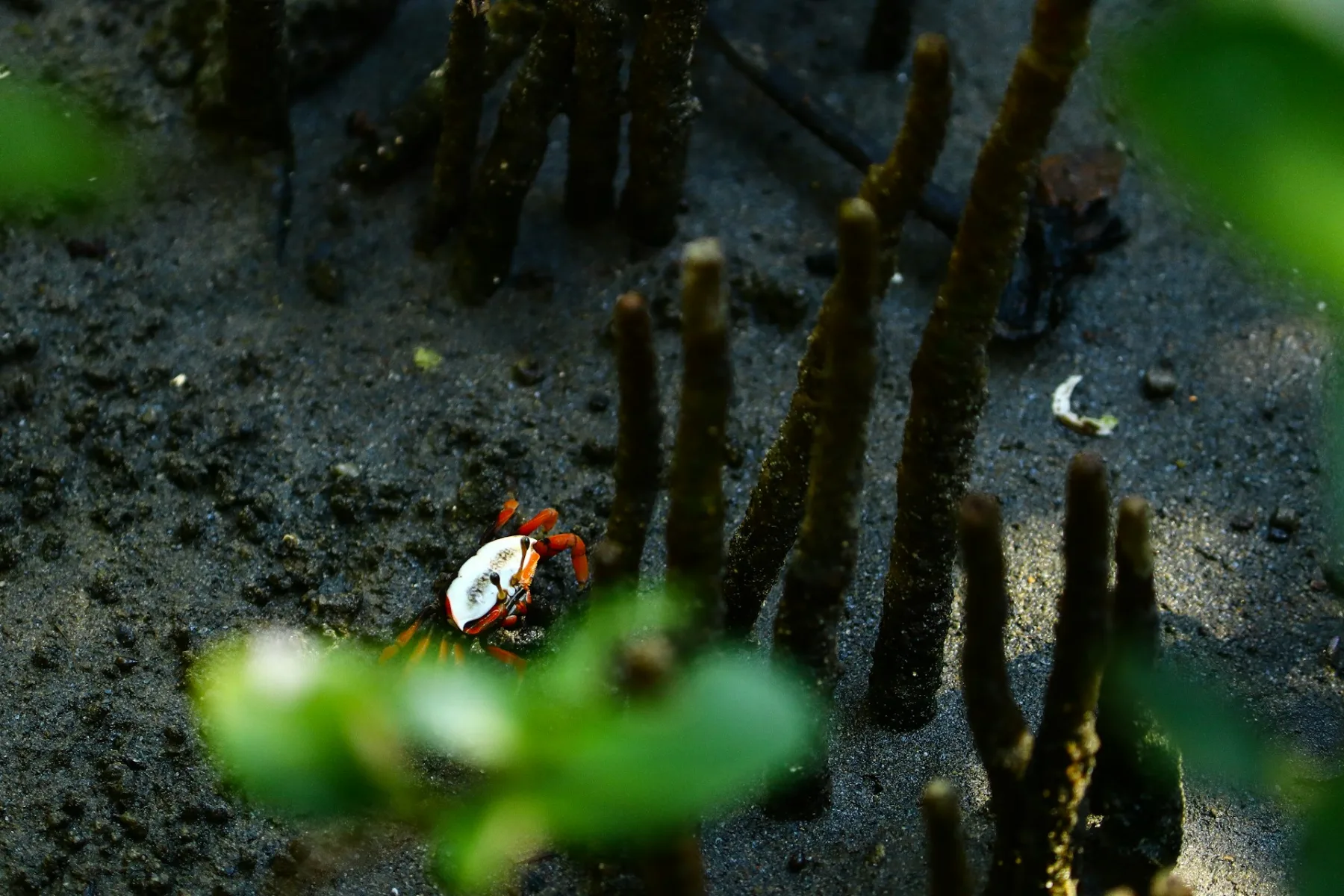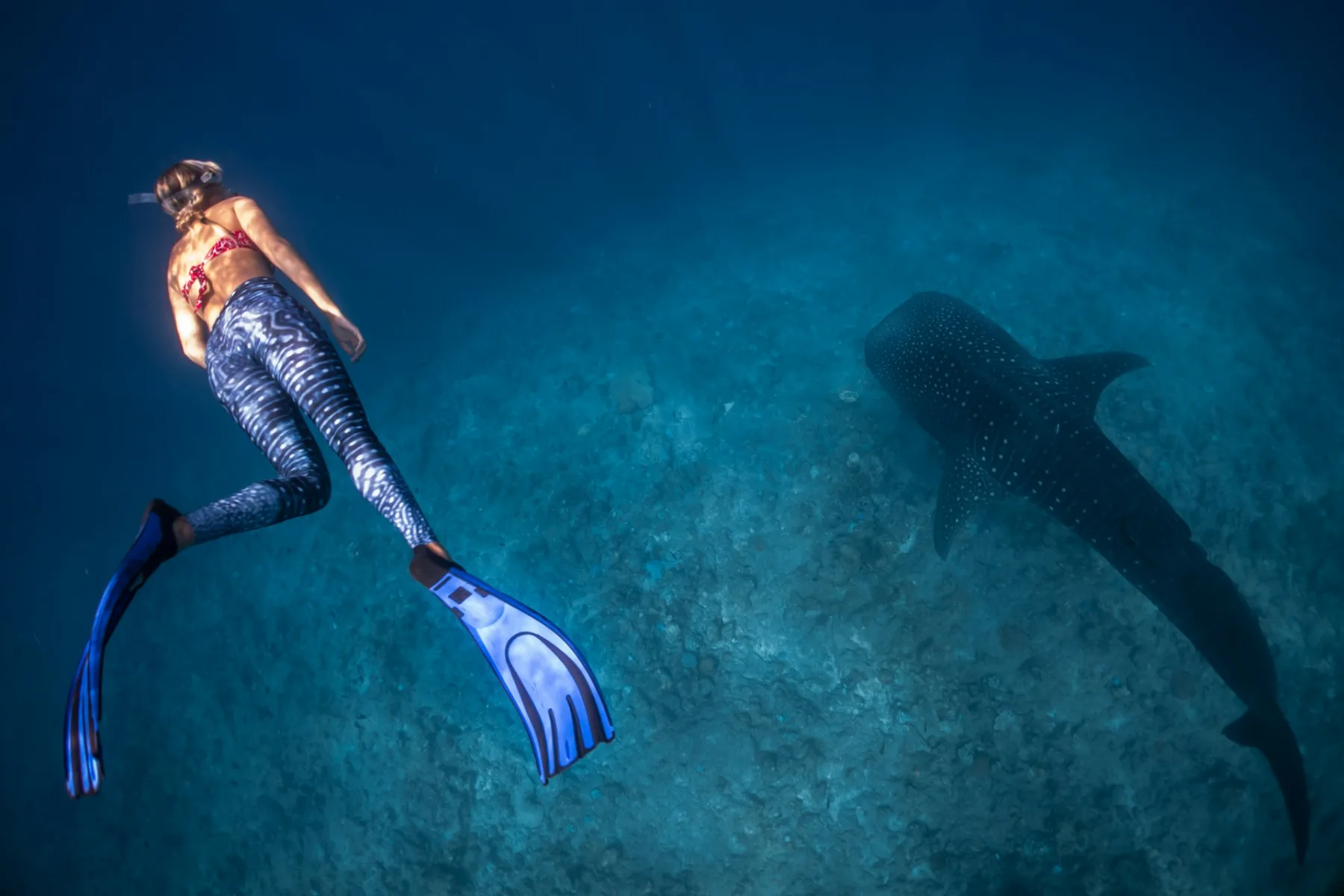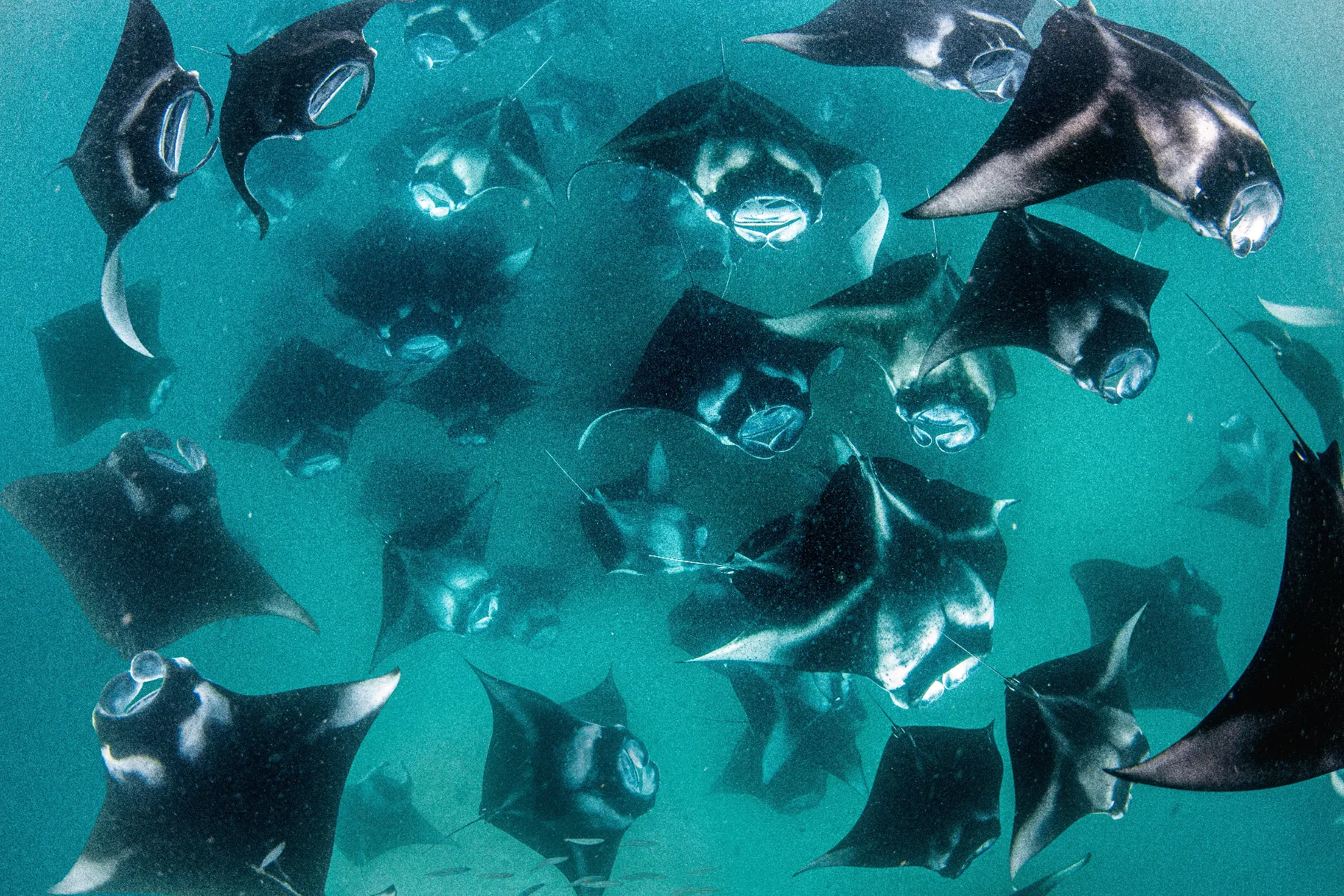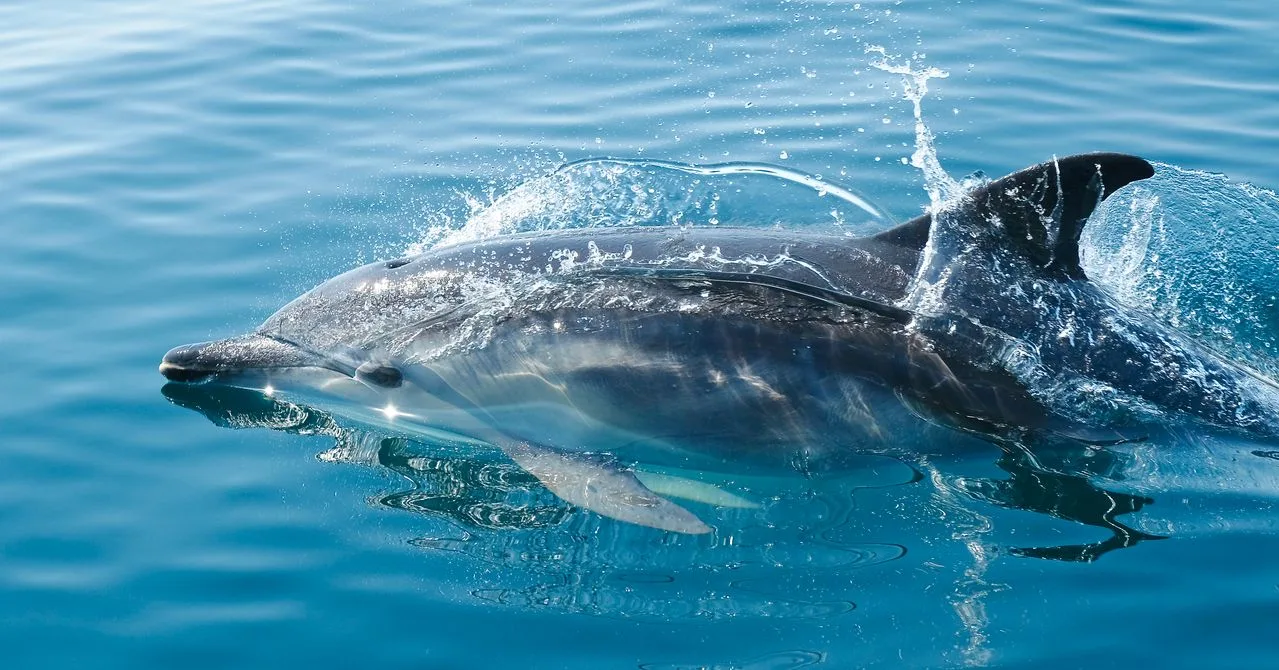
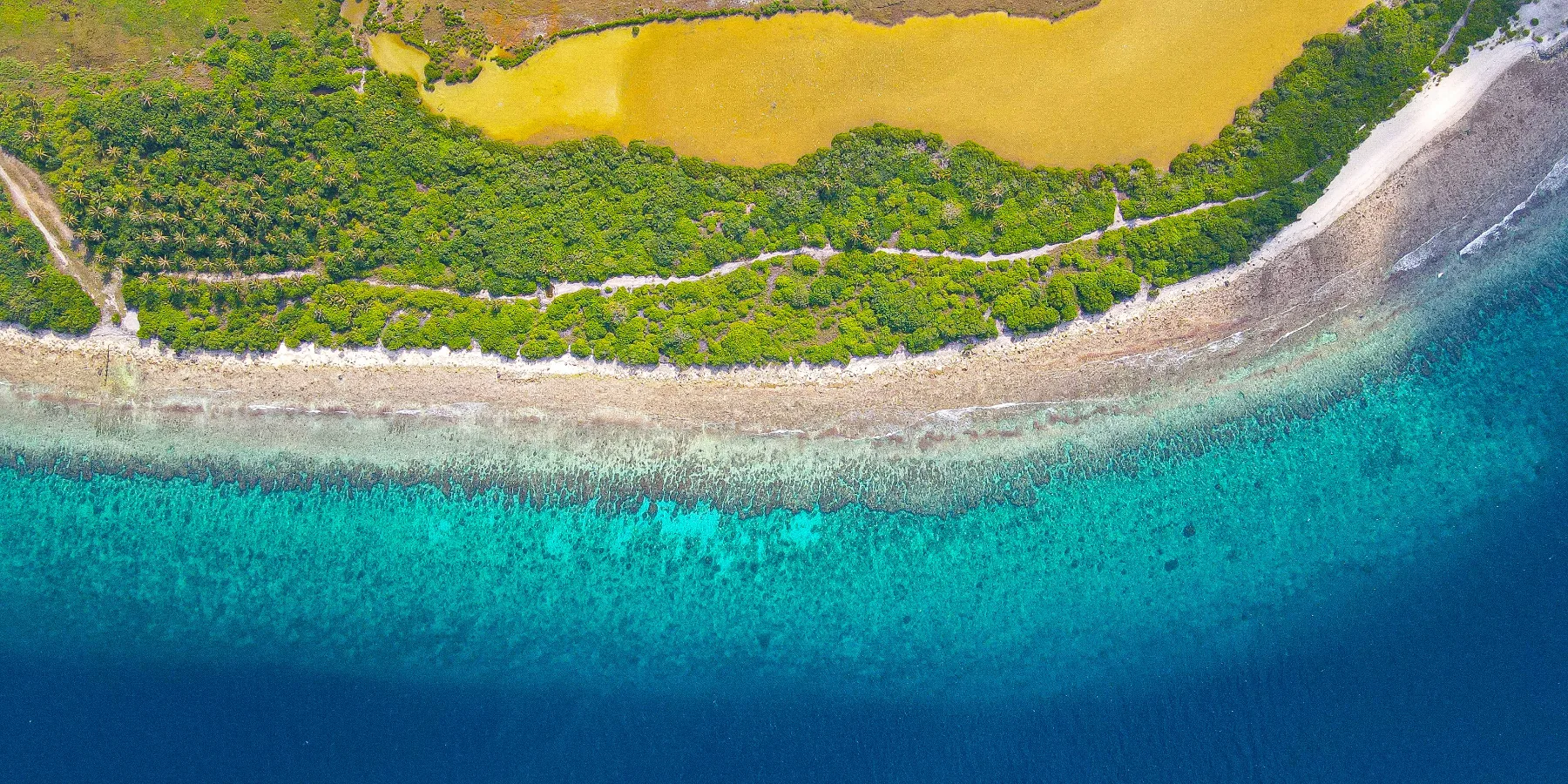
Mangroves rarely get the same attention as coral reefs. They sit in the mud at the tide line, not on a dive site, and most divers only see them from a boat window on the way somewhere else. But July 26 is the day UNESCO asks the world to look properly, and 2026 marks ten years since the International Day for the Conservation of the Mangrove Ecosystem was first observed in 2016. A decade in, mangroves are finally being recognised as one of the best climate tools the ocean has, and as one of the most productive nurseries a reef can have next door. They are also still disappearing faster than almost any other forest type on Earth, which is exactly why the restoration work now underway, from South Asia to East Africa to my own corner of Indonesia, is worth understanding properly.
When Is World Mangrove Day?
It falls on 26 July every year. UNESCO designated the date as the International Day for the Conservation of the Mangrove Ecosystem in 2015, and the first observance followed in 2016, which makes 2026 the tenth.
A Day Ten Years in the Making
UNESCO’s General Conference designated 26 July as the International Day for the Conservation of the Mangrove Ecosystem in 2015, and the first observance followed in 2016. That makes 2026 ten years since the day was first marked. The date was not picked at random. Coastal communities across the Southeast Pacific, particularly in Ecuador, had already been marking it informally for years, and representatives from Chile, Colombia, Ecuador, Panama and Peru asked for it to be given international standing. Ten years on, the day now functions as a global checkpoint, a moment for governments, scientists and coastal communities to publish new data, launch restoration work and push for stronger protection of a habitat that keeps being lost faster than almost any other on the planet.
That loss is real. Global mangrove cover has fallen from around 19.8 million hectares in 1980 to under 15 million hectares today, and current estimates put the rate of loss at three to five times faster than ordinary global deforestation. What makes that sting is how disproportionate the damage is. Mangroves cover a sliver of the world’s coastline, yet they carry an outsized share of the planet’s climate defence, and they do double duty as a nursery for the fish stocks that reefs and coastal fisheries depend on.
Blue Carbon: The Ocean’s Best-Kept Climate Secret
Blue carbon refers to carbon captured and stored by coastal and marine ecosystems, and mangroves are the standout performer in that group, ahead of seagrass, which does the same job and is disappearing faster. Per equivalent area, they sequester carbon at two to four times the rate of a mature tropical rainforest, and store three to five times more carbon overall. NOAA puts it even more plainly: a square metre of mangrove can lock away more than triple the carbon of a square metre of tropical rainforest, and more than ten times that of open grassland.
Almost all of that carbon sits underground. Between 50 and 99 percent of the carbon held in mangroves, tidal marshes and seagrass meadows is stored in waterlogged soil rather than in the trees themselves, and it can stay locked there for centuries. The same flooded, oxygen-poor mud that makes mangroves miserable to walk through is exactly what keeps that carbon from breaking down and escaping into the atmosphere. Disturb the soil, drain the wetland or clear the trees, and the carbon starts leaking back out as CO2, sometimes releasing centuries’ worth of storage within a few years.
No single country holds more of this than Indonesia, which carries more than a fifth of the world’s remaining mangroves. The World Bank puts the carbon stored inside them at around 3.14 billion metric tonnes, roughly what 2.5 billion cars would emit in a year, and it is one figure among many across a belt of mangrove coastline that runs from the Americas through West Africa to South and Southeast Asia. Seagrass meadows do a version of the same job just offshore, and I have written before about how seagrass is disappearing even faster than coral, despite doing comparable work as a carbon sink. Blue carbon is not one single habitat, it is a chain of them, and mangroves are the anchor at the coastal end, wherever in the world that coastline happens to be. The chain keeps getting longer, too: research published in 2024 put the carbon sunk each season by Antarctic krill in the same league as salt marshes, mangroves and seagrass, which is a lot of stored carbon for an animal nobody has built any policy around.
Nursery Habitat: Where the Reef’s Next Generation Grows Up
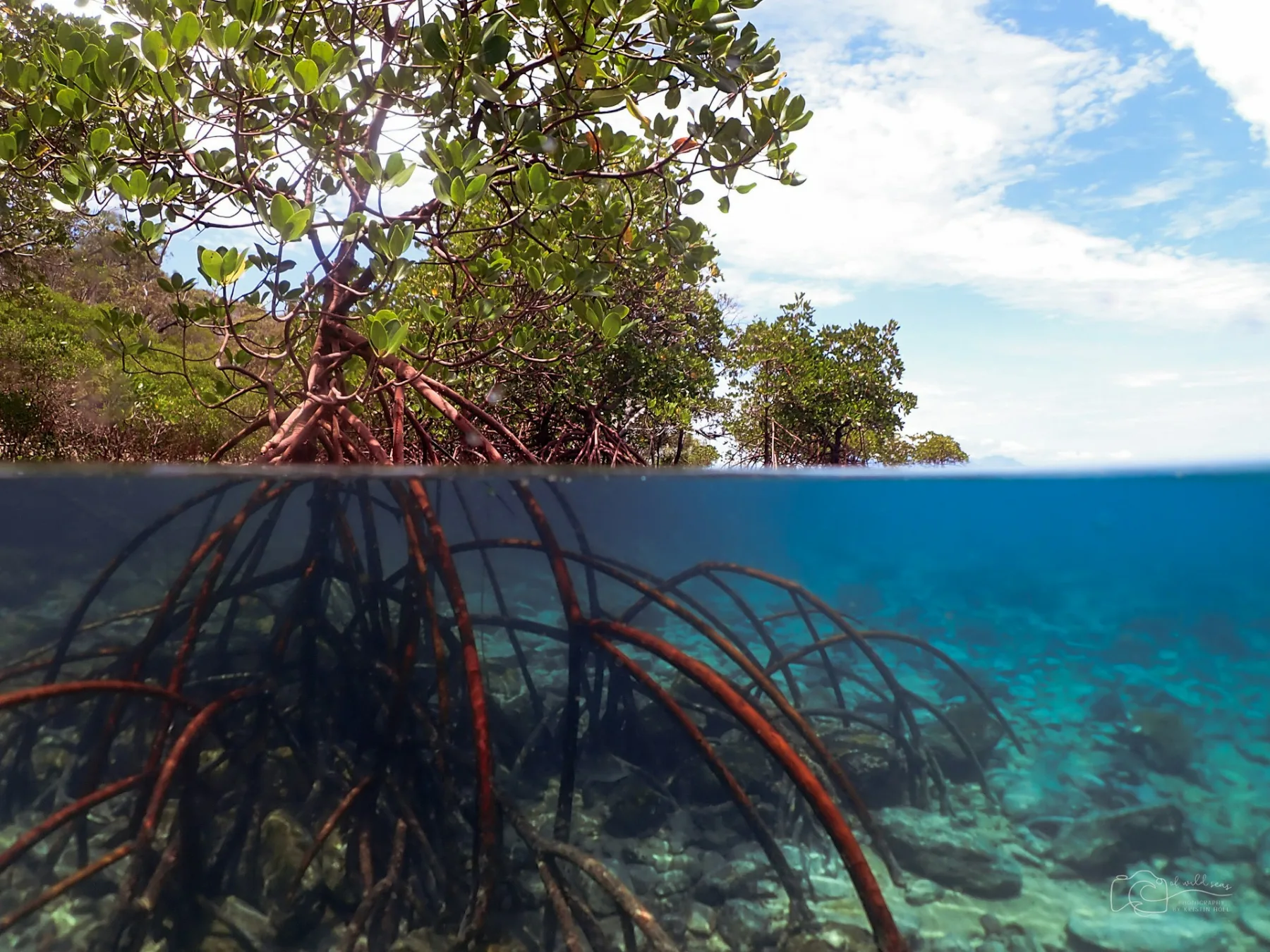
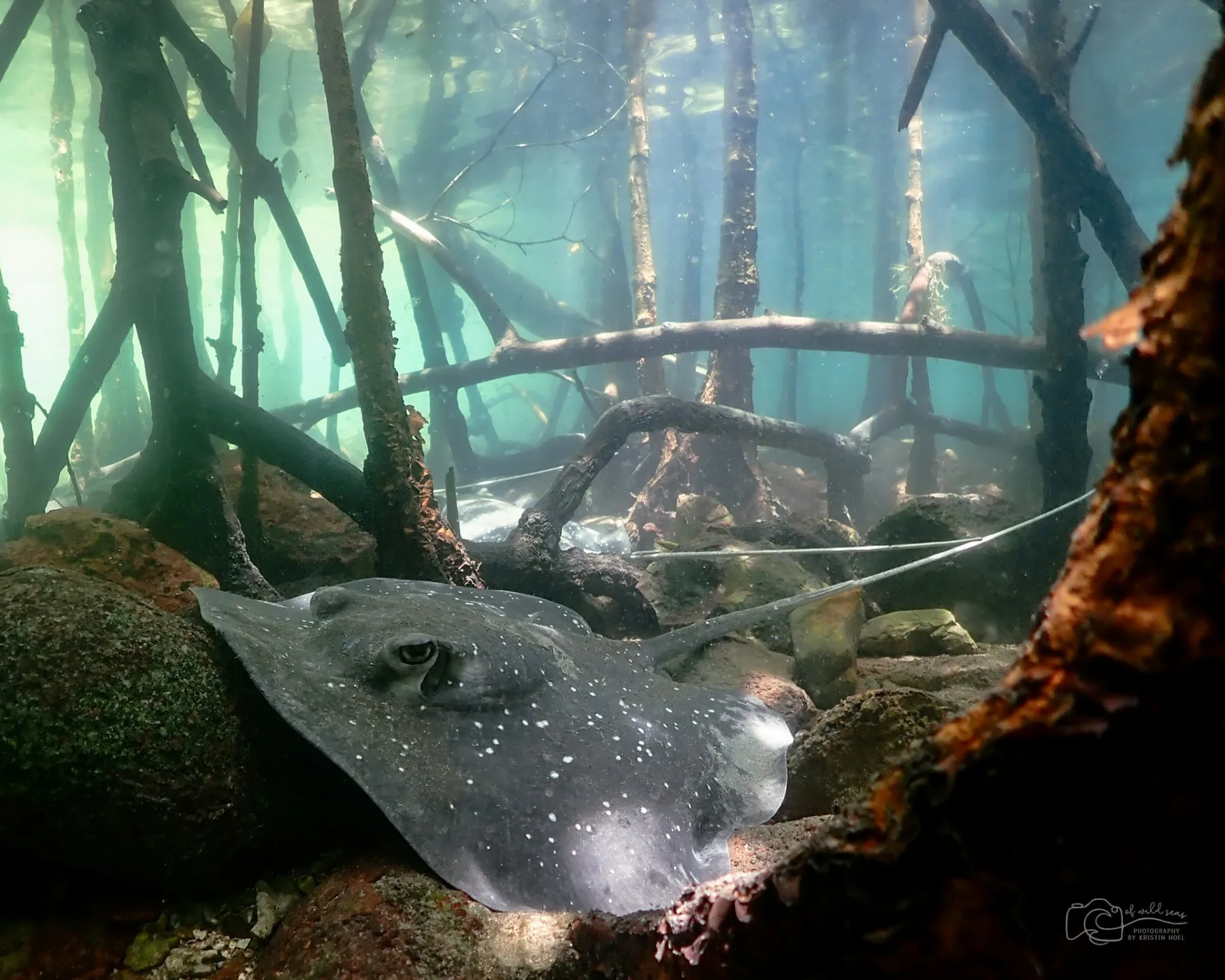
The other job mangroves do, less visible but just as important, is raising fish. Tangled prop roots create a maze of shallow, sheltered water where juveniles can hide while they are too small to survive on the open reef, and the science behind this keeps getting stronger. One study used otolith chemistry, essentially reading the chemical growth rings inside a fish’s ear bone, and found that up to 99 percent of the adult blackspot snapper sampled on Indo-Pacific reefs had spent their juvenile stage in mangrove habitat before ever moving offshore.
The picture is not uniform everywhere, and that nuance matters. Meta-analyses of juvenile reef fish show that in the Indo-Pacific, seagrass beds often hold higher overall juvenile densities than mangroves do, while in the Caribbean specific families like snappers and grunts show much stronger mangrove reliance. Researchers now describe mangroves as obligate, important or facultative nursery habitat depending on the species involved: obligate species cannot complete their life cycle without mangroves at all, while facultative species can get by using several different habitats instead. What stays consistent across every region studied is that losing mangroves narrows those options, and narrower options mean fewer juveniles making it to adulthood on the reef. That connectivity between coastline and reef is the same theme running through Coral Triangle Day, the biodiversity hotspot that holds the largest contiguous mangrove forests left on the planet, and it holds just as true off a single reef in the Caribbean or the Red Sea.
Restoration Is Underway, and It Is Working
The encouraging part of Mangrove Day 2026 is that restoration is no longer a fringe activity. It has become a genuine, funded, measurable industry, and two projects in particular show what that looks like at very different scales.
In Pakistan’s Sindh province, the Indus River Delta is home to Delta Blue Carbon, the world’s largest blue carbon project. Spread across 350,000 hectares, over a quarter of the roughly 43,000 people living in its 60 villages are now directly involved in planting and protecting mangroves, funded by selling verified carbon credits on the voluntary market to buyers including Microsoft and Trafigura. Over its projected 60-year lifespan the project aims to remove more than 140 million tonnes of CO2, while ploughing the revenue back into local jobs, clean water and education rather than treating the forest purely as a carbon calculation.
At a much smaller scale, Kenya’s Mikoko Pamoja in Gazi Bay was the world’s first blue carbon project of any kind, launched in 2010 after the community had already lost about a fifth of its mangroves to timber harvesting. Roughly 500 residents now regularly plant new mangroves through a community-run nursery, protecting 117 hectares under full-time guard, and the carbon credit income has paid for clean water, school repairs and books rather than sitting with a corporate offset buyer. It is proof that a blue carbon project does not need hundreds of thousands of hectares to matter, it needs a community with a stake in the outcome.
Both projects lean on the same core idea driving coral restoration everywhere else in the ocean: grow something small and vulnerable in a protected nursery first, then give it a real shot once it can hold its own. It is the same logic behind how coral gardening is bringing reefs back from the brink, just applied to a tree instead of a coral fragment.
Closer to Home: Bali’s Restoration Story
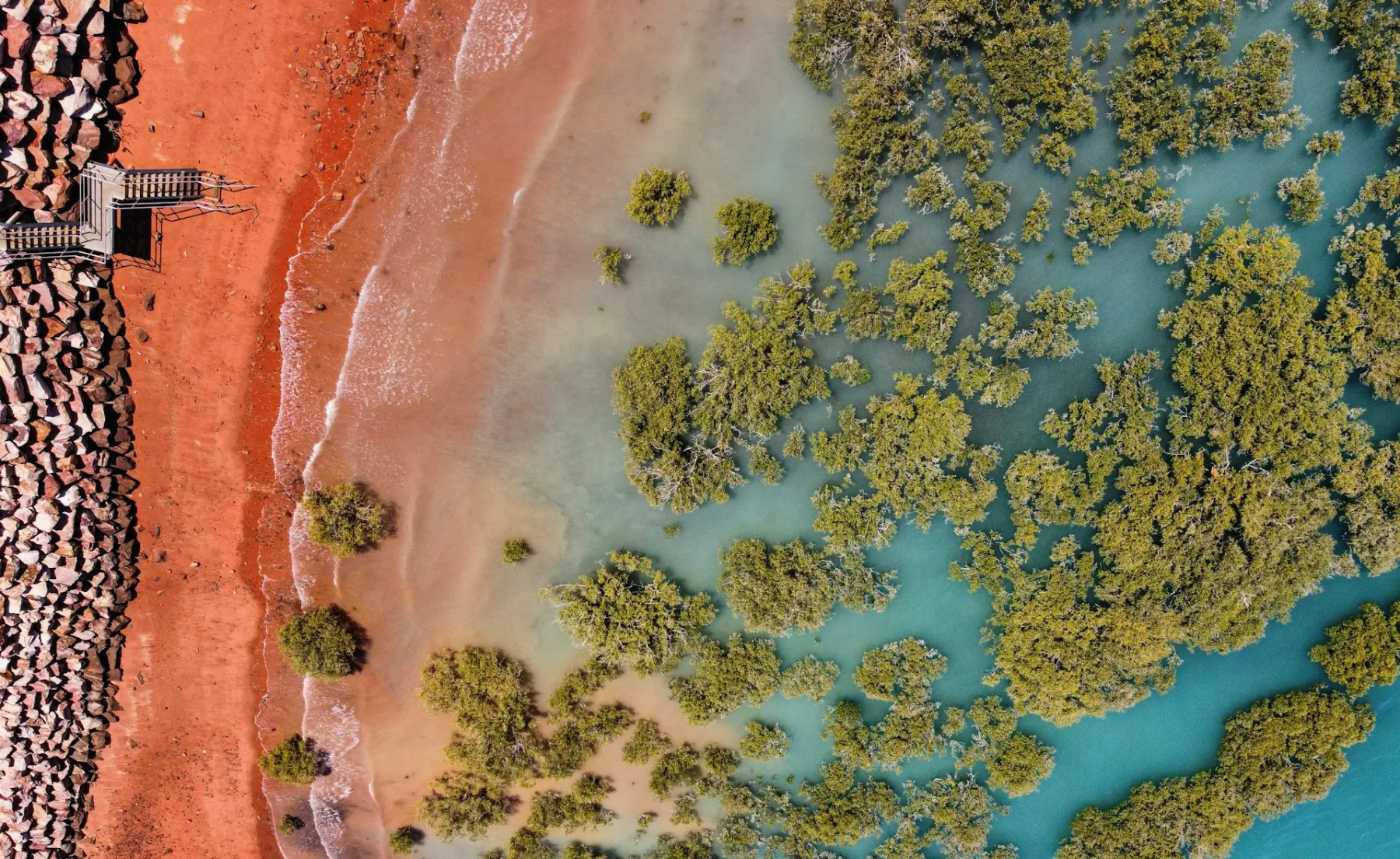
I’m currently living and diving in Indonesia, so I will end with the project I can actually walk through. Bali’s only forest park, Tahura Ngurah Rai, a short drive from the black sand diving at Amed, spans 1,373.5 hectares of mangrove around Benoa Bay, minutes from the airport, and it is squeezed on every side by the same tourism development it helps protect. The clearest example of what is at stake sits at Pudut Island off Tanjung Benoa, where mangrove cover shrank from around 14 hectares in 1970 to barely 10 square metres today. Since 2021, ITDC has partnered with the Tahura authority to replant it, adding 320 seedlings in October 2025 and a further 250 in May 2026, while the community-run Batu Lumbang site inside the park planted 1,000 seedlings for last year’s Mangrove Day alongside Wana Segara Kertih, a local fishing group paid to do the work rather than asked to volunteer for free. Bali’s own Mangrove Health Index shows real improvement between 2005 and 2025, though pockets around Mertasari, Kampoeng Kepiting and parts of Nusa Dua still rate only moderate. It is a small, imperfect, ongoing fight, and it looks a lot like the ones playing out in Sindh and Gazi Bay, just on a smaller patch of coastline.
What You Can Actually Do
🌱 Support a community-run blue carbon project. Mikoko Pamoja and similar Plan Vivo-accredited projects sell carbon credits and community merchandise directly, with the money staying local.
🌱 Choose seafood and shrimp carefully. Aquaculture expansion remains one of the largest drivers of mangrove clearance worldwide, so asking where farmed shrimp comes from is not a small gesture.
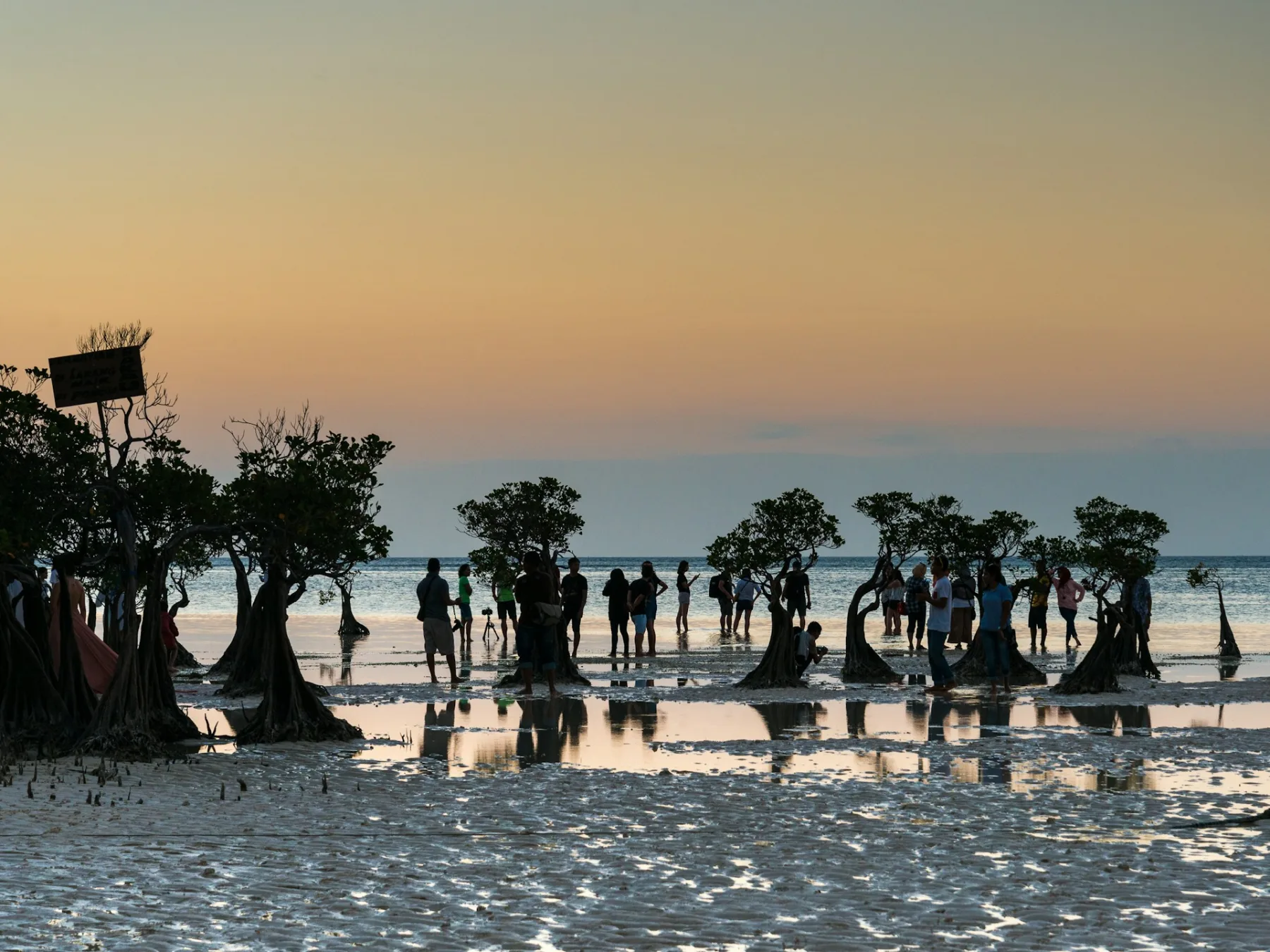
🌱 Visit a mangrove forest properly, wherever you are. Stick to boardwalks, pay entrance fees where they exist, and treat the visit as a conservation site rather than a backdrop for photos.
🌱 Time a visit or donation around 26 July. Planting events tend to cluster around Mangrove Day itself, in Bali and everywhere else mangroves grow, and most welcome visitors and volunteers.
🌱 Do not take shortcuts through the mud. Compacting mangrove soil damages the roots and the buried carbon store beneath them, the exact thing the whole ecosystem depends on staying undisturbed.