World Dolphin Day falls on 12 September, and unlike most ocean awareness days, it is not named after a species. It is named after a date, and the date was chosen because of what happened on it.
On 12 September 2021, 1,428 Atlantic white-sided dolphins were driven into a shallow bay in the Faroe Islands and killed in a single afternoon. Juveniles. Pregnant females. Entire family groups that had travelled together for years. It was the largest single slaughter of cetaceans ever recorded, and the footage travelled around the world before the tide had gone out.
Sea Shepherd established World Dolphin Day one year later, on the anniversary. Not as a celebration, and not as a memorial either. As a marker. A date on the calendar that makes it harder to pretend the killing is finished.
Most people who love dolphins have never been asked to think about any of this. That is the gap the day exists to close.
When Is World Dolphin Day?
World Dolphin Day is marked every year on 12 September.
It is a global day, and it is different from “National Dolphin Day”, which is observed in the United States on 14 April and leans much more toward appreciation than advocacy. World Dolphin Day was built for the harder conversation: hunts, captivity, fishing nets, and the fact that dolphins have almost no natural predators, so nearly every threat they face traces back to us.
Why 12 September? The Faroe Islands Grind
The grindadráp, or grind, is a drive hunt. Pods are spotted near the coast, then chased by powerboats and jet skis into one of the designated killing bays around the islands, where they are hauled ashore with hooks and killed in the shallows.
There is no season. There is no overall quota. A hunt can happen any day of the year if a pod comes close enough and the weather holds.
The 2021 hunt was extreme even by the standards of the practice. The 1,428 dolphins killed that day were close to five times the usual annual catch of white-sided dolphins, and almost double the previous record, which had been spread across an entire season. The Faroese government responded to the outrage by setting a catch limit of 500 white-sided dolphins, while leaving pilot whales, the species killed in far greater numbers, uncapped.
The grind did not stop. In 2025, roughly a thousand pilot whales and white-sided dolphins were killed across ten separate hunts, including at least 173 juveniles and unborn calves. One of those hunts, in September, took 285 animals from a superpod and lasted around 85 minutes from the first kill to the last.
Averaged across the past forty years, the Faroe Islands kill about 1,150 small cetaceans a year.
The defense offered is tradition and food security. The Faroe Islands are a wealthy, fully connected modern society with supermarkets and imports, and Faroese health authorities have spent decades warning residents to limit consumption of pilot whale meat because of mercury and PCB contamination. A tradition that poisons the people practicing it is not a food system. It is a habit that nobody has been willing to break.
Trigger warning the following video is upsetting to watch.
Why Dolphins Matter to the Ocean
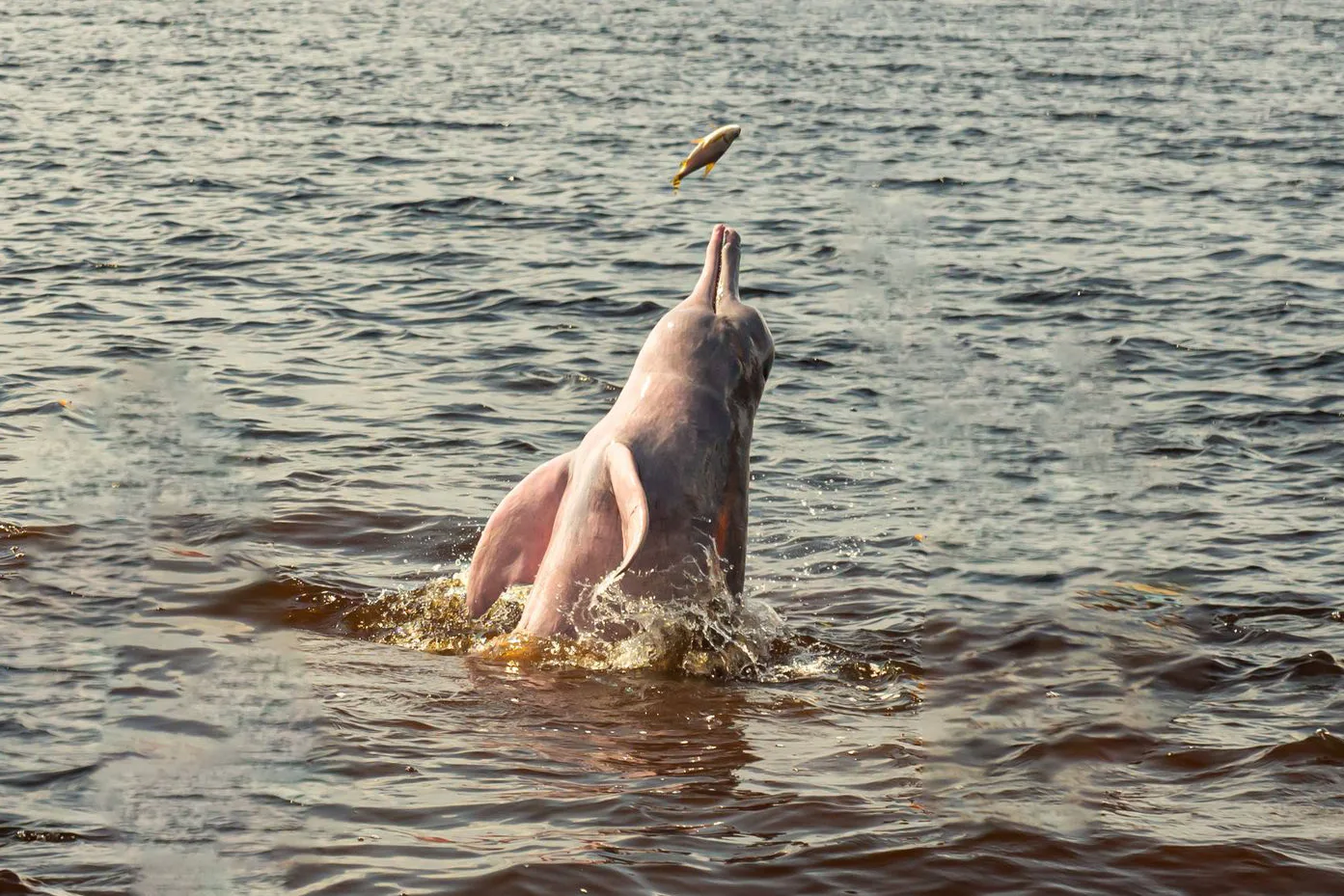
There are around 40 species in the dolphin family, from the bottlenose most people picture to river dolphins in the Amazon and the Ganges, to orcas, which are the largest dolphin of all. They live in every ocean and in several major river systems.
They are also, by any measure we have, extremely intelligent. Dolphins call each other by name, using signature whistles they invent as calves and answer to for life. They sleep one brain hemisphere at a time so they never stop surfacing to breathe. Some populations in Shark Bay carry sea sponges on their beaks to protect themselves while they root through sand for fish, and daughters learn the technique from their mothers. That is culture, passed down a female line, in an animal we still put in tanks.
Ecologically, they sit near the top. Dolphins move nutrients around, shape the behavior of the fish below them, and concentrate whatever is in the water into their own bodies over a lifetime. A population carrying a heavy contaminant load is telling you something about the entire food web underneath it, the same way the reef tells you something when it goes white. If you have read what I wrote about World Orca Day, this is the same principle applied to the rest of the family.
Bycatch: The Killing Nobody Films
The hunts are one front. Here is another, and it runs at the same time, in every ocean, all year.
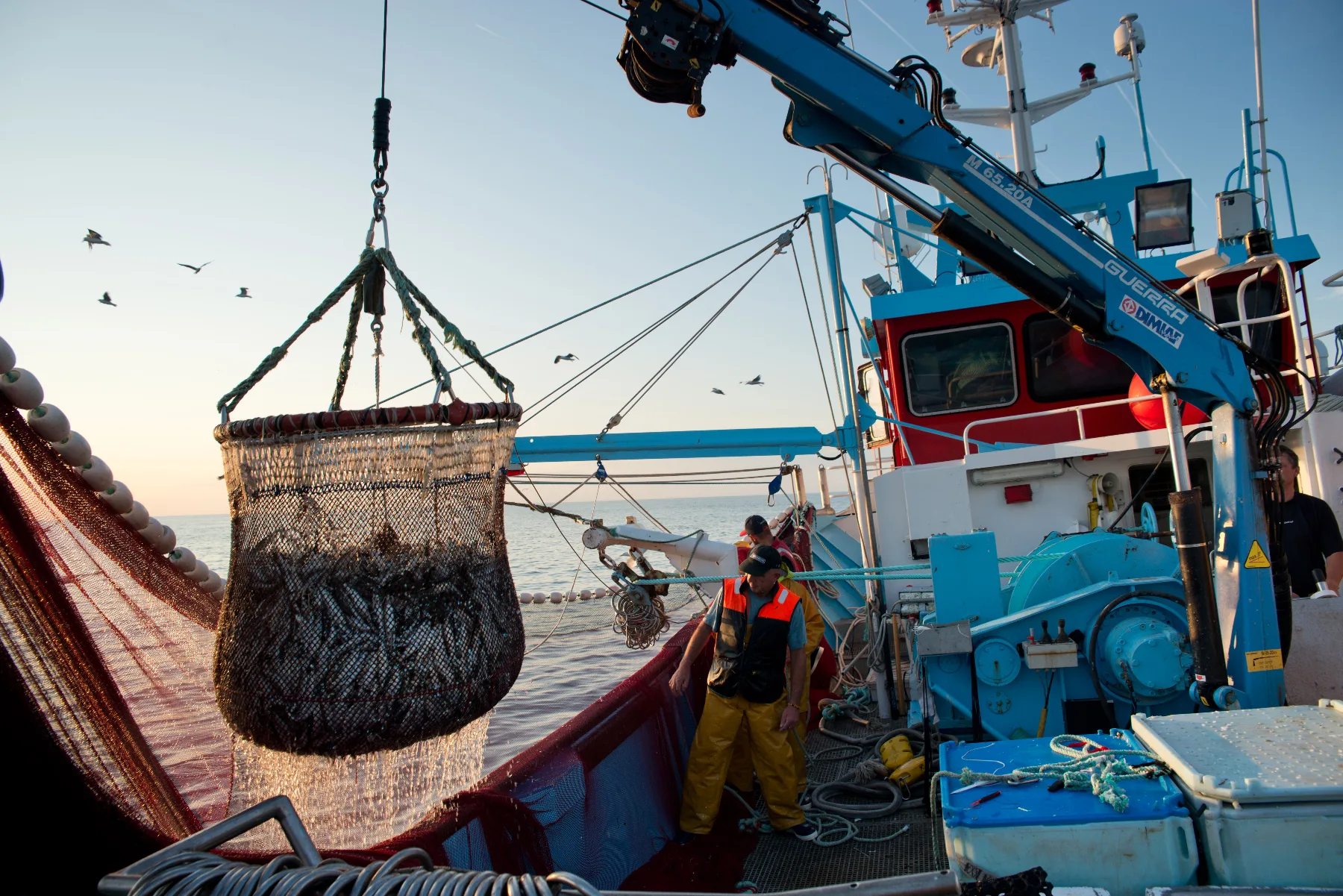
At least 300,000 whales, dolphins and porpoises die every year after being caught in fishing gear. That is more than 800 animals a day. The International Whaling Commission has treated it as a priority since establishing its Bycatch Mitigation Initiative in 2016.
Gillnets are the worst offender. They hang in the water column like invisible walls, they are difficult for a dolphin to detect on echolocation, and when one is lost or abandoned it keeps fishing for years. Of the small cetacean species listed as critically endangered on the IUCN Red List, the overwhelming majority are threatened primarily by nets.
The numbers barely get recorded. Most fishing nations do not monitor cetacean bycatch at all, so 300,000 is a floor, not a ceiling.
None of this makes the hunts smaller. The grind and the cove are deliberate. Somebody decides, every time, to chase a pod into shallow water and take it apart. Bycatch is what happens when nobody decides anything at all, which is its own kind of scandal, and it is the reason a dolphin can die for your dinner without anyone in the chain ever meaning it to.
These are not competing causes and they do not need ranking. Killing a pod on purpose, selling its calves to a marine park, and drowning three hundred thousand cetaceans a year in gear nobody is monitoring are all the same failure showing up in different forms: dolphins treated as something we are entitled to use. Refusing the hunts and refusing the nets are the same job.
The Dolphins We Have Nearly Already Lost
Bycatch is not an abstraction. It has already finished one species and is closing in on others.
The baiji, the Yangtze river dolphin, was declared functionally extinct in 2006 after a survey found none. Fishing gear was a leading factor. It was the first cetacean driven to extinction by human activity, and it happened within living memory.
The vaquita, a small porpoise found only in the northern Gulf of California, is the closest to going next. There were around 567 in 1997. The 2024 survey found six to eight and no calves at all. The 2025 survey found seven to ten, along with one or two calves, and a female with a bent dorsal fin known to researchers as Frida, seen with a calf three years running. Not a recovery. Just the first time in a long while that the line did not drop. They die in gillnets set illegally for totoaba, a fish whose swim bladder is trafficked for the Chinese medicine trade. The vaquita is collateral damage in someone else’s smuggling operation.
The Māui dolphin of New Zealand, the smallest dolphin subspecies in the world, numbers fewer than 50.
None of these animals were hunted. They were caught by accident, in gear set for something else, by people who mostly did not want them.
A Life Sentence in a Tank for Human Entertainment
Every September, on the first of the month, the drive hunt season opens in Taiji, Japan, and runs through the end of February.
The economics of Taiji are the clearest illustration in the world of what the captivity industry actually does. A dolphin killed for meat is worth under a thousand dollars. A live bottlenose selected for a marine park can sell for anywhere between thirty thousand and well over a hundred thousand, depending on age, sex and how it looks on camera.
So the hunt has shifted. In the 2024 to 2025 season, roughly 286 dolphins were killed and around 94 taken alive. The following season, around 400 were killed and 84 taken into captivity. The kill numbers keep falling because Japanese demand for the meat has collapsed. The live capture numbers hold steady, because the aquarium market has not.
The selection process is the part nobody films for the brochure. A pod is netted into the cove. Trainers and divers move among them choosing the young, unmarked animals with the right proportions. The rest are either killed or driven back out to sea, having watched their family taken apart. Released animals are not tracked, and calves that lose their mothers in the cove do not survive alone.
Every ticket to a dolphin show anywhere in the world is a vote in that market. The tank and the cove are not two industries. They are one industry with a shopfront and a supply chain.
View on Instagram
Dolphin Conservation Work
Dolphins do not live inside neat jurisdictions, and neither do the threats they face. A huge share of dolphin range sits in international water that no single country governs, which is exactly the gap The High Seas Treaty was written to close. The same crowding and bucket list pressure I wrote about around International Whale Shark Day shapes how dolphin encounters get sold, and the reef and coastal habitat pieces across my other conservation posts are all part of the system that has to be working for a top predator to survive in it at all.
How to See Dolphins Responsibly
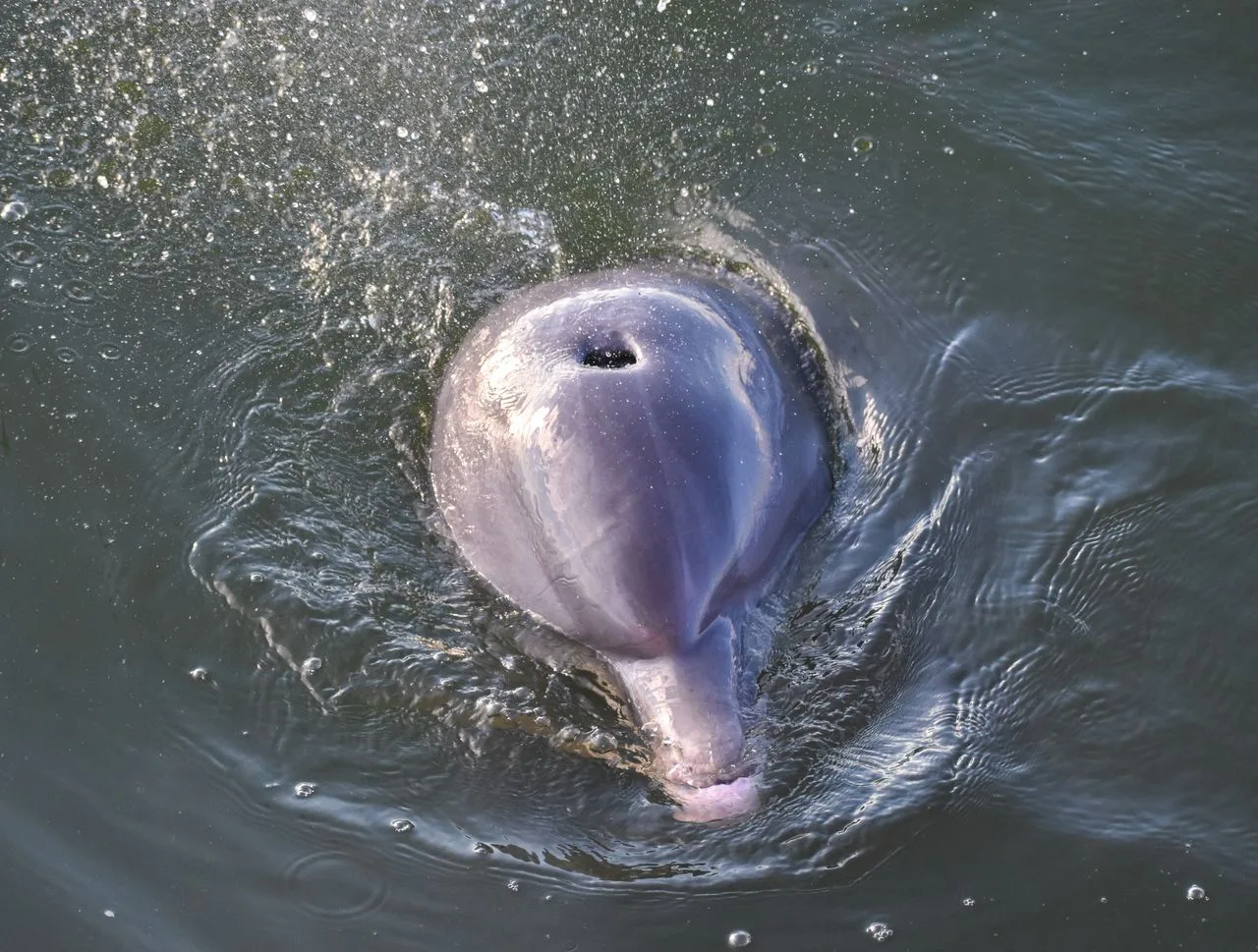
Wanting to see a dolphin is not the problem. They are one of the great encounters available to a person in the water, and there is nothing wrong with wanting it.
The problem is thinking the encounter is owed to you and that just because you pay money to be there you are entitled to an encounter.
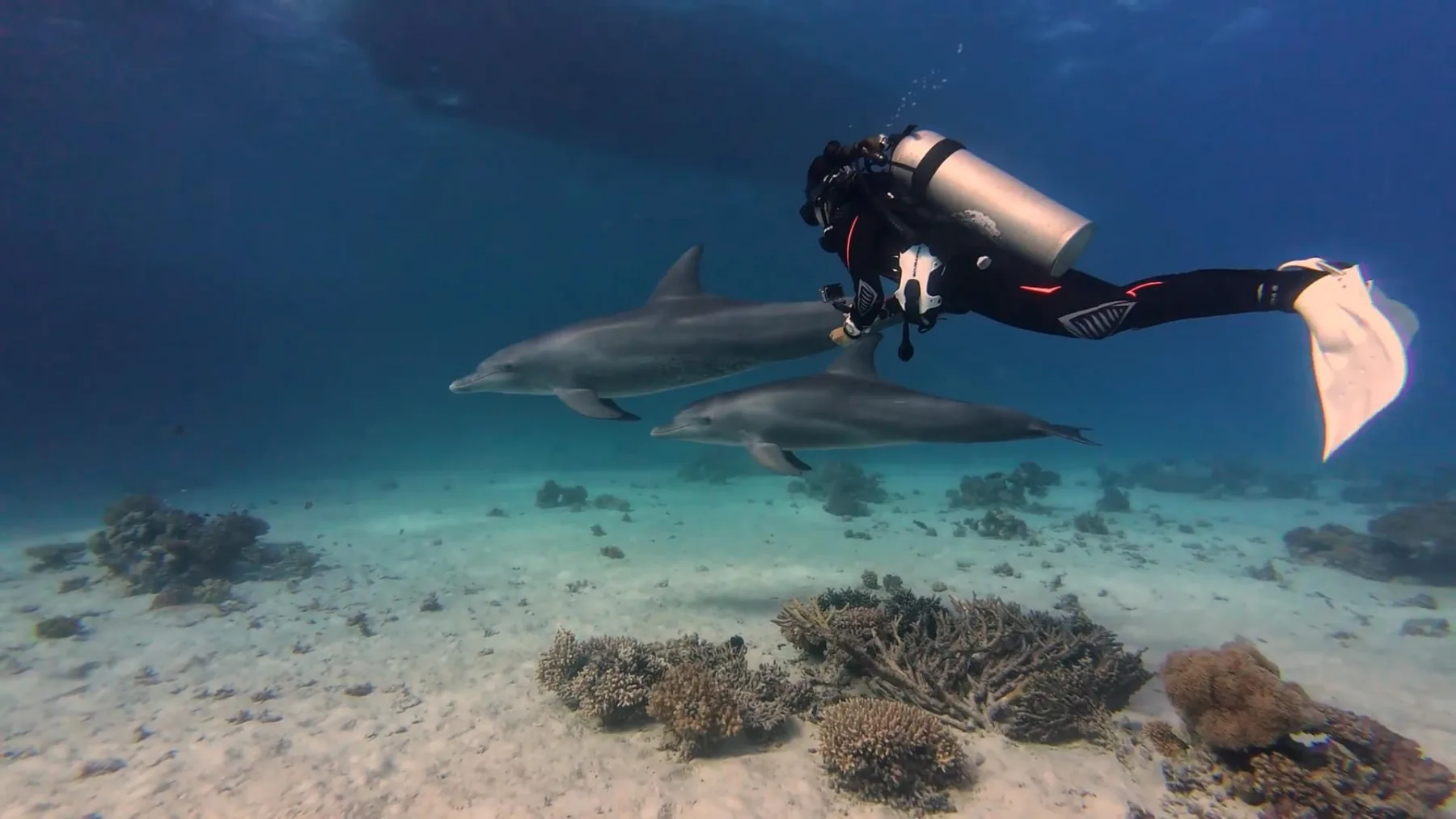
Some of the most remarkable dives in my entire life were when we were surprised by dolphins. Off the Egyptian Red Sea coast they showed up on more dives than we deserved, which is part of what keeps me writing about diving in Hurghada. You do not chase them. You stay where you are and let them decide.
If you are booking an operator, the rules are the same ones you would apply to shark or manta tourism:
🐬 Nobody guarantees a sighting. An operator who promises dolphins is promising to pressure dolphins.
🐬 No chasing, no encircling, no dropping swimmers on top of a pod. Boats should approach parallel and slow, never head on, and never into the middle of a group.
🐬 Resting pods are left alone. Spinner dolphins in particular use daytime bays to sleep. A tour that runs into those bays is not showing you dolphins, it is running an alarm clock.
🐬 No feeding, NO TOUCHING. Fed dolphins lose their fear of boats and start dying under propellers.
🐬 Small groups, short encounters, and a guide who talks about the animals rather than the photo you will get.
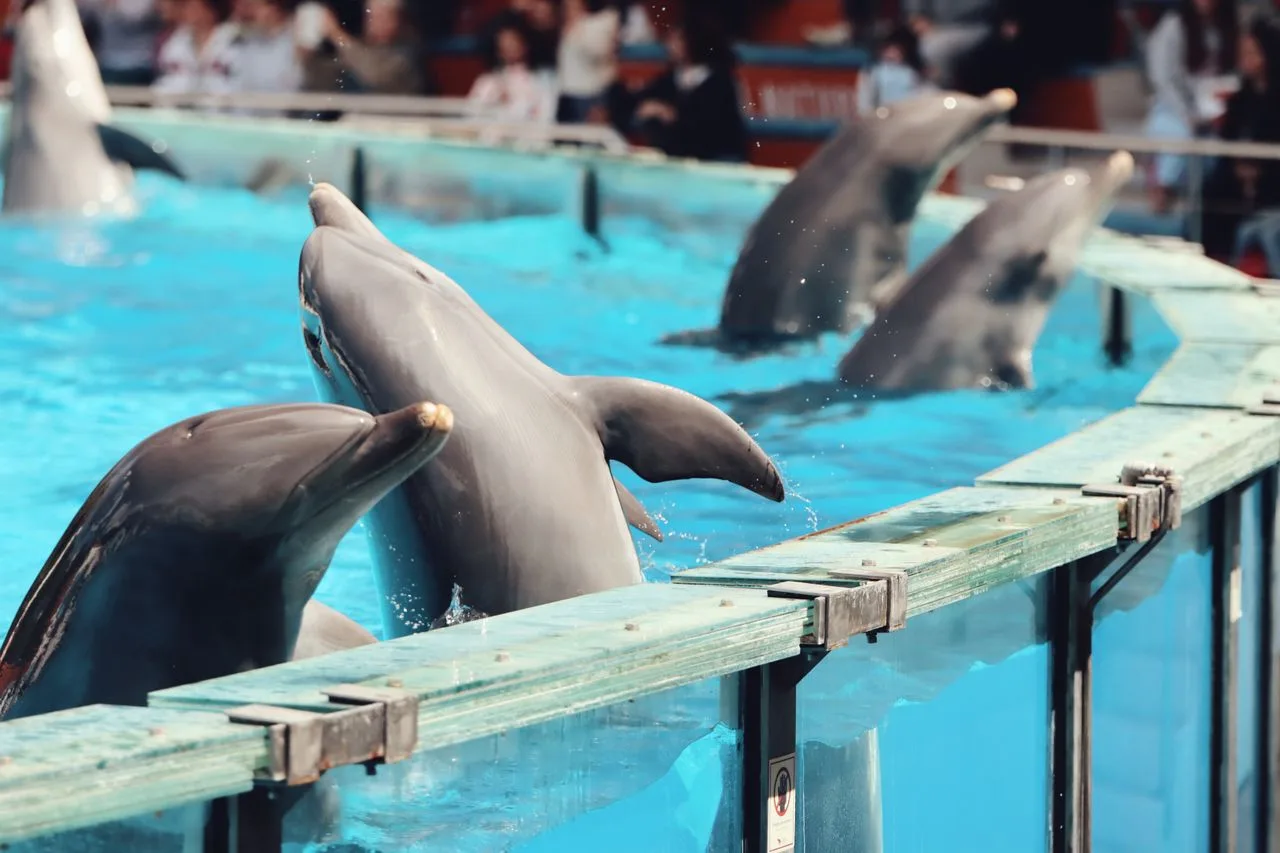
And if the encounter involves a pen, a pool, a lagoon, or a trainer with a bucket, it is not a wild encounter. It is captivity with a curated landscape.
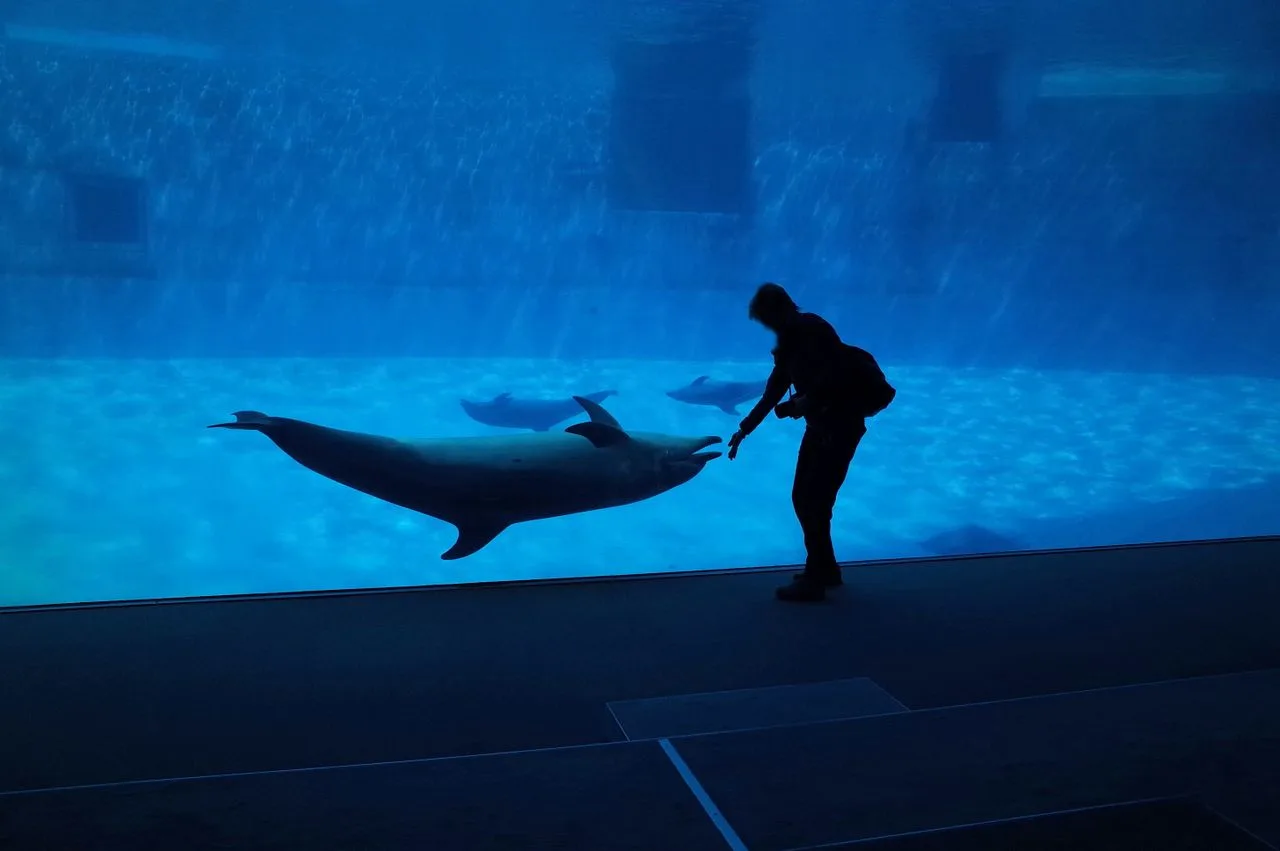
Your brain might tell you the dolphin in the photo is smiling. It is not. The upward curve of a dolphin’s beak is fixed anatomy, the same shape whether the animal is healthy, sick, stressed or dying, and it is part of their misfortune that we read it as consent. A captive dolphin cannot look unhappy, so people assume it isn’t.
What is actually in front of you is a wild animal with nothing left to decide. It performs because food is the leverage. It is fed for the behavior and it is not fed for refusing, which is not a partnership, it is control with a bucket attached.
A wild dolphin can cover tens of kilometers in a day, dive deep, hunt, and travel with a family group it may stay with for life. Those bonds are as strong as anything in the ocean, which is exactly why breaking them is the cruelest part of the process. A captive dolphin gets a concrete box, strangers for company, and the same circle, over and over, until the mind starts to go. Zoos have a word for it. Stereotypy. The animal repeats a pattern because there is nothing else to do with a body built to move.
It is the equivalent of sentencing a person to life in a bathtub and then selling tickets to watch them wave.
That is the life every marine park visitor helps fund. Sometimes unknowingly. But the money does not care what you intended.
What You Can Do for World Dolphin Day
The day itself changes nothing. What you do with the attention it generates is the whole point.
Do not buy a ticket to a dolphin show… EVER This is the single highest impact decision available to you, because it is the one that directly touches the money. Not a swim-with program, not a dolphin encounter add-on at a resort, not a marine park. The demand and the drive hunts are the same market.
Talk to the people around you before they book. Most parents planning a swim-with-dolphins day for their kids have never heard the word Taiji. A calm conversation does more than a hundred angry comments online.
I want to be straight with you about this one, because I have failed at it myself.
I have spent years talking to some family members about ocean conservation. About where captive dolphins come from. About raising the kids to be advocates for animals rather than spectators of them. And they still booked the SeaWorld trip and took the children.
That is the part nobody tells you. The kids in my family are getting one message from me and the opposite message at the ticket gate, from adults they love just as much, and a child cannot be expected to sort that out on their own. It is not a clean fight. It is not one conversation that lands and then everyone changes. Sometimes the people closest to you are the hardest people in the world to reach, because with family it stops being about dolphins and starts being about who is judging whom.
So I know it does not always work and I’m not going to pretend it does.
But failing at home is not a reason to stop. It is a reason to widen the circle. The conversation that bounces off a relative might land with a friend, a dive buddy, a colleague, a stranger who reads something you posted on a day like this one. You do not get to pick who listens. You only get to pick whether you keep speaking.
Keep saying it. Say it calmly, say it without contempt, and say it to the next person too. Some of them will hear you, and you will probably never find out which ones. That is still worth it.
View on Instagram
Look at what is on your plate. Bycatch is the largest killer of dolphins, and it comes from fisheries supplying supermarkets. Dolphin safe labeling is weaker than most people assume and does not guarantee no marine mammals were harmed. Reducing how much wild caught fish you eat, and knowing which gear caught what you do eat, is the version of dolphin conservation that happens in a shop rather than on a boat.
Support the organizations doing the unglamorous work. Sea Shepherd, Dolphin Project, Whale and Dolphin Conservation, OceanCare and Marine Connection all work on some combination of hunts, captivity and bycatch. Attention is free. Monitoring, litigation and gear research are not.
Share what the day is actually for. Post the reason the date is 12 September. Most people who repost a dolphin photo on the day have no idea it is an anniversary. It’s not just about how cute these species are. Spreading conservation awareness always helps.
Watch The Cove, and Remember Who Paddled Into It
None of this is old history.
The 2026 to 2027 season in Taiji opened on 1 September. On the first morning of it, a pod of around 200 bottlenose dolphins was found roughly 20 kilometers offshore and driven into the Cove, and 11 of them were taken alive for the captivity trade. The quota the Japan Fisheries Agency approved for this season is 1,814 animals. It runs until the end of April.
So this is not something that happened once. It happened a few days ago, and it will happen again this week, and it is happening while you read this.
In memory of those innocent souls, and every pod taken apart in that water before them, watch The Cove.
It won the Academy Award for Best Documentary Feature, and it is still the single most effective way to explain to another person why a dolphin show is not harmless. Watch it with your family. Send it to the friend who is about to book the resort with the lagoon. Let the film do the persuading, so you do not have to be the one lecturing at dinner.
And when you watch it, look for the surfers.
In October 2007, six of them paddled into that cove to form a memorial circle on the water for dolphins that had been killed there that morning. One of them was Hayden Panettiere, who was 18 years old. The fishermen drove them out aggressively with poles and boats. The footage made it into the film.
She never let it go after that. She went back to Japan to try to talk to local officials about alternatives. She spent years as a spokesperson for the Whaleman Foundation. She kept saying the same thing about captivity for nearly two decades, long after the news cycle that made it fashionable had moved on.
Hayden tragically died on 16 August 2026, at 36. The last campaign she filmed, made just weeks before her death and released by PETA afterward, was about dolphins in tanks. She was still asking people not to buy the ticket.
That is the whole lesson of this article in one life. She was 18 and she failed to stop the hunt that day. It kept going. It is still going. And she kept talking about it anyway, for eighteen more years, because the point was never winning a single afternoon in a cove in Wakayama. The point was how many people heard her.
Our ocean, our responsibility. The dolphins in the cove and the ones drowning quietly in a gillnet three thousand miles away are the same animal, and they are both there because of choices that are still being made, every single day, by people who could make different ones.
View on Instagram