World Manta Day lands on 17 September, and this is the first one where the law is finally on the animal’s side.
Two things happened to manta rays inside five months. In July 2025, science accepted a third species of manta ray. In December 2025, every manta and devil ray on the planet was voted out of international commercial trade, by consensus, with nobody objecting.
Both of those are enormous. Neither travelled far outside manta circles.
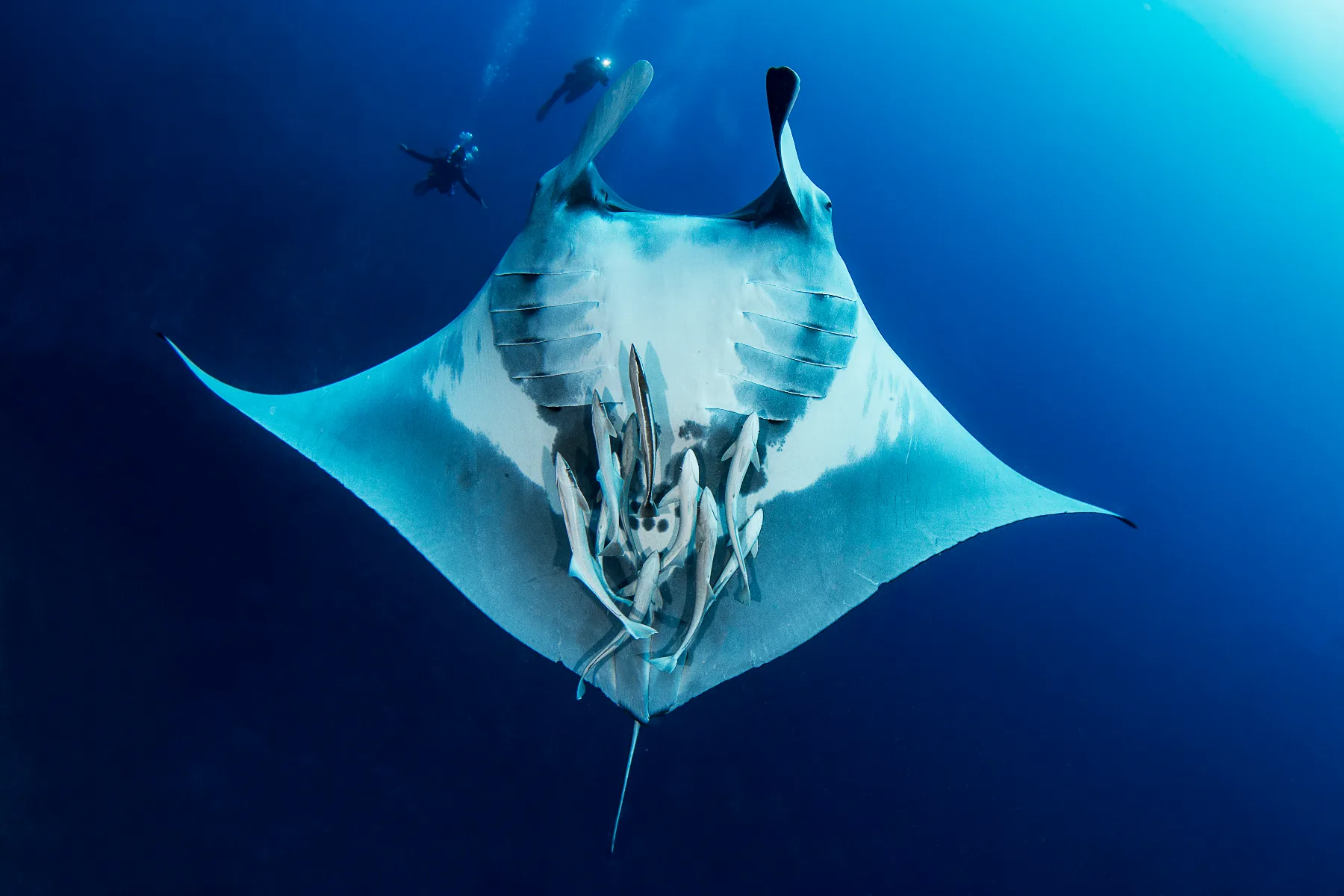
What Is World Manta Day?
World Manta Day is 17 September, every year, and it belongs to the Manta Trust, the UK charity that has coordinated manta and devil ray research since 2011. They launched the day in 2020.
The reasoning is the same as most ocean days. Manta research happens in small teams scattered across the Maldives, Indonesia, Ecuador, Mozambique, Mexico and a dozen other countries, most of them working on budgets that do not stretch to a press office. One fixed date gives all of that work a moment where people are actually listening.
Each year carries a theme. In 2025 it was The Power of Protection, run alongside the #SaveTheMantas campaign pushing for a full trade ban. That campaign got exactly what it asked for ten weeks later.
One detail in the name matters more than it looks. The day covers devil rays too. Mantas and devil rays together are the mobulids, the family Mobulidae, and while the mantas get the photographs, the devil rays are the ones dying in the largest numbers.
Manta Rays Are Three Species Now
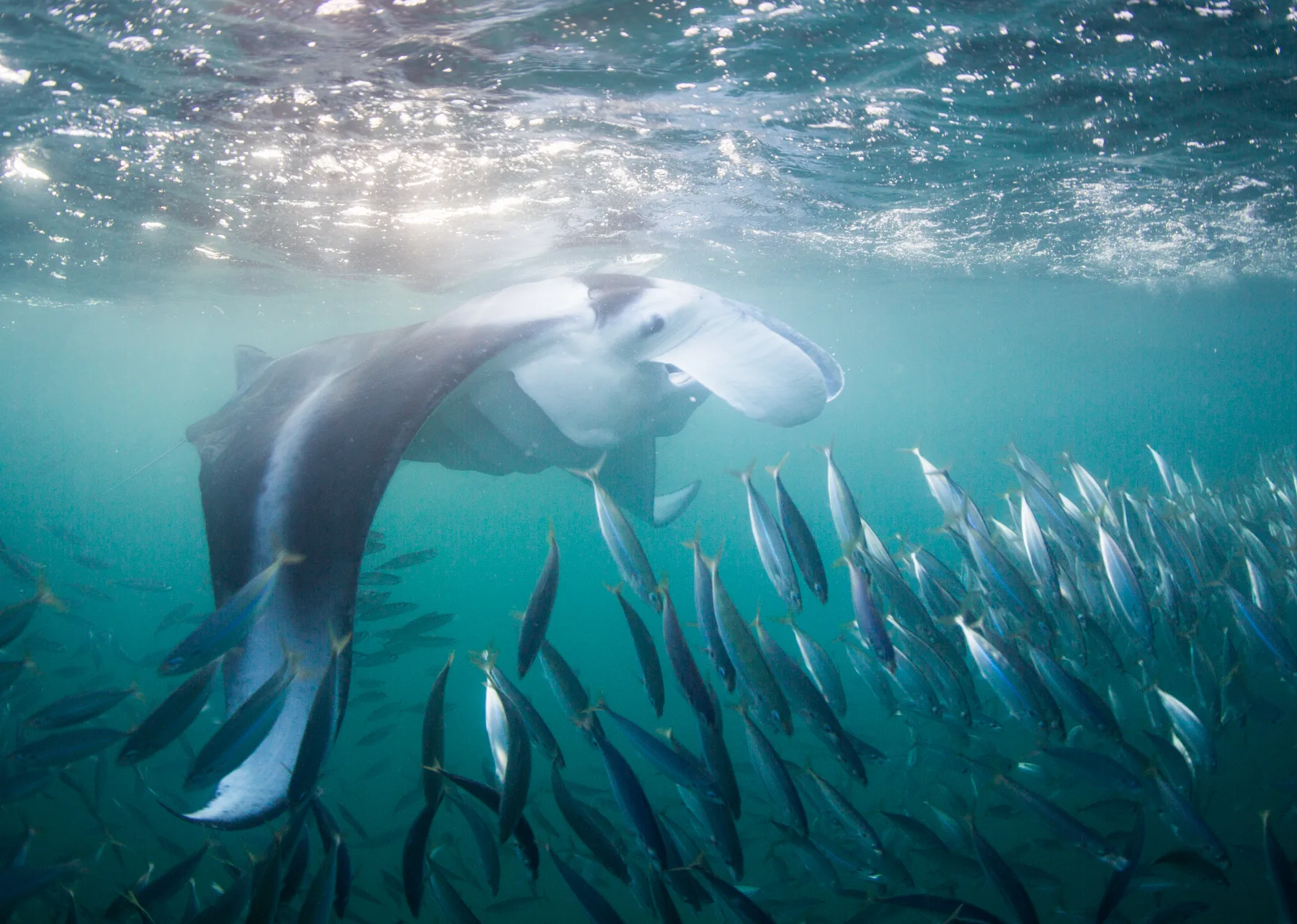
In July 2025, a paper in Environmental Biology of Fishes formally described Mobula yarae, the Atlantic manta ray. It is the first new manta named since 2009.
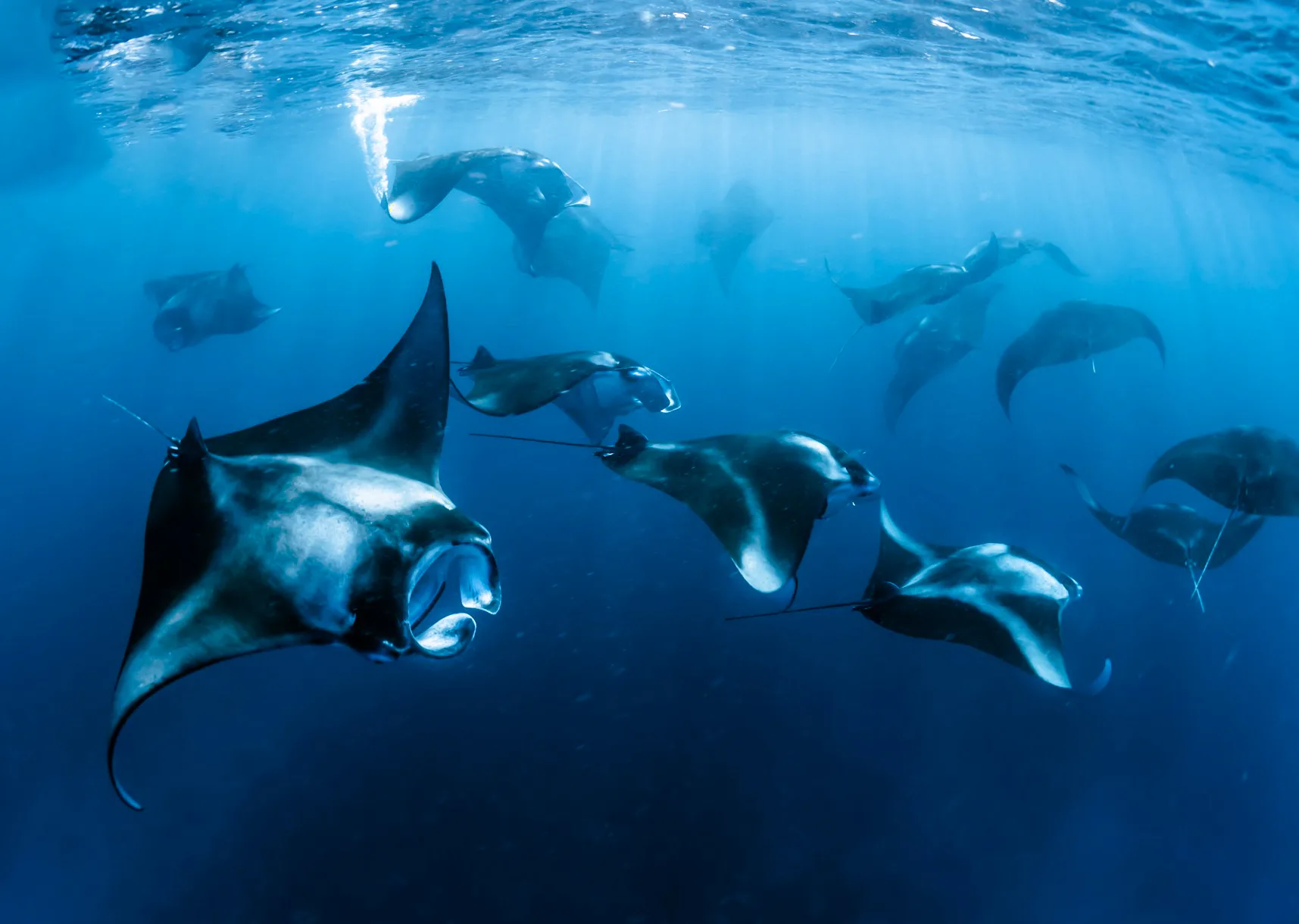
It lives in the western Atlantic, from the eastern United States down to southern Brazil, taking in the Gulf of Mexico and the Caribbean Sea. From above it reads as a giant oceanic manta, dark across the back with the same fin shape. From below it carries the lighter face and belly pattern of a reef manta. Its shoulder patches are V-shaped where a giant manta’s are T-shaped. That blend of features is how an animal six meters across hid inside another species for a century and a half.
The story behind it belongs to Dr Andrea Marshall, who split the manta into two species in 2009 and predicted a third in the same paper. She suffered a brain aneurysm and stroke in early 2024 and could not finish the description herself. An international team led by Brazilian researcher Nayara Bucair completed the work. The name honors Yara, the mother of waters in Tupi and Guaraní stories.
Splitting a species is not only a taxonomy footnote, either. Every Atlantic animal previously counted as a giant oceanic manta now belongs somewhere else, which makes both populations smaller than the numbers we had been using. The Atlantic manta has no IUCN (International Union for Conservation of Nature) assessment at all yet. We have named it and we still cannot say how many there are.
What the CITES Trade Ban Actually Changed
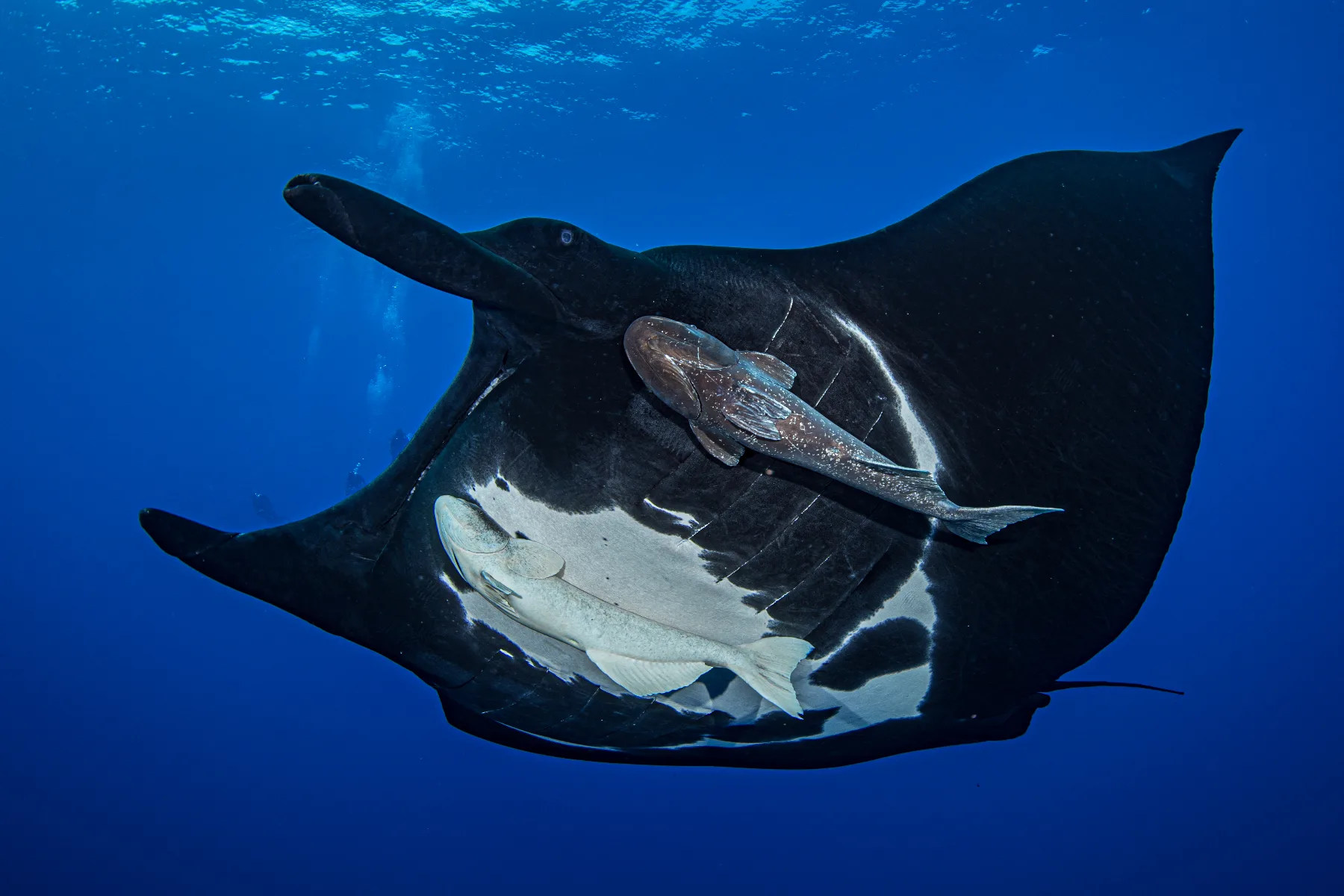
At CoP20 in Samarkand in late 2025, the parties to CITES moved every species in the family Mobulidae from Appendix II to Appendix I. It passed by consensus, one of only two Appendix I uplistings at that meeting adopted without a vote. The whale shark was the other, which I wrote about for International Whale Shark Day.
Appendix II is a permit system. Appendix I prohibits commercial international trade outright. The amendments took effect on 5 March 2026, which makes 17 September 2026 the first World Manta Day with the ban actually in force.
Mantas have been on Appendix II since 2013, devil rays since 2016. More than a decade of permits did not slow the decline, and that failure was the entire argument behind the proposal. It is the strongest thing this treaty has to offer, the CITES equivalent of the Appendix I tier hammerheads won this year under a different one.
Now the limits, because a listing is not a fence around the animal.
- It governs trade between countries. It does not stop a country fishing mantas in its own water for its own market.
- It does nothing about bycatch, and bycatch is where most mobulids die. Tuna purse seines and gillnets set for other species kill mantas that nobody intended to catch, and no trade rule reaches a net.
- Dried gill plates look almost identical between species. Enforcement needs DNA testing at ports, and most ports do not have it.
- The market moved. Physical gill plate shops in Guangzhou and Hong Kong have declined over the past decade while online sellers multiplied, and a web listing does not pass through customs the way a crate does.
A trade ban is a tool. It works where governments fund enforcement and it sits on a shelf where they do not. The shark fin trade is the long-running example of what happens when the paperwork exists and the will does not.
Why Are Manta Rays Endangered?
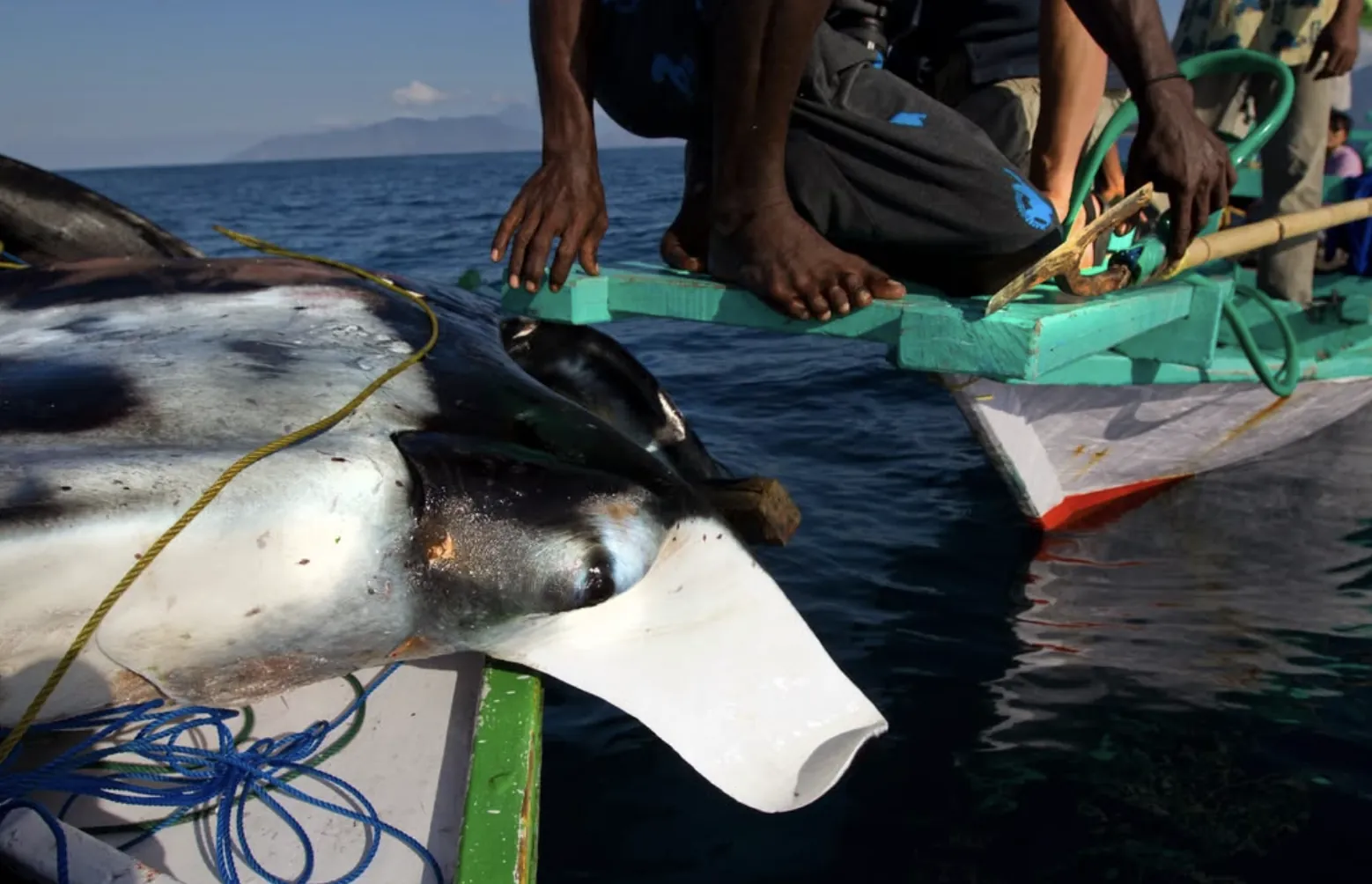
The IUCN lists the giant oceanic manta as Endangered and the reef manta as Vulnerable.
The reason sits in the biology. A manta carries one pup at a time, for roughly a year, then usually waits two to three years before doing it again. A female might produce a handful of pups across a life of forty years or more. Set that against a grouper releasing millions of eggs in a single spawning and the shape of the problem becomes obvious. A manta population does not bounce back. It refills over generations, if it refills at all.
Everything else stacks on top of that.
Gill plates. The filtering rakers inside a manta’s gills are dried and sold under the trade name pengyusai as a health tonic, marketed for everything from acne to cancer. It is not an old remedy with centuries behind it. It is a product that appeared in the last twenty years or so, rarely prescribed by actual practitioners and sold hard over the counter. Trader surveys found Guangzhou moving around 60 tons of dried gill plates in 2011 and 120 tons by 2013, equal to roughly 130,000 mobulids a year. Devil rays made up 96 percent of them.
Bycatch. Mantas feed where plankton concentrates, which is exactly where industrial fleets work.
Boat strikes and entanglement. Mooring line, fishing line, ghost gear. A manta trails cephalic fins and wingtips through all of it, and an entangled animal that loses a wingtip is an animal that cannot feed properly.
Food that keeps moving. Mantas follow plankton, plankton follows temperature and current, and both are shifting. The same heat driving coral bleaching is rearranging where the food gathers, which means some reliable aggregation sites will stop being reliable.
View on Instagram
A Manta Is Worth More Alive, and We Have Known Since 2013
A study published in PLOS ONE in 2013 put global manta watching tourism at around 140 million US dollars a year across more than 20 countries. The trade in manta gill plates was worth about 5 million.
The Indonesian numbers in that paper are the ones worth repeating. Gill plates brought fishermen an estimated 400,000 dollars. Manta tourism brought over 15 million, and it does that again the following year with the same animals. Indonesia protected mantas across its entire exclusive economic zone in 2014, creating the largest manta sanctuary in the world. The Maldives has the biggest manta watching industry anywhere, built on around a hundred sites.
The argument holds only as long as the tourism is run properly. Crowd a cleaning station and the mantas stop using it. Chase them for photos and they leave the site. A destination that harasses its mantas eventually loses the mantas, and then loses the case for keeping them.
Protection on paper needs the same scrutiny. Plenty of manta sites sit inside marine protected areas that exist mostly as lines on a chart.
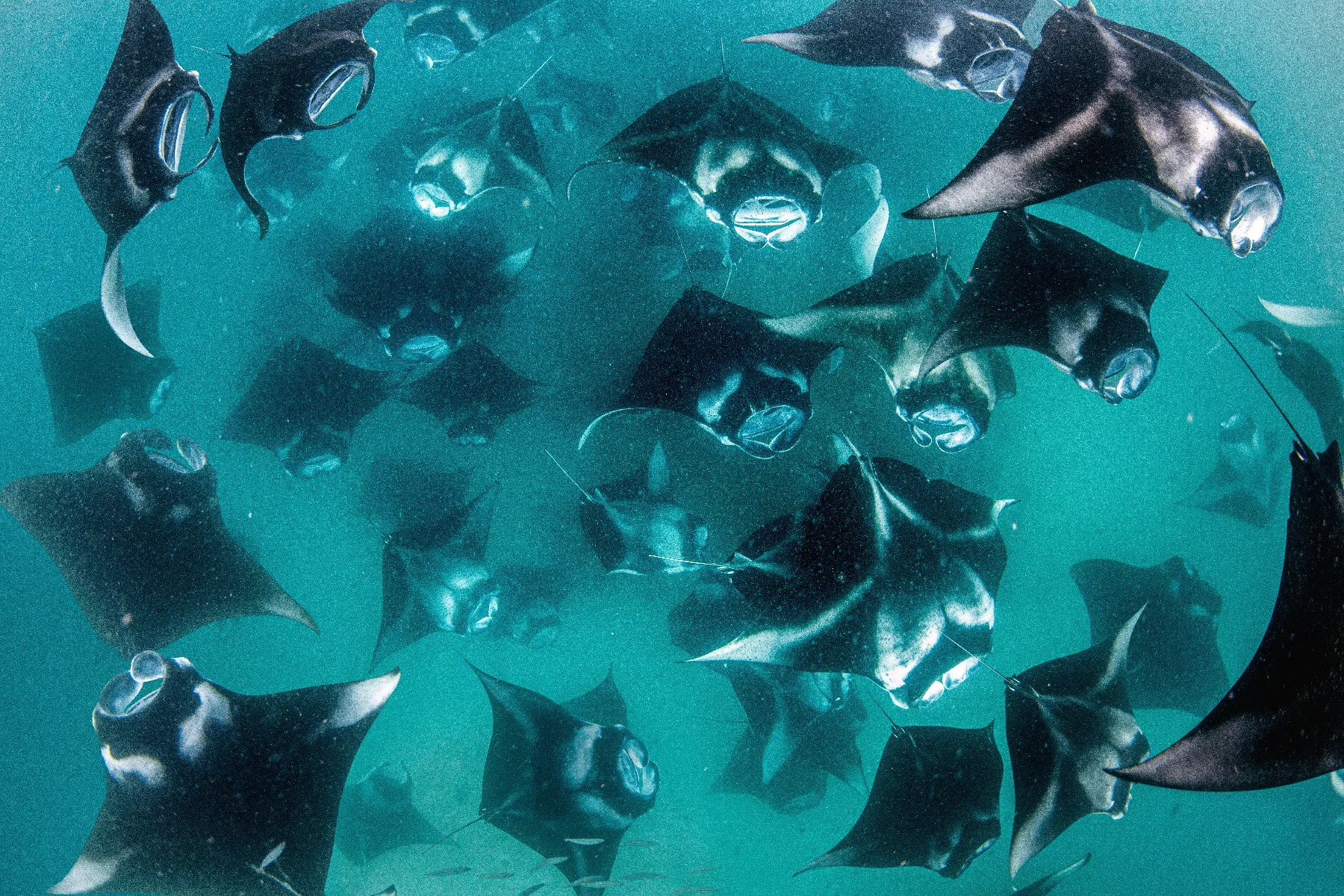
How to Dive With Manta Rays Without Wrecking the Encounter
The full etiquette is in my guide to diving with manta rays, and the seasons and sites are in the best places to dive with manta rays. The short version:
- Three meters minimum. More if the animal has not settled.
- Approach from the side. Never directly above, below or behind.
- Stay off the cleaning station. Settle low at the edge and leave the space above the coral empty.
- Never touch. The mucus layer on their skin is their defense against infection, and a hand takes some of it off.
- Do not chase. If it leaves, it has left.
- Mind your bubbles. A column of bubbles under a manta will move it.
- Leave the selfie stick on the boat.
The divers who get the closest encounters are the ones doing the least. Sit still, breathe slowly, keep your hands in, and a curious manta will often close the distance itself. That has been true at every cleaning station I have watched, and the opposite is true too. The group that kicks hard after the animal spends the dive looking at an empty reef.
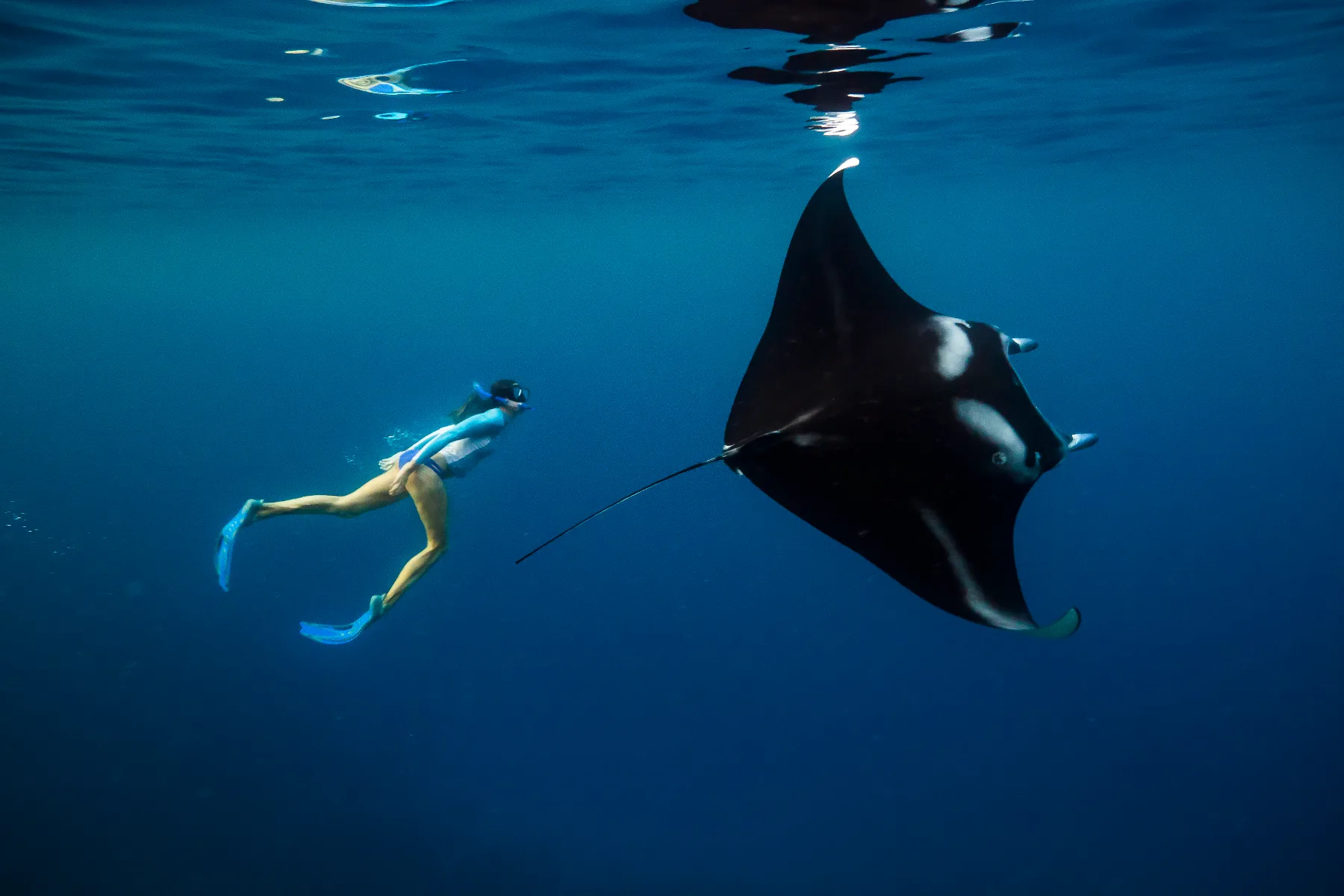
Your Photos of Manta Rays Are Data
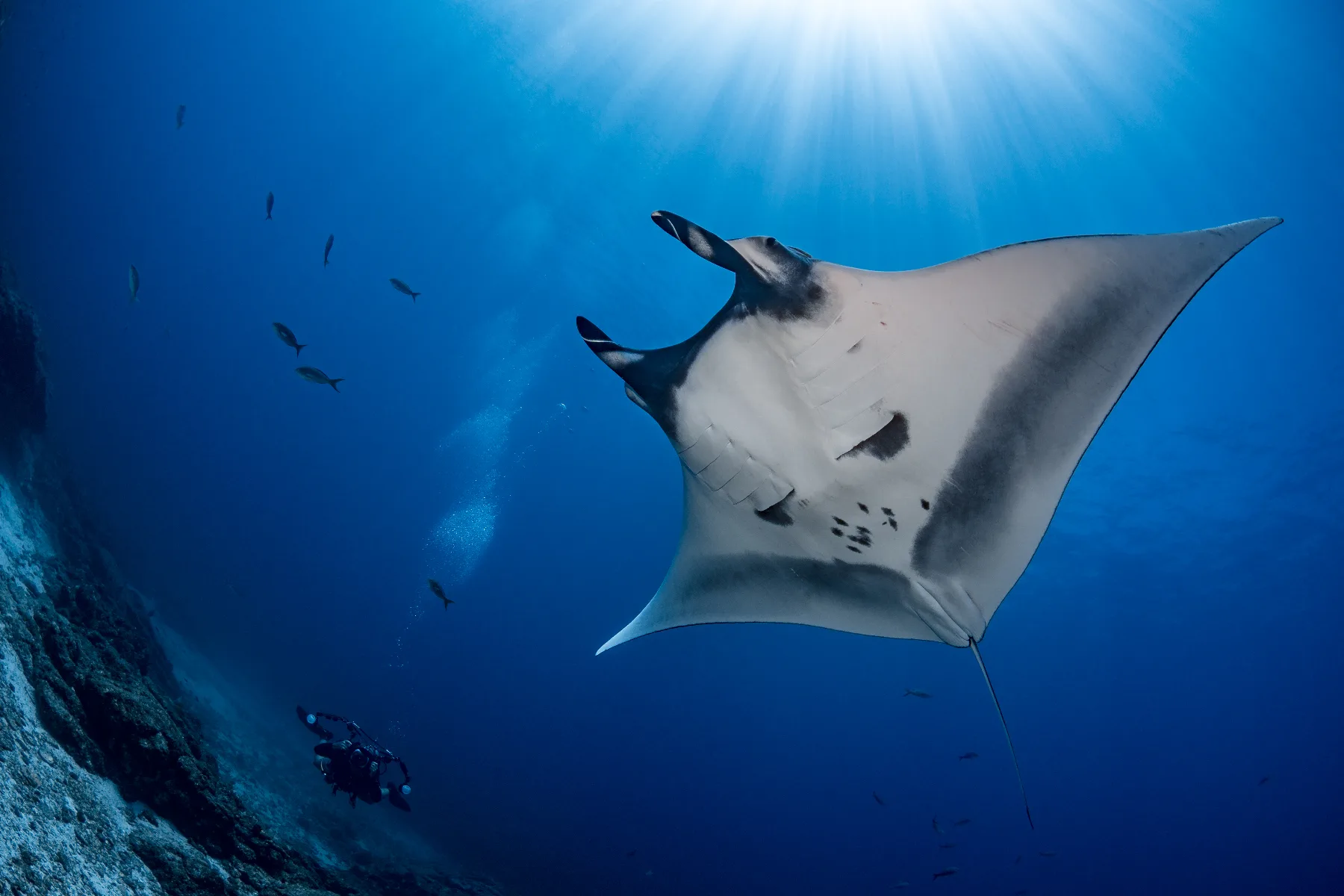
The spot pattern on a manta’s belly is unique to the individual and stays stable for life.
The Manta Trust runs IDtheManta, a global photo identification database that turns holiday photographs into sighting records. Thousands of individual mantas are logged in it, many of them submitted by divers and snorkelers with no research background at all.
Shoot the belly flat on, get the whole area between the gills, and log the date and the location. Either your photo matches an animal already on file, and you have added a point to its movement record, or it does not, and you have put a new manta into the global catalog.
This matters more than usual right now. The Atlantic manta’s range is barely mapped, and every belly shot from Florida, the Caribbean or Brazil helps draw the edges of it.
What You Can Do on World Manta Day
🩵 Upload your manta photos to IDtheManta so they become sighting records.
🩵 Pick operators that cap group sizes, brief properly and talk about the animals before they talk about your photos.
🩵 Ask your government where it stands on enforcement. The Appendix I listing is only worth what the ports behind it are willing to check.
🩵 Support the fieldwork: the Manta Trust, the Marine Megafauna Foundation, Mobula Project Indonesia and the regional teams doing landing site surveys. That money pays for boat fuel, ID databases and DNA testing.
🩵 Look at what you eat. Mantas are rarely the target of a net, and the nets do not care.
🩵 Tell somebody that there are three species of manta ray now and that we protected all of them from trade last year. Good news travels badly in conservation, and this is good news.
A manta takes about a decade to grow up and produces one pup at a time. The decision that finally took them out of international trade was made in a conference hall in Uzbekistan by people most divers will never meet, and it happened because enough of us kept making noise about an animal that cannot make any.
The paperwork is right now. The water has to catch up.
Our ocean, our responsibility.