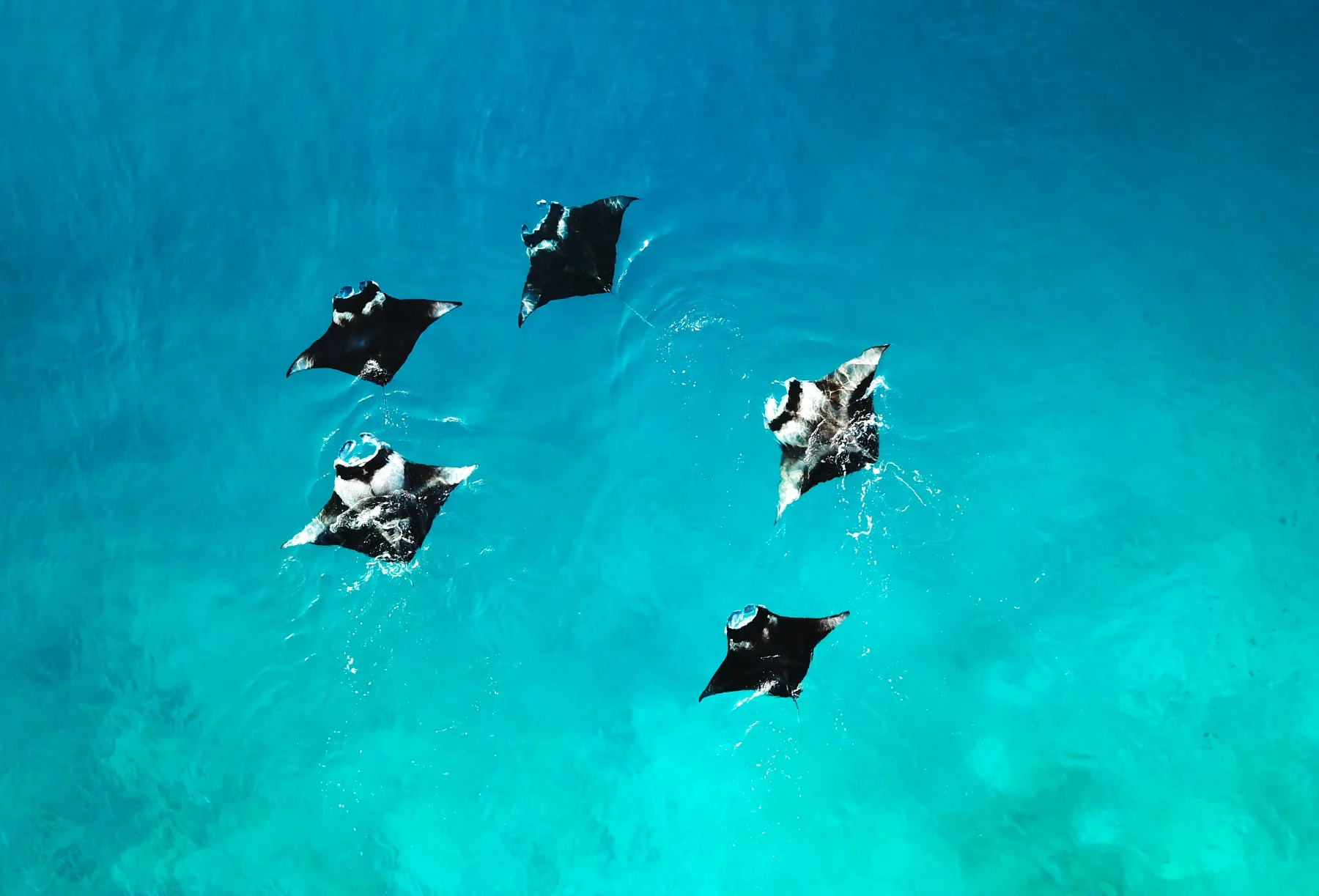
There is a specific kind of silence that comes over people when a manta ray appears. Divers who chatter through a whole surface interval go quiet. Snorkelers who were fidgeting with their masks suddenly float completely still. It is not fear, exactly. It is the recognition that something very large and very calm has decided to share the water with you, and that it is in no hurry at all.
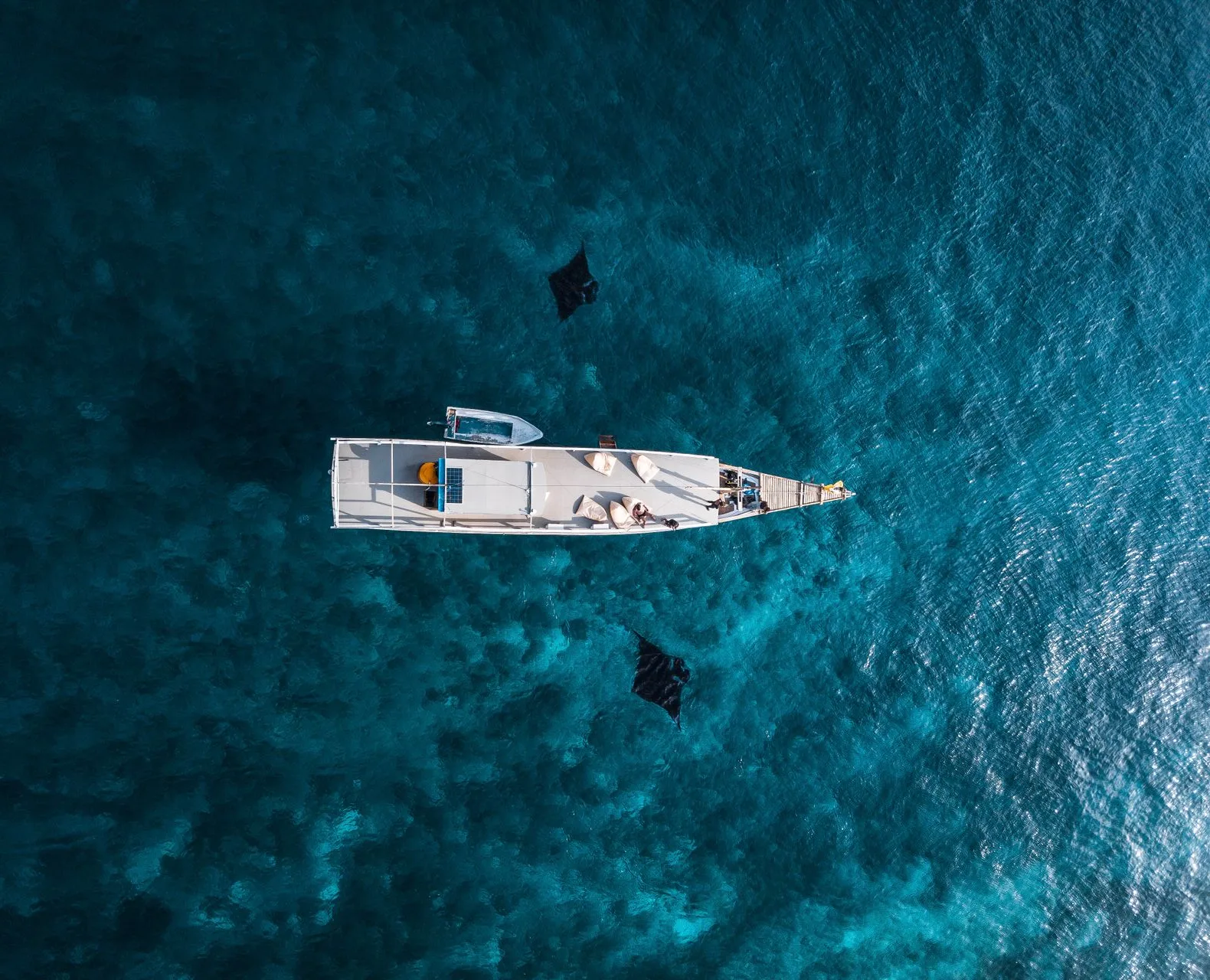
Manta rays sit in a strange emotional category. They are among the biggest animals a recreational diver is likely to meet, yet they are also among the least threatening. No teeth worth mentioning, no venomous barb, no aggression. Just a slow, deliberate creature moving through open water like a bird riding thermals. That combination, enormous and harmless, is exactly why they undo people.
This is a piece about what it means to dive or snorkel with them: what the animal actually is, how encounters tend to work, and how to plan one without lying to yourself about what nature owes you. It is not a promise that you will see one. That honesty matters, because the marketing around manta encounters rarely offers it.
The Animal Itself
It helps to understand what you are looking at, because it changes how the encounter feels.
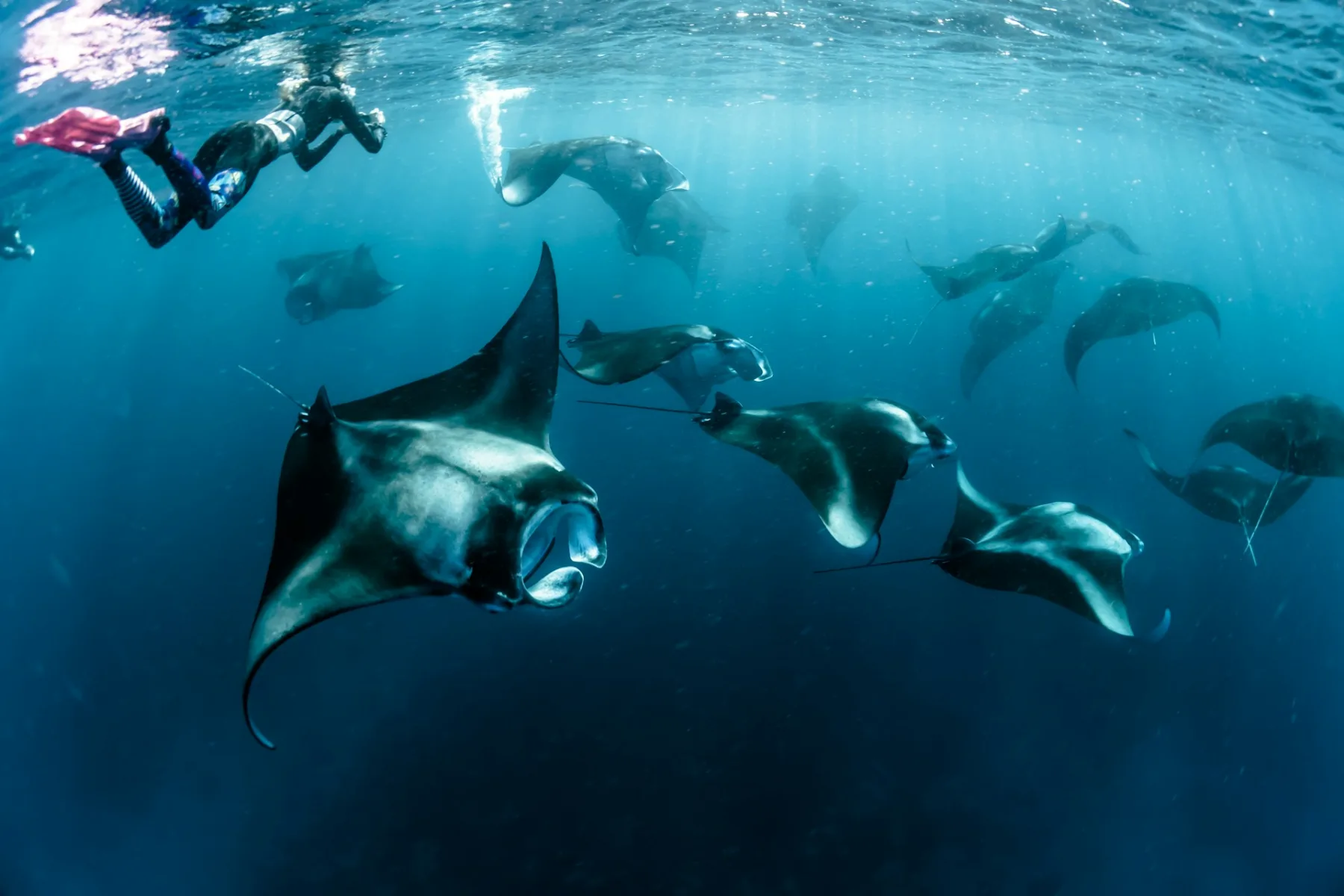
Manta rays are filter feeders. Everything about them, the wide wing-span, the two paddle-like flaps that unfurl beside the mouth, the cavern of a mouth itself, is built to strain plankton from the water. They are not hunting you, and they could not bite you if they wanted to. Those flaps beside the mouth, the cephalic fins, roll up like scrolls when the animal is cruising and open out to funnel food when it is feeding.
There are two species worth knowing apart: the reef manta and the larger oceanic manta. The reef manta is the one most encounters revolve around, since it tends to stay closer to coastal cleaning stations and feeding grounds. The oceanic manta is bigger, ranges further, and is seen less predictably.
The detail that stays with people is that mantas appear to be curious. They circle. They pass close and come back. Researchers debate how much of this is genuine investigation versus a manta simply working a patch of water it likes, but from inside a mask it reads as an animal choosing to look at you. That is rarer than it sounds. Most big marine animals ignore divers entirely.
Cleaning Stations, where the Magic Usually Happens
If you dive with mantas rather than snorkel, there is a decent chance it will be at a cleaning station.
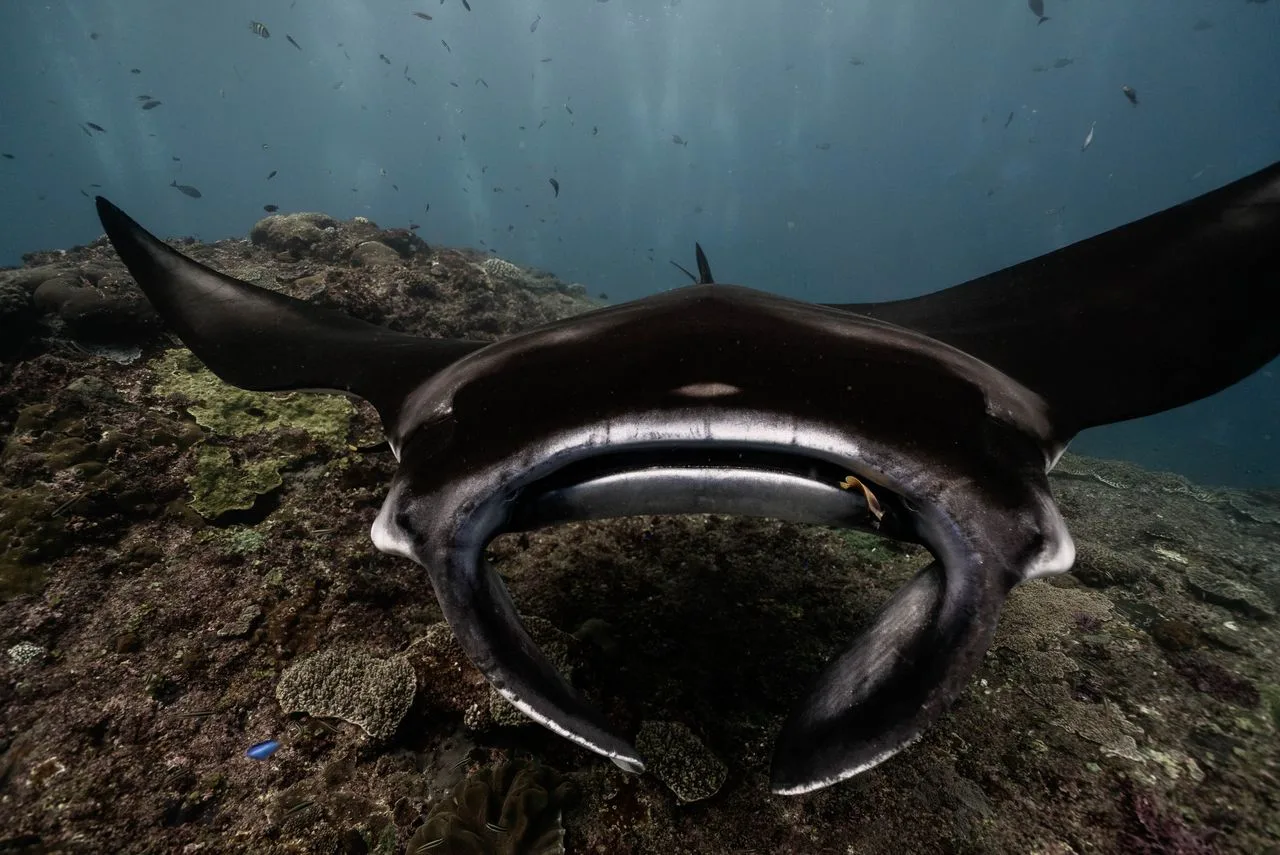
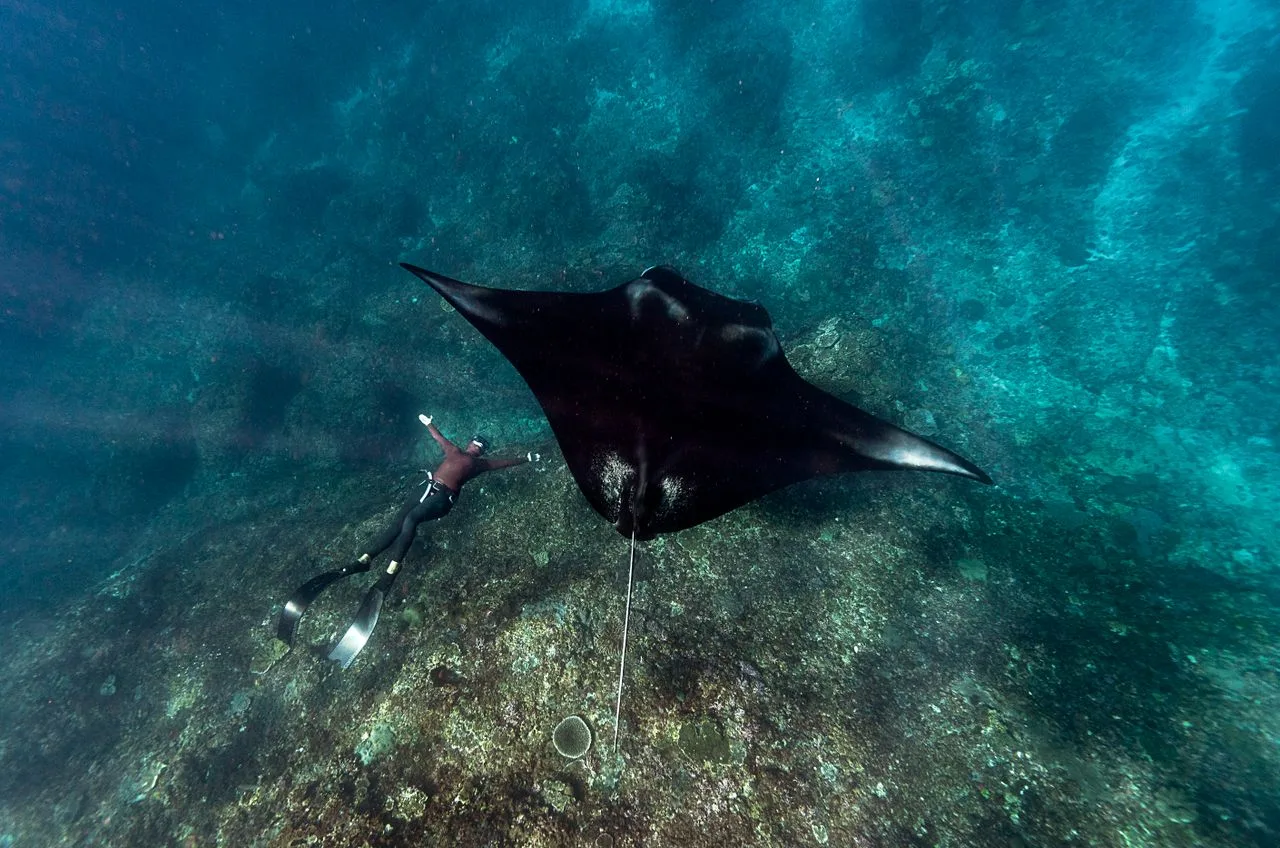
A cleaning station is a spot on the reef, often a coral outcrop or bommie, where small fish set up shop and remove parasites and dead skin from larger animals. Mantas queue for this. They hover, almost stationary, sometimes tilting and turning slowly while cleaner wrasse and other small fish work over their skin and gills. For a diver it is close to ideal, because a hovering manta is a manta you can actually watch.
The etiquette at a cleaning station is strict and it matters. You settle low, off to one side, and you do not swim into the space above the coral where the mantas want to be. Crowd the station and the mantas simply leave, which ruins it for everyone and, more importantly, denies the animal something it needs. The best guides brief this hard before you get in the water. Follow the briefing exactly.
Cleaning-station diving also rewards patience over pursuit. The people who see the most tend to be the ones who pick a spot, control their breathing, and wait. Kick around chasing a shape and you will spend your air and see less.
Feeding Aggregations and the Surface Show
The other great manta encounter happens near the surface, and it is where snorkeling comes into its own.
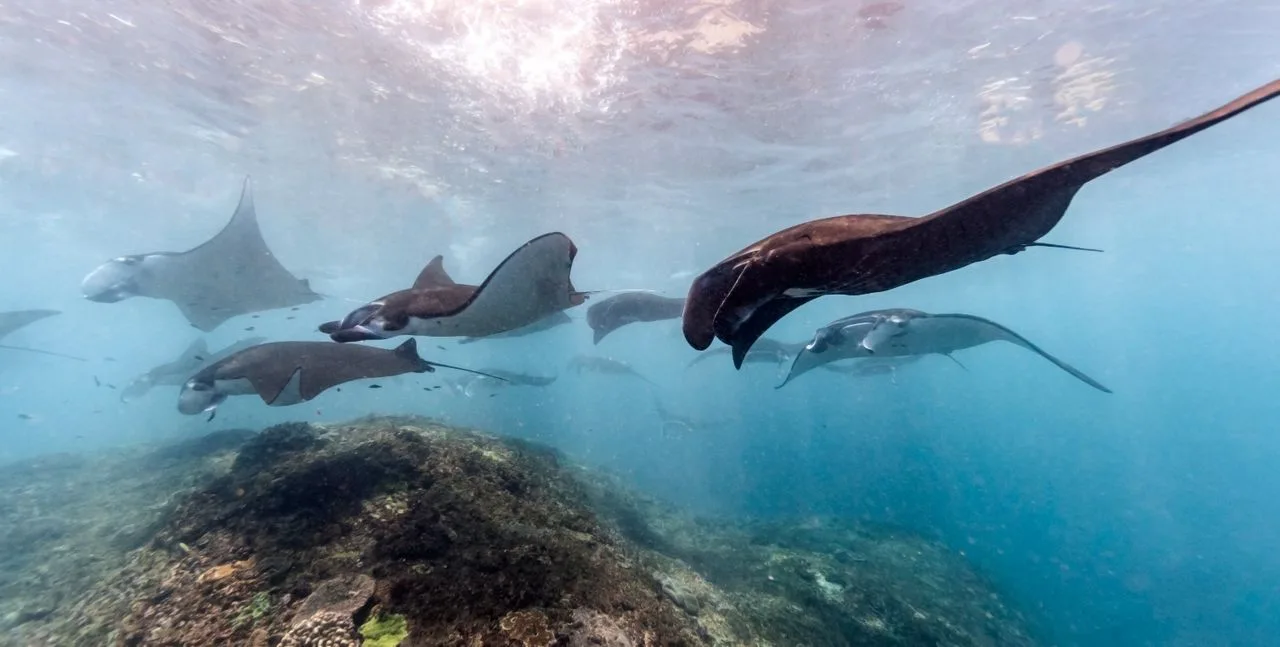
When plankton concentrates, mantas gather to feed, and they do it in ways that look almost choreographed. They somersault backwards through a dense patch of food, looping in slow barrel rolls to keep passing through the same rich water. Several mantas feeding together may fall into line, one behind another, forming what looks like a chain. From the surface with a snorkel, this can be the encounter of a lifetime, because it plays out in the top few metres of water where the light is best.
This is also the encounter most accessible to people who are not divers. You do not need a certification to float on the surface and look down. What you do need is honesty about conditions. Feeding aggregations depend on plankton, plankton depends on season and current, and current is exactly the thing that makes a site harder for a nervous beginner.
A word on the “never snorkeled before” question, because people ask it constantly and deserve a straight answer. The manta will not hurt you. The animal is the safe part. The part to respect is the water and your own inexperience in it. Practise breathing through a snorkel somewhere flat and calm first, go with a guide who runs small groups, use a float if it settles your nerves, and accept that your entire job is to relax and watch. Get those basics right and a first-ever snorkel becomes one of the best things you have ever done rather than a stressful one.
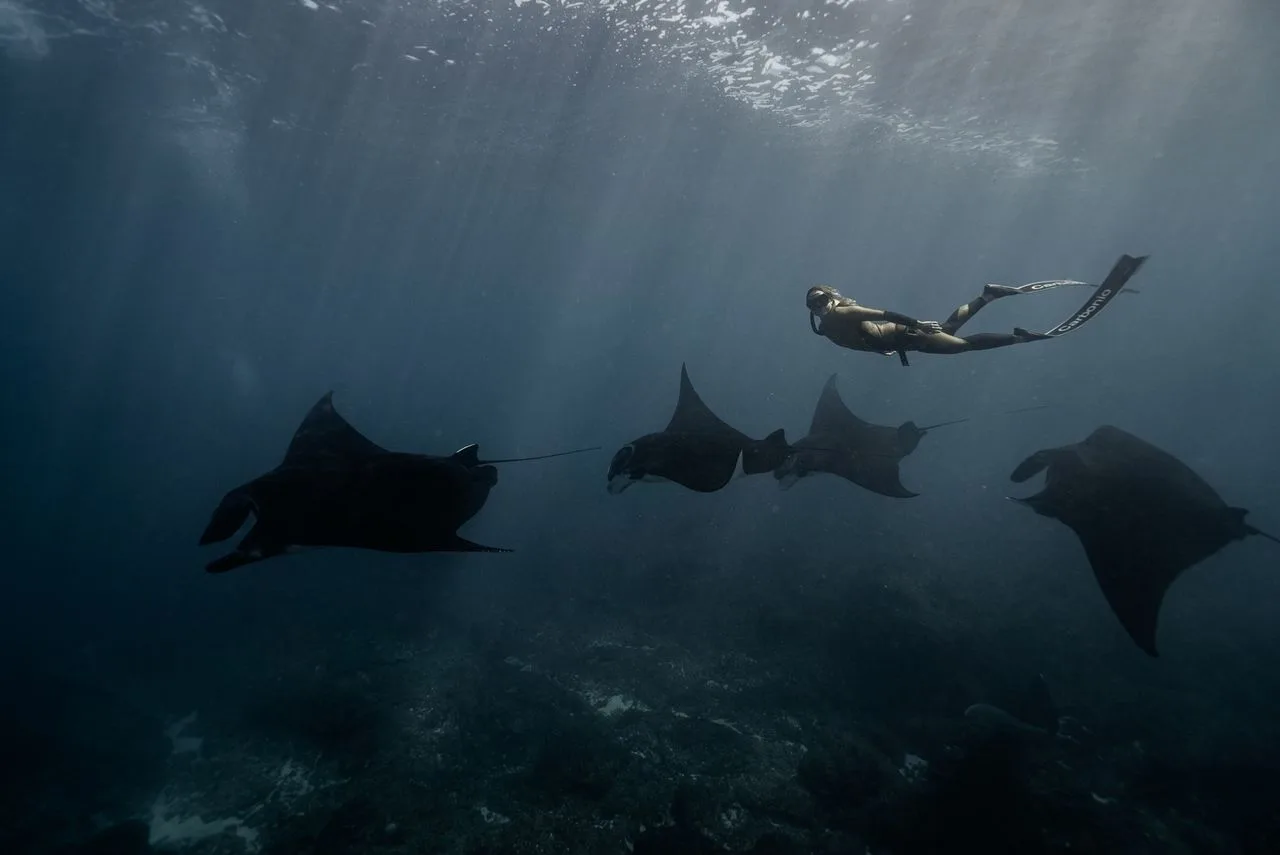
Touching, Chasing, and Why Restraint Is the Whole Game
Here is the rule that underpins every good manta encounter: you do not touch, you do not chase, you do not block.
Manta skin is coated in a mucus layer that protects them from infection, and a human hand strips it. Touching is not a harmless thrill, it is a small injury. Chasing burns the animal’s energy and teaches it that divers mean stress, which pushes mantas away from the very sites that depend on them. Blocking a manta’s path, or crowding the water above a cleaning station, does the same thing more subtly.
How much space to give a manta ray
The numbers are not arbitrary, and they are the same at almost every well run site in the world.
Three metres is the minimum. Keep at least 3 metres, roughly 10 feet, between you and any manta at all times. Manta Trust research at Maldivian cleaning stations found that divers who held more than 3 metres of distance and stayed off the station itself provoked almost no reaction from the animals. Inside that distance, mantas start responding to you instead of getting on with their day.
Ten metres if the animal is unsettled. If a manta is cruising, approaching the reef, or circling a cleaning station without having settled onto it, back off to around 10 metres and let it commit. Crowding an animal in that moment is the single most common way a cleaning visit gets aborted.
Never above, never below, never behind. Do not position yourself directly over a manta or directly under it. Approach from the side, within its field of vision, so it can see you coming and keep a clear path ahead. Coming in from behind reads as predator behaviour and will frighten it. If a manta does pass overhead, minimize your bubbles.
Stay at the edge of the cleaning station. Settle low at the base or off to one side. Do not swim over the top of it or up the sides. The station is the point of the whole encounter, and it stops working if it feels occupied.
If a manta swims toward you, hold still and let it pass. This is the part people get wrong in the moment. The instinct is either to swim at it or to fin backwards in a panic, and both create movement in its path. Stay put, keep breathing, keep your hands in. If you are drifting into its line, move calmly out of the way to the side rather than reversing along its route, and never block an escape path toward open water. As it passes, do not turn and follow. You will not catch a manta, and the attempt is what teaches it to avoid the site.
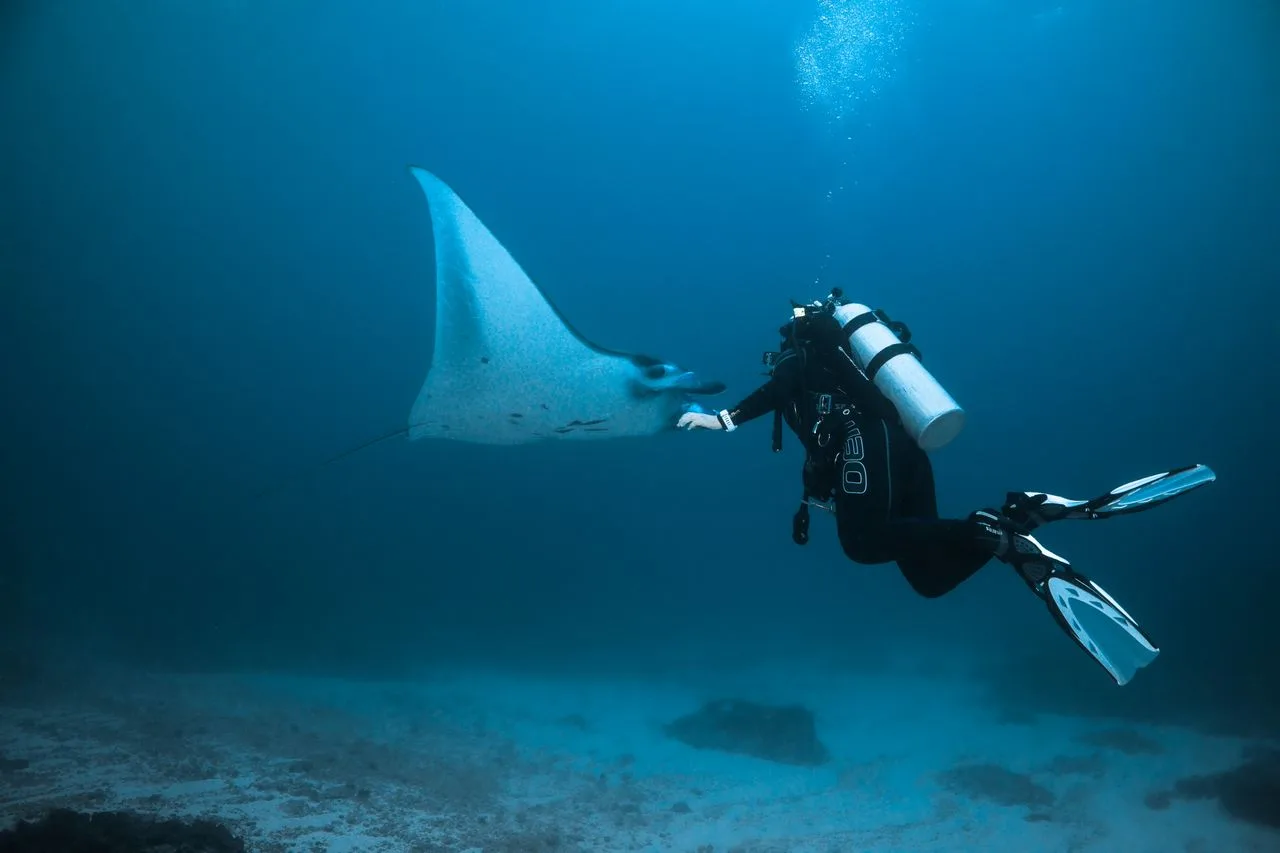
Stay behind your guide, do not go closer than they do, and leave the scooters and loud gadgets on the boat.
The paradox is that restraint produces better encounters, not worse ones. Hold still and stay low and a curious manta is far more likely to come close on its own terms. Every diver who has been buzzed at arm’s length by a manta got there by doing nothing at all.
This restraint is also conservation. Mantas are slow to reproduce, wide-ranging, and vulnerable to the pressures we already know about: entanglement, boat strikes, and targeted fishing driven largely by demand for their gill plates. Both species are on the IUCN Red List, the reef manta as Vulnerable and the oceanic manta as Endangered. Our ocean, our responsibility. A dive tourism model that treats them gently is part of what keeps them around to be seen at all, and the same restraint applies at every manta site on the map.
Who Diving With Manta Rays Is For
This is for the person who can accept that the ocean does not run on a schedule.
Manta encounters are not guaranteed. They are weather, season, plankton, current and luck stacked on top of a genuinely wild animal that owes you nothing. Book a trip expecting a certainty and you set yourself up to feel cheated. Book it understanding that you are buying a good chance at something extraordinary, and every part of the experience improves, including the dive where no manta shows and you simply enjoy the reef.
It is for the diver who is happy to sit still and wait, and for the snorkeler willing to get comfortable in the water first. It is not for anyone whose idea of a wildlife encounter involves getting the animal to perform. Mantas do not perform. They go about their lives, and on a good day they let you watch.
Where Are the Best Places to Dive With Manta Rays?
There is no single “best manta destination”, only sites where the odds are better and the behaviour is more reliable. Each of these gets the full treatment, with seasons and conditions, in the best places to dive with manta rays. Some places are built around cleaning stations, some around seasonal feeding, and a few around oceanic mantas that only show up if you go offshore to find them.
Nusa Penida, Indonesia. The most accessible reef manta site from Bali, and one of the few where encounters hold up across the whole year. Manta Point is a cleaning station on an exposed stretch of coast, so expect surge, cooler water than you packed for, and a shallow dive where you settle on the sand and wait. Crowding is the real issue at this site (including snorkelers), so pick your operator on group size, not price.
Komodo National Park, Indonesia. Karang Makassar, usually called Manta Alley or the manta highway, gives you both behaviours in one park: mantas hanging at cleaning stations and mantas feeding in current. The current is the point and also the catch. Bring a reef hook if the operator uses them, and be honest about your comfort in moving water.
Raja Ampat, Indonesia. Manta Sandy in the Dampier Strait is a designed encounter in the best sense, with a marked line divers stay behind so the cleaning station is never crowded. Peak season runs through the northwest monsoon months when plankton concentrates.
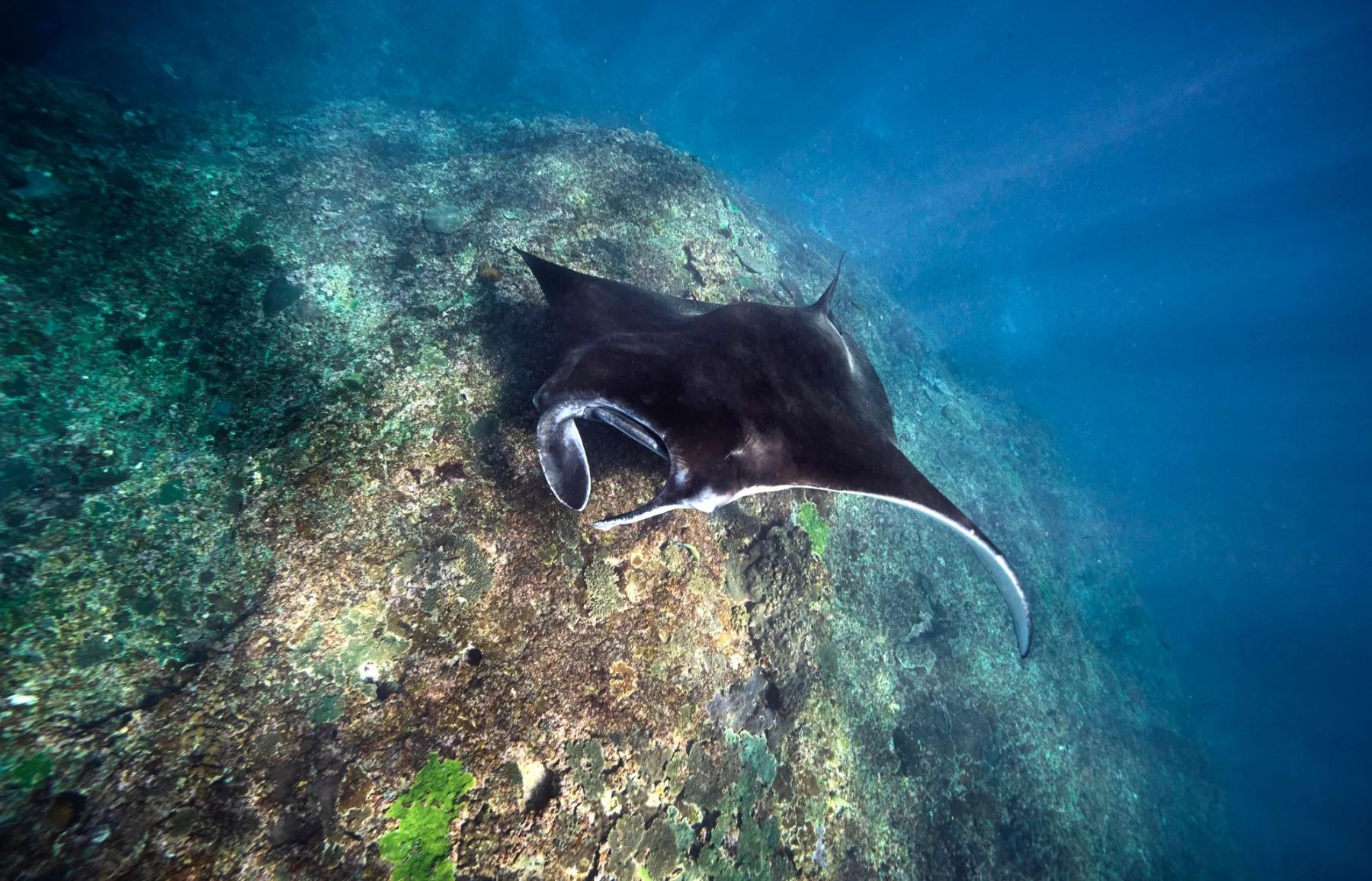
Hanifaru Bay, Maldives. The one that produces the images everyone has seen: hundreds of mantas cyclone feeding in a shallow bay in Baa Atoll. It is snorkel only, time limited, and heavily regulated, which is exactly why it still works. The window is the southwest monsoon, roughly May to November, and even then it depends on plankton and tide.
Kona, Hawaii. The night encounter. Lights are set on the seabed and at the surface, plankton gathers around them, and mantas come to feed within metres of you. It divides people. It is a managed, artificial setup, but it is also long running, well studied and run under a shared code of conduct, and for many people it is their first manta.
Revillagigedo (Socorro), Mexico. Liveaboard only, a long crossing from Baja, and the payoff is oceanic mantas rather than reef mantas. These are the big ones, and they are known for approaching divers on their own initiative. Season runs roughly November to May.
Worth knowing about too: Isla de la Plata in Ecuador, which hosts one of the largest known oceanic manta aggregations between June and October, and Tofo in Mozambique for reef mantas on cleaning stations.
If you are choosing between them, choose on season first and conditions second. A world class manta site in the wrong month is just a nice reef. Look at the the dive destination guides side of it before you book flights, and read up on how well the site is actually protected before you pick it, because manta etiquette varies from a marked line on the sand to nothing at all.
Beyond the Encounter
The thing that lingers after a manta swims off is not really about size. It is about how little the animal cared to hurry, and how completely it seemed to belong.
If you go, go with an operator that briefs the etiquette properly and enforces it, that keeps group sizes small, and that talks about the animals as wildlife rather than an attraction. The way a place treats its mantas tells you almost everything about whether they will still be there in ten years.
And if you are researching where and when, treat the honest, unglamorous questions as the important ones. Read up on how seasonality works with big animals before you commit to dates, and choose your site for the conditions you can actually handle, not the photo you saw online. Meet a manta on its terms and it will be one of the calmest, strangest, best encounters the ocean has to offer.