Knowing how to be a good tourist in the ocean matters more every year, because more of us are getting in the water than ever.
In 2025 the world logged around 1.52 billion international tourist arrivals, a post-pandemic record, and a lot of those trips ended at the sea. On a beach, on a boat, face down in a mask looking at a reef. Coral reefs alone draw more than 70 million trips a year.
Tourism is the reason many of the reefs I have dived are still protected. It is also the reason some of them are basically rubble. Both are true at the same time, often along the same stretch of coast, and what tips a place one way or the other is usually the people in the water.
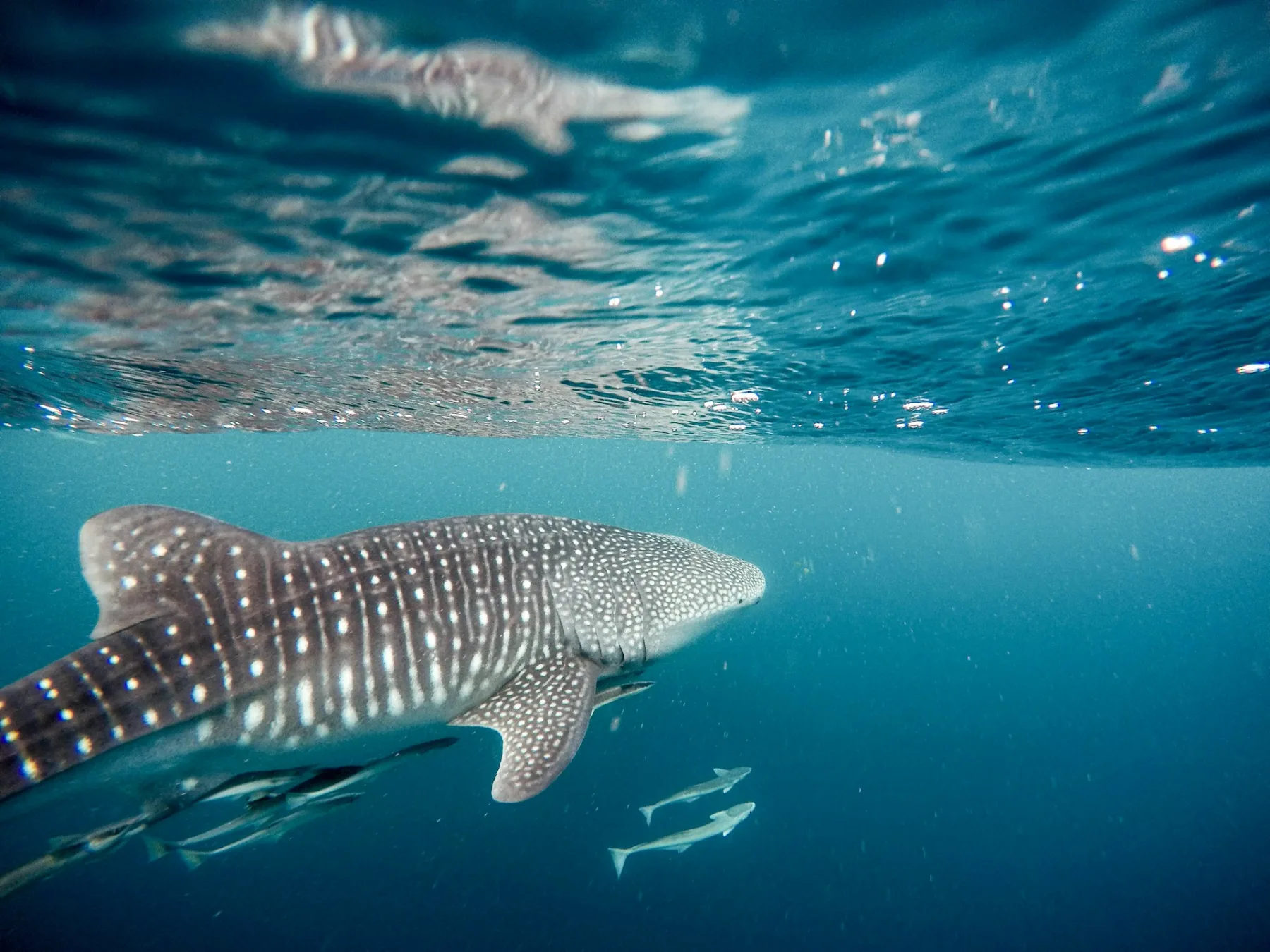
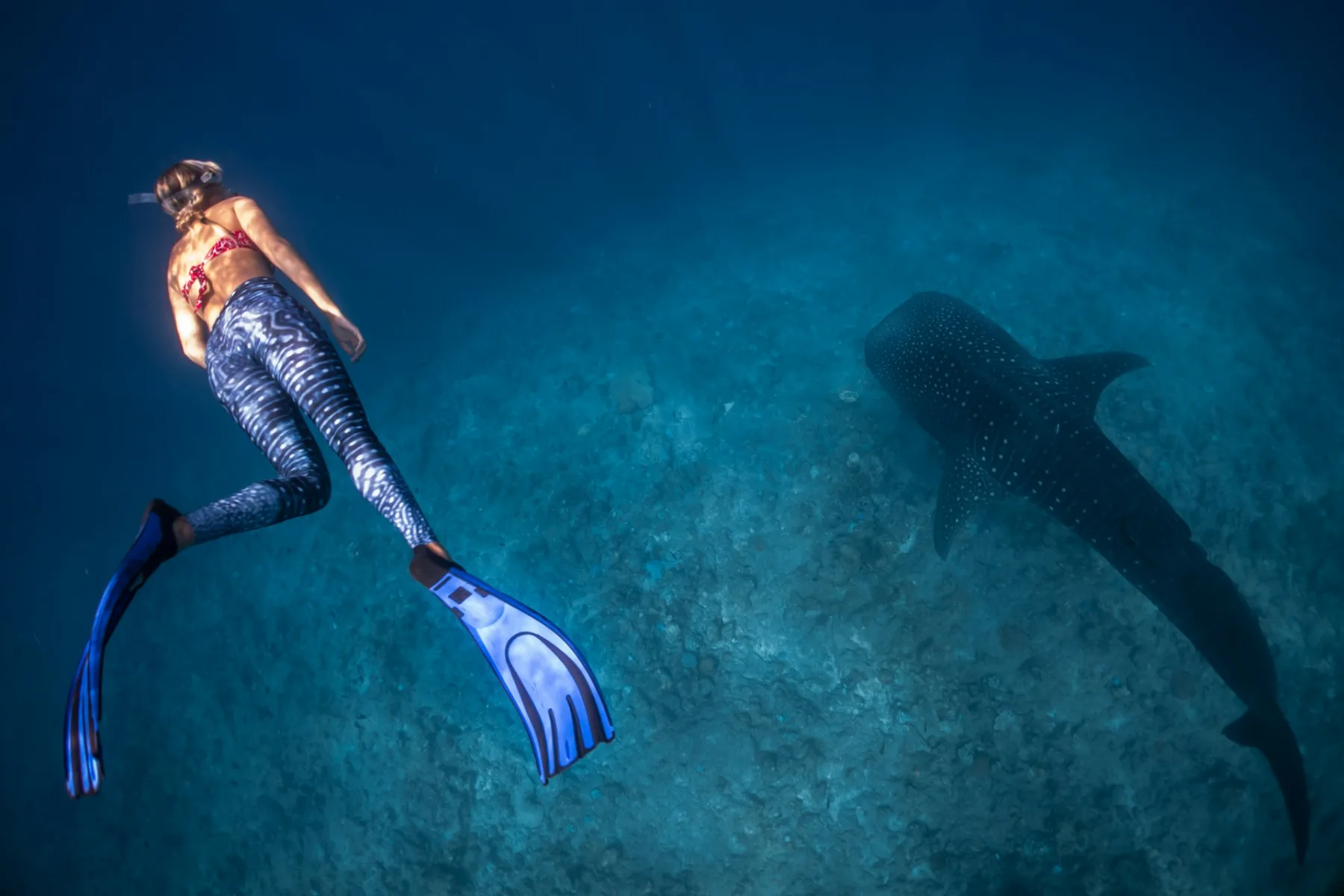
Social media decides where a lot of those people go. One “content creator” with a few hundred thousand followers posts a clip of a whale shark passing under their fins, and within a season that site is booked out with people who want the same fifteen seconds. Wildlife selfies have exploded on social platforms in recent years, and a large share of them show someone hugging, holding or handling a wild animal.
What worries me is the shift in what people are chasing. A lot of travelers now arrive wanting the video more than the encounter, and those two things ask for opposite behavior. The encounter asks you to hang back, stay still and let the animal choose the distance. The video asks you to get closer, and to get closer again when the first take does not look big enough. Operators feel that demand and answer it, which is how sites end up baiting animals so the clip is guaranteed.
Swimming with a manta, meeting a whale shark and diving a famous reef sit near the top of a lot of bucket lists, and I understand why. The ocean I dive is full of animals worth crossing the world for.
This is a guide to going beyond the checklist, sorted by where you actually are: on the beach, in the water, on the boat, and at the moment you pay for something.
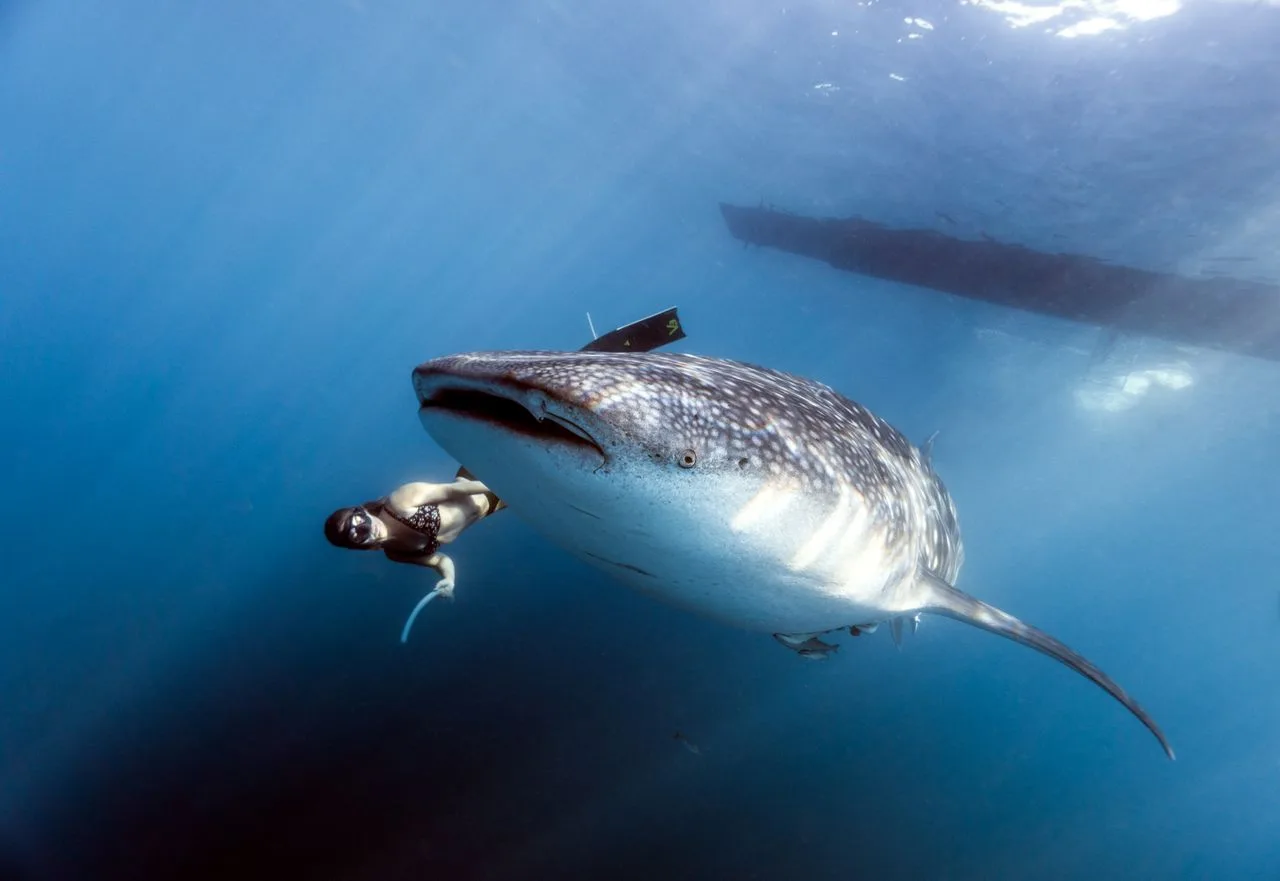
What Tourism Gives the Ocean
Money is the argument governments listen to, and the ocean happens to have a strong one.
A global study published in Marine Policy valued coral reef tourism at close to $36 billion a year. More than 70 countries and territories have what the researchers called million-dollar reefs, earning over a million dollars per square kilometer. When a reef earns that much alive, protecting it becomes economic policy.
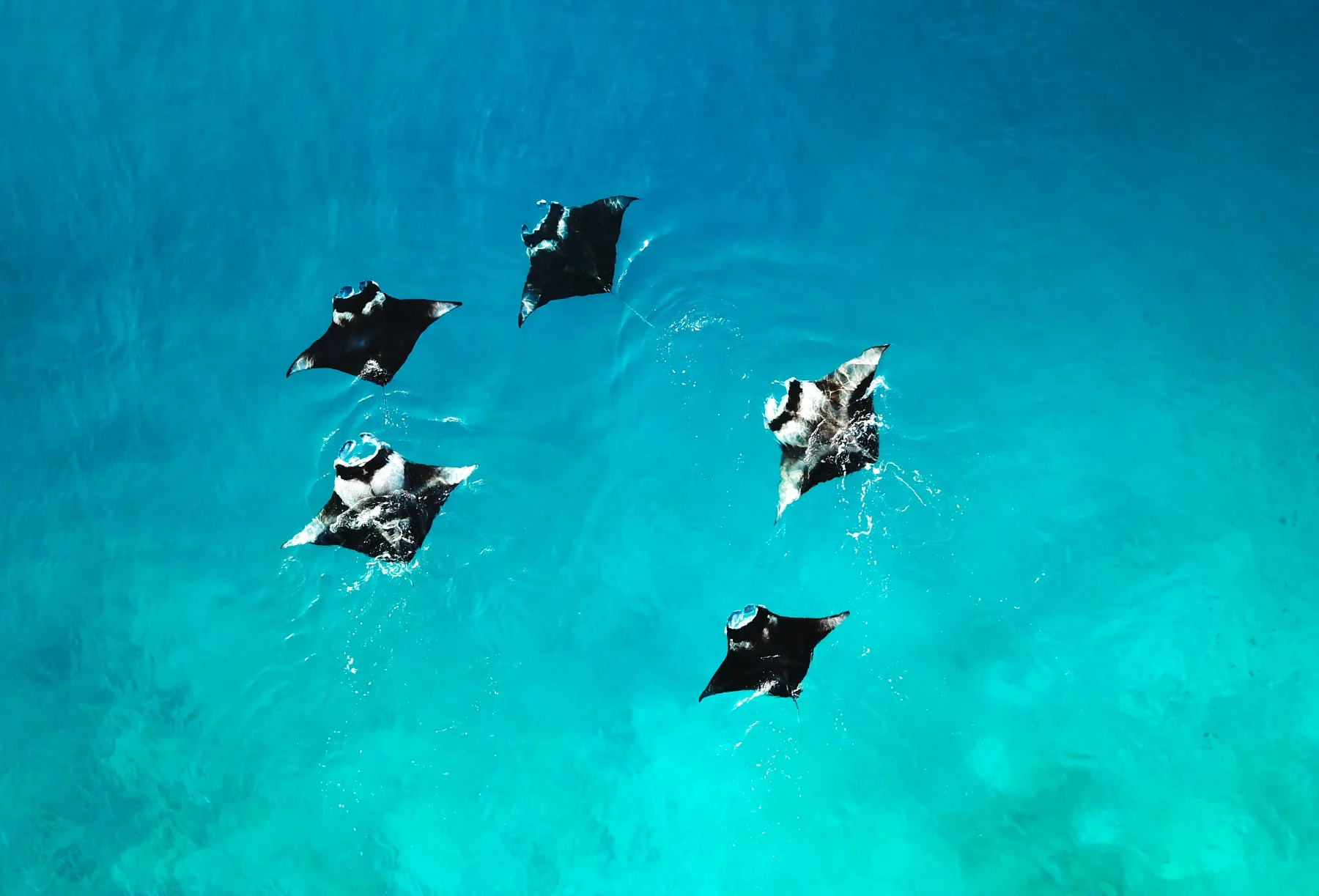
Manta rays make the case even more clearly. A 2013 study put the value of manta watching at around $140 million a year across 23 countries, while the global trade in their gill plates was worth about $5 million. In Indonesia, fishers made roughly $400,000 a year selling gill plates while manta tourism brought more than $15 million into coastal communities, and in 2014 the country protected mantas across all of its waters. Every trip you take for diving with manta rays adds weight to that argument.
Cabo Pulmo in Mexico takes it further. A fishing village stopped fishing its own bay, fish biomass climbed 460 percent, and much of the village now makes a living from the divers who come to see what came back.
Then there is the fee you pay at the dock, the most complained-about few dollars in diving. In many parks that money pays for rangers, mooring buoys and patrol boats. Marine protected areas only work when somebody enforces the rules, and enforcement costs money.
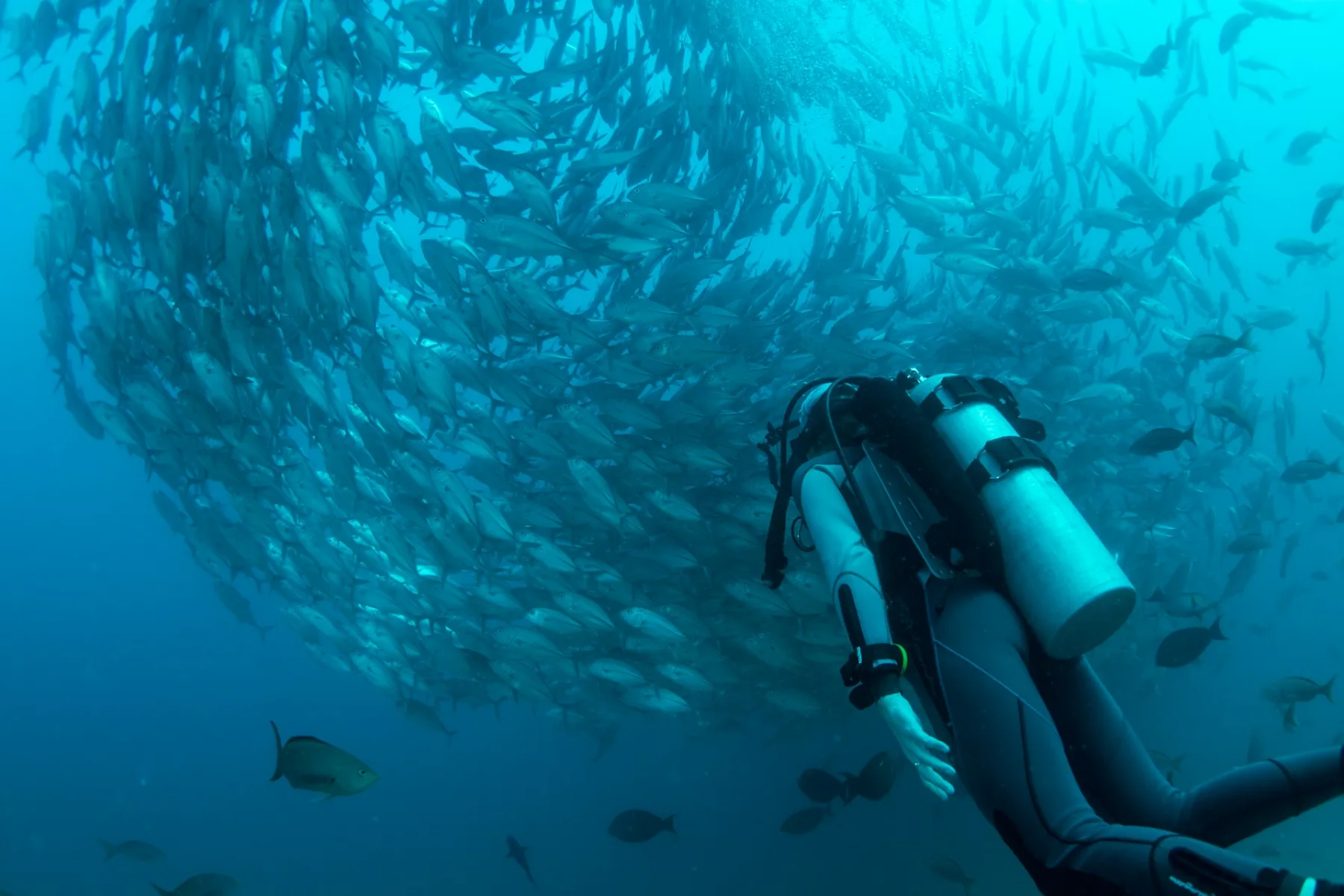
What Tourism Costs the Ocean
The same money that protects a reef can bury it.
Hurghada was a small fishing town in the 1980s. Hotel construction along its coast cleared large stretches of beach and coral reef, and much of the live coral in front of the hotels is now gone. I spent forty-five days diving in Hurghada, all of it from boats, because the reefs worth diving are the ones nobody could build on.
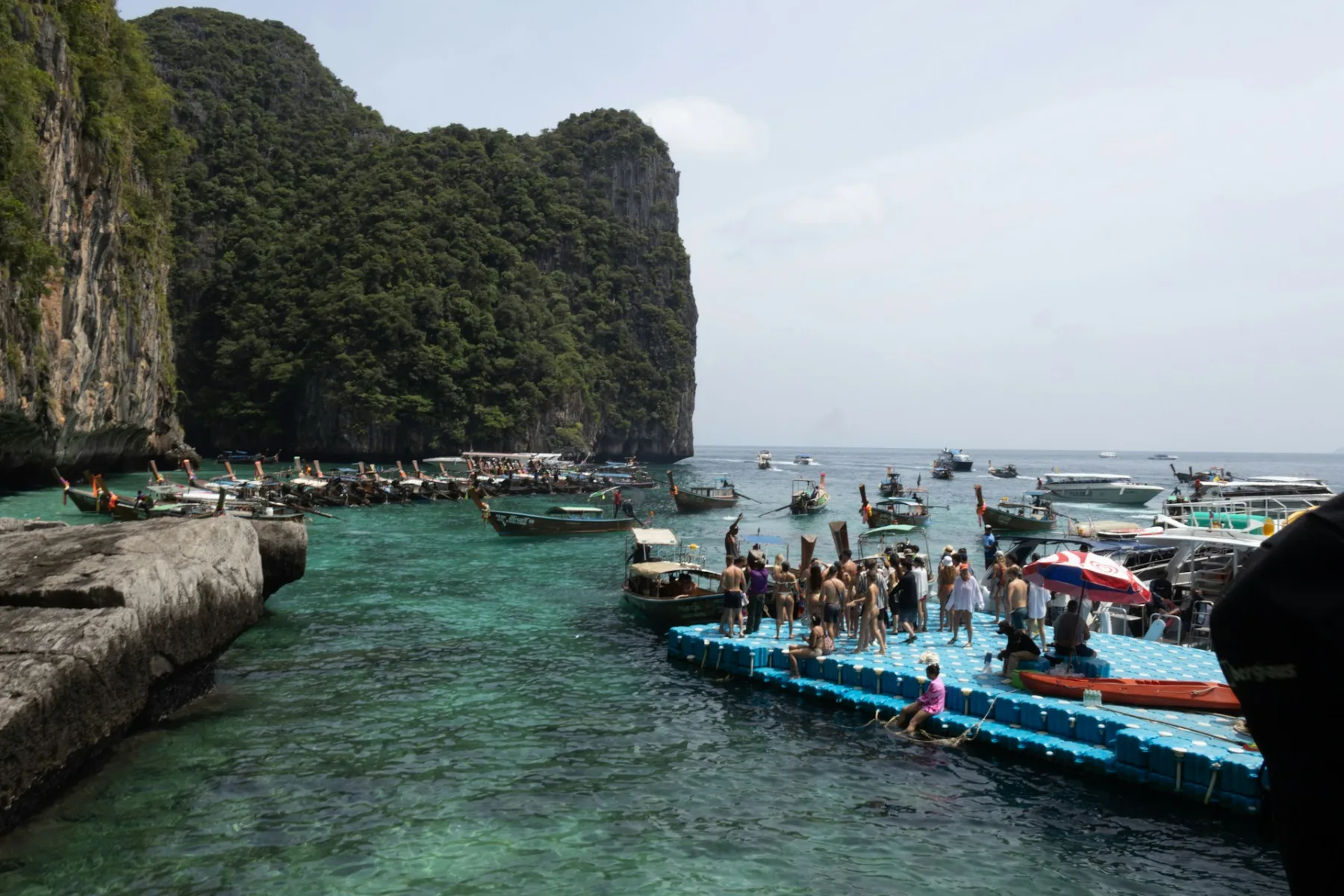
By 2018, Maya Bay on Thailand’s Phi Phi Leh was taking up to 5,000 visitors a day, with more than 200 boats dropping anchor in a bay about 250 meters long. Live coral cover fell to around 8 percent before the authorities shut it completely. What happened next is in diving in Ao Nang, and it is one of the most hopeful stories in Asian diving.
In the Mediterranean, WWF found that tourists cause a 40 percent spike in the marine litter entering the sea every summer. Ninety-five percent of it is plastic, and more than 200 million people visit the region each year.
None of that is an argument for staying home. It is an argument for paying attention to the next four sections.
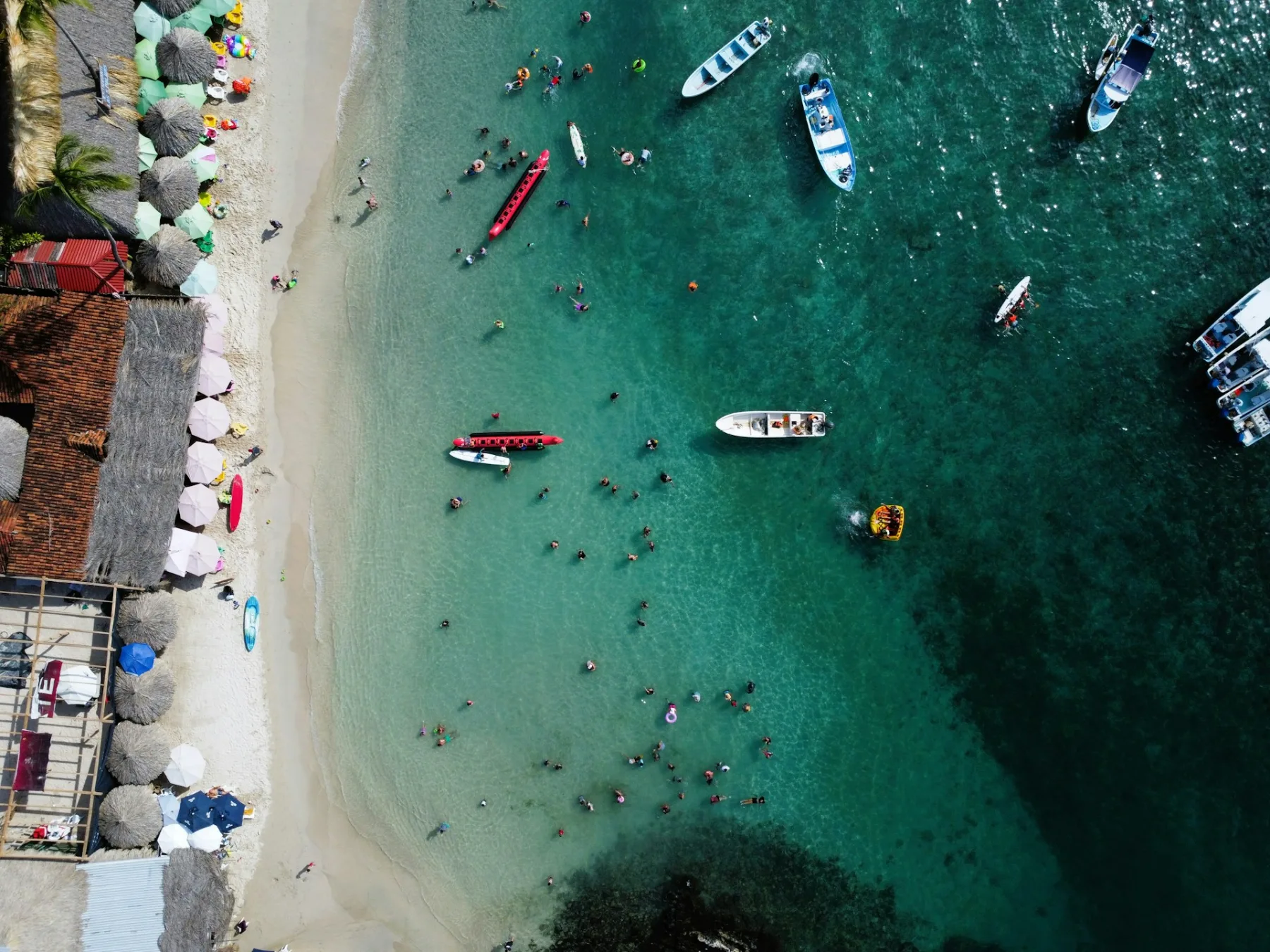
On the Beach
Most people who affect the ocean never put their face in it. The beach is where the damage is easiest to avoid and easiest to miss.
🌊 Cover up instead of coating up. A long-sleeve rash guard and a hat protect the reef better than any bottle. For exposed skin, use mineral sunscreen with non-nano zinc oxide, and read the ingredients, because labels like reef-safe are not regulated in most countries.
🌊 Bring a refillable bottle and a bag for your own rubbish. Tourist season is when coastal waste systems are most overwhelmed, and most beach plastic is single-use packaging somebody carried down that morning.
🌊 Take nothing home. Shells are houses, and a coral fragment on a shelf is a piece of a dead animal that took decades to grow. It’s also illegal to travel with them.
🌊 Respect nesting beaches. Keep umbrellas and vehicles off marked nesting zones, keep lights and flash away from the sand at night, and never dig up or handle a nest. Hatchlings navigate by light on the horizon, and a phone torch sends them the wrong way.
🌊 Do not feed the fish. Bread in the shallows changes what fish eat, where they stay and how they behave with people, and none of it is good for them.
In the Water
Snorkeling, freediving, scuba diving and surfing all put you in the same place, and the rules that matter are the same for all of you.
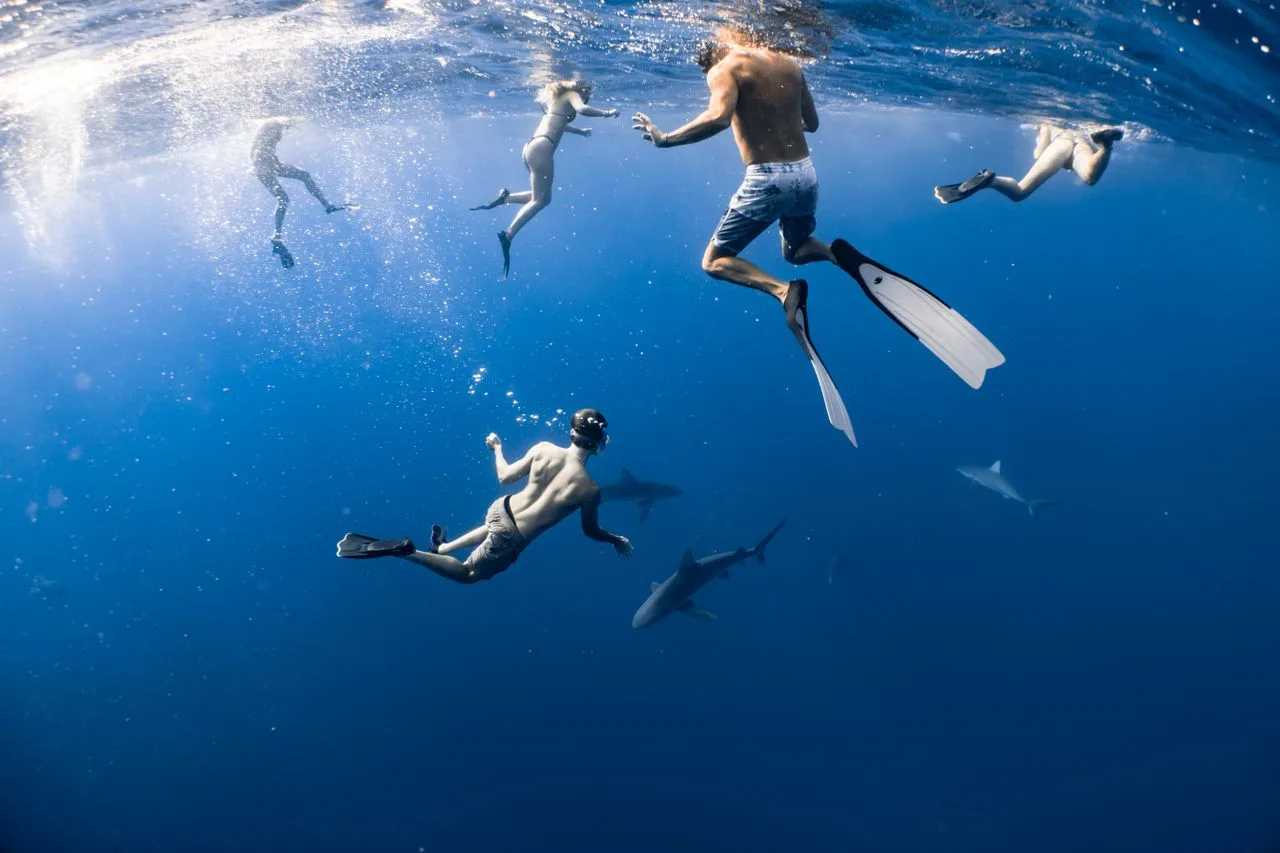
🌊 Keep your distance and let the animal choose. Restraint is what gets a manta to swim over and look at you, and crowding is what makes it leave a cleaning station it needs. Stay to the side rather than above or in front, keep your hands in, and if you want the shot, wait for the animal to come to you instead of swimming at it.
🌊 Touch nothing, including the reef itself. Coral is a living animal under a thin layer of tissue, so do not step on it, kneel on it or grab it to steady yourself. It is not a rock for you to rest on, it is an animal that suffocates and dies where your fin landed or where you stomped on. If your buoyancy is not good enough to hover without touching down, wear a life jacket.
🌊 Keep your hands off the animals too. Fish and turtles carry a protective slime coat that hands strip away, which leaves them open to infection. Do not pick up ANY animal, even if an ignorant tour operator encourages you to, and that includes lifting starfish out of the water for a selfie, which kills them easily, and grabbing crabs, urchins or anything else that fits in a hand.
🌊 Never lift a turtle hatchling, even at an organized release. The crawl from the nest to the water is the whole point of it. That crawl is how a hatchling reads the beach it will come back to lay on decades later, and it is what triggers the swimming frenzy that carries it past the shallows where everything is waiting to eat it. Carrying one to the waterline skips both, and warm hands overheat an animal that weighs a few grams. Stand back, keep torches and flash off the sand, and let it walk.
🌊 Never chase, block or corner an animal. If it changes direction because of you, you are too close. Cutting off a turtle’s route to the surface means stopping it from breathing, and a group circling to keep an animal in frame is a wall it has to push through.
🌊 Stay small in the group. Contact goes up when people bunch together, and so does stress on the animal. If the boat is putting twenty snorkelers in the water at one site, hang back and go last rather than joining the scrum.
🌊 Say something, kindly, when someone in your group is standing on the reef. Most people have no idea they are doing it, and a quiet word on the surface works far better than a lecture in front of everyone.
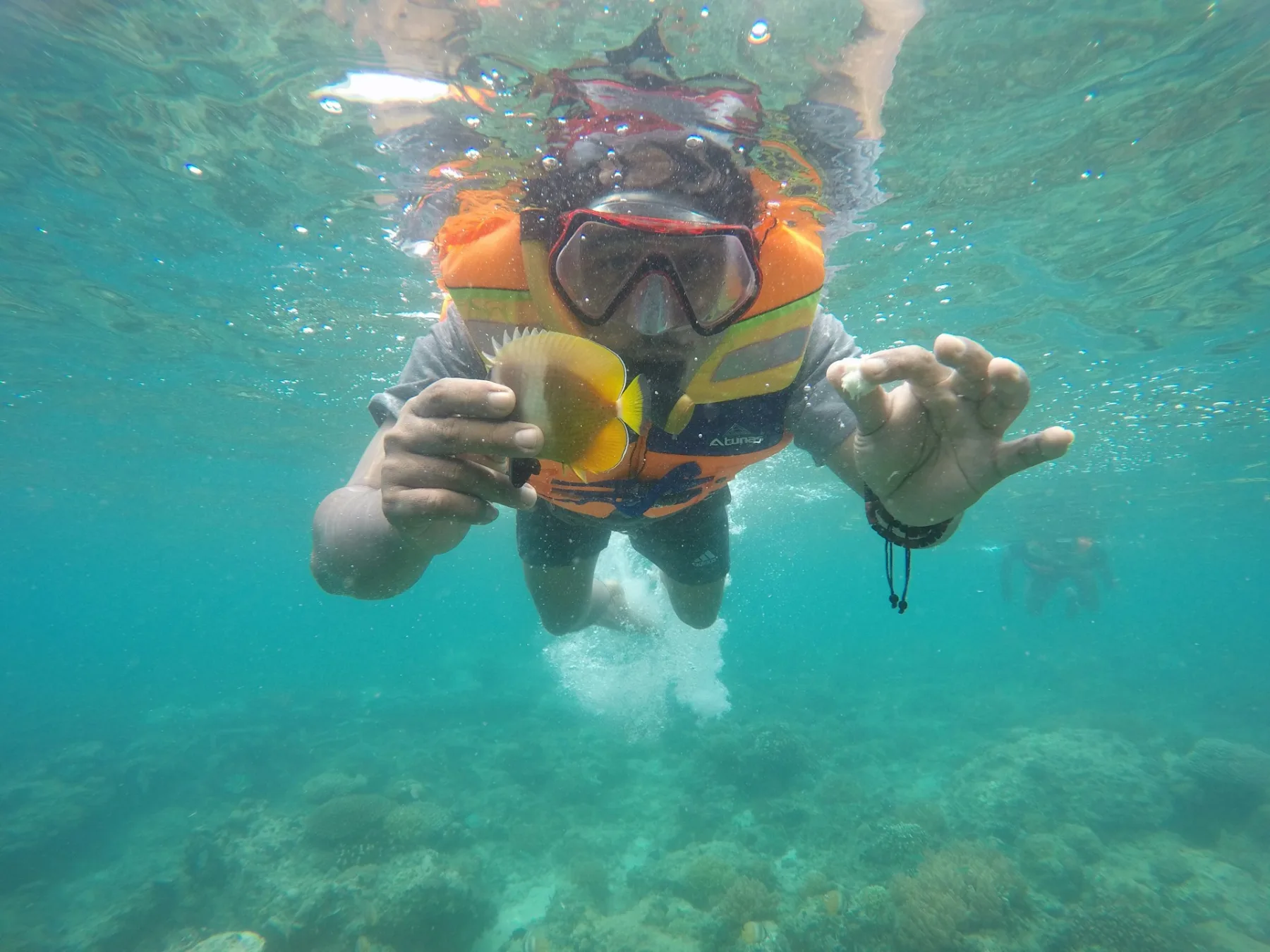
Snorkelers. Standing up is the single biggest cause of damage at reef sites, and it usually happens the moment someone gets tired or wants a better angle. Learn to float on your back to rest, wear fins so you stop needing the bottom, and use a float or the boat line in current.
Freedivers. You are quieter than everyone else in the water, which is why animals often behave better around you. The habit to watch is the hand that reaches for rock or coral on the way up, or at the bottom of a photo dive. Weight yourself properly and plan the ascent so you never need it.
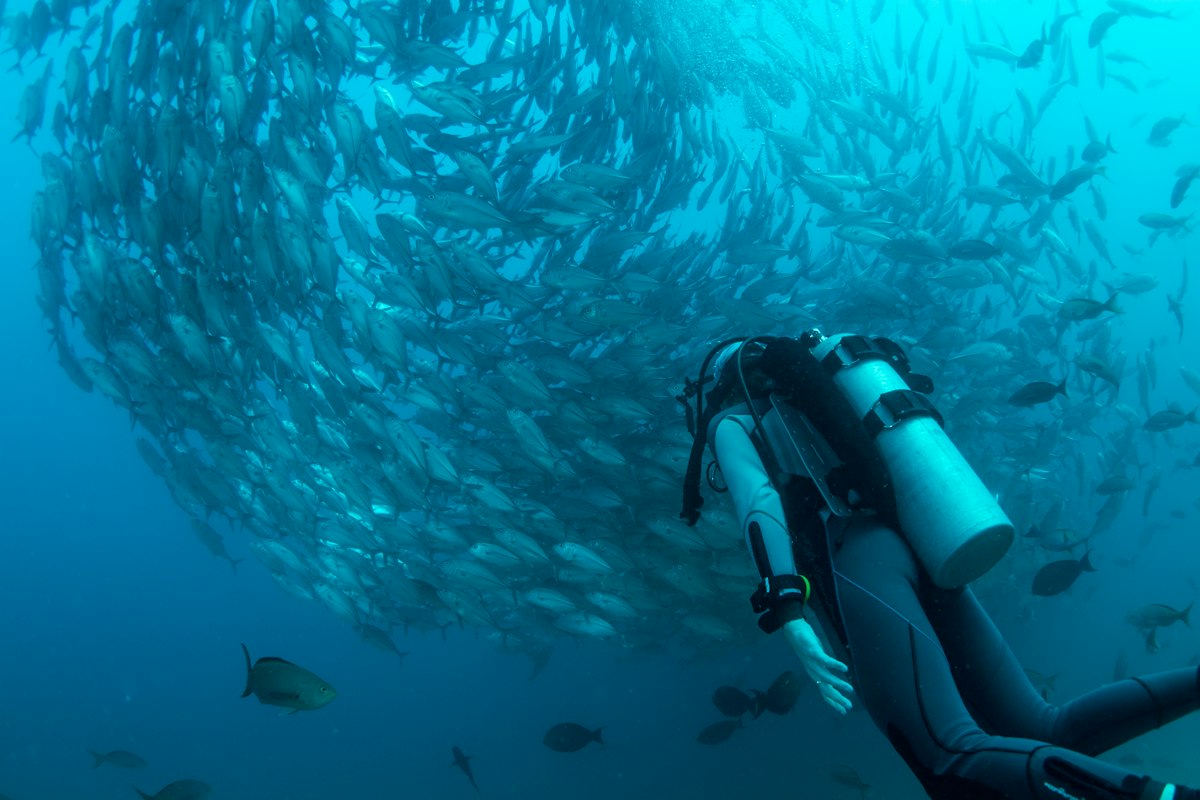
Scuba divers. In a 2026 study, Ronan Roche of Bangor University and Bing Lin of the University of Sydney followed 732 recreational divers at well-known sites in Indonesia and the Philippines and logged every contact with the reef. Divers touched or hit it about once every four minutes, more than 40 percent of those contacts caused visible damage, and most of it was accidental and unnoticed. Of the divers surveyed, 86 percent rated themselves above average at avoiding accidental contact, while the measurements showed they underestimated their contact by almost five times. Contact was also contagious, it spiked the moment a shark or manta appeared, and cameras, muck sticks and gloves were all linked to more of it. I am an underwater photographer, so that last point lands close to home. Buoyancy comes before the camera, and good underwater macro photography depends on it anyway.
Surfers and paddlers. Reef breaks are living structures. Walk around coral at low tide rather than over it, keep off seagrass in the shallows, and remember that a leash dragging across a reef does the same job as a careless fin.
On the Boat
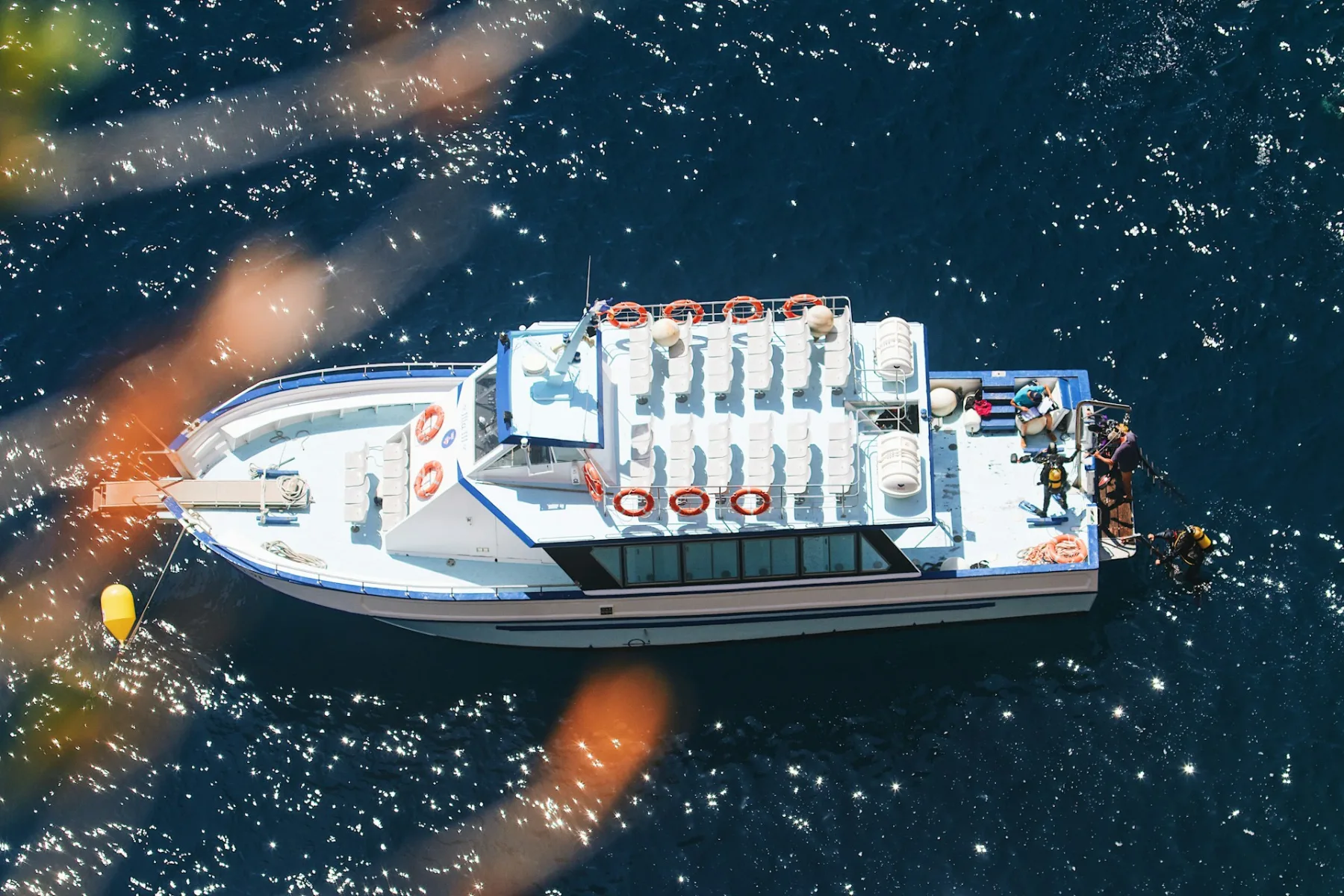
🌊 Ask whether the boat ties onto a mooring buoy or drops anchor. An anchor and chain dragging across coral or a seagrass meadow clears a scar that takes decades to grow back, and seagrass grows slower than the coral does.
🌊 Ask how many people are on the trip. Day boats carrying 40 people to one small site are the crowding problem, and the same site with two boats is a different place entirely.
🌊 Keep jet skis away from wildlife. Chasing dolphins on a jet ski is common in places where nobody is enforcing anything, and it is one of the few things in this article that is purely for the fun of the person doing it.
🌊 Nothing goes over the side. Not food scraps, not cigarette ends, not the plastic wrap from your lunch.
Why Are Cruise Ships So Bad for the Ocean?
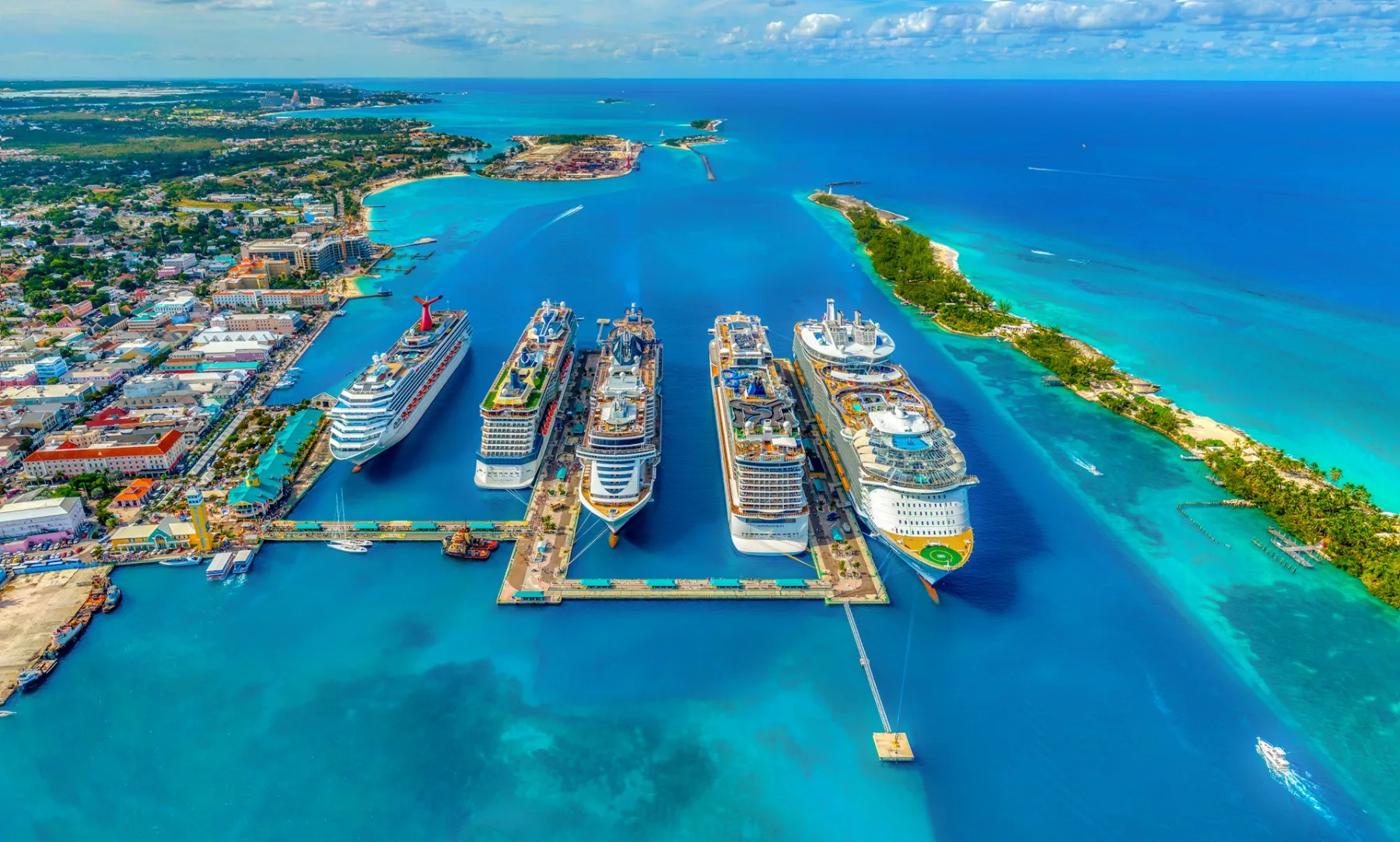
A large cruise ship is a town of five or six thousand people that moves, and it takes its waste stream with it. Congressional researchers in the US put a single week at sea for a ship carrying 3,000 passengers and crew at about 210,000 gallons of sewage, a million gallons of graywater, eight tons of solid waste and 25,000 gallons of oily bilge water. A few miles offshore, discharging it with minimal treatment is legal.
The hull and the port do the rest. In 2017 the Caledonian Sky, a small expedition ship carrying 102 passengers, ran aground on Kri reef in Raja Ampat and destroyed 13,270 square meters of the most biodiverse reef on the planet. Dredging the channel at PortMiami between 2013 and 2015 killed more than half a million corals, and the monitoring firm hired to track the project reported six.
Onshore it gets worse. Thousands of people land in one town on the same morning, use its water, its roads and its reef, then eat dinner back on board. Venice banned large ships from its lagoon in 2021, and it is not the only place now capping arrivals.
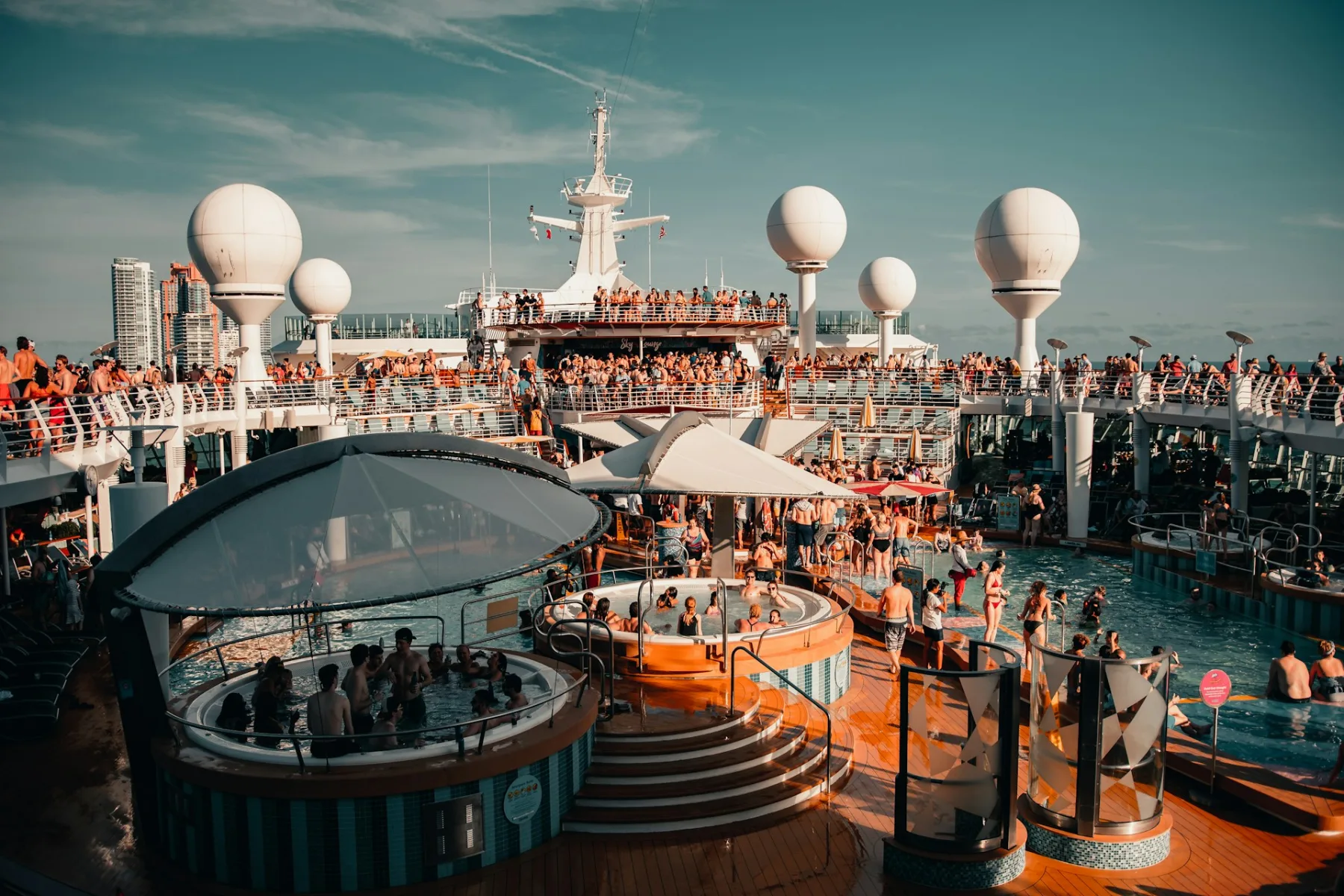
🌊 If you cruise, go small. Expedition-size ships still do damage, but a vessel carrying hundreds instead of thousands changes what a port has to absorb.
🌊 Check the ship before you book. Friends of the Earth publishes a cruise ship report card that grades lines on sewage treatment, air pollution and water quality compliance.
🌊 Book your day in port with a local operator rather than through the ship. That single decision moves your money from the cruise line to the town you are standing in.
🌊 Skip ship-sold wildlife excursions that promise a guaranteed encounter. The boat leaves that afternoon, so nobody on it carries the cost of how the animals were handled.
Those four things reduce the damage. They do not fix it, because nothing good for the ocean comes out of a floating amusement park carrying six thousand people. The version of this that actually works is not taking the cruise, and going to one of those places on its own terms instead.
What You Pay For
Every harmful marine attraction in the world exists because it sells.
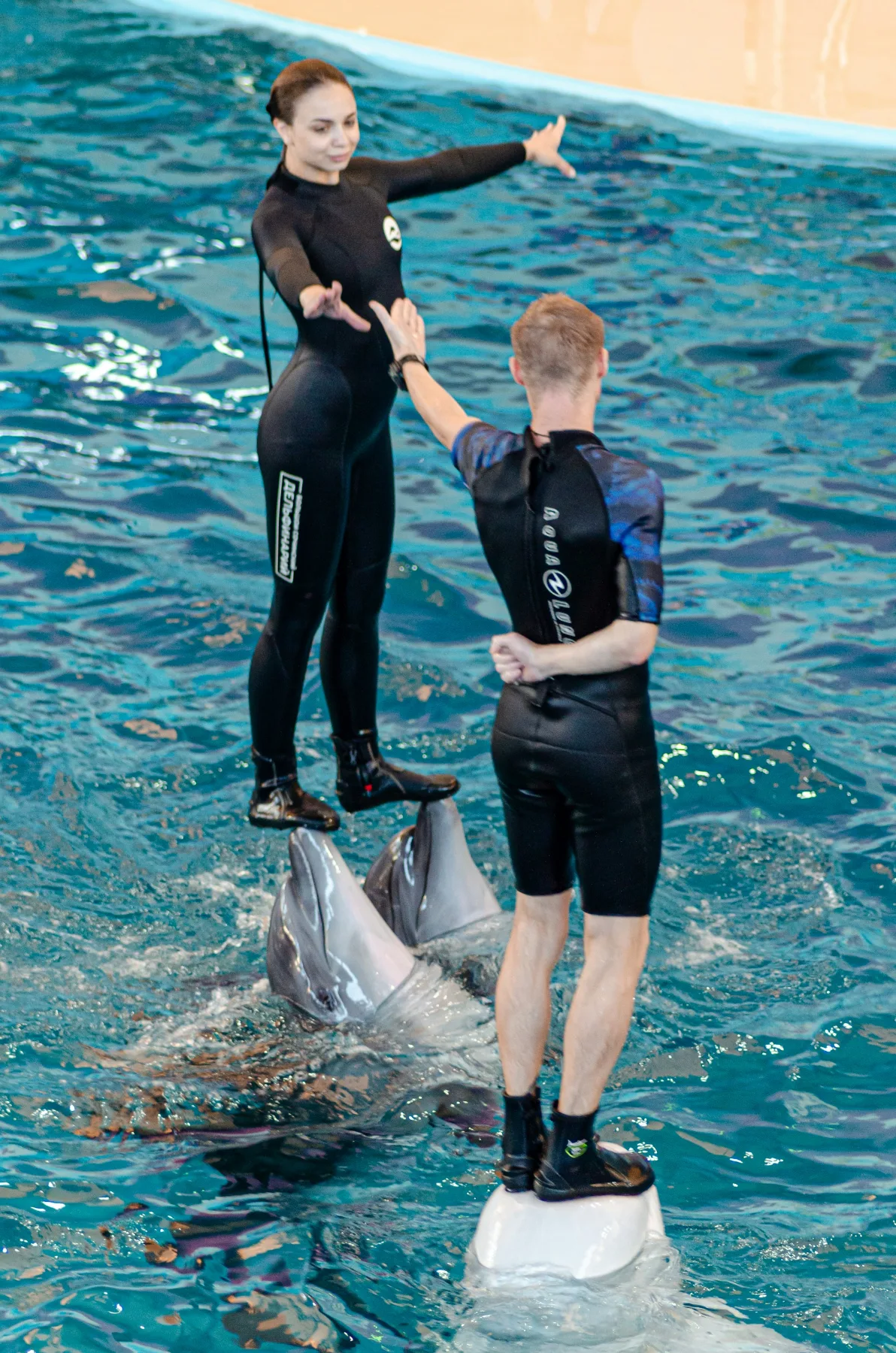
🌊 Skip captive experiences. Dolphin swims in sea pens, dolphinariums and touch tanks stocked with wild-caught animals are entertainment, and the animal spends its whole life paying for it. This applies to all the other species imprisoned in marine parks like belugas, orcas, sea lions, etc.
🌊 Skip anything that walks you along the seabed in a helmet. Sea walking puts people with no training on top of coral, and the coral is usually already wrecked where these operations run. Try a Discover Scuba Dive instead. You don’t require any experience for it.
🌊 Skip fed and baited encounters. Feeding stations for rays, sharks and fish change behavior, diet and distribution, and they teach animals to approach boats.
🌊 Do not buy marine souvenirs. Shell jewelry, coral, dried seahorses and pufferfish, turtle shell and shark jaws all have a supply chain. The shark fin trade runs entirely on demand.
🌊 Think about the menu. Parrotfish keep reefs clean and end up on plates in places that depend on those reefs, grouper are slow-growing and heavily fished, and shark is sold under names that hide it.
🌊 Spend locally. Locally owned guesthouses, restaurants and dive shops keep money with the people who live beside the reef, which gives them every reason to protect it.
🌊 Write the review and report what you see. Mention group size, the briefing and whether the guide protected the reef. Report bleaching or illegal fishing to the park office, Reef Check or a local NGO. Operators read reviews, and good behavior should be good for business.
Watch The Last Tourist Before Your Next Trip
If you watch one documentary before you travel again, make it The Last Tourist.
It is a 2021 film directed by Tyson Sadler and executive produced by Bruce Poon Tip, the founder of G Adventures. It was shot in more than 15 countries, including Jamaica, the Bahamas, Kenya, Peru, Thailand, Cambodia and India, with voices from Jane Goodall, Lek Chailert of the Save Elephant Foundation, and the workers and communities living in tourism’s shadow.
It covers animals suffering for entertainment, foreign-owned hotel chains, all-inclusive packages and the cruise industry. In the cruise section, ships come fitted with attractions like go-kart tracks to keep passengers spending on board, while shop owners in Montego Bay describe crowds being steered toward approved stores. The film also spends time with local people using tourism to protect wildlife and culture, which keeps it from turning into a lecture.
The film barely goes underwater, and it still belongs on every diver’s watchlist. The questions it asks about a resort or a cruise ship are the same ones worth asking about a dive boat. Who owns it? Where does the money go? What does the animal pay? Will this place be better or worse because I came?
Poon Tip’s point is that travel is “a privilege, not a right,” and that the industry follows demand. When what travelers ask for changes, what gets sold changes with it. That is the whole idea behind this guide.
If it leaves you wanting more, my list of ocean documentaries not on Netflix is the next place to go.
Tourism is going to keep growing. What each of us decides is what our visit leaves behind.
Our ocean, our responsibility.
Go and see it. Keep your hands to yourself. Spend your money where the reef lives.