Scuba diving certification costs anywhere from $250 to $900, and most of that gap has nothing to do with how well you will be taught. It comes down to where you learn, which agency the shop teaches under, and how much of the real cost the quoted price is actually carrying.
That last part is where people get caught. A course advertised at $320 can end up costing $500 once the theory fee, the card fee, the medical sign-off, the mask you had to buy on day one and, if your ears are the reason you are reading this, a pair of vented ear plugs are all added together. None of it is a scam. It is just that the number on the sign is the number that gets you through the door, not the number that gets you certified.
I have spent years around dive shops on four continents, and the shops I trust most are rarely the cheapest ones on the street. They are the ones that tell you the whole number up front.
Here is the whole number.
What Scuba Diving Certification Actually Includes
Every entry-level course, whatever the logo on the card, is built from the same three parts.
Theory. Pressure, gas, buoyancy, ascent rates, dive planning, equipment. Most people do this online now, at their own pace, before they arrive. It takes 8 to 15 hours.
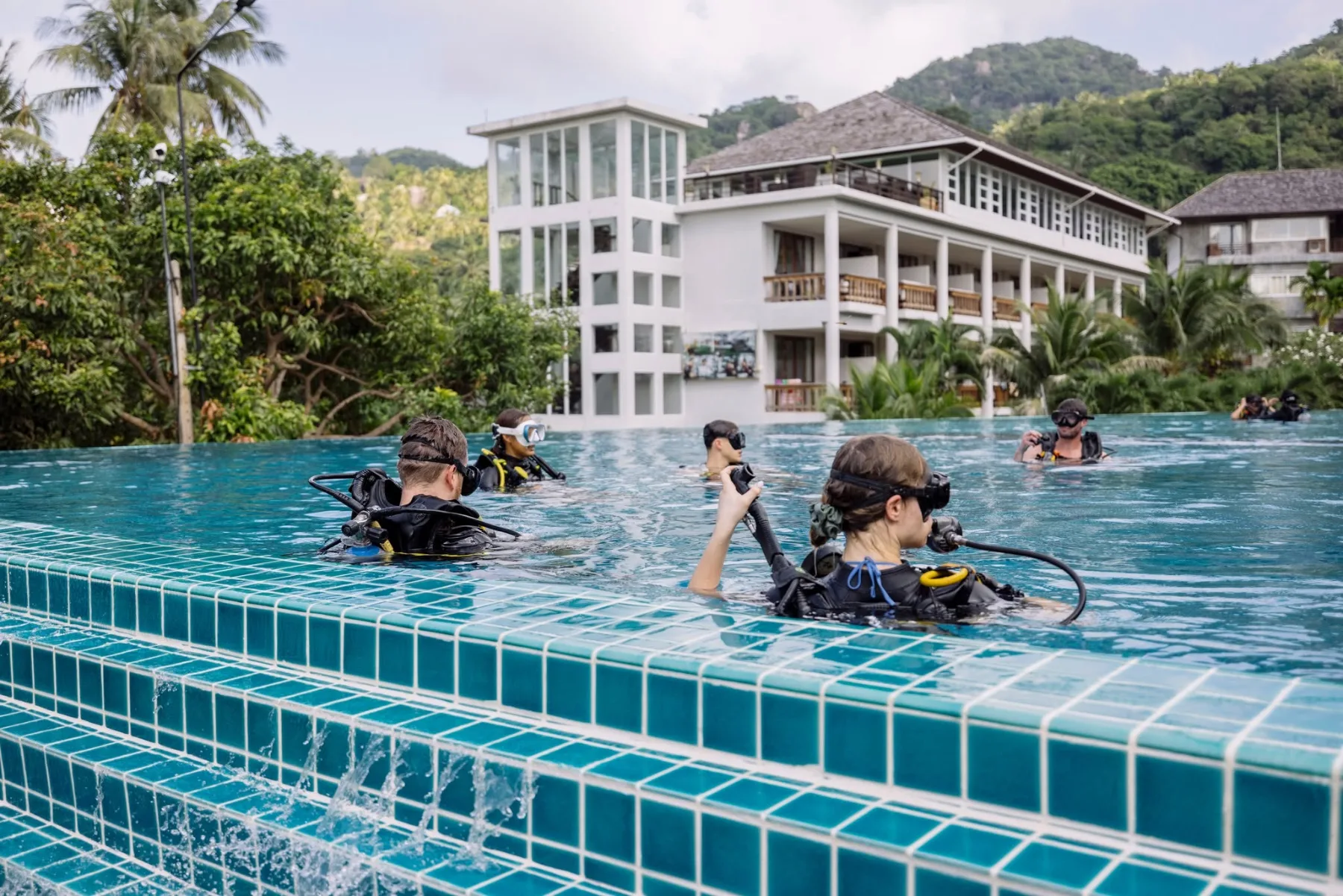
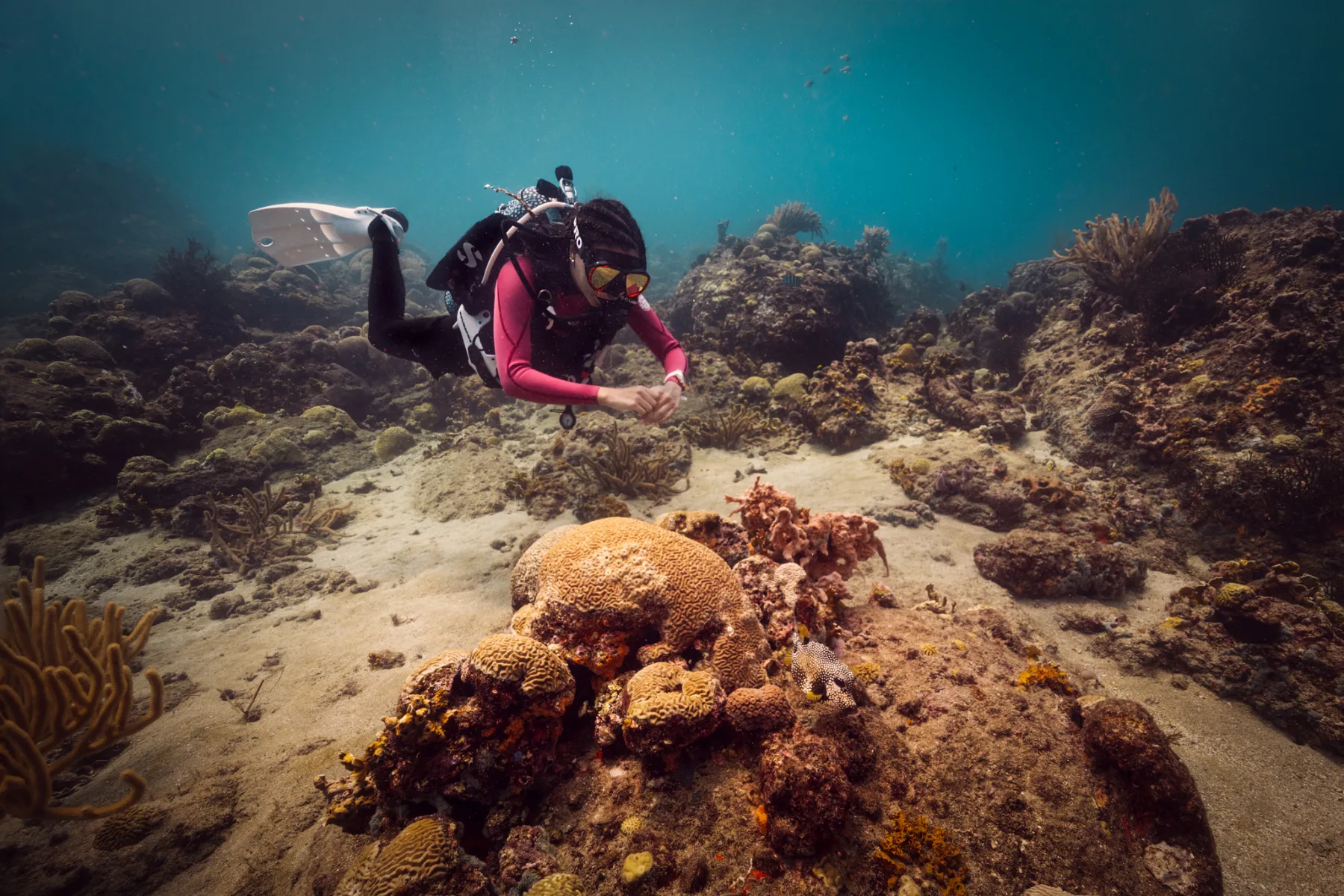
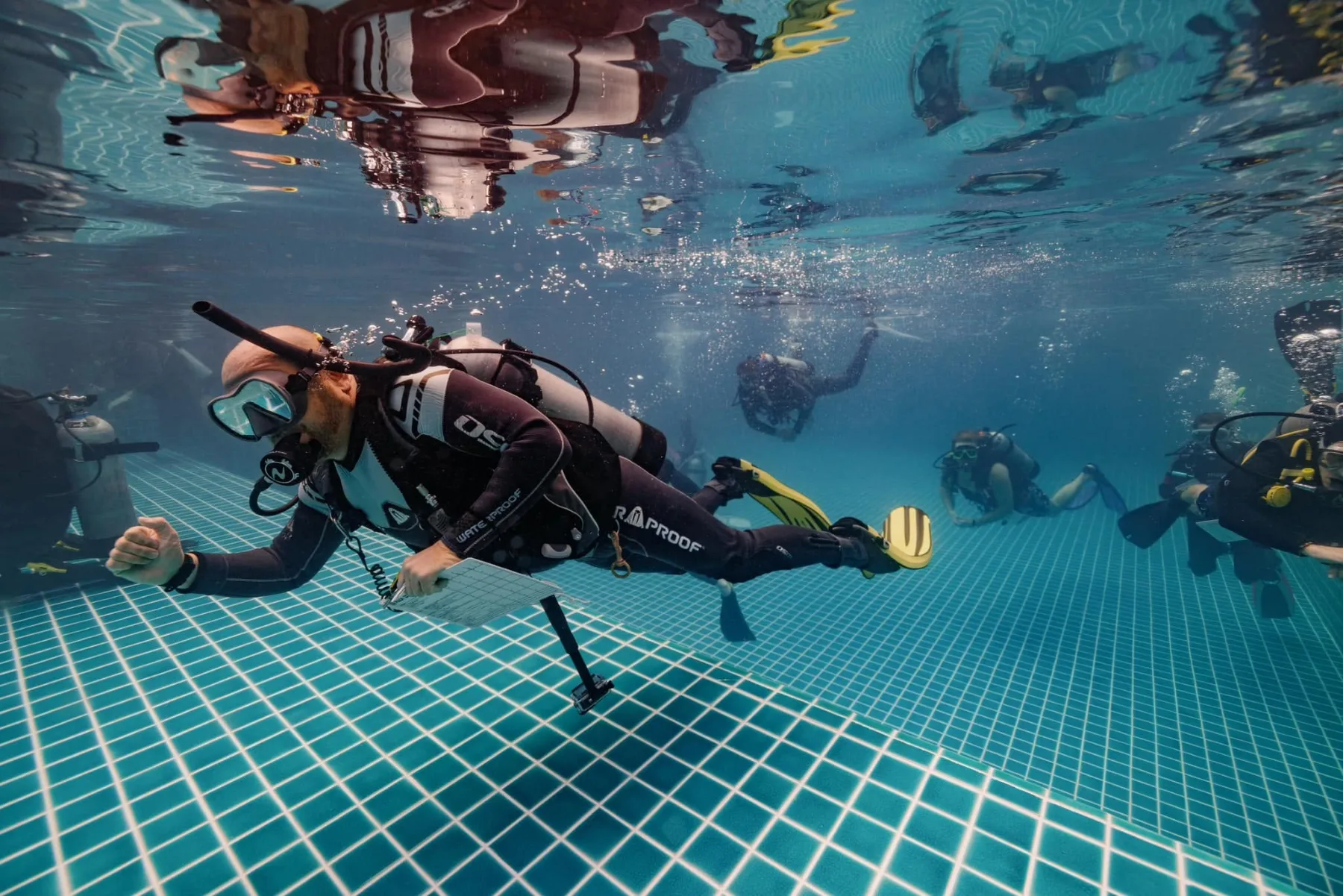
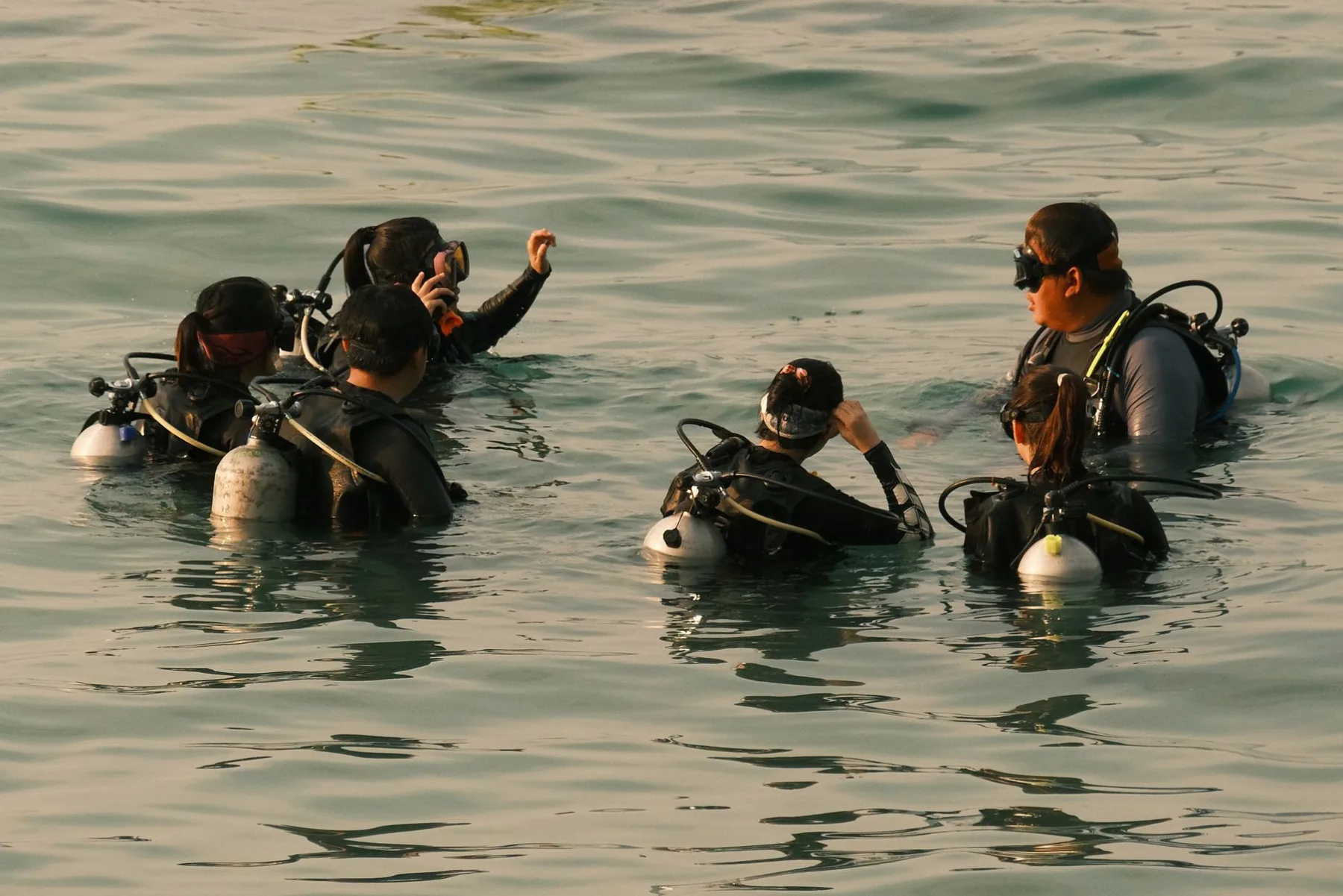
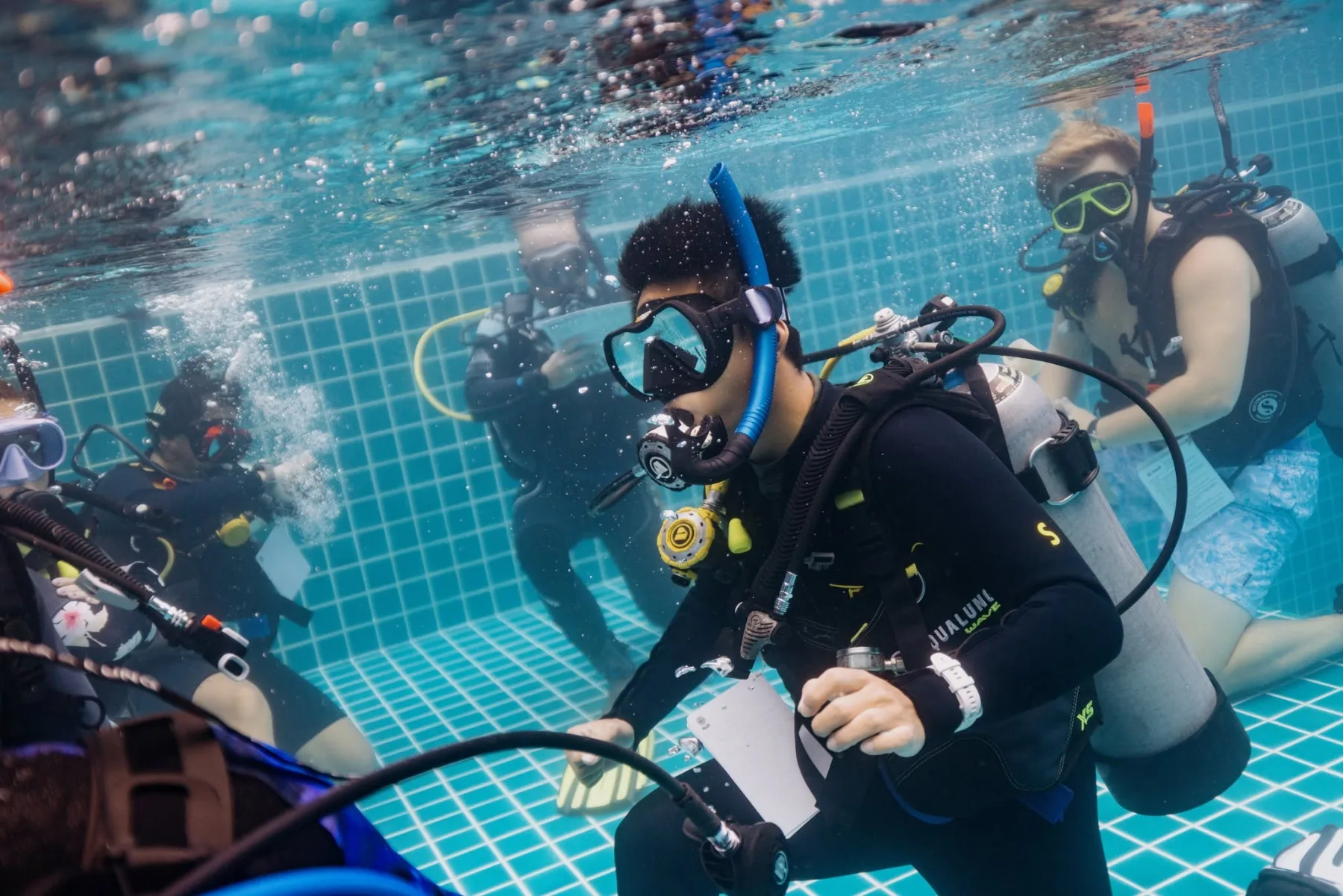
Confined water. A pool, or a shallow sheltered bay with pool-like conditions. This is where you clear your mask, recover your regulator, learn to hover, and practise the emergency skills until they stop feeling like emergencies.
Open water dives. Four dives in the sea, a lake or a quarry, usually across two days, where you repeat those skills in the real environment.
Finish all three and you hold a certification for life. There is no renewal fee, no expiry date, no annual subscription. You can walk into a dive center anywhere in the world twenty years later and rent a tank on that card.
If you want the full step-by-step version of what happens on each of those days, read how to become a certified scuba diver before you book anything.
What You Need to Qualify for the Course
Fewer things than people assume.
- Age. Junior certification starts at 10, with depth limits and a requirement to dive with a certified adult. Full open water certification starts at 15.
- Swimming. There is a water assessment, not a speed test. It is 200 metres unaided, or 300 metres with mask, fins and snorkel, untimed, plus ten minutes floating or treading. I did not learn to swim until my late twenties, so I know exactly how heavy that sentence lands when you read it.
- A medical questionnaire. Yes or no questions about heart, lungs, ears and medication. Tick yes to any of them and you need a doctor’s sign-off before you get in the water, which costs money and takes time. Check it before you book, not on the morning of the course.
None of that shows up in the price quoted over the phone, and the doctor’s signature is the one that catches most people out.
What It Costs to Dive Without Getting Certified
If you want to try it before paying for a full course, there is Discover Scuba Diving: one guided dive with an instructor beside you the whole time, no theory and no exam. It runs $60 to $150 depending on the destination.
It does not certify you and it does not let you dive on your own afterwards. What it does is answer the only question that matters before you spend several hundred dollars, which is whether you like being down there. Plenty of centres take the cost off the full course if you sign up afterwards, so ask before you pay for it separately. The whole path is in how to become a certified scuba diver.
How Much Does a Scuba Diving Course Cost Around the World?
These are realistic 2026 ranges in US dollars for a full Open Water course including rental equipment. Individual shops will sit above or below them.
| Where | Typical Open Water cost |
|---|---|
| Thailand, Indonesia, Philippines | $250 to $400 |
| Colombia (Santa Marta, Taganga) | $250 to $400 |
| Honduras (Utila, Roatán) | $300 to $420 |
| Egypt, Red Sea | $300 to $480 |
| Mexico, Caribbean coast | $400 to $600 |
| Mediterranean Europe | $400 to $650 |
| United Kingdom | $450 to $700 |
| Australia | $500 to $800 |
| United States | $500 to $850 |
| Canada | $700 to $995 |
The pattern is not about quality. It is about rent, fuel, wages, boat costs and how many shops are competing on the same beach. A dive center in Koh Tao is running boats on a strip with dozens of rivals and a year-round queue of students. A shop in Vancouver is heating a pool, buying drysuits and teaching in 12 degree water for five months of the year. Both can produce excellent divers.
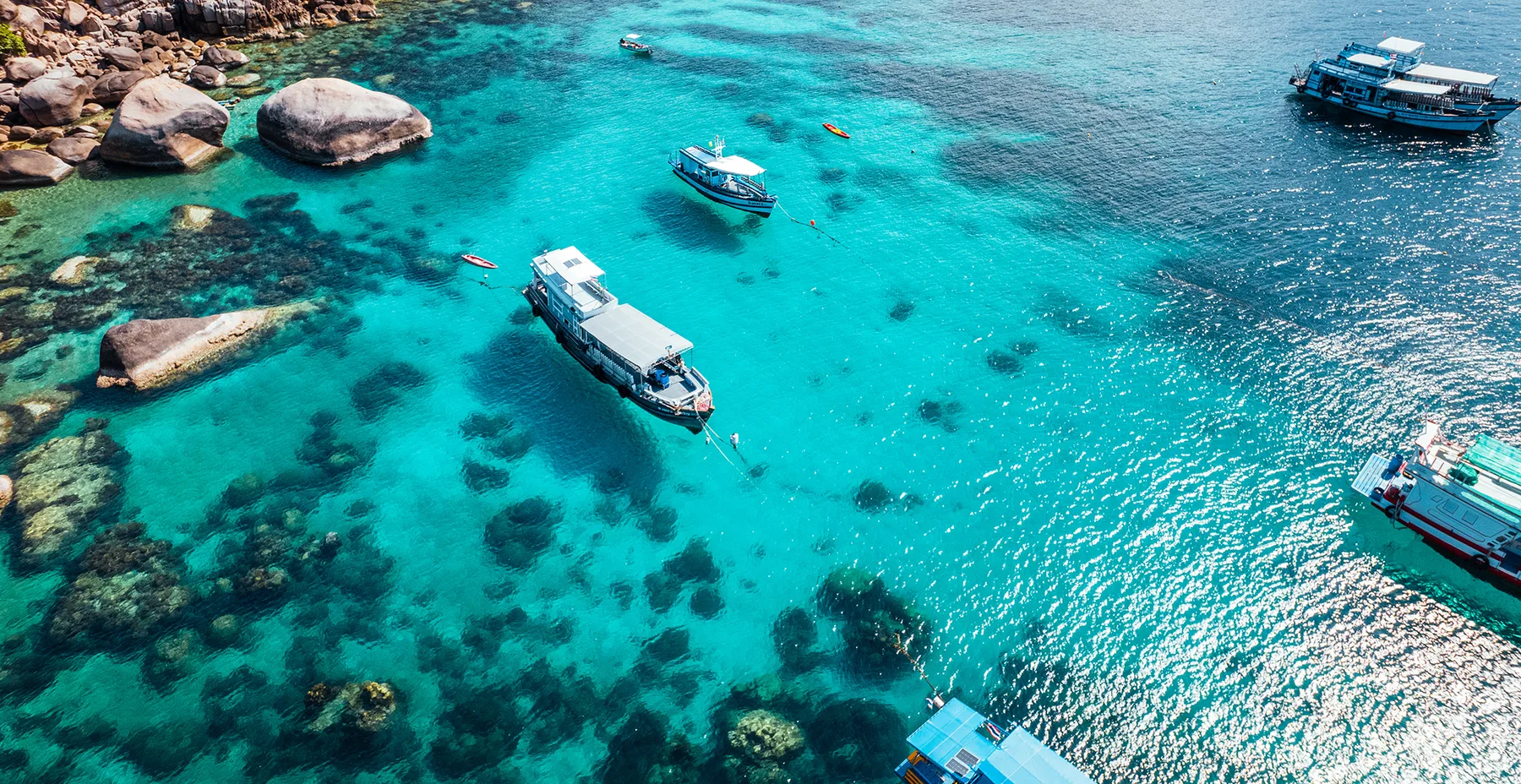
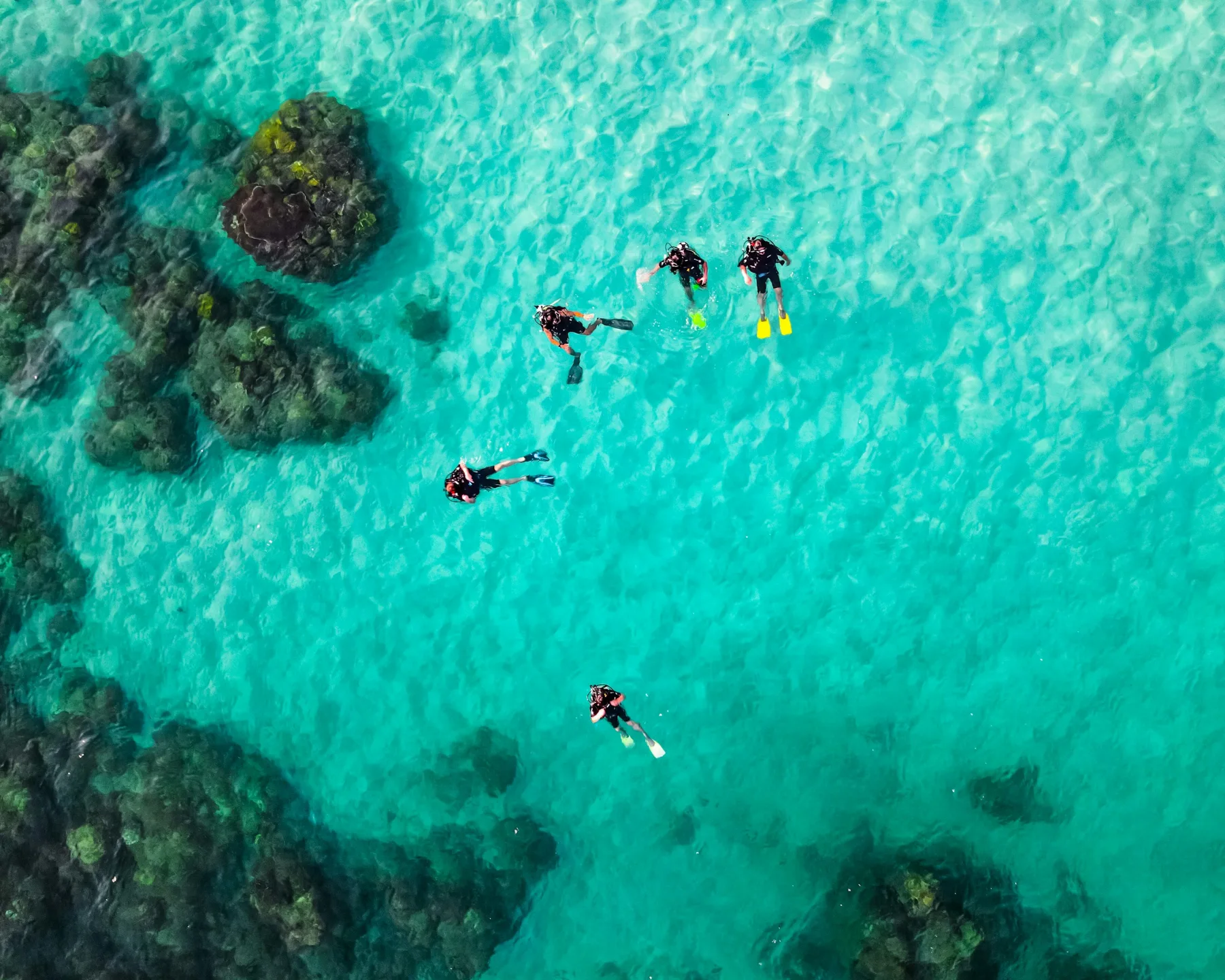
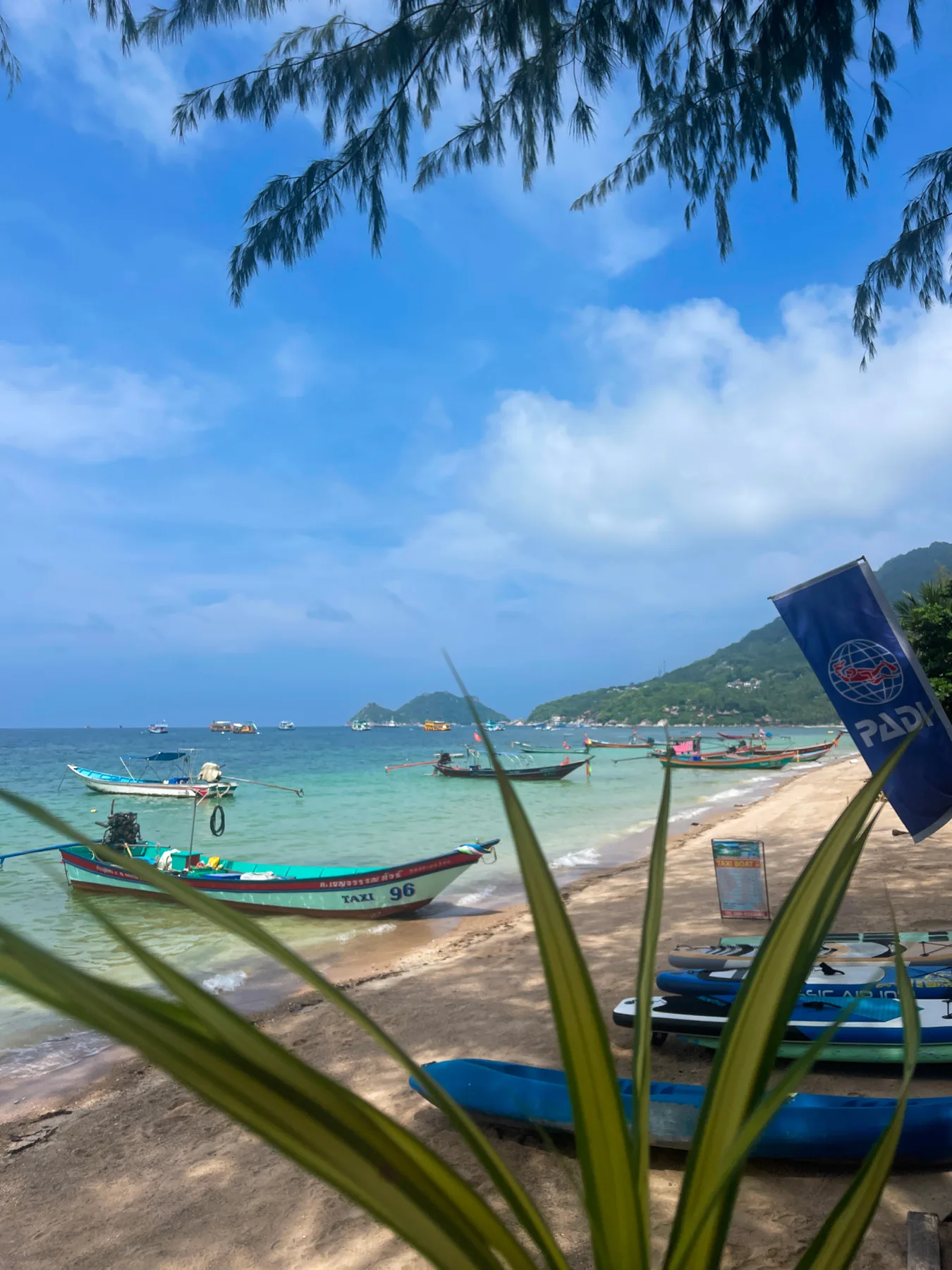
Southeast Asia is the cheapest place on earth to learn, and it is cheap for volume reasons, not corner-cutting reasons. If you are already heading that way, diving Koh Tao Thailand and diving Amed, Bali Indonesia will give you a sense of what the water is like where those prices live.
Does PADI Or SSI Cost More?
SSI courses usually come in $30 to $80 cheaper than the equivalent PADI course at the same shop. The reason is structural, not philosophical.
PADI charges separately for its eLearning, which runs around $150 to $230 if you buy it directly. SSI provides its digital learning materials through the dive center at no extra line item for the student, and its certification cards are digital only, which costs less to administer.
PADI also issues a temporary digital card on completion. If you want the permanent one, that is an additional fee of roughly $55, and it is not included in the course price.
Both cards are accepted at essentially every dive operation on the planet. An SSI diver gets on a PADI boat, a PADI diver gets on an SSI boat. The agency is a small part of what you are buying. The instructor and dive center are nearly all of it.
The Hidden Costs Nobody Puts in the Quote
This is the section that decides whether your budget survives.
The theory fee. The single most common gap between the advertised price and the final bill. Always ask whether eLearning is included. If it is not, add up to $200.
The certification card. Digital temporary card free, permanent card extra on PADI. Small, but it surprises people.
Medical clearance. Every agency uses a standard medical questionnaire. Answer yes to anything on it and you need a doctor’s signature before you can get in the water. Expect $50 to $150 depending on the country, and more if you need a specialist. Fill the form in honestly at home, not at the counter on the morning of day one.
Marine park and port fees. Common in the Philippines, Egypt, Mexico and much of the Caribbean. Usually $5 to $40 across the course. Often excluded from the headline price.
Equipment rental. Included almost everywhere in Asia. Frequently not included in the US, Canada and parts of Europe, where it can add $75 to $150.
Insurance. Not compulsory in most places, and worth having anyway. Dive accident cover from DAN or DiveAssure starts around $50 to $100 a year. Standard travel insurance often excludes scuba entirely, so check the wording rather than assuming.
The extra day. Weather cancels dives. If your course runs into a fifth day and your flight does not, you either pay to change the flight or you leave without the certification. Build a buffer day in. This is the most expensive mistake I see new divers make, and it is entirely avoidable.
Small things that add up. Logbook, passport photo, tips for the instructor and boat crew, lunch at the shop every day because you are there from eight until five.
Budget $100 to $250 above your course price and you will be close.
What Gear You Need to Buy Before Your Course
Almost none. This is where new divers overspend hardest.
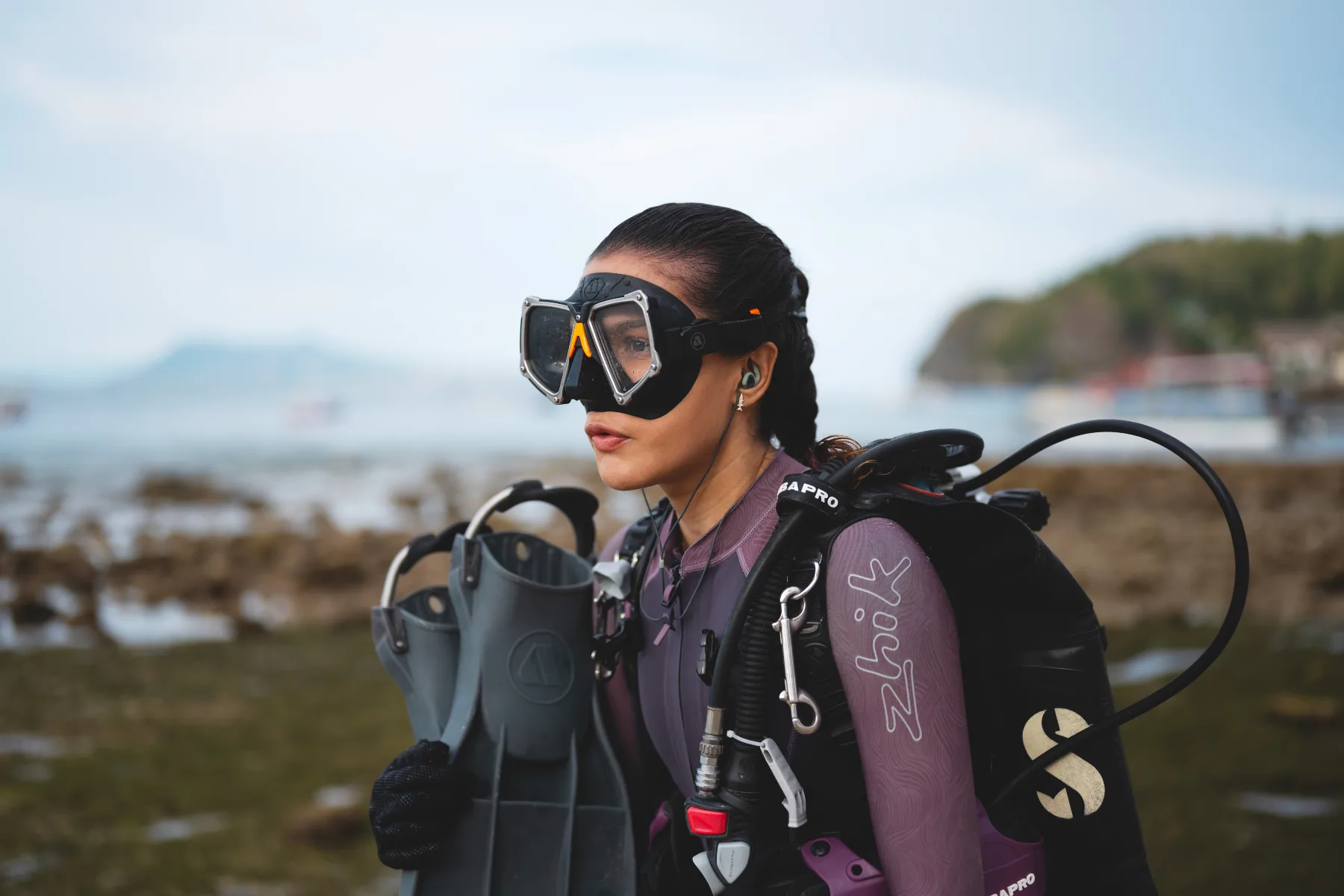
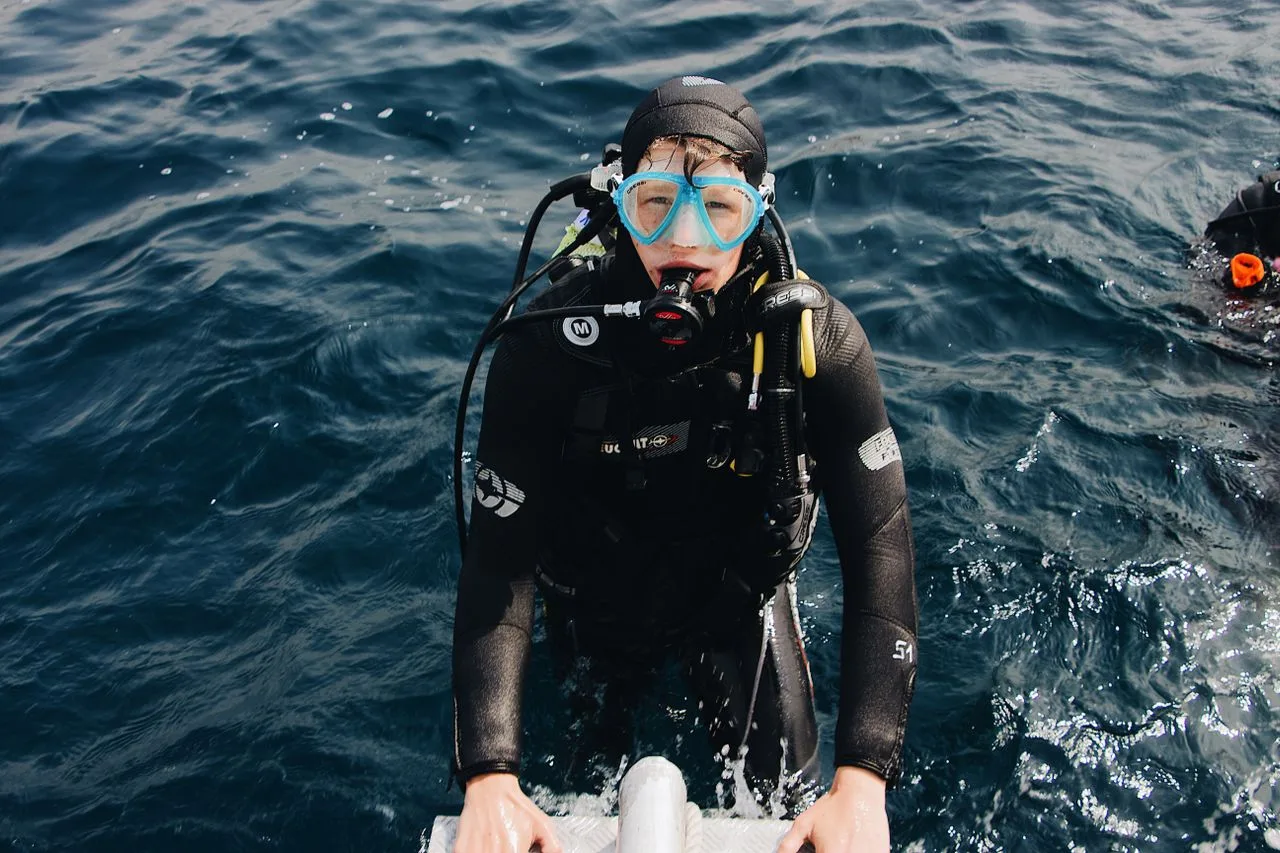
Buy a mask. That is the one piece worth owning from day one, because a rental mask that does not fit your face will leak for four days and turn learning to dive into an exercise in frustration. A good mask is $35 to $80 and will last you years.
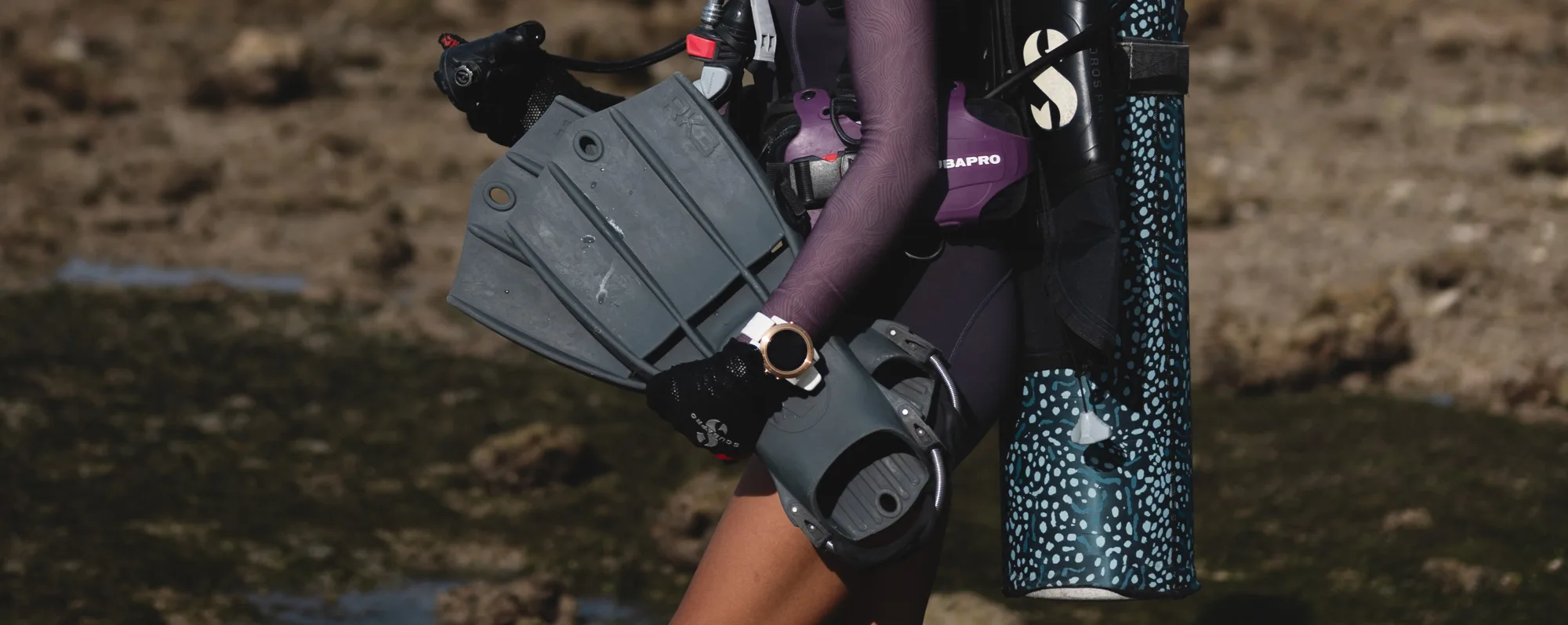
Everything else can wait. Regulators, BCDs, computers and wetsuits are all included in rental in most warm-water destinations, and you do not yet know what kind of diver you are going to be. Buying a full set before your first breath underwater is how people end up with a travel BCD they never use and fins that are wrong for their kicking style.
Once you are certified and diving regularly, the order that makes sense is mask, then scuba diving fins, then a dive computer, then a scuba diving regulator. The full reasoning behind that order is in buying your own scuba gear.
If you are learning somewhere cold, a well-fitting wetsuit moves up the list fast. Best scuba diving wetsuits for women covers what actually matters on fit.
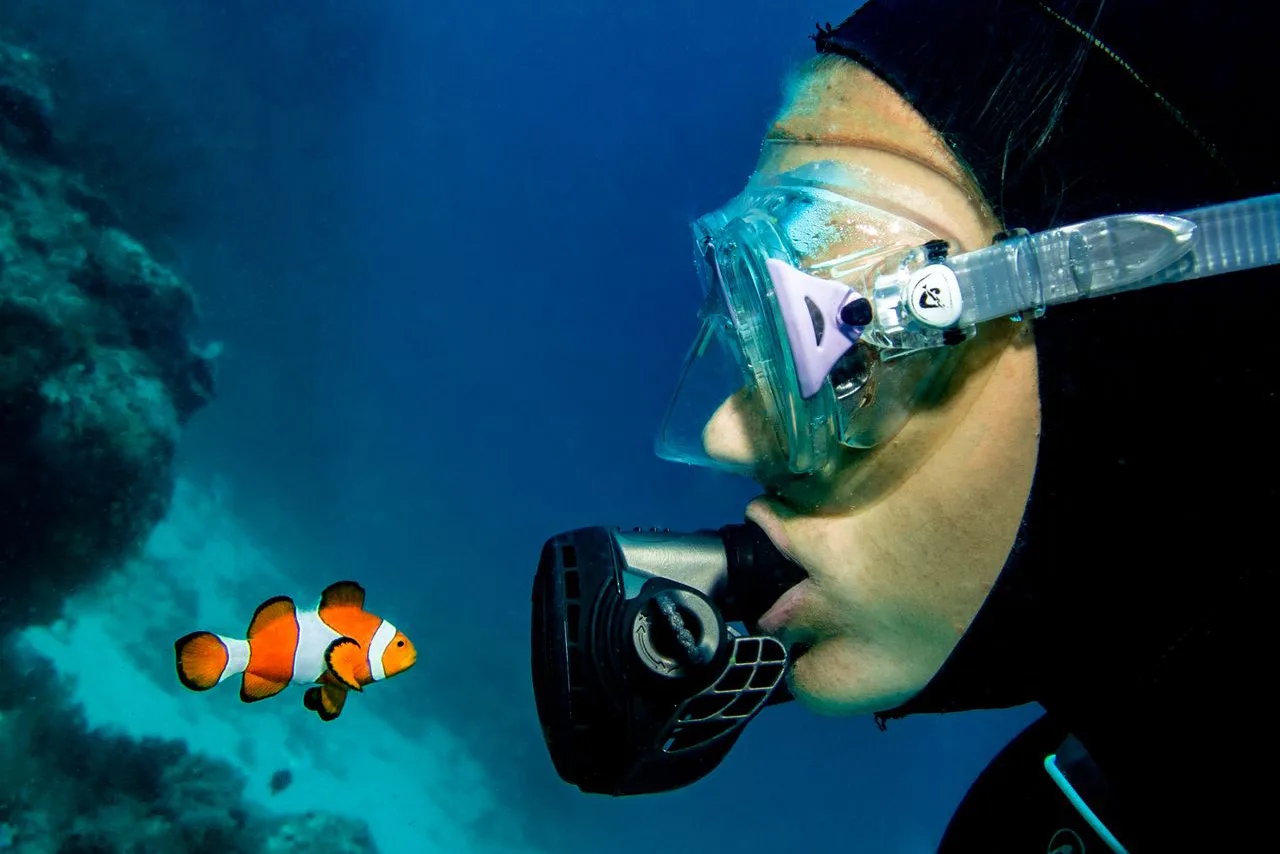
Is it Cheaper to Get Certified Abroad or at Home?
On the course price alone, abroad wins by a wide margin. On total cost, it depends entirely on whether you were going anyway.
If you already have a trip to Thailand, Indonesia, Mexico, Egypt or the Colombian Caribbean booked, adding an Open Water course is the cheapest certification you will ever get. You are paying $300 for a course instead of $700, and the flights are already spent.
If you would be flying purely to get certified, the math flips. A $250 course plus $900 in flights is not a bargain.
There is a middle path most people do not know about. A referral lets you complete your theory and your confined water sessions at a shop near home, then finish your four open water dives anywhere in the world within a set window, usually a year. You get the local pool time and the tropical certification dives. Shops on both ends handle the paperwork.
There is also an argument for learning cold and murky. Divers who certify in 12 degree water with 5 meters of visibility tend to find warm clear water almost effortless afterwards. Divers who certify in 29 degree water with 25 meters of visibility can find their first cold dive genuinely difficult. Neither is wrong. Learn in the conditions you actually plan to dive in.
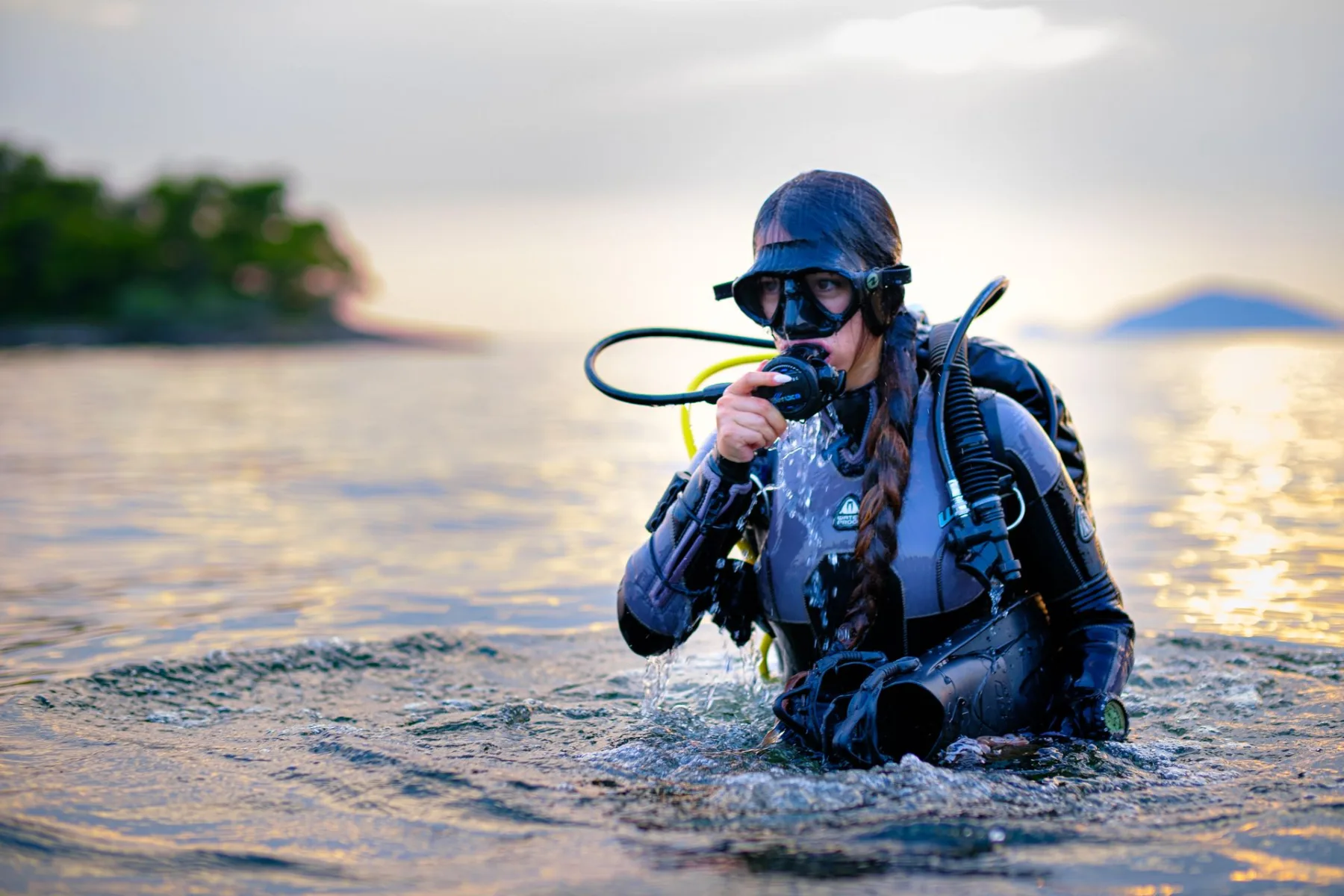
What the Courses After Open Water Cost
Open Water is the entry ticket, not the destination. Rough 2026 ranges:
- Advanced Open Water: $250 to $450. Five guided dives including deep and navigation. Takes you to 30 meters.
- Enriched Air Nitrox: $150 to $250. Mostly theory. Extends your bottom time on repetitive days, which matters more than new divers expect.
- Rescue Diver: $350 to $550. The course that changes how you dive more than any other.
- Divemaster: $1,000 to $1,600 depending on the country, plus professional membership and insurance fees each year.
Going from zero to Divemaster typically lands between $2,000 and $3,000 spread over one to three years. The spreading matters. Experience between courses builds better divers than stacking certifications back to back.
Once you are certified, a two-tank fun dive costs roughly $60 to $90 in Southeast Asia, $90 to $140 in Mexico and the Caribbean, and $140 to $200 in the US, Europe and Australia. That is the number that determines whether diving stays in your life, not the course price.
Recreational and Commercial Certification Are Not the Same Thing
Worth saying plainly, because people search for both with the same words and the prices are nothing alike.
Everything on this page is recreational diving: PADI, SSI, open water, $250 to $900. Commercial dive certification is a different industry, the one that does underwater welding, inspection and rig work, with schools charging tens of thousands of dollars over programmes that run for months. If you want to dive reefs on holiday or work in a dive centre, the recreational route is yours.
How to Pay Less Without Booking a Bad Course
Cheap and good are not opposites in diving. Cheap and rushed are.
Ask exactly what is included. Theory, rental gear, marine park fees, boat fees, certification card. Get it in writing. A shop that answers this clearly is telling you something about how it operates.
Ask the student to instructor ratio. Standards allow up to eight students per instructor in open water. Four or fewer is where people actually learn. This one question separates the good shops from the volume shops faster than any review.
Ask how many days. A course compressed into two days is legal in some configurations and is a bad idea for most people. Three to four days is normal. If a shop is proud of how fast they can push you through, walk.
Book in low season. Shops discount when boats are running half empty. You also get smaller groups, which is the real prize.
Go with a friend. Many shops discount pairs and small private groups.
Bundle Open Water with Advanced. Commonly 10 to 20 percent off the combined price, and doing them back to back while your skills are fresh works well.
Do not chase the lowest number on the strip. The shop that undercuts everyone is recovering that money somewhere, usually in group size, boat time or instructor pay. Underpaid instructors teach tired courses.
Our ocean, our responsibility applies here too. Ask what a shop does about reef contact, briefings on not touching, and whether they run cleanups or work with local protection efforts. The dive center you hand your money to is a small vote for how diving gets done in that place.
Learning to dive is not a cheap hobby, and pretending otherwise helps nobody. It is also not as expensive as most people assume before they look. For the price of a decent phone, you get lifetime access to about seventy percent of the planet.