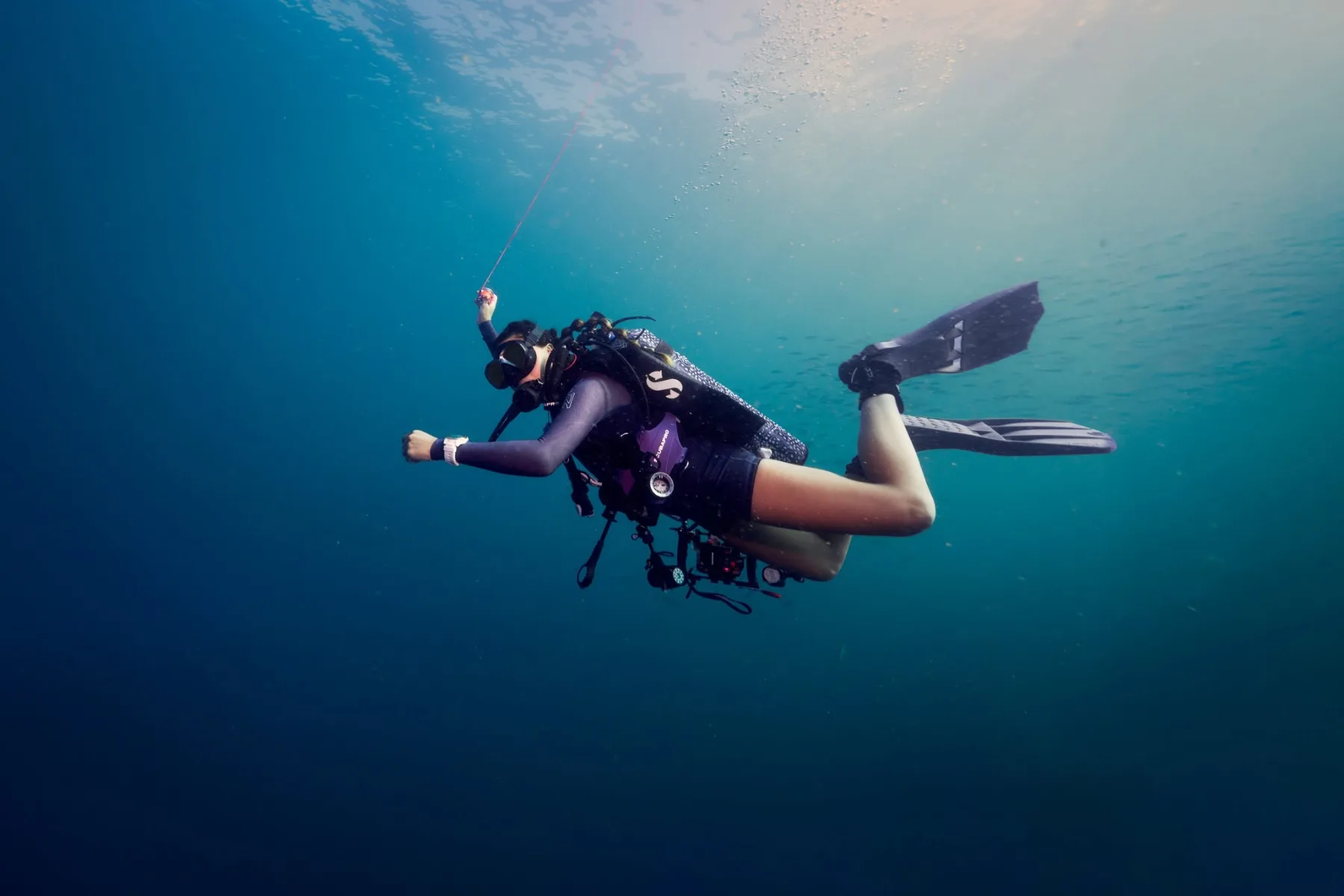
Scuba diving fins are one of the few pieces of dive gear that shape how every single kick feels, and they’re also one of the easiest to get wrong. The wrong pair will cramp your calves, wreck your trim, and leave you finning twice as hard as the diver next to you. It can make you miserable on a dive.
When you do your open water course, you usually just get what you’re given. The dive center will have a standard model that’s good enough but certainly not the best out there, which is the norm for most rental gear. So when you’re starting out, you don’t really know much about fins yet, and you’re left to find that knowledge yourself. That’s exactly why I’m making this guide.
Before we get into it, two quick tips, specifically for beginners. One: I know snorkeling sets are cheap, but do not buy snorkeling fins for diving. They’re a completely different animal, and you’ll only end up replacing them once you realize they don’t cut it underwater. Two: it’s fins, not flippers. Remember this. You’ll thank me later.
Now, let’s get into what to actually look for when shopping for the right scuba diving fins, in the order that matters, so you can walk into a shop or a rental room and know exactly what you’re looking at.
Foot Pocket Fins: Full Foot or Open Heel?
This is the first fork in the road, and it mostly comes down to water temperature and how you get in the water.
Full-foot fins slip straight onto a bare foot or a thin neoprene sock, like a shoe. They’re lighter, more streamlined, and pack down smaller, which makes them the default for warm-water diving and travel. The trade-off is no foot protection on entry, no versatility if the water turns cold, and a fit that has to be close to right off the shelf because there’s no adjustment. This option is usually preferred by holiday divers or those who know they only dive from boats.
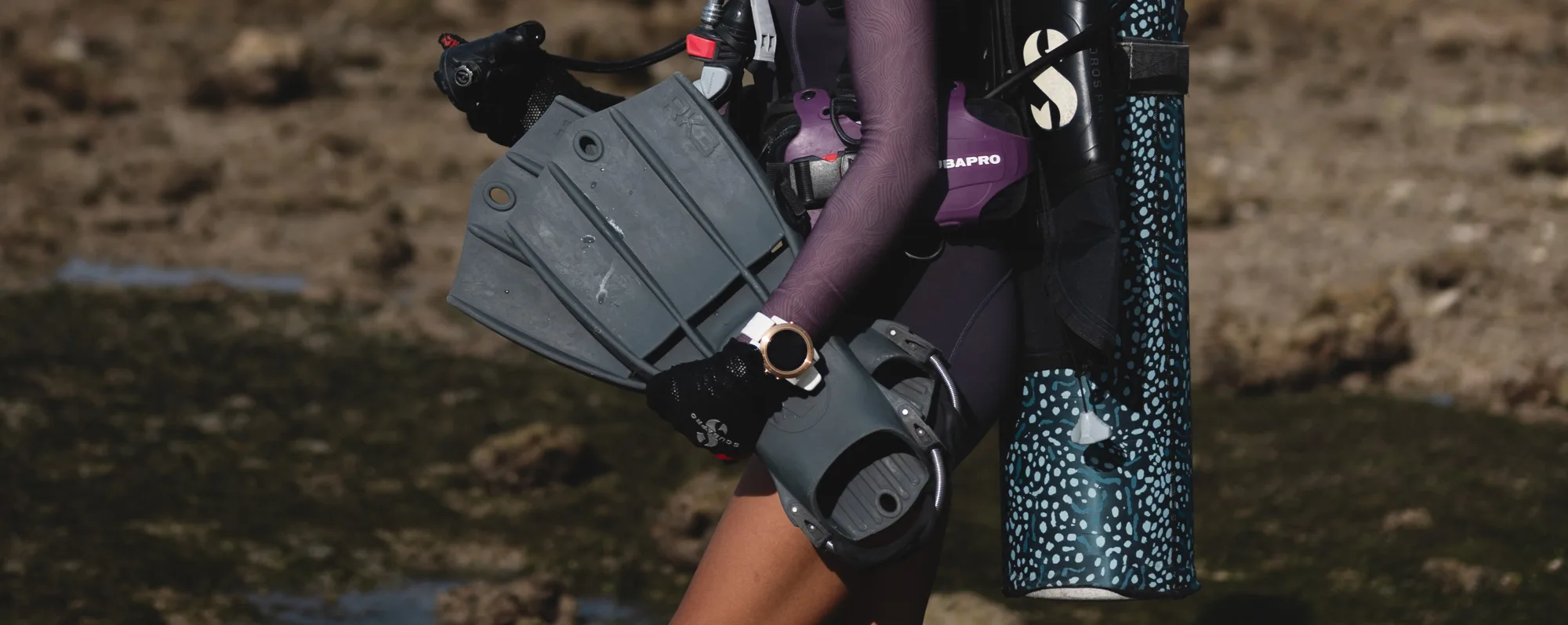
Open-heel fins are worn with a neoprene boot and have an adjustable heel strap. The boot means you can walk over rocks to a shore entry without shredding your feet, dive in colder water, and fine-tune the fit. They’re bulkier and heavier, but they’re what most divers end up owning because they cover far more situations. If you only buy one pair of fins for life, this is almost always the type. This option is preferred by seasoned and professional divers.
You can own open-heel fins and cover all the mentioned diving scenarios: warm or cold diving, boat or shore diving. Therefore I’d say: go for the open-heel option.
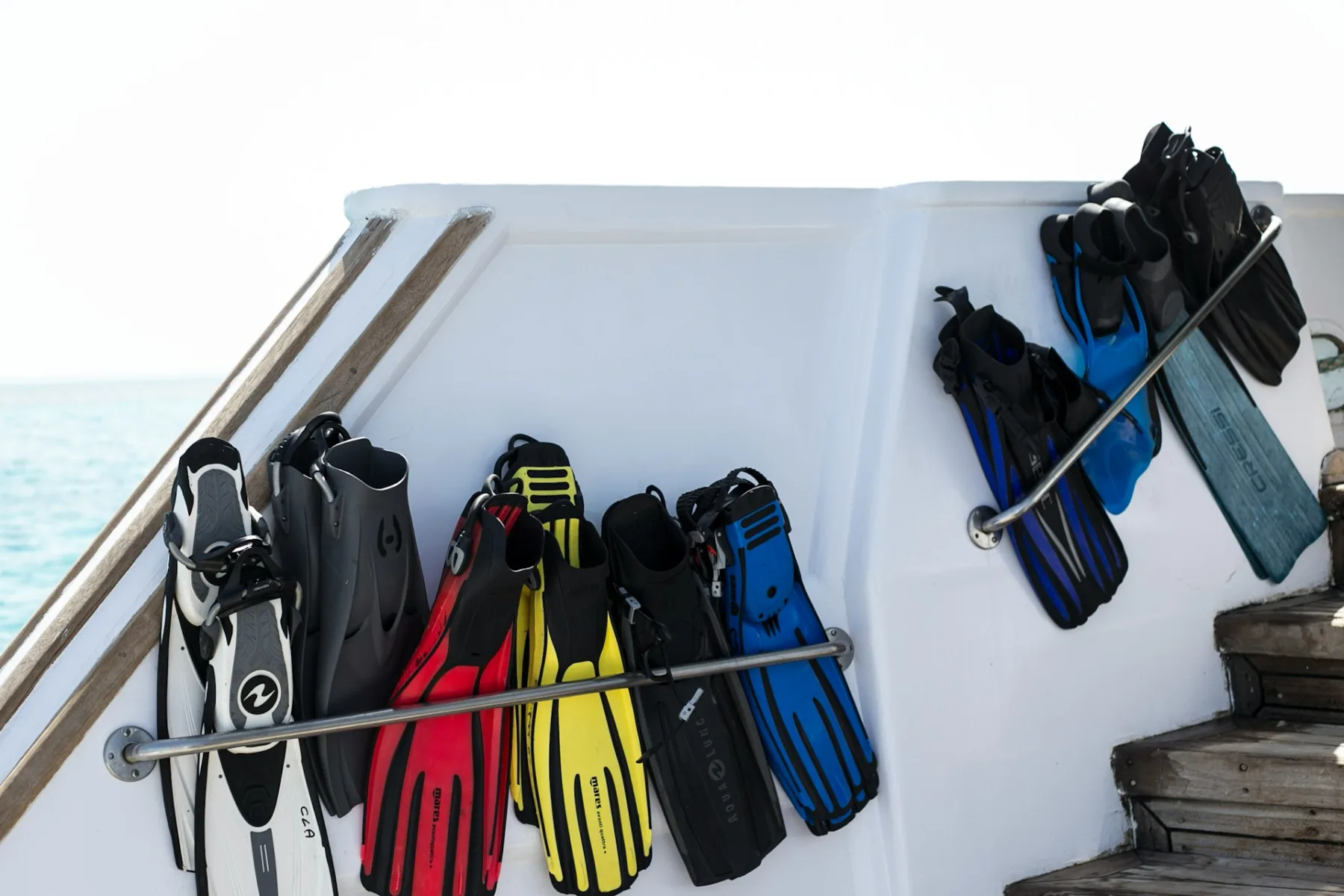
The Heel Strap: Buckle, Bungee, or Spring?
If you go open-heel, the strap itself is a real decision, not a detail.
Standard buckle straps are the cheapest and come on most entry-level and rental fins. They work, but they’re fiddly to adjust especially with cold hands or gloves, and the clips are the single most common failure point on a fin. If a strap is going to snap mid-trip, it’s usually one of these.
Bungee straps replace the rigid strap with a loop of elastic cord. You just pull the fin on and the bungee holds tension automatically. Nothing to buckle, nothing to adjust, far less to break. Popular as rental fins at diver centers.
Spring straps are stainless steel springs that do the same job as bungee but last essentially forever and don’t lose tension. They’re the most expensive option and increasingly the standard upgrade serious divers make first but they’re undoubtedly the best option, and they turn “wrestling your fins on from a rocking boat” into a two-second job.
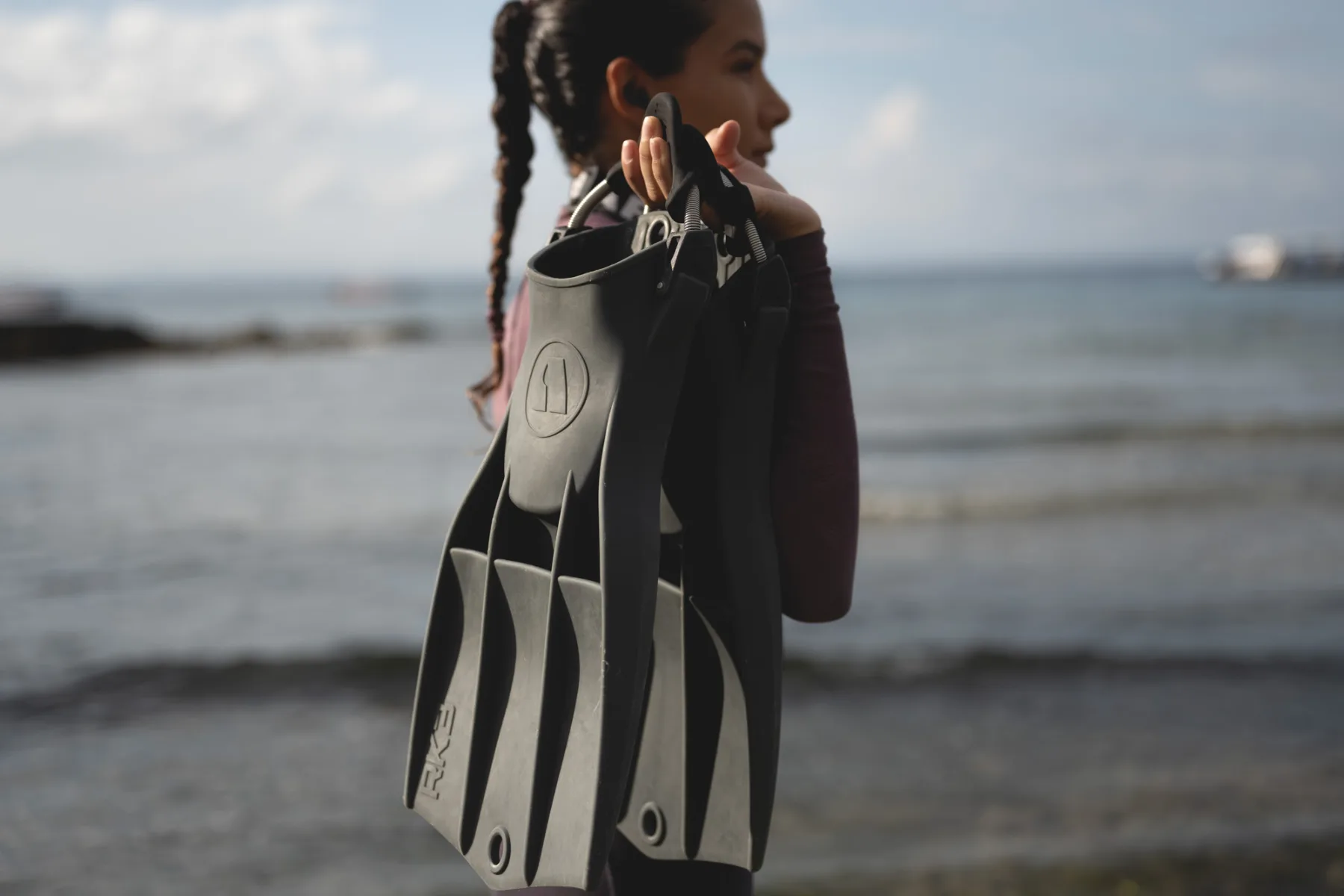
Blade Design: Paddle, Split, or Channel
This is the choice that changes how the fin actually moves water, and it’s the one most new divers never think about.
Paddle blades are the classic flat, stiff design. They give you the most direct power and control, and they’re the only blades that reliably let you do advanced kicks, frog kick, back kick, helicopter turns, without fighting the fin. They demand more from your legs in a straight flutter, but they’re what every technical, wreck, and cave diver uses, and they’re what you’ll be taught precise buoyancy and trim on. If you want to grow as a diver, a medium-stiff paddle is the fin that grows with you.
Split fins have a blade divided down the middle, which works like a propeller: they slice through the water on the flutter kick with very little effort, so they’re gentle on the knees and calves and great for divers who fatigue easily or have joint issues. The catch is they’re inefficient at anything other than flutter. Frog kick, back kick, and precise hovering are all much harder, and in strong current a split fin can feel like it’s spinning without gripping. Okay for easy reef cruising, frustrating for technique. I know you like it when I give you some insights that are not voiced on other platforms so… Split fins are not considered “cool” in the diving world. I will always say; choose what ever YOU like and what works for YOU. But I also like telling you, things you might not know 😬
Channel or vented blades sit in between: a flexible blade with channels or vents that flex to cup and release water. They’re a comfortable, efficient middle ground for general recreational diving, forgiving on the legs while still handling a wider range of kicks than a split fin.
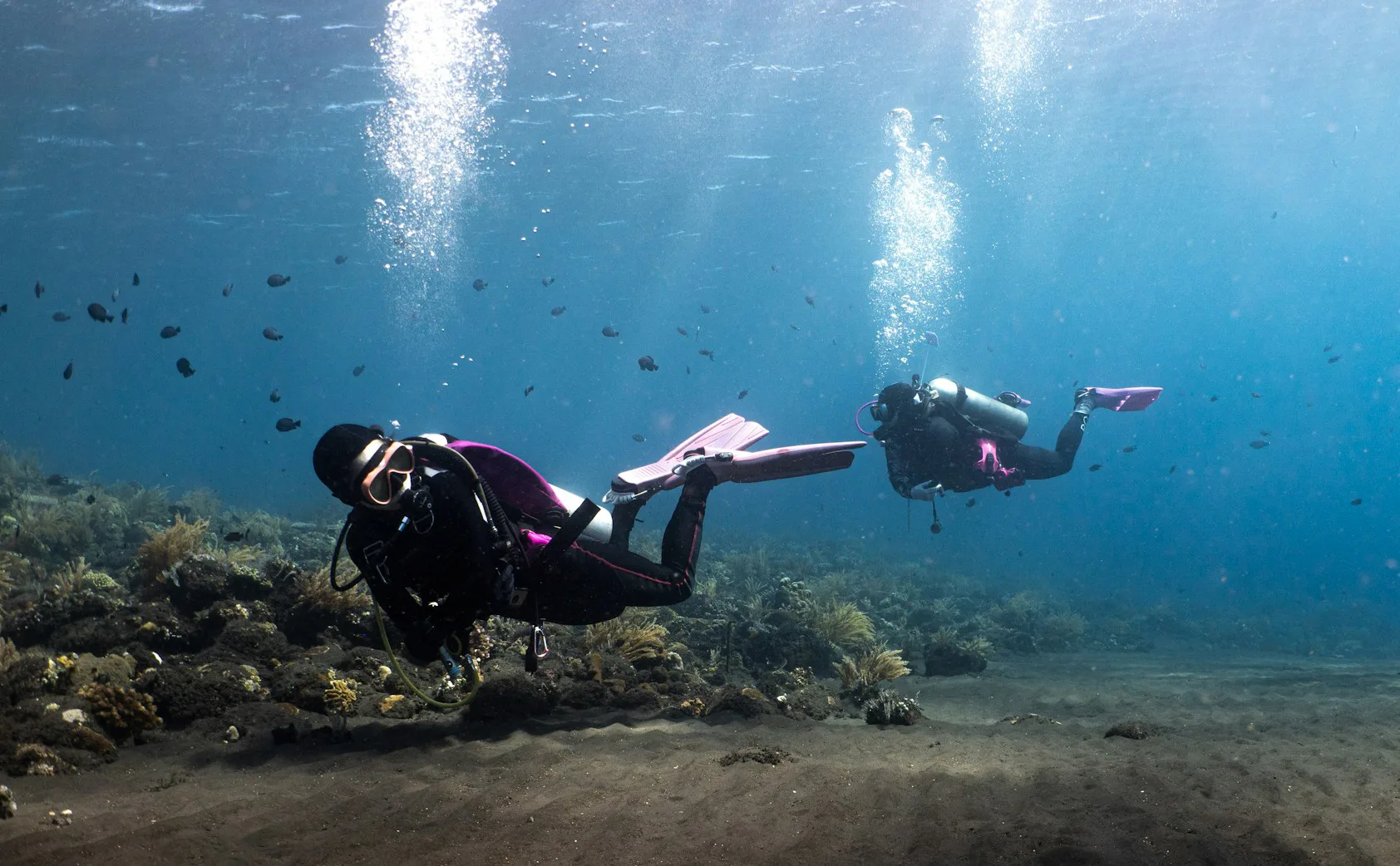
Stiffness: Match the Blade to Your Legs
A stiffer, larger blade moves more water per kick, which means more power and better control in current. It also demands more leg strength, and if it’s too stiff for you, you’ll cramp and tire fast. A softer blade is gentler and more comfortable but gives you less to push against when it matters.
There’s no universally “best” stiffness, only the one that matches your body. Smaller divers, or anyone who isn’t finning against current all day, are usually better served by a medium or medium-soft blade than by the biggest stiffest fin in the shop. Bigger, stronger legs can load a stiff paddle and get real thrust out of it. This is one of the most common mistakes I see: divers buying a fin that’s too much fin for them because it looks serious, then wondering why their calves are on fire after twenty minutes.
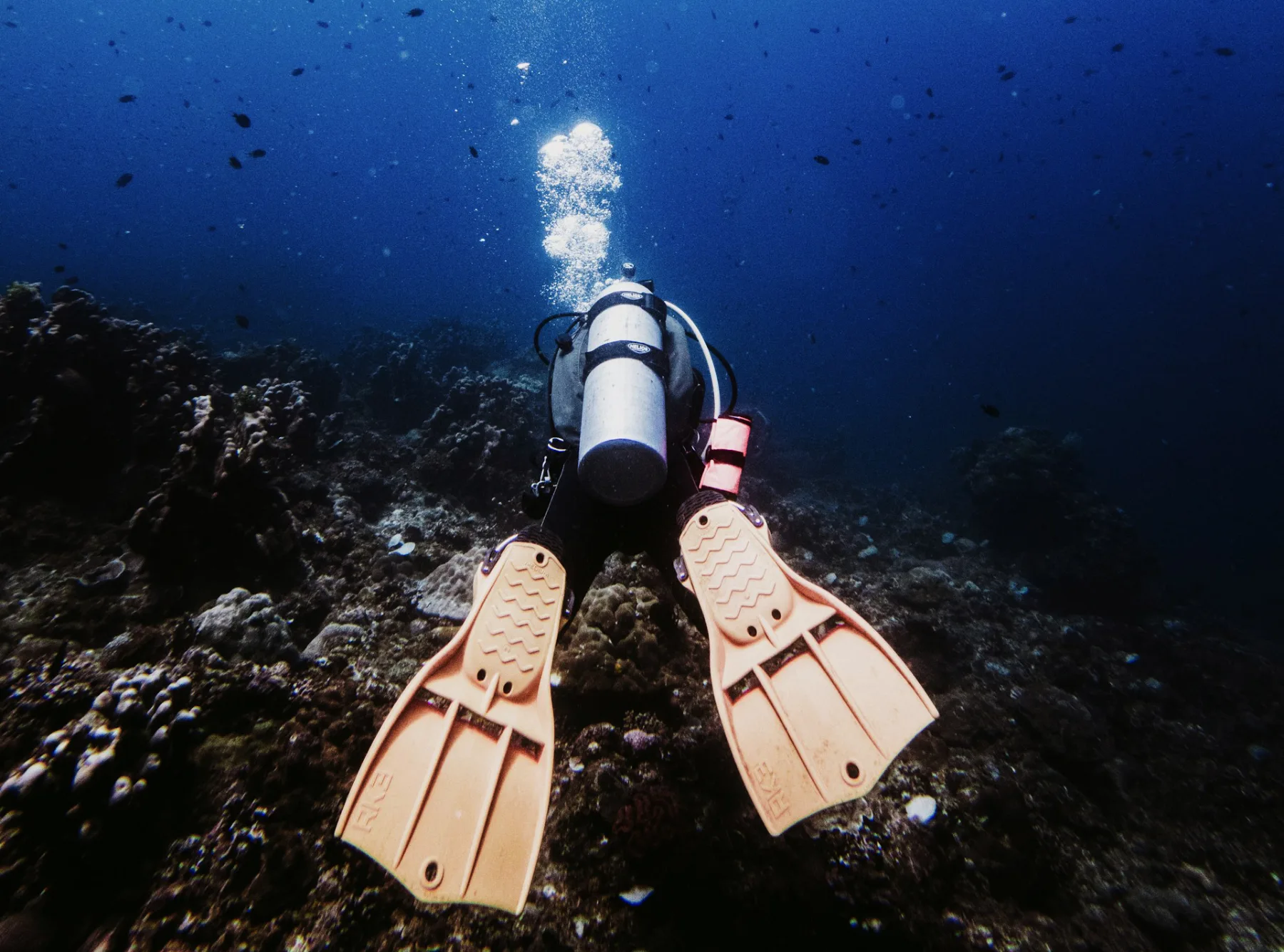
Fin Buoyancy: Negative, Neutral, or Positive
This is the part most divers have never even heard of, and it quietly affects your trim more than almost anything else, because your fins sit at the very end of a long lever, your legs.
Trim is whether you float flat and horizontal in the water, or hang at an angle. If your feet sink, you end up angled head-up, finning slightly downward, stirring silt and wasting energy. If your feet float up, you tip head-down. The buoyancy of your fins nudges this either way.
Negative fins sink. They’re ideal for divers whose feet float up, and they’re the standard choice for drysuit divers, because air migrates down into the legs and boots of a drysuit and lifts the feet. A negative fin counterbalances that. They’re also popular with technical and backmount divers for the same reason.
Neutral fins don’t pull your trim in either direction. They’re a safe, do-no-harm default, and the usual pick for sidemount divers in wetsuits.
Positive fins float. They suit divers whose feet sink, taking some load off the hamstrings, and they have the small bonus of floating to the surface instead of sinking to the seabed if one ever comes off. Foot-heavy divers often feel instantly more balanced in a positive or neutral fin.
A quick trick before you commit: most fins will tell you their buoyancy, but if you already own a pair and want to check, drop them in a pool or a full bathtub. Sink, hover, or float tells you what you’ve got. Just remember saltwater is more buoyant than the freshwater in your tub, so a fin that’s neutral in the bath will be slightly positive in the sea.
If you’re not sure whether your feet sink or float, that’s worth sorting out first, because it drives this whole decision. It ties directly into how you weight and balance your whole rig, which I get into in the guide to buying your own scuba gear.
A Note on Slip-On and Force-Fin Style Fins
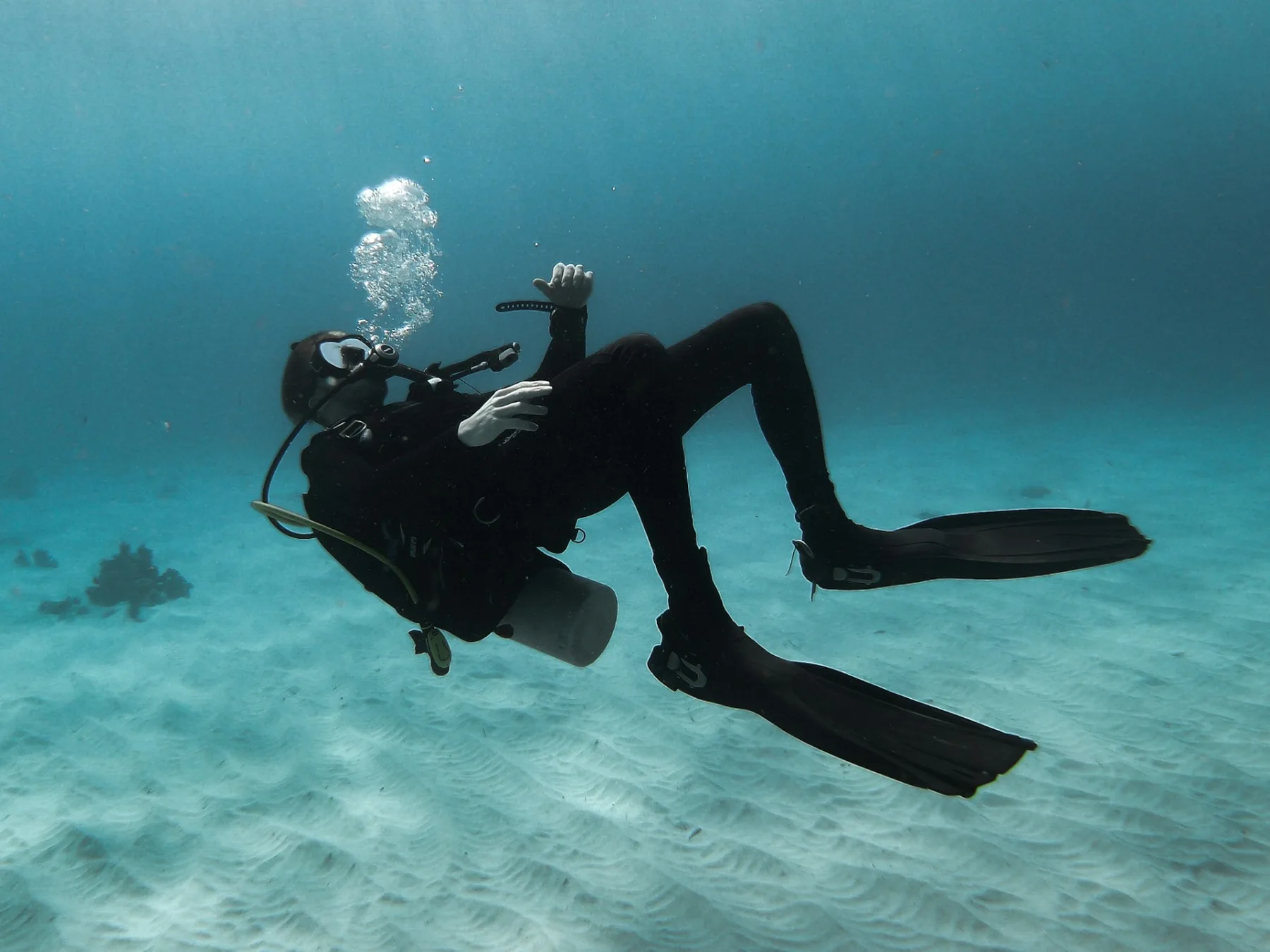
You’ll occasionally see unusual designs, short slip-on fins, hinged “force fin” styles, and similar. I’ll be honest, they’re not my personal preference, and they’re not what most divers should start on. But they exist for a reason: some divers with hip, knee, or ankle conditions find certain low-resistance or hinged designs far easier on the joints than a conventional blade, and for them that can be the difference between diving comfortably and not diving at all. If you have a specific physical reason a standard fin doesn’t work for you, they’re worth investigating with a knowledgeable shop or instructor rather than dismissing. For everyone else, they’re a niche, not a starting point.
A Word on Color
Color isn’t just vanity, though there’s nothing wrong with wanting gear you actually like the look of. Pick whatever color makes you happy, but know that color does a few practical things too, both on the boat and in the water.
There’s the topside bonus: on a busy dive boat where half the group is diving similar or identical black fins, having a pair in a color that isn’t black makes yours instantly recognizable in the pile. No squinting at foot pockets trying to work out which ones are yours, no accidentally walking off with someone else’s gear. A small thing, but a nice one after a long day of diving.
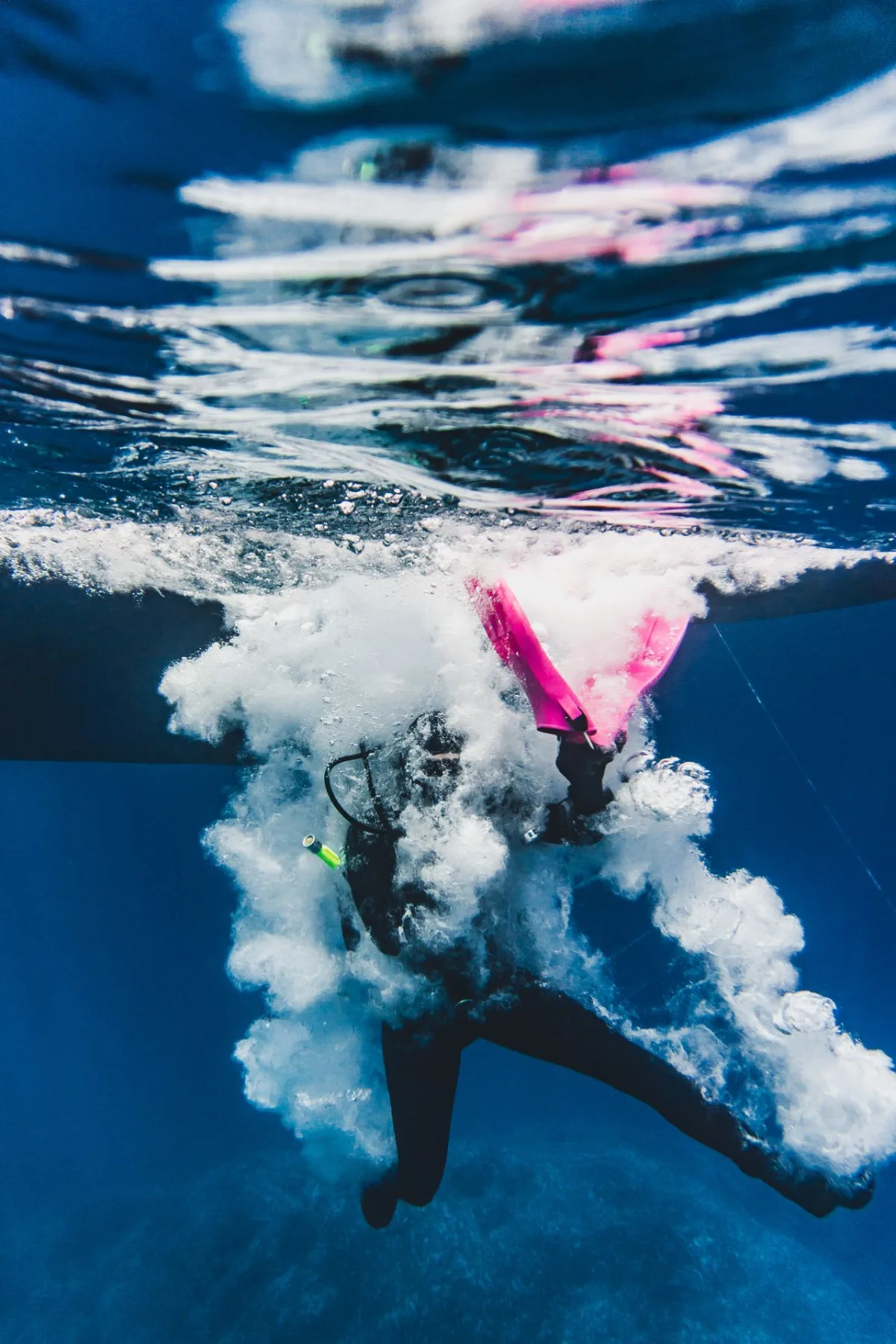
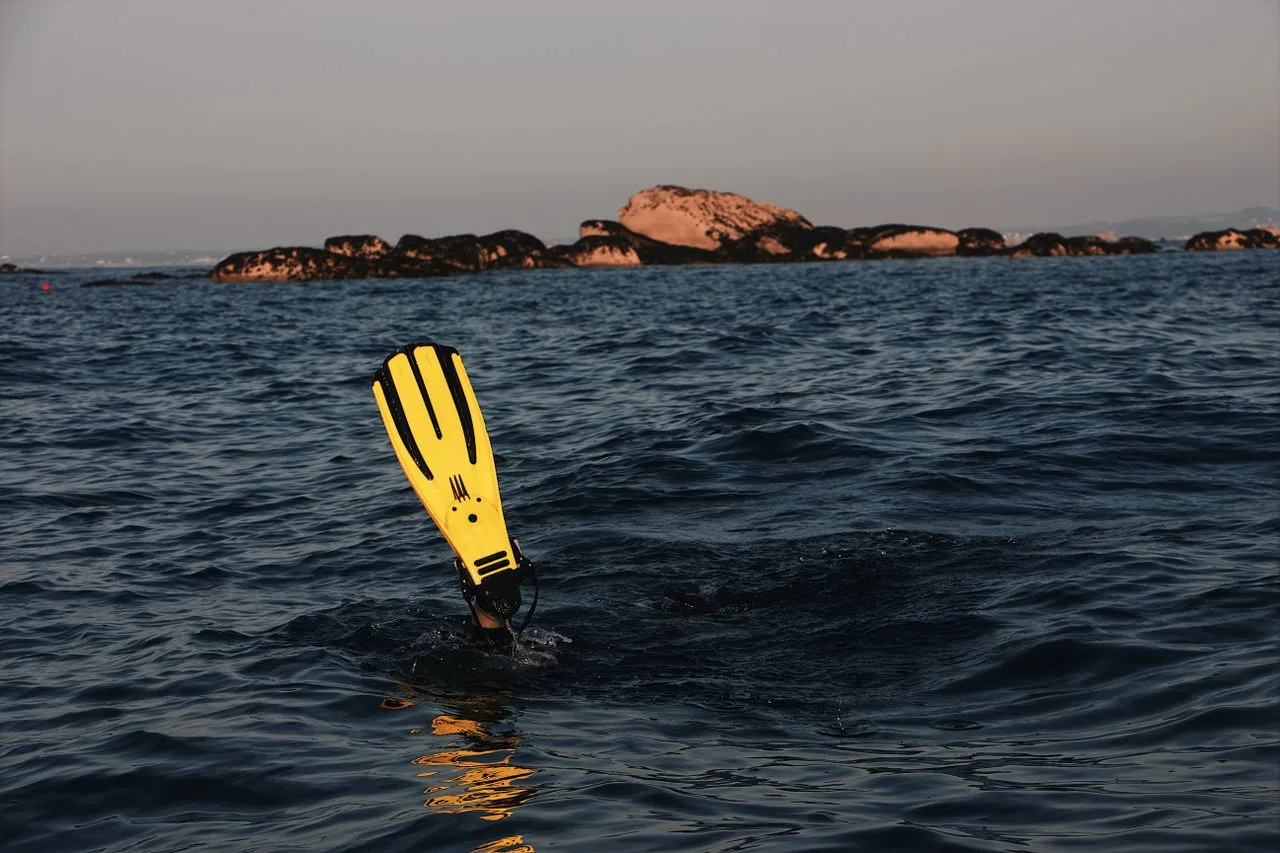
Bright, high-visibility fins (yellow, orange, pink, bright blue) make you dramatically easier to spot underwater too. That matters more than it sounds: your buddy is far less likely to lose you, and if you dive professionally, it’s a real advantage. When I’m guiding, bright fins mean my divers can pick me out instantly in a group, even at distance or in lower visibility, which keeps everyone together and calm.
There’s one exception worth knowing about: shark diving. Some operators don’t allow yellow or white fins, on the theory that high contrast and pale colors resemble fish and make you more visible, or more interesting, to sharks. Whether that actually makes a meaningful difference is debatable, and falls somewhere in the “allegedly” category, but it doesn’t matter, because it’s their boat and their rules. If an operator says no white and no yellow, you’ll be handed the shop’s fins for the day regardless of what you own. That’s exactly what happened to me diving with bull sharks in Playa del Carmen, so if you’re traveling somewhere specifically to dive with sharks, it’s worth checking the operator’s policy before you assume you’ll be using your own gear.
And a small, real-world note on white fins: they look fantastic, and I owned a white pair for a while. What nobody tells you is that every scuff, every speck of boat grime, every bit of sediment shows up on white, and if you’re the kind of person who likes your gear looking clean, you’ll spend a surprising amount of time scrubbing them. Lovely, high-maintenance. Worth knowing before you fall for a white pair.
Diving Boots and Fins Are a Package Deal
If you go open-heel, your boots and fins have to be chosen together, not separately, because the fit between them is what makes or breaks your comfort. A boot that’s too thin for the foot pocket leaves your foot sliding around, which causes rubbing, hot spots, and eventually blisters on a longer dive. A boot that’s too thick for the pocket won’t seat properly, so the fin feels like it’s being pushed off with every kick.
The fix is simple: try them as a pair. Put the boot on, then the fin, and check that your foot sits snugly in the pocket with no sliding side to side and no painful pressure points. Your heel should sit firmly against the back of the pocket, and the strap should hold without having to be cranked down to the last notch. If you already own boots, bring them when you shop for fins. If you’re buying both, buy them at the same time from somewhere that lets you test the combination.
Sometimes the fix is even smaller than swapping boots. I wear a dive sock under my boot, which takes up just enough space to stop any sliding, prevents rubbing at the heel and toes, and makes the whole setup noticeably more comfortable on longer dives. It’s a cheap, easy way to dial in a fit that’s almost right, and it doubles as an extra layer of warmth. If your boots feel a touch loose in the pocket, or you’re prone to blisters, a dive sock is often the answer before you go buying anything bigger.
And before you commit to any pair, try before you buy if you possibly can. Borrow a friend’s fins on a dive, or rent a few different models from a dive center that stocks them. What feels great in the shop can feel completely different after forty minutes of finning, and the only way to really know is to get them wet. Most divers go through a pair or two they didn’t love before they find the ones that disappear on their feet, and a bit of trial up front saves you buying the wrong thing twice.
That’s also exactly why there’s such an active second-hand market for dive gear. Plenty of divers sell items that were perfectly good but just weren’t right for them, so if you’re after a better deal, buying used is a solid option, and often means someone else absorbed the depreciation on a barely-used pair. Just check the foot pocket and straps for wear before you commit.

Matching Fins to the Diving You Actually Do
Once you understand the pieces above, the “which fin” question mostly answers itself based on where you dive.
Warm-water reef cruising and travel. Full-foot or lightweight open-heel, a soft-to-medium blade, split or channel if your legs tire easily. Prioritize weight and packability. This is most holiday diving.
General recreational diving in mixed conditions. Open-heel with boots, a medium paddle or channel blade, spring or bungee straps. The do-everything setup, and where most divers should land.
Strong current, drift, and blue-water diving. A stiffer paddle or power fin. You need to be able to load the blade and hold position against moving water, and a soft or split fin will leave you underpowered and drifting.
Wreck and overhead environments. Stiff paddle fins, full stop. You need precise back kicks and helicopter turns to move through tight spaces without silting out the whole site or touching fragile structure. Long blades and splits are the wrong tool here.
Technical and drysuit diving. Stiff, negative paddle fins with spring straps. This is the jet-fin-style territory: rugged, powerful, predictable in reverse, and heavy enough to counter drysuit leg buoyancy.
The through-line is the same one that runs through all dive gear: buy for the diving you actually do most, not the one dramatic trip you might take once. If ninety percent of your dives are warm reefs, a giant stiff current fin will just punish your calves the rest of the time. Fins are also, happily, one of the more affordable and longer-lasting pieces of kit, so a good pair matched to your real diving is money very well spent. If you’re still working out what’s worth owning versus renting more broadly, the wetsuit buying guide walks through the same buy-what-you-use logic for exposure protection.

Sizing
Fin sizing runs in fairly broad brackets rather than exact shoe sizes, and most models cover a range like XS/S/M/L/XL, sometimes with a couple of numbers grouped into each. For the majority of divers, sitting comfortably in the middle of the range, this is a non-issue: you’ll find your size in almost anything, and the choice comes down to everything else in this guide. Full-foot fins need to match your bare or socked foot fairly precisely, while open-heel fins give you more room to adjust with boot thickness and strap tension. Either way, the fit should be snug and secure with no sliding and no pinching, and it’s always worth trying before you buy.
Where sizing gets tricky is at the two ends of the range, and those edges deserve their own attention.
If Adult Fins Don’t Come Small Enough
This is the part almost no guide talks about, and it’s a real struggle, especially for women with smaller feet. Adult scuba fin sizing tends to start around a 36 to 38 EU and go up from there. If you’re a 34 or smaller, you’ll often find that adult scuba fins simply don’t come small enough, and the only things that fit are kids’ fins, which are almost always made for snorkeling, not diving.
That’s a real problem, because a snorkeling fin won’t give you the blade, power, or foot pocket you need for scuba, and finning against any real current in one is exhausting and underpowered. Being forced into a kids’ fin isn’t a solution, it’s just the gap in the market showing.
The better route, if adult full-foot fins won’t go small enough, is open-heel. Pairing the smallest available adult foot pocket with a thicker boot and a dive sock can take up the extra space and give you a secure, powered fit that a too-large pocket alone never will. It’s fiddlier, and it means committing to the open-heel-plus-boot setup rather than a simple slip-on, but it’s the way smaller-footed divers get into a proper scuba fin instead of settling for pool-toy gear. If you’re in this bracket, shop open-heel, go to a shop that will let you test the boot-and-pocket combination, and don’t let anyone talk you into a snorkeling fin as though it’s the same thing.

If You’re Bigger Than the Rental Rack Goes
The opposite problem is just as real. If your feet run larger than a standard XXL, you’ll quickly learn that most dive centers simply don’t stock anything that fits you. Rental racks are built around the sizes most divers fall into, and the extra-large end is almost always where they run out. Turning up to a dive center hoping they’ll have your size is a gamble, and the worst-case version of losing that gamble is sitting on the boat unable to dive because nothing fits.
So if you’re at the large end of the range, owning your own fins isn’t really optional, it’s the thing that guarantees you can actually dive. Buy them at home, before the trip, from a shop or online retailer that carries genuine extra-large sizing, and take the time to get the fit right while you have options and no pressure. Online is often your best bet here simply because the selection is far wider than any single shop’s wall, just order early enough to exchange them if the first pair isn’t right, and never so close to a trip that a sizing miss leaves you stuck. Showing up with your own proven pair means the dive center’s rental stock is irrelevant, and you never have to find out the hard way that XXL was their ceiling.
In short
This guide is extensive because there’s a lot that goes into finding the right scuba fins. It’s sort of a Cinderella situation and you want to get it right from the start.
If this is a lot, here’s the short version. Most divers are best served by an open-heel fin, worn with a neoprene boot, with a medium-stiff paddle or channel blade, upgraded to spring or bungee straps, in a buoyancy that suits whether your feet sink or float. Get the fit snug but not tight, make sure there are no pressure points, and if you possibly can, try them in water before you buy. The right fins are the ones you stop noticing. Everything else on this page is just how you get there.
Happy diving! 🤿