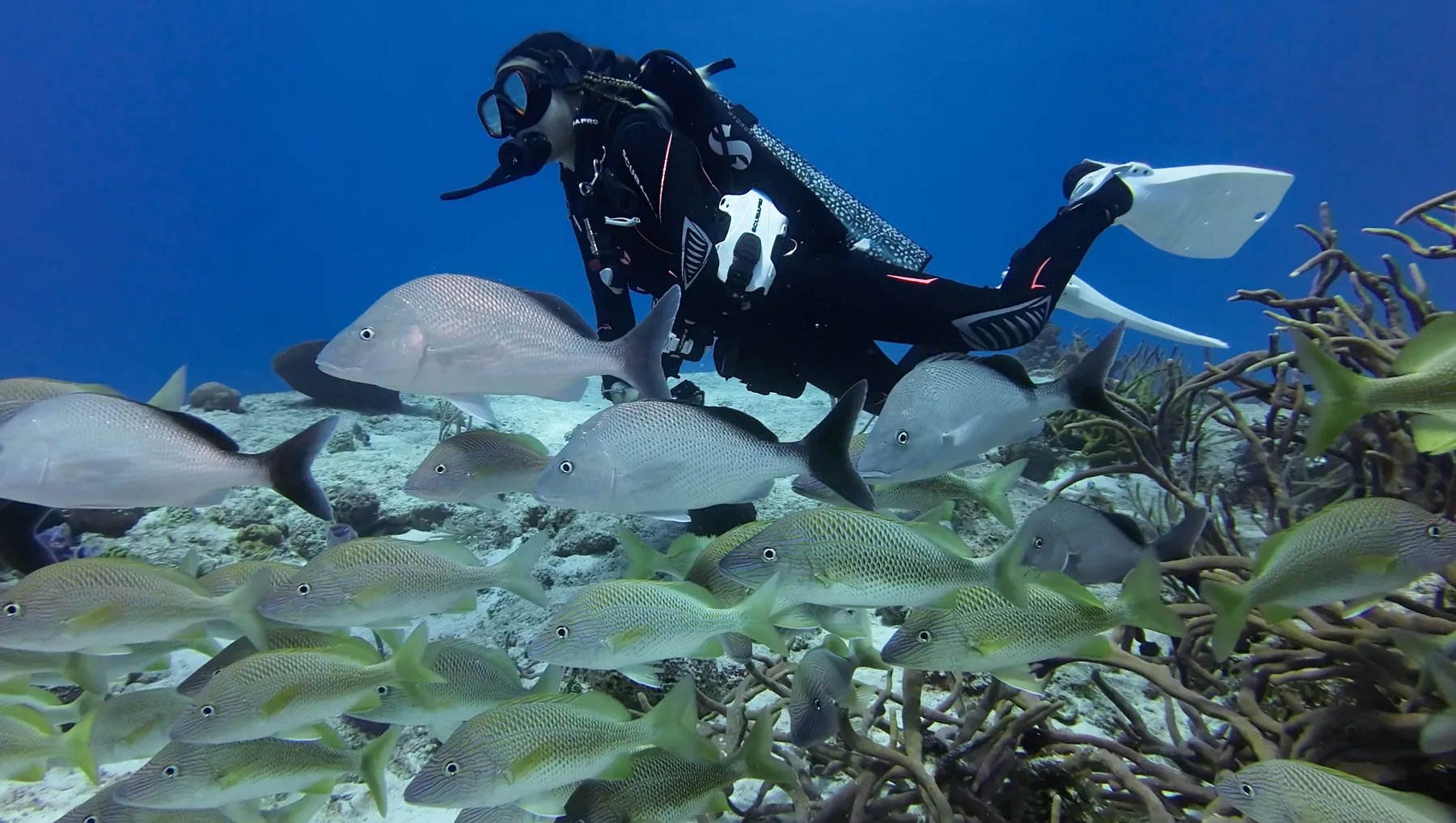
If you ask ten divers what the most important piece of gear is, most will say the regulator or the dive computer, and very few will mention their scuba diving mask. Those two are certainly important, but the piece of gear that can quietly ruin a dive is the one strapped to your face. A leaking, fogging, pinching mask turns a beautiful dive into an hour of blinking through a blur and clearing water every few breaths.
I think a lot of divers underplay the mask because it looks so simple next to everything else. There are no hoses, no batteries, no settings to learn. Just glass, a silicone skirt and a strap. So it often becomes an afterthought, something people grab from the rental box on the way to the water.
Yet if there’s one piece of gear every diver should own first, it’s a mask. It’s affordable, it fits in any bag, and it’s the one item that has to suit your face and no one else’s. Rental masks are chosen to fit as many people as possible, which rarely means they fit you well. If you’re starting to think about buying your own scuba gear, this is the place to begin.
Something you need to know about a diving mask is that it either fits you, or it doesn’t. There’s no way around it. Brands try to design masks that adapt to every face, but that’s really an impossible task, because human anatomy isn’t generic. The shape of your cheekbones, the bridge of your nose and the width of your face all change how a mask sits. That being said, there are plenty of options on the market for you to try, Cinderella style.
In this guide I’ll walk you through what to look for and how to test the fit, so you can find a scuba diving mask that feels like yours and keep your attention where it belongs: the underwater world.
Now, let’s dive in.
How a Scuba Diving Mask Works
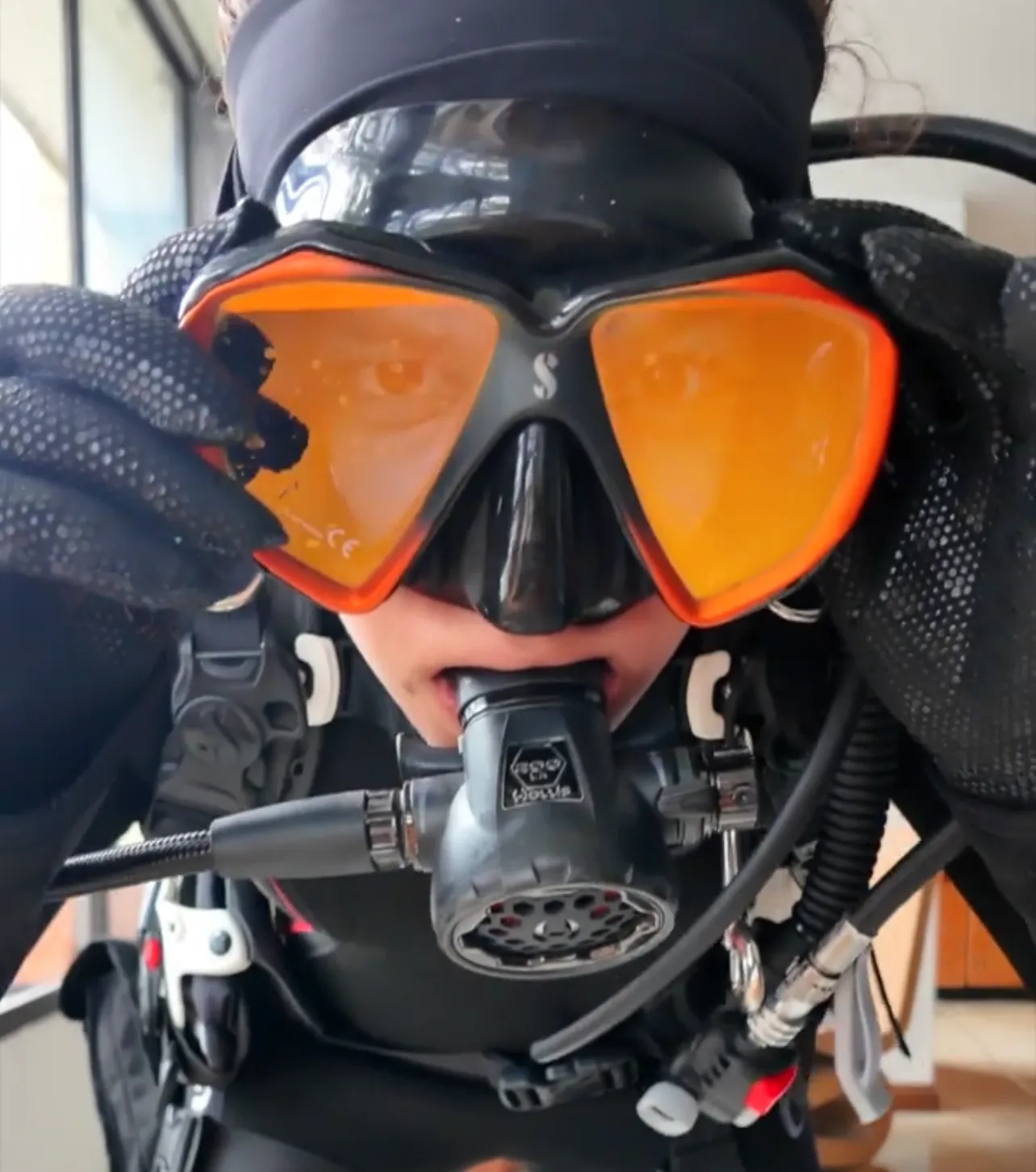
A dive mask does one job. It traps a pocket of air in front of your eyes so you can see clearly underwater, where your bare human eyes cannot focus. That air pocket is held in place by a soft silicone skirt that seals against your skin, and the seal is maintained mostly by water pressure pushing the mask gently onto your face as you descend.
This is why the strap is not what holds the mask on. The strap only stops it drifting off. The seal comes from the skirt matching the shape of your face and from the slight suction the pocket of air creates. Cranking the strap tight to fix a leak is the classic beginner mistake: it deforms the skirt and usually makes the leak worse, not better. Doing that can also give you a headache and leave you with harsh marks on your face.
A mask also has to let you equalize. As you go down, the trapped air compresses and the mask squeezes onto your face, so you exhale a little through your nose to top it back up. That is why every dive mask has a nose pocket you can pinch, and why swimming goggles, which do not, are useless for diving.
The Seal Is Everything
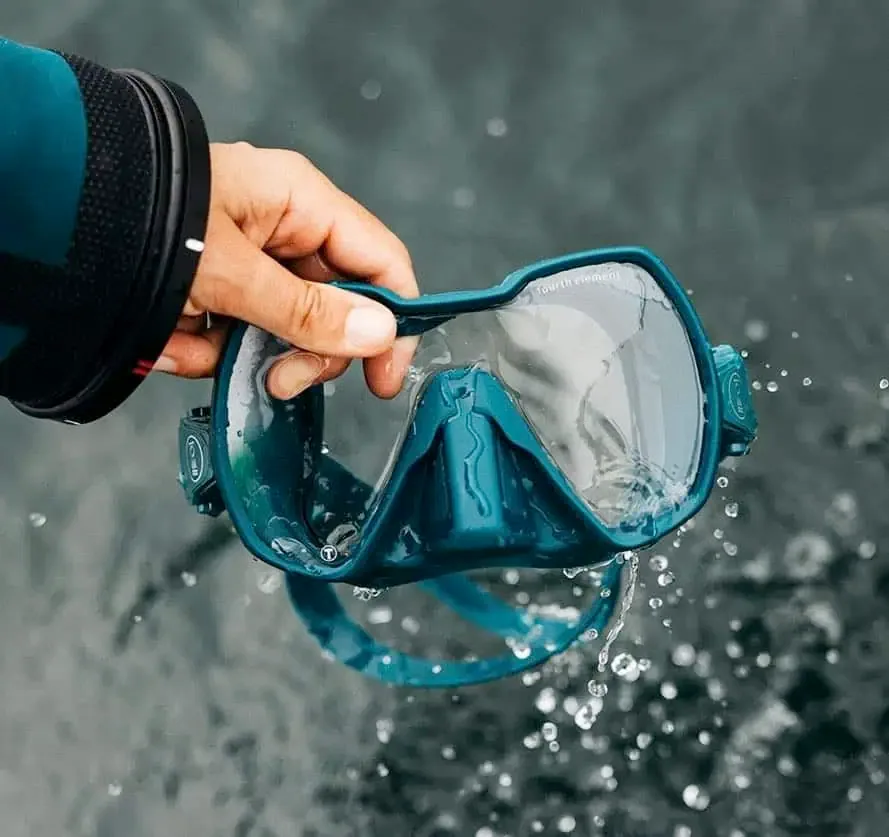
Fit beats brand, every time. The single most useful thing you can do is the suction test. Hold the mask against your face with no strap, tilt your head down slightly, and breathe in gently through your nose. If it grips and stays put for a few seconds on suction alone, the skirt is matching your face shape. If it slides off or you hear air hissing in, that mask is not for your face, no matter how good the reviews are.
Pay attention to three trouble spots while you do this. The bridge of your nose, where a poorly shaped pocket digs in. Your forehead, where a stiff frame can press. And the corners beside your eyes, where wider faces often lose the seal. A mask that seals everywhere except one small gap will leak all dive, so do not talk yourself into “close enough”.
Masks Are Designed for “Most” Faces, Not Yours
Every mask on the shelf was designed around an average. Manufacturers shape the skirt to seal on the widest range of faces they can, which means any given model will fit a lot of people reasonably well and a few people perfectly. Whether you fall into that second group depends entirely on your own anatomy, and there is no way to know until you hold it to your face.
This is where it gets frustrating if you have a narrow or small face. A skirt built around an average adult face will often sit too wide at the temples or too low on the cheeks, and no amount of strap tension fixes that. Plenty of divers conclude they’re simply hard to fit, when the truth is they’ve only tried masks built for a different face shape.
The good news is that several brands now make a smaller version of their standard model, sometimes sold as a mini, compact or small-fit version of the same mask. Same lens design, same silicone, scaled down across the skirt and frame. If you’ve tried four or five masks and every one of them leaks at the cheekbones, ask your dive shop specifically for the small-fit versions rather than working through more standard ones.

Low-Volume Dive Mask vs. Wide View
Internal volume is a real trade-off, not just a spec. Low-volume masks sit close to your face and hold a small pocket of air. That makes them quicker and easier to clear if water gets in, and easier to equalize. These are actually the preferred type for freediving, where every bit of air you spend on the mask is air you are not using to go deeper. The catch is that they can feel slightly more enclosed. Higher-volume masks give a big open field of view and an airy feel, but there is more water to blast out when you clear them.
For most scuba divers a low to moderate volume mask is the sweet spot: easy clearing, easy equalizing, and a view that is plenty wide once you are underwater and not thinking about it. If you tend to get water in your mask often, lean lower volume.
Lens and Skirt Quality
Look for tempered glass and clear silicone. The lens should say tempered or safety glass, never plastic, because plastic scratches and fogs far more easily. On the skirt, clear or translucent silicone lets in more light and can reduce the tunnel-vision feeling, while black or opaque silicone cuts glare and reflections, which some people prefer, especially for underwater photography. Neither is wrong. It is a comfort and preference call, not a quality one.
Give the silicone a gentle squeeze. It should feel soft and springy, not stiff. Is the nose pocket easy to press with your fingers? Does it let you reach your nose easily? Cheaper masks sometimes use a firmer skirt that seals well on a shop shelf but tires your face over a long dive.
Single Lens or Twin Lens
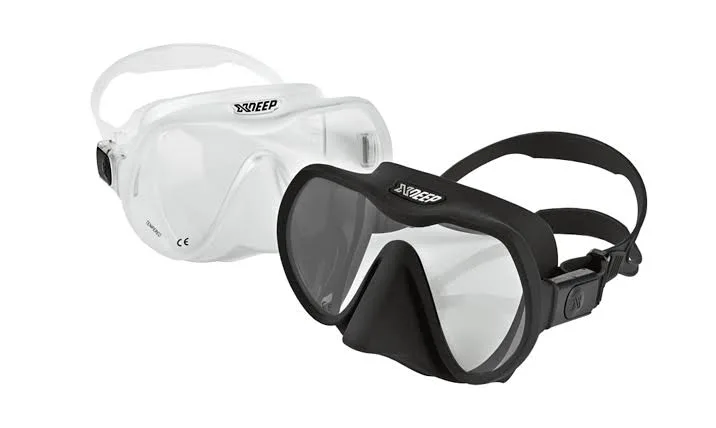
Choose by your face and your eyes, not by looks alone. A single-lens mask has one continuous pane of glass and gives an open, undivided view. Many people find it more comfortable across the nose. A twin-lens mask has a separate lens over each eye, usually sits a bit closer to your face for lower volume, and, crucially, is the type that accepts prescription lenses.
So the deciding factor is simple. If you need corrective vision underwater, you almost certainly want a twin-lens design that takes prescription inserts. If your eyesight is fine, pick whichever one seals best and feels most comfortable, and ignore the debate.
Fogging, and Why New Masks Are Worse
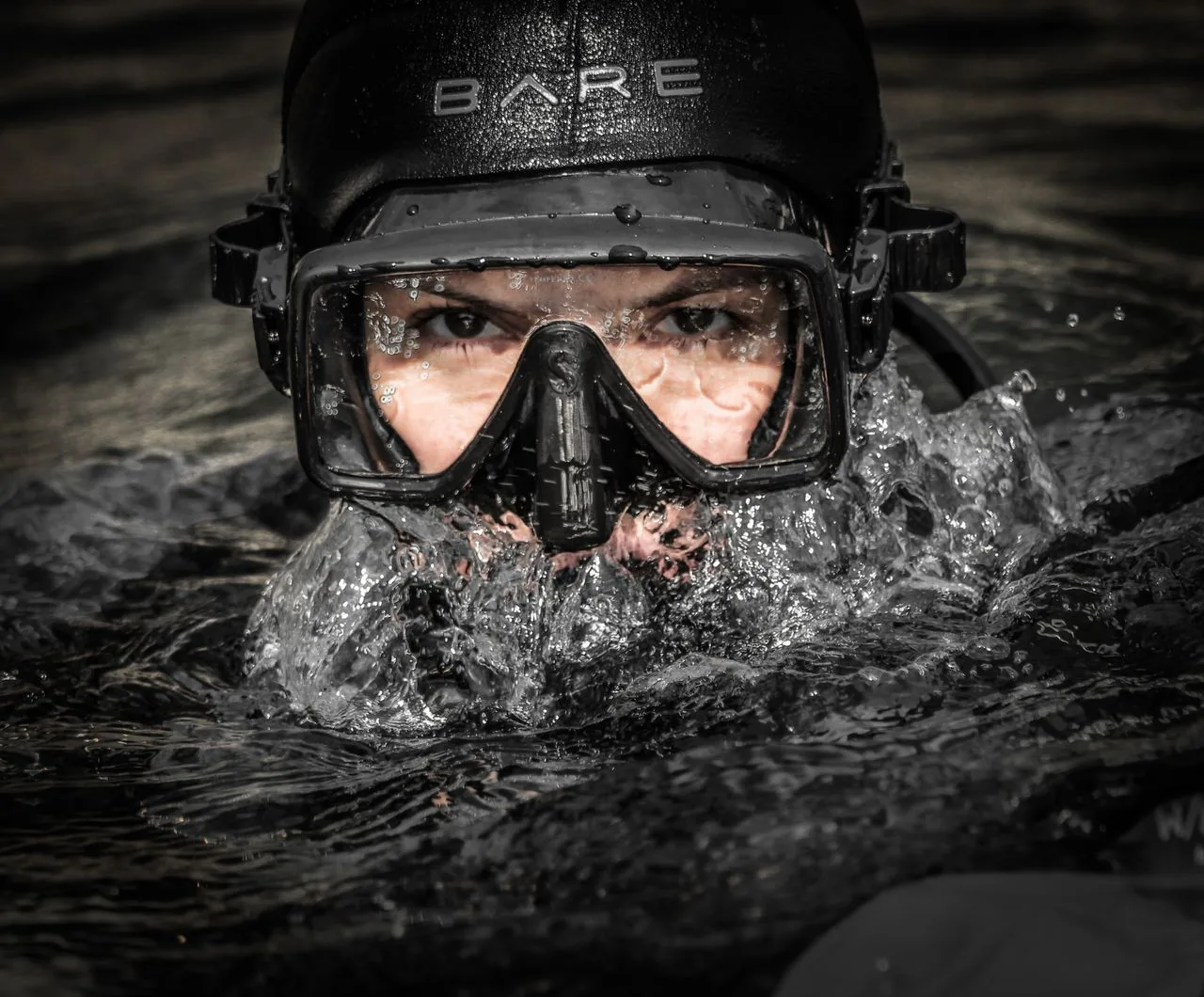
Every brand new mask arrives with a thin manufacturing film on the inside of the lens. Until you remove it, the mask will fog no matter what you do. This is normal and it catches almost everyone.
Before its first dive, a new mask needs a proper one-time clean of that film. The usual method is a non-gel toothpaste scrubbed over the dry lens with your finger, left for a few hours, then rinsed, and repeated two or three times until the glass squeaks. You can leave it overnight. Some divers burn the film off with a lighter flame, which works on tempered glass but will melt silicone if you let it touch the skirt, so it’s not a technique to try on a mask you just paid for.
After that, a light coat of anti-fog gel, spit or a drop of diluted baby shampoo (avoid harsh chemicals like dish soap, which are bad for your eyes and the reef) smeared around the dry lens and rinsed lightly before you jump in, keeps it clear for the dive. If a mask still fogs after all of that, the problem is usually the seal letting water creep in, which loops right back to fit.
There are some masks on the market that claim to have an “anti-fog” coating. Know that this feature wears off with use. I experienced this myself and for a few months, truly enjoyed the Cressi A1 that advertised having an “anti-fog tempered glass lens” but later on there was not a dive in which it would not fog up. The worst part is that the traditional anti-fogging methods didn’t work on that specific type of lens, so in the end after trying many fixes, I ended up scratching it completely as I tried to remove the original coating and it became entirely useless. Other divers agree that the “anti-fog” feature does wear off on other models as well.
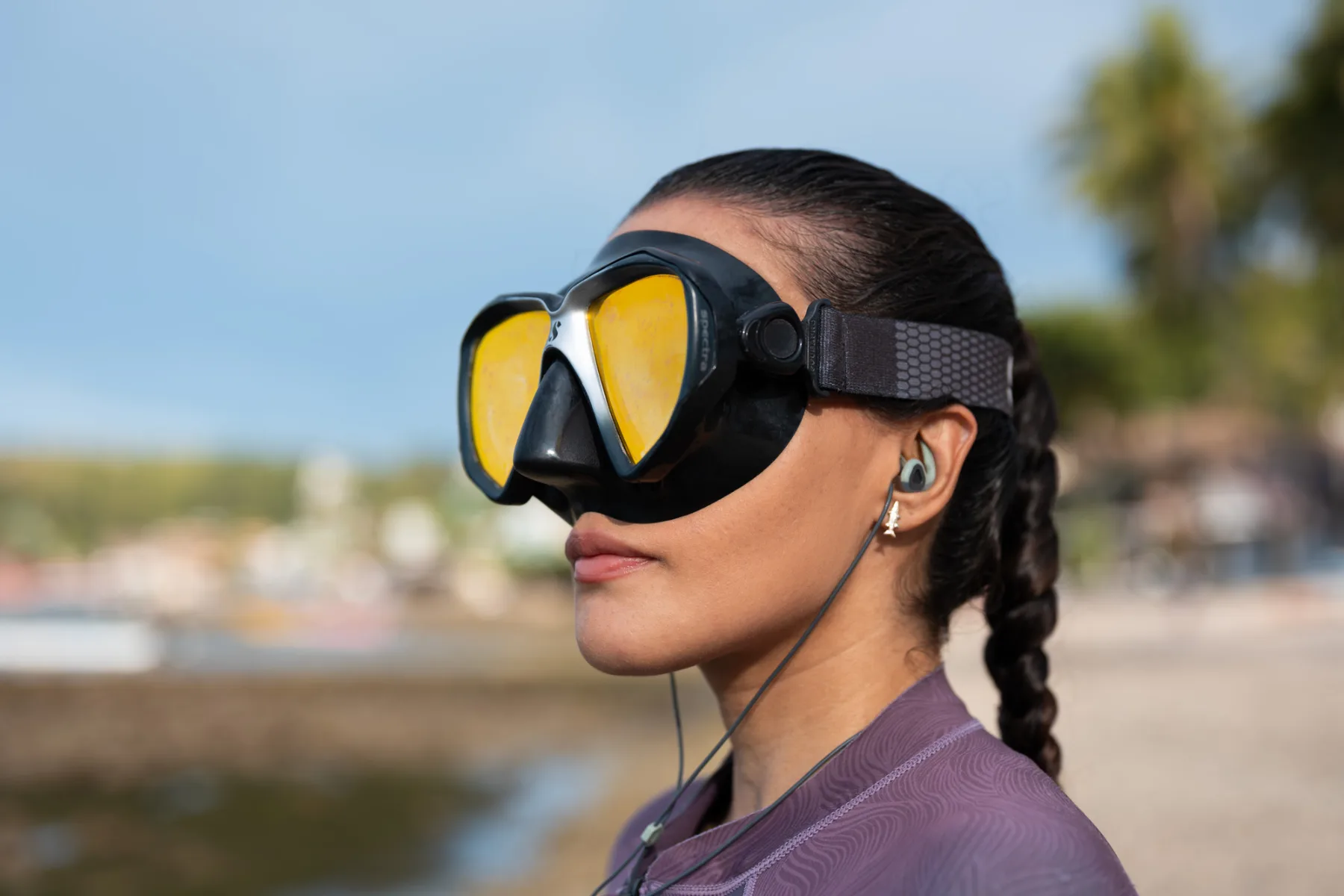
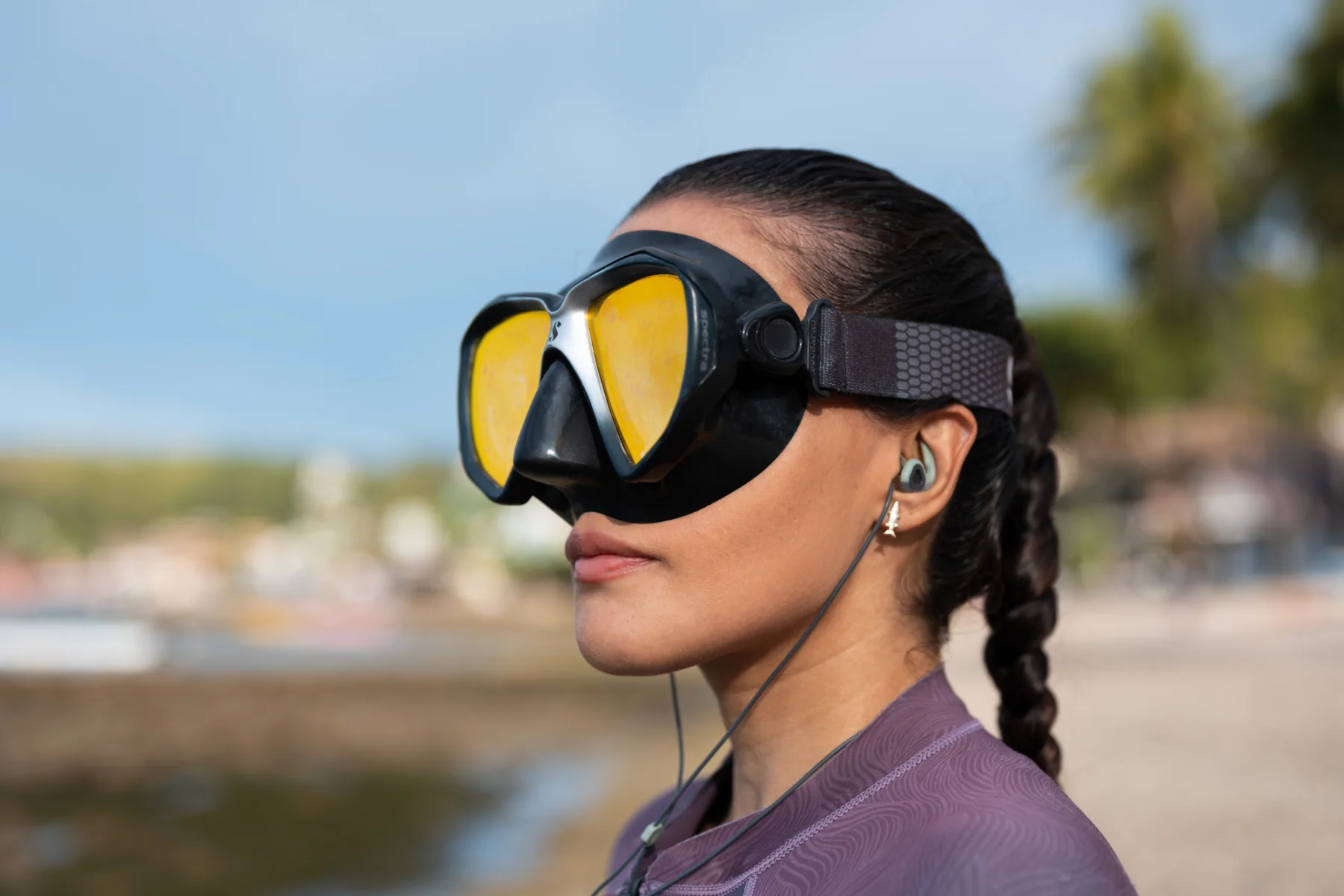
If you get a mirrored mask like my Scubapro Spectra, do not use the burning method. Use the toothpaste method instead.

Getting the Fit Right
Once you have a mask that passes the suction test, a few habits keep it working. Set the strap so it sits fairly high on the back of your head, not low on your neck, and keep it just snug, never tight. If you wear the strap over a hood in cold water, adjust it again once the hood is on, because the hood changes the tension. How much insulation you need depends on where you dive, which I cover in the guide to choosing a scuba diving wetsuit.
Keep your hair out from under the top edge of the skirt. Even a few strands break the seal and let a steady trickle in. If you have a beard or moustache, know that facial hair on the upper lip can lift the skirt just enough to leak, and a smear of vaseline along that edge is the usual workaround.
Finally, practice clearing your mask on purpose in shallow water. A mask will let in a little water at some point on almost every dive. Knowing you can tilt your head back, press the top of the frame and exhale through your nose to clear it turns a small annoyance into a non-event.
Diving Mask Straps: Silicone, Elastic or a Strap Cover?
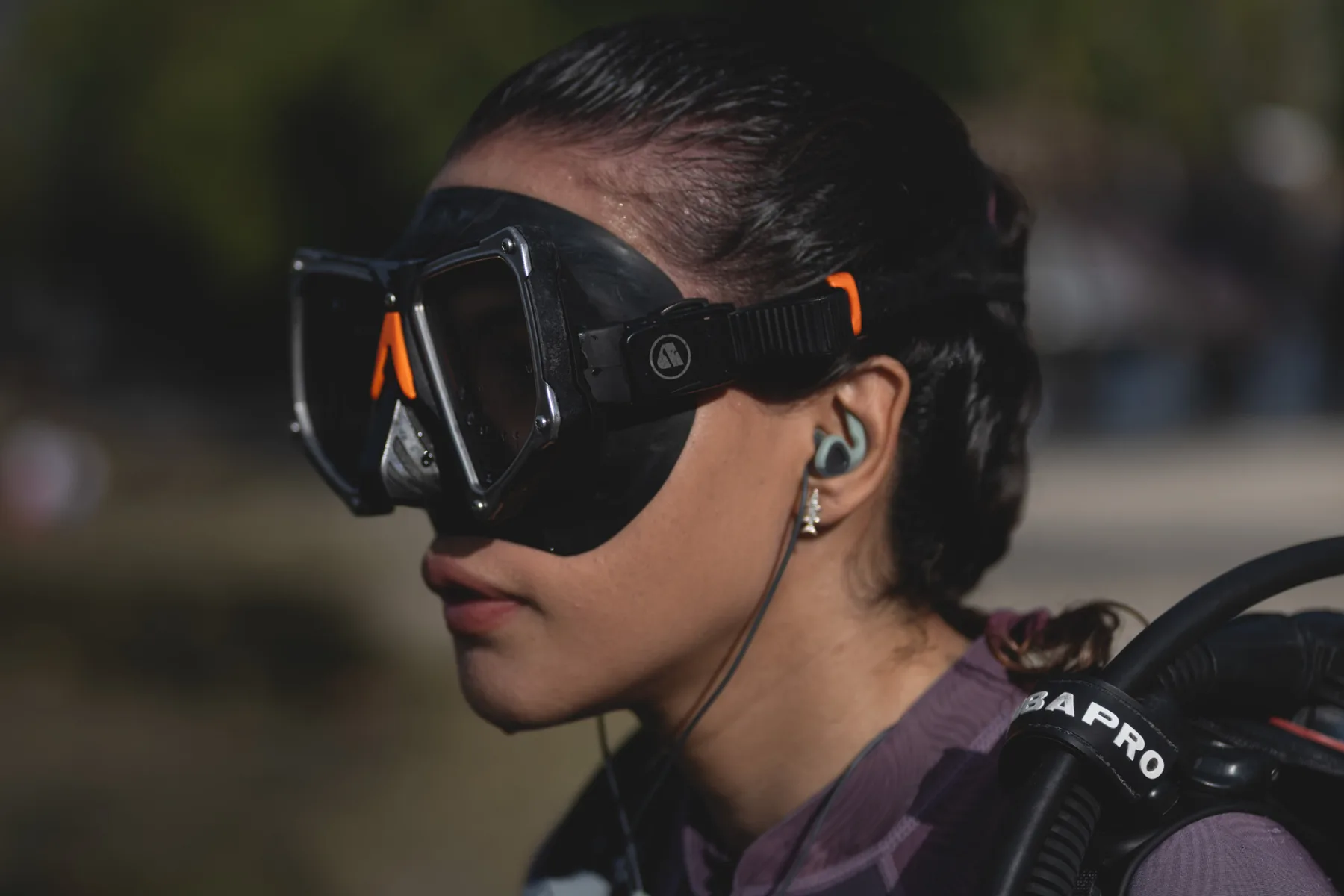
The strap is the part of a mask most divers don’t think about until it starts pulling their hair out one strand at a time. The seal comes from the skirt, so the strap’s job is simply to hold the mask in place. Still, it has a big say in how comfortable your mask feels, from the moment you put it on until you pull it off back on the boat.
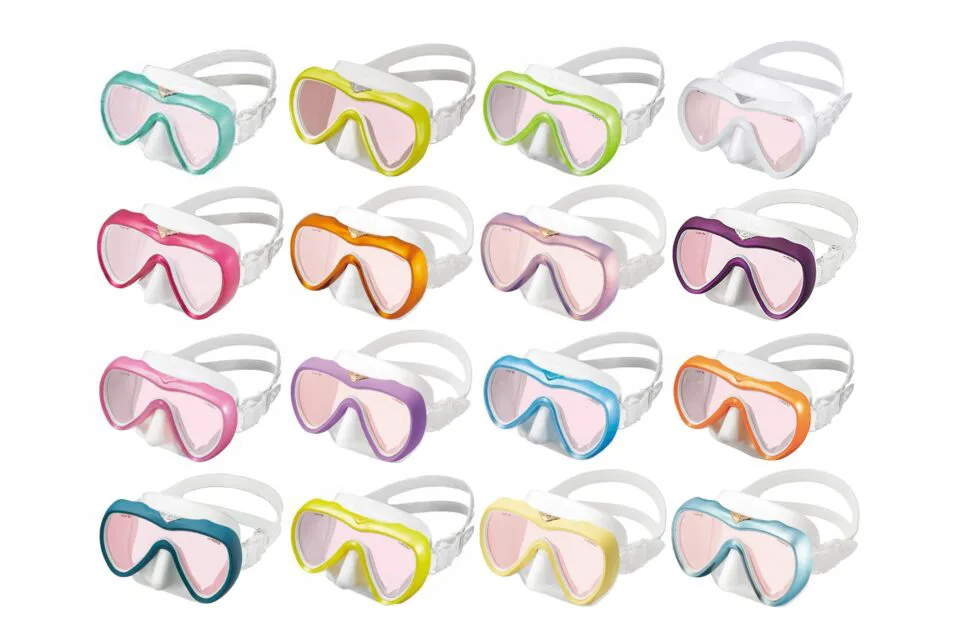
Almost every mask comes with a silicone strap, and you have two ways to change that: swap it for an elastic comfort strap, or slide a neoprene cover over the one you already have.
Silicone straps
This is the standard strap on nearly every scuba mask. It’s durable, grips well, rinses clean and dries in minutes. Most are split at the back into two bands, which spreads the pressure and keeps the mask steady when you turn your head. If one snaps, a replacement costs very little, and it’s worth keeping a spare in your save-a-dive kit. Some designs have a hole in the middle so you can pass your ponytail through, which is a lot more comfortable than one that can only go over it.
The downside with this type of strap is hair. Silicone grips everything, including long hair, so every time you put the mask on, take it off or adjust it, it tugs and tangles. Over three or four dives a day, that adds up. I personally cannot use these unless I’m also wearing a hood. Silicone also doesn’t love the sun. Leave your mask drying on deck day after day and the strap will slowly turn stiff and brittle.
Elastic comfort straps
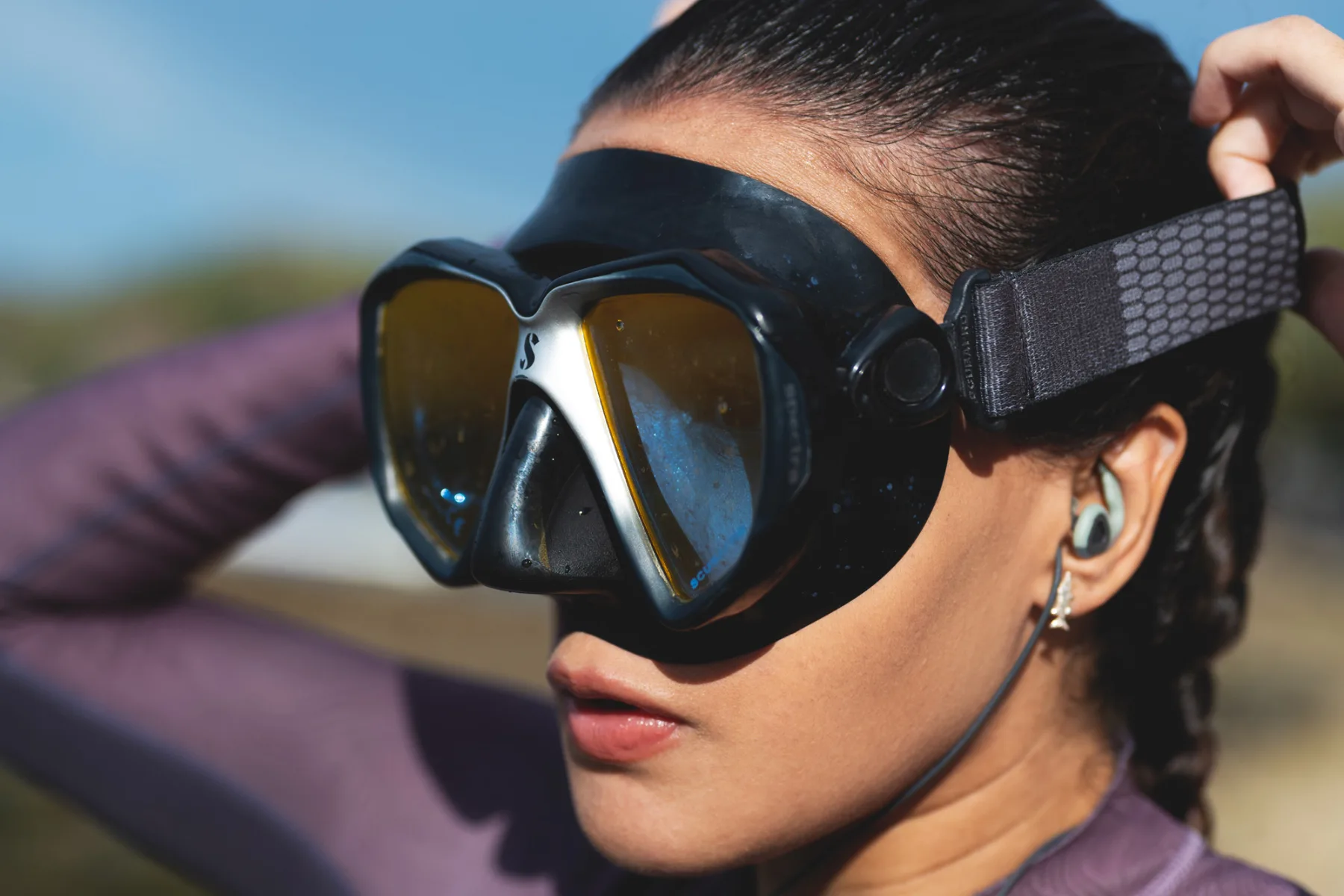
Comfort straps replace the silicone strap entirely. They’re a smooth elastic fabric band, designed like the strap on a pair of ski goggles, that clips onto the buckles on the sides of your mask.
They’re usually more expensive than a silicone strap (a little overpriced if we’re honest), but if you have long hair, they’re one of the best upgrades you can make for such a small piece of gear. The fabric glides over your hair instead of gripping it, so putting your mask on and taking it off is smooth, with no knots and no tugging. They also feel softer against the back of your head and hold the mask in place without that tight, pinching feeling silicone can leave behind.
The one thing to check before you buy is compatibility. Comfort straps clip onto a specific type of buckle, usually a round, button-style fitting, so they won’t fit every mask on the market. Scubapro and Fourth Element list which of their masks work with the strap, and if your mask is from another brand, check the buckle design first or ask your dive shop.
Neoprene strap covers/Mask tamers
If you’re happy with your silicone strap, or your mask isn’t compatible with a comfort strap, a neoprene cover is a simple solution. It’s a soft sleeve that wraps around your existing silicone strap and closes with hook-and-loop, so you don’t need to remove anything from the mask, and it fits almost any mask.
It’s also the cheaper option. The silicone is still underneath, so the edges can occasionally catch a few hairs, but it’s a big improvement on bare silicone. Neoprene does hold water, so give the cover a rinse after diving and let it dry out of the sun. Covers come in all sorts of colors and prints too, which has a practical bonus: on a crowded dive boat where every mask in the rinse bucket looks the same, you’ll spot yours straight away.
View on Instagram
Bonus Tips: How to Take Care of Your Scuba Diving Mask
A mask asks for very little, and a few minutes of care is the difference between one that lasts years and one that goes cloudy and brittle in a season. Salt is what does the damage and this applies to all dive equipment. It dries into crystals in the buckles and along the edge of the skirt, and over time it stiffens the silicone and wears at the strap.
🤿 Rinse it properly, not quickly. After every day of diving, soak the mask in fresh water rather than running it under a tap for two seconds. Work the buckles open and closed while it’s submerged so the water flushes the salt out of the mechanism, which is where most strap failures start. Use cool or lukewarm water, never hot, because heat is hard on silicone.
🤿 Then dry it out of direct sun. UV is the fastest way to ruin a mask: it yellows a clear skirt, turns the silicone stiff, and eventually makes it crack. The deck of a boat in the tropics and the dashboard of a car are the two worst places you can leave one, and both are where masks usually end up. Find shade, and let it dry fully before it goes back in the box or bag. If you don’t, disgusting mold starts growing on your mask.
🤿 Keep the inside of the lens clean, as well as the skirt. Sunscreen, hair products and your skin’s natural oils all break down whatever anti-fog you’ve applied, and they’re why a mask that behaved all week suddenly fogs on one dive. I usually wash mine at home with dish soap and then fully rinse it, that way it removes all the build up.
🤿 If you happen to use spit as defog, which is perfectly fine, you’ll want to do the same. It’s unreal how often you’ll see divers who clearly never clean their masks, with black mold stains all around the skirt. Not only does it look gross, it’s also not good for your skin.
🤿 Check for sand before scrubbing the inside to defog the lens. This can leave fine scratches you’ll be looking through for the rest of the mask’s life.
🤿 Store it in the hard box it came in, or anything that keeps the skirt from being squashed. A mask crushed under weights at the bottom of a dive bag comes out with a deformed skirt that no longer seals.
🤿 Check the strap and buckles now and then for cracks or thin spots, especially if the mask has lived in the sun. Straps are cheap, and carrying a spare in your save-a-dive kit costs almost nothing. Replacing one on a boat takes a minute, while a snapped strap with no spare costs you the dive.
🤿 When putting it on, don’t pull the strap mindlessly. I did this once trying not to ruin the hair style I was wearing and ended up irreparably breaking my mask. I pulled too hard and the silicone that held the buckle snapped. Entirely my fault and a lesson that has stayed with me ever since.
🤿 One last habit worth building: don’t park your mask on your forehead between dives. This is a rookie mistake. It slides off easily, which is how a lot of masks end up on the bottom, and in many parts of the world divers read a mask pushed up on the forehead as a sign that someone is in trouble. Around your neck or in your hand is safer on both counts.

Bottom Line
The best scuba mask is not a specific model on a best-of list. It is the one that seals on your face without fuss, holds a clear view, and disappears from your attention the moment you drop below the surface. That is different for every face, which is exactly why buying a mask purely on someone else’s word, mine included, is the wrong move. Take other divers’ suggestions into account, then make sure the mask works for your face too.
If you are new to diving, put fit above brand, above color, above every feature bullet on the box. Try masks on, do the suction test, equalize and be willing to walk away from a well-reviewed model that simply does not fit you. If you can, buy the one you have physically tested rather than the one that looked best in a photo. Get that right and the mask stops being something you think about at all, which is the whole point. You came to look at the water, not to fight your gear.