Learning how to choose a scuba diving wetsuit is less about brands than most buying guides admit. Two suits in the same thickness, at the same price, can perform completely differently underwater because of where the zipper sits, how the seams are joined, and what the neoprene does when you take it to 25 meters.
This is the version I wish someone had given me before my first purchase. No models, no rankings, just the things that decide whether you finish a dive comfortable or spend the safety stop shivering. If you want specific brands and cuts afterwards, the guide to the best scuba diving wetsuits for women goes brand by brand.
How a Scuba Wetsuit Actually Keeps You Warm
A wetsuit does not keep you dry. It lets in a thin layer of water, your body heats that layer, and the neoprene slows down how fast that heat escapes. Everything else follows from this.
The consequence some people miss: the enemy is not water getting in, it is water moving through. That is called flushing, and it happens every time cold water enters at the neck, wrists, ankles or zipper and pushes the warm layer out. A loose suit flushes constantly. A snug suit with good seals barely flushes at all, which is why fit beats thickness more often than not.
Two things make scuba different from any other water sport. You are usually submerged for 45 minutes or an hour at a time without warming up in the sun, and you go deep, where pressure squeezes the gas bubbles inside the neoprene. At 20 meters your 5mm is behaving more like a 3mm. It is thinner, less insulating, and less buoyant than it was at the surface.
That compression is also why divers get cold on the second and third dive of the day rather than the first. You never fully rewarm between them, and the suit itself never fully recovers either.
Why a Surfing Wetsuit Is Not a Scuba Wetsuit
“Can I wear a surfing wetsuit for scuba diving?” is a question that comes up constantly, usually from someone who either already owns a surf suit or wants to save money. It’s a fair question since they are at least a quarter of the price. For a few warm tropical dives it will do. From personal experience, I can tell you; it’s fine. I dove for quite some time in Koh Tao waters wearing a 2/3 mm Rip Curl wetsuit and it was okay because the temperatures and conditions didn’t ask for more. Would a proper 3 mm scuba wetsuit been better? Yes. Here are the differences.
The foam is built for a different job. Surf neoprene is optimized for stretch and lightness, because paddling is exhausting and a stiff suit costs you waves. It is softer and full of larger gas cells, which is fine at the surface and poor at depth, where those cells crush and the insulation goes with them. Scuba neoprene is denser and more compression resistant. It feels stiffer in the shop and holds its thickness where it counts.
Surfers are not submerged. A surfer is mostly in air, repeatedly re-wetted, and moving hard the whole time. Their suits are designed to shed water and let heat out during exertion. A diver is fully immersed, barely moving, generating almost no heat. Those are opposite design problems.
Abrasion happens in different places. Scuba suits get reinforcement at the shoulders and lower back where tank straps and cylinder bottoms grind, at the hips where a weight belt sits, and at the knees for kneeling on sand or a boat deck. A surf suit reinforces for a board and a beach.
Seals are optional in surfing and not in diving. A surfer who takes a little flush at the wrists warms back up in the sun. A diver at 20 meters does not.
Longevity. Salt, compression cycles, tank valves, boat ladders and weight belts destroy a surf suit fast. You will replace it in a season or two of real diving.
One useful exception: a few surf brands do make dedicated scuba lines, and a surf suit is a perfectly reasonable stopgap for warm-water diving while you save up. Just buy it knowing what it is.
Freediving suits are a separate case again. Open cell suits are the warmest thing you can wear for the thickness, but they are fragile, need lubricant to get into, and have no zipper. Excellent for freediving, a bad match for a tank and a weight belt, though a couple of brands are now building hybrids that borrow the warmth without the fragility.
What Thickness Do You Actually Need?
The standard chart is a starting point, not a definite answer. This can be a good base for most divers but not for all. Some times when I’m diving waters as warm as 27-28°C I’m still happy to be wearing a 5mm wetsuit.
- 3mm for water around 24 to 30°C
- 5mm for roughly 18 to 24°C
- 7mm or a semi-dry below about 18°C
Now adjust for the things the chart ignores.
Dive count. One dive a day and you can run thin. Three or four dives a day and you accumulate a cold debt that never clears. Go a step thicker than the chart says if you are diving a liveaboard schedule.
Dive time. Sixty-minute dives on a reef in 27°C water will chill most people. Thirty-minute dives will not.
Your own thermostat. Some people run cold and no amount of neoprene reasoning changes that. If you get cold easily, buy for your body rather than for the average diver on the chart. Nobody has ever cut a dive short for being slightly too warm.
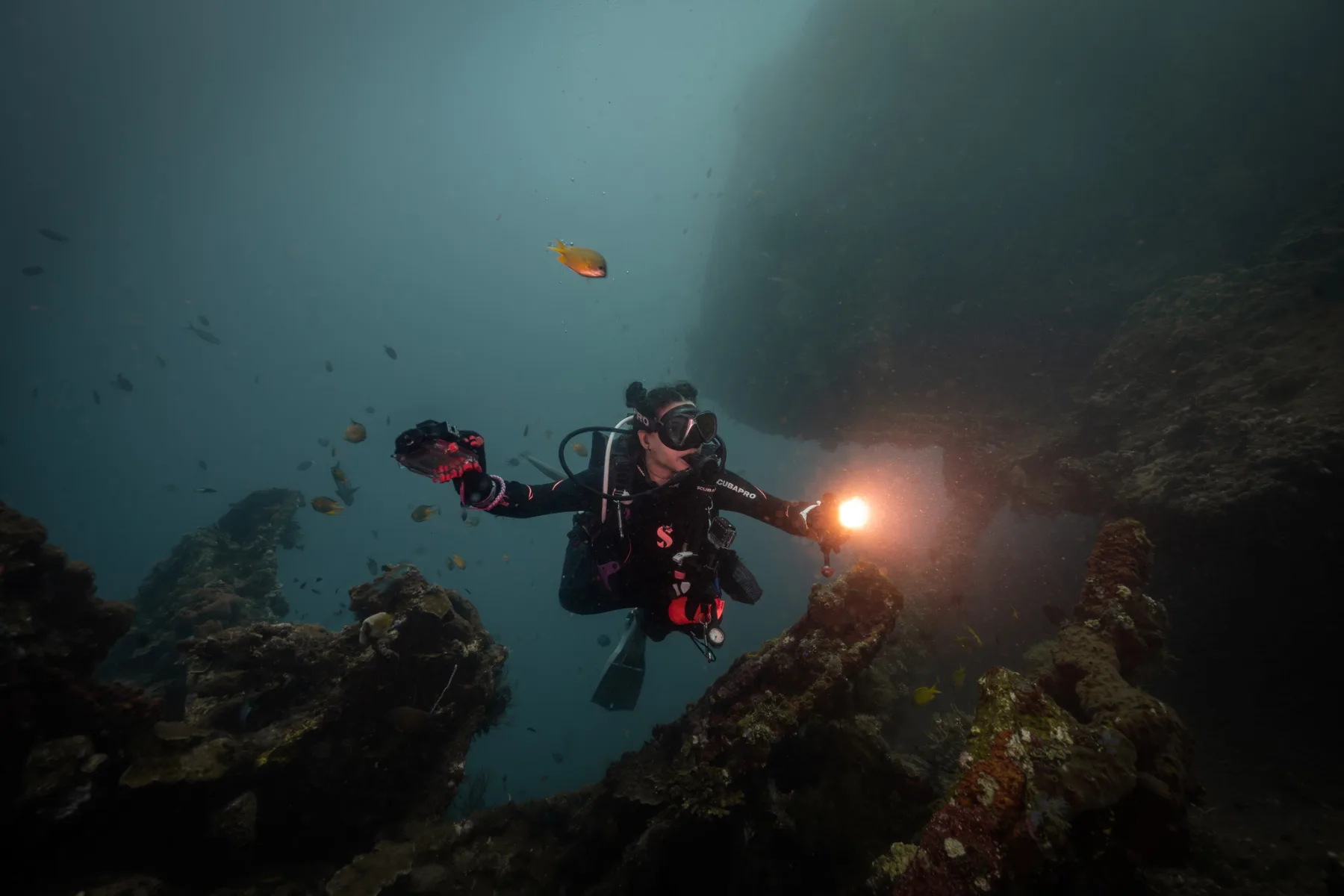
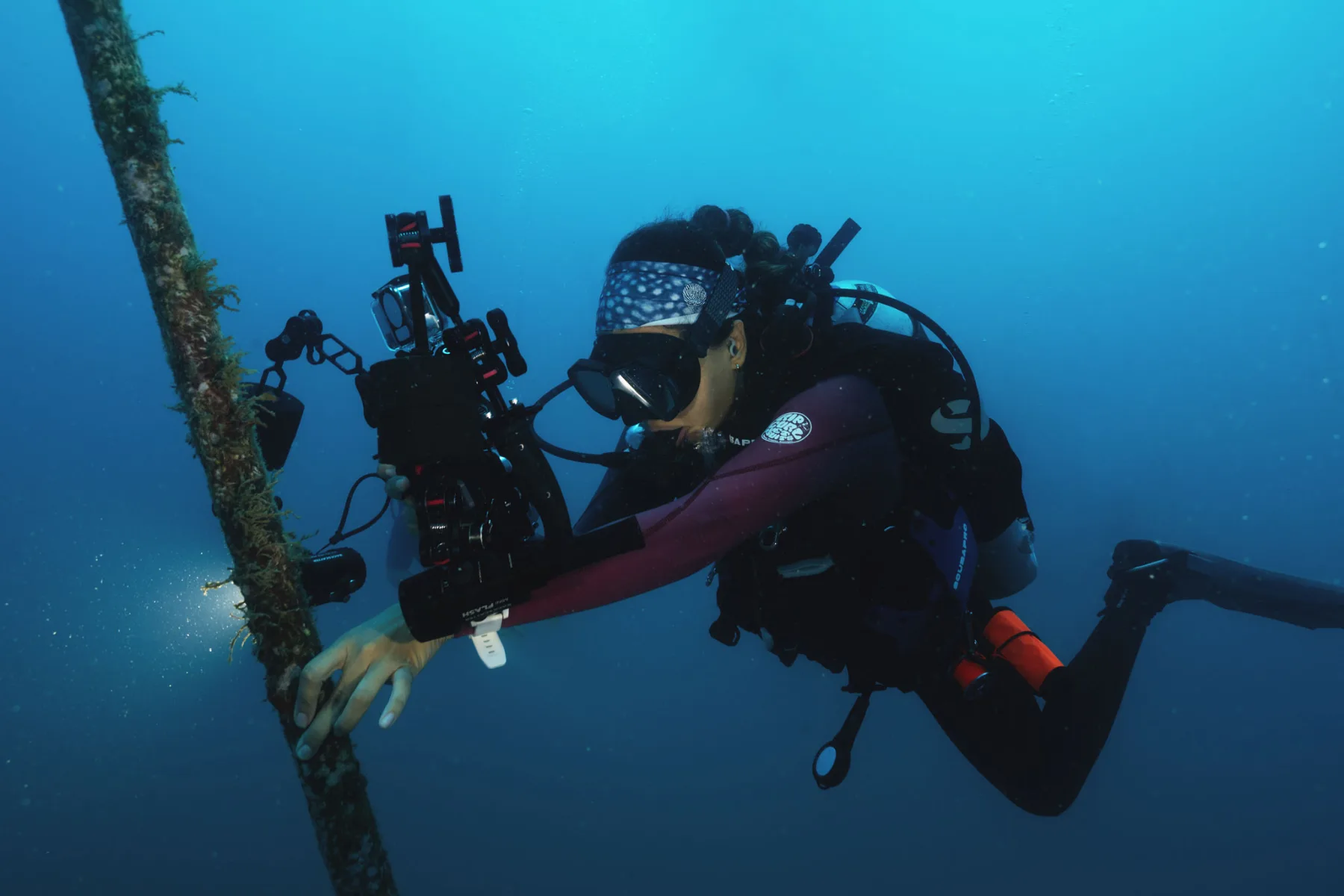
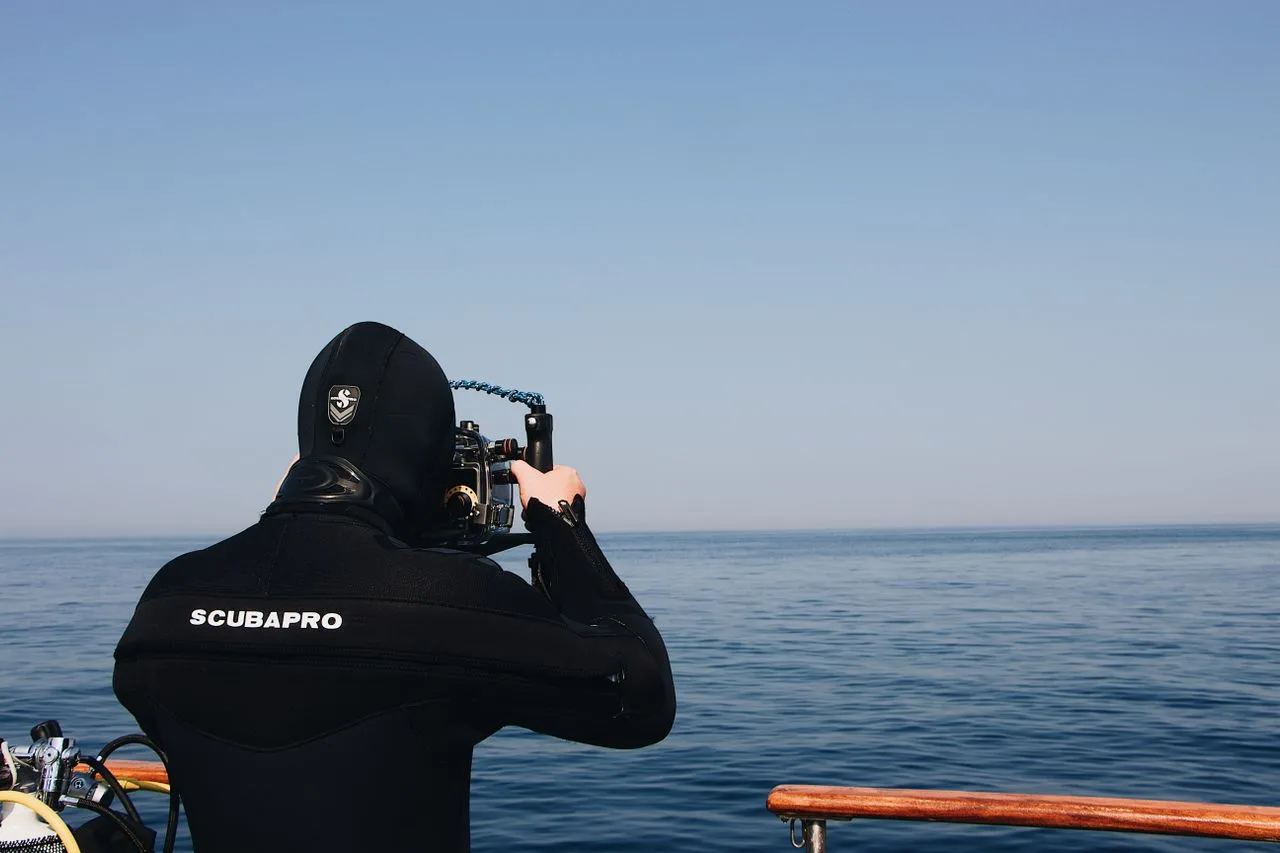
Activity level. Drift diving is passive. Photographers hover motionless for ten minutes at a time and get colder than everyone else on the boat.
The other lever is layering. A hooded vest under a 5mm adds real warmth at the head and core, which is where you lose most of it, and it costs less than moving up to a 7mm. Most people underestimate how much heat leaves through an uncovered head.
Above roughly 15°C a wetsuit still works. Below that you are into semi-dry territory, where better seals cut flushing to almost nothing, and eventually into a drysuit, which is a different sport and a different certification.
Zipper Placement: Back Zip, Chest Zip or Zipperless
The zipper is the single largest hole in the suit, so where it sits matters more than most people realize.
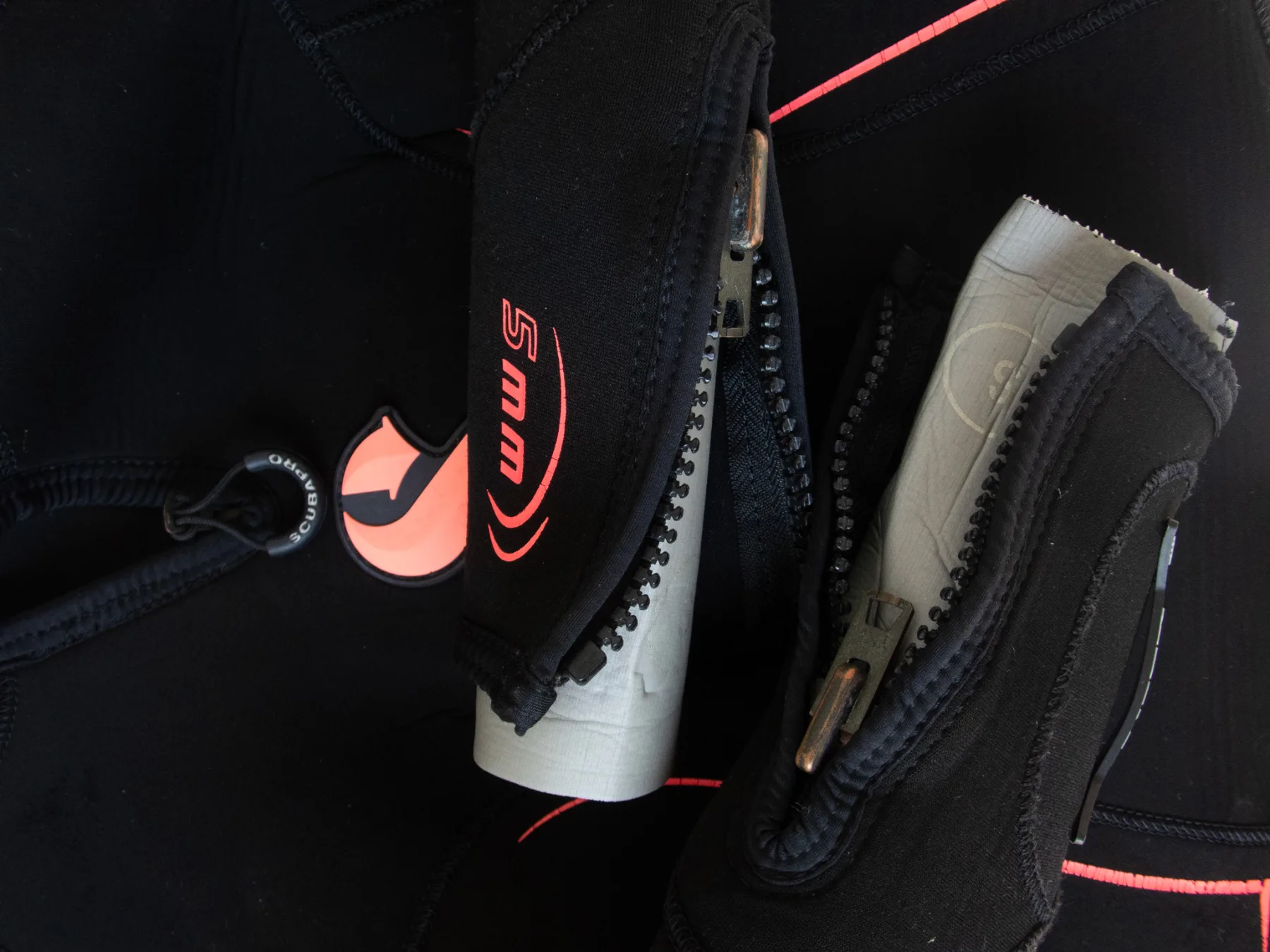
Back zip. The standard for scuba, and the easiest to get into. A long vertical zip down the spine with a pull cord you can reach, or that a buddy can reach for you. The trade-offs: it is the biggest flush path in the suit, and it sits directly under your tank and BCD backplate. Look for a wide internal baffle or backing panel behind the zip, and a spine pad. Cheap suits skip both and you feel it as a cold stripe up your back.
Chest zip or front zip. Common in surfing and increasingly on dive suits. Warmer, because the opening is smaller and sits away from the spine, and nothing digs in under your BCD. The downside is that entry is a wrestling match through the neck opening, and thicker versions can be hard to get into alone on a moving boat.
Front vertical zip. A middle ground found on some entry-level suits. Much easier to do up by yourself than a back zip, which matters a lot if you dive solo off a beach or travel alone.
Zipperless. Warmest of all, and the freediving standard.
Wrist and ankle zips. These make thick suits far easier to put on, and every one of them is another potential leak path. On a 7mm they are usually worth it. On a 3mm they are not.
One thing to check regardless of placement: whether the zipper is a proper corrosion-resistant marine zip. It is the first component to fail, and a seized zipper turns a good suit into a bin item. Rinse it every single time, and never force it.
Seams and Seals: Where the Cold Gets In
This is the spec that separates a warm suit from a cold one at the same thickness, and it is the one many buyers don’t think of.
Flatlock stitching. Sewn right through the neoprene, leaving a flat, comfortable seam and thousands of tiny holes. Fine for warm water and surfing. Leaks steadily anywhere colder.
Glued and blind stitched. The panels are glued together, then stitched without penetrating all the way through. No holes, so no seepage. This is the minimum you want on any suit you plan to dive in cold or for long periods.
Taped or liquid sealed seams. A layer of tape or a bead of liquid rubber over the glued seam, inside, outside, or both. Warmer again and more durable, since seams are usually where a suit eventually splits.
Seals are the other key component.
Smoothskin cuffs. A slick, uncoated rubber band at the wrists and ankles that seals against skin rather than sliding over it. Look for this before you look at anything else on the spec sheet.
Double or W-shaped seals. Two lips instead of one, trapping any water that gets past the first. Common on better suits.
The neck. The most important seal and the one lots of divers get wrong. It should sit close without choking you, with a shaped collar that follows your neck rather than a flat band that gaps at the front. If a suit is going to flush, it usually starts here.
The quick test in the shop: run your fingers along the inside of a seam. If you can feel stitch holes going all the way through, you are looking at flatlock.
Neoprene and Linings: Decoding the Hang Tag
Marketing language on wetsuits is worse than almost any other category of dive gear. What actually matters:
Limestone-based neoprene. Made from limestone rather than petroleum. It is lighter, absorbs less water, and has a smaller environmental footprint. Most decent suits now use it. Worth choosing when you have the choice.
Compression resistance. Rarely printed on the tag, unfortunately, but it is what separates a scuba suit from a surf suit. A denser foam holds its thickness at depth.
Super-stretch panels. Placed at the shoulders, armpits and behind the knees. This is what lets a warm suit still let you reach your valve, and it is a fair reason to spend more.
Thermal linings. A plush or metallic inner lining that reflects body heat and dries faster. The plush ones make a real difference to comfort; the reflective claims vary from useful to marketing.
Two-piece suits. A long john plus a jacket gives you a doubled core layer where it counts, plus flexibility to dive the jacket alone in warmer water. Excellent value in cool water and a nuisance to get into.
Color. Almost everything is black, and this is a durability and cost decision rather than a design one. A note if you shoot: a lighter suit reflects strobe light back into your own frame, which is one small argument for the default black when you are building an underwater camera setup.
Fit, Weighting and Making It Last
Fit is everything. A cheap suit that fits will beat an expensive suit that doesn’t, every time.
Put it on and check for slack. The problem spots are always the same: the lower back, behind the knees, the armpits, and the crotch. A fold or a pocket in any of those is a reservoir of cold water waiting to be pumped through the suit every time you kick. Then check mobility: both arms overhead, a full squat, and a reach behind your head as if you were shutting down a valve. If you cannot do those on land, you will not enjoy them at depth.
The suit should feel slightly too tight and slightly wrong when dry. Neoprene relaxes in water. A suit that slides on easily in the shop will be loose on the dive.
Don’t forget: your new suit changes your weighting. A 5mm is significantly more buoyant than the 3mm you rented, and thicker suits both need more lead at the surface and lose buoyancy as they compress at depth, which is why you feel light at the safety stop and heavy at the bottom. Do a proper weight check on the first dive in any new wet suit rather than guessing. This interacts with your BCD too, so it is worth reading alongside the guide to the best BCD for recreational diving.
Care is simple and a lot of people still skip it. Rinse in fresh water after every dive, inside and out, paying attention to the zipper. Dry out of direct sunlight, since UV destroys neoprene faster than salt does. Hang on a wide hanger or fold it over a bar rather than a thin wire hanger that will crease the shoulders permanently. Then turn it inside out so it dries properly, especially if it’s thick. You might think leaving it hanging outside for days means it’ll be completely dry. It won’t and the side that didn’t get proper ventilation, will stink. Also, never leave it wet in a bag. Trying to neutralize bad wetsuit smell, is a difficult mission.
With proper care, a good wetsuit outlasts almost everything else in your kit bag, which is exactly why the fit is the best money you will spend. If you are working out what else deserves your budget first, buying your own scuba gear covers the order I would buy things in, and scuba diving fins covers the piece most divers get wrong.