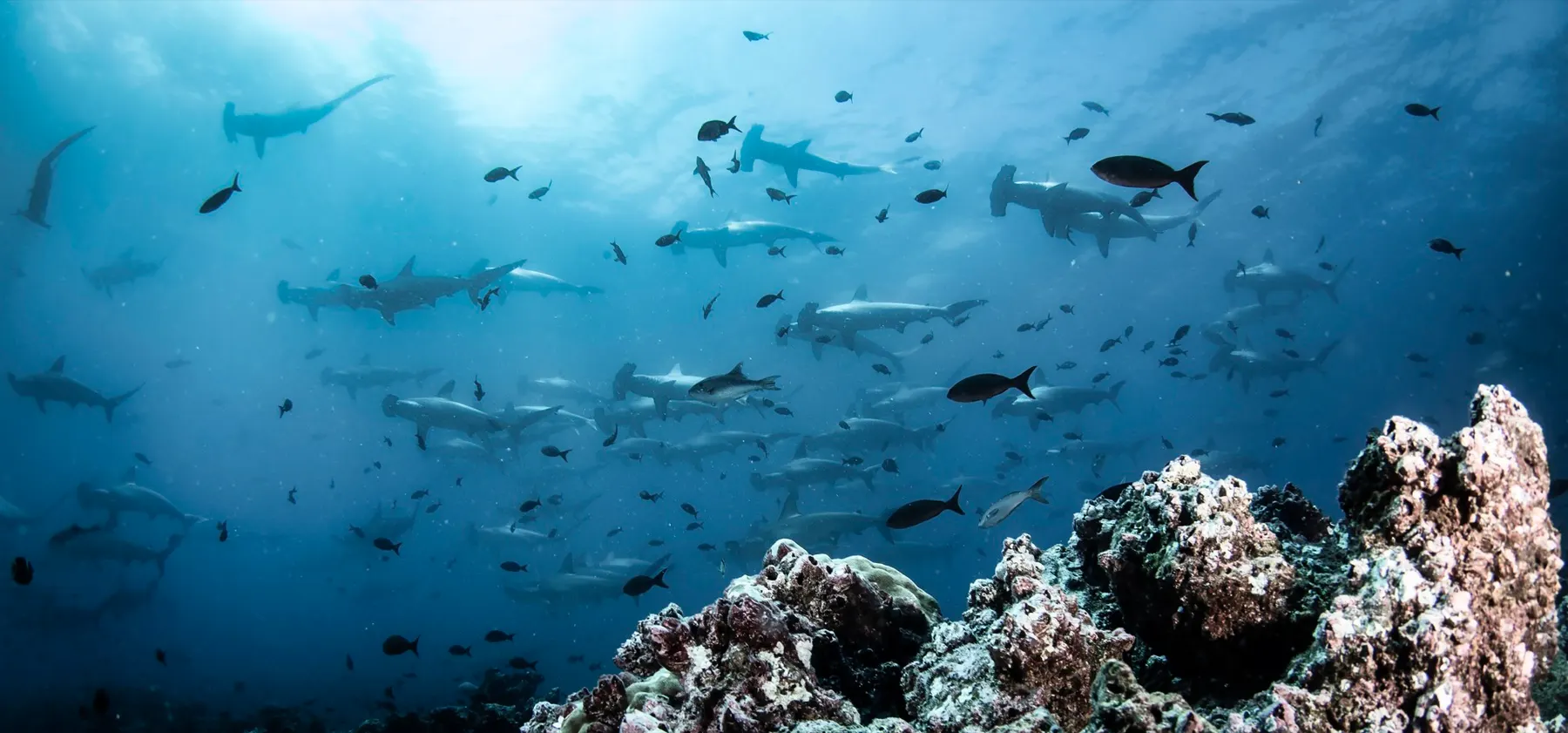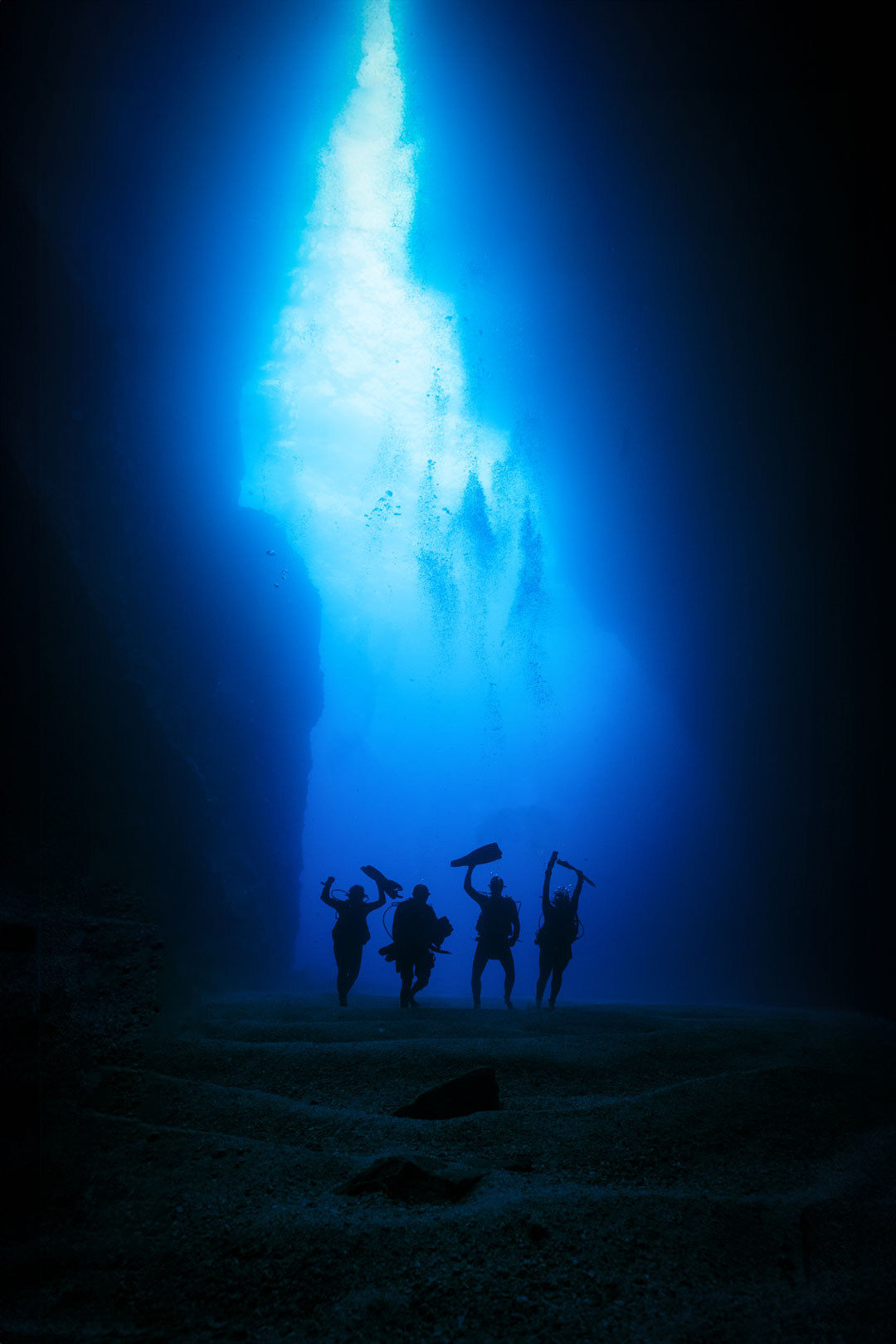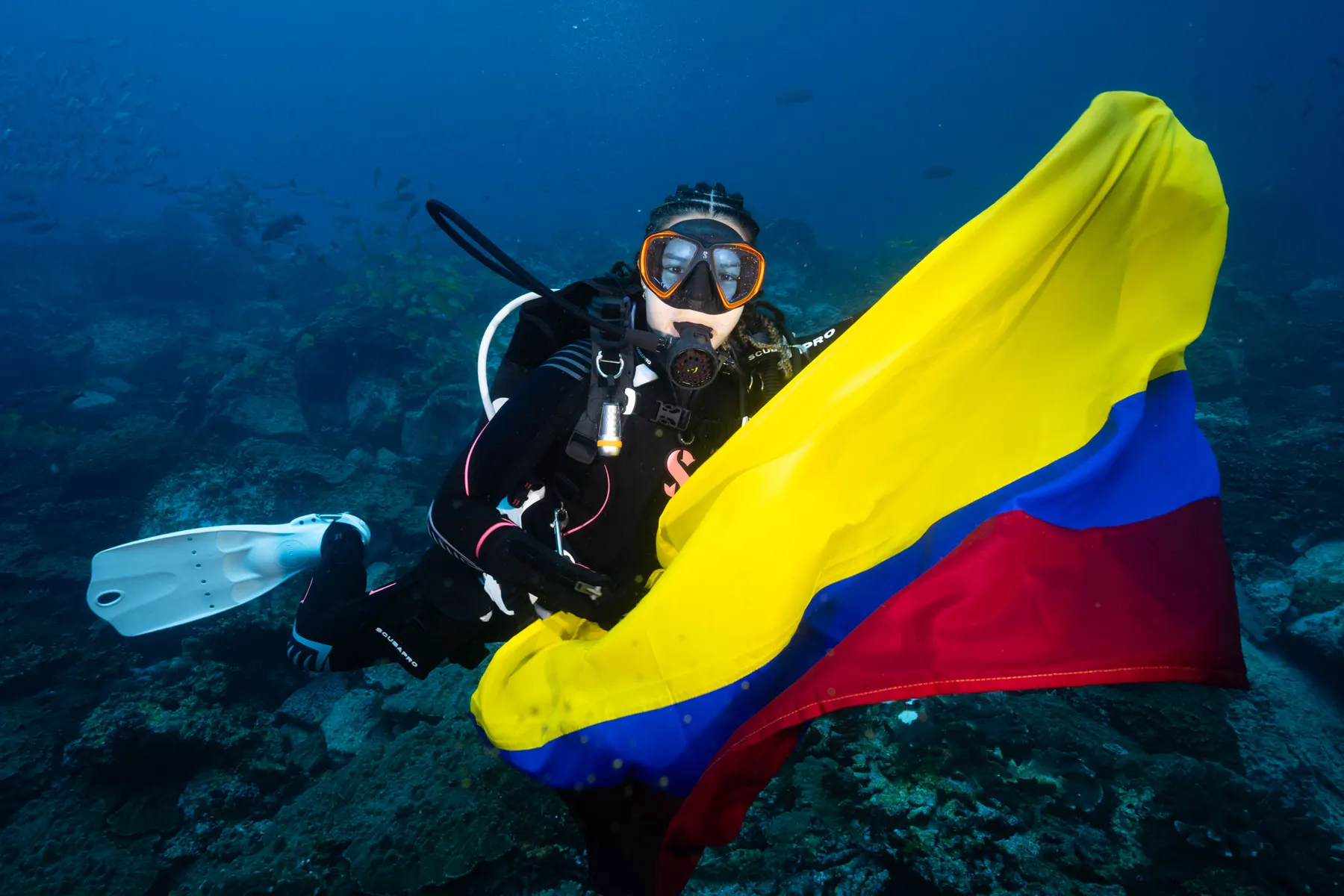
Diving in Gorgona is the Colombian Pacific’s other great shark trip, and it lives in Malpelo’s shadow even though it is closer, cheaper and kinder to divers with fewer logged dives. White tip reef sharks rest on the sand between volcanic rocks, you can hear the humpback whales singing while you dive as they arrive from Antarctica every July, and the island is ringed by the largest coral reefs on Colombia’s Pacific coast.
Gorgona has a past that is hard to separate from the place. From 1960 to 1984 it was Colombia’s maximum-security prison, the country’s Alcatraz, and the ruins of the cell blocks are still there, swallowed by the forest a short walk from the old settlement. When the prison closed, the island and the sea around it became a national park, and Parques Nacionales now calls it the “Isla Ciencia”, the Science Island, for the decades of research done on its reefs and forest.
If you start planning a trip, you will run into a problem quickly. Most guides online still describe a lodge, a restaurant and a dive center on the island, but the truth is that nobody has been allowed to sleep on Gorgona since August 2023, when the tourism concession expired. Three years later the island is still closed to overnight stays, and the practical way for a visiting diver to dive Gorgona is from a liveaboard. This guide covers how those liveaboard trips work, the dive sites, the marine life and the best season, along with what is happening to the park and its reef.
Where Is Gorgona Island, and Why Dive It?
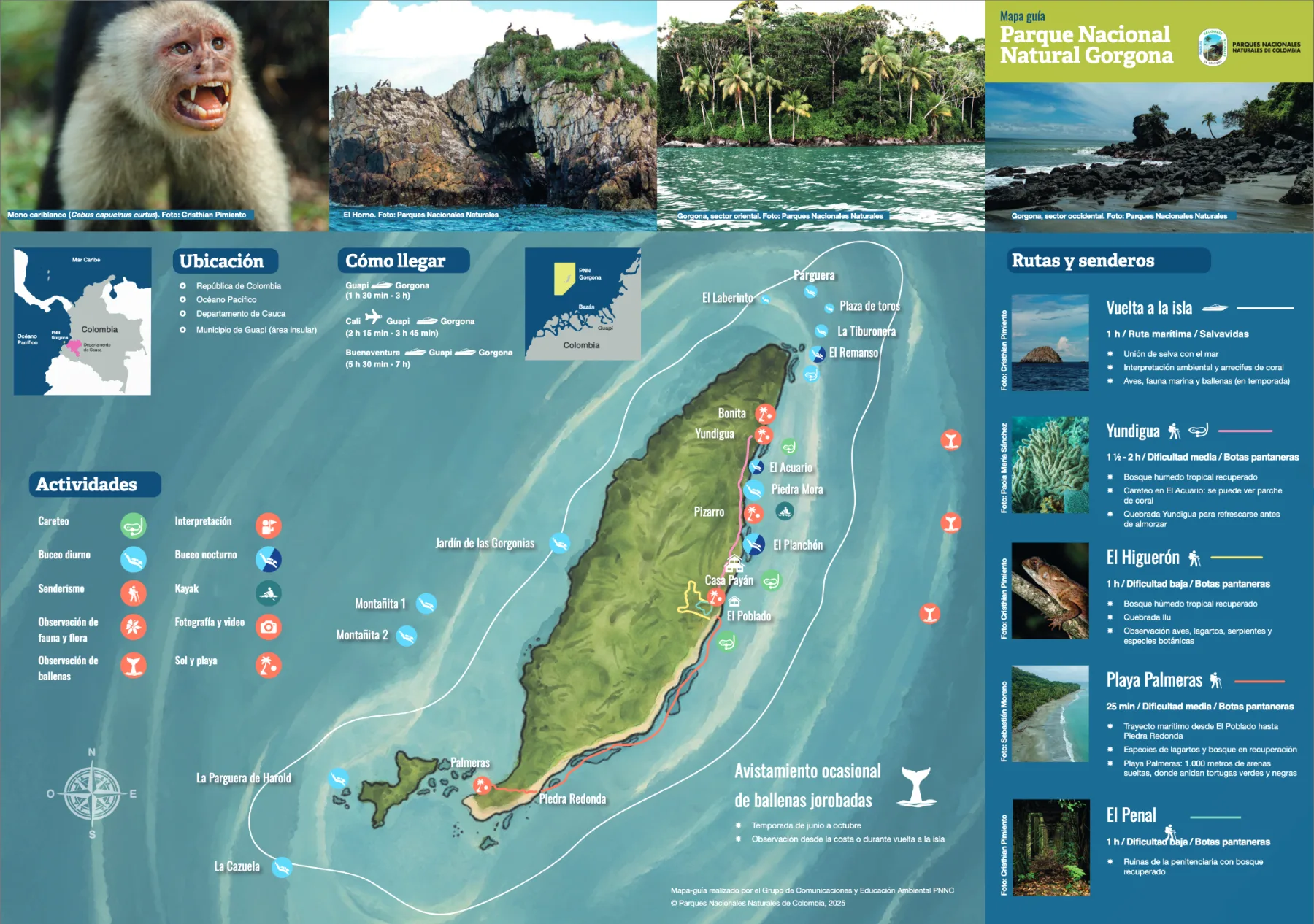
Gorgona sits about 35 kilometers off the coast of Cauca, in Colombia’s southern Pacific, and 89.5 nautical miles from the port of Buenaventura. The island is about 9 kilometers long and 2.5 kilometers wide, with a much smaller island, Gorgonilla, off its southwest tip and rocky islets scattered around both.
Rainforest covers Gorgona from the beaches to the cloud that sits on its highest peak, and it rains on most days of the year. The island receives close to 7,000 millimeters of rain annually, and about 25 streams keep flowing into the sea even in the driest months.
Gorgona National Natural Park was declared on 19 July 1984 and covers about 60,500 hectares, and almost 97 percent of that area is sea. On land it protects species found nowhere else, including the blue anole, the only all-blue anole lizard in the world and the park’s symbol. It also protects a lot of snakes. Francisco Pizarro named the island in 1527 after losing men to snakebites, borrowing the name of the Gorgon Medusa and her hair of serpents, and the fer-de-lance is still common enough that rubber boots are part of the rules on every trail.
Underwater, Gorgona belongs to the Eastern Tropical Pacific Marine Corridor, the network of protected islands that links Malpelo with Cocos in Costa Rica, Coiba in Panama and the Galápagos in Ecuador. Gorgona is far closer to the mainland than any of them, and you can see that in the water. Rivers and plankton make it greener than the open ocean around Malpelo, the reefs are shallower, and the dives mix resting sharks and reef fish with the big animals that travel along this coast.
What makes Gorgona special for a diver is the combination. You get the Pacific’s big-animal potential and the most important coral reefs on this coast, with dive sites a short zodiac ride apart and conditions that ask less of you than the Malpelo open-ocean seamounts.
Scuba Diving in Gorgona in 2026
Why Gorgona trips run on liveaboards
Until 2023, visitors stayed in the park’s cabins at El Poblado, the island’s only settlement, and dived with the dive station there. The last overnight visitor left on 2 August 2023, when the second extension of the tourism concession ran out. In 2024 Parques Nacionales confirmed it had no contract with any operator to provide lodging or food on the island, and in 2026 Gorgona is still closed to overnight stays while the process for a new concession drags on.
The diving itself kept going. The park has kept diving open through authorized boats, and its list of authorized operators includes two dive liveaboards, the Sea Wolf and the Ferox. A liveaboard solves the problem the closed lodge created, because you sleep, eat and fill your tanks on board, and the crew brings the compressor, the oxygen kit, the guides and the zodiacs with them. For a visiting diver it is also the safest way to do this trip, since the boat and its crew handle a remote stretch of Pacific from the moment you leave port.
How a Gorgona liveaboard trip works
Gorgona trips leave from Buenaventura, the same port as the Malpelo expeditions. Most divers fly into Cali and take a ground transfer of around three hours to the port, which the operators can arrange. The crossing to the island takes roughly 12 to 14 hours, so the boat sails overnight and the first dive day starts at the island.
A standard Gorgona trip is short. The Colombian-run company DivingLife’s departures on the Sea Wolf run three nights, from dinner on the first evening to breakfast on the fourth morning, with six day dives and a night dive when conditions allow.
Dives run from zodiacs, as they do at Malpelo, and the sites sit around a small island, so the rides between them are short. Park rules set the hours when visiting boats can enter and leave park waters, and the crew plans the dive day around them.
Which liveaboard to choose for Gorgona
Two dive liveaboards appear on the park’s authorized list. The Sea Wolf is the 34-meter yacht I crossed to Malpelo on, with eight cabins, zodiacs on the dive deck and a Colombian crew, and it runs on air only. The Ferox, run by Colombia Dive Adventures, is a converted navy minelayer with an 11-millimeter steel hull that takes up to 12 guests and offers nitrox.
DivingLife, the Colombian operator I did Malpelo with, runs its Gorgona departures on the Sea Wolf. I wrote about how they organize a trip in diving Malpelo with DivingLife, and they are the first place I would look for a Gorgona trip.
There are other international dive operators offering these trips using the same liveaboards but I found that they are nearly double the price. Therefore I find DivingLife to be the best option. Even if you don’t speak Spanish, the trip leaders speak English and are happy to welcome foreigners.
Cost, Certification and National Park Fees
A Gorgona trip costs a fraction of Malpelo. DivingLife’s recent Gorgona departures were priced at $6’280.000 COP ($2.000 USD), around a quarter of their Malpelo expeditions, because the crossing is shorter and the trip lasts three nights instead of eight.
The park entrance fee for foreign visitors who are not Colombian residents is COP $77,500 ($25 USD), and operators often list it as a separate charge, so check what your quote includes. To dive, you need to show a certification card. Open Water divers are allowed in the park, but many of the best sites sit between 20 and 30 meters, so Advanced Open Water and some experience in Pacific conditions will help you enjoy them. Each operator sets its own minimum, so confirm it before you book.
The Best Dive Sites in Gorgona
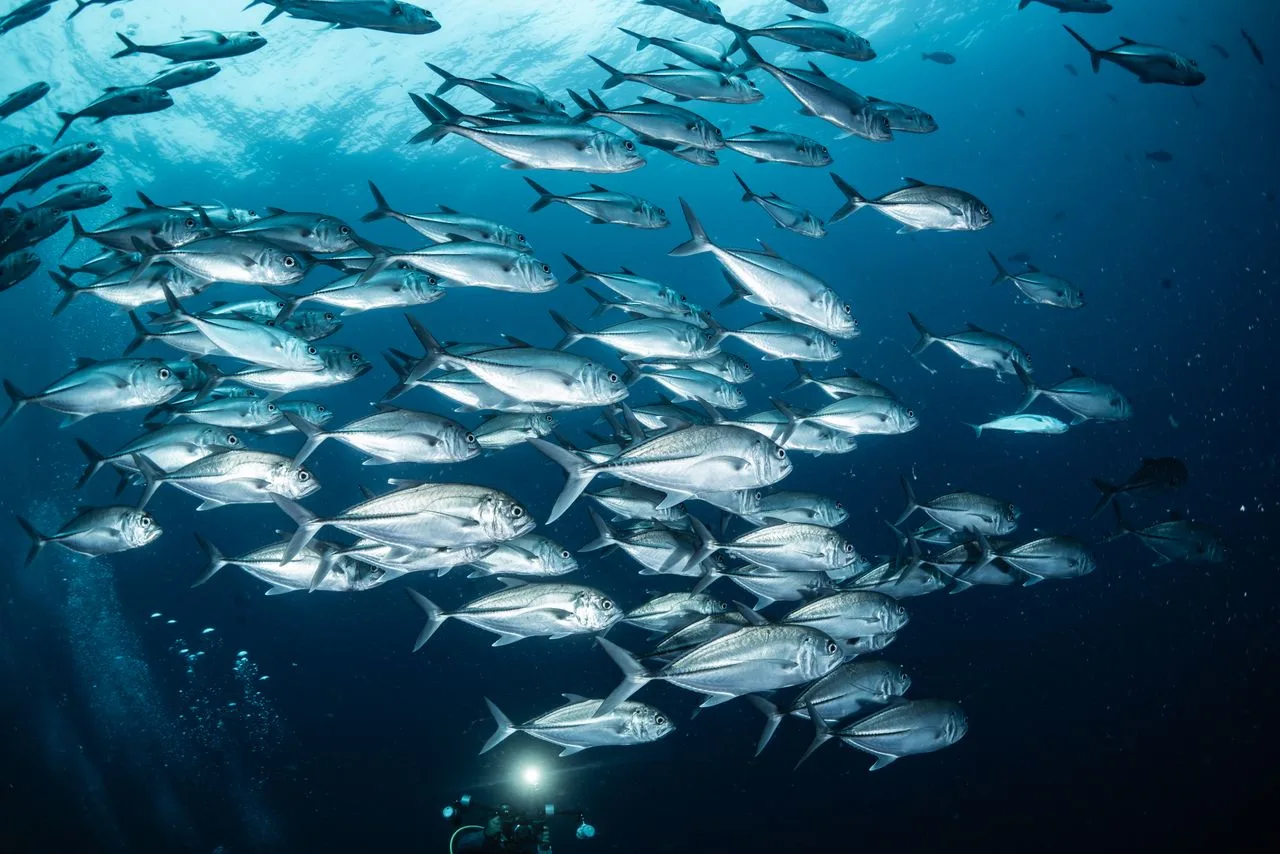
Parques Nacionales lists between 12 and 15 dive sites, depending on sea conditions, split between the sheltered northeast of the island and the exposed west. The northeast faces the mainland and usually has the calmer water. The west faces the open Pacific, where the coast is mostly cliffs, and the boats go there when the swell allows. Most sites sit between about 12 and 35 meters.
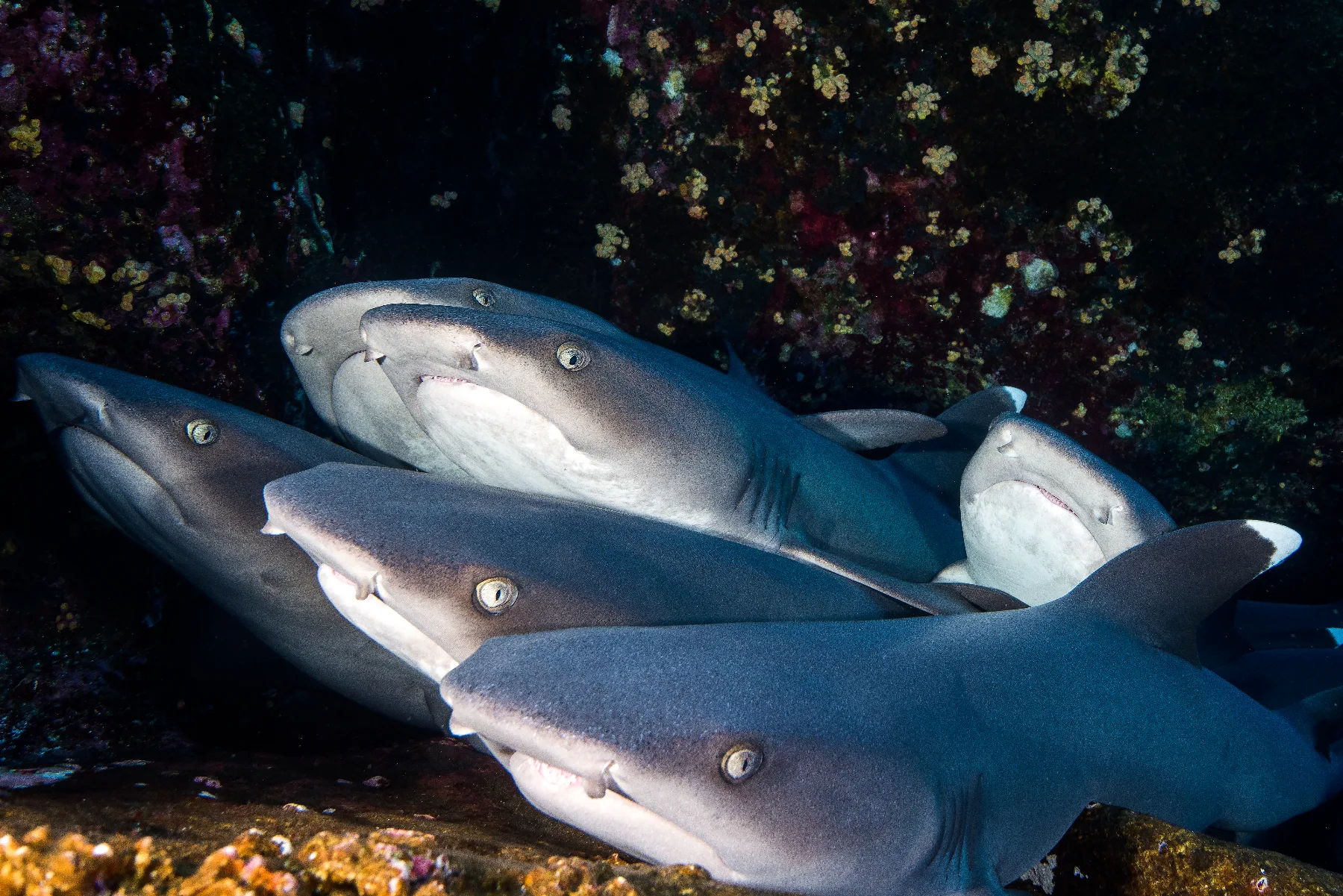
El Horno and La Tiburonera. The Rocas del Horno are a cluster of steep rocks off the northern tip of Gorgona, and several of the island’s classic sites sit around them, including La Tiburonera, Plaza de Toros, La Parguera and El Remanso. La Tiburonera, the shark place, takes its name from the whitetip reef sharks that rest on the bottom between the rocks. Lobsters, gobies and shrimp live in the cracks, and the volcanic formations under the surface are as dramatic as the rocks above it.
La Parguera and Plaza de Toros. La Parguera is named for the snappers, pargos in Spanish, that gather around its rocks, and Plaza de Toros, the bullring, sits close by with the same volcanic structure. Both are typical Gorgona dives, where you move slowly along the rock, check the ledges for resting sharks and keep an eye on the green water for whatever is passing.
El Remanso. El Remanso is a calmer site, and its name means still water. The park also uses it for snorkeling, which makes it a good second dive or an easy option for divers who want a gentler profile.
El Viudo. El Viudo, the widower, is the largest of the rocky islets off the southwest tip of Gorgonilla. It faces the open ocean, so it draws schooling barracuda and other large fish, and it is one of the sites where a manta or a whale shark can pass if you are lucky.
Las Montañitas I and II. These are small rock plateaus separated by deeper channels. Turtles graze on the sponges that line the walls, lobsters and octopus hide in the cracks, and the channels are worth watching for sharks.
El Planchón. This is the site in front of El Poblado, the island’s old settlement, and the park uses it for snorkeling and training dives. It works well as a shallow check-out dive on the first day.
La Azufrada and Playa Blanca. These are the two largest coral reefs on Gorgona, both on the sheltered east coast. They are shallow fringing reefs built mostly by branching Pocillopora coral, and they are best seen on a shallow dive or a snorkel at the right tide.
The west side adds sites such as Jardín de las Gorgonias and Los Farallones, which the crew runs when the Pacific swell drops. Gorgona also allows night diving, which Malpelo does not, and the park lists watching bioluminescence among its activities. If you plan to dive after dark, choosing a dive light will help you pick one that is bright enough for green Pacific water.
What Marine Life Will You See Diving in Gorgona?
Gorgona’s species list is long. Park records count 381 species of marine fish in its waters and 11 species of whales and dolphins, and a single dive can move from resting sharks to schooling fish to the small life hiding in the cracks.
Whitetip reef sharks
Whitetips are the shark you are most likely to see. Between 2004 and 2011, researchers from the Colombian shark and ray foundation Squalus used 427 recreational dives and 866 photos and videos to identify individual sharks and rays around the island. They saw whitetips in every month of the year, mostly between 20 and 30 meters on sandy, rocky bottoms on the west and south sides, sometimes in groups of up to nine.
Several sharks turned up resting in the same spots in different years, and the team recorded pregnant females and births, which makes Gorgona a nursery for the species. Whitetips spend their days resting under ledges and on the sand, and the best encounter comes when you settle a few meters away and let them stay where they are. Chasing one for a photo ends the encounter.
Whale sharks and manta rays
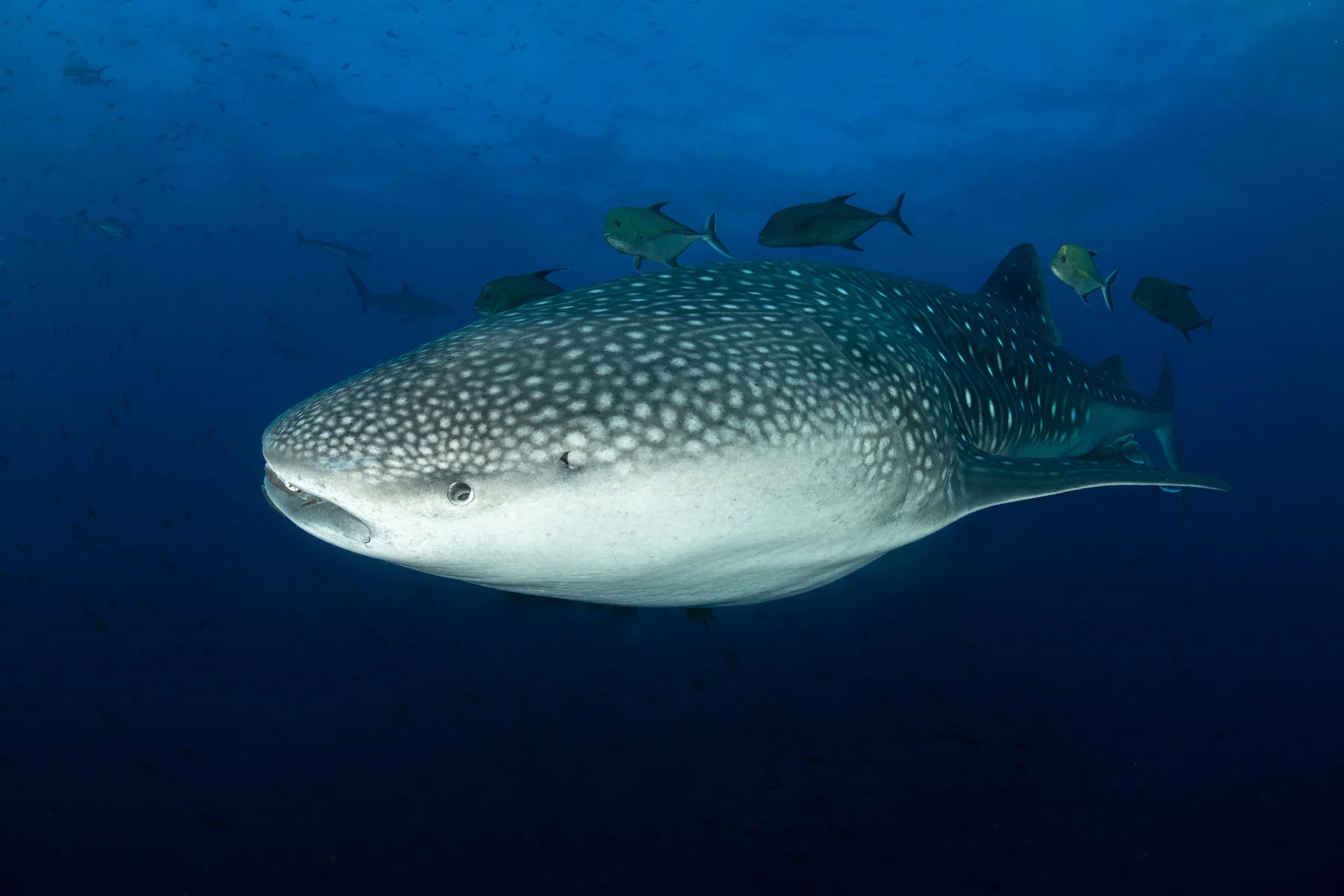
Whale sharks and manta rays pass through Gorgona without gathering there. The same study identified five whale sharks and 15 mantas, seen mostly between March and September in the north of the island, where plankton is richest and the water was between 28 and 33°C. They come in to feed and move on, so count any whale shark here as luck.
Humpback whales
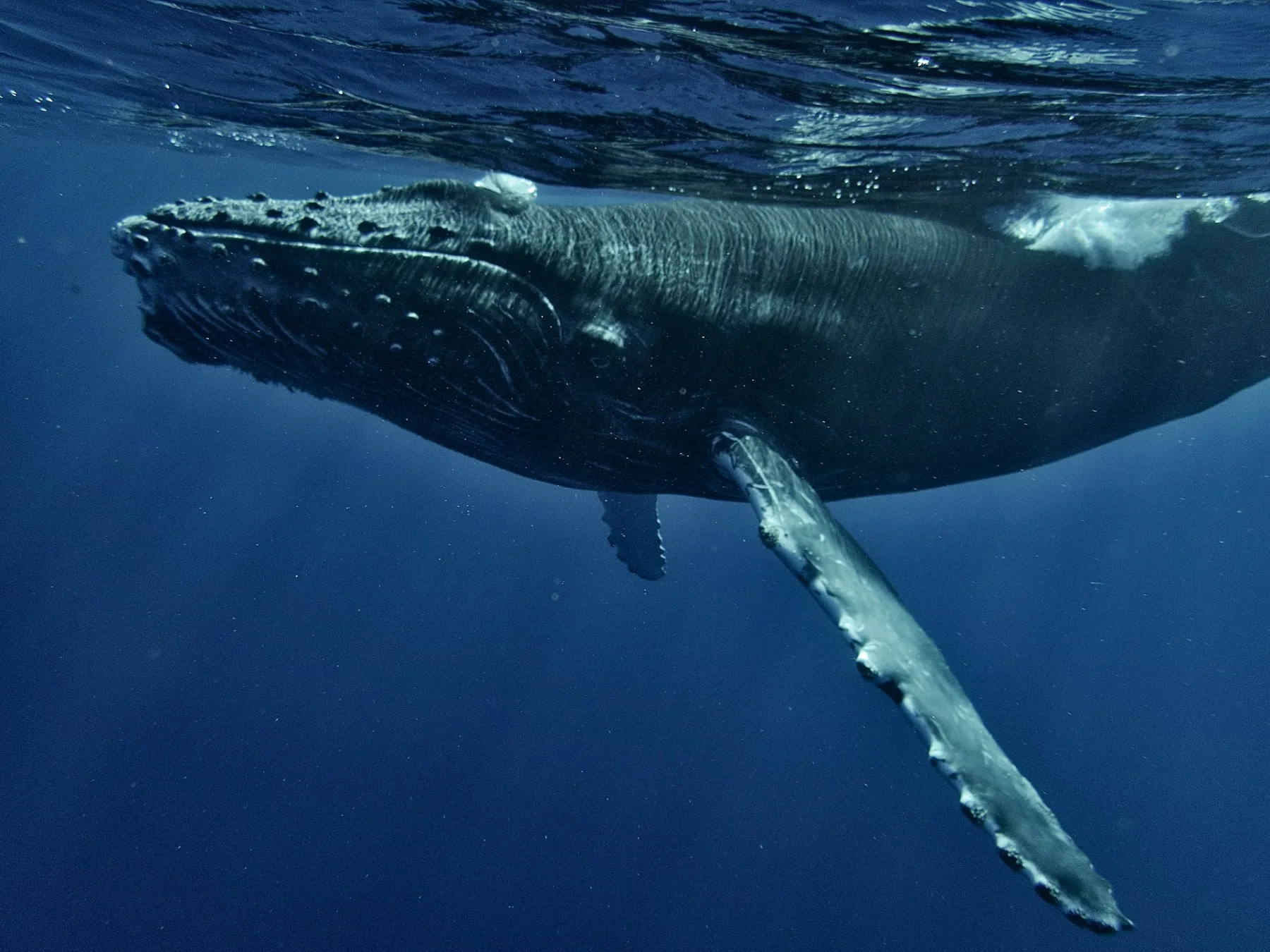
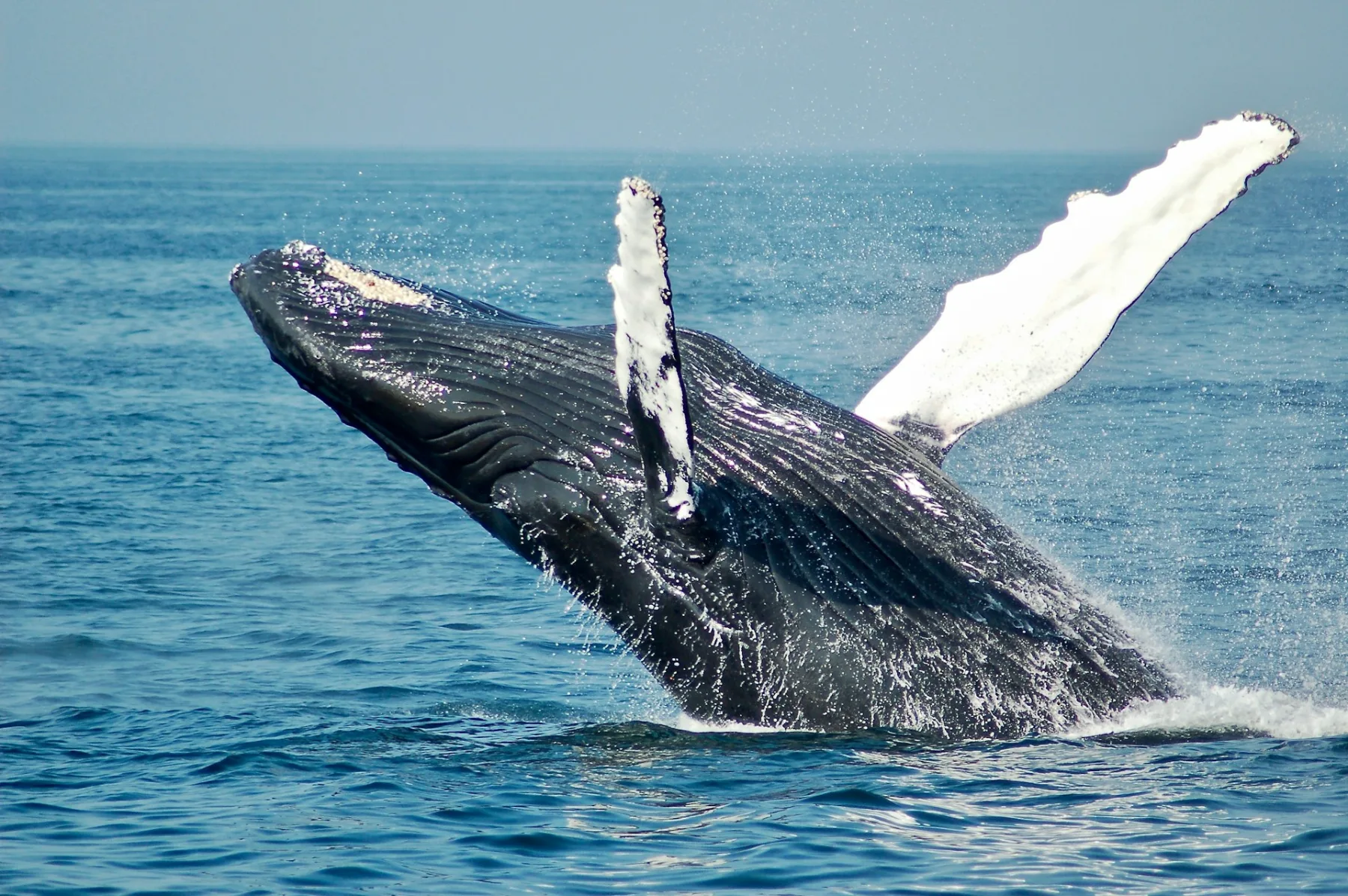
From July to November, humpback whales reach the Colombian Pacific after a journey of around 8,500 kilometers from Antarctica, to mate, give birth and raise their calves in warm water. Gorgona sits on their route, and mothers with calves often surface close to the island in season. Humpback males sing on their breeding grounds, so keep your ears open underwater during these months.
Park rules only allow encounters with whales that happen by chance, so boats don’t chase them. If a whale passes on a dive, stay still and let it decide how close to come.
Turtles and reef life
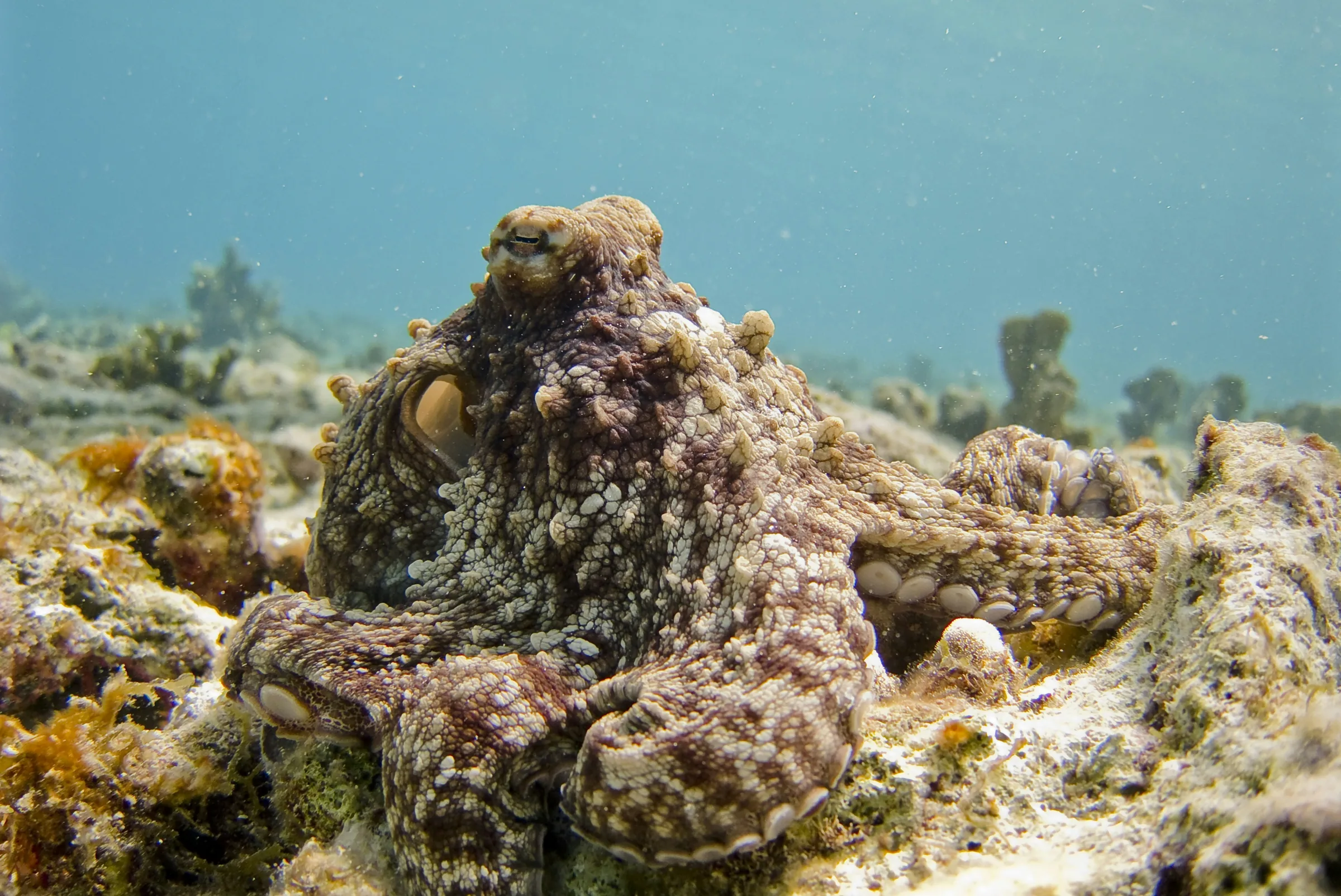
Green and hawksbill turtles feed on the reefs, and Playa Palmeras on the south of the island is a nesting beach. Morays, octopus, lobsters, big groupers, snappers, pufferfish and schools of barracuda fill out a typical dive, and the rocks reward slow divers with shrimp, gobies and scorpionfish.
View on Instagram
Gorgona’s Coral Reefs and the Pressures on the Park
Coral reefs are rare on Colombia’s Pacific coast. Across the whole coast they cover only about half a square kilometer, and the largest and best developed of them grow around Gorgona. La Azufrada, on the sheltered east side, is a fringing reef about a kilometer long, built mostly by branching Pocillopora coral, with massive Pavona colonies on the deeper slope.
These reefs live in hard conditions. The tide at Gorgona can swing by more than five meters, and during the most extreme low tides the top of the reef sits out of the water, sometimes long enough to bleach and kill the shallowest coral. From mid-January to mid-April, upwelling pushes cold, low-oxygen water over the reefs, and the temperature drops to between 17 and 24°C from the usual 28°C.
They are also tougher than most. The 1982 to 1983 El Niño killed up to 85 percent of the coral at La Azufrada, and the reef was back to its earlier coral cover within about ten years. During the 1997 to 1998 El Niño, up to a third of the coral on the reef slope bleached, but less than 1 percent died. For years after national reef monitoring began in 1998, Gorgona’s reefs recorded the highest live coral cover of any monitored reef in Colombia.
That resilience has limits. El Niño now arrives on top of warmer oceans, and the fourth global coral bleaching event reached the Eastern Tropical Pacific too. I have seen what repeated heat does to reefs in other parts of the world, and a reef that recovered once has no guarantee of doing it again. Good buoyancy matters even more on a reef this shallow, because a single careless fin kick lands on coral that took decades to grow.
When Is the Best Time to Dive Gorgona?
You can dive Gorgona all year, and each season gives the island a different character. July to November is humpback season and the most popular time on the boats, with warm water around 28°C. March to September is when whale sharks and mantas pass most often. Mid-January to mid-April brings the upwelling, with water that can drop to 17 to 24°C, and it overlaps with the least rainy months of the year.
Rain shapes the trip as much as the water does. Parques Nacionales describes January to March and July to September as relatively dry, and April to June and October to December as the rainy seasons, when some activities can be suspended for safety. If you can only pick one window, July to September brings together the humpbacks, the second half of the whale shark and manta season, warm water and one of the drier spells.
Visibility and conditions
Gorgona is green-water diving compared with the Caribbean. Visibility usually sits somewhere between 5 and 20 meters and changes with plankton, rain runoff and the big tides. The east side is sheltered, the west takes the Pacific swell, and the crew chooses sites day by day based on what the sea allows.
Gear and safety
A 3 mm wetsuit covers most of the year, and a 5 mm with a hood makes sense from January to April, when the upwelling arrives. My guide to scuba diving wetsuits explains how to choose thickness for water that changes like this.
Carry your own surface marker buoy and know how to deploy it, since dives end with a zodiac pickup. Gorgona is a long way from medical help, and the nearest hyperbaric chamber is on the mainland, hours away by boat and road, so dive conservatively and make sure your insurance covers dive accidents and evacuation.
Pack seasickness tablets for the overnight crossing and take them before the boat leaves Buenaventura. The park asks for ocean-friendly sunscreen and bans alcohol, single-use plastics and aerosols on the island, and if your trip includes a landing, the trails require rubber boots because of the snakes.
Why Gorgona Is Worth the Crossing
Gorgona gives you the Colombian Pacific in a form more divers can handle. Whitetips rest in the open, humpbacks pass in season, whale sharks and mantas come through when the plankton is right, and the most important coral reefs on this coast sit a zodiac ride away, all on a three-night trip from Buenaventura.
It is also a park in the middle of a long debate about who gets to use it and how. Divers who come with good buoyancy, follow the whale rules and travel with authorized operators are part of the case for protecting it, and my guide on how to be a good ocean tourist covers the habits that matter most on trips like this one.
If you are building a bigger Colombia trip, Gorgona pairs well with the Caribbean side. Diving in Providencia brings Caribbean reef sharks in warm, clear water, and scuba diving in Colombia puts both coasts and every level of diver in one place.
View on Instagram