I am writing this from Sabang, on the north coast of Mindoro, between dives. The reefs are the healthiest I have ever seen, and I cannot understand why more people are not flying here on the strength of that fact alone.
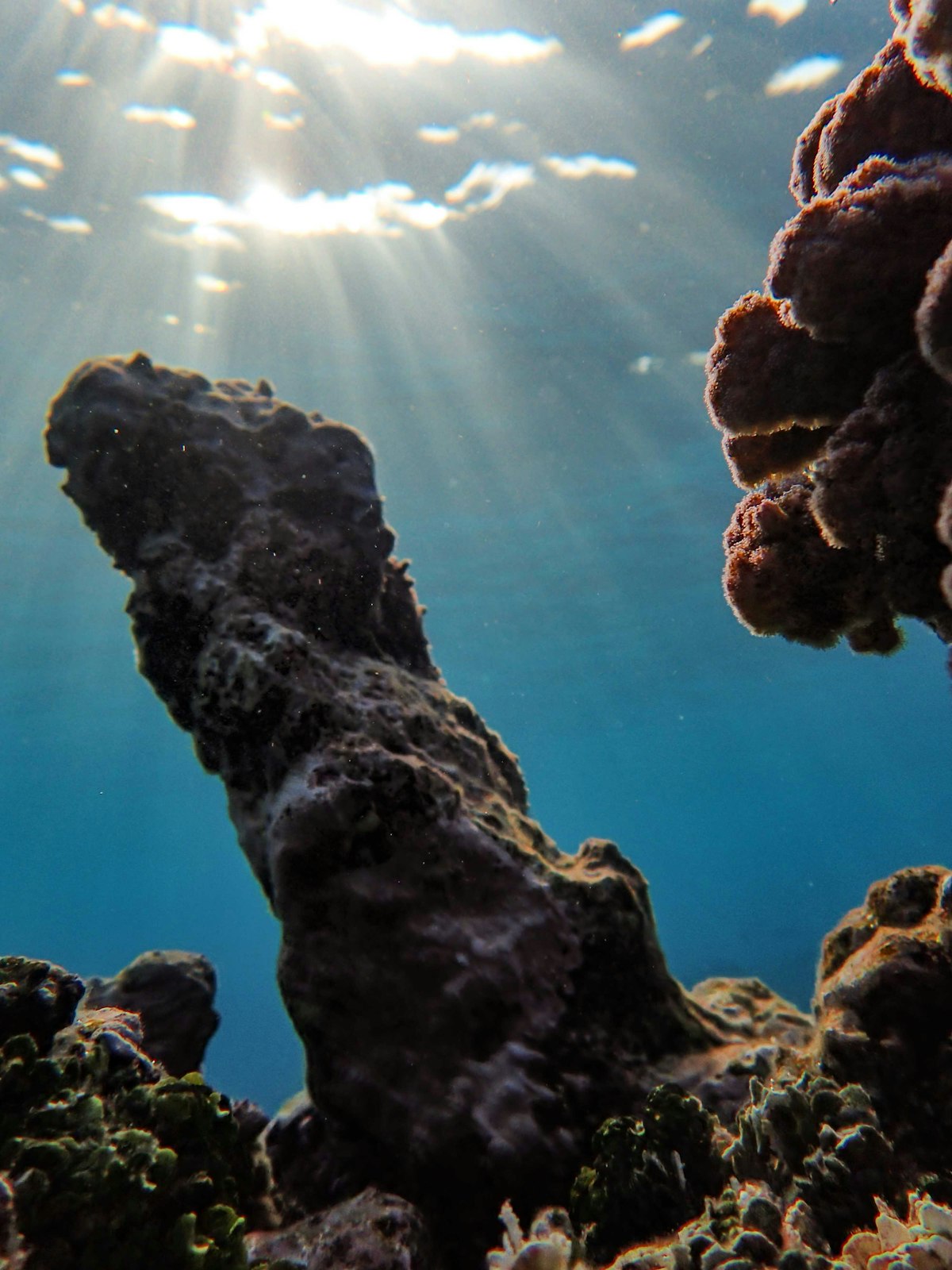
The first time I noticed it was forty minutes into a dive at Sabang Point. The reef was so dense I could not find a single bare patch of substrate. Not one. Soft coral piled on top of hard coral piled on top of more soft coral, in colours and textures stacked like a city seen from above. I have dived the Red Sea, Cabo Pulmo, Malpelo, Tayrona, and a slow accumulation of reefs across the Caribbean. I had not seen a reef do this before.
That dive was the moment I understood why people who have travelled with their fins on for thirty years keep coming back to one specific bay on the north coast of Mindoro. Puerto Galera is not a famous-shark destination. It is not a clean-blue-water destination. It is a reef destination, in the strict and unfashionable sense of the word, and the reefs are the healthiest I have ever seen.
Why the Reef Is Like This
Puerto Galera sits inside the Verde Island Passage, the narrow body of water that separates Luzon from Mindoro. In 2005, Kent Carpenter and Victor Springer published the paper that confirmed what marine biologists working in the region had long suspected. The passage holds the highest concentration of coastal marine species per unit area anywhere on the planet. The “centre of the centre of marine biodiversity,” as their title put it. Higher even than the Coral Triangle as a whole, which itself is the most species-rich marine region on Earth.
The reef at Sabang Point is what that statistic looks like in person. You do not see a sample of species. You see the floor of a system that has had everything in it for so long that there is no room left for anything to be missing.
The Cephalopod Parade
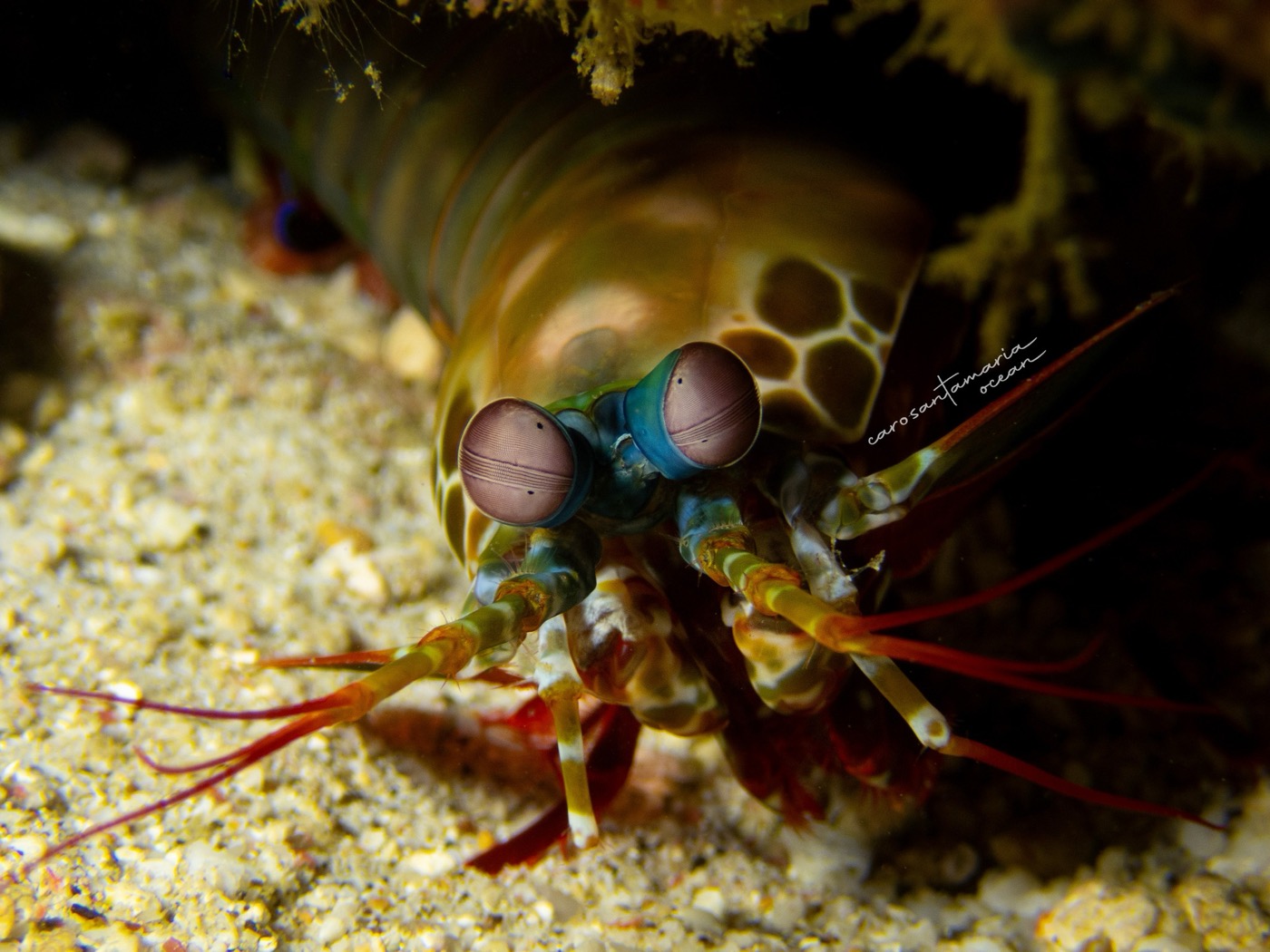
Reef density is the first thing you notice. Cephalopod density is the second. I have lost count of the number of dives in Puerto Galera that delivered an octopus encounter I would have flown for on its own. Mimic octopus, sliding across sand in the late afternoon, pretending to be a flatfish until it remembers it is meant to be a banded sea krait. Blue-ringed octopus, the size of a thumb, sitting on a coral head with its rings blinking on and off like a warning sign. Wonderpus on the move. And the one that gets me every time, the flamboyant cuttlefish, walking across the sand on its hyponomes with the colours rolling through its skin in waves of hot pink, yellow and dark purple. There is no other animal that looks like this.
The nudibranch life matches. New species every dive, in a range that you cannot file properly in your head until you have done forty dives in the area. Anything you have seen on a critter ID poster, you can find here, often with the same divemaster pointing to three of them in a single safety stop.
This is one of those destinations where a dedicated macro camera earns its weight. I have shot the same dive sites with three different setups and the macro days are the ones I keep coming back to in the edit.
Sinandigan Wall and the Threshers
I was not expecting threshers. Puerto Galera is not where divers fly to see threshers; that destination is Malapascua, on Cebu’s northern tip, where the pre-dawn dive at Monad Shoal is one of the more famous big-animal encounters in Southeast Asia. But in March, Sinandigan Wall on the eastern side of Sabang Bay starts seeing them, in a window where the wall delivers consistent sightings for divers who time it right.
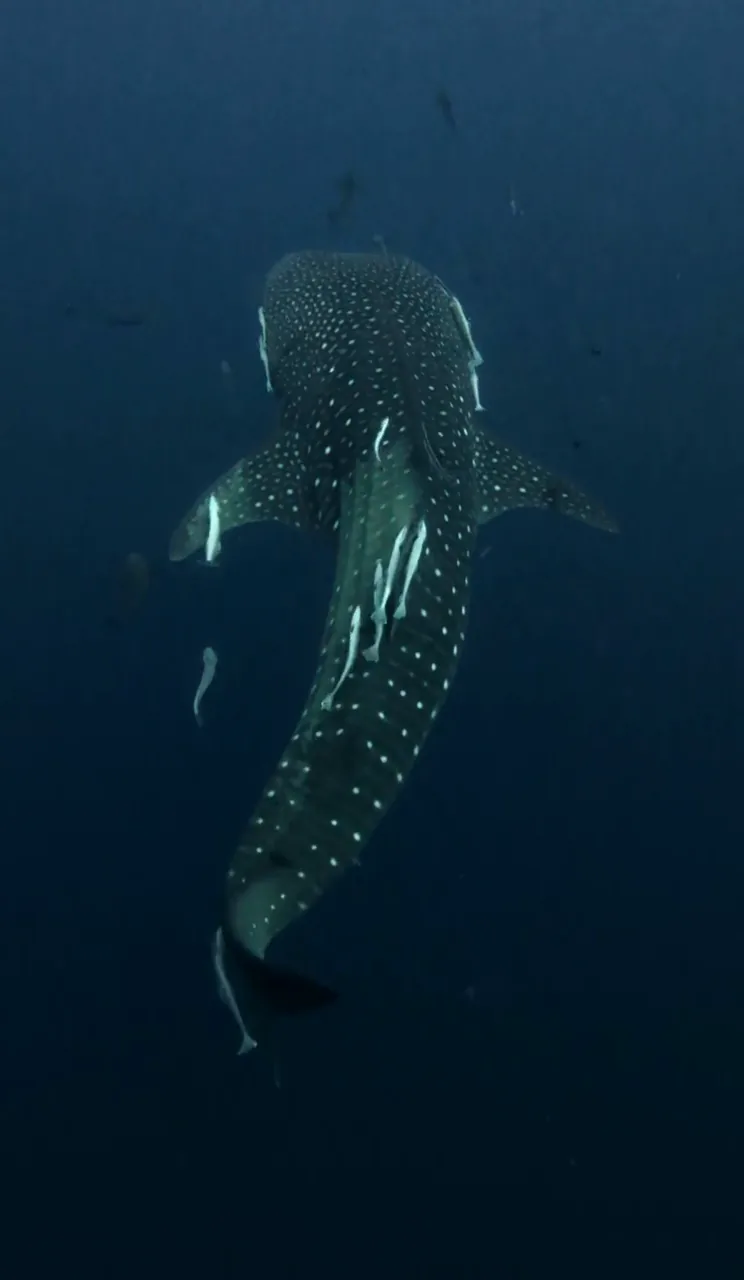
We had five consecutive days of thresher encounters at Sinandigan. Most of the sightings sat between twenty and twenty-five metres, the long-tailed silhouettes moving along the contour of the wall the way threshers move, slow and deliberate, indifferent to the divers floating beside them. A couple of times the animals came inside ten metres of me. That close, you can see the eye. You can see the slow downstroke of the upper lobe of the tail driving the body forward. You stop breathing for a second because you have forgotten you are meant to.
The encounter that sticks is the one where the same animal turned and came back along the wall for a second pass. Threshers do not usually do that. This one did. Then it was gone, into the deeper water beyond the wall, and the next morning we were back at the same site doing the same dive looking for the same animals. They came again.
Yesterday, Orcas
On 13 May 2026, a pod of orcas was filmed in the Verde Island Passage off Lubang, Mindoro. Footage went up on Marine Wildlife Watch of the Philippines within hours. Orcas are not Philippine waters animals; they prefer the colder temperate latitudes and only occasionally drop into tropical channels while moving between hunting grounds. Local marine groups treat any orca sighting in the passage as a rare event, the kind that surfaces every several years.
There is no claim to make here other than the obvious one. The passage holds enough density of life that the apex animals occasionally swim through to remind everyone what the system is capable of.
The Sites Around Sabang
Most divers base in Sabang, the small town on the eastern arm of Puerto Galera Bay. From there, almost every site worth doing is five to fifteen minutes off the beach by banca. The proximity is its own gift. You can do a dive, come back to your room, use a real bathroom and a hot shower, eat a proper lunch, and be back on the water two hours later. There is none of the two-tank-trapped-in-the-wetsuit-with-no-options situation that most other dive destinations force on you. We are all adults. We all know what the alternative is. Sabang lets you skip it.
The other gift is the range. There are not many bays in the world where you can do every kind of dive within a half-hour radius of one beach.
The current sites are the headline. The Canyons is the dive that puts Puerto Galera on the more committed divers’ map: three sand bowls strung along a sweeping current line at twenty-five metres, run only when the tide is right and by operators that know what they are doing. West Escarceo runs fast along the reef edge with schooling jacks and barracuda passing close. Hole in the Wall is a literal swim-through cut into the reef, usually paired with a drift past Escarceo Point. Pink Wall is a current-driven wall site east of Sinandigan.
The easy reefs are the other half of the bay. Coral Garden is the introductory site, twelve to eighteen metres, with the densest soft-coral carpet I have ever seen and no current to fight. Kilima Steps is terraced coral on a gentle slope, the kind of dive you do twice on the same morning. LaLaguna Point is the protected reef site for warm-ups and recovery between harder dives. Boulders is exactly what it sounds like, a cluster of large rocks covered in soft coral, easy and beautiful.
The wrecks live in front of the town. Sabang Wreck is actually three small wrecks scattered in the bay, sometimes diveable as a long shore dive straight off the beach. The Alma Jane is a steel hull at eighteen metres, beautifully overgrown after two decades in the water.
The macro and muck diving is where Puerto Galera really separates from its competitors. Sinandigan Wall has the famous wall, but the macro at the top of the wall, at five to ten metres, is just as productive as anything below. Monkey Beach is sand and seagrass, the kind of motionless muck dive you swim slowly across for an hour and find ten new things. Manila Channel runs along a sandy slope with reef structure on one side and the channel itself feeding nutrients across the site, productive at both ends of the size spectrum.
And then there are the secret sites. Every operator has a different shortlist of unpublished sand patches and rubble corners that the local divemasters built up through years of repeat looking. The wonderpus they found two years ago and have not stopped checking on. The blue-ringed octopus that sits under the same coral head every Wednesday. Ask. The better operators will take you to theirs.
Pelagic chances stack on top of all this. Sinandigan Wall in March holds the thresher sharks, as discussed above. The deeper edges of The Canyons see eagle rays and the occasional larger transient. The bay itself, on the right day, gets visitors from the open passage. Yesterday, orcas.
I did not dive Verde Island itself, which would have meant a longer crossing and a different operator, and I did not get to Calapan on the south coast. People I trust say both are worth a trip on their own. Next time.
Practical Notes
Sabang is the practical base for most divers. Resorts and dive shops are stacked along the beach. Asia Divers, Atlantis Dive Resort, Action Divers and Capt’n Gregg’s are the operators with the longest local histories, and the quality of guiding is generally high. Equipment hire is normal-priced; bring your own underwater camera if you have one.
The route in: fly to Manila, road transfer to Batangas Pier (two and a half hours on a good day), banca crossing to Sabang (thirty to sixty minutes). Most resorts will arrange the door-to-door package and it makes the journey vastly easier. Four to five hours total is typical.
Open Water certification is plenty for most sites. Advanced helps for the Canyons and gives you the depth allowance to fully use the wall sites at Sinandigan. Dive insurance, as always, is non-negotiable.
For best conditions, the dry season from November through May is the most reliable window. June through October is the southwest monsoon, but the northern coast of Mindoro is well sheltered and the diving holds up on most days. March for the threshers. May for the warm water and the chance, this year at least, of having been there when the orcas came through.
A Closing Thought
Puerto Galera is not a destination that markets itself well. It does not have the photogenic shorelines of Palawan or the brand recognition of Bali. The flight in is long, the road is bumpy, and the bay itself looks like a working fishing town because that is what it is. None of that matters once you are at twenty metres watching a flamboyant cuttlefish walk across the sand on legs that should not work.
The reefs are the proof. After a slow accumulation of dives across the Caribbean, the Red Sea, the Eastern Pacific and now Southeast Asia, I have not seen anything as healthy as these reefs in this small stretch of the Verde Island Passage. I am here right now and I am not in a hurry to leave.