The ocean documentaries on Disney+ are the ones most divers skip, and I understand why. You think Disney, you think animation. But National Geographic sits inside that platform, and National Geographic has been funding, filming and distributing ocean work for longer than most of the streamers have existed. The result is a catalog that runs from the single best ocean film released in the last decade to a shark franchise that gets a new season every July. Counting the individual films, there are sixteen worth your time here.
I have already covered the ocean documentaries on Netflix and the ocean documentaries not on Netflix. This is the platform-specific version for Disney+, where the National Geographic library actually lives.
Availability shifts by region. Most of these also stream on Hulu in the US and many are already available on the National Geographic YouTube channel. Check what is live where you are.
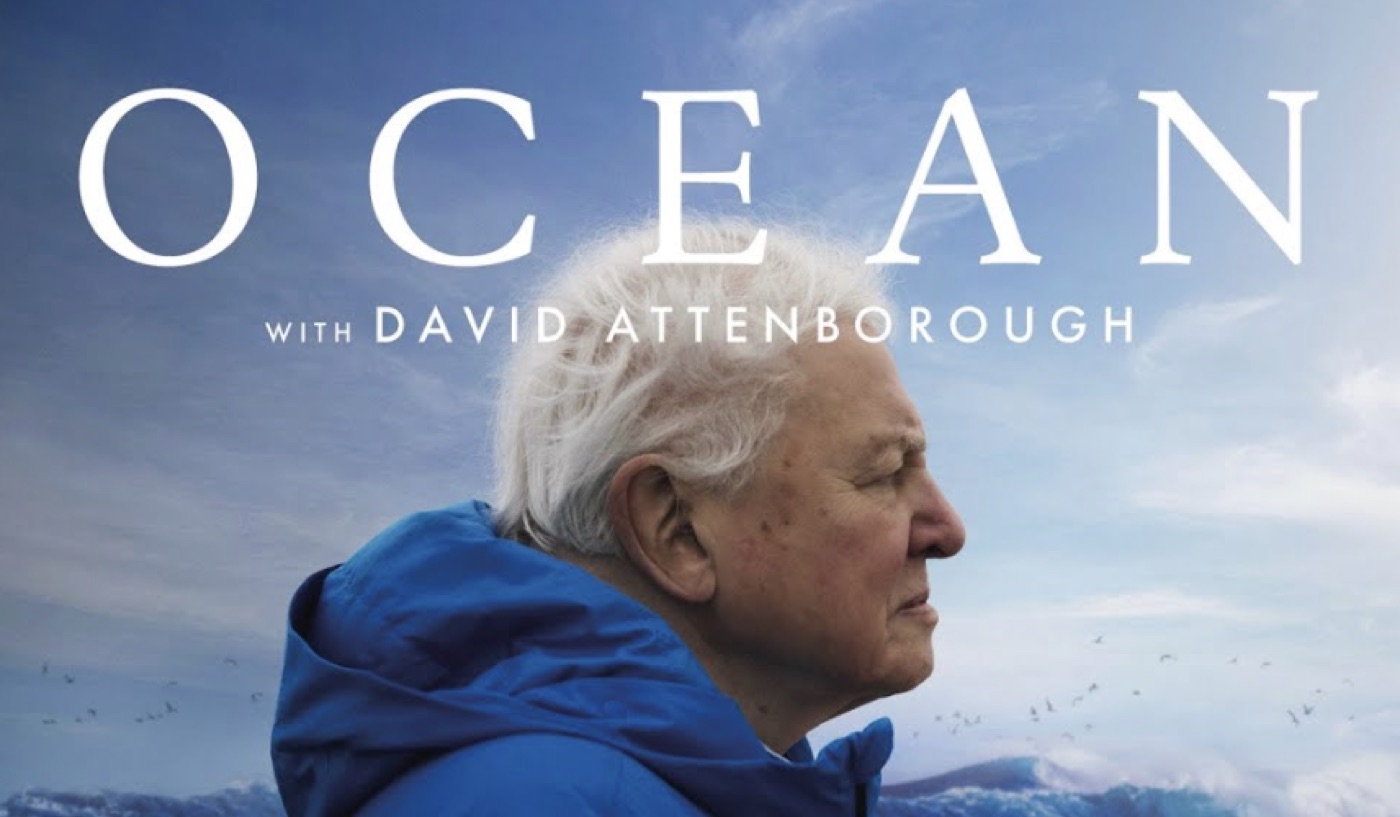
Ocean with David Attenborough
If you watch one thing on this list, watch this.
Released in select cinemas on 8 May 2025, Attenborough’s ninety-ninth birthday, and streamed on Disney+ and Hulu from World Ocean Day the following month. Directed by Toby Nowlan, Colin Butfield and Keith Scholey for Silverback Films, distributed by National Geographic Documentary Films, and co-produced with National Geographic Pristine Seas. Ninety-five minutes. It won two Critics Choice Awards, including Best Science and Nature Documentary.
The film’s argument is simple and it is delivered by a man who has been making ocean television since the 1950s: he has watched the sea change across a single human lifetime, and the damage is not abstract to him. He says outright that the ocean is in worse condition than at any point in his life. Coming from anyone else that is a line. Coming from him it is testimony.
What sets it apart from every other Attenborough production is the bottom trawling sequence. Nature filmmaking almost never shows you the mechanism of destruction. It shows you the beautiful thing, then tells you the beautiful thing is at risk, then cuts to a scientist looking concerned. This film puts a camera behind a trawl net and holds it there while the net scrapes the seabed flat. Everything living in the path of it is either killed or thrown back dead. You watch a habitat that took centuries to build get erased in seconds, and then you watch it happen again, because that is what the industry does every day across an area of seabed larger than most people can picture.
That footage did real work. It ran during the year the High Seas Treaty was moving toward force, and it landed in a policy conversation that was already live. It is still the clearest visual answer to the question of why bottom trawling in EU Marine Protected Areas is the scandal it is.
The film does not end there, which is the other reason it works. The last act is about recovery, and specifically about how fast the ocean comes back when you actually leave it alone. If you want the fuller picture of what seven decades of his filmmaking changed, I wrote about what David Attenborough did for the ocean separately. Watch on Disney+.
If you don’t have Disney+ you can find the full documentary on the National Geographic YouTube channel.
Secrets of the Whales
Brian Skerry’s four-part series, narrated by Sigourney Weaver, executive produced by James Cameron. Three years of filming across twenty-four locations.
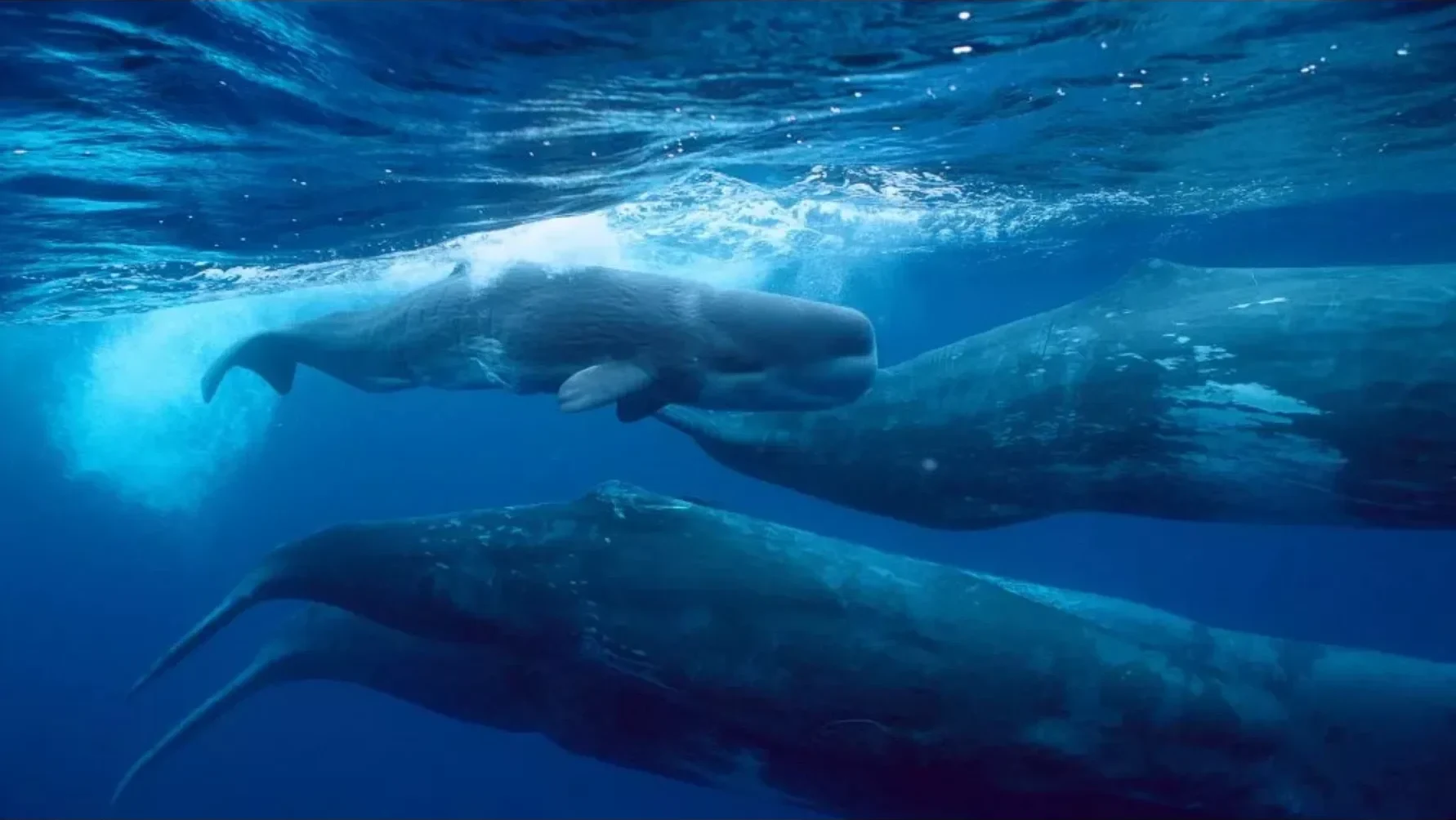
The thesis is whale culture. Not whale behavior, culture: that orcas, humpbacks, belugas, narwhals and sperm whales pass down distinct traditions, hunting techniques and dialects across generations, and that a whale born into one pod is raised into a different set of customs than a whale born into another.
Once you accept the framing, the footage stops being spectacle and starts being family footage. The New Zealand orca matriarchs teaching juveniles to hunt stingrays is the sequence everyone remembers, and it earns that. The lesson goes badly. The young animals miss, overshoot, get it wrong, and the older ones correct them and run it again. It is not edited to look like teaching. It is teaching.
Skerry is a National Geographic photographer and it shows in the framing. He shoots whales the way you shoot a portrait, close and patient, and the intimacy of that is the whole point of the series. Watch it alongside World Orca Day and the whale culture material stops feeling like a nice idea and starts feeling like the reason Iceland and the Faroes whaling in 2026 is indefensible. You are not killing an animal. You are removing a library. Watch on Disney+.
Secrets of the Octopus
Three parts, released on Earth Day 2024, narrated by Paul Rudd, presented and co-produced by marine biologist Dr Alex Schnell, directed by Adam Geiger, with Cameron again as executive producer. Two years of underwater filming.
The comparison everybody makes is to My Octopus Teacher, and I think it is the wrong one. That film is one relationship, one kelp forest, one year. This is the species-level version. Day octopuses on the Great Barrier Reef, giant Pacific octopuses jetting over kelp off Vancouver Island, coconut octopuses carrying their own shelters across open sand. Different animals, different oceans, one argument: octopus intelligence is not a party trick, it is a whole separate solution to the problem of having a mind.
Schnell’s relationship with a day octopus she calls Scarlet is the emotional center, and it is handled without the sentimentality the setup invites. What she is documenting is a wild animal choosing, repeatedly, to interact with a human it does not need to interact with. Divers who spend time with octopus already know that behavior. Seeing it filmed properly over months is another thing.
Rudd’s narration is the risk that pays off. It is light, funny, and it keeps a series about an animal with three hearts and blue blood from tipping into reverence. Good watch for anyone you are trying to bring into the ocean who thinks nature documentaries are homework. Watch on Disney+.
OceanXplorers (My Favorite!)
Six episodes, released August 2024, executive produced and narrated by James Cameron, co-produced by the BBC Studios Natural History Unit and OceanX. The Natural History Unit is the Blue Planet II team, and that pedigree is visible in every underwater sequence.
The premise is the ship. OceanXplorer is a research and media vessel with submersibles, a helicopter, laboratories and a full production suite, and the series follows a crew including deep-sea researcher Zoleka Filander, shark biologist Melissa Cristina Márquez, robotics engineer Eric Stackpole and former Royal Marine Aldo Kane as they work through specific scientific questions in the Bahamas, the Azores, the mid-Atlantic and the Arctic.
The tone is not Attenborough. It is closer to an expedition series, with the tension of whether the tag deploys, whether the sub finds the animal, whether the weather holds. Some people find that a downgrade. I do not. Most ocean filmmaking hides the work, and this shows it: the failed attempts, the equipment that will not cooperate, the long stretches of nothing that any diver who has waited on a big animal will recognize immediately.
The standout episodes for divers are the Azores sperm whale dive profiling, the sixgill shark tagging, and the hammerhead migration episode, which lands differently now that hammerheads have won the highest international protection there is. It also gives you an honest look at what modern marine science actually costs to do. Watch on Disney+.
Also available on the National Geographic YouTube channel.
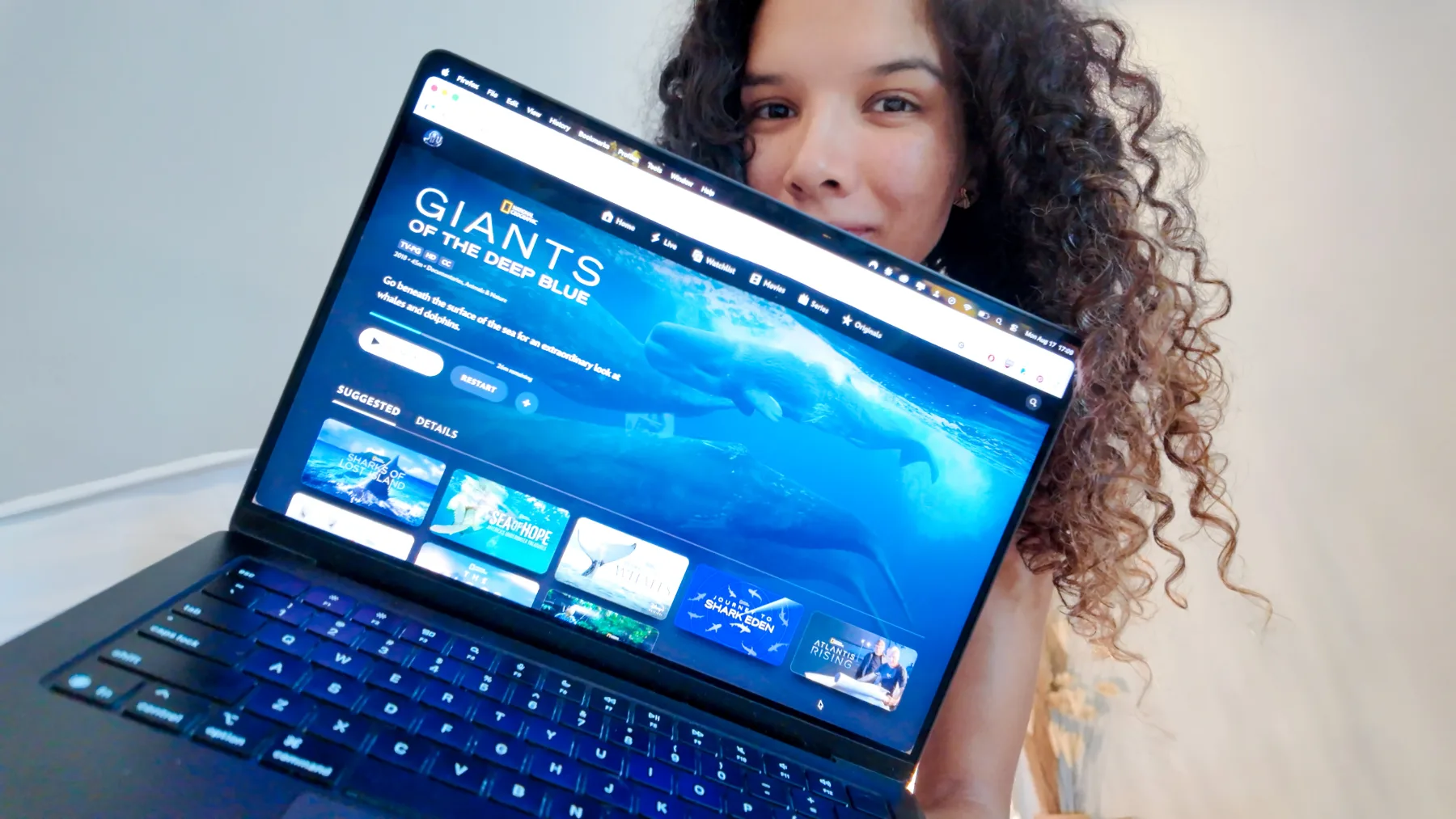
Giants of the Deep Blue
The short one, and useful precisely because it is short.
Ken Corben’s 2018 Nat Geo Wild film runs forty-four minutes, narrated by Bill Graves, covering whales and dolphins across social behavior and hunting strategy. It is not a landmark production and it does not pretend to be. It is a compact, well-shot primer that gets through more material in under an hour than most series manage in three.
The section worth the watch is the feeding economics. A blue whale is the largest animal that has ever lived and it eats one of the smallest, but it does not eat indiscriminately. It assesses krill swarms and rejects the ones that are not dense enough, because a lunge costs so much energy that a thin swarm leaves the animal worse off than not feeding at all. Every dive is a calculation. That is a useful frame for anything you watch afterward, and it is the practical version of what World Krill Day is about: pull the krill out and the math stops working for everything above it.
The ending is abrupt and the opening is slow. Put it on when you have forty-five minutes rather than an evening. Watch on Disney+.
Sea of Shadows
This is the hardest watch on the list and the one I would push hardest on divers who think conservation is a matter of individual behavior.
Directed by Richard Ladkani for National Geographic Documentary Films, winner of the Sundance audience award in 2019. It follows the collapse of the vaquita porpoise in the Gulf of California, which is not happening because anyone wants vaquita. It is happening because Mexican cartels and Chinese traffickers built a market for the swim bladder of the totoaba fish, sold as a luxury good and nicknamed the cocaine of the sea, and vaquita drown in the gillnets set to catch totoaba.
The film is structured as a thriller, follows undercover investigators, journalists and the Mexican Navy, and it never lets you retreat into the comfortable idea that ocean loss is a slow, faceless process. This is organized crime. There are named people making the decision. The population has been counted in single digits for several years now.
What it teaches is transferable. The same structure sits underneath the shark fin trade: a luxury market, a supply chain, enforcement that is underfunded and outgunned, and a species that disappears as a side effect of somebody else’s business. Watch it and then look at Cabo Pulmo, which sits in the same Gulf of California and shows what the other outcome looks like when a community closes a bay. Same sea. Two completely different endings. Watch on Disney+.
Ocean’s Weirdest
Three episodes, forty-four minutes each, narrated by David Carling, released in 2022.
This is the one nobody puts on a best-of list, and it is the one I would put on after a long dive day. The tone is light and it is funny on purpose, which is rare in ocean programming and mostly a relief. Seas of Love covers reproduction, including eels and seahorses. Predation Games is hunting strategy, sharks alongside small fish that survive by being cleverer than the thing trying to eat them. Mutant Misadventures is the strange evolutionary corners, including the coconut octopus carrying its own armor across open sand.
What it does well is scale. Most ocean documentaries are built around large animals, and this is built around small ones behaving oddly. That is what most divers spend their dives looking at, whether you are hunting critters on a muck site or learning how to find nudibranchs on a reef you have already dived twice. This is pretty much the kind of diving I experience on a regular basis so I completely recommend it!
Not a landmark. A good hour. Watch on Disney+
Journey to Shark Eden and Sharks of Lost Island
These two are the most overlooked films on Disney+ and, for anyone who cares about marine protected areas, the most important. Both follow Enric Sala, who founded National Geographic Pristine Seas. Both are older, short and unglamorous. Both worked, in the sense that the reef in each film is legally protected today.
Journey to Shark Eden covers the 2009 expedition to the southern Line Islands in Kiribati, five uninhabited atolls with no fishing pressure. What the team found is the thing every diver should understand and almost none of us have seen. The biomass pyramid inverts. There is more predator than prey by weight, sharks and groupers outweighing everything they eat, which is the opposite of every reef most of us dive. That is the baseline you are unknowingly measuring a healthy reef against.
Kiribati announced protection at the 2014 Our Ocean Conference and made it permanent in 2018. When the team went back in 2021, after warming had killed roughly half the coral, the reefs had almost fully recovered. Set against the fourth global coral bleaching event, that is the strongest argument I know for protection as climate strategy.
Sharks of Lost Island is the 2013 companion, filmed in the Pitcairn Islands. Set expectations: it is not a shark film. It is a record of how a marine reserve actually gets made, and in 2015 the UK made Pitcairn the largest fully protected reserve on earth.
Pristine Seas has since worked in Colombian waters, the same machinery behind the people who guard Malpelo’s shark sanctuary. Their Emmy-winning Arctic film The Last Ice is on Disney+ too. Watch on Disney+.
Ocean’s Breath
The one almost nobody outside Italy has seen.
Michele Melani’s 2019 film runs forty-five minutes and was made for Walt Disney Television Italia, which is why it sits buried in Disney+ search while lesser films surface above it. Two National Geographic explorers work through the past, present and future of coral reefs, and the framing is deliberate: coral as ancient architecture, built over thousands of years, currently being suffocated faster than it can rebuild.
What separates it from most reef films is where it spends its time. The problem gets stated and then the film moves on to what people are actually doing about it. Restoration work, nursery techniques, the science of which corals survive heat and why. That is a harder film to make than one that just documents loss, and there are not many of them.
Watch it after the fourth global coral bleaching event piece, in that order. The context makes the solutions land instead of feeling like reassurance. Watch on Disney+
Sea of Hope: America’s Underwater Treasures
Robert Nixon’s 2017 film, and the direct companion to Mission Blue.
Sylvia Earle, National Geographic photographer Brian Skerry and writer Max Kennedy spend a year diving American waters with a crew of young divers, building a photographic case for what Earle calls blue parks: protected areas in US seas, made for the centenary of the national parks system on land. The argument is a single sentence long. We worked out how to protect landscapes a hundred years ago. We have barely started on the sea.
It is not the film Mission Blue is. It is shorter, made for television, and the structure is looser. What it has instead is Earle and Skerry working, not being interviewed about their work, and a set of American ecosystems that get almost no screen time anywhere: Gulf of Mexico deep reefs, New England canyons and seamounts, the Pacific Northwest, Florida springs. If your image of US diving is Hawaii and the Keys, this expands it considerably.
The other reason to watch it is the political frame. The film was made to influence a specific decision by a specific administration, and it says so. Ocean protection is not won by being right. It is won by getting the right images in front of the right person before a window closes, which is exactly what Hope Spots like Rapa Nui and the southern Africa Hope Spots run on. Watch on Disney+.
Becoming Cousteau
I covered this one in depth in the ocean documentaries not on Netflix list, so the short version here.
National Geographic Documentary Films, 2021, assembled almost entirely from Cousteau’s own footage. It traces the arc from inventor and showman to environmentalist, and it does not soften the early Calypso years, when the crew killed sharks on camera and dynamited reefs to count fish. It includes the sequence from The Silent World that most retrospectives leave out.
Watch it for the honesty of that arc, and for the underwater footage of an ocean that no longer exists in that condition. Watch on Disney+.
Photographer: Paul Nicklen and Cristina Mittermeier
This is the one on the list I take personally, because it is about the job.
Photographer is a six-part National Geographic series from 2024, made by E. Chai Vasarhelyi and Jimmy Chin, the directing team behind Free Solo. Each hour follows one photographer through an actual assignment. Episode one is Paul Nicklen and Cristina Mittermeier, the two working ocean photographers whose images have probably done more to move ocean policy than anyone else’s in the last twenty years. It is called Win or Die, and the title is not decoration.
The assignment takes them to the Bahamas to photograph a reef system under threat from proposed oil drilling. What the episode shows, and what almost nothing else does, is the gap between the finished image and everything that produces it. The hours in the water for one frame. The dive plan built around light rather than around a site. The physical cost. The commercial reality that conservation photography has to sell before it can persuade.
Nicklen and Mittermeier founded SeaLegacy, and the episode is honest about what that has cost them, including the tension between making the image and using it, and between the two of them as partners in work and in life. It does not smooth that over into a profile piece. Chin and Vasarhelyi come out of climbing documentary, where the culture is to leave the friction in, and they leave it in here.
For anyone shooting underwater, this is the most useful hour on Disney+. It reframes the work as patience and access rather than gear, which is the same thing I keep coming back to when people ask about building your first underwater camera setup or about underwater macro photography. The camera is the smallest variable. Buoyancy, behavior and hours in the water are the rest of it.
The other five episodes cover portraiture, conflict photography, adventure and scientific macro work, and none are ocean episodes, but the Anand Varma hour on photographing at scales the eye cannot see is worth the time if you shoot small subjects. Watch on Disney+.
Animals Up Close with Bertie Gregory, and SharkFest
Bertie Gregory is the most interesting thing National Geographic has going in the field right now, and his work is split across a series and a run of specials.
Animals Up Close with Bertie Gregory ran six episodes on Disney+ from September 2023, produced by Wildstar Films. Two are essential. The Antarctic episode follows the B1 killer whales that hunt by generating waves to wash seals off ice floes, a behavior only a handful of animals in the world perform, and Gregory is chasing the question of why that population is declining. The Indonesia episode is a search for devil rays on reefs he describes as among the best left, and it is built around waiting for an anchovy feeding frenzy that may not happen.
The value of Gregory’s work is that he leaves the failure in. Eighteen months of planning, two hundred and nineteen days in the field across the series, and a substantial amount of screen time given to the days when nothing works. Any diver who has done a week of blue water dives waiting on one animal will feel seen.
The specials since have included Sharks Up Close, where he dives cageless with white sharks in South Africa, and Dolphins Up Close, filmed in the Azores chasing bait balls in a region that went from whaling center to one of Europe’s most significant marine protected zones. That history sits under the footage and the special does not skip it.
SharkFest is the wider frame. National Geographic’s annual summer shark event ran its fourteenth year in 2026, opening on 5 July with Hammerhead Sharks Up Close with Bertie Gregory, filmed off Mexico. It runs across National Geographic, Nat Geo WILD and Nat Geo Mundo through late July, with select titles streaming on Disney+ and Hulu. Quality varies across the lineup and some of it is straightforwardly sensational. The Gregory titles are the ones worth your time. Watch on Disney+.
Disneynature: Dolphin Reef
The family entry, and worth naming for what it is rather than dismissing.
Directed by Alastair Fothergill and Keith Scholey, narrated by Natalie Portman, seventy-eight minutes, on Disney+ from April 2020. It follows a young Pacific bottlenose dolphin called Echo around a coral reef, and it is anthropomorphized in the way Disneynature films always are. Echo has a personality. There is a story arc about growing up.
What redeems it is the supporting cast. The reef sections are properly filmed and the film gives real screen time to peacock mantis shrimp, bumphead parrotfish, cuttlefish and green turtles queuing at a cleaning station. The parrotfish sand explanation alone has probably done more to make people care about reef fish than a decade of policy papers.
Released alongside it was Diving with Dolphins, the companion film about how the footage was made. That one is the better watch if you shoot underwater, because it is essentially ninety minutes of problem-solving on camera housings, approach distances and animal behavior.
This is the film to put on for children, or for anyone who needs an entry point that does not open with grief. Watch on Disney+.
Where to Start With Ocean Documentaries on Disney+
If you watch one: Ocean with David Attenborough. It is the strongest ocean film released in years, on any platform.
If you want the one that will change how you think about an animal: Secrets of the Whales.
If you want to understand why conservation is not primarily about your own behavior: Sea of Shadows.
If you want proof that protection works: Journey to Shark Eden, then Sharks of Lost Island. Two reefs that are legally protected today partly because these films were made.
If you dive and you want to see what the ocean looked like before: Becoming Cousteau.
If you shoot underwater, or want to: Photographer, episode one.
If you have someone to bring in gently: Dolphin Reef, then Secrets of the Octopus.
The National Geographic library on Disney+ is deeper than its reputation, and it is the only place holding both the Pristine Seas policy work and the Cameron production slate. Once you have worked through it, the ocean documentaries on Netflix list is next, and the ocean documentaries not on Netflix list picks up Blue Planet II, Fathom and the rest across Apple TV+ and BBC iPlayer.
Our ocean, our responsibility. Watching is the easy part.