World Jellyfish Day falls on 3 November, and if you dive, you probably already have an opinion about jellyfish. It usually involves a stinging forearm on a safety stop, or a guide signaling the group to give a drifting bell some room.
Jellyfish have been in the ocean for more than 500 million years, and for most of the history of marine science they were written off. Researchers saw them as bags of seawater with almost no nutritional value, animals that ate plenty and fed almost nothing, and they labeled them a dead end in the food chain.
That idea has fallen apart over the last twenty years. Cameras strapped to turtles and penguins, DNA pulled from predator stomachs and images of the deep seafloor all point the same way, and a surprising amount of the ocean turns out to run on jelly.
So for this World Jellyfish Day, I want to look at what jellyfish do for the ocean, from the turtles they feed to the carbon they sink, and at what we can do for them in return.
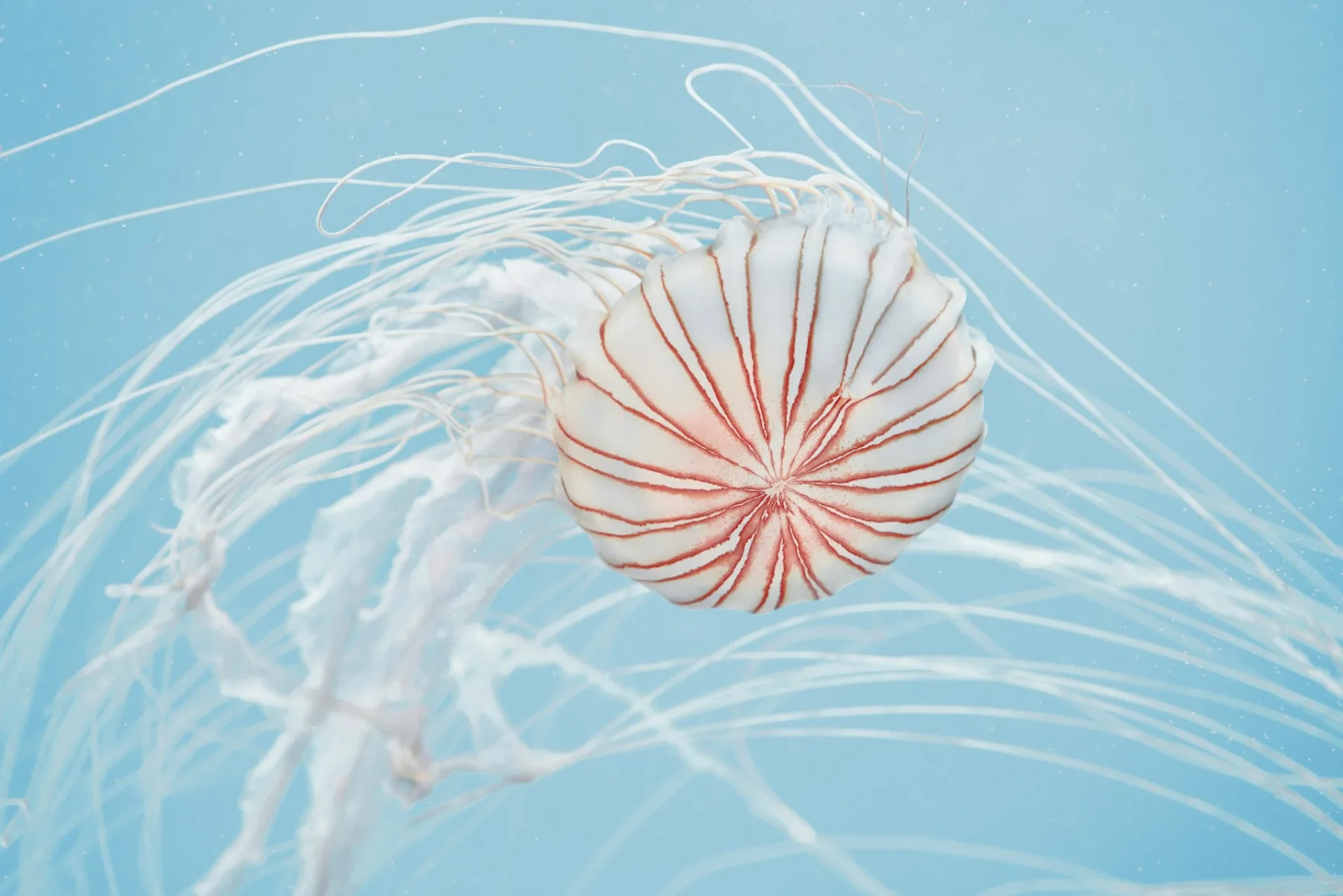
What Is World Jellyfish Day?
World Jellyfish Day has been marked every 3 November since around 2014. It’s not clear who started it, and like most of the awareness days I cover in ocean conservation, it has no treaty or UN resolution behind it. The explanation usually given for the date is that November is spring in the southern hemisphere, the season when jellyfish start turning up along the coast in numbers.
The idea is to give people a reason to understand an animal most of them only meet as a hazard.
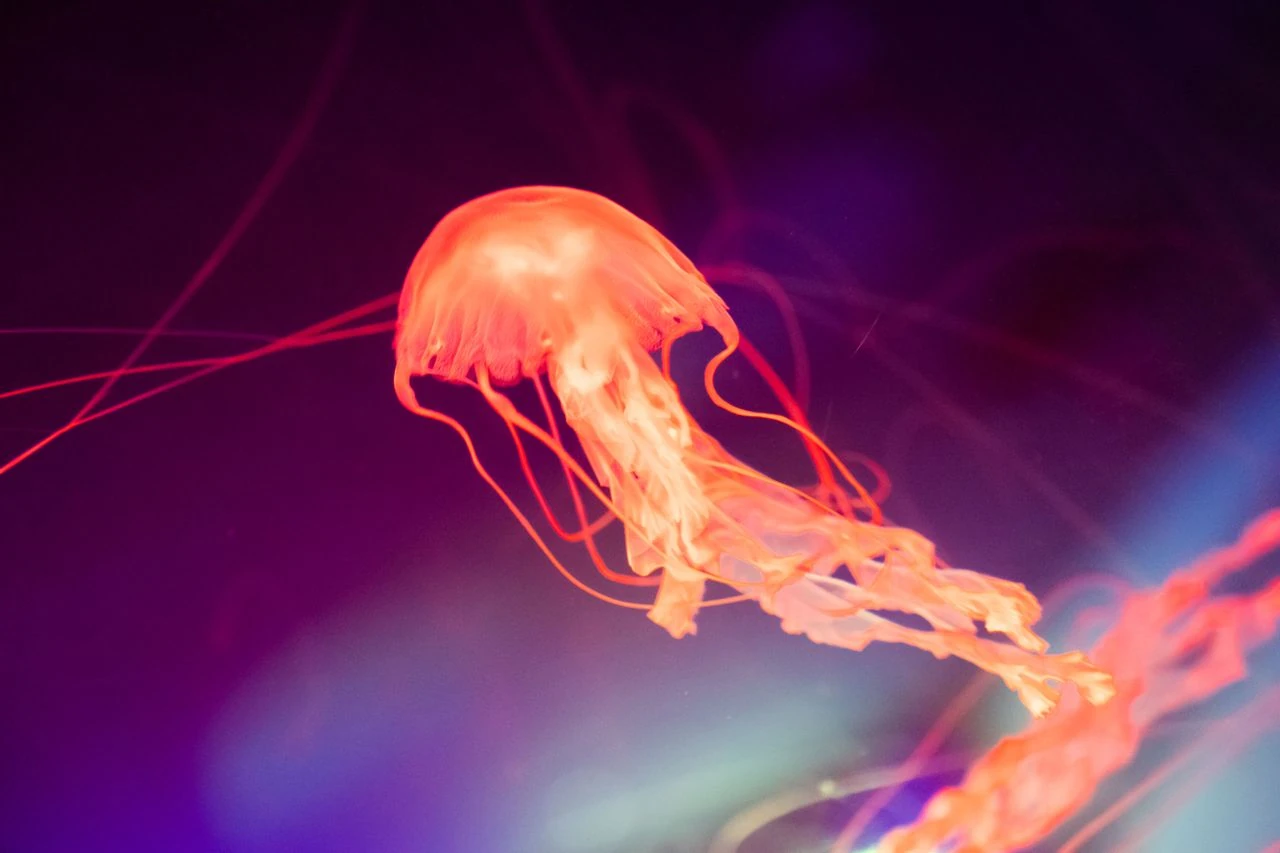
Despite the name, jellyfish have nothing to do with fish. They are cnidarians, the same group as corals and sea anemones, and they sting with the same kind of cell that makes fire coral burn when you brush against it. A jellyfish has no brain, heart, bones or blood, its body is about 95 percent water, and it senses the world through a simple net of nerves.
Many species also spend part of their life as a tiny polyp attached to a hard surface on the seafloor, budding off young jellyfish when the conditions suit them. Keep that polyp stage in mind, because it explains a lot about where blooms come from.
Jellies have also given us more than most people realize. A glowing protein from the crystal jelly, Aequorea victoria, which drifts off the west coast of North America, earned three scientists the 2008 Nobel Prize in Chemistry. Labs now use it to watch nerve cells develop and cancer cells spread.
View on Instagram
Are Jellyfish a Dead End in the Ocean Food Chain?
For a long time, scientists thought almost nothing ate jellyfish. They have hardly any calories, and when researchers checked the stomachs of fish and seabirds, they rarely found any jelly inside. So jellyfish got labeled a dead end, an animal that eats plenty while almost nothing eats it.
The problem was that they weren’t looking in the right way. Jelly breaks down very fast in a stomach, so by the time anyone checked, the evidence was gone. When scientists started using small cameras on animals and testing their droppings for DNA, jellyfish showed up on the menu of fish, seabirds, turtles, octopus and crabs all over the world.
So why would anything eat food that is mostly water? Think of it like snacking on cucumber. A jellyfish has almost no nutrition, but it can’t escape, it’s easy to digest, and during a bloom there are thousands of them. When food is that easy to catch, quantity makes up for quality.
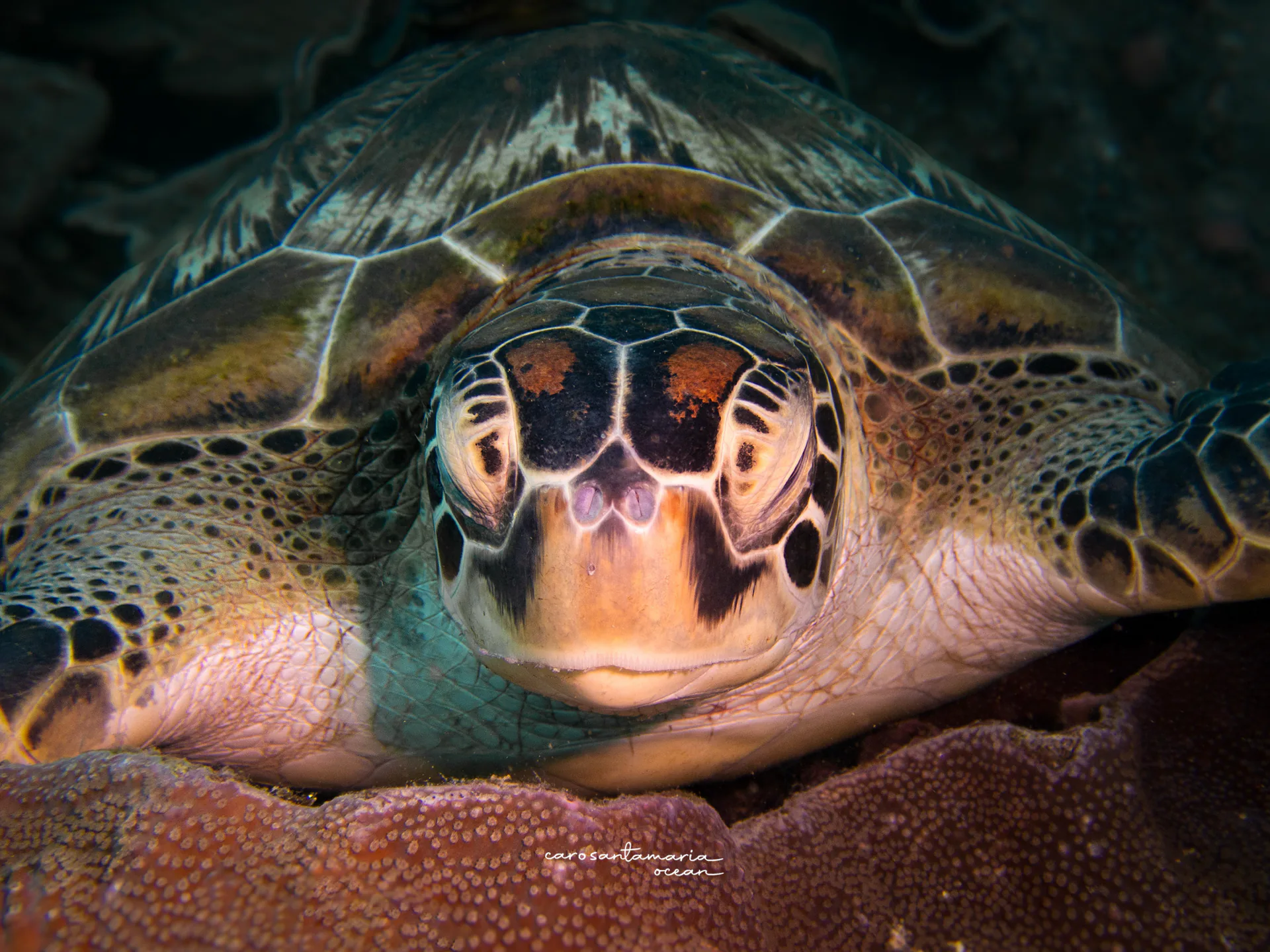
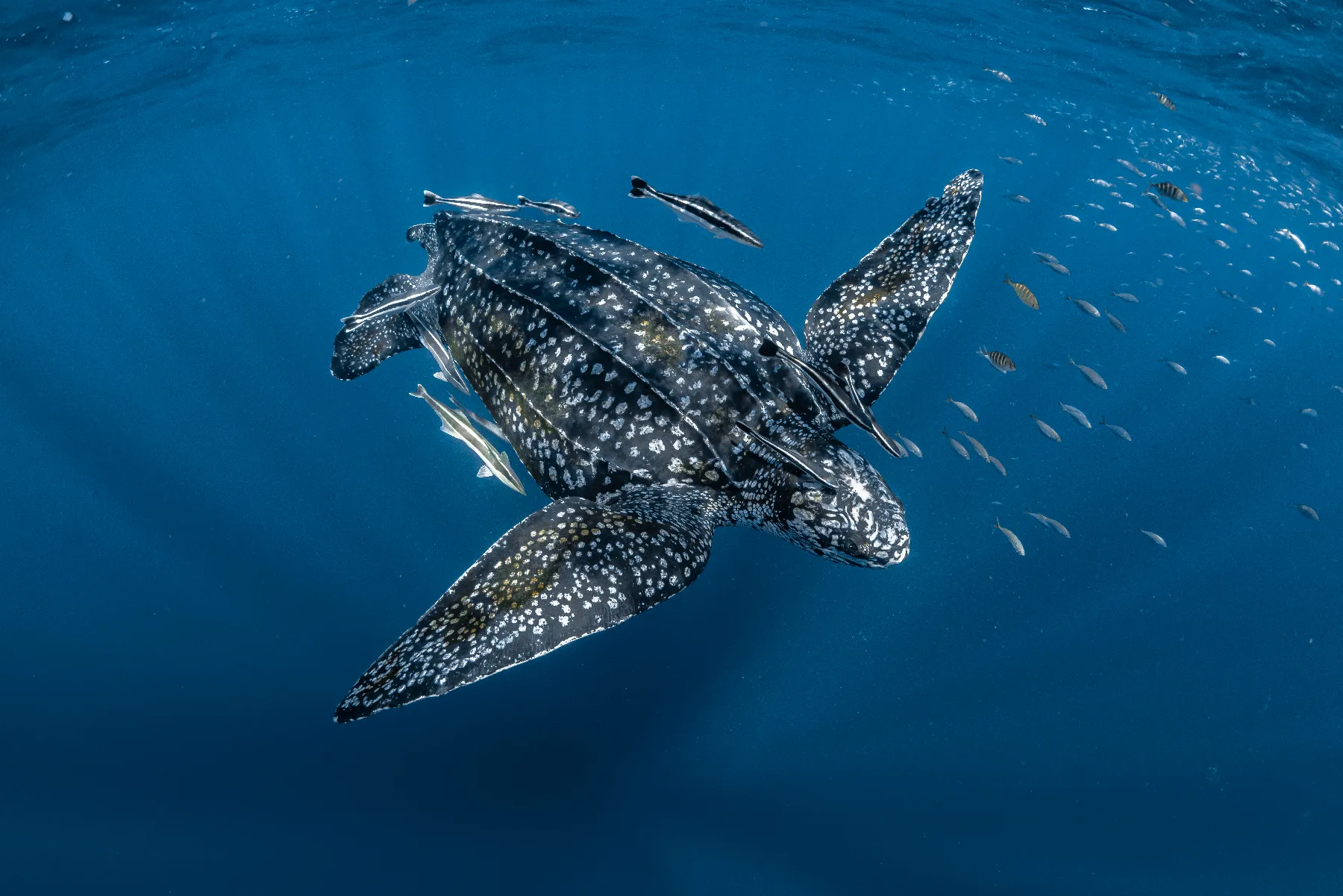
The leatherback turtle shows this better than any other animal. Scientists in Canada attached cameras to leatherbacks and watched them eat around 260 jellyfish a day, close to three quarters of their own body weight. That diet is how the largest turtle on earth fattens up before swimming thousands of kilometers to breed.
Leatherbacks eat almost nothing except jellyfish, and they have plenty of other problems, which I went through when I looked at which sea turtles are still endangered this year.
Penguins were the bigger surprise. Researchers fitted tiny cameras to penguins in the southern oceans and caught four different species chasing jellyfish on purpose. Jellies are only a small part of a penguin’s diet, but nobody expected a bird that needs so much energy to stay warm in freezing water to bother with them at all.
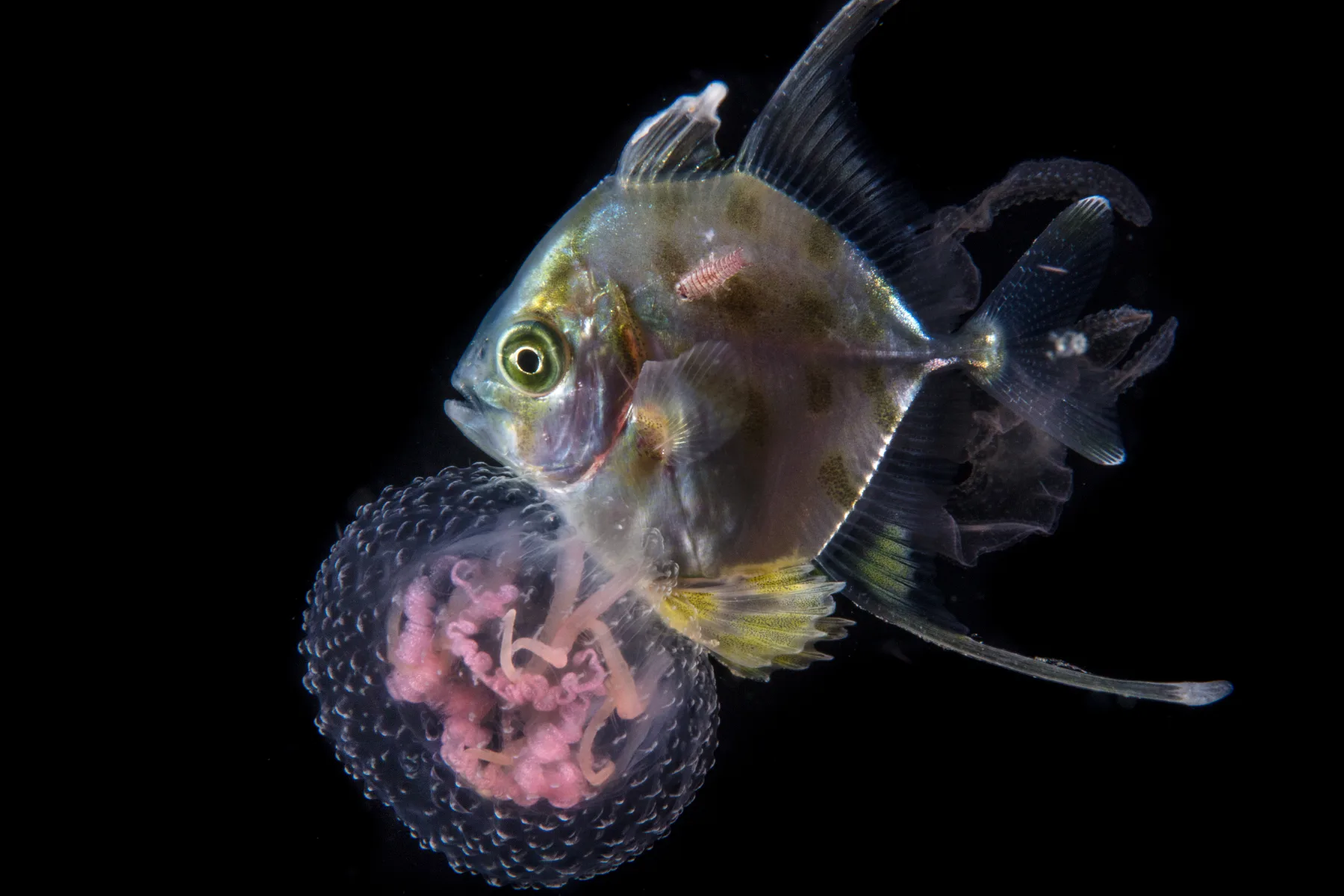
How Do Jellyfish Shelter Baby Fish?
Open water is a hard place to grow up. A fish the size of a fingernail has no reef to hide in out there, and almost everything around it wants to eat it.
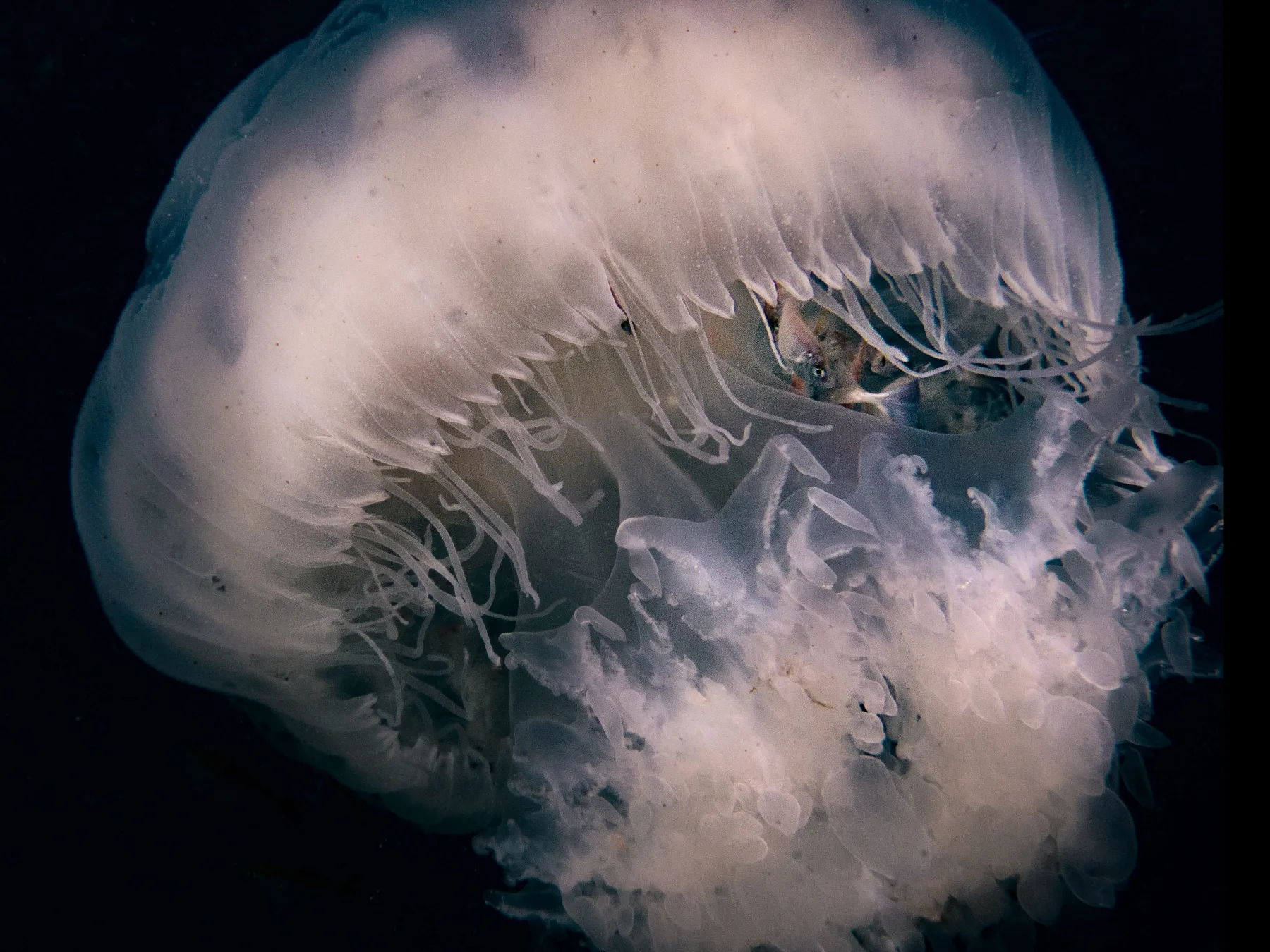
Many juvenile fish deal with that by moving in with a jellyfish. They hover under the bell or between the tentacles, using the stinging curtain as a shield, and they feed on plankton the jellyfish stirs up or catches. A 2019 study in Proceedings of the Royal Society B, subtitled “life in the gingerbread house”, concluded that this is most likely an evolved anti-predator strategy. It shows up most often in fish that later settle on the seafloor or on reefs.
More than two thirds of the fish species the researchers identified as sheltering with jellyfish are commercially important. Some of the fish that end up on dinner plates may well have spent their first weeks hiding inside a jellyfish.
This is my favorite part of the jellyfish story, because you can see it for yourself. The next time a large jellyfish drifts past on a dive or a safety stop, take a look under the bell before you move away. There is a fair chance something small is living there.
The relationship cuts both ways. Jellyfish also eat fish eggs and larvae and compete with young fish for the same plankton, so the same animal can be a nursery for one fish and a predator of another. That balance holds as long as there are enough fish in the water, which is where overfishing comes into the story.
How Do Jellyfish Carry Carbon to the Deep Sea?
Jellyfish blooms don’t last forever. When one ends, the bodies sink, and they sink fast. Scientists call this a jelly-fall, and sometimes it leaves patches of the seafloor covered in dead jellyfish.
Those bodies are full of carbon that came from the surface, and when they sink, the carbon goes down with them, far from the atmosphere. Add the waste jellyfish and their jelly relatives produce while they are alive, and one study estimated these animals could account for around a third of all the carbon that sinks out of the ocean’s surface each year.
The same study suggested that jelly-falls are mostly left out of the numbers scientists use to track ocean carbon. That means the role of jellyfish in the carbon cycle is probably bigger than we have been counting.
On the deep seafloor, where food is scarce, a jelly-fall is also a free meal. Crabs, sea cucumbers and other scavengers move in and eat what lands. Krill do a similar job with their fast-sinking waste, which I wrote about for World Krill Day, and a lot of the ocean’s ability to lock carbon away depends on animals most people never think about.
Are Jellyfish Blooms a Sign of an Unhealthy Ocean?
You have probably seen headlines saying jellyfish are taking over the ocean. The real picture is more complicated than that.
When a large group of jellyfish scientists pulled together all the long-term data they could find, they didn’t find clear proof that jellyfish are increasing worldwide. Jellyfish numbers seem to rise and fall in natural cycles of about 20 years, and a high point in the 1990s is part of why the idea of a jellyfish takeover caught on.
In some places, though, blooms really have grown, including the Sea of Japan, parts of the Mediterranean and the North Atlantic, and people are often part of the reason.
Overfishing is the clearest example. The waters off Namibia used to be famous for sardines and anchovies. After years of heavy fishing, scientists measured the area and found more than three times as much jellyfish as fish by weight. Jellyfish eat the same tiny food as small fish and also eat fish eggs and babies, so the researchers warned that once jellyfish take over, it may be very hard for the fish to come back.
The second reason is construction. Remember the polyp stage? Baby jellyfish need something hard to stick to, and every new pier, marina, fish farm and sea wall gives them more of it. Researchers have found jellyfish polyps growing in dense colonies on these structures, each one ready to release new jellyfish, and some scientists call this ocean sprawl.
Pollution and warmer water probably play a part in some places too. When a coast fills up with jellyfish year after year, the bloom is usually telling us something about the fish we took out and the structures we put in. Healthy fish populations help keep jellyfish in check by competing for the same food, which is one more reason marine protected areas matter.
How to Dive Around Jellyfish Without Getting Stung
Most jellyfish encounters underwater are harmless as long as you give the animal space. A jellyfish has no way to move out of your path in a hurry, so avoiding contact is on you. Stay horizontal, keep your fins still when one drifts close and let it pass.
Tentacles can trail far beyond the bell and are often close to invisible. Stinging cells also keep working after a jellyfish dies, and so do broken pieces of tentacle floating in the water.
This is where coverage matters as much as warmth. Even in water warm enough for a shorty, a full-length suit or a thin skin keeps most stings off your arms and legs, and a hood helps when small stingers gather near the surface. If you are deciding what to buy, I went through thickness, fit and seals in how to choose a scuba diving wetsuit.
On a safety stop during a bloom, keep looking around you, since many jellyfish drift in the top few meters. In box jellyfish regions, such as northern Australia and parts of Southeast Asia, operators run stinger seasons and full-body suits are standard. Follow the local first aid protocol, because treatment differs by species and what helps one sting can make another worse.
If you shoot, jellyfish are one of the most rewarding subjects in open water. The best images come from staying still and letting the animal drift into the frame, so never chase one with a strobe arm or nudge it into position by hand.
View on Instagram
What Can You Do for World Jellyfish Day?
🪼 Cut down on plastic bags and never release balloons. Sea turtles hunt by sight, and they unfortunately end up eating soft, clear plastic, the debris that looks most like a jellyfish.
🪼 Report what you see. In the UK and Ireland, the Marine Conservation Society collects jellyfish and turtle sightings through its Wildlife Sightings project, and platforms like iNaturalist take photo records from anywhere. Divers see blooms long before they make the news, and long-term records are what jellyfish science is shortest on.
🪼 Choose seafood from fisheries that leave enough fish in the water. Namibia shows what happens when they do not. Seafood guides, like the Marine Conservation Society’s Good Fish Guide in the UK, rate fish by how and where they are caught.
🪼 Support marine protected areas and fishing limits, at home and wherever you travel to dive.
Jellyfish have drifted through half a billion years of ocean history, feeding turtles, sheltering fish and sinking carbon the whole time. When they bloom out of control, it often points back to something we changed in the rest of the system, so the least we can do on World Jellyfish Day is learn to look at them properly.