Komodo shows up in every conversation you have about diving before you’re even certified. You hear about the currents. The mantas. The reefs that won’t let you forget why you got into this in the first place. Most destinations offer you something. Komodo asks something first, then delivers.
This place doesn’t let you coast. It demands solid buoyancy, respect for conditions, and the kind of focus you bring to every breath underwater. Do that, and it opens up in ways that change how you think about diving.
Why the Water Moves Like That
Komodo sits inside the Indonesian Throughflow, the system that drains warm Pacific water into the Indian Ocean through the straits of the archipelago. All of that volume squeezes between islands, over sills and around pinnacles, and Komodo happens to sit in one of the tightest sections of it.
Squeezed water moves fast and carries nutrients up from depth. Nutrients feed plankton, plankton feeds everything above it, and the whole food chain stacks up on top of that. Mantas, sharks, schooling pelagics and reef so dense it stops looking like individual corals.
Komodo sits inside the Coral Triangle, the most biodiverse marine region on earth, so the baseline here is already high before the current does anything. What the upwelling adds on top is cooler water, particularly in the south, which is part of why these reefs have held up better through recent bleaching years than reefs sitting in flatter, warmer water elsewhere in the region.
The Underwater Landscape
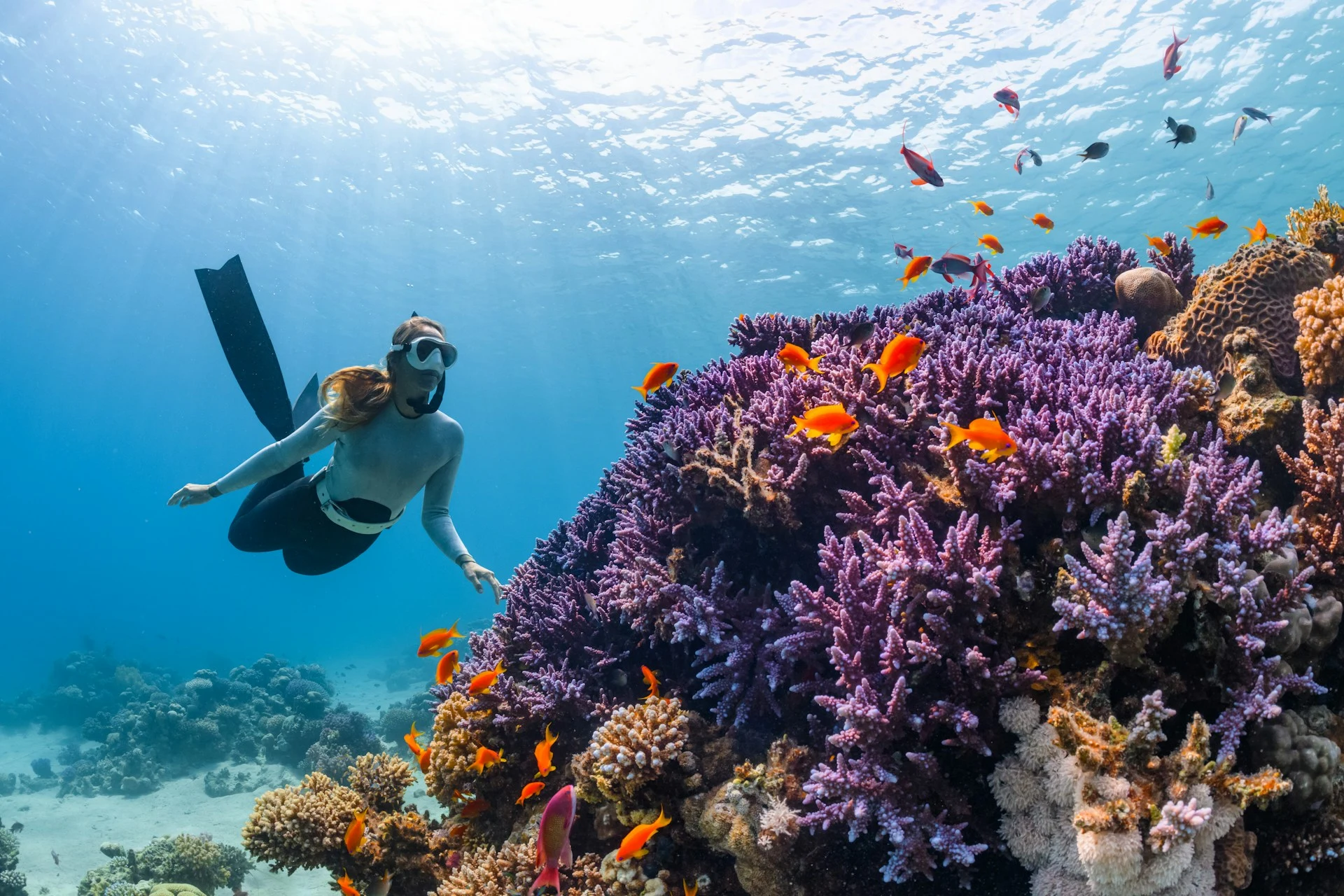
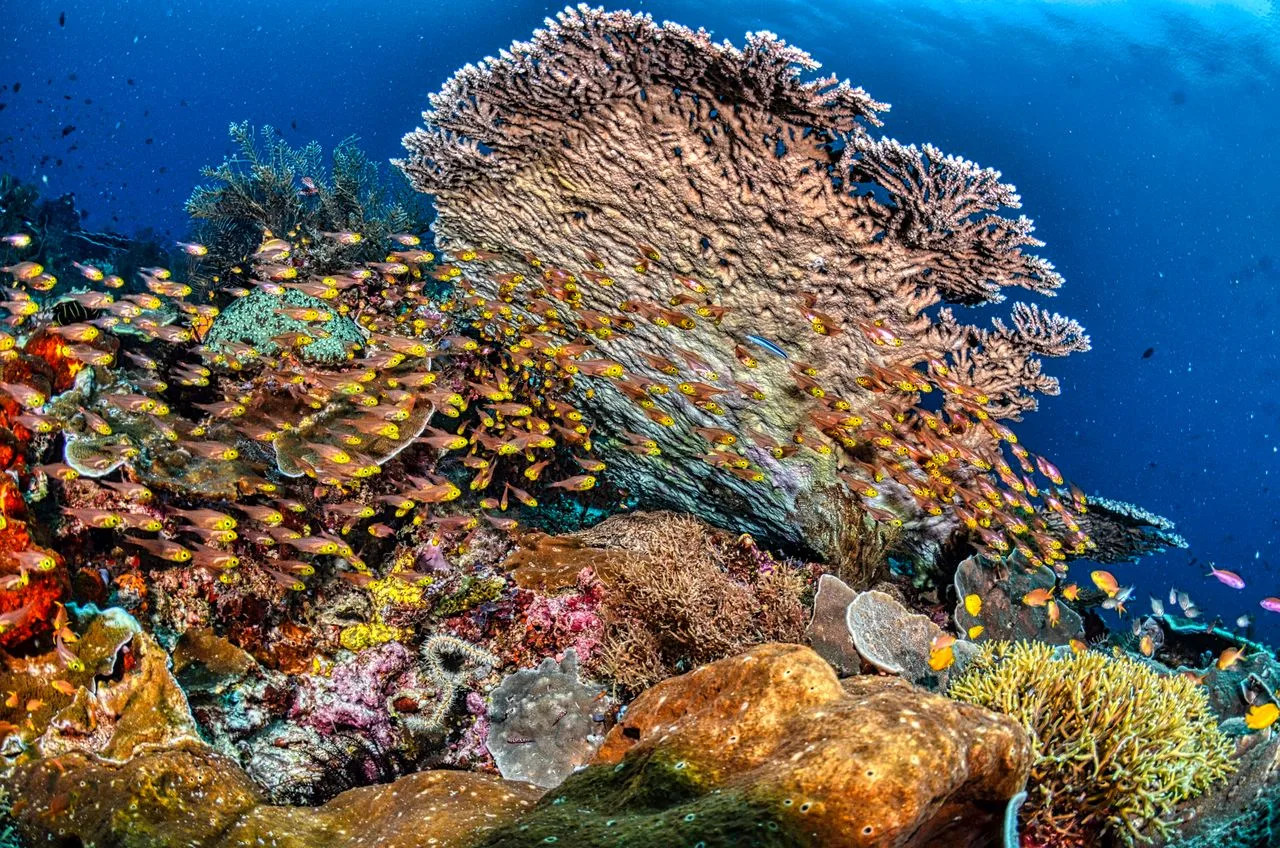
You drop in and the coral is immediate. Hard coral built thick and layered, soft coral in the current lanes, gorgonians on the deeper walls. Fish move through it in volumes that take a few dives to stop registering as unusual. Fusiliers, surgeonfish, redtooth triggers, anthias clouding the shallows.
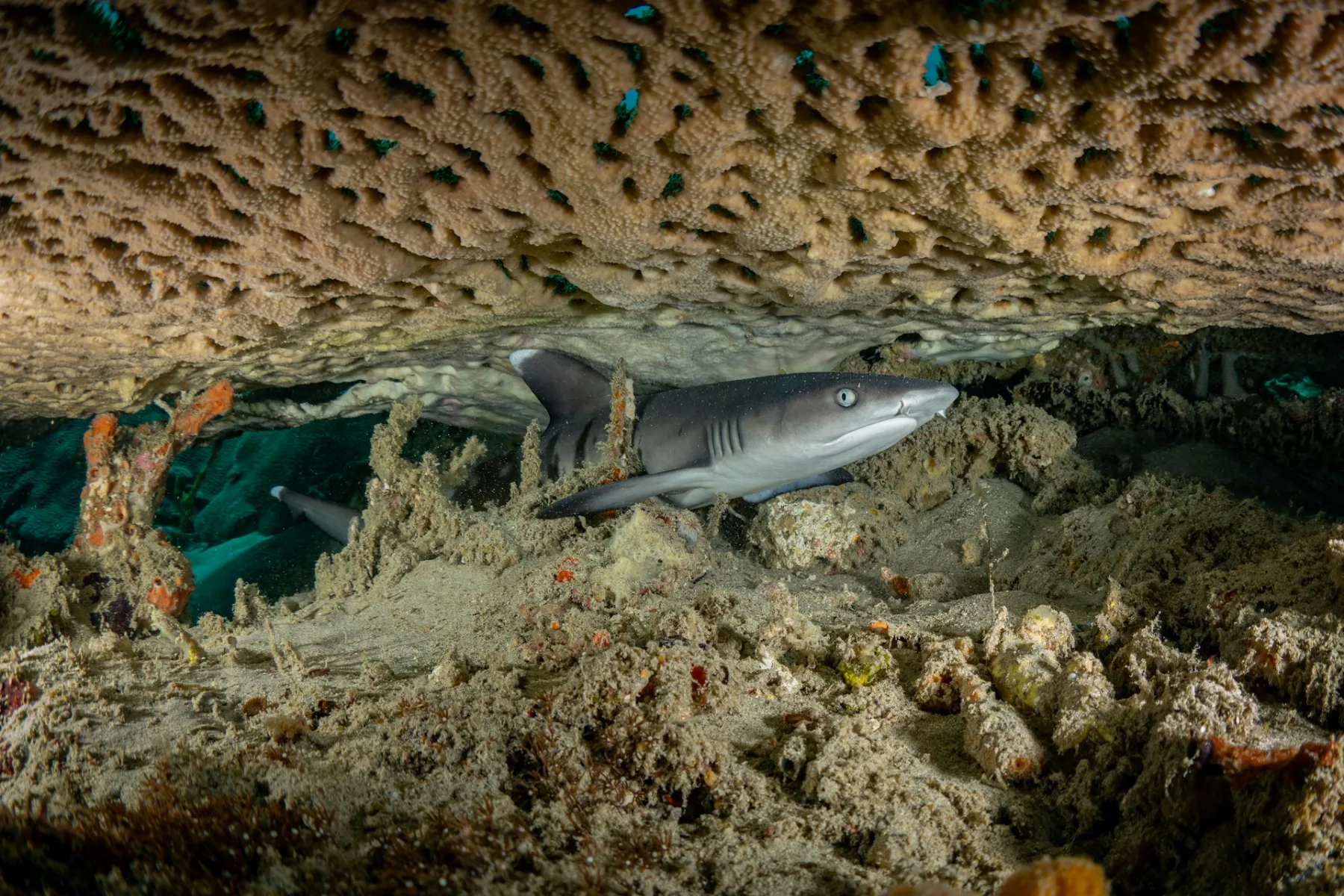
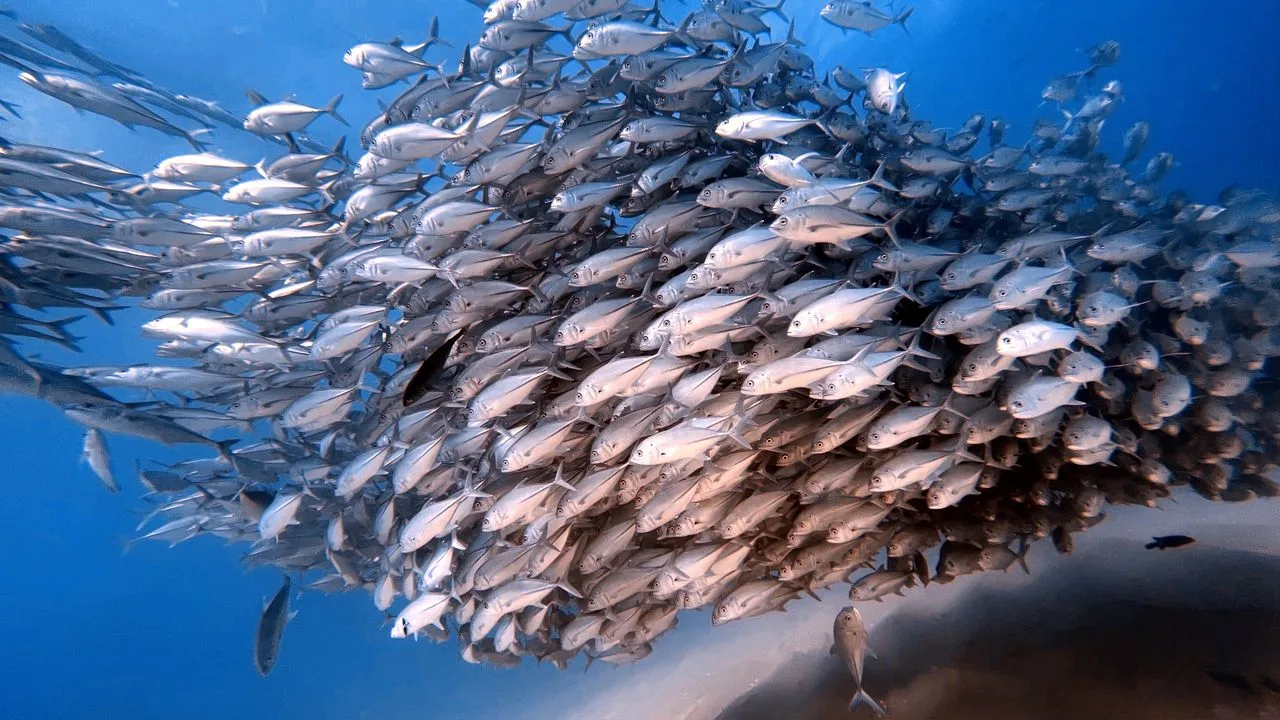
Then the bigger animals. Giant trevally hunting in packs. Dogtooth tuna appearing out of the blue at speed. Napoleon wrasse the size of a person. Whitetips and grey reefs working the drop-offs, blacktips patrolling the shallows. Turtles everywhere, to the point where you stop pointing them out.
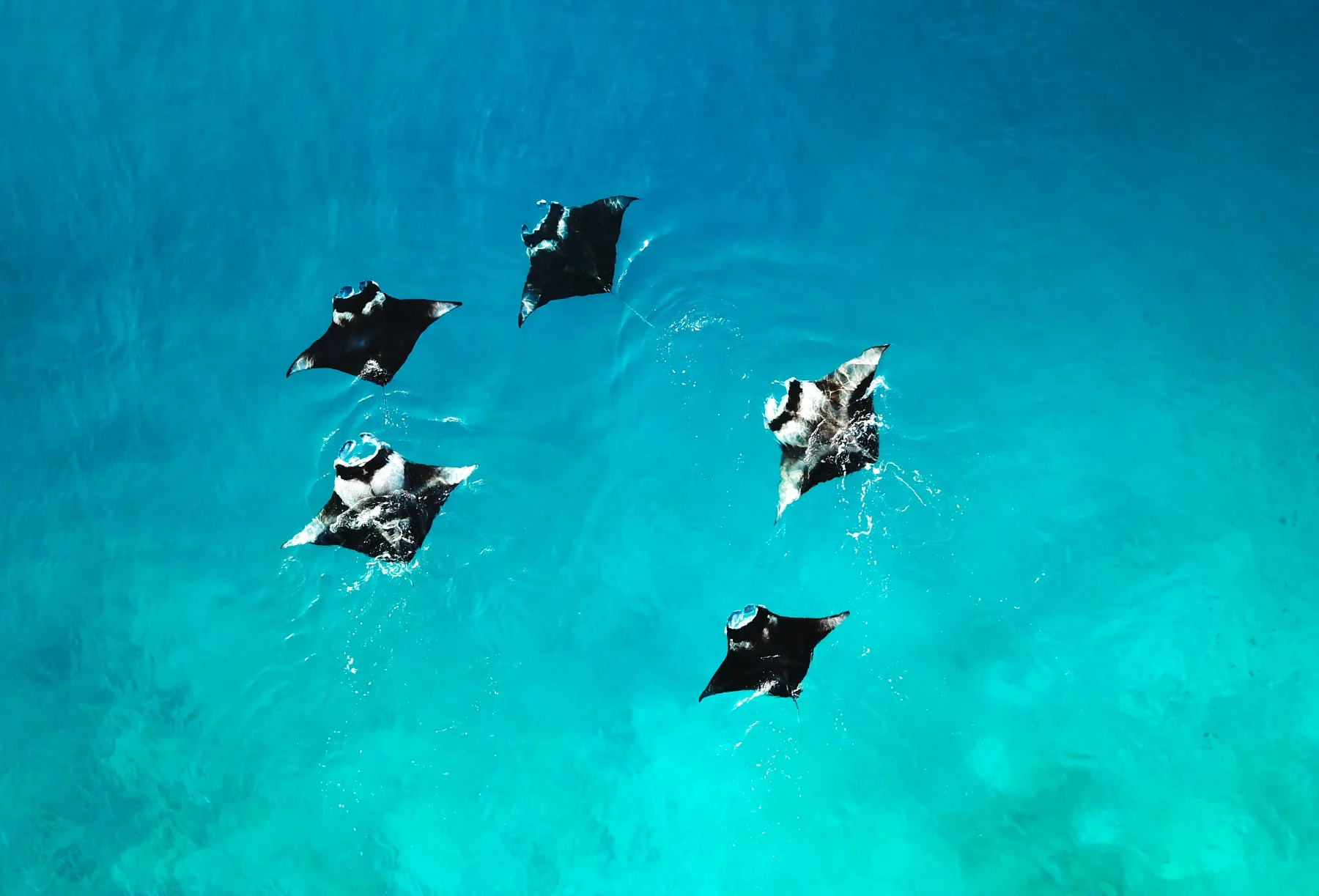
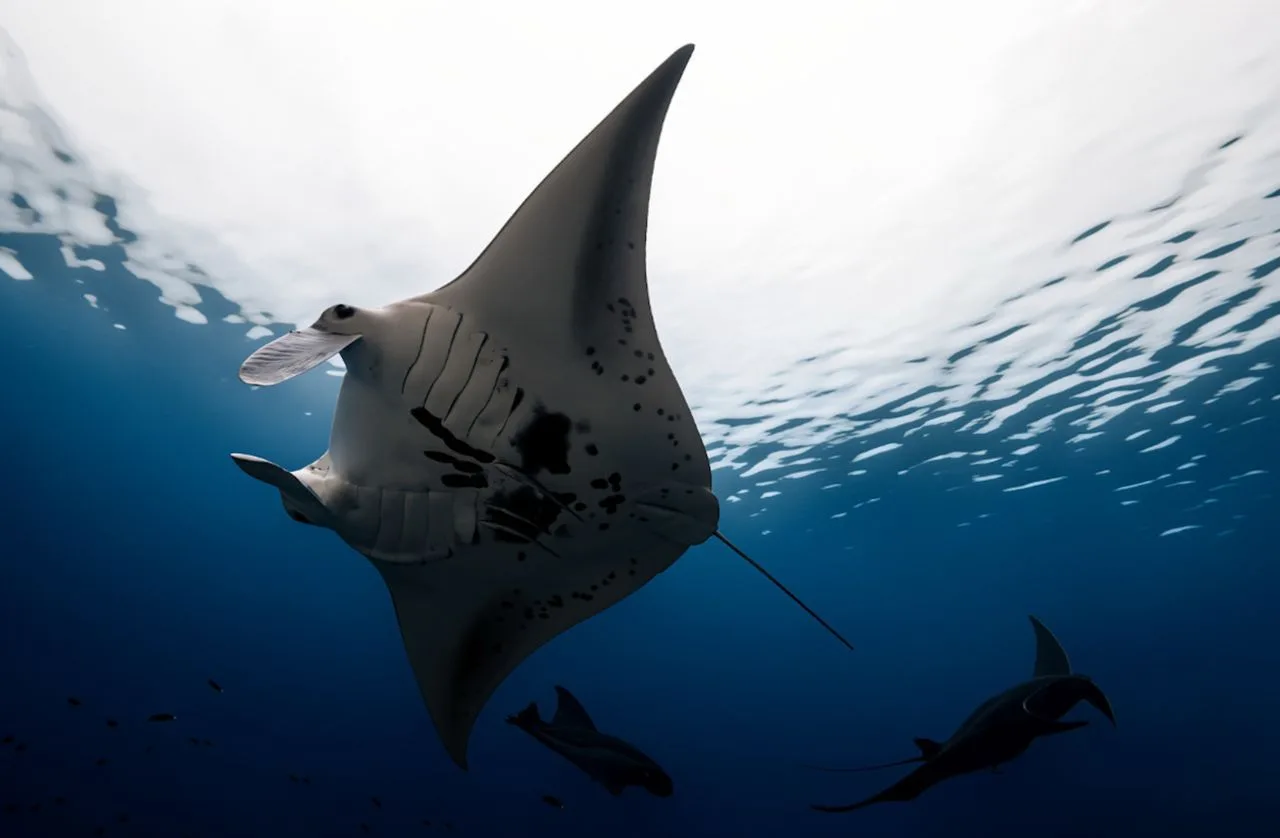
Mantas are the headline. Reef mantas gather at cleaning and feeding stations across the park, and when plankton is thick they stack up in numbers that are hard to describe without sounding like exaggeration.
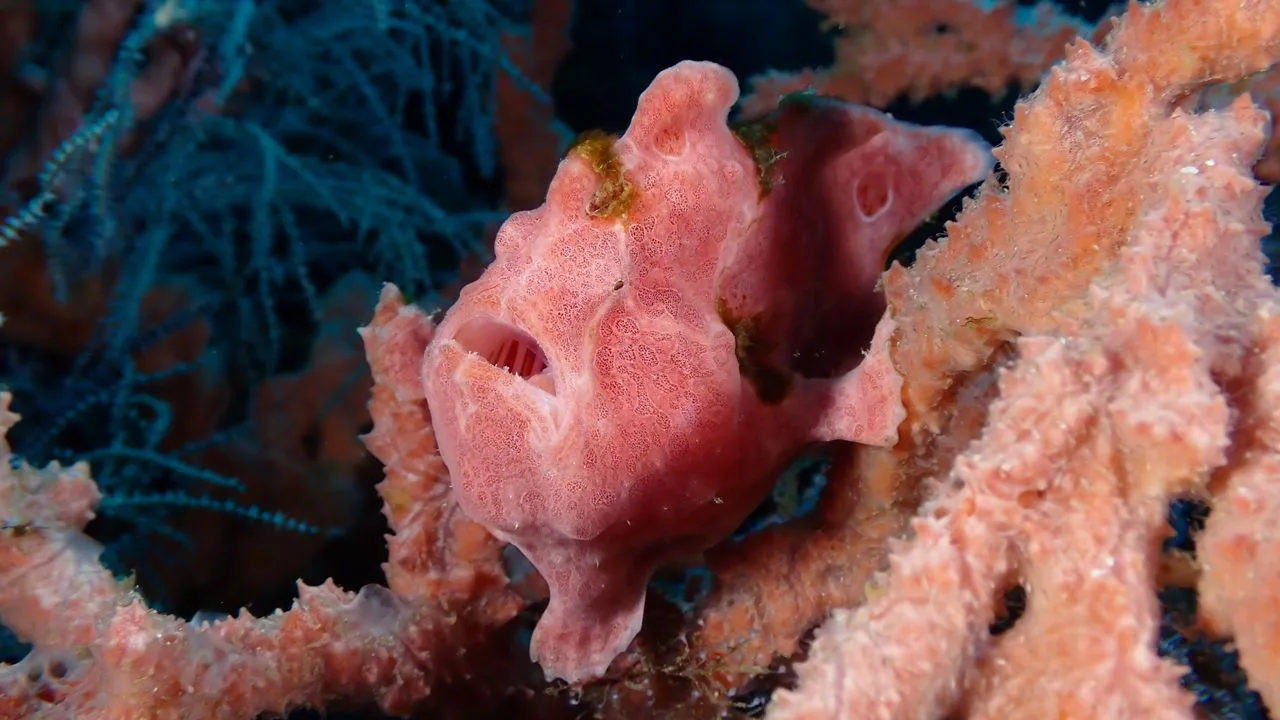
Then there is the macro, and this is where Komodo gets misrepresented. The critter list is superb: frogfish, mimic and blue ringed octopus, flamboyant cuttlefish, ornate ghost pipefish, mandarin fish at dusk, nudibranchs in numbers, pygmy seahorses on the southern sea fans. What gets left out is that almost none of it happens on the dives Komodo is famous for.
You do not shoot macro at Batu Bolong with the flow running. Holding position, framing a subject the size of a grain of rice and getting a strobe where you want it are not things that happen while water is moving you sideways. The macro lives on separate sites, dived on separate days, in completely different conditions.
Wainilu off Rinca is the main one, a shallow sandy slope with little current, a maximum of around 18 meters and visibility between 5 and 15 meters because of the silt. Siaba Besar is similar. Cannibal Rock in the south and the black sand slopes around Sangeang are the other two worth naming. Calm, slow, and nothing like the rest of the park.
So plan for it rather than hoping. Ask the operator which macro sites are on the itinerary before you book, because some skip them entirely to chase the big sites. Tell your guide at the briefing, because they are exceptional spotters and they will work for you if they know what you are after. And commit a dive to it rather than switching lenses mid trip and hoping the conditions cooperate. Underwater macro photography rewards patience and buoyancy more than gear, and in silt that goes double, because one careless fin kick ends the dive for everyone behind you.
Current, and How to Dive It
Current is the first thing people tell you about Komodo, and the reason some divers hesitate. The reason is straightforward: it’s not gentle. These are strong, fast-moving currents that shift with the moon and the site, and you don’t dive Komodo the way you’d dive a Caribbean reef.
But current brings everything. Nutrients. Movement. The pelagics that make you hold your breath. Komodo without current would be just another reef. Current is why Komodo is Komodo.
You need solid buoyancy control. Not buoyancy you’re still working on. Real control. You read water, adjust to it, stay calm while it moves you. If you’re still figuring out weighting at 20 meters, Komodo teaches fast and it teaches hard.
Some operators will take you regardless of experience. They exist. But be honest with yourself. You might survive Komodo, but surviving isn’t the same as enjoying it. The certification card doesn’t matter. Your actual skills do. Make sure you’re a competent diver before you book.
Moon cycles drive current strength. Full and new moons bring stronger flows. Plan your dates around your tolerance. Want gentler dives? Avoid the peak moon phases. Want the full-throttle experience? Time it for maximum flow.
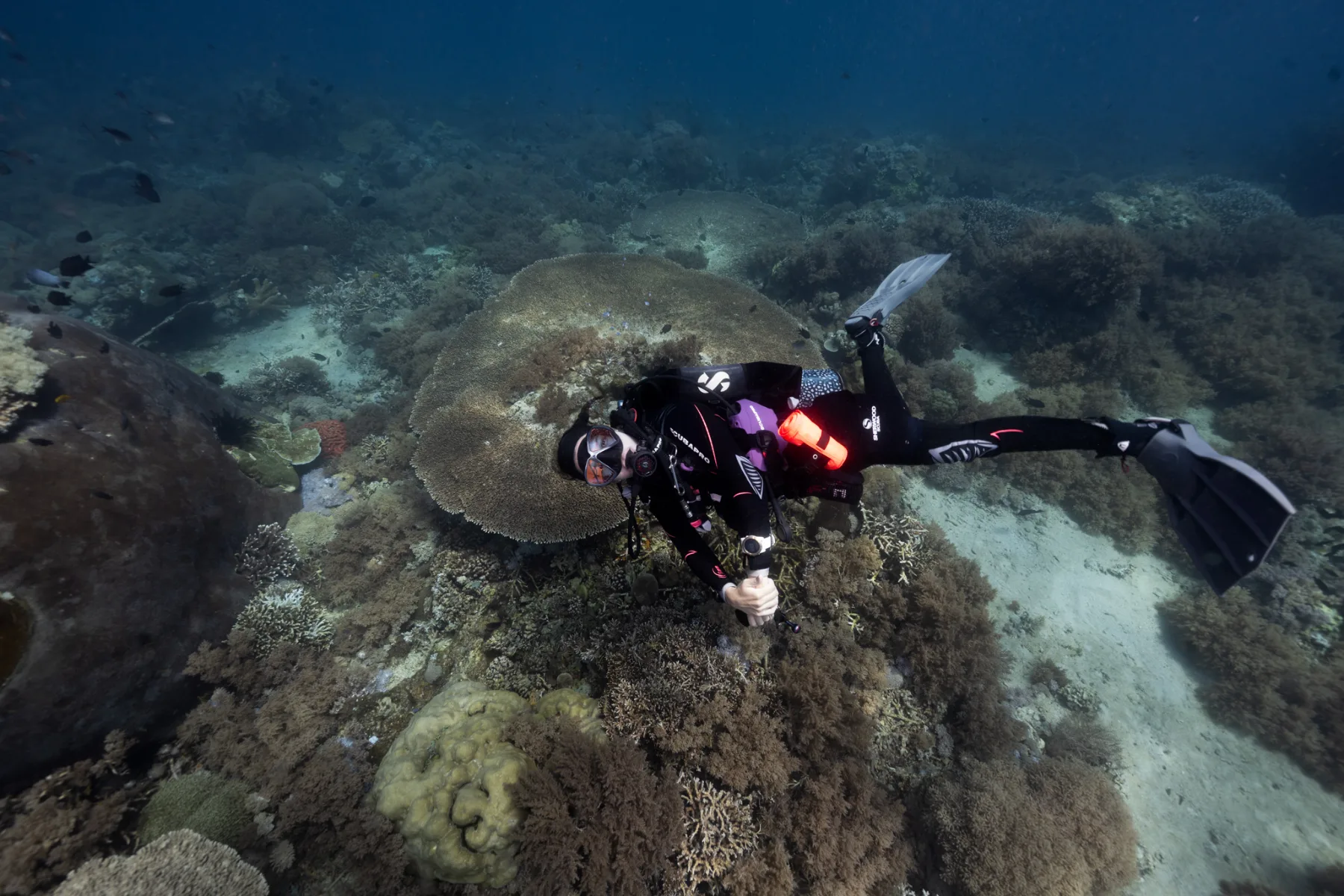
A few things that hold true on every dive here:
🌊 Listen to the briefing properly. Sites are dived in a specific direction for a reason, and the reason is usually safety rather than sightseeing.
🌊 Stay close to your guide. Conditions shift mid dive and you need to be near enough to see the signal when the plan changes.
🌊 Carry a DSMB and know how to deploy it under pressure. This piece of gear saves lives on every dive you make, not just here.
🌊 Consider a PLB if you are diving remote southern sites. Surface currents can move you a long way before anyone reaches you.
🌊 Negative entries are standard at several sites. Practice them somewhere easy first.
Gear That Earns Its Place in Current
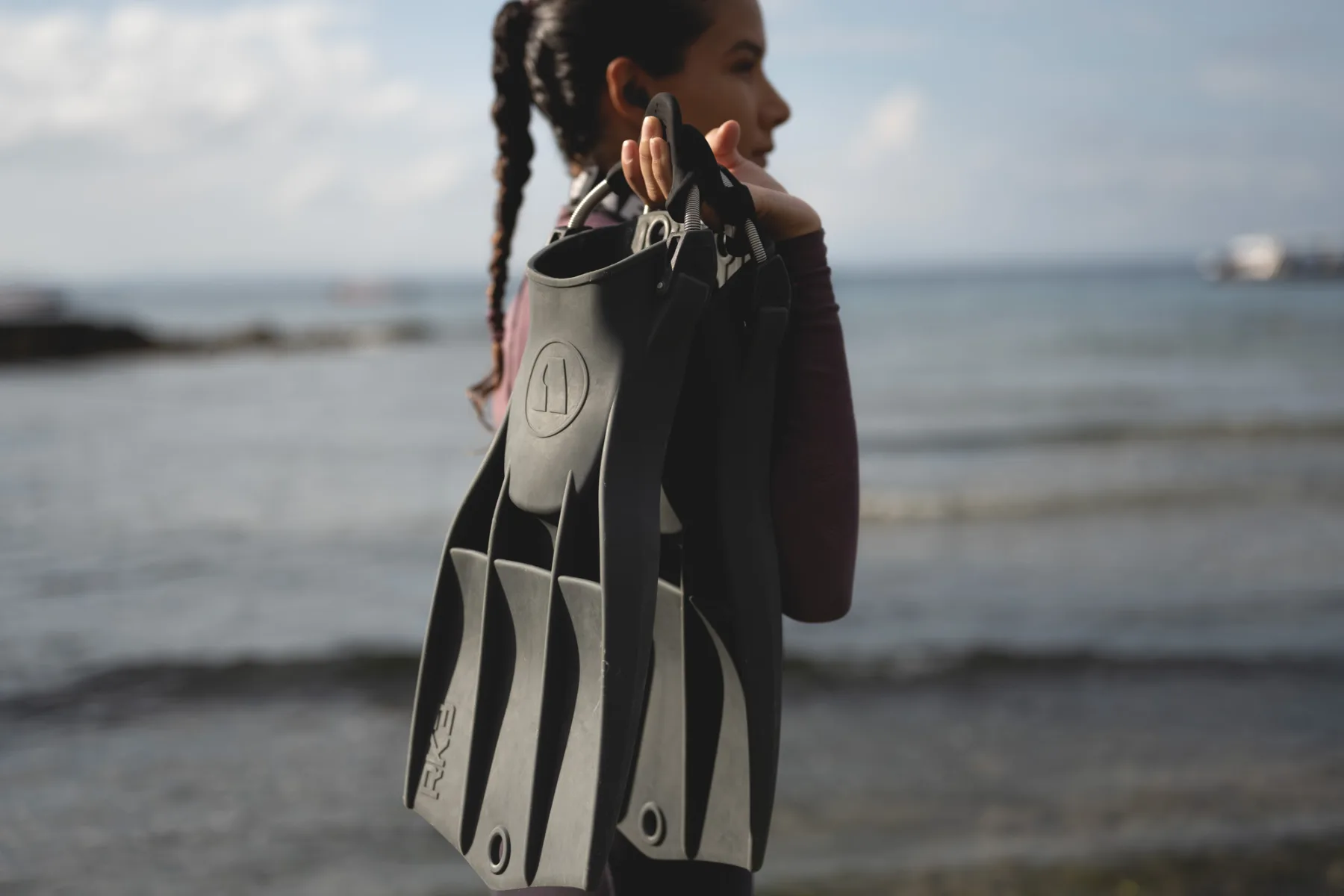
Fins matter more here than anywhere else you are likely to dive. When current is running you are making real propulsion decisions, sometimes for minutes at a time, and soft or badly fitted fins turn that into a fight you lose. Stiffer blades and a fin you can frog kick, flutter and back kick in will change your day.
Bring your own if you have them. Rental fins are a lottery and Komodo is a poor place to discover you drew badly. How to choose scuba diving fins covers what actually separates a blade that works from one that looks good on a shelf. But I can tell you; you can’t go wrong with the Apeks R3K, Tecline LightJet or Mares Avanti Quattro fins. . A reef hook is worth packing for the pinnacle sites, where the plan is often to hold position and watch rather than swim. Learn how to use this tool so you don’t end up causing harm to the reef by hooking it onto living corals (which as you know, are animals) or sponges. Gloves are restricted inside the park, so check with your operator before you count on them. Carry a torch as well. Not for night dives, for being found. Groups get strung out in current and separations can happen quickly, and a beam is the fastest way to show your guide and your buddies where you are.
As mentioned before, a DSMB is essential and most dive operators require it anyway.
When to Dive Komodo
May through October is dry season. Visibility sits at 15-30 meters depending on the specific dive and month. Calmer conditions overall. Liveaboards return here from other regions, so operator choices widen. This is the straightforward time to go if you want predictability.
November through April, wet season arrives. Visibility drops. Rain itself doesn’t change underwater conditions, but the nutrient wash from it does. Pelagics show up. If manta rays are your target, this season often delivers. You trade clarity for life.
June through August is peak season everywhere in the region. Tourist boats stack up at sites. Land excursions get crowded. If you want quiet dives and the ability to explore without seeing other groups constantly, avoid these months.
Water temperature runs 24-29°C depending on depth and location. Southern areas and deeper sections run cooler. A 3mm wetsuit handles most diving here. If you’re doing multiple dives daily or heading deep, 5mm makes more sense, especially in the south.
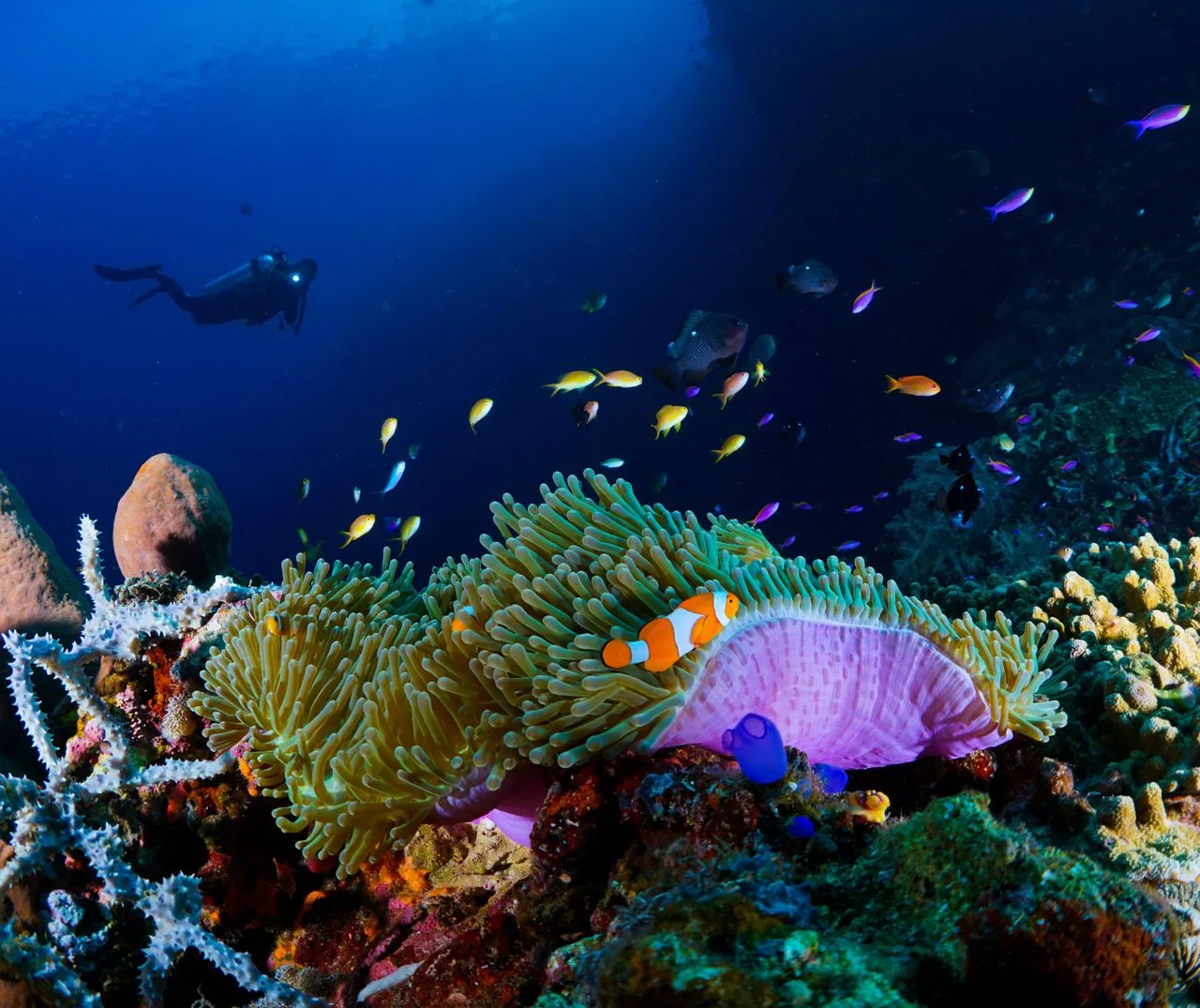
Komodo’s Specific Dive Sites
Batu Bolong is a small rock surrounded by current. The protected side drops steeply, the shallows above dense with fish. You watch pelagics come out of blue water while reef details layer the wall below you. Managing focus on multiple planes at once becomes necessary here.
Castle Rock delivers what the name suggests. Coral pinnacles rise from a 20-24 meter shelf toward the surface, creating structure that works. Sharks patrol. In the right season, manta and eagle rays move through.
Crystal Rock splits and channels current through a gap. You feel the force. Settle into the protected side and watch predators hunt the current seams. Tuna. Trevally. Jacks working in formation. Sharks reading the flow.
Manta Alley is in the south and holds feeding and cleaning stations close together. When conditions line up, divers report aggregations of several dozen mantas in a single dive. The water runs 25-27°C here, colder than other sites, worth factoring into exposure protection.
Cauldron (called Shotgun at speed) delivers the rush. Strong current accelerates you or pins you to a wall depending on where you settle. The ride spits you into a broader cauldron area. Coral gardens follow. Your heart rate spikes, then settles as anthias clouds and glassfish schools drift past.
Tatawa Kecil. Worth naming because of the down currents. On the right day it is superb, with healthy hard coral, sharks, a cleaning station and pygmy seahorses in a cave around 24 meters. On the wrong day it belongs to very experienced divers only. Trust the guide’s call.
Wainilu. The opposite of everything above, and the reason to check your itinerary. A shallow sandy slope off Rinca with almost no current, sitting under 18 meters, where the whole point is going slowly. Mandarin fish at dusk, mimic octopus, frogfish, blue ringed octopus, nudibranchs. Visibility is poor by Komodo standards because of the silt, which is exactly what the critters live in.
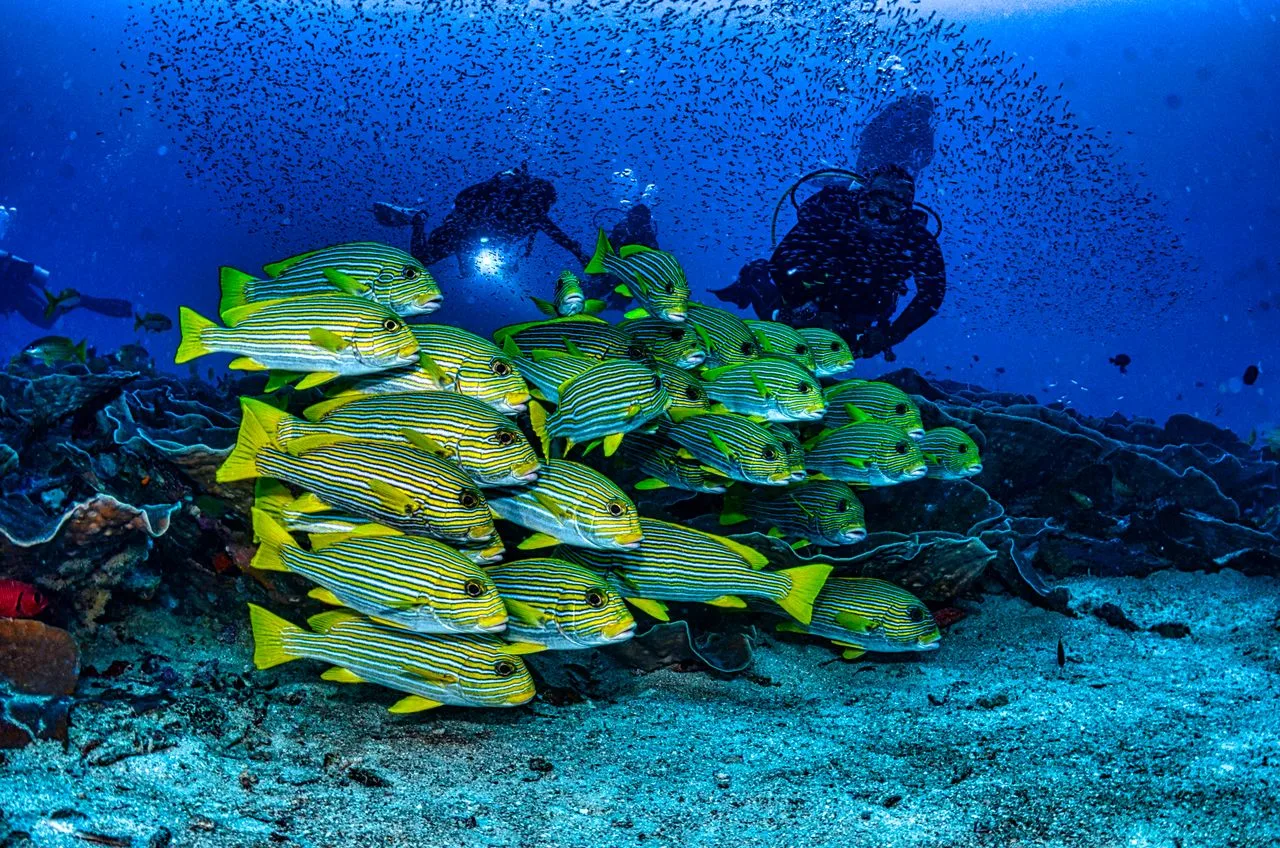
Liveaboard or Land-Based
Day boats run from Labuan Bajo on Flores, which is well connected by domestic flights from Bali and Jakarta. They reach the central sites comfortably. What they cannot do is reach the south, where the mantas and the quieter diving are.
A liveaboard fixes that. Three day trips cover the central highlights. Seven to ten days get you the whole park, the southern sites and often a run out to Sangeang, an active volcano with black sand muck diving that feels like a different country to the reefs you were on that morning. Four dives a day is standard, sometimes five with a night dive.
Land based makes sense on a tighter budget, a shorter trip, or if boats are not for you. You sleep still, eat off the boat, and dive one or two tanks a day. Several operators sit outside town specifically to reach the sites ahead of the day boat traffic.
Park fees apply on top of your diving and are usually bundled by the operator. Rates have changed more than once in recent years, so confirm what is included before you book. Those fees are also the budget for the ranger patrols and the mooring lines, which is the difference between marine protected areas that work and the ones that exist only on a map. Komodo is in the first category, and the diving you came for is the reason why.
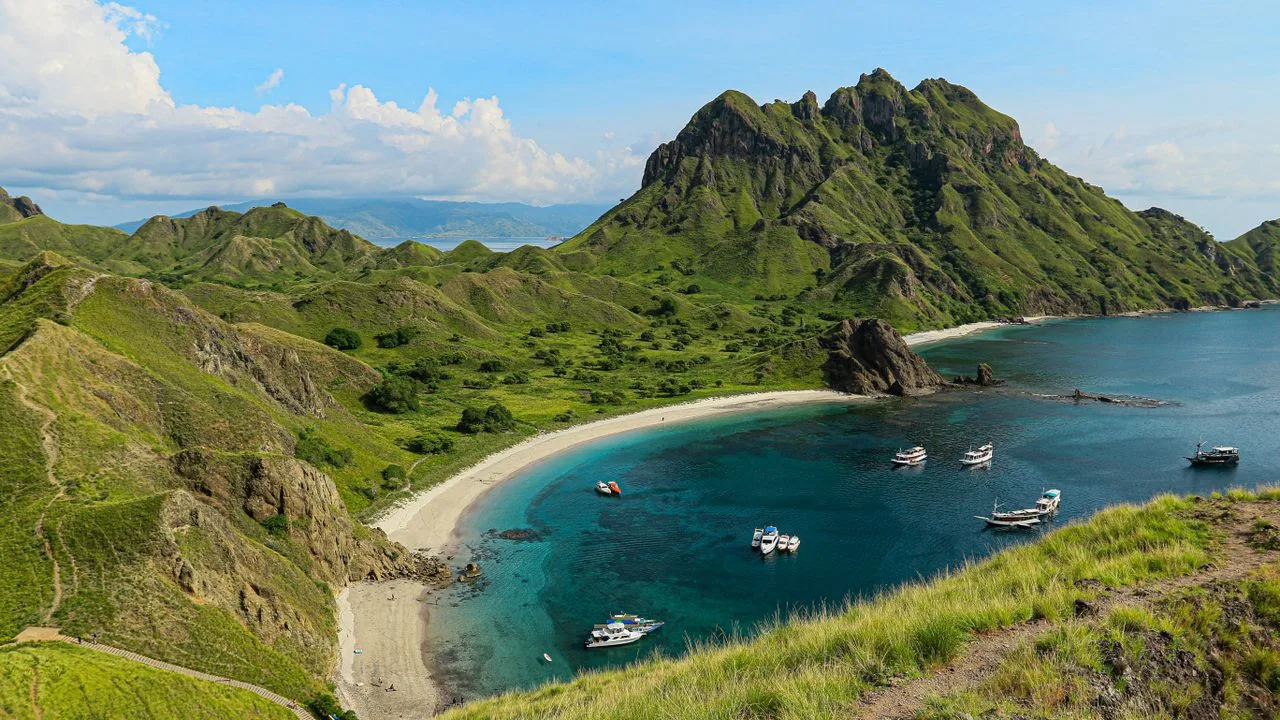
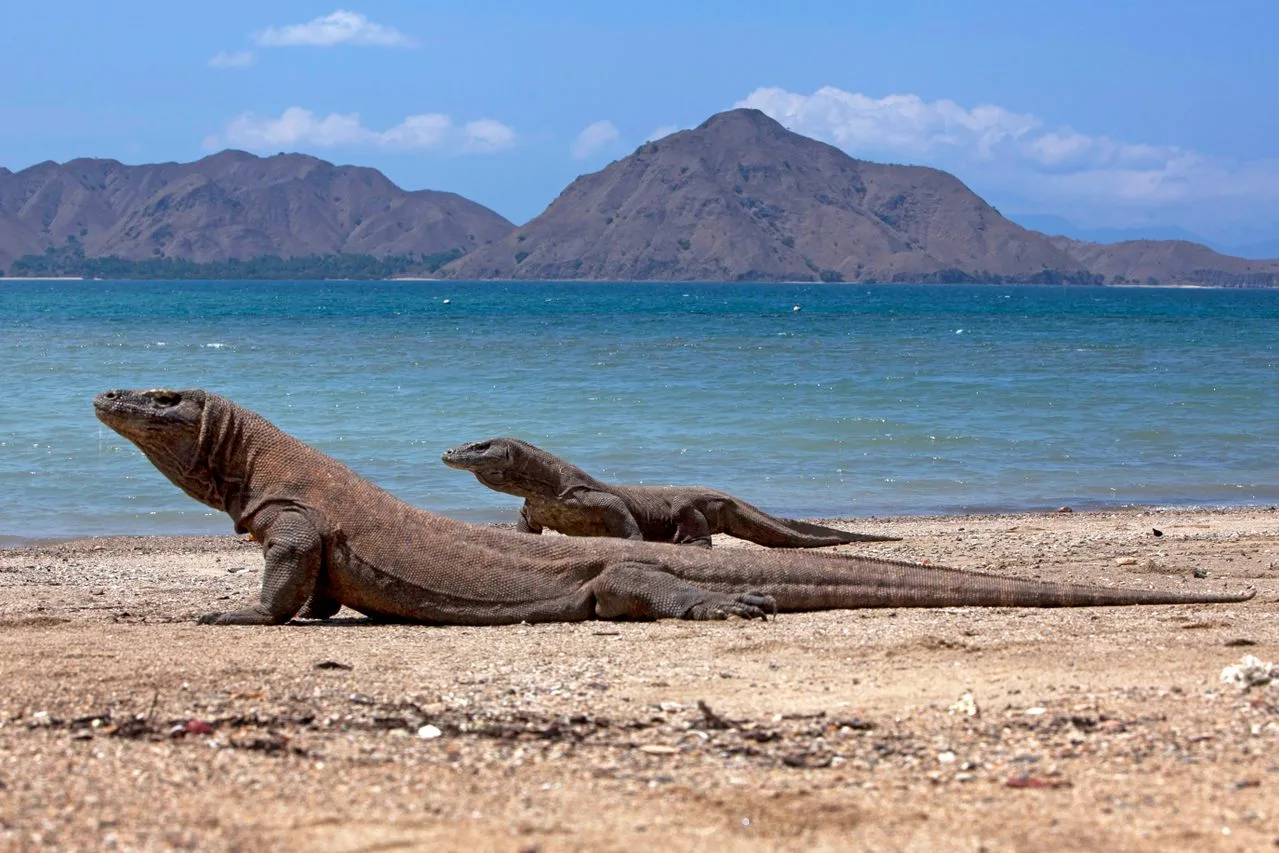
Both options put the land excursions within reach. Komodo dragons are on Komodo and Rinca islands, walked with a ranger, and worth the hour if your itinerary allows it. Padar has the viewpoint over three differently colored beaches that every photo of this region seems to come from, best at sunrise or sunset and busy in peak season. Kalong Island empties thousands of flying foxes into the sky at dusk, which is the kind of thing that sounds ordinary and is not. Plenty of divers skip all of it and stay on the boat, which is a legitimate way to spend the week.
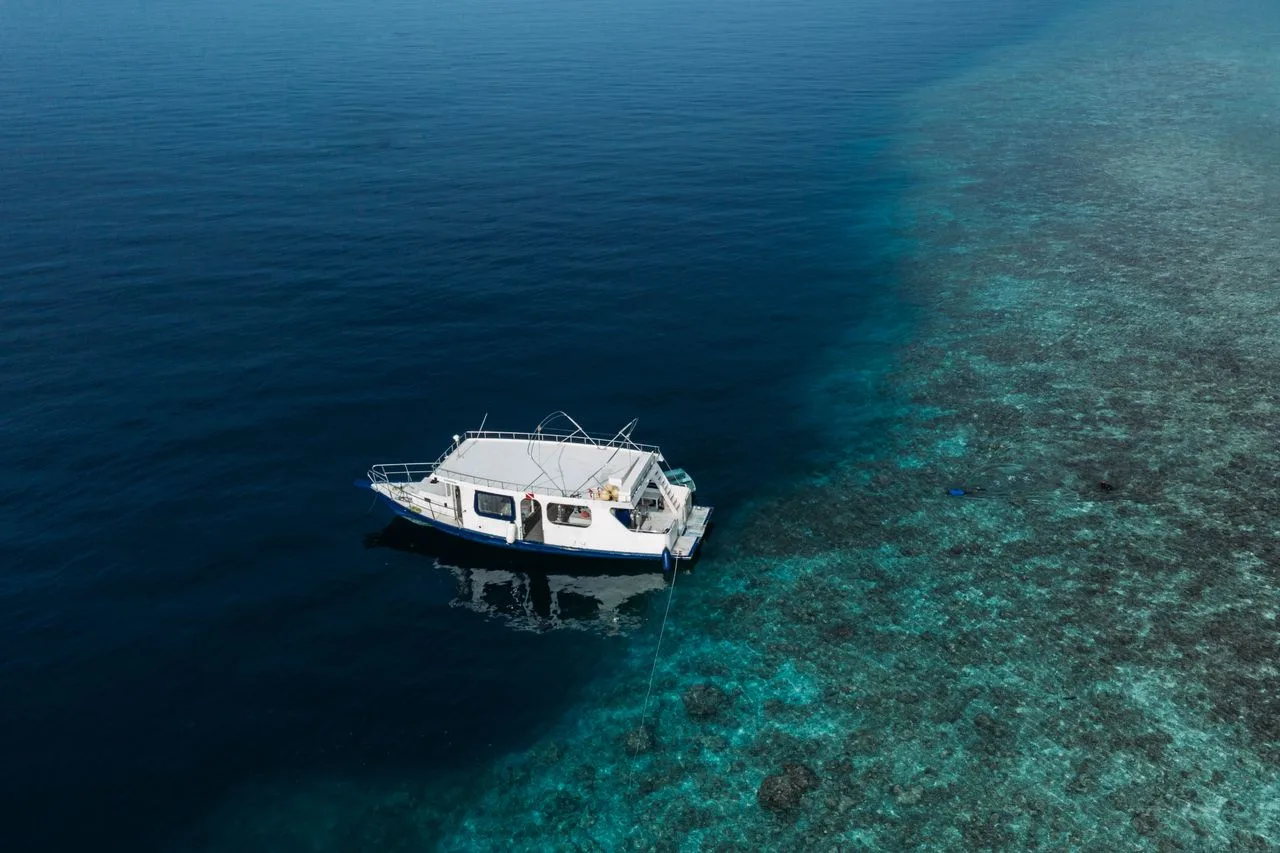
What Komodo Requires
This is the recap, not a new list: buoyancy that holds without thought, real time behind you in current rather than a card that says you should have it, and the discipline to admit which one you are actually short on before a guide has to find out for you mid dive.
Most liveaboards ask for 50 or more logged dives and Advanced certification. Some operators will take you with far less, and that gap between the rule and what gets enforced is exactly where things go wrong. The card matters less than what you can actually do in the water.
Then trust your guide completely. These people dive these sites every day, they read the water in real time, and they will change the plan mid dive when it needs changing. Stay close, watch for the signal, go with it.
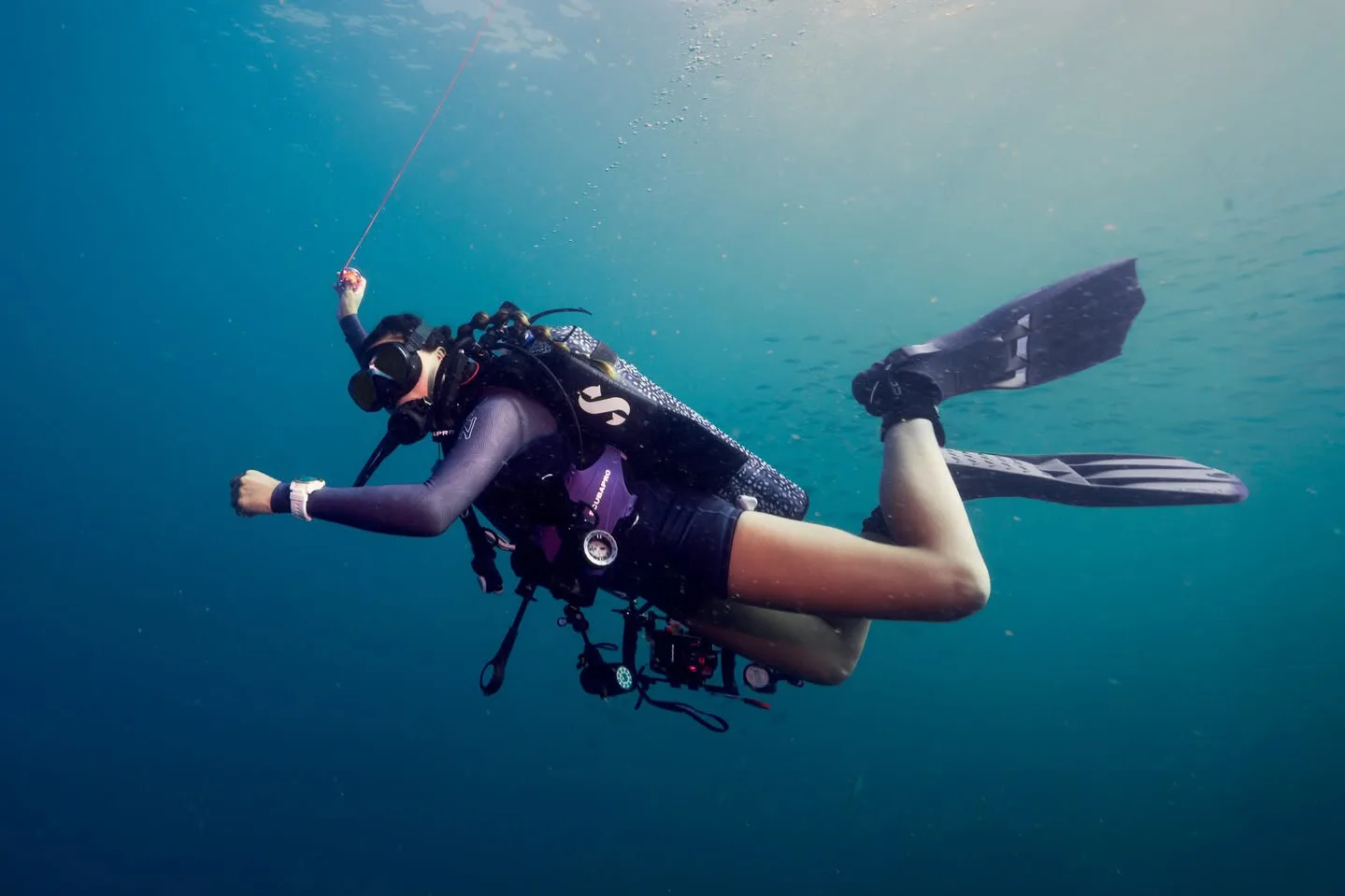
Komodo is one of the few places that still delivers everything it promises. Go prepared for what it asks of you and you come out the other side a sharper diver than you went in, having had one of the best weeks of diving available anywhere, which is not a bad trade for a bit of homework beforehand.
And if you read the requirements and still think you are not there yet, that is worth listening to rather than arguing with. Indonesia is enormous and generous with places to build those skills first. Diving Amed, Bali Indonesia is shore diving over black sand with no current to fight and plenty to look at, which is close to ideal for working on buoyancy and trim. There are more of them in scuba diving destinations. Komodo is not going anywhere. Come back when the water will feel like an invitation rather than a test.
And if you feel like you’re ready for it, enjoy! 🤙🏽
Bonus Travel Information
How to Get to Komodo, Indonesia
Everything starts at Labuan Bajo, a harbor town on the western tip of Flores. It is the gateway to the park and there is no way around it. Day boats leave from the harbor, liveaboards board in town, and the dive shops are all within walking distance of each other.
Flying in. Komodo Airport at Labuan Bajo takes domestic flights only, so you are connecting through Indonesia wherever you start from. Bali is the usual hop at around an hour and a half, with several flights a day. Jakarta is roughly two and a half hours, Surabaya a little less. Flights are small and they get cancelled or shuffled in bad weather, which matters more than it sounds.
Give yourself a buffer night. Liveaboards board the afternoon or evening before the first dive day and they leave on schedule. A delayed domestic connection is an ordinary event in Indonesia, and it is a miserable way to lose a week of diving you already paid for. Fly in a day early, sleep in Labuan Bajo, board relaxed. Do the same on the way out if you are connecting to an international flight, and remember the no fly window after your last dive.
Arriving by sea. Pelni ferries call at Labuan Bajo as part of the national network, which is slow but cheap. There are also multi day boat trips that run from Lombok through Sumbawa and arrive in Labuan Bajo, usually stopping at Moyo, Satonda and Komodo itself along the way. These are travel experiences rather than dive trips, so treat any diving on them as a bonus.
Visas. Most nationalities get a visa on arrival for Indonesia, currently around IDR 500,000, valid for 30 days and extendable once. It can be applied for online before you travel to save queuing. Rules change, so check your own passport’s situation close to your travel date rather than trusting a blog, including this one.
Getting around town. The airport is a few minutes from the center and taxis or hotel transfers cover it easily. Labuan Bajo itself is small enough to walk, though it has grown fast in the last few years and the traffic on the main road reflects that.
What it costs to enter the park. Park fees are charged on top of your diving, with separate line items for entry, ranger fees and diving, and they change periodically. Most operators bundle them into the trip price, but not all of them, so ask exactly what is included before you pay a deposit.
Happy diving! 🫧