Diving in Cozumel starts with giving up an idea most divers arrive holding: that you are the one moving.
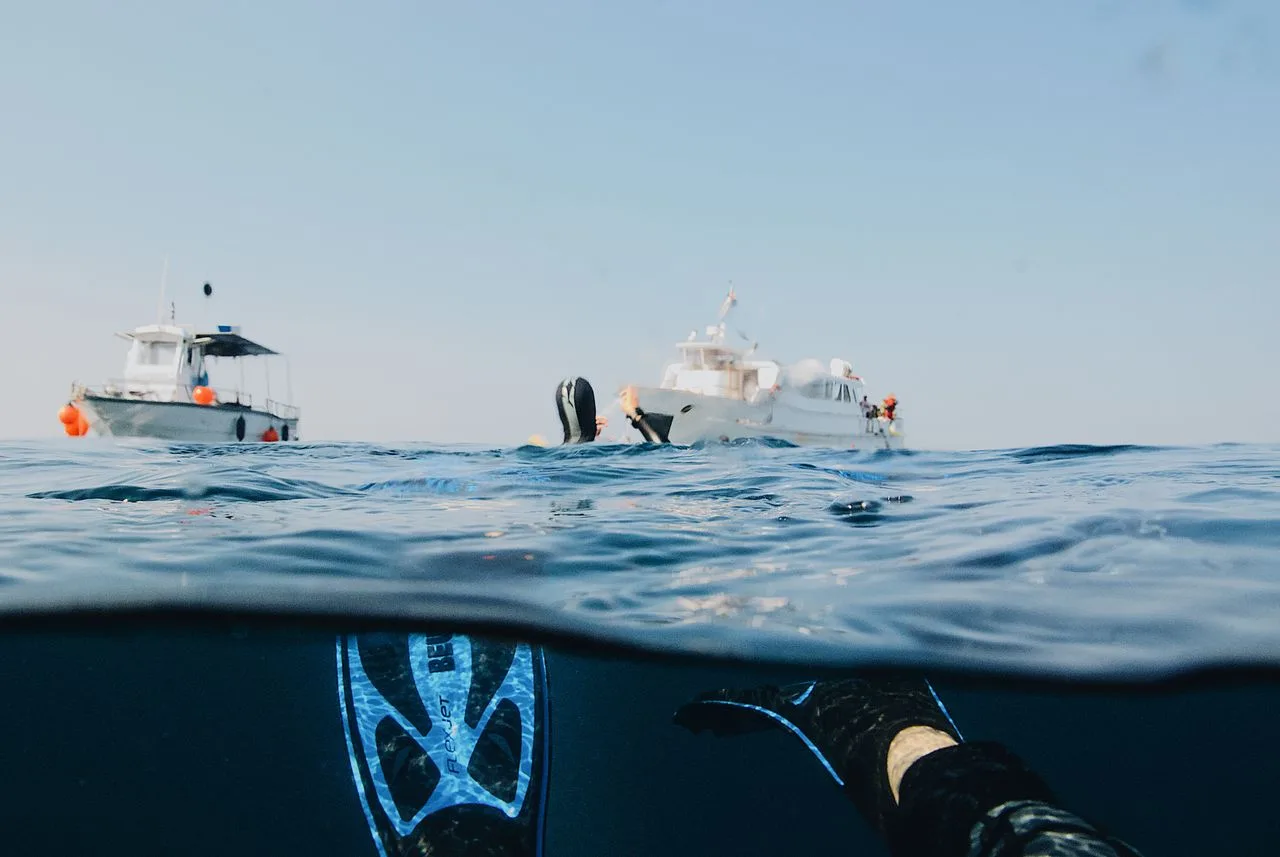
You are not. The current is. It runs along the western coast of the island, fed by the Yucatan Current pushing through the Cozumel Channel, and it has decided the direction of your dive before you finish your buoyancy check. The boat drops you upcurrent. You descend. The reef starts sliding past. Forty-five minutes later you send up a marker and the boat comes to find you.
That structure is the destination. It changes what a dive costs you physically, and it changes what you have left over to notice while you are down there.
There is a second thing worth saying up front, because most guides to this island skip it. Cozumel lost close to half its coral cover in the space of a few months in 2018 and 2019. The diving is still excellent. Both of those are true at once, and you deserve to know both before you book.
Why Cozumel Dives Unlike Anywhere Else in the Caribbean
Cozumel sits inside the Mesoamerican Barrier Reef, the second largest reef system in the world, running from the tip of the Yucatan down past Belize and Guatemala to Honduras. Almost all the diving happens on the western and southern coasts. The eastern side faces the open Caribbean and is too exposed for recreational diving on most days.
Three things separate this island from the rest of the region.
The channel. Deep water cuts Cozumel off from mainland Mexico, so the island does not receive the coastal runoff, sediment and sargassum that regularly wreck conditions along the Riviera Maya. When the mainland beaches are brown, Cozumel is usually still clear.
The visibility that comes with it. A slow day here gives you 18 to 20 meters. A good day runs past 30, sometimes past 36. Drifting a vertical wall in that kind of water, reef falling away below you and nothing but blue on the other shoulder, is a spatial experience most Caribbean reef diving cannot offer.
The protection. Parque Nacional Arrecifes de Cozumel was declared in 1996 and covers roughly 12,000 hectares of the western reef system. It is not a paper park. Mooring buoys instead of anchors, rotating site closures that rest reefs on a cycle, patrol boats, and rules that operators actually enforce. Compare it to unprotected reef on the same barrier system and the difference is visible on the first dive.
Cozumel Is a Drift Diving Island
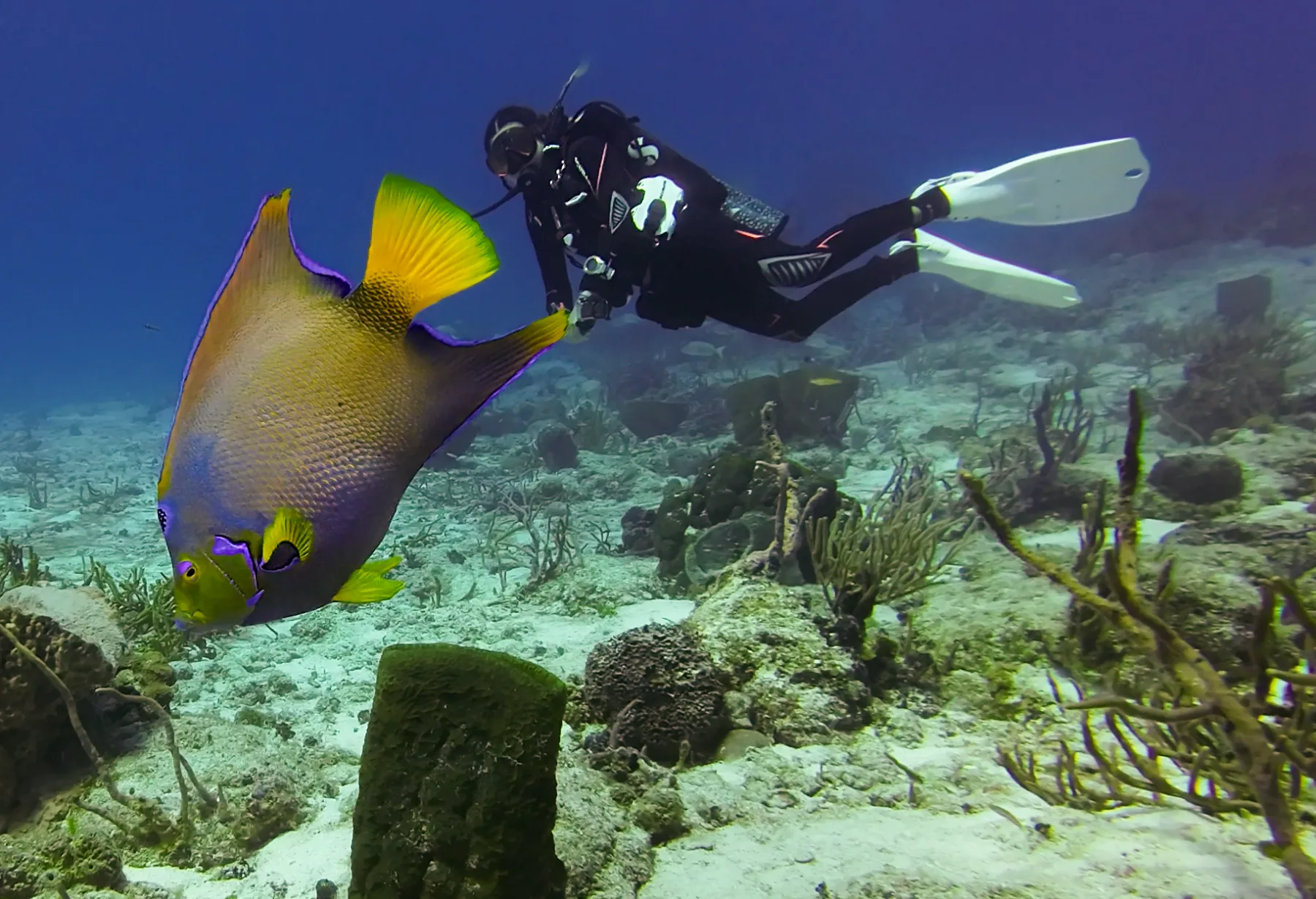
Drift diving means moving with a sustained current rather than swimming against it or holding a fixed spot. There is no return leg. The boat tracks you from the surface and collects you wherever you finish.
The mechanics are simple. Giant stride or back roll, descend, orient to the reef, let it start moving. The guide leads. You stay behind the guide and off the reef. At the end you ascend under the guide’s marker buoy, hold your stop, and surface into a boat that is already coming for you.
What surprises people is not the current. It is what falls off the dive once the water is doing the work. No navigation. No fixed reference to keep tabs on. No constant low-level finning just to stay in one place. Breathing slows without you deciding to slow it. Buoyancy settles, because you are not fighting your own propulsion. Air lasts longer, and not because you got fitter overnight.
Current here usually sits around 1 to 2 knots. It can run a good deal harder, especially at the far northern and far southern sites and during seasonal transitions. It is not constant, and it does not always run the way the guidebook says. Wind, season and whatever is happening out in the channel all move it. This is why site selection happens on the morning of the dive, by someone who has read the water, and why a slick website counts for nothing against twenty years of local knowledge.
You do not need a drift specialty. Open Water covers most of the island. What matters is functional buoyancy: holding a depth without wild overcorrection when the water shoves you. If that is still coming together, say so at the briefing rather than after the dive. Cozumel is a reasonable place to build it, because the current takes one variable off your plate.
One piece of gear worth thinking about before you fly. Drift diving rewards fins that give you control in moving water rather than raw speed, and a bad fin choice shows up the moment you need to hold position against a push. If you are reassessing your kit, my guide to choosing scuba diving fins covers what actually matters. Bring your own SMB and know how to deploy it, even when the guide is carrying one.
The Cozumel Dive Sites Worth Planning a Trip Around
There are more than 30 named sites along the western and southern coasts. This is not the full inventory. These are the ones that define what the island is.
Paradise Reef
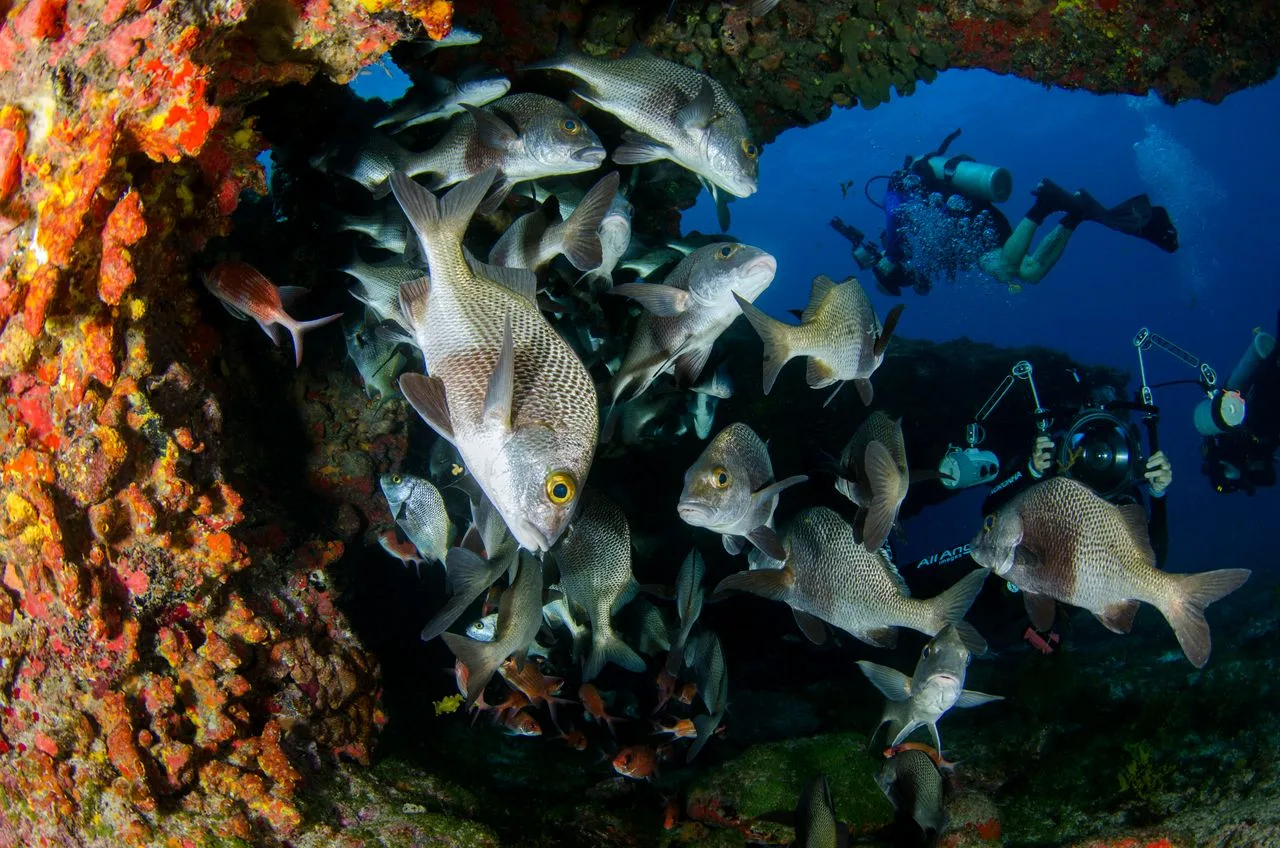
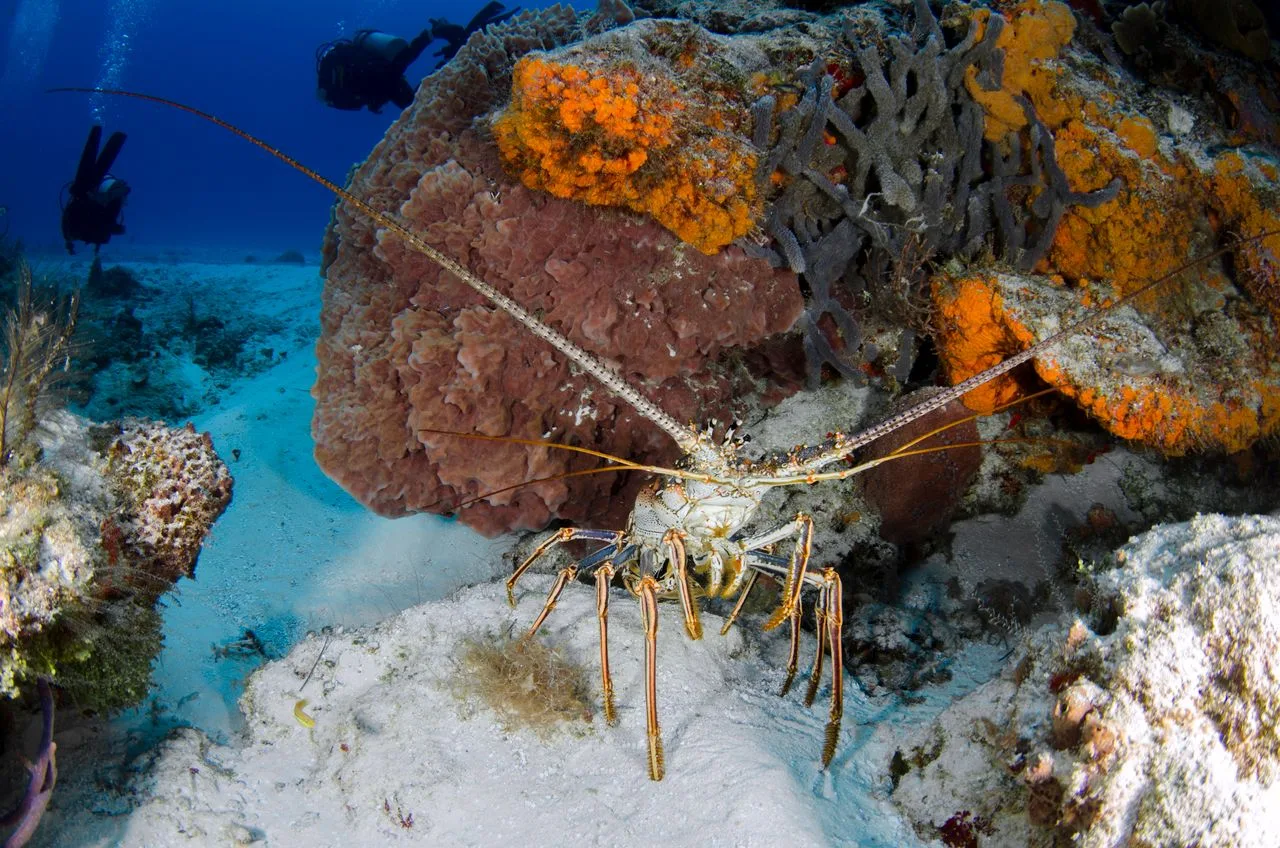
The closest reef to town and the one wall divers write off. That is a mistake. Three parallel strips of reef running shallow and mild, with more packed into them than reefs twice as deep manage: schools of grunts and snappers that open around you, angelfish, lobster antennae poking out of every gap.
It is the right first dive of any trip. The current is gentle enough that you can find the drift rhythm without anything else demanding your attention, which matters more than people admit on day one of a trip when the gear feels unfamiliar and you are still shaking off the flight.
After dark it becomes a different site entirely, and the best night dive on the island. Octopus out in the open, squid hanging in the water column, and the toadfish calling from somewhere you will never pinpoint.
Level: Any certification. The best opening dive of a trip and the best night dive on the island.
Palancar Reef
The name everyone knows before they book. What nobody tells you is that Palancar is four separate dives, and the section you get changes the day completely. Ask which one you are diving.
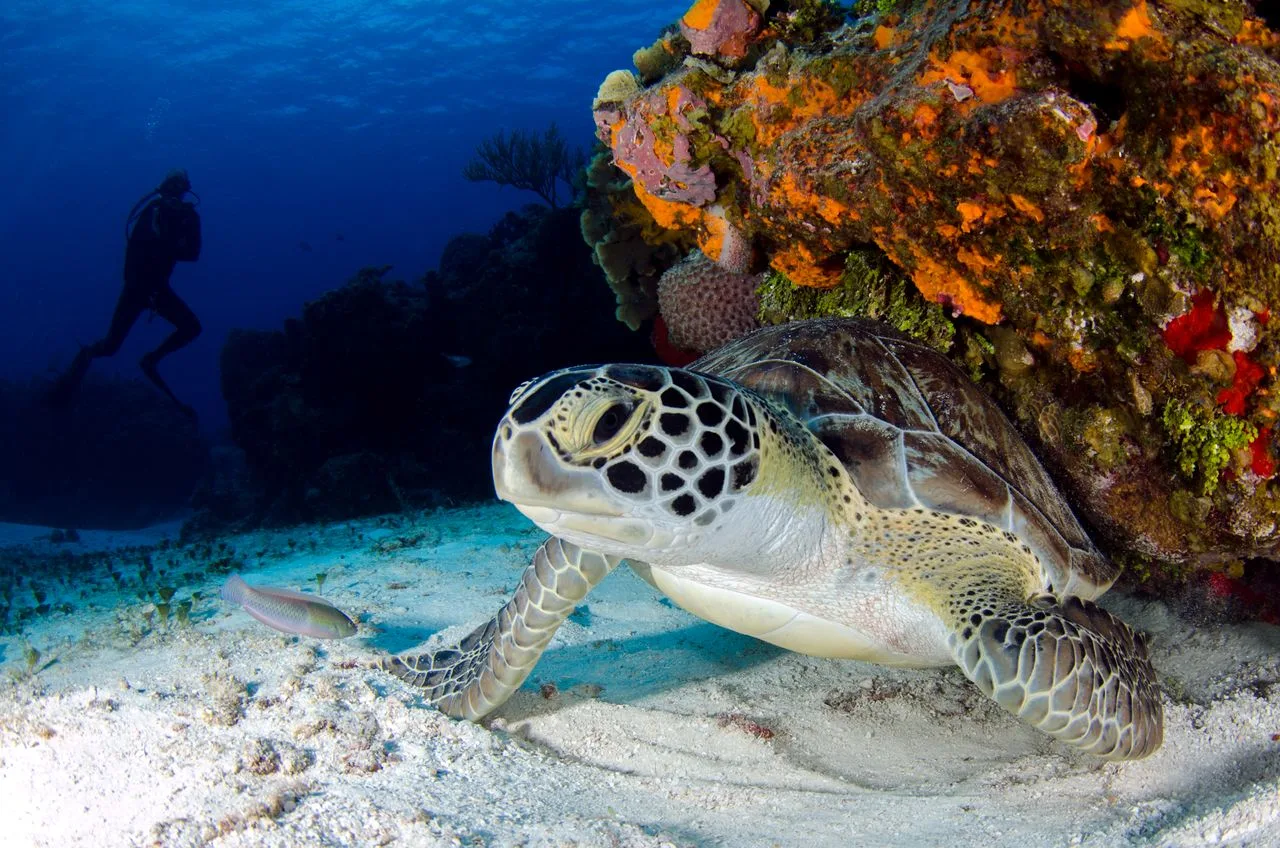
Gardens is the gentle one: a broad coral platform, easy current, turtles on most dives. It is not a watered-down Palancar, it is its own dive, and any certified diver can do it well.
Caves is the stretch that shows up in every photograph of this island. Tunnels and overhangs cut through the reef and open onto blue, the drift slows enough inside them to actually hover, and the light dropping through the gaps is why photographers keep coming back to this one site for years.
Horseshoe and Bricks go deeper and pull harder. Tall coral pinnacles separated by sand chutes, tunnels leading out into open water and back. This is the full wall version of Palancar and it asks more of you.
Level: Gardens suits any certification. Caves and deeper want Advanced and some comfort in current.
Santa Rosa Wall
The dive people come to Cozumel for and the one they talk about afterward. A sheer vertical wall with a steady, often quick drift running along it. Reef on one shoulder, open blue on the other, nothing below.
Barrel sponges big enough to climb into. Sea fans laid flat by the flow. Schools that travel with you for a stretch and then are simply gone. The pace is what makes it: you are not swimming, you are being moved past something enormous, and the sensation is closer to flying than to diving.
This is not the site for a first drift. The current can pick up without much warning and the wall gives you no reference below. Come here once you have a few Cozumel dives behind you and it will be the best one of the trip.
Level: Advanced, with drift experience. Not a first drift dive.
San Francisco Reef
The site that fills the gap most divers actually need filling: past the easy patch reefs, short of full wall exposure. Mild to moderate current, and a reef that changes character as you move along it. Low and spread out at one end, wide tunnels through the middle, swim-through passages at the other.
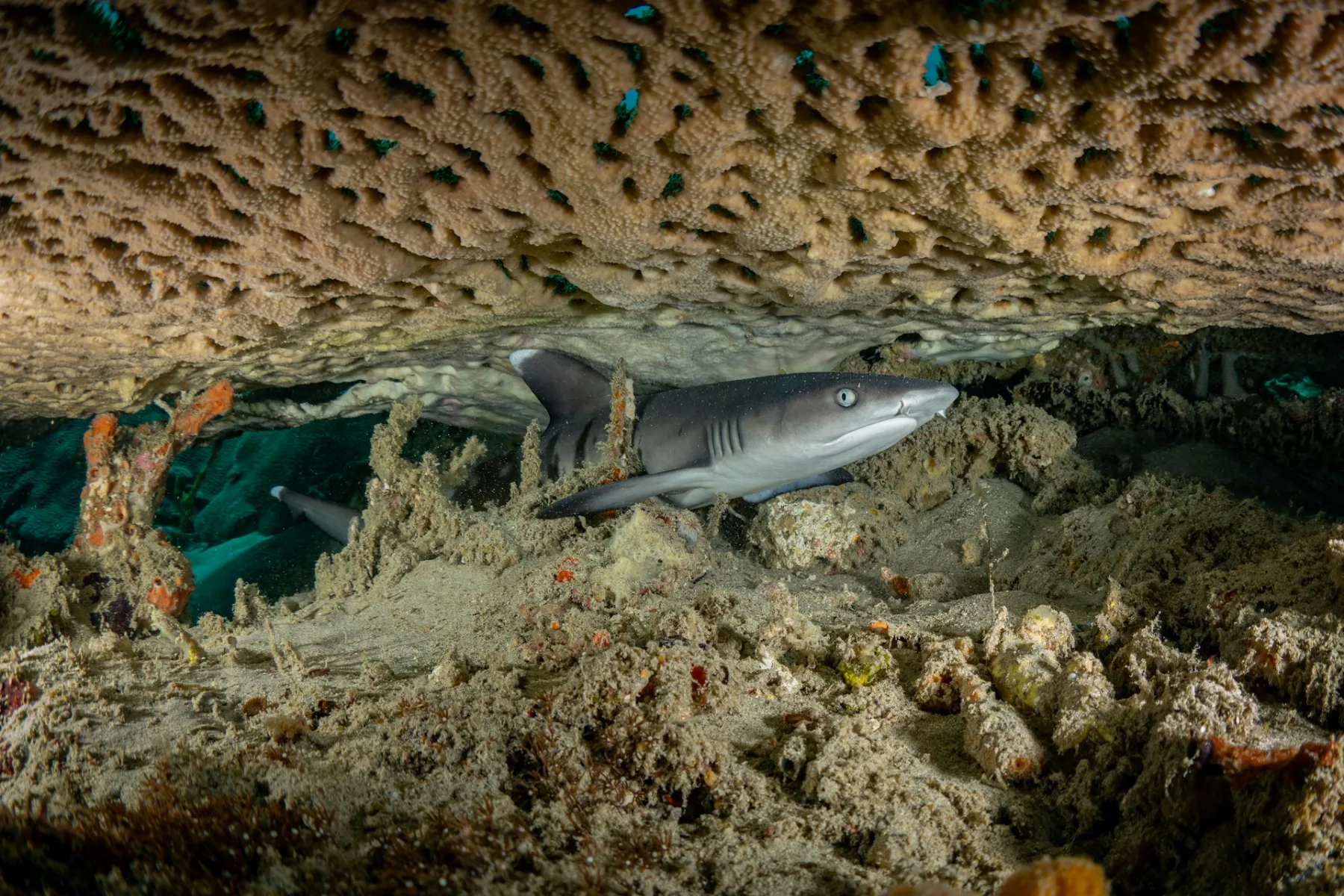
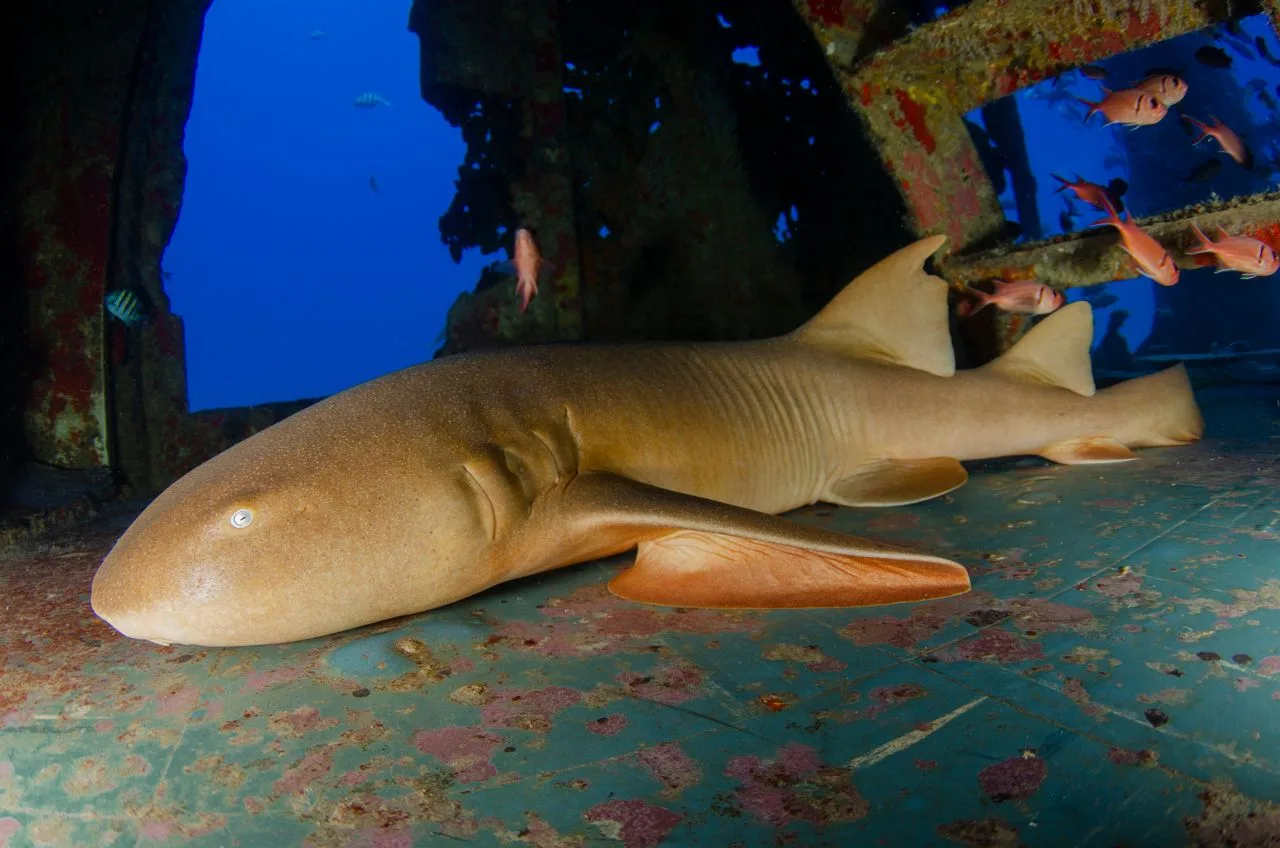
It is also off the standard tourist rotation, which in Cozumel is worth a great deal. Eagle rays cruising through the blue, grouper parked inside the tunnels, barracuda holding overhead, and nurse sharks tucked into the sand at the base of the reef.
Level: Open Water with a few dives behind you. A sensible step up from the shallow reefs.
Colombia Reef
Southern end of the island, longer boat ride, and fewer boats when you get there. That trade is usually worth making.
The structure here is the draw. Coral gardens opening into deeper tunnels and towers on a scale the rest of the Caribbean rarely matches, with enough happening at every level that rushing it is a waste. Current runs easier than Santa Rosa, which means you can stop and look at things. Turtles are consistent, and eagle rays pass through often enough to expect them.
Level: Open Water to Advanced, depending on which sections you dive.
Yucab and Tormentos
Both are second dives of the day, and both are the ones people end up talking about on the boat ride in.
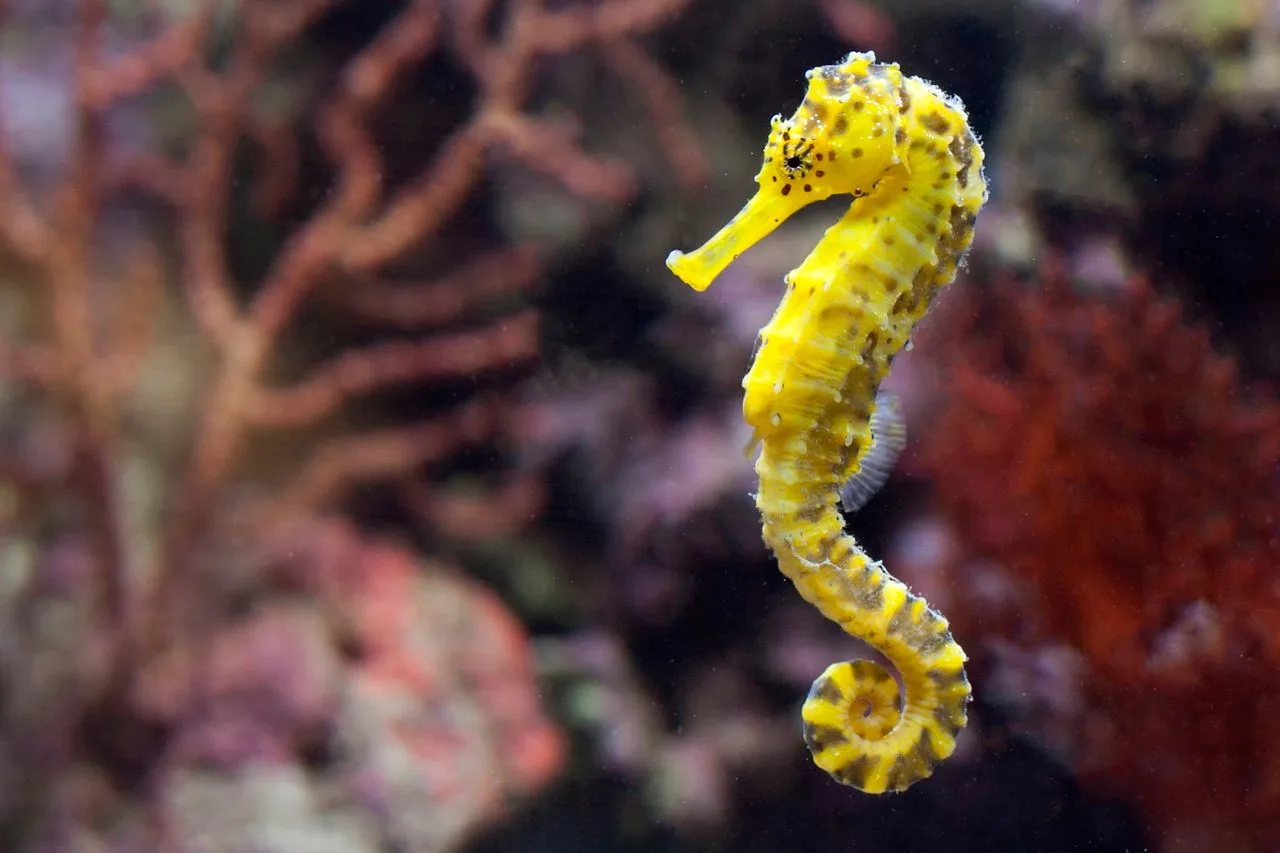
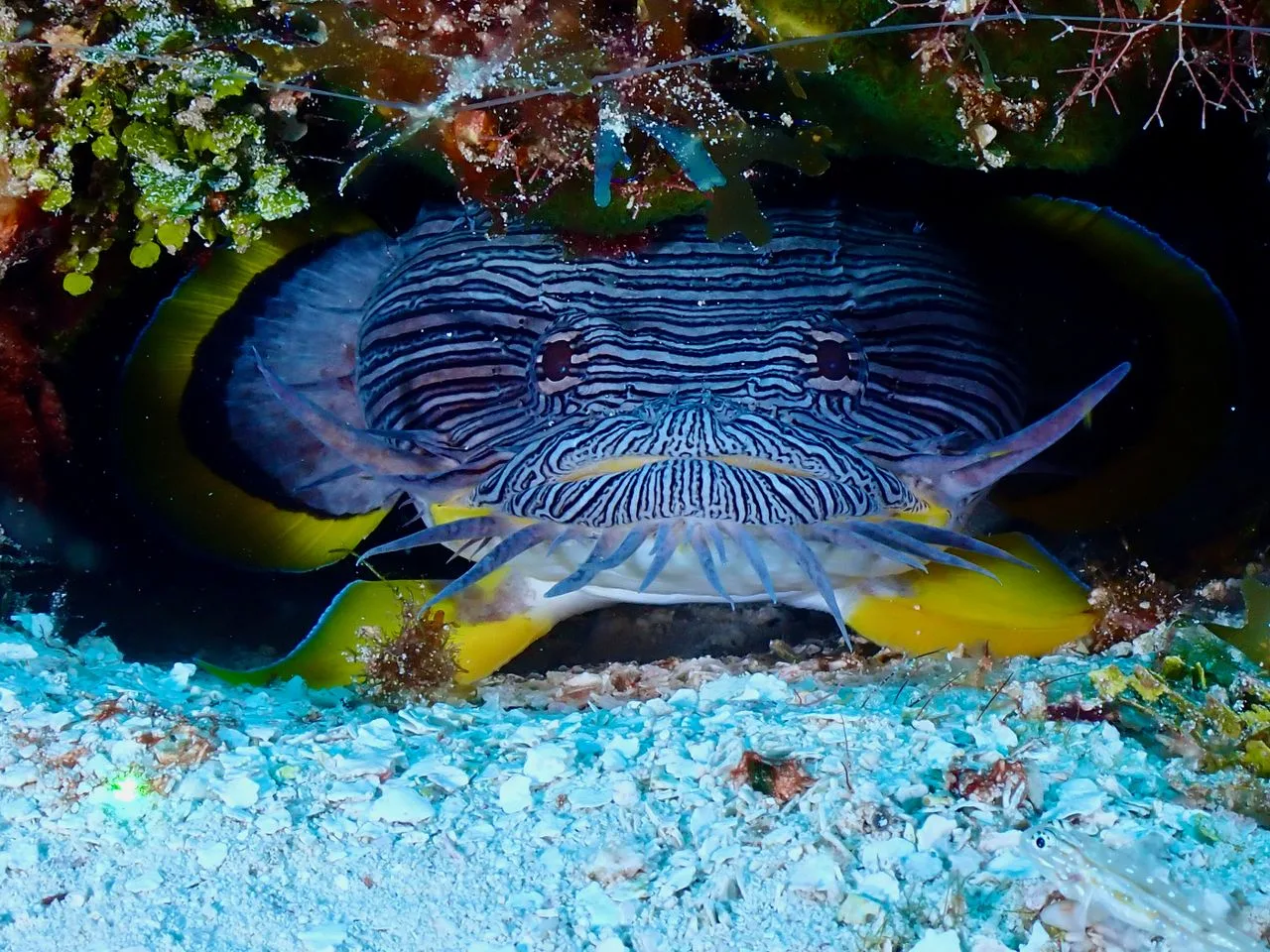
Yucab is a macro dive dressed as a drift. Low, dense reef with flamingo tongues on the gorgonians, stingrays parked in the sand between coral heads, grey angelfish entirely unbothered by you, seahorses for anyone actually looking, and the splendid toadfish jammed under the ledges. Bring the macro lens and accept that you will miss the exit.
Tormentos is a run of coral heads with mild current and cleaning stations working all day. Settle off to one side and watch the queue form: fish lining up, waiting their turn, holding still for the shrimp. It is the most forgiving drift on the island and the sensible place to do your first one.
Level: Any certification. Tormentos is the best introduction to drift diving here.
C-53 Felipe Xicoténcatl
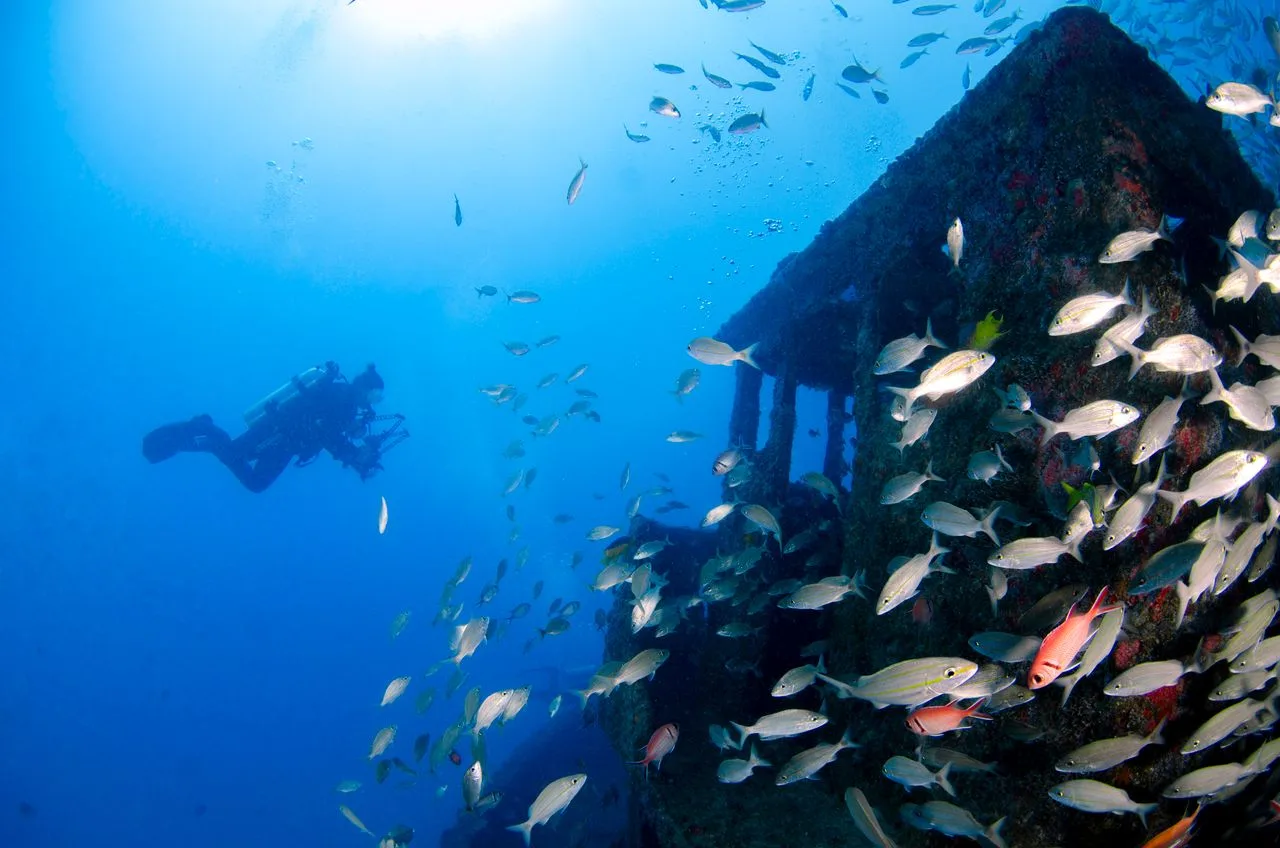
The only wreck inside the marine park. A former US Navy minesweeper, deliberately sunk in 2000 and sitting upright in sand, with the hull cut open so divers can move through it without trailing a line.
It doubles as the island’s Advanced training wreck, so you will usually share it, and it is large enough that this rarely spoils anything. Take a torch even if you plan to stay outside. The recesses along the hull are where the toadfish and octopus have set up, and the wreck has been down long enough to have become a reef in its own right.
Level: Advanced. Straightforward as wrecks go, and a good first one.
Punta Sur and Devil’s Throat
The furthest site from the marina and the most serious dive on the island. Devil’s Throat is a narrow coral tunnel you drop into and follow through the dark before it spits you out onto open wall. The Cathedral, the other half of the site, is a wide cave mouth with sponges forming a cross in the roof where the light comes through.
This is a real overhead environment with current, at depth, at the exposed southern tip of the island where surface conditions can turn. Most shops will want to see your logbook before they take you, and they should. If your buoyancy is not excellent and your gas management is not automatic, this one waits for another trip. There is nothing lost in that.
Level: Advanced, with real depth and overhead experience. Operators will check.
Cozumel Marine Life: What Lives on These Reefs
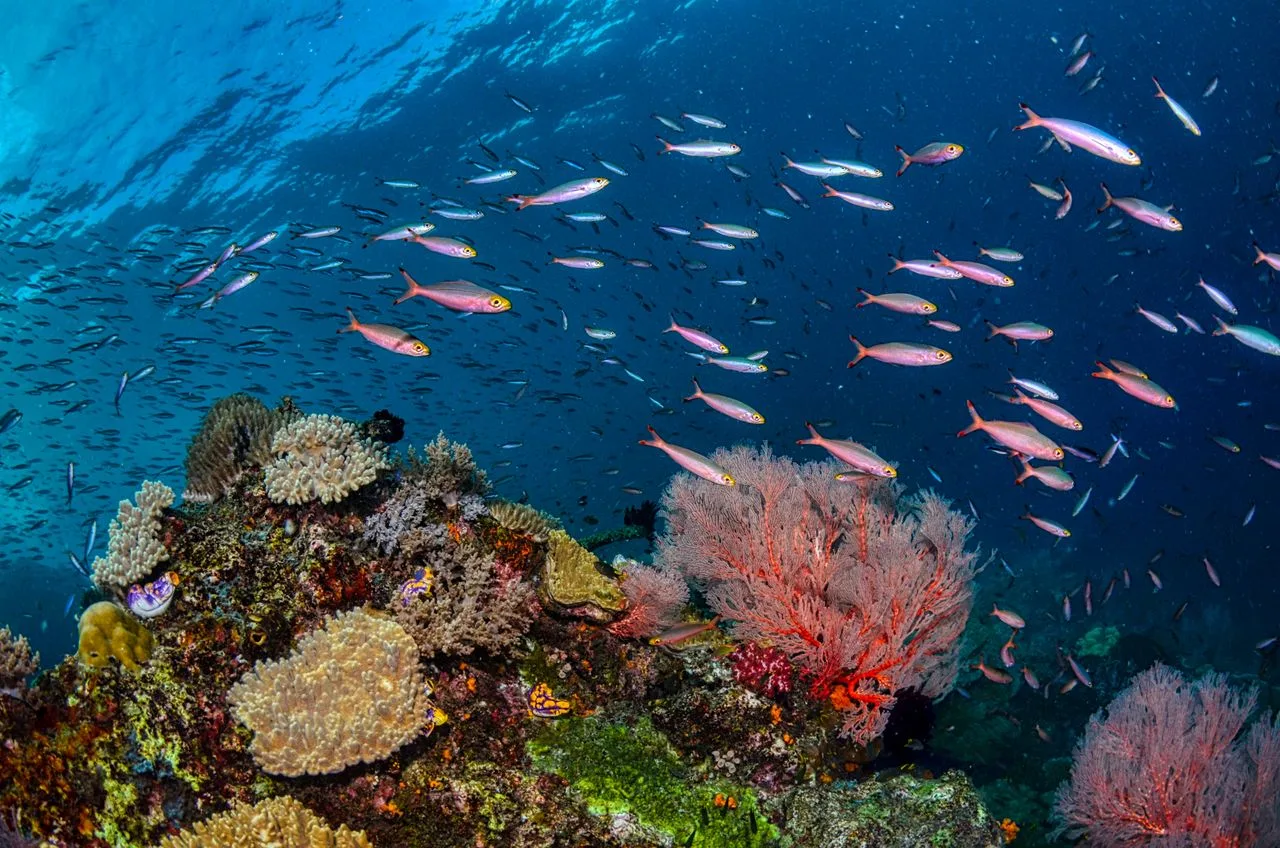
The reef here is dense, and the drift structure means you disturb it less. When you are not kicking hard to hold position, animals that would otherwise back off tend to stay put.
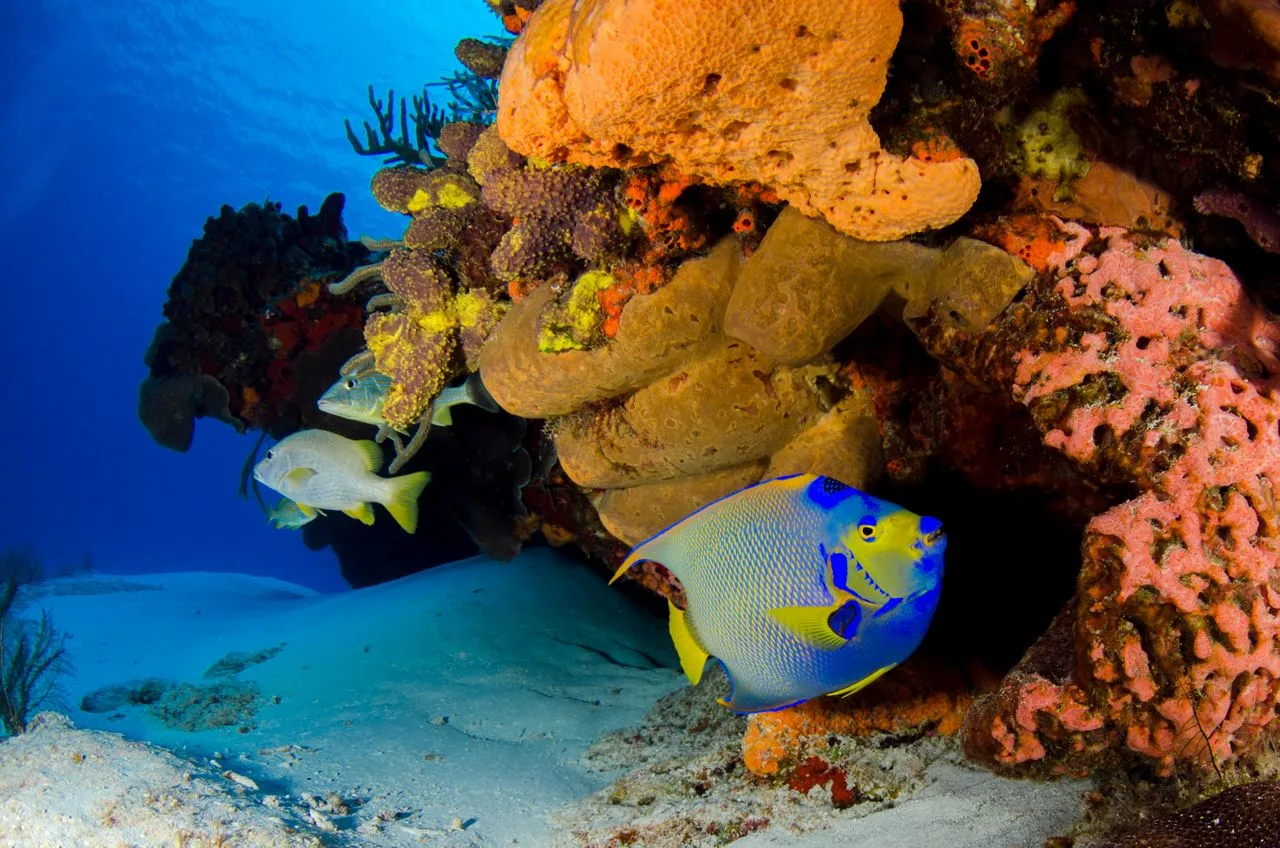
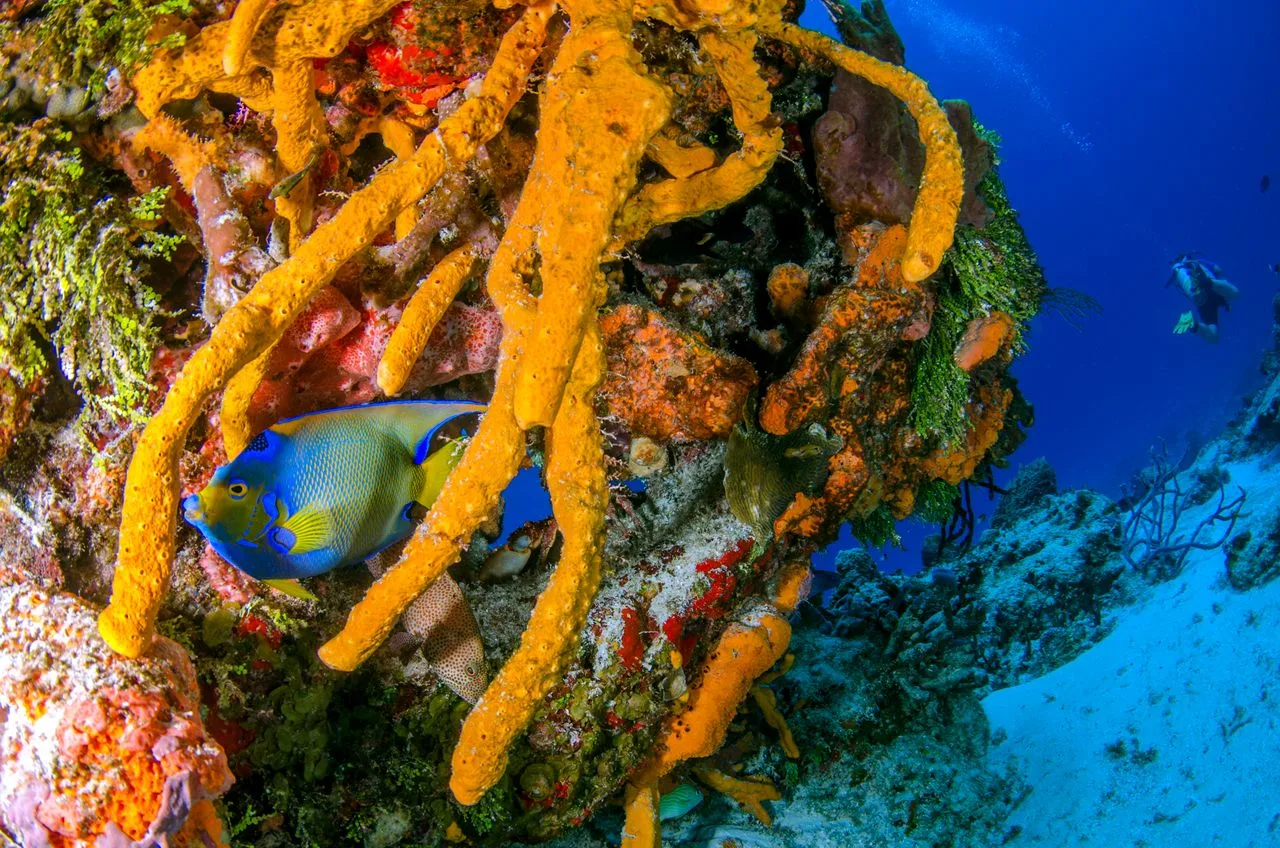
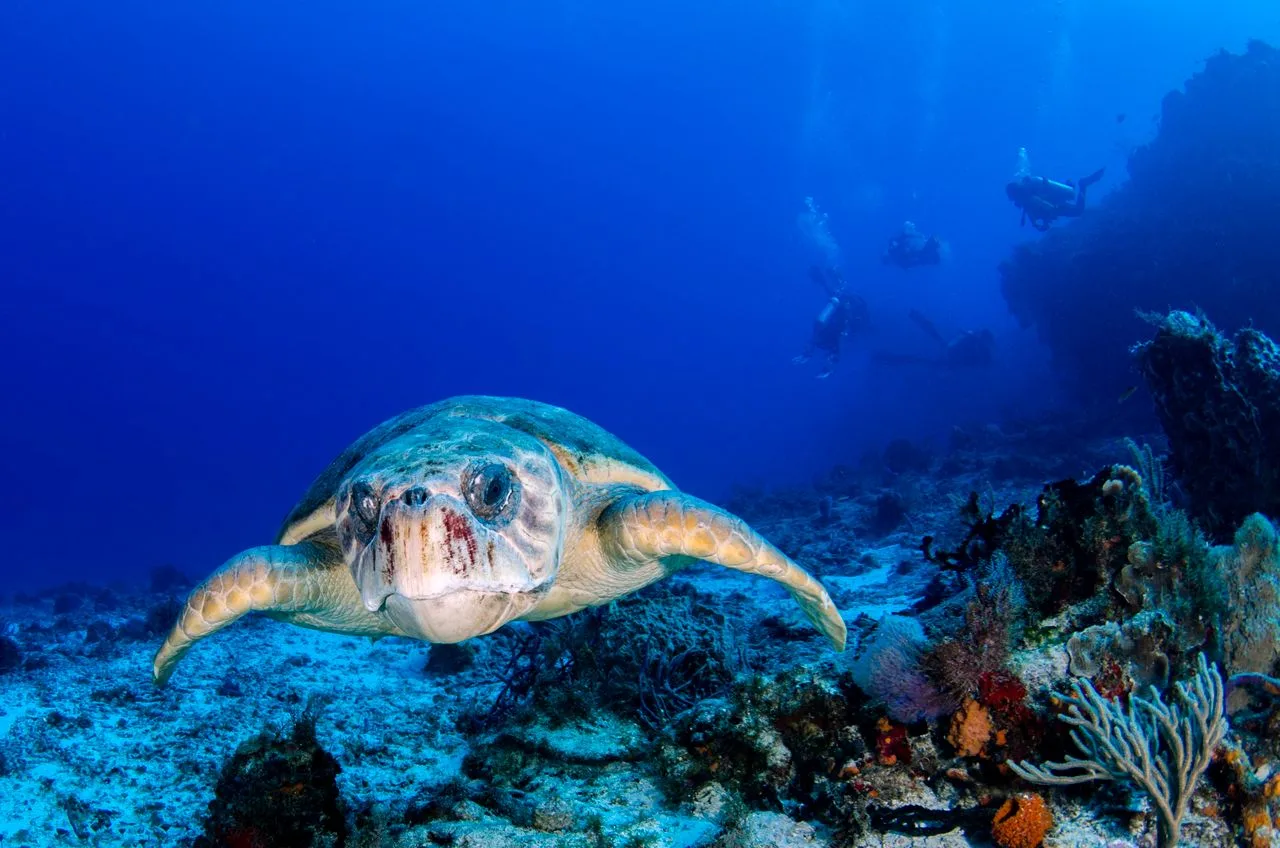
Year-round. Green, hawksbill and loggerhead turtles resting on ledges and grazing the wall. Nurse sharks tucked under overhangs and in sandy cuts. Green and spotted morays. French and queen angelfish. Nassau grouper. Barracuda holding above the reef. Flamingo tongue snails, which most divers swim straight past. Parrotfish doing the quiet work of keeping algae off the coral.
The endemic one. The splendid toadfish, Sanopus splendidus, lives on these reefs and effectively nowhere else on earth. Lumpy, striped, improbable, wedged under a ledge with only its face showing. Finding one is the local handshake. It is also a macro photographer’s problem, because it will not come out and the light will not go in.
Seasonal and occasional. Spotted eagle rays are around all year but concentrate from November through March, moving in small groups over sand between reef structures. Caribbean reef sharks and blacktips turn up periodically at the deeper sites, usually near the drop-off, usually shy.
Two of the region’s headline encounters happen close by but not here. Bull sharks aggregate off the mainland from November through February, peaking in December and January, and I have covered diving with bull sharks in Playa del Carmen in full. Whale sharks gather off Isla Mujeres from mid-May to mid-September. Both are day trips from Cozumel. Neither is a Cozumel dive.
The State of Cozumel’s Coral, and the Rules That Protect It
Stony Coral Tissue Loss Disease reached the western reefs in December 2018. It was first recorded off Miami in 2014, and the leading explanation for how it crossed the Gulf against prevailing currents is cruise ship ballast water. Research published in Frontiers in Marine Science tracked what followed: the outbreak swept the southwestern reefs in roughly two months, peaked at five, and by the summer of 2019 most infected colonies were dead. Coral cover across surveyed sites dropped by 46 percent. In the main reef-building families, mortality ran between 33 and 95 percent.
What that means for a diver arriving now: the architecture is intact. Walls, tunnels, pinnacles and swim-throughs are limestone laid down over thousands of years and they did not go anywhere. Fish life is still dense, because structure plus protection plus nutrient-rich current still adds up to biomass. Sponges and soft corals have moved into a lot of the space hard coral used to hold. If you dived here a decade ago you will see the difference, and some of what is still standing is skeleton with algae on it.
Cozumel is also better placed to recover than most of the barrier system, and that is not luck. It is the marine park doing its job. The rules exist because they work, and they are enforced.
🌊 Stay 1.5 meters off the reef. No touching, no holding, no standing. 🌊 No sunscreen. The regulation bans non-biodegradable products; in practice most operators ban all of it. Wear a rash guard or a suit. 🌊 No gloves, knives, spears or hooks. Registered dive professionals are the exception. 🌊 No feeding, no chasing, no collecting anything, living or dead. 🌊 No anchoring. Boats use fixed moorings. 🌊 Only dive with CONANP-authorized operators. Ask for the permit number if you are unsure. 🌊 Sites rotate through closures to rest. If your operator says a reef is shut this month, that is the system working.
The park fee is around 13 USD per diver per day as of January 2026, collected in cash at the dock before your first dive. Pay it without complaining. It funds the thing you came to see.
Beyond the rules, the useful thing is your buoyancy. This is drift diving over reef that has already lost half its coral, at sites carrying a high volume of divers. Every fin kick into a coral head is permanent on a human timescale. If your trim is loose, book a buoyancy session before your first reef dive rather than practicing on the reef itself.
Our ocean, our responsibility. For the wider picture on where reefs stand right now, my piece on Coral Reef Awareness Week covers the fourth global bleaching event and what divers can do about it. The same pressures reach the Caribbean coast of Colombia and everywhere else along this system.
Cozumel Diving Season by Season
There is no bad month. There are trade-offs, and the two variables that decide your week are current and visibility.
November through April. Peak season. The most consistent visibility of the year, often 24 to 36 meters and sometimes beyond. Water around 25 to 27°C. Current runs strongest in this window, which is excellent if you are a confident drift diver and demanding if you are not there yet. Eagle rays are at their most concentrated. It is also the busiest and priciest stretch, with the most boats on every site.
May through early July. The window most people overlook. Water climbs toward 29°C, current settles into gentler and more predictable patterns, crowds thin noticeably, and visibility holds up. If you are returning to diving after a gap, or building drift confidence, this is the smartest time to come.
Mid-July through September. Warmest water of the year and the quietest reefs. Hurricane season is technically active, but direct hits are uncommon and conditions in this window are frequently excellent. Get travel insurance that specifically covers weather disruption.
October through mid-November. The most variable stretch. Late September to mid-October carries the highest chance of a storm interrupting a trip. Some years it does, some years it passes without incident. If your itinerary has no flexibility, factor this in carefully.
Water Temperature by Season
| Season | Temp | Recommended Exposure |
|---|---|---|
| December to February | 25 to 26°C | 3mm full suit, 5mm if you run cold |
| March to May | 26 to 27°C | 3mm full suit |
| June to September | 28 to 30°C | Shorty, 1mm skin or rash guard |
| October to November | 27 to 28°C | 3mm full suit or shorty |
Winter water in Cozumel is warm by most standards and cool by Caribbean ones. It reads fine on paper and catches people out on the third dive of a multi-day trip. If you are diving here in January or February, bring more neoprene than the numbers suggest.
Practical Notes for Diving in Cozumel
Getting there. Cozumel has its own international airport with direct flights from a long list of North American cities. The alternative is flying into Cancun, transferring to Playa del Carmen and taking the passenger ferry, which runs frequently and takes about 45 minutes. If you come that way, build in extra days for diving in Playa del Carmen and the cenotes. That is a completely different kind of diving and one of the better reasons to be in this part of Mexico.
Getting around. San Miguel is walkable. Most dive shops are in town or along the southern hotel strip and will collect you from your hotel or a pier. Scooters and rental cars are easy to arrange.
Cost. A two-tank morning typically runs 100 to 140 USD depending on the operator and whether gear is included. Marine park fee is separate. Nitrox is widely available and worth taking for repetitive multi-day diving.
Certification. Open Water covers most of the island. Advanced opens Santa Rosa, the deeper Palancar sections, the C-53 and Punta Sur. Buoyancy matters more than the card.
Operators. There are dozens and quality varies enormously. Look for a CONANP permit, small groups, a real briefing that covers current direction and the plan if conditions shift, and a guide who gets in first to read the water. Ask how they handle a diver who touches the reef. The answer tells you what kind of operation you are dealing with.
Nearby. Bull sharks off Playa del Carmen, November to February. Whale sharks off Isla Mujeres, mid-May to mid-September. Cenotes an hour inland from the ferry terminal, which deserve a dedicated day rather than being squeezed onto the end of a reef morning.
A Note on Delfinarios
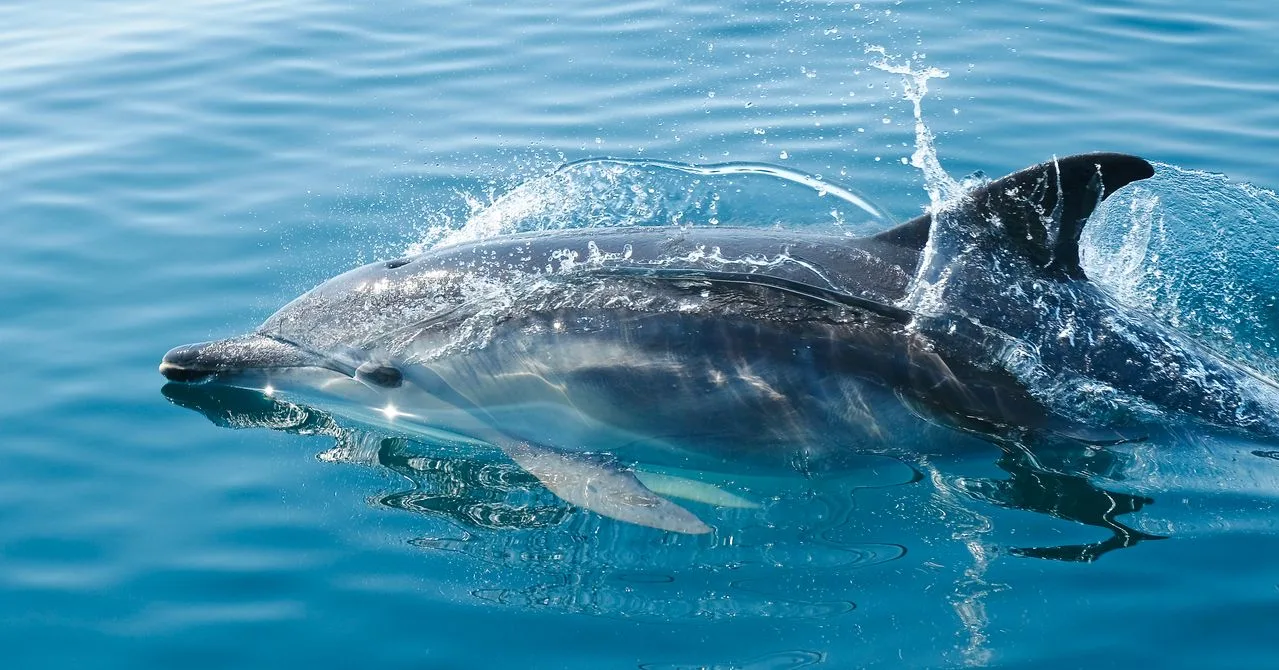
If you love the ocean enough to dive it, do not buy a ticket to a delfinario and prevent your family/friends from doing so as well.
Cozumel sells captive dolphin encounters hard, mostly to cruise passengers with four hours ashore and a list to tick off. You can spend your morning holding a meter and a half off coral so you do not break something that took a century to grow, then walk past a concrete pen in the afternoon where the entire product is touching an animal that cannot swim away from you. Those two things do not belong to the same person.
Be clear about what is on the other side of that wall. These animals are prisoners, and they suffer.
A wild bottlenose covers tens of kilometers a day, dives deeper than any of us will, hunts cooperatively and lives inside a social structure that shifts and reforms across a lifetime. A tank takes all of it and returns a dead fish for a trick. Dolphins navigate by sound, so a concrete enclosure means their own echolocation comes back at them off every surface, constantly, with nowhere to send it. Picture a room where every sound you make is thrown straight back into your face and the door does not open.
What that does shows up in the animals. Circling the same direction for hours. Floating motionless at the surface, which the industry has a tidy word for. Stress ulcers, suppressed immune systems, teeth worn down from grinding on concrete and gates, self-injury against tank walls. In 2022 more than a hundred scientists signed a public statement condemning cetacean captivity on precisely these grounds. Hunger is the training lever, because an animal fed regardless of performance has no reason to perform.
The smile is not a smile. It is the fixed shape of a bottlenose jaw. It looks identical on a healthy animal, a sick animal and a dead one, and an entire industry has been built on people not knowing that.
Mincho, the dolphin whose death forced Mexico’s reform, died at a Riviera Maya facility in 2025. Inspectors who went in afterward found water quality that failed standards and swim sessions carrying more tourists than the animals could take. The place was closed and fined around 7.5 million pesos. That was not one rogue operator. That was the model working exactly as designed, caught once.
Mexico has now legislated on this. In July 2025 an amendment to the General Wildlife Law came into force, known as Mincho’s Law. It bans marine mammals in shows and therapy programs, bans captive breeding, and bars facilities from acquiring new animals by capture, import or birth. The roughly 350 dolphins held across the country are meant to be relocated to sea pens. In practice, enforcement has lagged, and encounters were still being sold on this island well after the law took effect.
So the law has ended the industry’s future but not its present. What closes these places faster than regulation is people declining to pay. Every ticket is a vote to keep one more animal in that box for one more season. The same applies to the sea lion and manatee programs, which are the identical arrangement with a different animal inside.
You are a diver. You already have the better version of this. Wild encounters happen on the animal’s terms or they do not happen at all, and that uncertainty is the whole value of them. A dolphin with no choice about being there is not an encounter. It is a captive, and the ticket is what keeps the door shut.
Our ocean, our responsibility. It does not stop when you climb out of the water 🐬