Diving in Cartagena is something I tell people to do if they are already in the city. The reefs sit about an hour away by boat in the Rosario Islands, the water is warm all year, and the diving is easy and pleasant. I wouldn’t necessarily fly to Colombia just for it, and I think it helps to know that before you book.
The one time of year I would plan a trip around the diving is the coral spawning. About a week after the full moon in September, the star corals of the Rosario Islands release their eggs and sperm together at night, and you can watch it from a few meters away on a night dive. DivingLife, my favorite Colombian operator, runs an exclusive trip timed to it. I wrote about my experience diving Malpelo with DivingLife if you want to see how they run a trip.
Cartagena also has a reef that most visitors never hear about. Varadero grows inside the city’s bay, in water that should have killed every coral there, and it still holds more live coral than much of the national park. It is one of the most hopeful reef stories in the Caribbean.
I am Colombian, so I would love this coast to have a better reputation in the dive world. This guide covers where the diving is, the sites you will hear about on the boat, the coral spawning, the state of the reef and how to plan your days on the water, so you can decide how much of your trip to spend underwater.
View on Instagram
Is Diving in Cartagena, Colombia Worth It?
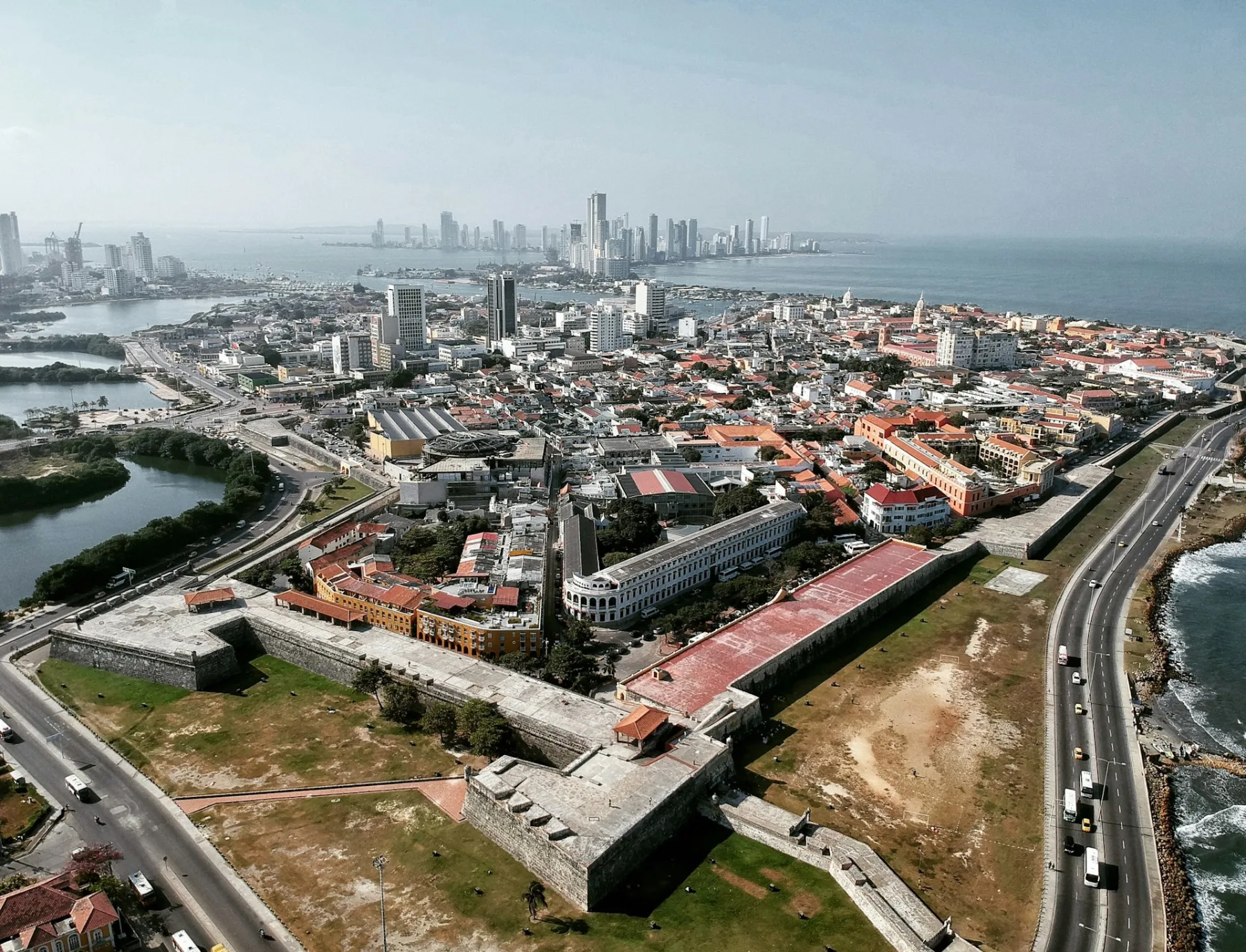
Cartagena is the city most people picture when they think of the Colombian Caribbean. Pedro de Heredia founded it in 1533, its walled old town is a UNESCO World Heritage Site, and most travelers come for the colonial streets, the food and a day on the islands. Diving fits into that kind of trip as a day out.
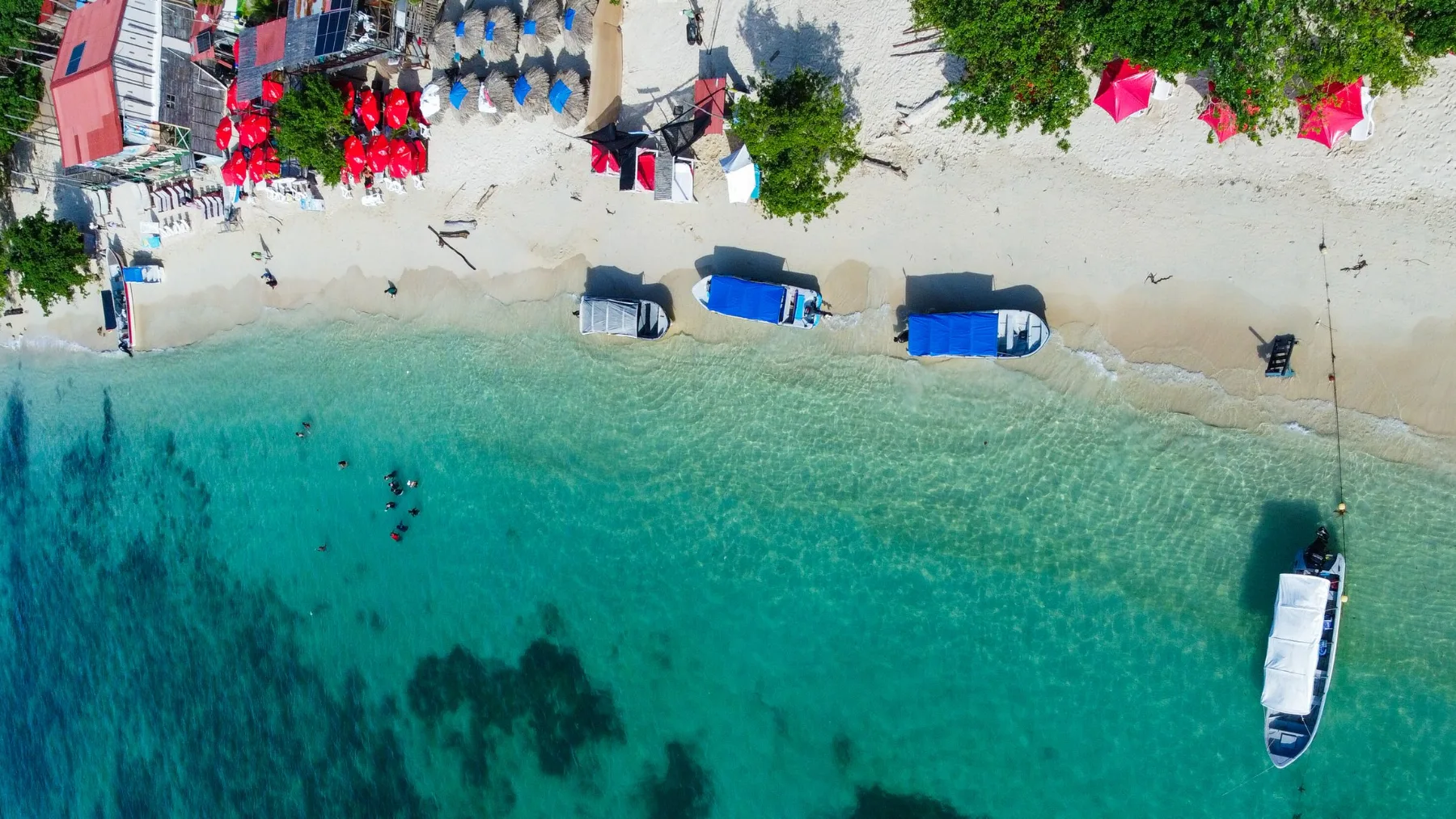
The diving is warm, shallow and calm on most days, which makes Cartagena a good place for a Discover Scuba Diving session, an Open Water course or a refresher after a long break. Many sites sit between 5 and 18 meters, the boat ride is short, and lunch on an island comes with many dive days. If you are traveling with people who do not dive, they can snorkel or stay on the beach while you are in the water.
What Cartagena does not have is big animals or the clear blue water of the Colombian islands. Visibility usually sits between 10 and 20 meters, the reef has lost a lot of its coral to sediment, heat and heavy tourism, and you will share the islands with a lot of boats. If you want the Caribbean most divers picture, diving in San Andres and diving in Providencia deliver it, and San Andrés has direct flights from Cartagena.
So my answer is yes, go diving if you are in Cartagena, and keep your expectations at the level of a good day out, not a world-class diving experience. The exception is September, when the coral spawning turns a pleasant reef into one magical natural spectacle (if you’re lucky to witness it, of course).
Where Do You Dive in Cartagena? The Rosario Islands
Almost all the diving from Cartagena happens in the Corales del Rosario y San Bernardo National Natural Park, southwest of the city. The park was declared in 1977 and covers around 120,000 hectares, almost all of it underwater. It protects the 27 islands of the Rosario archipelago, about an hour from Cartagena by speedboat, and the San Bernardo Islands, around two hours away.
The park matters more than its size suggests. El Espectador (Colombian news) reported in 2021 that it holds around 82% of the coral reefs on Colombia’s continental shelf, and that some of its coral colonies have been growing for more than 350 years. That same year it was the most visited national park in the country, with around 1.2 million visitors, most of them on day trips to the beaches.
A dive day follows the same pattern with almost every shop. You meet early at the Muelle de la Bodeguita, next to the old city, and a speedboat takes you to a base on Isla Grande or one of the island hotels. You do two dives at sites the shop picks that morning based on visibility and current, eat lunch on the island during the surface interval, and you are back in the city by around 4 pm.
There is also diving closer to the city, around the island of Tierra Bomba, Barú and the Salmedina bank just outside the bay. These are shorter rides, and shops use them for training dives, wrecks and half-day trips that have you back in town by lunchtime.
The Best Dive Sites in Cartagena and the Rosario Islands
Cartagena and the Rosario Islands have more than 25 named dive sites, from shallow coral gardens to walls and a handful of wrecks. Most recreational dives sit between 5 and 18 meters, and a few sites go past 30 meters for Advanced divers. Shops choose the sites on the day, so it helps to arrive with a sense of what is out there and stay flexible.
Dive sites in the Rosario Islands
The names you will hear most often on the boat are La Pared, El Pargo, El Faro, Bajo de las Barracudas, El Canal and El Manglar. La Pared, Spanish for the wall, is a wall dive, while El Pargo and El Faro are two of the best-known reef sites in the park. The reef here mixes hard and soft coral with seagrass and mangrove edges, and those edges are where juvenile fish shelter before they move out to the reef.
Wrecks are one of the better surprises of the area. Local shops count around ten sunken ships, a car and a small plane among their dive sites, and several of them sit between 5 and 18 meters, within reach of Open Water divers.
Barco de San Martín de Pajarales is one of them, a wreck beside the small island that holds the Oceanario de las Islas del Rosario. Dive the wreck, then get back on the boat. The Oceanario is a delphinarium that keeps dolphins and sharks in captivity and puts them on show for visitors, and I am asking you not to visit it under any circumstance. I explain why further down.
Should You Visit the Oceanario de las Islas del Rosario?
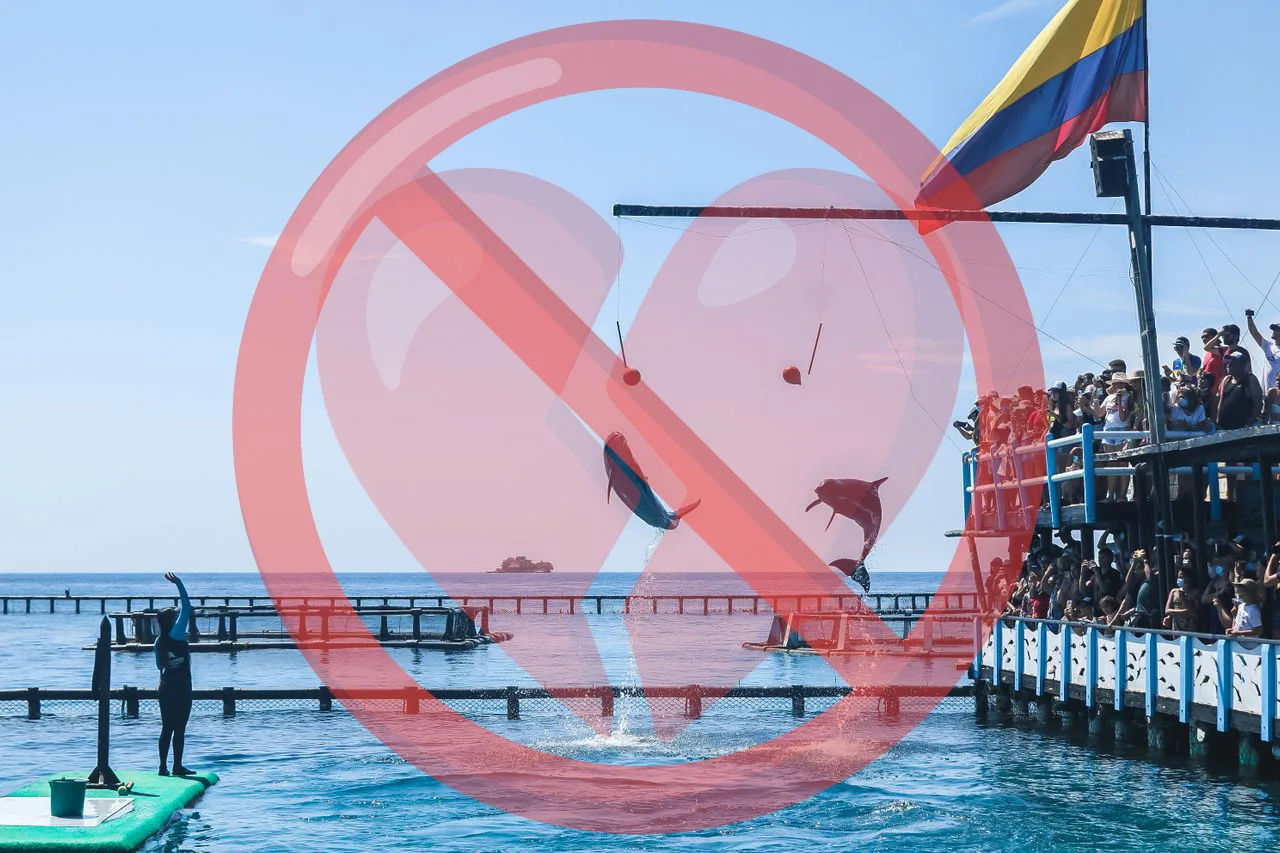
My answer is a resounding no, and I would ask you to keep it off your trip under any circumstance. The Oceanario sits on Isla San Martín de Pajarales, inside the national park. Local coverage in 2026 still describes dolphin shows, with the dolphins performing acrobatics for the crowd alongside their trainers, and shark presentations where visitors watch trainers feed the sharks up close. Tickets cost around COP 40,000 ($10 USD) for adults, and plenty of island day tours from Cartagena fold the stop into their itinerary, which I personally find disgraceful.
A delphinarium is one of the cruelest things you can pay for on a beach trip. Wild bottlenose dolphins live in fluid groups that often number a dozen or more, spend a large share of their day traveling, and can cover more than 100 kilometers on a single foraging trip. Captivity shrinks that life to an enclosure, the same few companions and a feeding schedule built around the next show. When RSPCA Australia reviewed the research in 2017, it found the evidence pointed strongly to captivity harming dolphin health and welfare. The studies it gathered describe dolphins swimming in repetitive circles, stress severe enough to cause ulcers and loss of appetite, and aggression and social instability linked to illness and death. Imagine being taken away from your mother when you were a defenseless kid and then someone forces you to be in a bathtub for the rest of your life while you perform tricks just so they give you some fish and big audiences pay just to watch you.
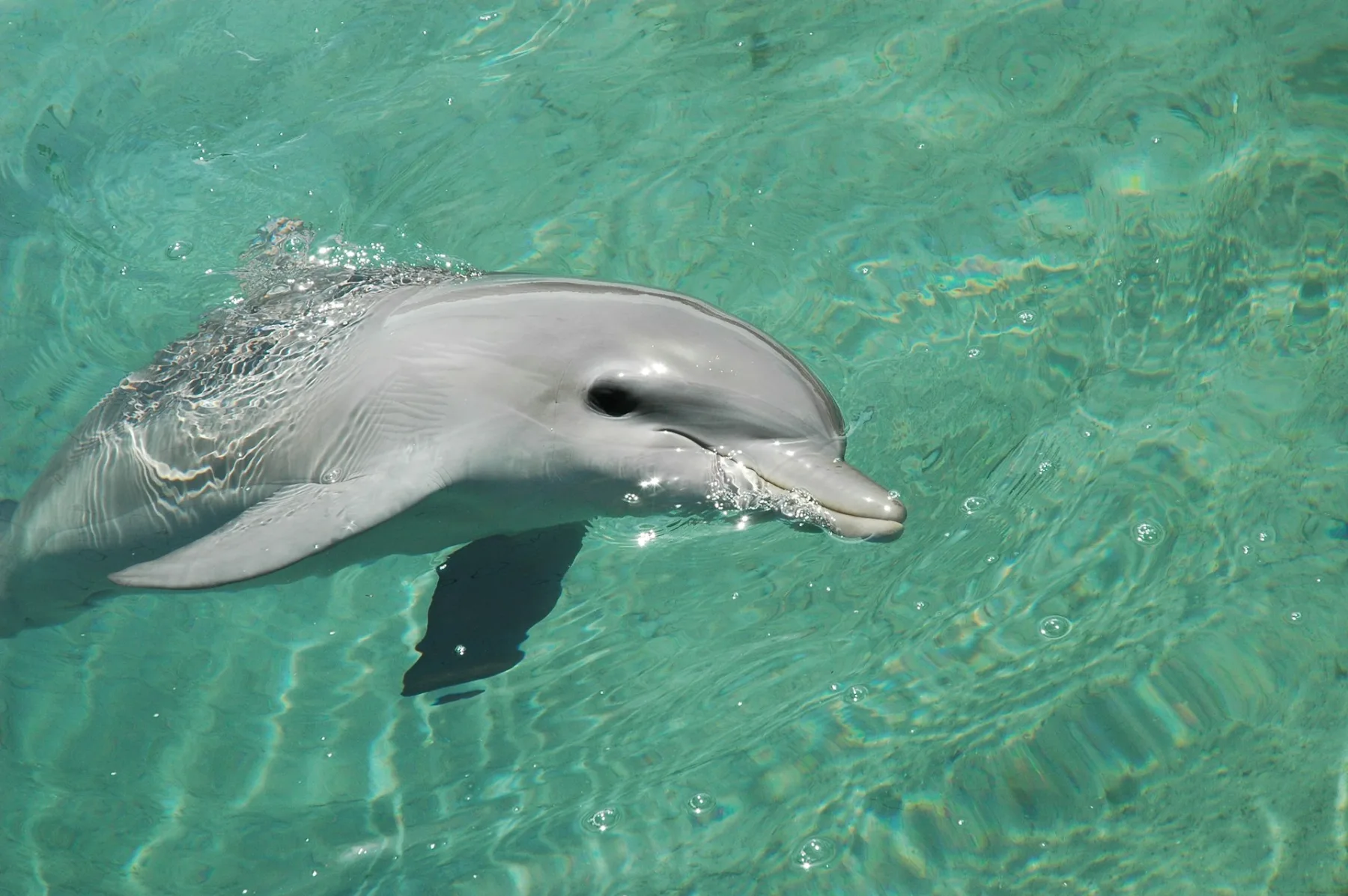
The “smile” does not help. A dolphin’s face is fixed in that shape whatever the animal is going through, which is why a show can look joyful from the stands. Shows are also the business case for the whole captive dolphin industry, and around the world that industry is still supplied by live captures from wild pods. I could not find public information on where the Oceanario’s dolphins came from, and the answer would not change mine. I wrote about the hunts that feed the trade in World Dolphin Day.
The Oceanario presents itself as a conservation center, and it does host coral nurseries, sea turtle work and lab space that coral researchers, including the Coraltheca team behind the spawning project below, have used. That research needs a lab and a boat, and none of it depends on a dolphin performing for a crowd. Calling a show education does not make it education, and greenwashing marketing doesn’t work on people who work on conservation. A child who watches a dolphin jump for a fish learns that wild animals exist to entertain us, and that is the opposite of what the ocean needs us to learn.
If you want to see dolphins in Colombia, see them where they live. The pods that chased our dive boats off Santa Marta, which I wrote about in diving in Santa Marta, gave me more than any show ever could, and who knows, there’s always a chance you might come across them on a boat.
Before you book an island tour, ask whether it stops at the Oceanario and choose one that does not. If your boat stops there anyway, stay on the dock, keep your money in your pocket and tell the people you are traveling with why. Our ocean, our responsibility, and that includes the animals we refuse to pay to watch while they have miserable lives in a small enclosure.
Dive sites near the city
Salmedina is a shallow bank about five nautical miles off Cartagena, just outside the bay, with depths from around 3 to 30 meters. Two sunken ships in its shallows once served as the base for a lighthouse, and ships from different centuries ran aground on the bank, so Colombia’s maritime authority has recorded several archaeological sites there, with cannons and anchors still on the seabed. Currents can run strong, and everything on the bottom is protected heritage that stays where it is.
Bajo Burbujas sits off the same stretch of coast and goes deeper, from around 9 to 40 meters. Like Salmedina, it suits divers who are comfortable with depth and current.
Playa Vásquez is where many shops run first training dives, on a sandy flat beside a reef with two wrecks, the Atlas and the Tolú, resting nearby. The Pedro de Heredia, a wreck named after the city’s founder, sits on a sandbank among the corals that have colonized it.
What you will see diving in Cartagena
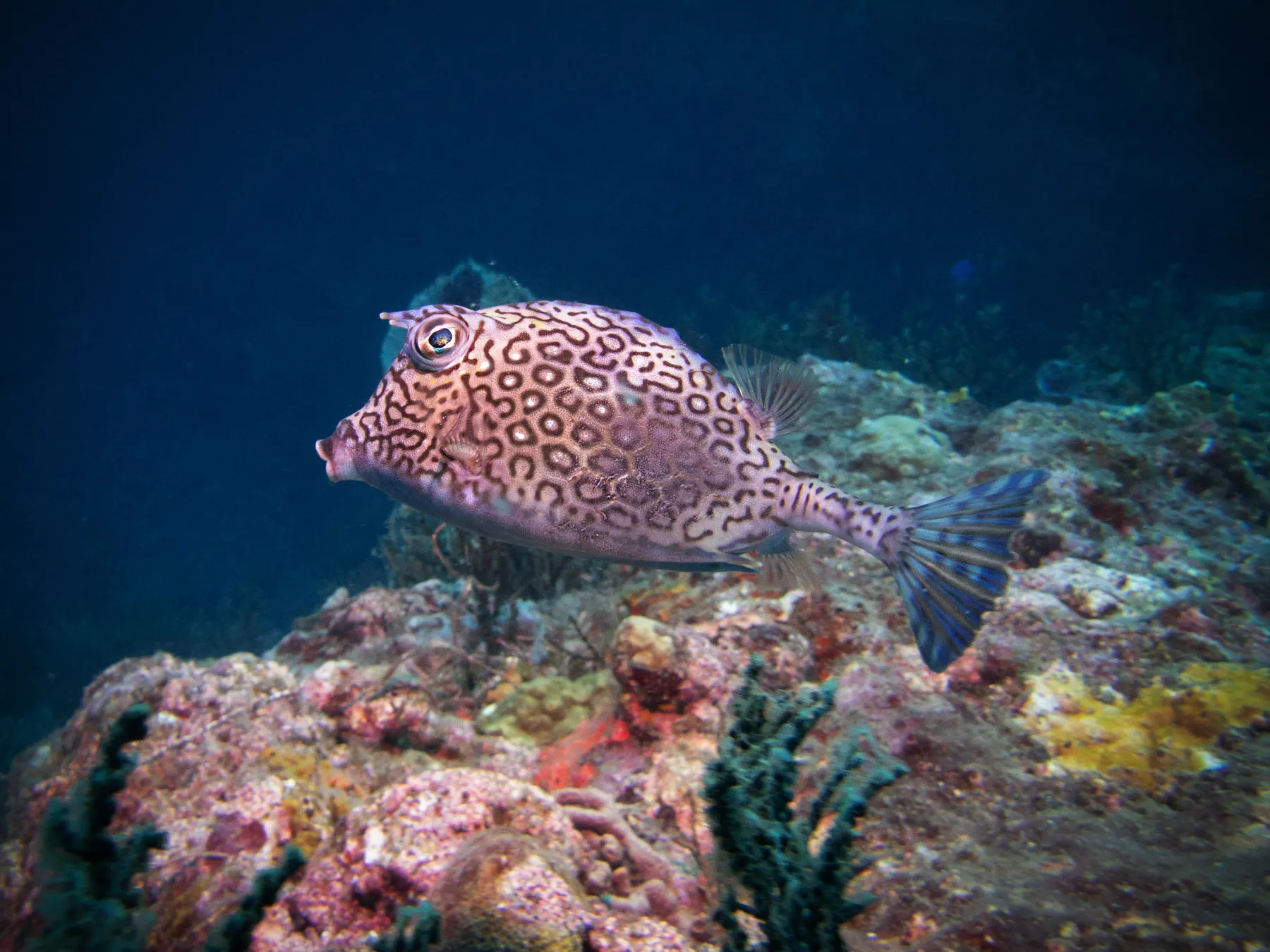
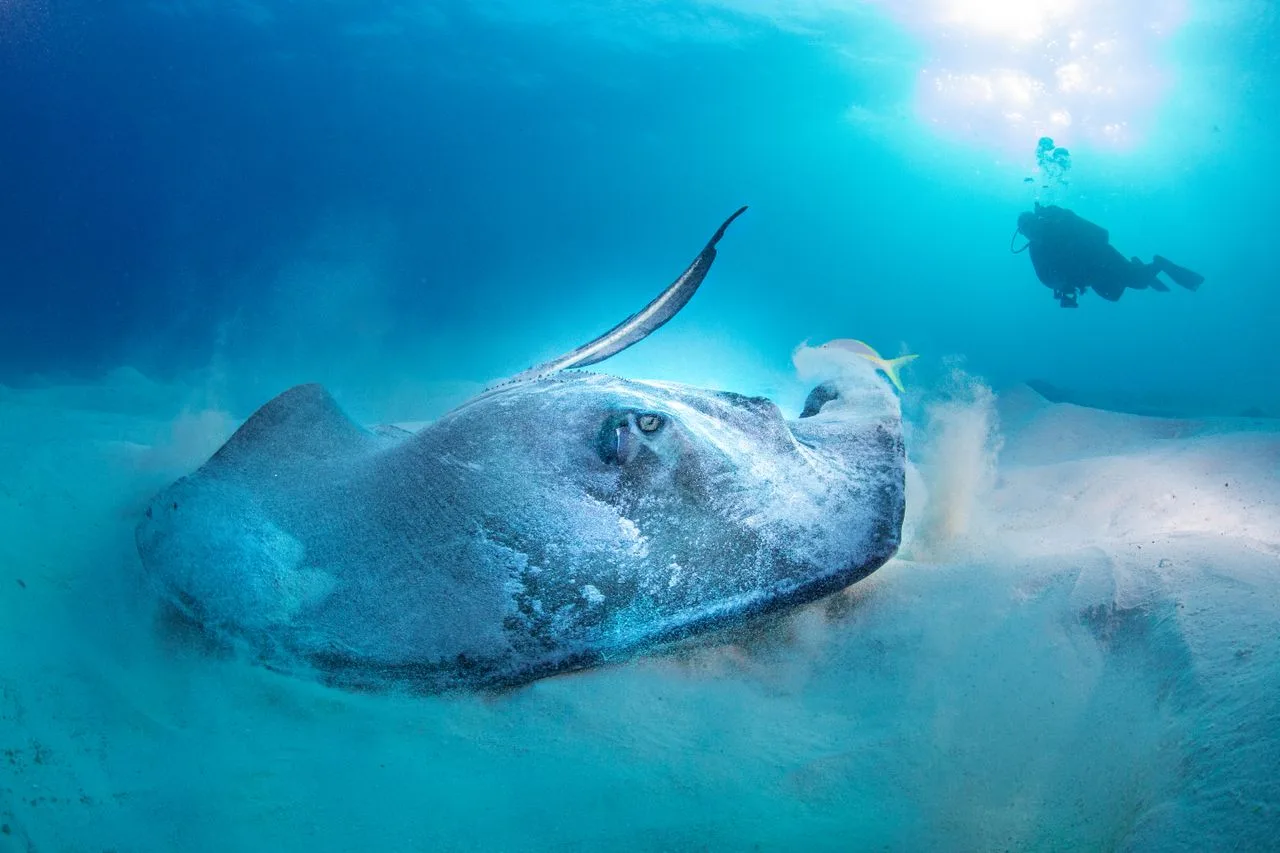
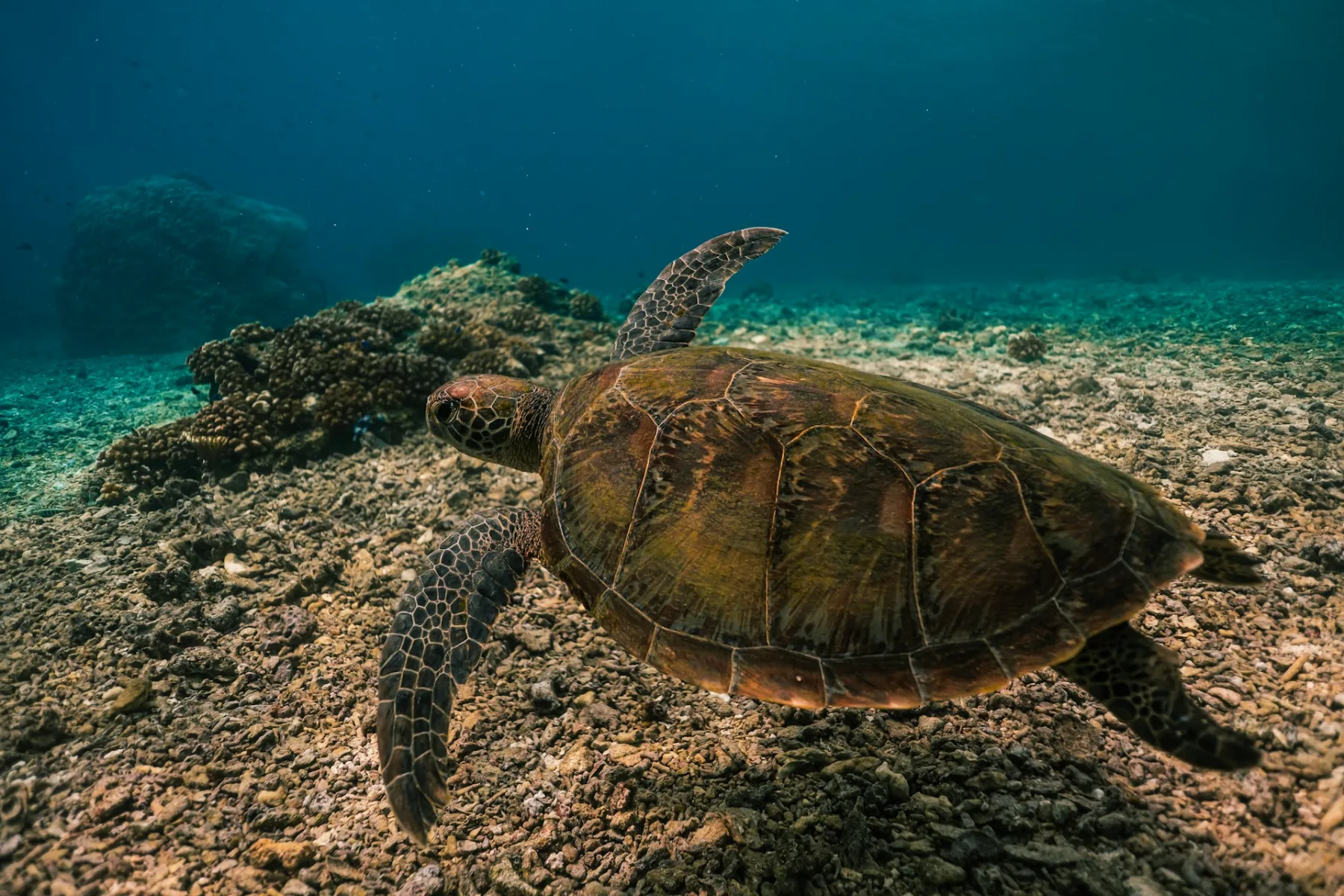
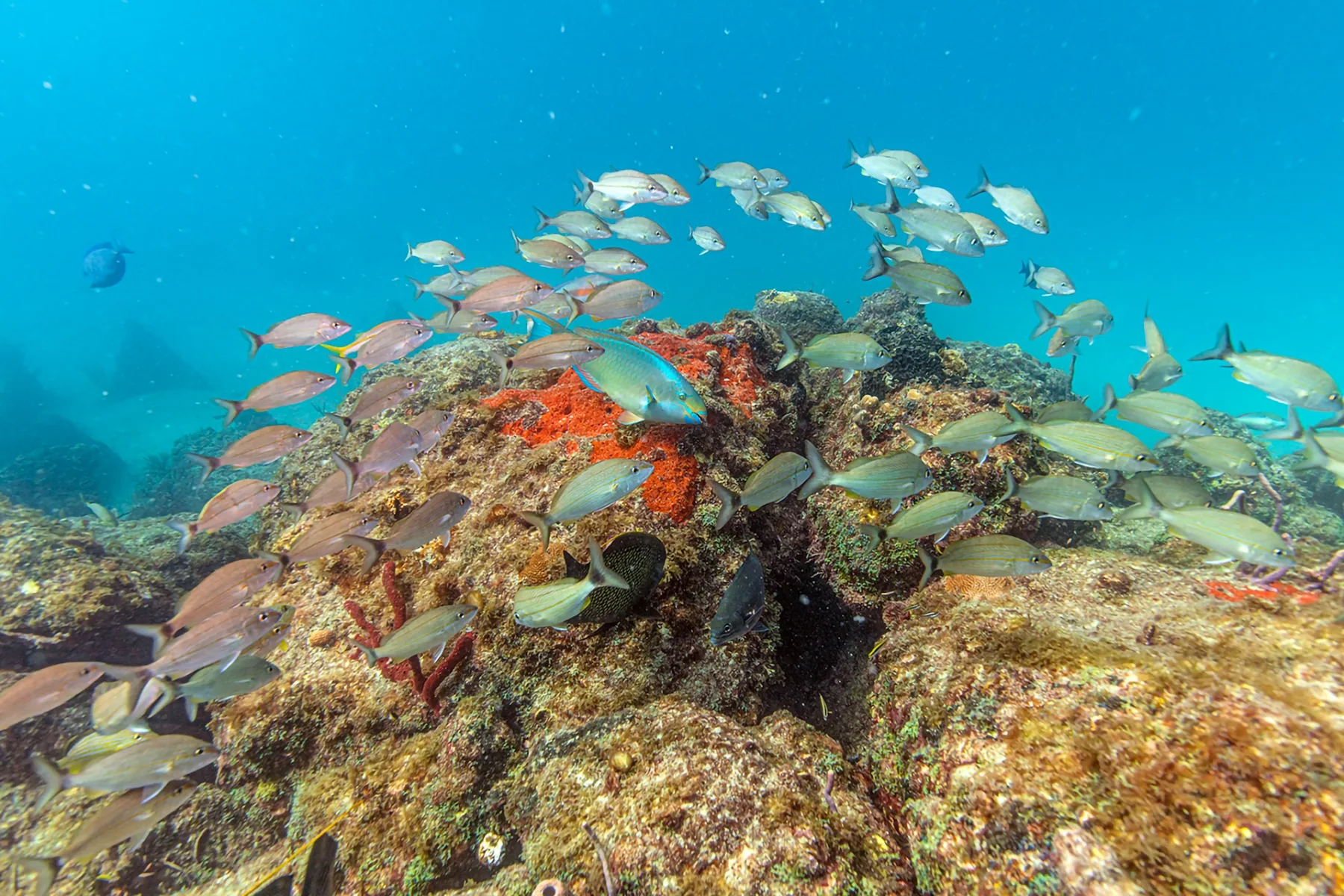
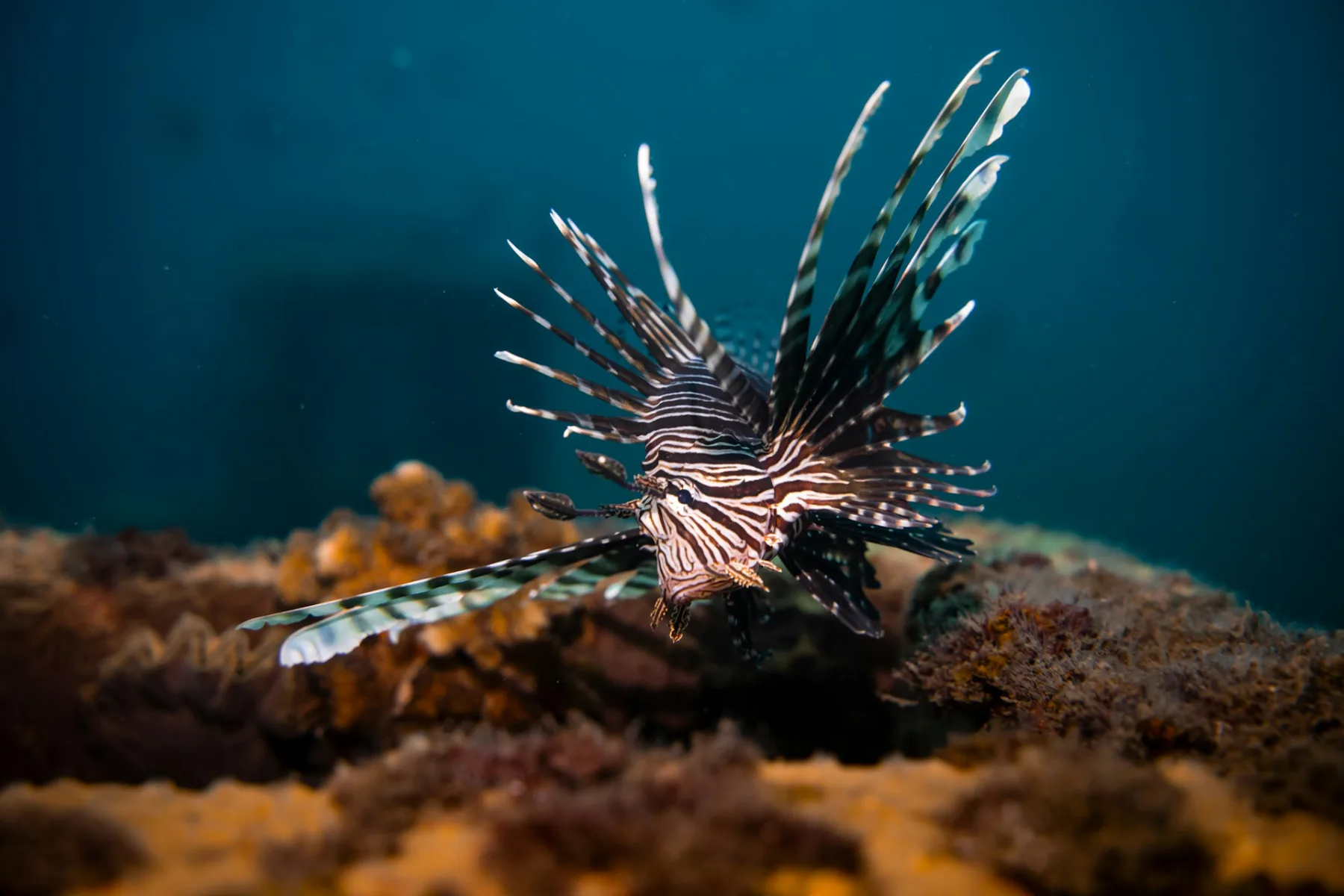
The marine life is classic Caribbean reef. Angelfish, blue tangs, snappers, spadefish, cowfish, creole wrasse and barracuda turn up on most dives, and moray eels and lobsters hide in the cracks. Turtles and stingrays appear on some dives, nurse sharks are occasional, and you will see lionfish, which have spread along the whole Colombian coast.
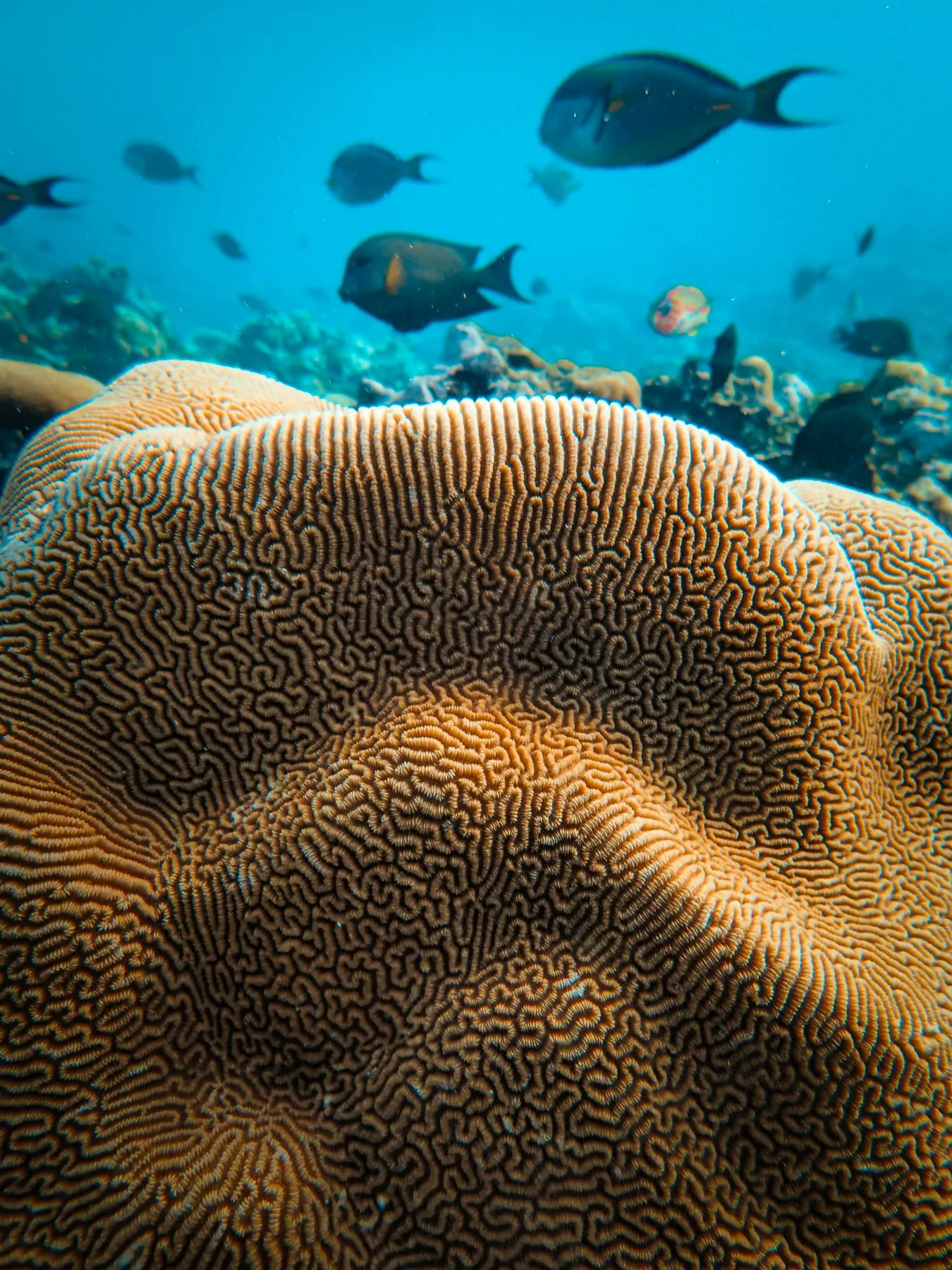
The coral is the main subject. Brain and star corals, sea fans and barrel sponges cover the slopes, and the area holds around 52 species of coral and more than 200 species of fish. Octopus and seahorses are there for divers who slow down, and night dives bring out the octopus, lobsters and crabs that hide during the day.
When Is the Coral Spawning in Cartagena?
The coral spawning in Cartagena happens once a year, six or seven days after the full moon in September. On that night, roughly three to four hours after sunset, colonies of two reef-building star corals, Orbicella annularis and Orbicella faveolata, release hundreds of tiny pink and orange bundles of eggs and sperm that drift up toward the surface. Colonies of the same species spawn within the same short window so their gametes can meet, and the main event lasts around an hour.
Both species are listed as endangered by the IUCN, and they are among the corals that built the reefs of the Caribbean over thousands of years. Researchers in the Rosario Islands have tracked their spawning month by month since 1997, which is why local guides can now predict the night and the hour.
On the dive itself, you settle near a colony in the dark and wait. For a few minutes, the bundles push up through the mouths of the polyps and the colony takes on a fuzzy look. Then it releases them, the colonies nearby follow, and small beads start rising past your mask toward the surface. It is a slow, quiet dive, and it changes how you see a reef that looked ordinary in daylight.
View on Instagram
Why the coral spawning matters
The spawning is how these reefs make new coral, and the odds are poor. Fewer than 2 percent of the eggs released in the wild ever settle as new colonies, and in the Rosario Islands it is harder still because colonies of the same species now grow far apart, and fresh water from the Canal del Dique lowers the salinity, which keeps sperm from swimming to the eggs.
In 2021, the marine biologist Elvira Alvarado and Ecomares started a project with Diving Planet, Parques Nacionales, two universities and SECORE International to collect spawn on this night, fertilize it in the lab and raise larvae to settle back on the reef. Most coral reef restoration grows fragments cut from a single colony, so every new coral is a clone, and raising larvae from spawn adds the genetic diversity a reef needs to cope with disease and heat. Diving Planet, one of the city’s dive centers, was a PADI AWARE grantee for this work in 2022, and PADI reports that the team went on to produce 13,500 coral fragments with other local organizations.
How to join a coral spawning dive trip
DivingLife runs a short coral spawning trip from Cartagena timed to the forecast. In 2025 it ran from September 13 to 15 and included six dives, four during the day and two at night, plus the hotel, meals, gear rental, travel insurance and an instructor. The group is capped at 12 and the dates follow the moon, so check the next departure early and plan your flights around it.
If you organize it yourself, Ecomares has published spawning forecasts for Cartagena, Santa Marta and San Andrés, and the night moves every year with the lunar calendar. When the September full moon falls late in the month, the spawning lands in the first days of October, so check the forecast before you book anything.
On the dive, keep your light low and off the colonies unless the guide tells you otherwise, hold your position well above the reef, and leave the collection nets to the researchers. My guide to choosing a dive light will help if you do not have one yet, and your buoyancy matters more on this dive than on almost any other.
View on Instagram
Varadero, the Coral Reef Inside Cartagena Bay
Varadero is a coral reef of around one square kilometer at the southern mouth of Cartagena Bay, near Bocachica, a fishing village on the south side of Tierra Bomba island. The reefs inside the bay were thought to be gone, killed by the polluted, sediment-heavy fresh water that the Canal del Dique pours into it. Varadero survived anyway, and studies have measured an average live coral cover of around 45 percent, close to 80 percent in some patches.
Fishers from Bocachica always knew the reef was there, but scientists only began to document it properly in the 2010s. They have since recorded 147 species of fish on Varadero, seven of them threatened, and around 38 species of coral. In 2018, Mission Blue named it a Hope Spot after a campaign by Salvemos Varadero, a citizen initiative founded in Cartagena in 2016, and it became the second Hope Spot in Colombia after Malpelo.
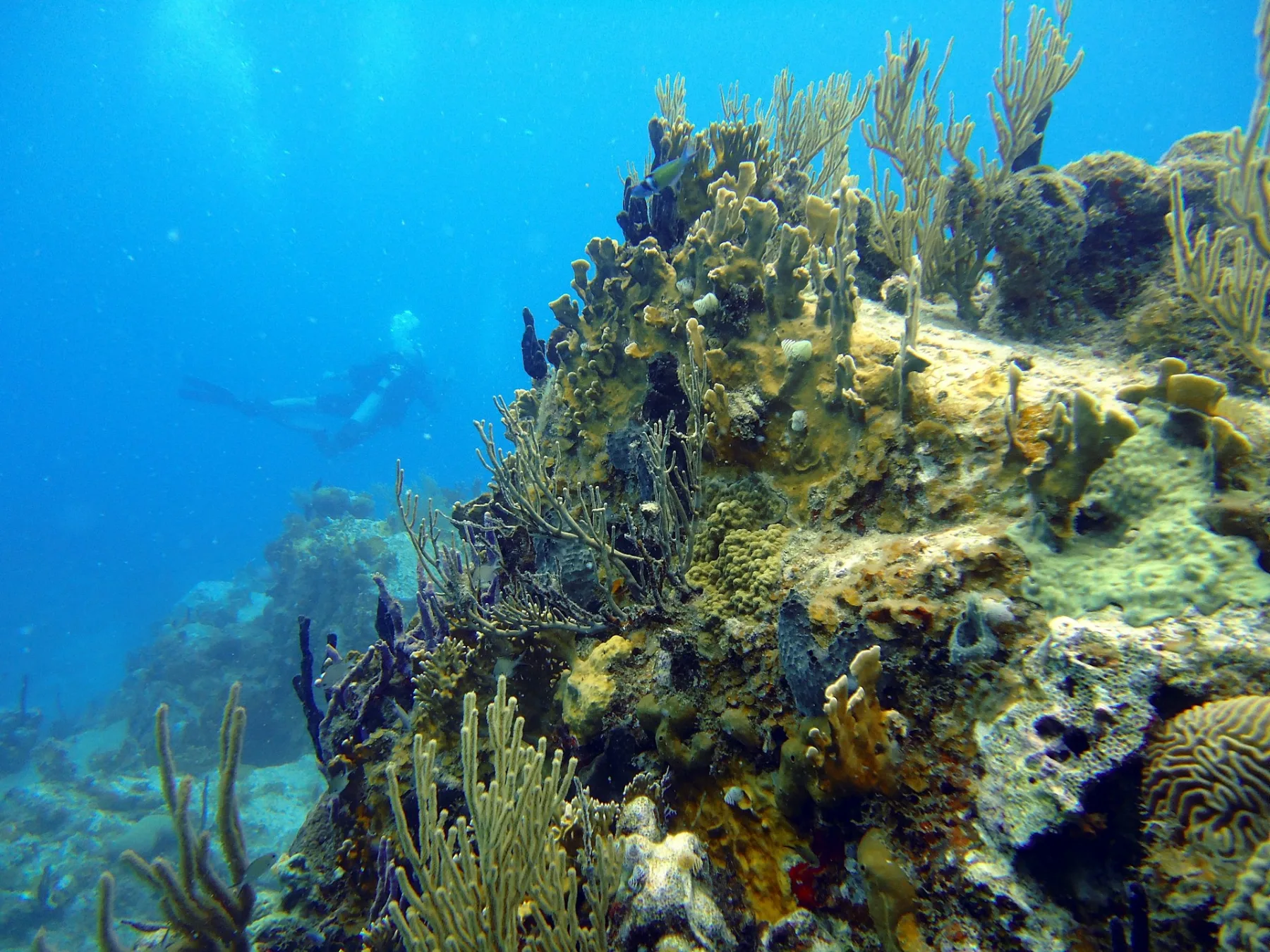
The last few years have been hard on it. Stony coral tissue loss disease reached Varadero at the end of 2018, the reef bleached in the 2023 heat, and plans for new dredging and port projects in the bay keep coming back to the table.
Protection is moving, though. Cardique, the regional environmental authority, is leading the process to declare a regional marine and coastal protected area of 2,731 hectares around the reef and the north of Barú. In October 2026, the draft update of Cartagena’s land use plan listed Varadero as a priority zone for preservation and ecological restoration, and it would require any port or industrial project to prove it will not affect the reef.
A small restoration pilot is also underway with the Bocachica community, using reef stars, the hexagonal steel frames that hold coral fragments and stabilize loose rubble, to reconnect damaged patches of the reef. Whether all of this works will come down to enforcement, which is what separates marine protected areas that protect something from parks that only exist on paper.
Varadero is not part of the standard dive day to the Rosario Islands, and visibility in the bay is low, so ask the dive shops in town if you want to see it. Even if you never dive it, it is a good reason to care about what happens in the bay, because scientists now treat it as a living laboratory for how corals survive in murky, polluted water.
What Is the Reef Like in Cartagena Today?
The biggest pressure on the reefs around Cartagena comes from the Canal del Dique. It is a 115-kilometer artificial channel that connects the Magdalena River, the largest river in Colombia, to Cartagena Bay, and it carries fresh water, sediment and pollution toward the reefs. Cartagena’s mayor has put the load at around two million metric tons of sediment a year reaching the bay.
Sediment blocks the light that corals need, settles on the colonies and buries young corals before they can grow. Alvarado’s studies found that the reefs of the Rosario Islands are now made up more of algae and cyanobacteria than of coral, and El Espectador reported in 2021 that live coral cover in the park was estimated at below 30%.
Heat has added to it. In November 2023, Colombia’s Ministry of Environment warned that between 70% and 80% of the country’s coral reefs had shown bleaching, with reports from the Rosario and San Bernardo park and from Varadero. I have seen bleaching on reefs around the world during the fourth global coral bleaching event, and the reefs here had very little margin to start with.
Tourism is the third pressure. The Rosario Islands get more visitors than any other national park in Colombia, much of that traffic comes on party boats and day tours, and on busy reefs anywhere the shallow coral takes the damage from anchors, fins and tourists lathered on harmful sunscreen standing on it. Cover up or use a mineral sunscreen, and keep your fins well off the reef. My piece on what sunscreen does to coral explains why that matters most in shallow water crowded with swimmers.
There is real movement on the canal. A restoration project with locks and gates at Calamar and Puerto Badel aims to control the water and sediment entering the bays of Cartagena and Barbacoas, and in August 2026 Colombia’s environmental licensing authority, ANLA, cleared the way for it to move forward. Officials have said construction could begin in 2027, and the work will take years, so the water in the bay will not clear up soon.
How to Plan a Dive Trip to Cartagena
Getting there
Rafael Núñez International Airport has direct flights from Bogotá, Medellín and other Colombian cities, as well as international routes that include Miami and Panama City. The airport is a short taxi ride from the old city, where most dive shops have their offices, and the boats to the islands leave from the Muelle de la Bodeguita.
When to go
Diving runs all year, and the water stays between 27 and 30°C. Most shops call December to April the best months for visibility, but that is the dry season, when the northeast trade winds blow hardest and the hour-long boat ride can be rough. From July to October the currents usually ease, while river sediment can drop visibility to around 10 meters.
For the coral spawning, plan for mid-September to early October, depending on the moon. The islands are at their busiest over Christmas, New Year and Easter, when much of Colombia goes on holiday.
Gear
A 3 mm wetsuit or a shorty is enough for most people at these temperatures, and plenty of divers go with just a rash guard. My guide to scuba diving wetsuits covers how to choose. If you are doing a night dive or the spawning, bring your own light so you are not relying on a rental.
Costs and park fees
Two-tank days for certified divers start at around USD 110 per person, and many include the boat, gear and lunch on the island. The national park charges an entrance fee of COP 13,500 per person in 2026, or COP 11,000 in the San Bernardo sector, which is a fraction of what Tayrona charges foreign visitors. Ask your shop whether the fee is included. If you are thinking of getting certified in Cartagena, my guide to the cost to learn to scuba dive explains what a course price should include and what it often leaves out.
Choosing a dive shop
Cartagena has a lot of dive shops, and quality varies as much as it does anywhere busy with tourists. Look for a shop that briefs every dive, keeps groups small, uses mooring buoys instead of anchors and talks about the park rules before you get in the water.
Diving Planet, a PADI 5 Star center founded by marine biologists, has been part of the spawning research for years and runs an adaptive diving program that has taken more than 350 people with disabilities underwater. Choosing an operator that puts money back into the reef is one of the simplest ways to be a good ocean tourist.
Again, for this kind of destination I would prefer to go with DivingLife as I know I love the vibe of their trips and that way I’d be avoiding the city’s touristic feel.
Safety
There is a hyperbaric chamber at the Naval Hospital in Cartagena. Check that your boat carries emergency oxygen and that your dive insurance covers Colombia before you go, because the islands are an hour by boat from the city.
Stay a night on the islands
Most visitors see the Rosario Islands on a day trip, and the islands get much quieter once the day boats head back to the city. Staying a night or two gives you time for a night dive, and in the San Bernardo Islands you can swim with bioluminescent plankton in the mangrove lagoons after dark.
Where to dive next in Colombia
Cartagena is the easy add-on to a Colombia trip. For more of the Caribbean coast, diving in Santa Marta puts you on the reefs of Tayrona, around four hours away by road. For the big animals, diving in Malpelo is the other end of the scale, with hammerheads in open-ocean current. I put the whole country together in scuba diving in Colombia.